
Cichorium intybus - Chicory
Cichorium intybus - Chicory
Cichorium intybus - Chicory
Cichorium intybus
Wild succory, Blue dais, Blue dandelion, Blue weed, Bunk, Coffeeweed
Back-to-school special offer!
Get €10 off for every €50 you spend! And get up to €40 off on a single order.
How does it work?
1. Shop your favourites
Add your favourite plants to your basket. For every €50 you spend (excluding delivery charges, store credit and the plastic-free option), you’ll receive a €10 voucher.
€50 spent = €10 voucher
€100 spent = €20 voucher
€150 spent = €30 voucher
€200 spent = €40 voucher
2. Place your order
Once your basket reaches one of the spending thresholds, place your order. You can even choose your delivery date!
3. Receive your voucher
As soon as your order has been shipped, you’ll receive an email containing your personal voucher code and its value.
4. Use it on your next order
Your voucher is valid for 90 days from the date you receive it. It can be used once only, on a new order worth at least the value of the voucher, excluding delivery charges.
Please note: Vouchers can be combined with other offers, but cannot be split or refunded.
Home or relay delivery (depending on size and destination)
Important: You may be charged customs duties by your country’s customs authorities upon delivery.
Schedule delivery date,
and select date in basket
This plant carries a 12 months recovery warranty
More information
We guarantee the quality of our plants for a full growing cycle, and will replace at our expense any plant that fails to recover under normal climatic and planting conditions.
Would this plant suit my garden?
Set up your Plantfit profile →
Description
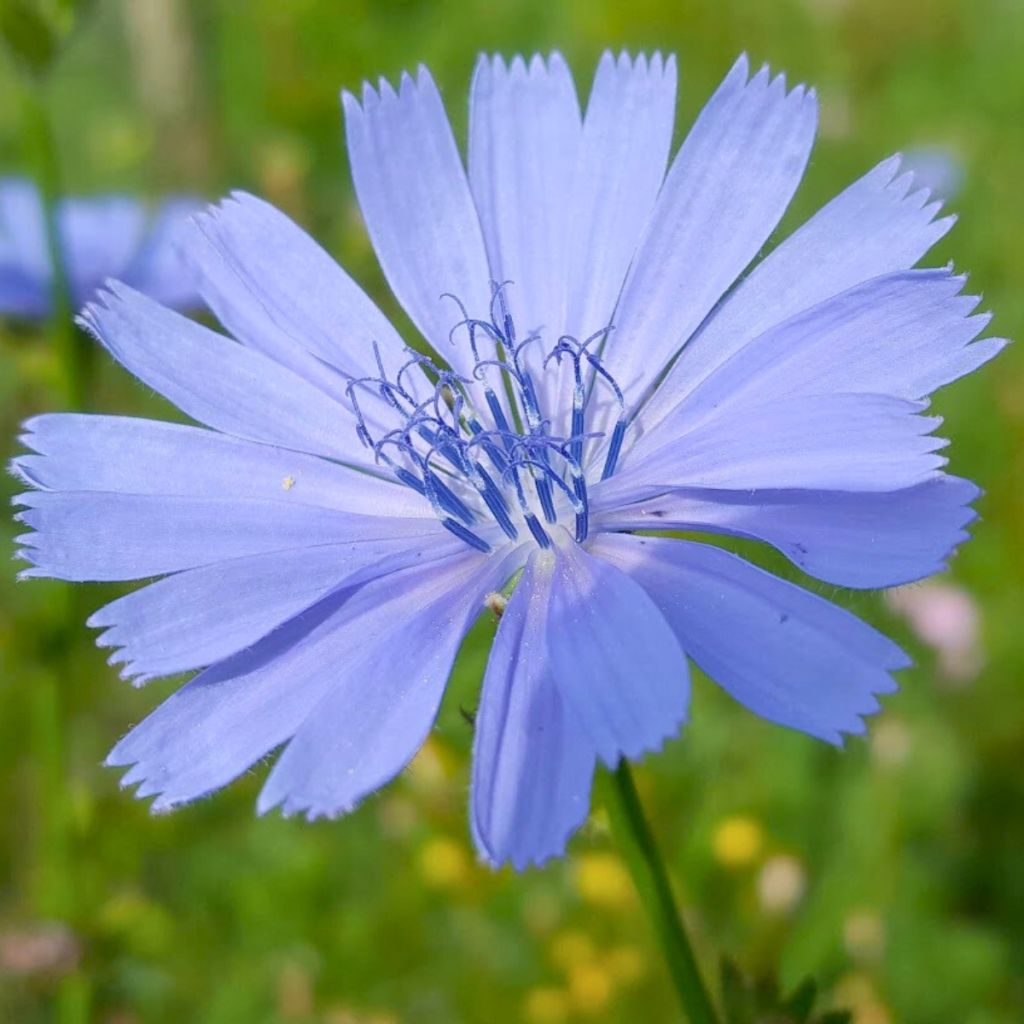
Cichorium intybus, Wild Chicory, is a hardy perennial that is both ornamental and edible, well-known for its sky-blue flowers that brighten the summer along roadsides and in meadows. In the garden, it forms light, intensely blue clumps that integrate naturally into cottage garden borders, flower meadows, and slightly wild corners of the vegetable patch. Very robust and drought-resistant, it requires minimal maintenance while providing nectar and pollen to many insects.
This botanical species belongs to the Asteraceae family. It is known by the names wild chicory, bitter chicory, common chicory, barbe-de-capucin, or wild endive. Many vegetable cultivars (endives, salad chicories, Italian chicories) are derived from it. It is a herbaceous perennial plant, capable of living for several years thanks to its fleshy taproot. Native to a vast Euro-Mediterranean zone, wild chicory grows spontaneously from Portugal to Russia, from the Maghreb to the Caucasus and as far as Central Asia and the western Himalayas. It has since naturalised in North America, other regions of Asia, and Australia. It is found mainly in dry meadows, embankments, fallow land, field edges, and sunny roadsides.
The plant forms an upright, somewhat angular clump. In the first year, it develops a rosette of basal leaves, 10 to 25 cm long, deeply cut, similar to dandelion leaves. From this rosette, rigid, hairy or rough stems develop, branched in their upper part. At maturity, wild chicory reaches between 70 cm and 1 m in height with a spread of 40 to 60 cm. Its growth is rapid once the young plant is well-rooted. The bright green to bluish-green foliage is deciduous to semi-evergreen, depending on the climate. The flowers are gathered in 2 to 3 cm diameter heads, borne singly or in small groups along the stems. Each head is composed solely of ligulate florets of an azure to lavender blue, sometimes tinged with mauve, with finely toothed tips. The flowers open in the morning, in sunny weather, and generally close in the early afternoon. Flowering lasts from June or July to September. Pollination is ensured by many pollinating insects. The fruits are small, light brown achenes, topped with a short 'feather'. This plant self-seeds spontaneously in light soil. Its long, fleshy taproot penetrates deep into the soil: it firmly anchors the clump, giving it good wind resistance and drought tolerance.
It is this root that provides the famous roasted chicory root, used since the 19th century as a coffee substitute, particularly in Northern France and Belgium. The slightly bitter, young leaves, as well as the flowers, can be consumed in salads or as an infusion.
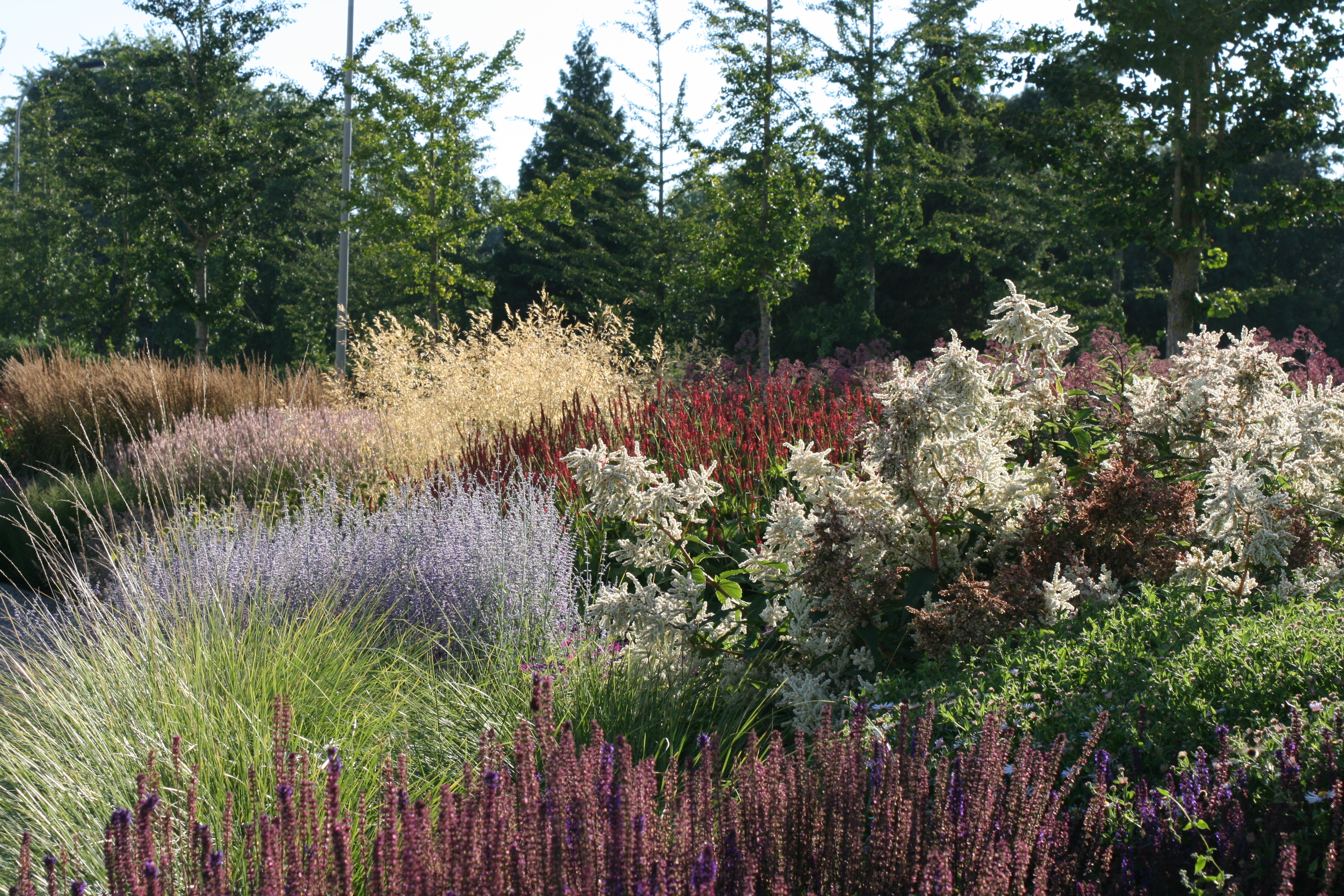
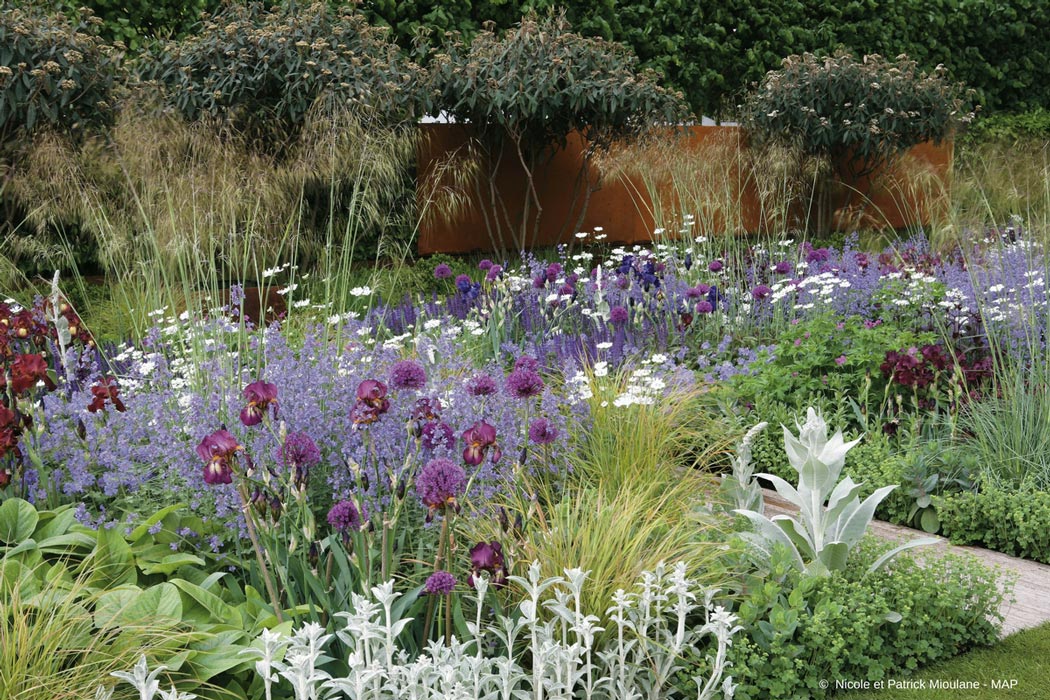
In the garden, scatter wild chicory in clumps in a flower meadow, in a naturalistic border, or at the edge of a vegetable patch. It forms a blue line and lets the gaze wander. It can be paired with Heliopsis helianthoides 'Burning Hearts', whose large bright yellow flowers with a red heart warm its blue tones in late summer. In light, dry soil, combine it with Eschscholzia californica Thai Silk Apricot Chiffon, a California poppy with crumpled flowers in apricot and coral tones, and Gaillardia grandiflora 'Dazzler', with its large red-orange daisies with yellow tips. The horizon blue of this chicory pairs perfectly with the fuchsia pink of shrubby sage 'Cerro Potosi'.
Report an error about the product description
Cichorium intybus - Chicory in pictures


Flowering
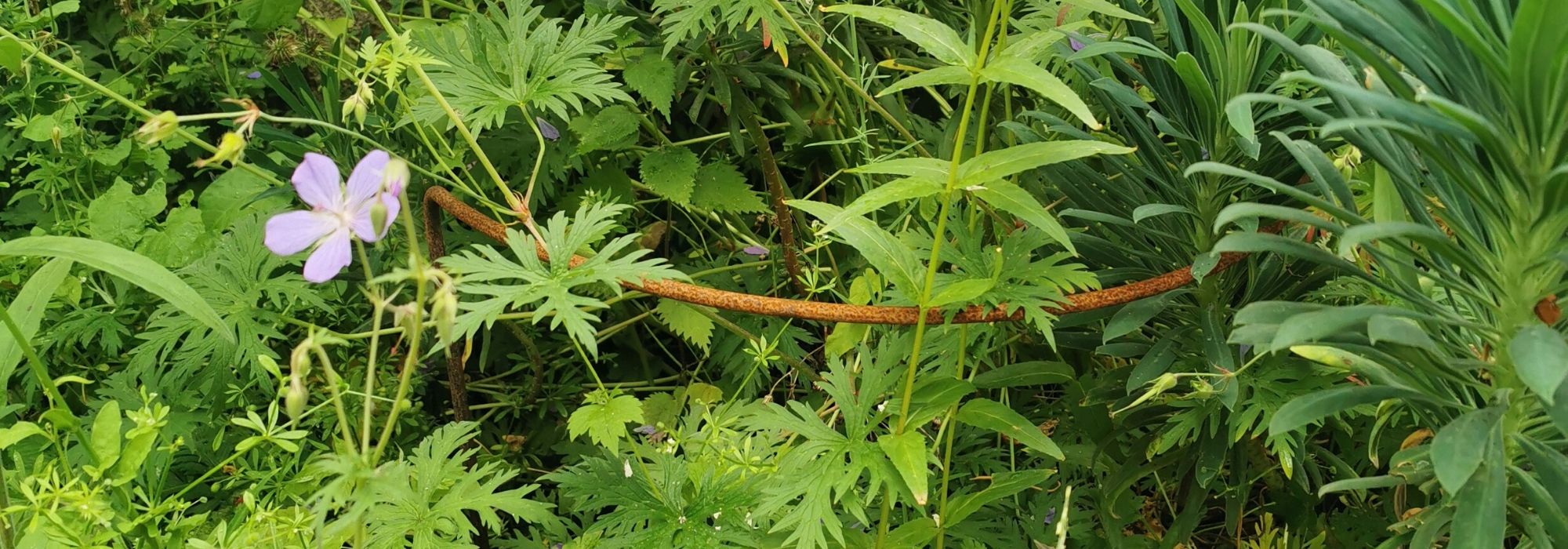
Foliage
Plant habit
Botanical data
Cichorium
intybus
Asteraceae
Wild succory, Blue dais, Blue dandelion, Blue weed, Bunk, Coffeeweed
Cichorium rigidum, Cichorium sylvestre, Cichorium perenne, Cichorium balearicum
Western Europe, Central Europe, North Africa, Caucasus, Central Asia, West Asia
Planting and care
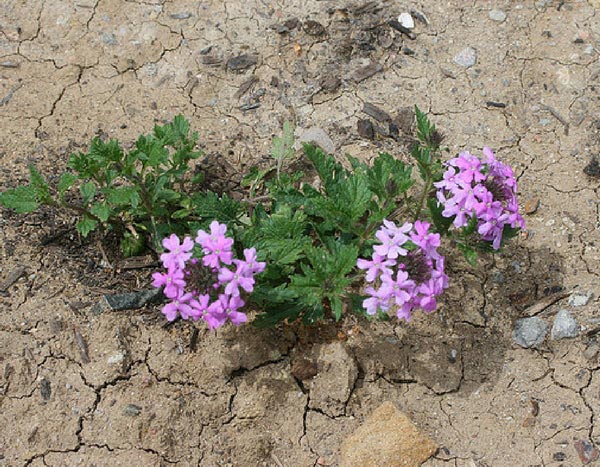
Plant wild chicory in a sunny position, in ordinary but well-drained soil, preferably chalky or neutral, even poor or stony. Loosen the soil to a good depth to facilitate the anchoring of the taproot. Space the young plants 35 to 40 cm apart, preferably in spring or very early autumn. Water generously after planting, then regularly for the first few weeks; afterwards, the plant tolerates dry periods well and no longer requires watering, except in exceptionally dry summers and in very free-draining soil.
Weed around it for the first few months, then let it mingle with other perennials or grasses if you are using it in a flowering meadow.
Planting period
Intended location
Care
Planting & care advice
-
-
-

-
-
-
-
-

This item has not been reviewed yet - be the first to leave a review about it.
Recently viewed products
Haven't found what you were looking for?
Hardiness is the lowest winter temperature a plant can endure without suffering serious damage or even dying. However, hardiness is affected by location (a sheltered area, such as a patio), protection (winter cover) and soil type (hardiness is improved by well-drained soil).

The flowering period indicated on our website applies to countries and regions located in USDA zone 8 (France, the United Kingdom, Ireland, the Netherlands, etc.)
It will vary according to where you live:- In zones 9 to 10 (Italy, Spain, Greece, etc.), flowering will occur about 2 to 4 weeks earlier.
- In zones 6 to 7 (Germany, Poland, Slovenia, and lower mountainous regions), flowering will be delayed by 2 to 3 weeks.
- In zone 5 (Central Europe, Scandinavia), blooming will be delayed by 3 to 5 weeks.
In temperate climates, pruning of spring-flowering shrubs (forsythia, spireas, etc.) should be done just after flowering.
Pruning of summer-flowering shrubs (Indian Lilac, Perovskia, etc.) can be done in winter or spring.
In cold regions as well as with frost-sensitive plants, avoid pruning too early when severe frosts may still occur.
The planting period indicated on our website applies to countries and regions located in USDA zone 8 (France, United Kingdom, Ireland, Netherlands).
It will vary according to where you live:
- In Mediterranean zones (Marseille, Madrid, Milan, etc.), autumn and winter are the best planting periods.
- In continental zones (Strasbourg, Munich, Vienna, etc.), delay planting by 2 to 3 weeks in spring and bring it forward by 2 to 4 weeks in autumn.
- In mountainous regions (the Alps, Pyrenees, Carpathians, etc.), it is best to plant in late spring (May-June) or late summer (August-September).
The harvesting period indicated on our website applies to countries and regions in USDA zone 8 (France, England, Ireland, the Netherlands).
In colder areas (Scandinavia, Poland, Austria...) fruit and vegetable harvests are likely to be delayed by 3-4 weeks.
In warmer areas (Italy, Spain, Greece, etc.), harvesting will probably take place earlier, depending on weather conditions.
The sowing periods indicated on our website apply to countries and regions within USDA Zone 8 (France, UK, Ireland, Netherlands).
In colder areas (Scandinavia, Poland, Austria...), delay any outdoor sowing by 3-4 weeks, or sow under glass.
In warmer climes (Italy, Spain, Greece, etc.), bring outdoor sowing forward by a few weeks.
Shipping country and language
Your country of residence may be:
Your country of residence is:
For a better user experience on our website, you can select:
Your shipping country:
-
 Austria
-
 Belgium
-
 Bosnia & Herzegovina
-
 Bulgaria
-
 Croatia
-
 Cyprus
-
 Czechia
-
 Denmark
-
 Estonia
-
 Finland
-
 France
-
 Germany
-
 Greece
-
 Hungary
-
 Iceland
-
 Ireland
-
 Italy
Italy
-
 Latvia
-
 Liechtenstein
-
 Lithuania
-
 Luxembourg
-
 Malta
Malta
-
 Netherlands
-
 Poland
-
 Portugal
-
 Romania
-
 Serbia
-
 Slovakia
-
 Slovenia
-
 Spain
Spain
-
 Sweden
-
 Switzerland
Language:
-
French
-
 English
-
Spanish
-
Italian
-
German
-
Portuguese
-
Dutch
-
Finnish
My Account
Hello
My wish lists
My cart
Log in / Register
Existing customer?
This form is protected by reCAPTCHA - the Google Privacy Policy and Terms of Service apply.
New customer?
Create an account to track your orders, access our customer service and, if you wish, make the most of our upcoming offers.