
Cornus controversa Pagoda - Giant Dogwood

Cornus controversa Pagoda - Giant Dogwood

Cornus controversa Pagoda - Giant Dogwood
Cornus controversa Pagoda - Giant Dogwood
Cornus controversa Pagoda - Giant Dogwood
Cornus controversa Pagoda - Giant Dogwood
Cornus controversa Pagoda
Giant Dogwood, Wedding Cake Tree
Received and planted in 2020. The growth is decent, with 3 levels, however, as the main trunk was broken upon arrival, I'm afraid it won't grow anymore. Should I use and stake a high branch to try to revive the trunk?
dom, 15/09/2024
Back-to-school special offer!
Get €10 off for every €50 you spend! And get up to €40 off on a single order.
How does it work?
1. Shop your favourites
Add your favourite plants to your basket. For every €50 you spend (excluding delivery charges, store credit and the plastic-free option), you’ll receive a €10 voucher.
€50 spent = €10 voucher
€100 spent = €20 voucher
€150 spent = €30 voucher
€200 spent = €40 voucher
2. Place your order
Once your basket reaches one of the spending thresholds, place your order. You can even choose your delivery date!
3. Receive your voucher
As soon as your order has been shipped, you’ll receive an email containing your personal voucher code and its value.
4. Use it on your next order
Your voucher is valid for 90 days from the date you receive it. It can be used once only, on a new order worth at least the value of the voucher, excluding delivery charges.
Please note: Vouchers can be combined with other offers, but cannot be split or refunded.
Home or relay delivery (depending on size and destination)
Important: You may be charged customs duties by your country’s customs authorities upon delivery.
Schedule delivery date
and select date in basket
This plant carries a 24 months recovery warranty
More information
We guarantee the quality of our plants for a full growing cycle, and will replace at our expense any plant that fails to recover under normal climatic and planting conditions.

Would this plant suit my garden?
Set up your Plantfit profile →
Description
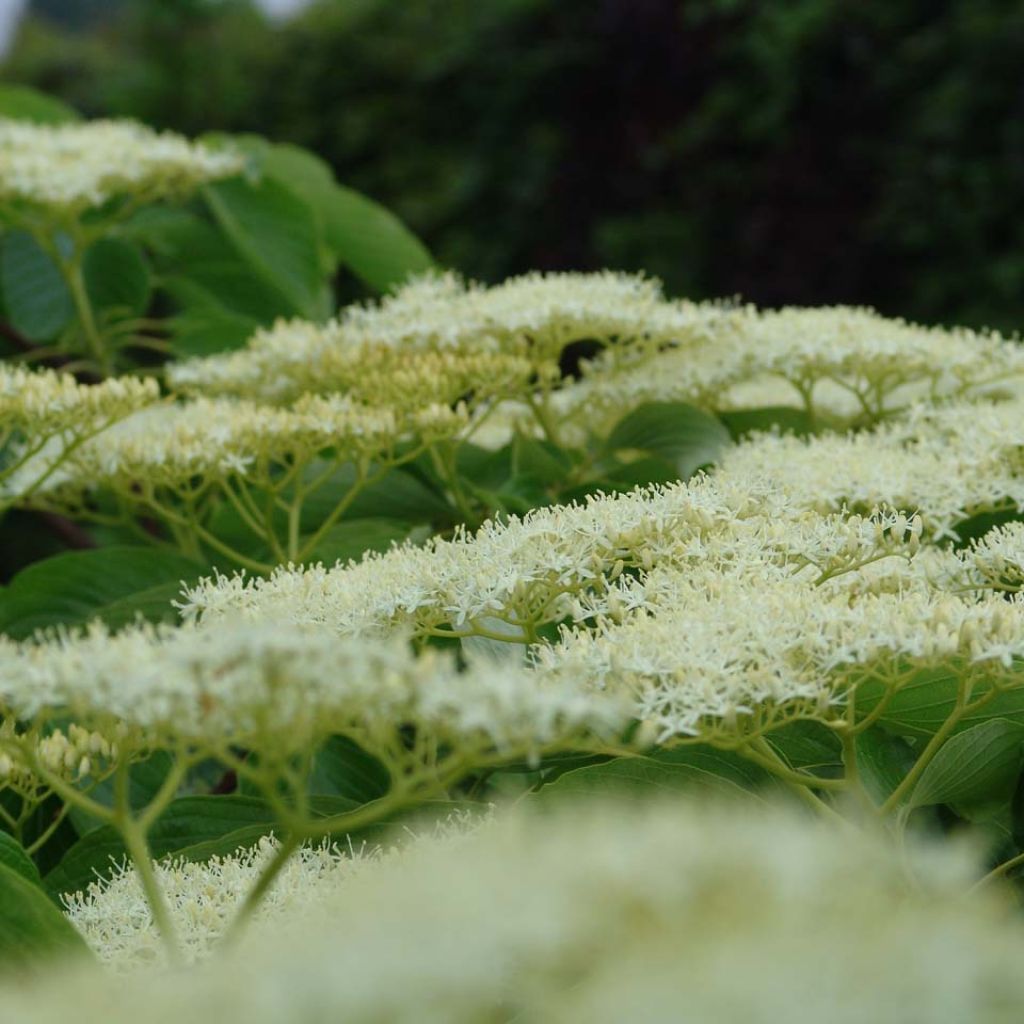
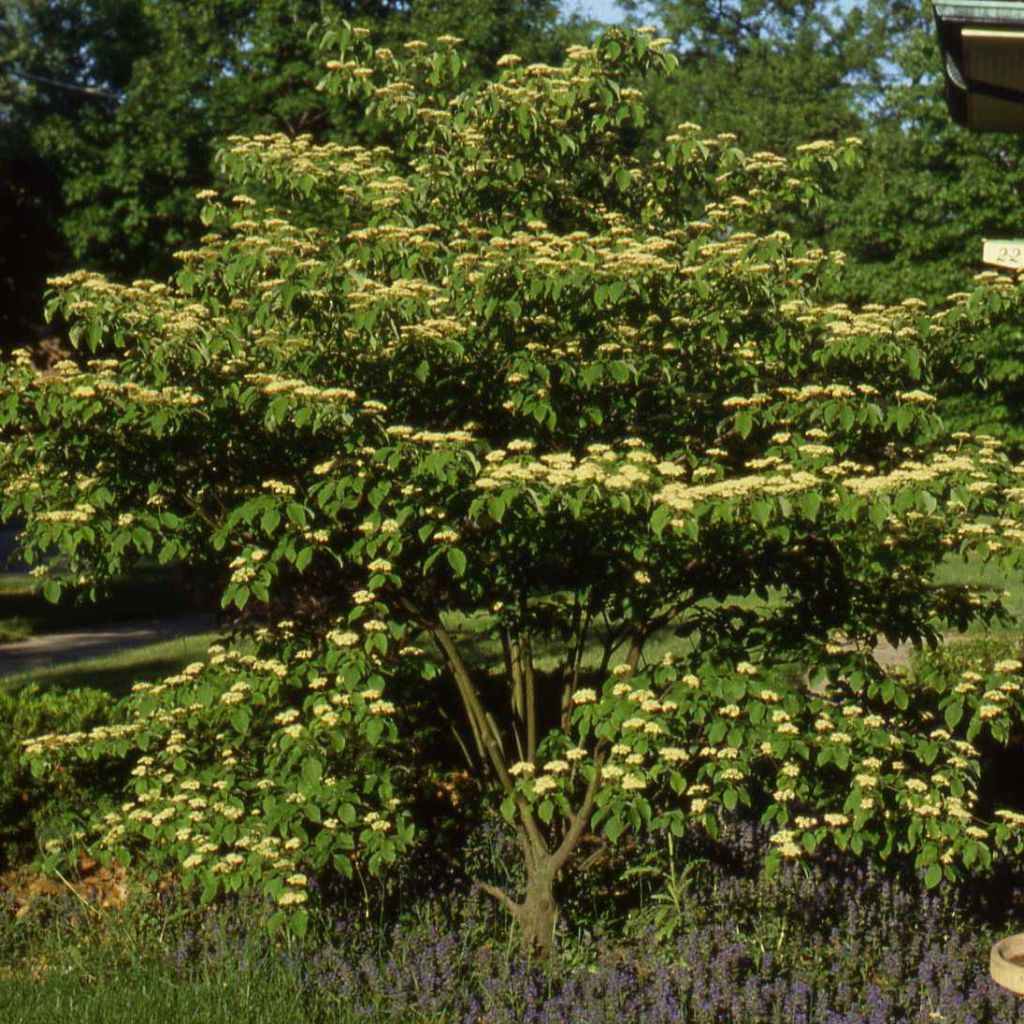
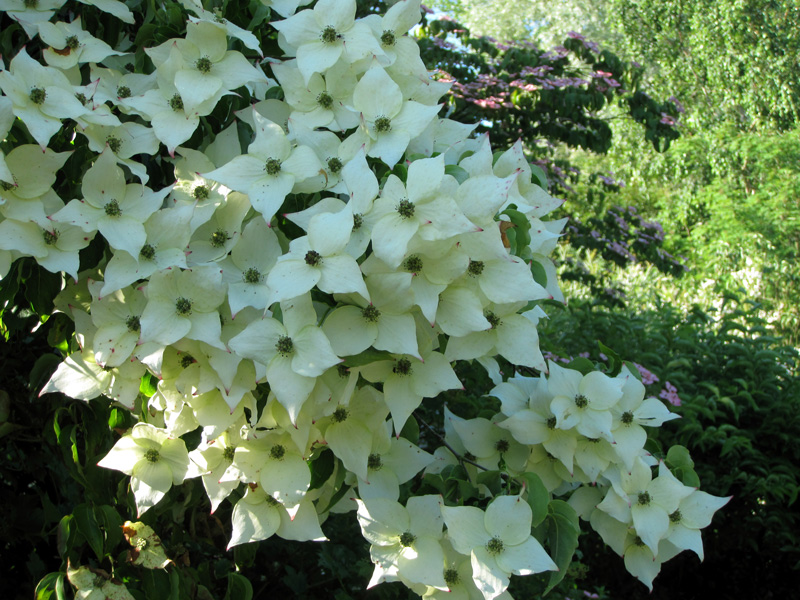
Cornus controversa 'Pagoda' bears a layered habit that perfectly lives up to this cultivar's name. This dogwood, one of the largest in its genus, forms a true small tree with branches arranged perfectly horizontally, forming even more pronounced and flattened tiers than in the typical species. It is adorned with glossy foliage and in summer is covered with snowy, fragrant masses, followed by blue-black and shiny fruits. Its foliage takes on stunning colours in autumn before falling. A dogwood full of elegance and majesty, to be planted as a specimen.
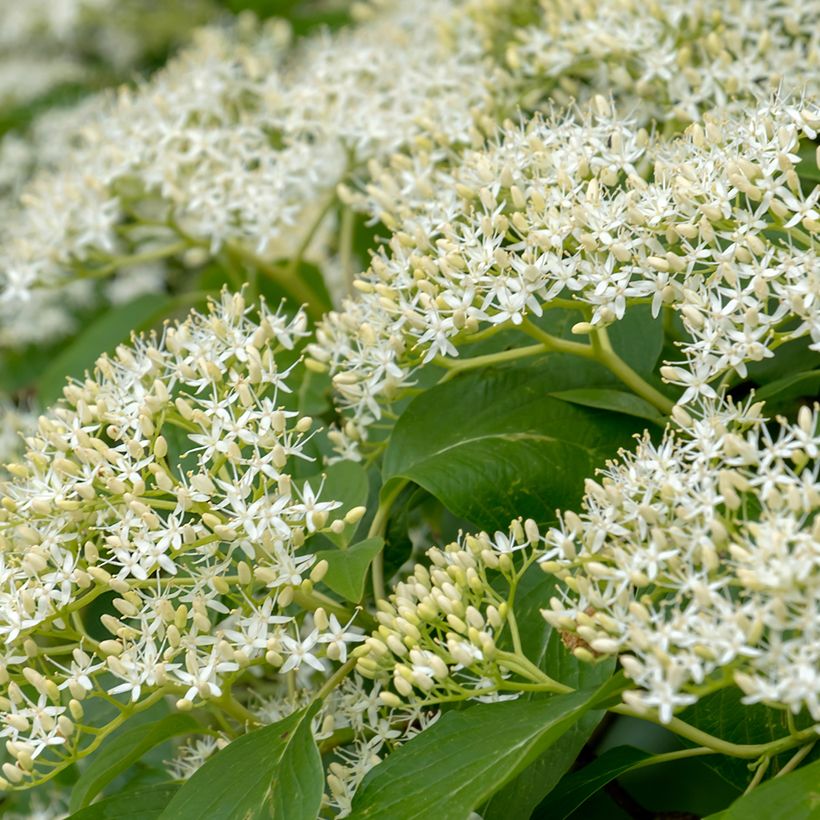
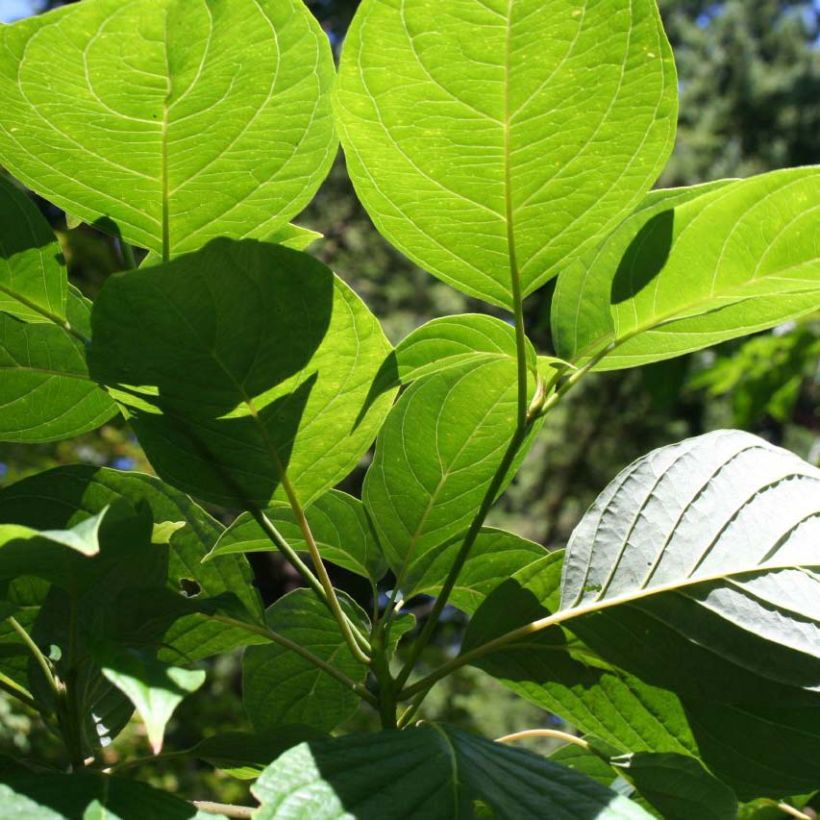
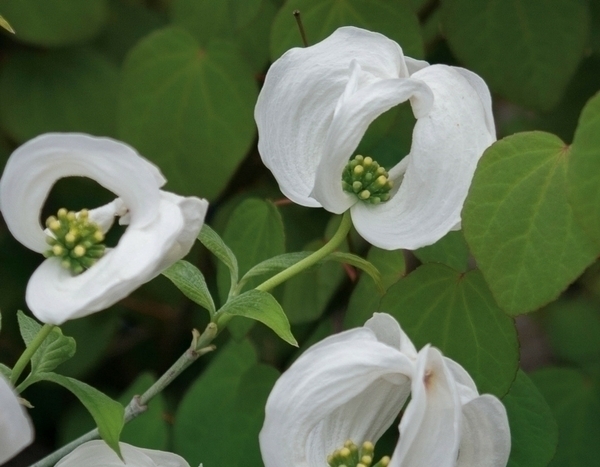
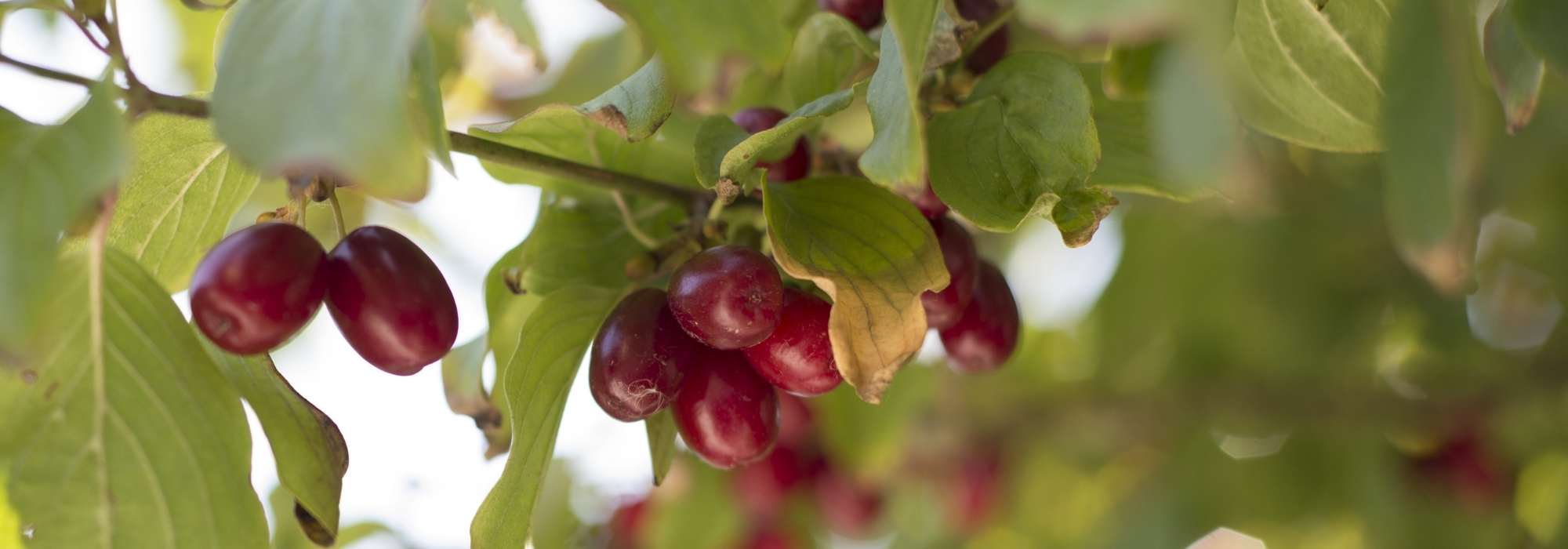
Cornus controversa is a small tree originating from China, Korea, and Japan. It simultaneously develops a vertical stem and layered, horizontal branches, slowly reaching an average height of 12 m (39.4 ft) with a spread of 7 m to 8 m (23 ft to 26.2 ft). The cultivar 'Pagoda' displays particularly layered architecture. Its young reddish twigs are covered with green, highly veined, glossy foliage, with the underside being lighter, greyish to bluish. It is the only dogwood, along with Cornus alternifolia, to have alternate leaves rather than opposite. They are elliptical, ovate, with a pointed tip, and have about 8 parallel veins, measuring 10 cm (3.9 in) in length. The foliage turns dark red in October and remains vibrant on the tree before falling. While it is magnificent at the end of the season, its flowering from May to June in flat white cymes is highly ornamental. The large fragrant clusters they form, measuring 10 cm to 15 cm (3.9 in to 5.9 in) in diameter, illuminate the tree while highlighting its unique habit. The flowering is followed by dark blue-black berries, 1 cm (0.4 in) in diameter.
'Pagoda' deserves to be planted as a specimen on a short grass lawn. Its moderate growth is suitable for medium-sized spaces. It can obviously be used in Japanese-inspired scenes where it will blend perfectly with the small Acer palmatum 'Dissectum', Rhododendron yakushimanum, or Pieris japonica 'Forest Flame'. The perennials that accompany it will also appreciate moist, slightly acidic soils. In the sun, its base can be covered with Lithodora diffusa, which offers intense blue flowers, and in partial shade, heucheras and astilbes will fulfil this function perfectly. In a more minimalist style, its striking visual qualities will work in combination with very simple materials such as concrete or metal, as well as with grasses like Calamagrostis x acutiflora, Helictotrichon sempervirens, Carex comans 'Bronze'. At its base, a fern with an upright habit like Matteucia struthiopteris will create a beautiful contrast with the horizontal nature of our small tree.

Cornus controversa Pagoda - Giant Dogwood in pictures
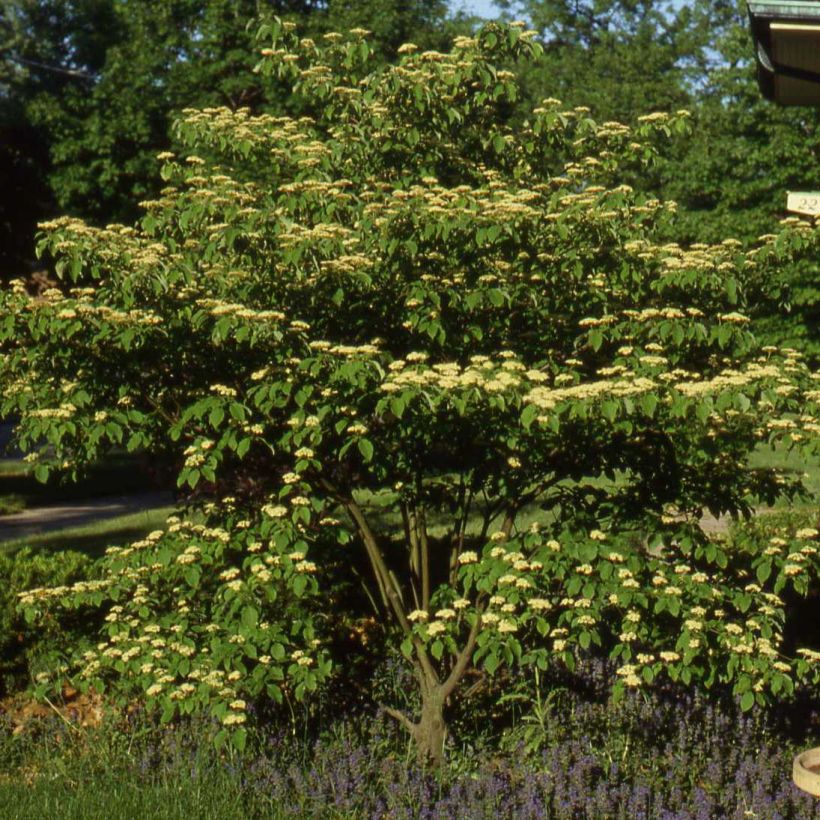
Plant habit
Flowering
Foliage
Botanical data
Cornus
controversa
Pagoda
Cornaceae
Giant Dogwood, Wedding Cake Tree
China
Planting and care
Easy to cultivate, it requires little maintenance. Pruning is unnecessary as its magnificent habit is completely spontaneous. It prefers moist, humus-rich soil, not too chalky and slightly acidic. Plant it in a sunny or semi-shady position. It is very hardy, resistant to -20° C (-4° F). In limestone soils, make sure to add acidity. Prepare a large planting hole (1 m x 1 m x 0.5 m (3.3 ft x 3.3 ft x 1.6 ft)). Replace 40% of the removed original soil with a mixture of 30% turf, 20% leaf compost and 10% river sand. If the soil is already neutral or acidic, adding compost and manure will be sufficient for planting. For maintenance, regularly apply fertiliser as well as turf or pine bark to maintain acidity in alkaline soils. Remove faded flowers.
Pruning is not necessary, but you can optionally cut back the branches at the end of winter to stimulate the growth of new vigorous shoots. It is also important to remove dead wood and crossing branches to maintain a beautiful habit.
Planting period
Intended location
Care
Planting & care advice
-
-
-
-
-

-

-

-
-
, onOrder confirmed
Reply from on Promesse de fleurs
Recently viewed products
Haven't found what you were looking for?
Hardiness is the lowest winter temperature a plant can endure without suffering serious damage or even dying. However, hardiness is affected by location (a sheltered area, such as a patio), protection (winter cover) and soil type (hardiness is improved by well-drained soil).

The flowering period indicated on our website applies to countries and regions located in USDA zone 8 (France, the United Kingdom, Ireland, the Netherlands, etc.)
It will vary according to where you live:- In zones 9 to 10 (Italy, Spain, Greece, etc.), flowering will occur about 2 to 4 weeks earlier.
- In zones 6 to 7 (Germany, Poland, Slovenia, and lower mountainous regions), flowering will be delayed by 2 to 3 weeks.
- In zone 5 (Central Europe, Scandinavia), blooming will be delayed by 3 to 5 weeks.
In temperate climates, pruning of spring-flowering shrubs (forsythia, spireas, etc.) should be done just after flowering.
Pruning of summer-flowering shrubs (Indian Lilac, Perovskia, etc.) can be done in winter or spring.
In cold regions as well as with frost-sensitive plants, avoid pruning too early when severe frosts may still occur.
The planting period indicated on our website applies to countries and regions located in USDA zone 8 (France, United Kingdom, Ireland, Netherlands).
It will vary according to where you live:
- In Mediterranean zones (Marseille, Madrid, Milan, etc.), autumn and winter are the best planting periods.
- In continental zones (Strasbourg, Munich, Vienna, etc.), delay planting by 2 to 3 weeks in spring and bring it forward by 2 to 4 weeks in autumn.
- In mountainous regions (the Alps, Pyrenees, Carpathians, etc.), it is best to plant in late spring (May-June) or late summer (August-September).
The harvesting period indicated on our website applies to countries and regions in USDA zone 8 (France, England, Ireland, the Netherlands).
In colder areas (Scandinavia, Poland, Austria...) fruit and vegetable harvests are likely to be delayed by 3-4 weeks.
In warmer areas (Italy, Spain, Greece, etc.), harvesting will probably take place earlier, depending on weather conditions.
The sowing periods indicated on our website apply to countries and regions within USDA Zone 8 (France, UK, Ireland, Netherlands).
In colder areas (Scandinavia, Poland, Austria...), delay any outdoor sowing by 3-4 weeks, or sow under glass.
In warmer climes (Italy, Spain, Greece, etc.), bring outdoor sowing forward by a few weeks.
Shipping country and language
Your country of residence may be:
Your country of residence is:
For a better user experience on our website, you can select:
Your shipping country:
-
 Austria
-
 Belgium
-
 Bosnia & Herzegovina
-
 Bulgaria
-
 Croatia
-
 Cyprus
-
 Czechia
-
 Denmark
-
 Estonia
-
 Finland
-
 France
-
 Germany
-
 Greece
-
 Hungary
-
 Iceland
-
 Ireland
-
 Italy
Italy
-
 Latvia
-
 Liechtenstein
-
 Lithuania
-
 Luxembourg
-
 Malta
Malta
-
 Netherlands
-
 Poland
-
 Portugal
-
 Romania
-
 Serbia
-
 Slovakia
-
 Slovenia
-
 Spain
Spain
-
 Sweden
-
 Switzerland
Language:
-
French
-
 English
-
Spanish
-
Italian
-
German
-
Portuguese
-
Dutch
-
Finnish
My Account
Hello
My wish lists
My cart
Log in / Register
Existing customer?
This form is protected by reCAPTCHA - the Google Privacy Policy and Terms of Service apply.
New customer?
Create an account to track your orders, access our customer service and, if you wish, make the most of our upcoming offers.