

































Hippeastrum Neon - Amaryllis
Hippeastrum Neon - Amaryllis
Amaryllis (Hippeastrum) Neon
Hippeastrum
Beautiful color and large flowers as advertised.
Julien, 02/04/2024
Special offer!
Receive a €20 voucher for any order over €90 (excluding delivery costs, credit notes, and plastic-free options)!
1- Add your favorite plants to your cart.
2- Once you have reached €90, confirm your order (you can even choose the delivery date!).
3- As soon as your order is shipped, you will receive an email containing your voucher code, valid for 3 months (90 days).
Your voucher is unique and can only be used once, for any order with a minimum value of €20, excluding delivery costs.
Can be combined with other current offers, non-divisible and non-refundable.
Home or relay delivery (depending on size and destination)
Important : des droits de douane sont susceptibles de vous être facturés par la douane de votre pays lors de la livraison.
Schedule delivery date,
and select date in basket
This plant carries a 6 months recovery warranty
More information
We guarantee the quality of our plants for a full growing cycle, and will replace at our expense any plant that fails to recover under normal climatic and planting conditions.

Would this plant suit my garden?
Set up your Plantfit profile →
Description
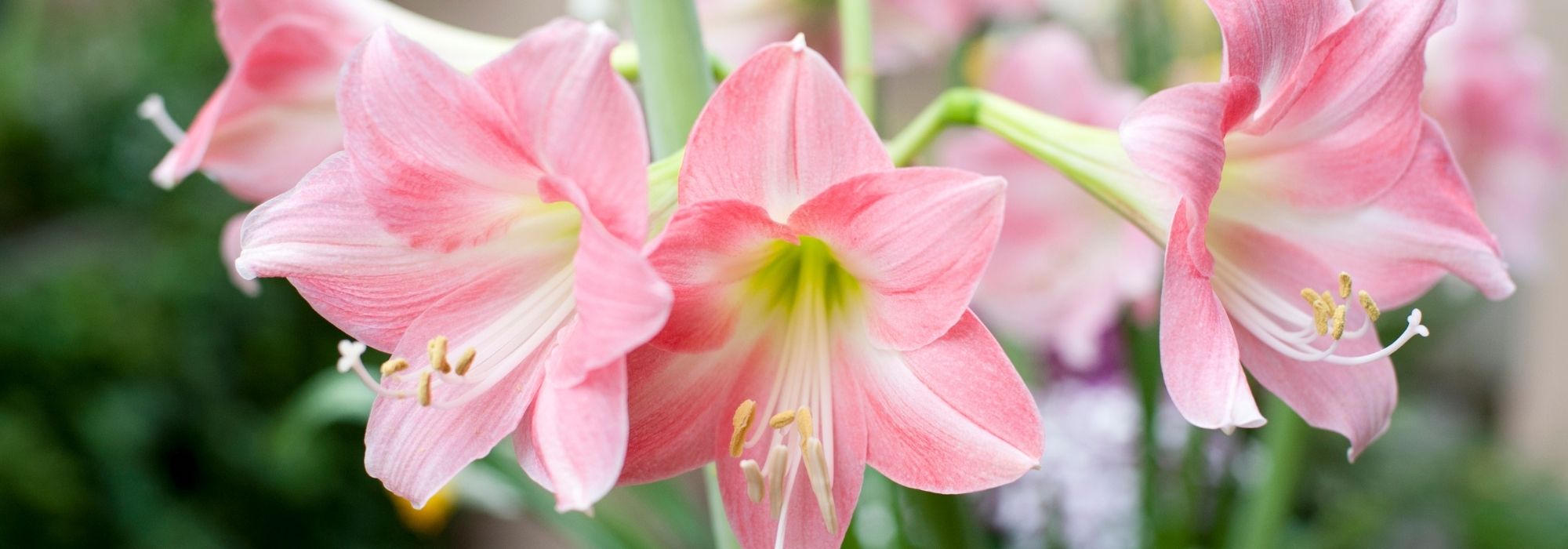
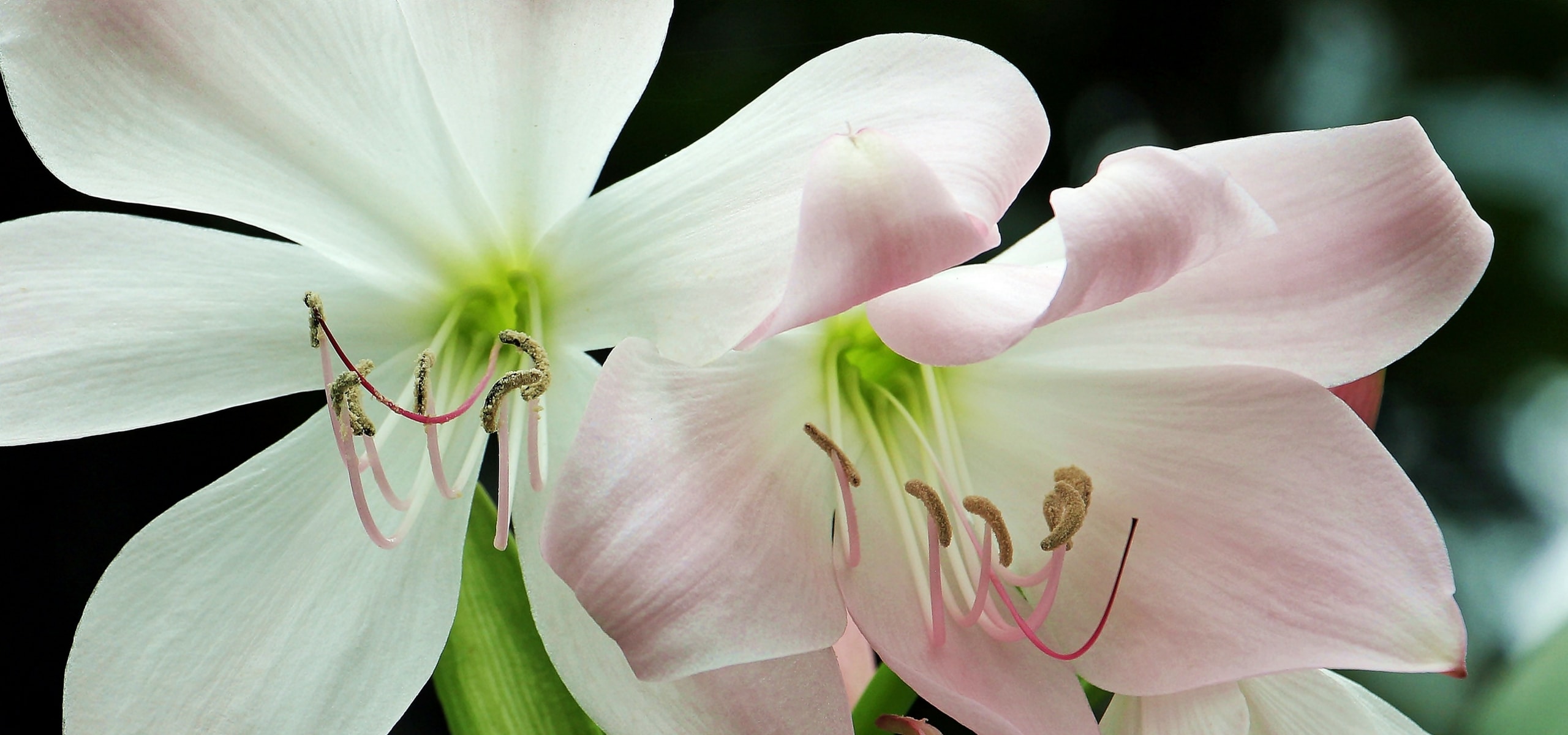
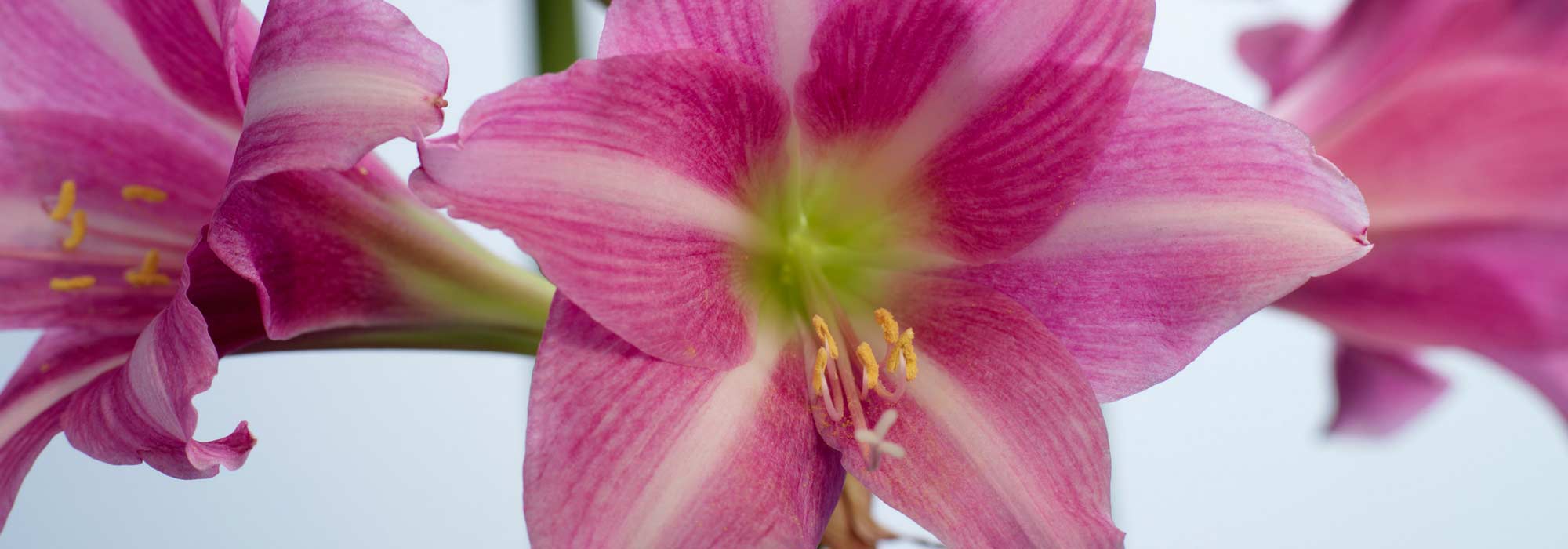
L'Amaryllis 'Neon', comme son nom le laisse présager, est un Hippeastrum qui se remarque de loin ! Les fleurs en forme d’entonnoir sont d’un rose fuchsia fluo incroyable, irrégulièrement strié de blanc autour d’un cœur verdâtre. Très florifère, chaque bulbe produit généralement 2 hampes florales, chacune portant entre 4 et 6 fleurs, l'ensemble formant un généreux bouquet vivement coloré et joyeux. Cette superbe variété est aussi très facile à cultiver et à faire fleurir à la maison.
Originaire des régions subtropicales d'Amérique centrale et du Sud, les Hippeastrum sont des plantes gélives appartenant à la famille des Amaryllidacées, généralement cultivées en pot sous nos latitudes. En pleine floraison, la variété ‘Neon’ forme une touffe de 50 à 60 cm de hauteur et 30 cm de largeur. Elle offre 4 à 6 fleurs par tige, en forme d’entonnoir, composées de 6 pétales. Chaque pétale lancéolé est de substance épaisse et irisée. Le cœur de la fleur, vert-jaune, laisse échapper un bouquet de longues étamines roses et courbées. Chaque bulbe produit deux épaisses hampes creuses. Positionnées dos-à-dos, les fleurs forment ensemble une composition unique. Les feuilles sont caduques, rubanées et d'un vert foncé lustré.
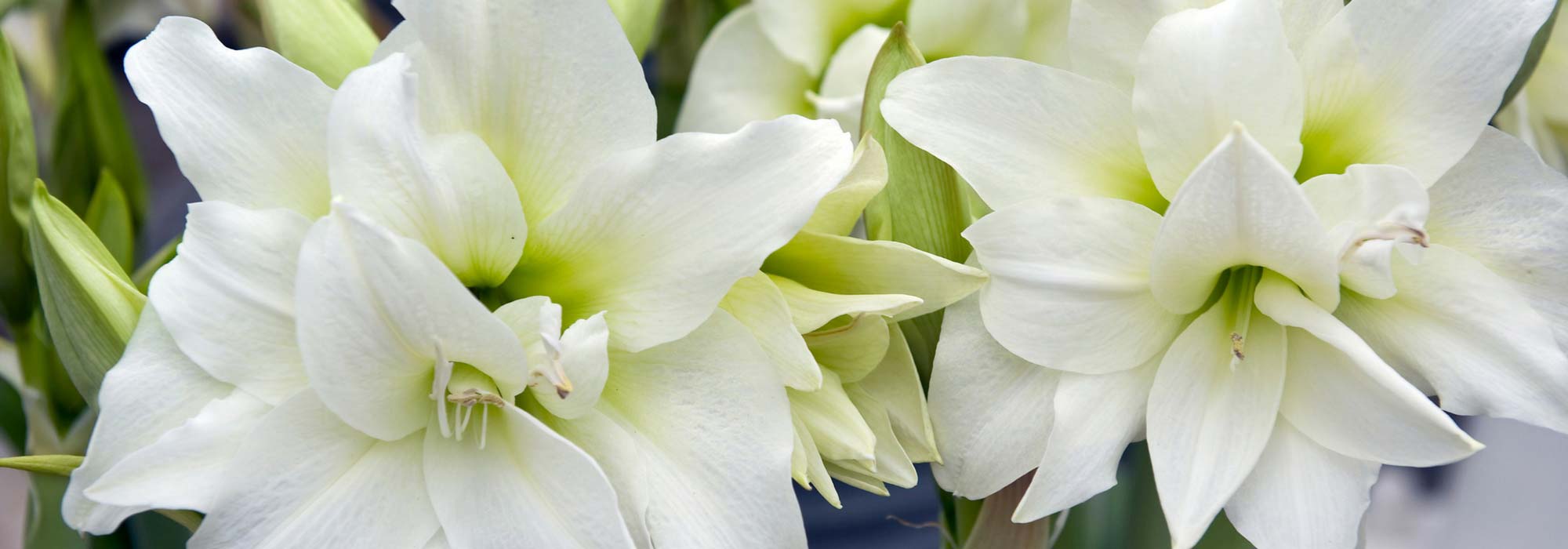
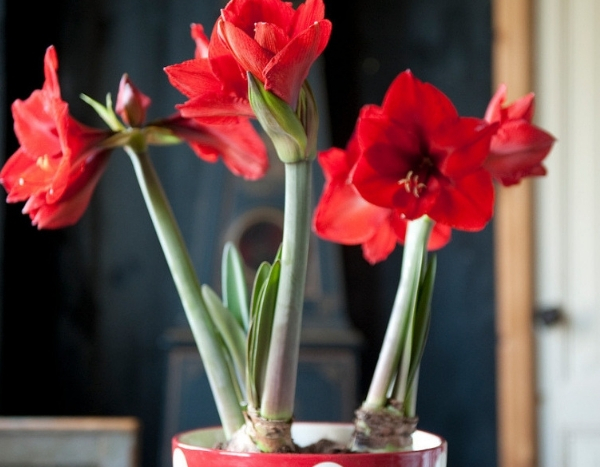
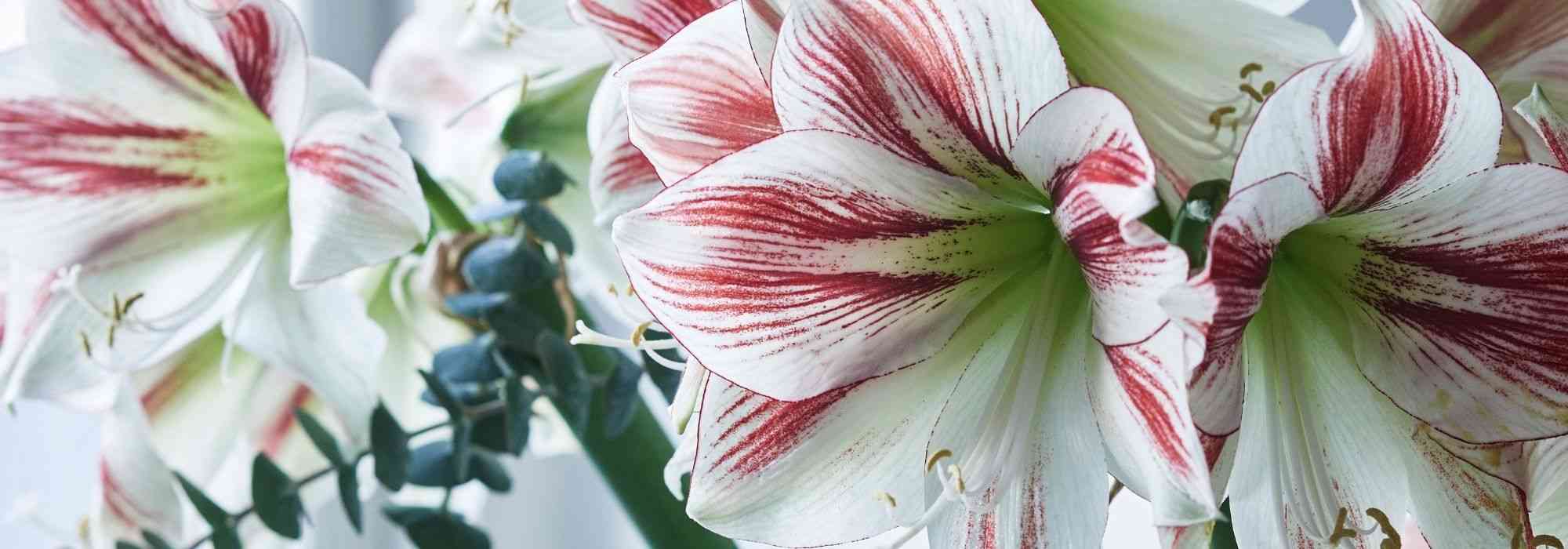
Planter une Amaryllis est chose très gratifiante. L'Hippeastrum est très facile de culture et sa croissance est extrêmement rapide ; 6 à 10 semaines après la plantation, les fleurs s'épanouissent déjà. Vous pourrez les apprécier durant tout l'hiver. Pour l'offrir à la Noël pensez à la planter dès le début du mois de novembre. La variété 'Neon' s'associe bien à l'Amaryllis ‘Amputo’, virginal et blanc pur, ‘Double Nymph’, blanc strié de rouge corail, ou aux narcisses ‘Paperwhite’ ou ‘Erlicheer’ que l'on aura pris soin de forcer au chaud. Les petites clochettes blanches des perce-neiges pourront aussi garnir son pied comme autant d'étoiles. Exposez-la de préférence au soleil devant une fenêtre par exemple.
Parler d'Amaryllis est ici en fait un abus de langage directement lié à une erreur commise au 18ème siècle. C'est Linné, lui-même, qui l'utilisa pour nommer l'espèce américaine. Or le nom était déjà employé pour une autre belle, sud-africaine celle-ci. Conventionnellement on a conservé la dénomination Amaryllis pour les deux. Et pour les distinguer, on ajoute la mention Hippeastrum pour la première et Belladonna pour la seconde. Il faut dire que les deux méritent bien ce nom : Amaryllis signifie « étincelant » et, dans la littérature grecque classique, la plante a fait l'objet d'un poème pastoral où la belle bergère Amaryllis se meurt d'un amour qui ne lui sera rendu accessible qu'après une terrible blessure. De son sang surgiront de superbes brassées de fleurs rouges. Depuis, le terme est synonyme de beauté altière.
Plant habit
Flowering
Foliage
Botanical data
Amaryllis (Hippeastrum)
Neon
Amaryllidaceae
Hippeastrum
Cultivar or hybrid
Planting and care
Vous pouvez planter les bulbes d'Amaryllis 'Neon' d'octobre à fin avril. Choisissez un pot pas trop grand (un ou deux cm en plus que la taille du bulbe). Disposez une couche de drainage au fond pour un bon écoulement de l'eau d'arrosage. Mélangez moitié terreau, moitié terre de jardin. N'enterrez le bulbe qu'à moitié. Posez le pot dans un endroit chaud et clair. Arrosez peu jusqu'à l'apparition de la tige. Ensuite arrosez tous les jours. 6 à 8 semaines plus tard, vos bulbes fleuriront. Notre conseil : si vous choisissez plusieurs bulbes, plantez-les avec un intervalle de deux semaines afin de profiter de la beauté des Amaryllis tout l'hiver. Comment faire refleurir mes Amaryllis ? Après la floraison, coupez les fleurs fanées et laissez les feuilles se développer. Continuez à arroser régulièrement et donnez-leur de l'engrais pour plantes d'intérieur tous les 15 jours. C'est à ce moment que le bulbe se reconstitue pour préparer les fleurs de l'année prochaine. Après 4 à 6 mois, oubliez vos potées, laissez-lez au repos 3 mois environ dans un endroit abrité. Vous pourrez alors sectionner les feuilles fanées, rempoter dans un terreau neuf et recommencer un cycle de culture.
Planting period
Intended location
Care
Planting & care advice
-
-
-
-
-
-
-
-
-
, onOrder confirmed
Reply from on Promesse de fleurs
Recently viewed products
Haven't found what you were looking for?
Hardiness is the lowest winter temperature a plant can endure without suffering serious damage or even dying. However, hardiness is affected by location (a sheltered area, such as a patio), protection (winter cover) and soil type (hardiness is improved by well-drained soil).

Photo Sharing Terms & Conditions
In order to encourage gardeners to interact and share their experiences, Promesse de fleurs offers various media enabling content to be uploaded onto its Site - in particular via the ‘Photo sharing’ module.
The User agrees to refrain from:
- Posting any content that is illegal, prejudicial, insulting, racist, inciteful to hatred, revisionist, contrary to public decency, that infringes on privacy or on the privacy rights of third parties, in particular the publicity rights of persons and goods, intellectual property rights, or the right to privacy.
- Submitting content on behalf of a third party;
- Impersonate the identity of a third party and/or publish any personal information about a third party;
In general, the User undertakes to refrain from any unethical behaviour.
All Content (in particular text, comments, files, images, photos, videos, creative works, etc.), which may be subject to property or intellectual property rights, image or other private rights, shall remain the property of the User, subject to the limited rights granted by the terms of the licence granted by Promesse de fleurs as stated below. Users are at liberty to publish or not to publish such Content on the Site, notably via the ‘Photo Sharing’ facility, and accept that this Content shall be made public and freely accessible, notably on the Internet.
Users further acknowledge, undertake to have ,and guarantee that they hold all necessary rights and permissions to publish such material on the Site, in particular with regard to the legislation in force pertaining to any privacy, property, intellectual property, image, or contractual rights, or rights of any other nature. By publishing such Content on the Site, Users acknowledge accepting full liability as publishers of the Content within the meaning of the law, and grant Promesse de fleurs, free of charge, an inclusive, worldwide licence for the said Content for the entire duration of its publication, including all reproduction, representation, up/downloading, displaying, performing, transmission, and storage rights.
Users also grant permission for their name to be linked to the Content and accept that this link may not always be made available.
By engaging in posting material, Users consent to their Content becoming automatically accessible on the Internet, in particular on other sites and/or blogs and/or web pages of the Promesse de fleurs site, including in particular social pages and the Promesse de fleurs catalogue.
Users may secure the removal of entrusted content free of charge by issuing a simple request via our contact form.
The flowering period indicated on our website applies to countries and regions located in USDA zone 8 (France, the United Kingdom, Ireland, the Netherlands, etc.)
It will vary according to where you live:- In zones 9 to 10 (Italy, Spain, Greece, etc.), flowering will occur about 2 to 4 weeks earlier.
- In zones 6 to 7 (Germany, Poland, Slovenia, and lower mountainous regions), flowering will be delayed by 2 to 3 weeks.
- In zone 5 (Central Europe, Scandinavia), blooming will be delayed by 3 to 5 weeks.
In temperate climates, pruning of spring-flowering shrubs (forsythia, spireas, etc.) should be done just after flowering.
Pruning of summer-flowering shrubs (Indian Lilac, Perovskia, etc.) can be done in winter or spring.
In cold regions as well as with frost-sensitive plants, avoid pruning too early when severe frosts may still occur.
The planting period indicated on our website applies to countries and regions located in USDA zone 8 (France, United Kingdom, Ireland, Netherlands).
It will vary according to where you live:
- In Mediterranean zones (Marseille, Madrid, Milan, etc.), autumn and winter are the best planting periods.
- In continental zones (Strasbourg, Munich, Vienna, etc.), delay planting by 2 to 3 weeks in spring and bring it forward by 2 to 4 weeks in autumn.
- In mountainous regions (the Alps, Pyrenees, Carpathians, etc.), it is best to plant in late spring (May-June) or late summer (August-September).
The harvesting period indicated on our website applies to countries and regions in USDA zone 8 (France, England, Ireland, the Netherlands).
In colder areas (Scandinavia, Poland, Austria...) fruit and vegetable harvests are likely to be delayed by 3-4 weeks.
In warmer areas (Italy, Spain, Greece, etc.), harvesting will probably take place earlier, depending on weather conditions.
The sowing periods indicated on our website apply to countries and regions within USDA Zone 8 (France, UK, Ireland, Netherlands).
In colder areas (Scandinavia, Poland, Austria...), delay any outdoor sowing by 3-4 weeks, or sow under glass.
In warmer climes (Italy, Spain, Greece, etc.), bring outdoor sowing forward by a few weeks.