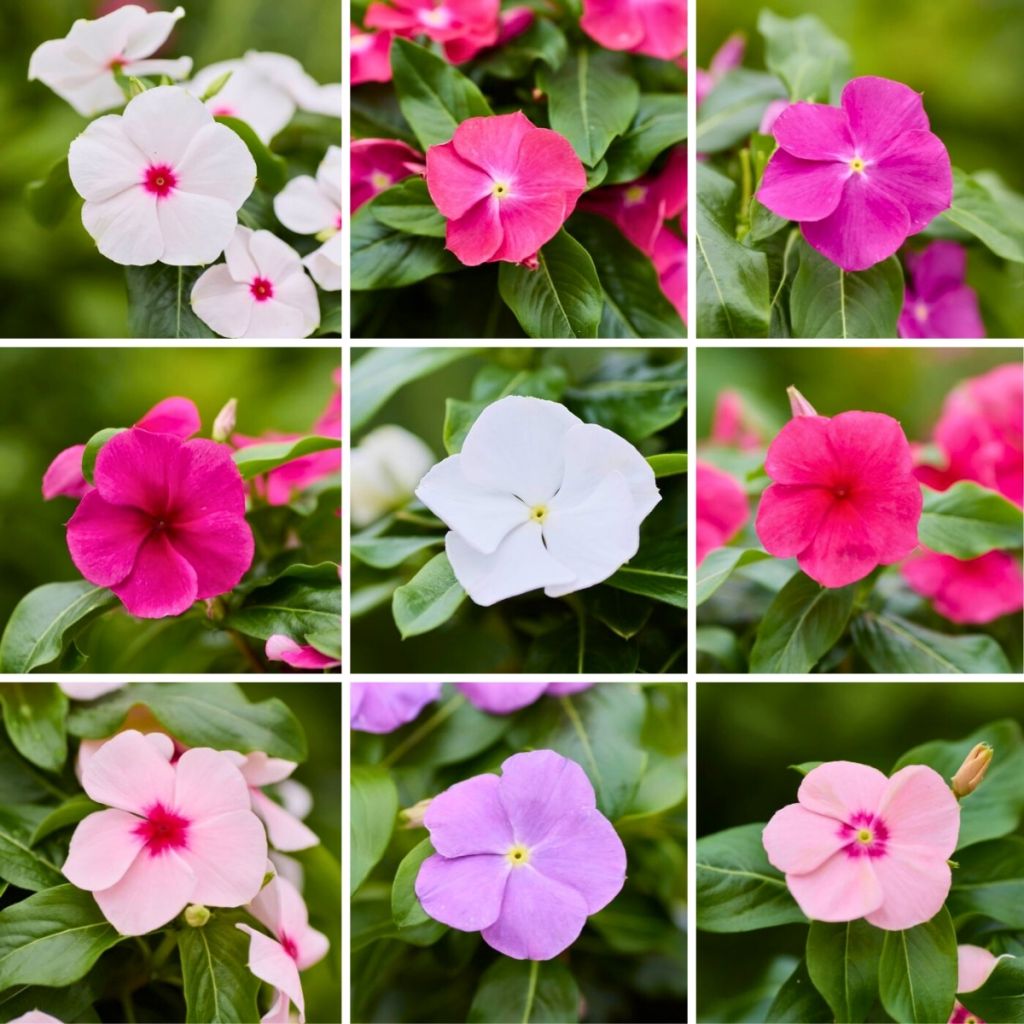
Catharanthus roseus Heatwave Mix seeds - - Madagascar periwinkle
Catharanthus roseus Heatwave Mix seeds - - Madagascar periwinkle
Catharanthus roseus Heatwave Mix
Madagascar periwinkle
Back-to-school special offer!
Get €10 off for every €50 you spend! And get up to €40 off on a single order.
How does it work?
1. Shop your favourites
Add your favourite plants to your basket. For every €50 you spend (excluding delivery charges, store credit and the plastic-free option), you’ll receive a €10 voucher.
€50 spent = €10 voucher
€100 spent = €20 voucher
€150 spent = €30 voucher
€200 spent = €40 voucher
2. Place your order
Once your basket reaches one of the spending thresholds, place your order. You can even choose your delivery date!
3. Receive your voucher
As soon as your order has been shipped, you’ll receive an email containing your personal voucher code and its value.
4. Use it on your next order
Your voucher is valid for 90 days from the date you receive it. It can be used once only, on a new order worth at least the value of the voucher, excluding delivery charges.
Please note: Vouchers can be combined with other offers, but cannot be split or refunded.
Home or relay delivery (depending on size and destination)
Important: You may be charged customs duties by your country’s customs authorities upon delivery.
Schedule delivery date
and select date in basket
This plant carries a 6 months recovery warranty
More information
We guarantee the quality of our plants for a full growing cycle, and will replace at our expense any plant that fails to recover under normal climatic and planting conditions.
Would this plant suit my garden?
Set up your Plantfit profile →
Description
Sow this Madagascar Periwinkle Heatwave Mix seed blend early to enjoy a multicoloured flowering from June to October. Catharanthus roseus is a tender perennial from Madagascar which is cultivated as an annual. Superb in the garden in borders, flowerbeds or beds, it can also be grown in pots, hanging baskets and planters. This very floriferous plant is particularly easy to grow due to its resistance to heat and diverse growing conditions. It is a fast-growing annual, one of the best for flowering displays.
The Madagascar Periwinkle, whose scientific name is Catharanthus roseus, belongs to the Apocynaceae family, rich with about 350 genera and 5000 species, mostly native to subtropical and tropical zones, like Frangipani or Hoya, grown as a houseplant. Nevertheless, some grow in our temperate or Mediterranean climates, such as the popular Periwinkles (Vinca), which form groundcover carpets, or the much less common Oxypetalum with its unreal blue flowers.
The Catharanthus genus comprises eight species, only one of which is not endemic to Madagascar. In its country of origin, C. roseus, the Madagascar Periwinkle, grows in the east and south of the large island, from sea level up to 1800 m altitude, in both moist but well-drained soils and dry ones. This great versatility explains its usefulness in horticulture and the number of cultivars on the market today. It is a herbaceous perennial plant that can reach 1 m in height, with an erect or trailing habit. It bears elliptical to obovate leaves, 2.5 to 9 cm long and 1 to 3.5 cm wide. Borne on short petioles (less than 5 mm), the leaves are glossy and dark green. The solitary flowers, formed of a tube 2.5 to 3 cm long which opens into spreading, rounded petals, are white, pink or red depending on the specimen. In these climates, the plant flowers almost continuously all year round.
The Heatwave Mix brings together the twelve flower colours of the varieties from the Heatwave range, plus the Santa Fe variety. Your seeds will therefore give you young plants whose main colours will be white, pink and purple, as well as many intermediate variations, monochrome or with a different coloured heart. All these nuances are perfectly highlighted by the medium to dark green, satiny foliage. These fast-growing annuals sown at the beginning of the year will produce plants approximately 30 cm high and wide by late spring. Their compactness creates carpets of flowers within beds and makes them ideal for planters or pots. The 3 to 4 cm diameter flowers are constantly renewed from June to October, making this plant one of the best for summer flowering displays. These Madagascar Periwinkles require almost no maintenance; the faded flowers fall off by themselves. The plants are quite resistant to drought and heat, even if some additional water is beneficial in summer. Their fertilisation needs are also quite modest.
The Madagascar Periwinkle Heatwave Mix blend will bring you maximum pleasure for minimum effort and care. Growing from seed is economical, allowing you to obtain many young plants at low cost and cover a large space en masse. On par with Petunias and Surfinias, this annual is great in the summer garden. You can also use it in combination to form displays in containers alongside Bacopa with its charming little flowers, or the superb Euphorbia 'Diamond Frost', with its multitude of small white flowers that halo the plant like a cloud.
Note: All parts of the plant contain toxic alkaloids, from which effective molecules for the treatment of leukaemia have been derived.
Report an error about the product description
Flowering
Foliage
Plant habit
Botanical data
Catharanthus
roseus
Heatwave Mix
Apocynaceae
Madagascar periwinkle
Ammocallis rosea, Lochnera rosea, Vinca rosea
Cultivar or hybrid
Planting and care
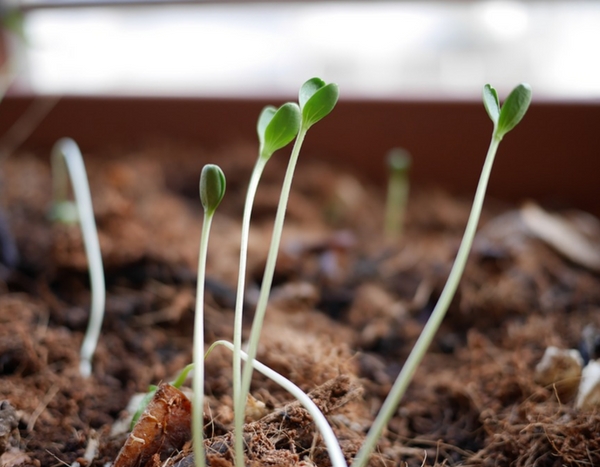
Sow the seeds of Madagascar Periwinkle indoors in warmth, for example, in a propagator, 10 to 12 weeks before the last frosts in your area (from January to February-March). Use plug trays or seed trays, and standard seed compost. Press them gently into the soil and cover lightly. Madagascar Periwinkle seeds require darkness to germinate. Cover them with newspaper or place them in a black plastic bag. Protect them from direct sun, but place them at a temperature of 24 to 27 °C. Germination will occur in 10 to 21 days. Then remove the newspaper or bag, and expose to direct light as soon as the first seeds begin to germinate. When the young plants have 3 to 4 true leaves (in addition to the cotyledons), transplant them into 5 to 7.5 cm pots. Transplant the Madagascar Periwinkle young plants into the garden 30 cm apart from each other, when the soil and air temperature are consistently above 18 °C.
Madagascar Periwinkles, endemic to the island of Madagascar, grow equally in humid mediums or in dry, almost arid zones, from sea level up to 1800 metres in altitude. In the wild, they also grow just as well in prairies, cultivated land, open forests, and along paths. This shows how undemanding and easy these plants are in sun, partial shade, or even shade in warm regions. Their only requirement is a well-drained soil, kept just moist during the flowering period. They are tender perennial plants that should be sheltered in winter, by storing them in a very bright room, not too heated, even though they tolerate a rather dry atmosphere well. You can lightly pinch the tips of the stems during growth to maintain a bushy habit, but not too much, as it could hinder flowering.
Sowing period
Intended location
Planting & care advice
-

-
-

-

-

-

-

-

This item has not been reviewed yet - be the first to leave a review about it.
Recently viewed products
Haven't found what you were looking for?
Hardiness is the lowest winter temperature a plant can endure without suffering serious damage or even dying. However, hardiness is affected by location (a sheltered area, such as a patio), protection (winter cover) and soil type (hardiness is improved by well-drained soil).

The flowering period indicated on our website applies to countries and regions located in USDA zone 8 (France, the United Kingdom, Ireland, the Netherlands, etc.)
It will vary according to where you live:- In zones 9 to 10 (Italy, Spain, Greece, etc.), flowering will occur about 2 to 4 weeks earlier.
- In zones 6 to 7 (Germany, Poland, Slovenia, and lower mountainous regions), flowering will be delayed by 2 to 3 weeks.
- In zone 5 (Central Europe, Scandinavia), blooming will be delayed by 3 to 5 weeks.
In temperate climates, pruning of spring-flowering shrubs (forsythia, spireas, etc.) should be done just after flowering.
Pruning of summer-flowering shrubs (Indian Lilac, Perovskia, etc.) can be done in winter or spring.
In cold regions as well as with frost-sensitive plants, avoid pruning too early when severe frosts may still occur.
The planting period indicated on our website applies to countries and regions located in USDA zone 8 (France, United Kingdom, Ireland, Netherlands).
It will vary according to where you live:
- In Mediterranean zones (Marseille, Madrid, Milan, etc.), autumn and winter are the best planting periods.
- In continental zones (Strasbourg, Munich, Vienna, etc.), delay planting by 2 to 3 weeks in spring and bring it forward by 2 to 4 weeks in autumn.
- In mountainous regions (the Alps, Pyrenees, Carpathians, etc.), it is best to plant in late spring (May-June) or late summer (August-September).
The harvesting period indicated on our website applies to countries and regions in USDA zone 8 (France, England, Ireland, the Netherlands).
In colder areas (Scandinavia, Poland, Austria...) fruit and vegetable harvests are likely to be delayed by 3-4 weeks.
In warmer areas (Italy, Spain, Greece, etc.), harvesting will probably take place earlier, depending on weather conditions.
The sowing periods indicated on our website apply to countries and regions within USDA Zone 8 (France, UK, Ireland, Netherlands).
In colder areas (Scandinavia, Poland, Austria...), delay any outdoor sowing by 3-4 weeks, or sow under glass.
In warmer climes (Italy, Spain, Greece, etc.), bring outdoor sowing forward by a few weeks.
Shipping country and language
Your country of residence may be:
Your country of residence is:
For a better user experience on our website, you can select:
Your shipping country:
-
 Austria
-
 Belgium
-
 Bosnia & Herzegovina
-
 Bulgaria
-
 Croatia
-
 Cyprus
-
 Czechia
-
 Denmark
-
 Estonia
-
 Finland
-
 France
-
 Germany
-
 Greece
-
 Hungary
-
 Iceland
-
 Ireland
-
 Italy
Italy
-
 Latvia
-
 Liechtenstein
-
 Lithuania
-
 Luxembourg
-
 Malta
Malta
-
 Netherlands
-
 Poland
-
 Portugal
-
 Romania
-
 Serbia
-
 Slovakia
-
 Slovenia
-
 Spain
Spain
-
 Sweden
-
 Switzerland
Language:
-
French
-
 English
-
Spanish
-
Italian
-
German
-
Portuguese
-
Dutch
-
Finnish
My Account
Hello
My wish lists
My cart
Log in / Register
Existing customer?
This form is protected by reCAPTCHA - the Google Privacy Policy and Terms of Service apply.
New customer?
Create an account to track your orders, access our customer service and, if you wish, make the most of our upcoming offers.