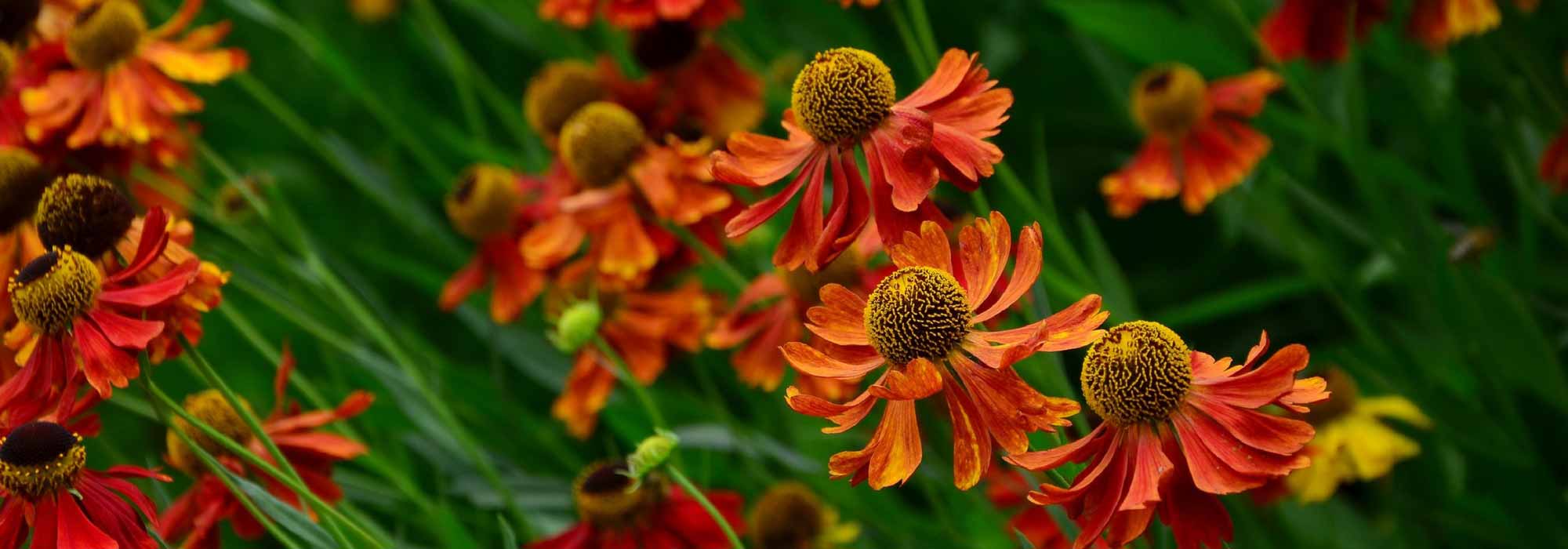
Helenium, sneezeweed: planting, cultivation and care
Contents
Helenium in a nutshell
- Helenium, radiant and sunlit, offers long, flamboyant flowering in summer and autumn
- Its distinctive flowers, resembling yellow, orange, red and copper daisies, bloom continuously from summer into autumn
- Easy to grow, it prefers sunny positions and fertile soils that remain fairly cool
- It is a robust, very hardy plant, virtually free from disease
- With Aster, it is the must-have perennial of autumn in country gardens, English-style mixed borders and in bouquets
A word from our expert
With its generously unconventional flowering resembling a daisy, Helenium or helenium is a summer and autumn perennial with large flowers, essential in meadow-style or slightly wild gardens.
Equipped with heads with a particularly developed, domed centre, the copper-red helenium ‘Moerheim Beauty’, ‘Ruby Tuesday’, the pink helenium ‘Tie Dye’, the autumnal canary-yellow helenium, helenium puberulum and helenium bigelovii or “Hélénie de Bigelove”, all warm the garden with a symphony of blazing hues, sometimes lasting into autumn. There is a Helenium for every gardener!
With its strong presence, it sets the garden alight and creates wild-looking, colour-rich scenes full of impact! Its sunny flowers are classic favourites for mixed borders and sunlit beds, bringing verve and whimsy.
It is a docile and hardy perennial, easy to grow in all gardens, in full sun, in cool, well-drained soil. Easy to combine and very versatile, it forms within just a few years beautiful clumps with exceptional floribundity in warm tones welcome at the end of summer and the start of autumn.
Discover in our Helenium collection the variety missing from your garden and bouquets!
Description and botany
Botanical data
- Latin name Helenium
- Family Asteraceae
- Common name Helenium, autumn daisy
- Flowering June to autumn
- Height 0.60 to 1.50 m
- Exposure Full sun
- Soil type All, well-drained
- Hardiness -15°C to -20°C depending on variety
Genus Helenium includes about 40 species of perennial, annual or biennial heleniums. They have produced more than 70 hybrids and cultivars of interest, variable in shape, height and colour such as ‘Moerheim Beauty’, the best-known helenium, and ‘Ruby Tuesday’.
Most hybrids derive from Helenium autumnale. Helenium hoopesii, Helenium puberulum and Helenium bigelovii (Bigelove helenium) are also frequently found in gardens.
This perennial has an upright, clump-forming habit, fairly compact, slightly untidy, easily reaching 1.50 m in height for 50 cm width in the most imposing varieties.
Though it shows rapid growth, helenium needs about two years to fill out properly, then increases year after year to form dense, very floriferous clumps, sometimes becoming invasive. Once established, it can live for many years.
From a basal rosette of leaves emerge in spring tall, graceful yet sturdy stems, more or less branched in their upper part. Exceptionally sturdy and wind-resistant, they generally do not require staking.
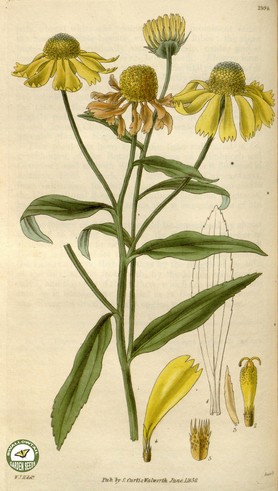
Helenium autumnale – botanical illustration
Helenium displays vigorous growth whose main interest lies in its abundance. Deciduous, foliage resembles that of daisies and Echinaceas. Stems are erect and bear narrow leaves 10 to 30 cm long, lanceolate in shape and slightly toothed. Smaller towards stem tips, they are arranged alternately. Sometimes very thick, they range from bright green to dark green or bluish.
Conquering and radiant, helenium flowers, a close relative of the sunflower, are decidedly sunlit in appearance. Warm tones of this flowering announce autumnal fires.
There are early heleniums that flower from May to July and late heleniums or “autumn heleniums” whose flowering extends from August until the onset of winter. From June to November, depending on variety, stems bear large, long-lasting capitula 2 to 10 cm in diameter reminiscent of daisies, Rudbeckias or Echinaceas.
All summer and until the frosts, a myriad of flowers opens relentlessly, sometimes grouped in corymbs of 3 to 8 at stem tips.
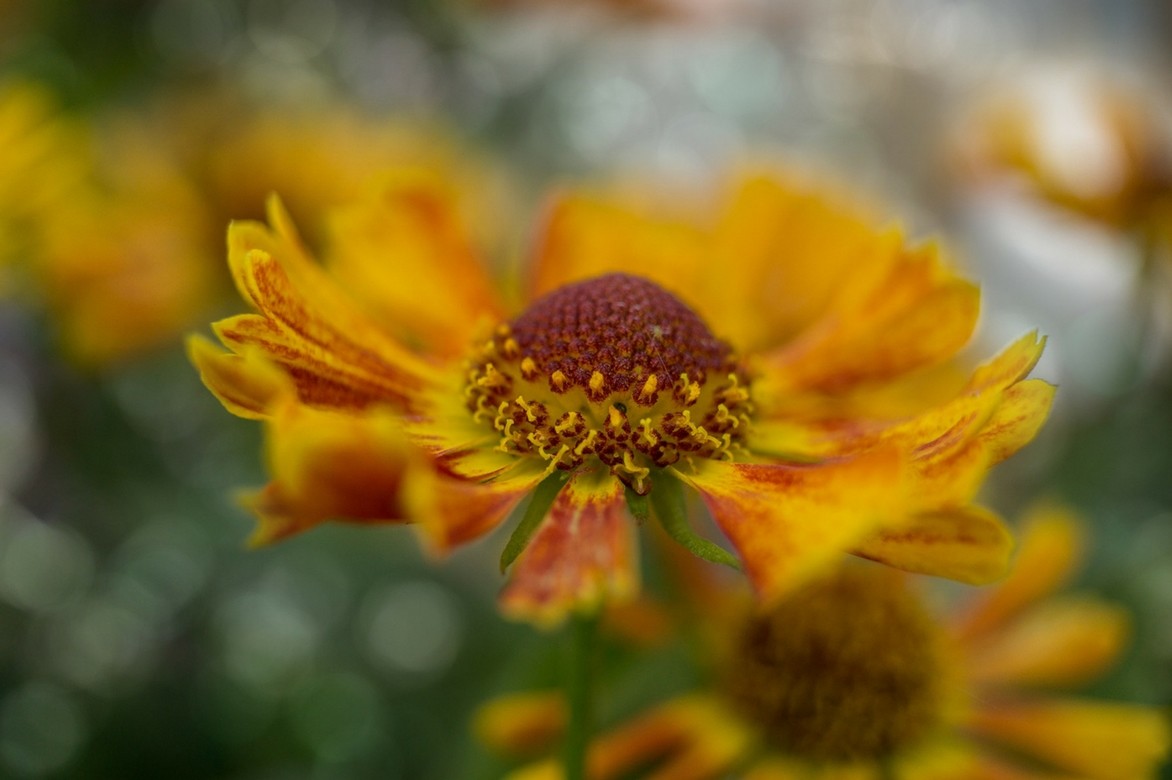
Flowers consist of a well-rounded hemispherical cone coloured chocolate brown, old gold or amber, which can be very prominent, sometimes forming a small rounded cushion that gradually becomes dotted with yellow stamens. The centre of this pompom is surrounded by a
These well-opened corollas display vibrant autumnal colours, particularly flamboyant, taking all warm shades from the brick red of Helenium ‘Moerheim Beauty’, to the ruby red of Helenium ‘Ruby Tuesday’, to the bright coppery orange of Helenium ‘Short’n ‘Sassy’ or the sunny yellow of Helenium ‘Kugelsonne’. Some multicoloured or bicoloured florets combine yellow, red, orange and copper.
This remarkably generous flowering, lasting 6 to 10 weeks, is colourful and melliferous, staging all summer long: flowers renew continuously until autumn in borders where bees and butterflies gather.
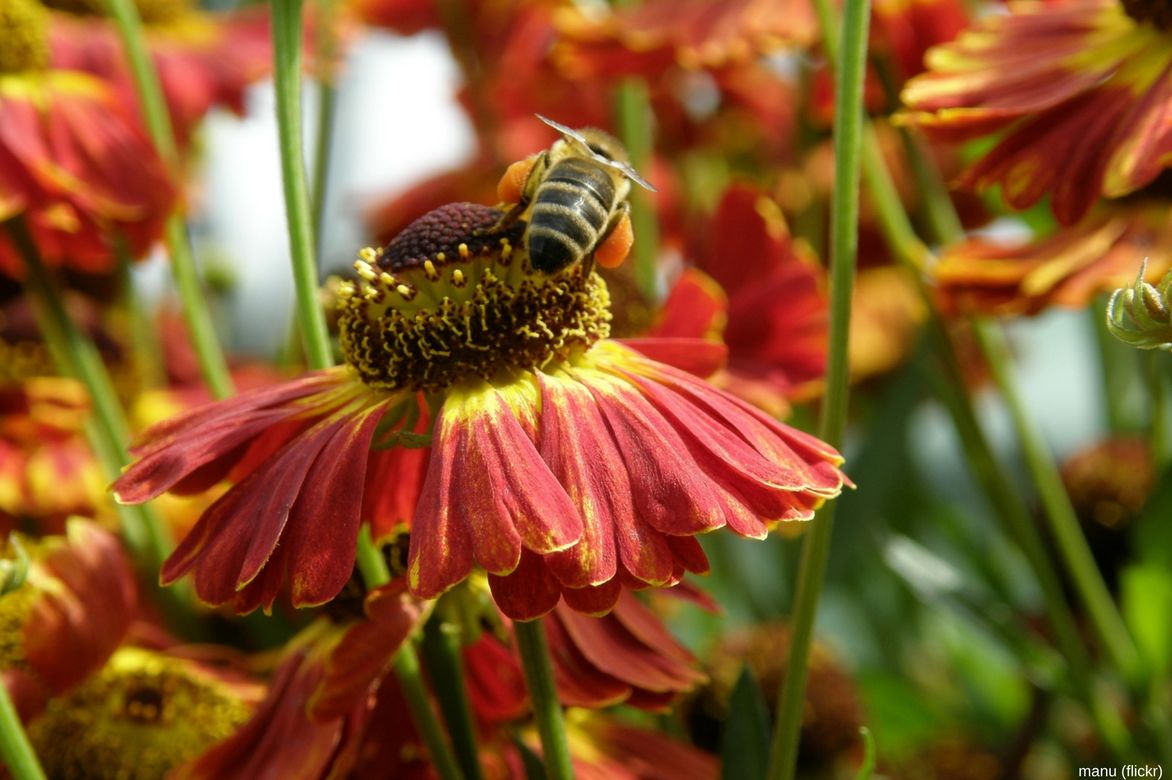
Helenium flowers are melliferous.
Fresh flowers have good vase life and make bright, fiery summer bouquets.
Very hardy, well beyond -15°C, helenium can be grown in all regions. Rarely troubled by disease, Helenium is easy to grow in sun, in any good garden soil that remains slightly moist, although it will be more exuberant in soil rich in organic matter. It is a robust, well-structured plant that tolerates occasional intense heat and drought.
It suits naturalistic plantings, enlivens banks and enchants English-style mixed borders. Some varieties are also suitable for growing in pots.

From left to right: Helenium autumnale ‘Mardis Gras’, Helenium ‘Zimbelstern’, Helenium ‘Baudirektor Linne’, Helenium ‘Double Trouble’, Helenium ‘Bandera’.
Main species and varieties
The complex, warm colours and heights (0.60 to 1.50 m) of Heleniums abound in a myriad of warm hues ranging from yellow through coppery orange to ruby red, and many cultivars are now available such as ‘Moerheim Beauty’, the most popular of all heleniums or ‘Ruby Thuesday’.
There are early heleniums that flower throughout summer and later types, known as ‘autumn daisies’, which begin to flower in summer and come into flower in autumn.
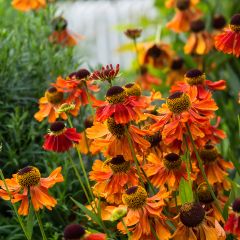
Helenium Moerheim Beauty
- Flowering time July to October
- Height at maturity 90 cm
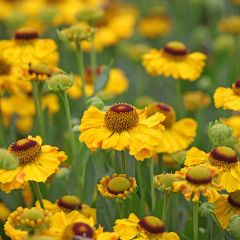
Helenium El Dorado
- Flowering time August to October
- Height at maturity 1 m
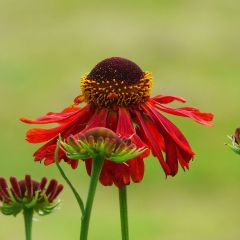
Helenium Ruby Tuesday
- Flowering time September to November
- Height at maturity 55 cm
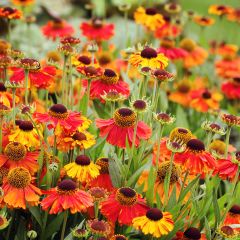
Helenium Sahins Early Flowerer
- Flowering time August to December
- Height at maturity 1 m
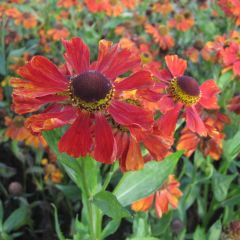
Helenium Baudirektor Linne
- Flowering time August to October
- Height at maturity 1,50 m
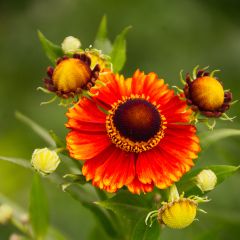
Helenium Dunkle Pracht
- Flowering time August to October
- Height at maturity 90 cm
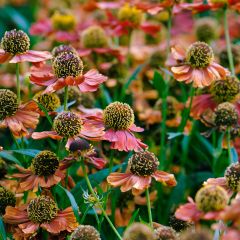
Helenium Rubinzwerg
- Flowering time August to November
- Height at maturity 80 cm
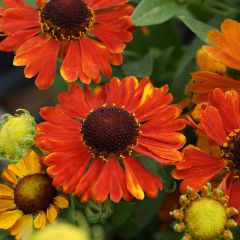
Helenium Mardi Gras
- Flowering time August to October
- Height at maturity 60 cm
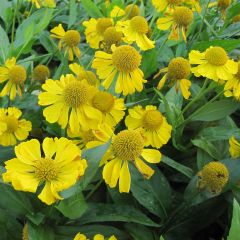
Helenium Tijuana Brass
- Flowering time August to October
- Height at maturity 1,50 m
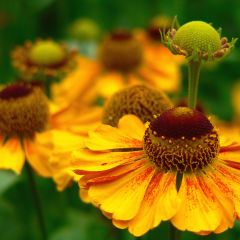
Helenium Zimbelstern
- Flowering time September to November
- Height at maturity 1,20 m
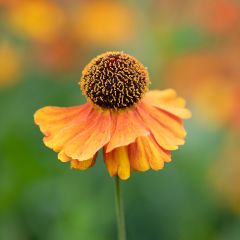
Helenium Waltraut
- Flowering time August to October
- Height at maturity 80 cm
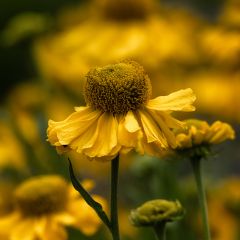
Helenium Pumilum Magnificum
- Flowering time July to September
- Height at maturity 80 cm
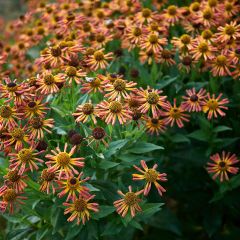
Helenium Loysder Wieck
- Flowering time August to October
- Height at maturity 90 cm
Discover other Helenium
View all →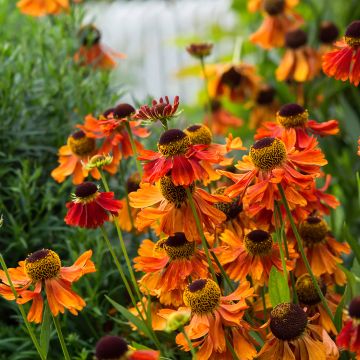
Available in 3 sizes
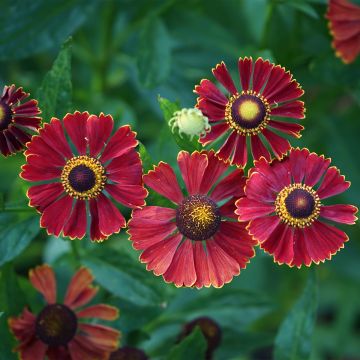
Available in 1 sizes
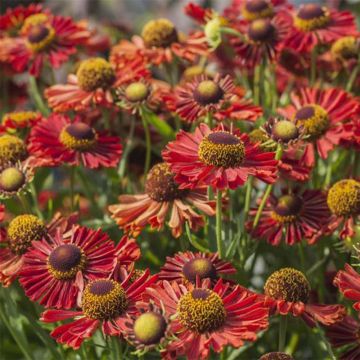
Available in 1 sizes
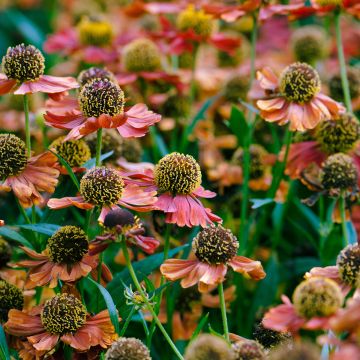
Available in 1 sizes
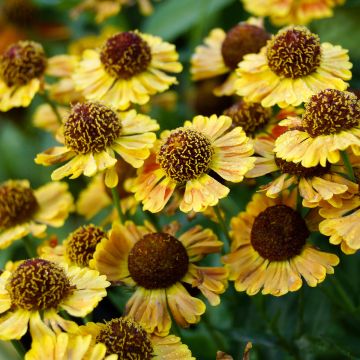
Available in 1 sizes
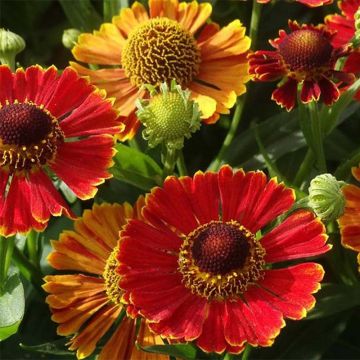
Available in 1 sizes
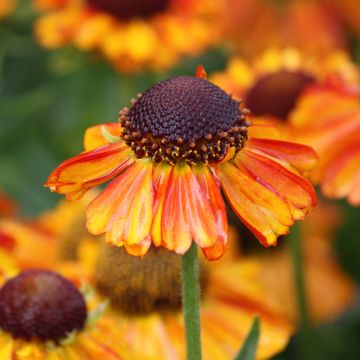
Available in 3 sizes
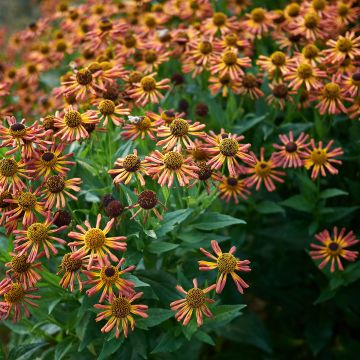
Available in 1 sizes
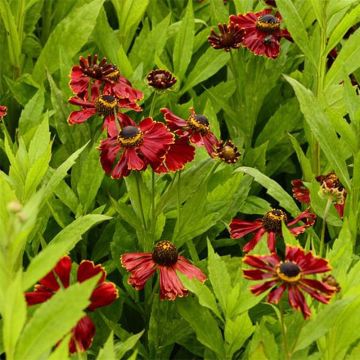
Available in 1 sizes
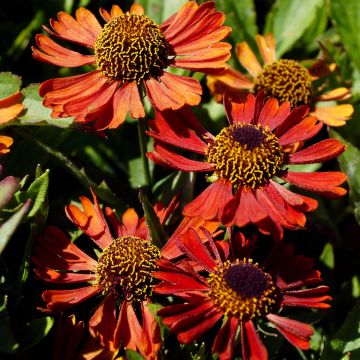
Available in 1 sizes
Planting
Where to plant Helenium
Very easy to grow, with good hardiness (below −15 °C), Helenium grows throughout France and adapts well to seaside conditions.
Once well-rooted in a place it likes, it thrives year after year, becoming ever more floriferous and can even become invasive, smothering neighbouring plants. It can self-seed. It struggles when planted too close to other plants. Choosing location carefully at planting is therefore essential: give it space!
Choose a sunny, sheltered spot, protected from wind that can bend stems of the taller specimens.
This handsome perennial grows in heavy, clayey and marshy soils and is sometimes used to drain overly wet ground naturally. While it accepts most soils provided they are not too dry, it will perform best in deep, fertile soil. Soil must be rich in organic matter to allow plant to flower well. In poor soil, it will tolerate conditions but will never be luxuriant.
It likes well-drained soil that remains cool during summer, especially in first years; it will tolerate occasional drought better with age. Winter flooding is fatal: it needs a free-draining, well-filtering soil.
Versatile, it fits into any planting scheme and can be used in borders or flower beds. The tallest Heleniums (‘Kugelsonne’) will form large, floriferous shrubs at back of borders. Smaller Heleniums will enliven borders. Some reasonably sized varieties are also suitable for container growing.
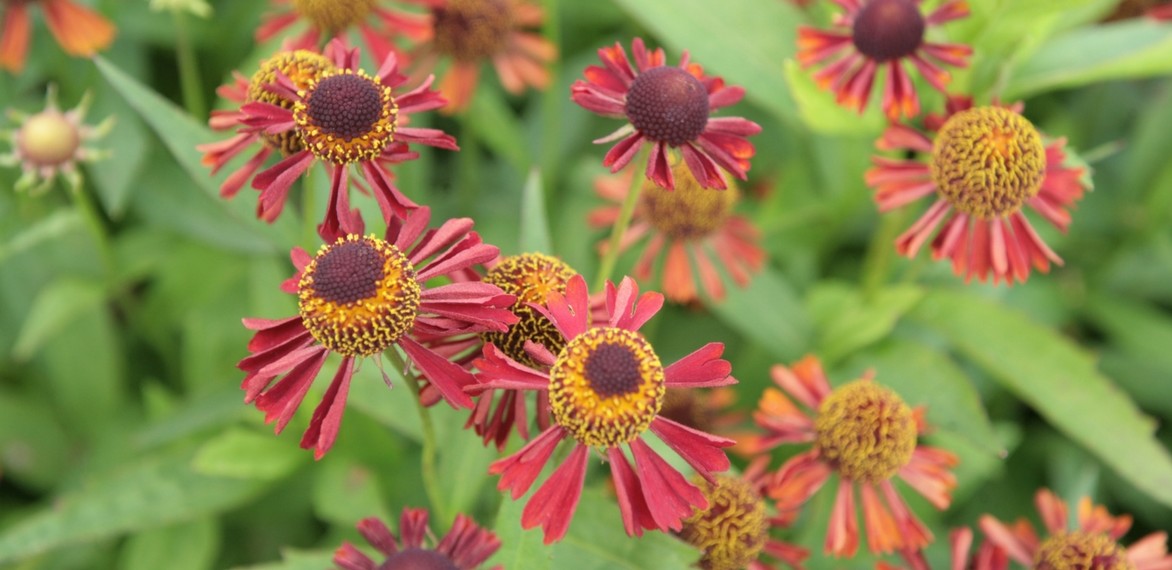
Flowers of Helenium ‘Ruby Thuesday’.
When to plant Helenium
Helenium is ideally planted in spring, in March–April in cold regions, or in autumn, in September–October elsewhere, outside periods of frost and drought.
How to plant Heleniums
In open ground
Allow 30–40 cm between plants and plant in groups: count 3–5 pots per m², given strong vigour of this perennial; this is enough to create a striking effect in a border.
Helenium is a hungry plant, so soil must be well improved: make a good addition of well-rotted compost.
- Work soil well, remove weed roots and stones
- Plant in a mix of potting compost with a generous dose of well-rotted compost
- Mulch in spring with a layer of pine bark to keep soil cool during summer; this ensures prolonged flowering
- Water regularly after planting
- In spring, protect young shoots from snails and slugs
More than in open ground, Helenium will need plenty of water. Choose a small-growing variety.
- Plant in a large container in a mix of potting compost and compost kept consistently moist
- Spread a good drainage layer (gravel or clay pebbles) at pot base for effective drainage
- Mulch and water very regularly, never allowing substrate to dry out
- Fertilise regularly with an organic fertiliser during flowering
Read also
Growing Helenium in a potCaring for Heleniums
Helenium is an undemanding perennial plant provided it does not lack light or water in summer. Once established it requires little care provided soil is free-draining, sufficiently fertile and remains cool during summer.
During first springs and summers, give generous watering. In periods of drought, water daily but avoid waterlogging.
Care for heleniums is simple:
- In spring, before growth starts for late-flowering varieties or in autumn after flowering, cut back dry stems to 15 cm above the ground using shears.
- Take the opportunity to add a shovelful or two of compost at its base: remember, they like fertile soil,
- Mulch in May to keep the base sufficiently cool in summer.
- Stake taller varieties if necessary.
- In summer, remove flowers as they fade to prolong flowering.
Every 3–4 years, in spring or autumn, divide large clumps if plant shows signs of decline to restore vigour.
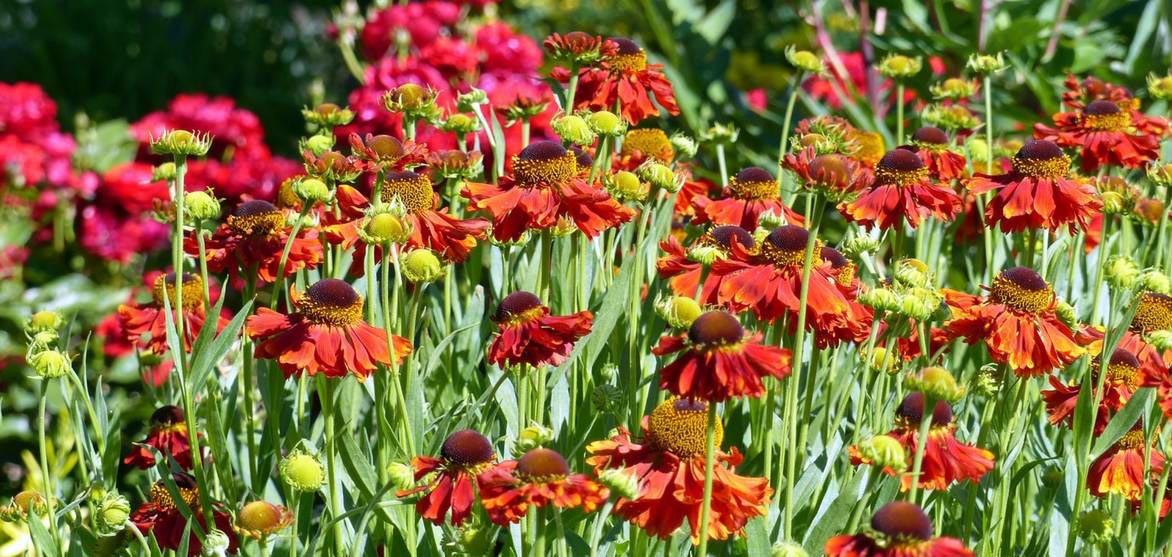
Pretty clump of Helenium ‘Moerheim Beauty’.
Potential diseases and pests
Seldom affected by disease, Helenium has only a few enemies: gastropods at the start of the growing season. In spring, protect young shoots from slugs and snails. Discover all our tips in our advice sheet : “Slugs: 7 effective natural ways to control them”
It can sometimes be prone to powdery mildew and foliar spots (rust), especially when planted in too much shade, in a somewhat confined position or in soil that is too heavy and damp. To prevent and combat powdery mildew, follow our advice : “Powdery mildew or white disease: prevention and treatment”
Multiplication
To multiply Helenium, division remains the least tedious method. Root cutting is possible but fairly delicate. Sowing produces a large number of plants; we recommend it only for botanical species whose flower colour remains true.
Division
Division of clumps should be carried out after 3 or 4 years, when plant is well established. Divide late-flowering heleniums that bloom in autumn in March, and early-flowering heleniums that bloom in summer in October.
- Using a sharp spade, cut a few divisions from the perimeter, each with at least one bud and a root
- Use the opportunity to rejuvenate the plant by keeping only the outer divisions and discarding the central clump
- Replant these divisions immediately in the garden in well-tilled, cool soil
How to sow Helenium?
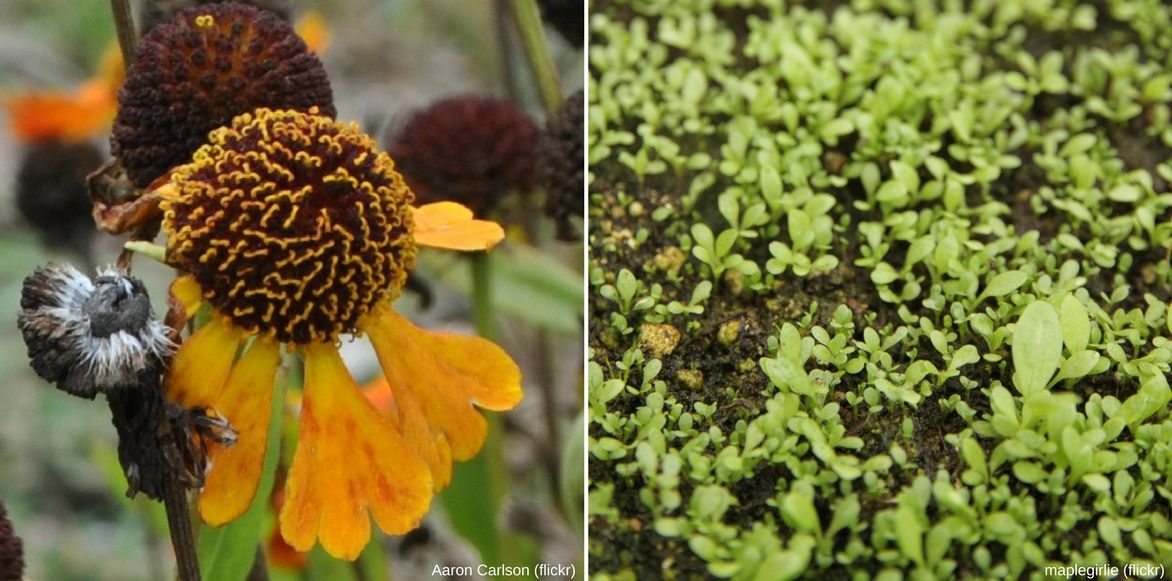
Helenium is a perennial and very easy to grow from seed. Sow outdoors in autumn or in May, or in a seed tray from January to March, using fully ripe seeds harvested in autumn or seeds bought in packets.
- Sow in a mix of potting compost and river sand, barely covering the seeds
- Place the tray under a heated frame at 15–20°C
- Water regularly but avoid waterlogging the growing medium
- Expect germination in 2–3 weeks
- When seedlings have two true leaves, prick out into individual pots
- Plant out in ground in autumn or the following spring when seedlings have grown stronger
- Plants will flower from the second year after sowing
→ Learn more about multiplying heleniums on our tutorial page!
Companion planting with Helenium in the garden
Helenium is particularly inspiring for creating a naturalistic garden, or a mixed border in the spirit of cottage gardens with other perennials with an upright habit that are easy to grow. Its original, sunlit flowers splash across beds and borders in summer and autumn, giving them a fiery luminosity.
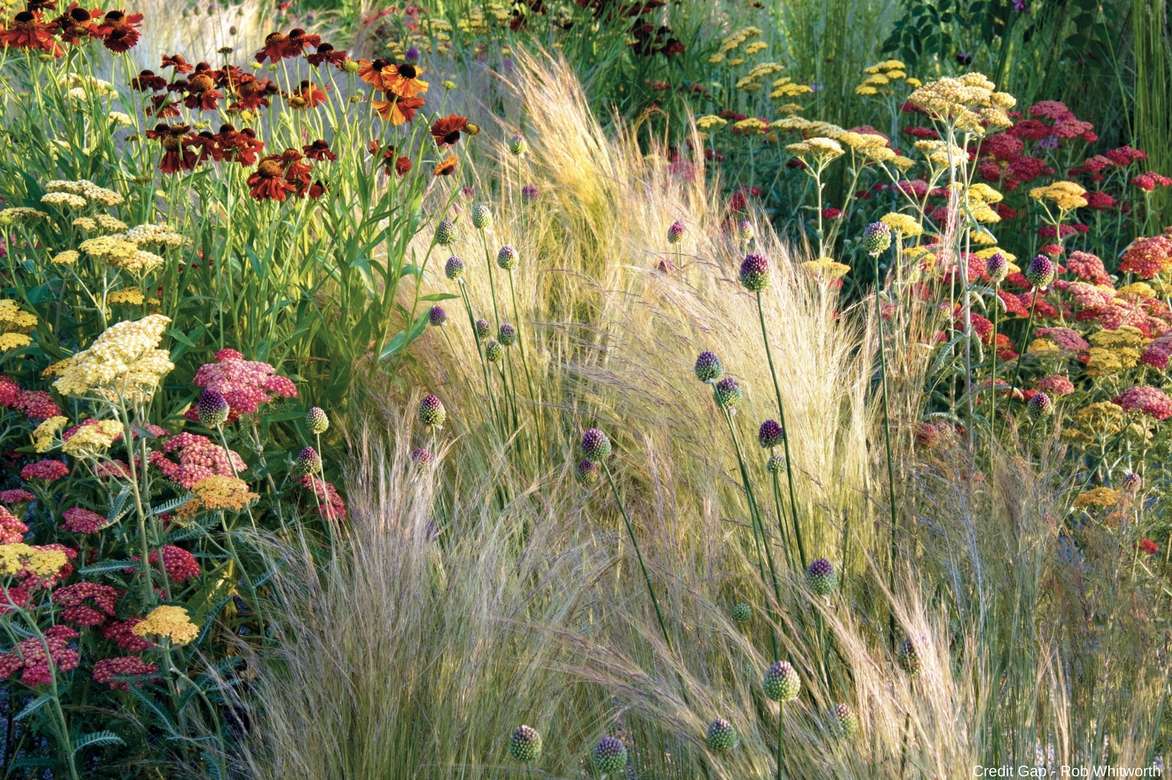
A superb natural scene: Achillea ‘Terracotta’, Achillea ‘The Beacon’, Achillea ‘Paprika’, Helenium ‘Moerheim Beauty’, Stipa tenuifolia, Allium sphaerocephalon.
It is essential for composing wild-looking scenes, lush and high in colour at the height of summer.
Planted in groups rather than singly, it gives structure to a bed with its strong colour presence, either by providing contrast or in a toned or monochrome version.
Its intense colours pair easily with complementary (crimson/blue) tones of asters and sages, creating a lively, bold effect.
For an explosive mix of tones, combine it with Echinaceas, Oriental poppies, Rudbeckia, daisies, Achilleas, Agastaches, Helianthus, Coreopsis, Echinops, perennial chrysanthemums or Phlox.
Its slightly untidy habit will provide, in an exuberant summer bed, a contrast of form with plants that have more defined outlines such as dahlias, kniphofias, cannas and crocosmias. Perennials with a light habit such as Gaura, Gypsophila, and grasses like Miscanthus will add softness and movement to offset Helenium’s somewhat stiff habit.
In a border, smaller heleniums work wonderfully alongside sages, daylilies, and heucheras, which will really set off their warm tones.
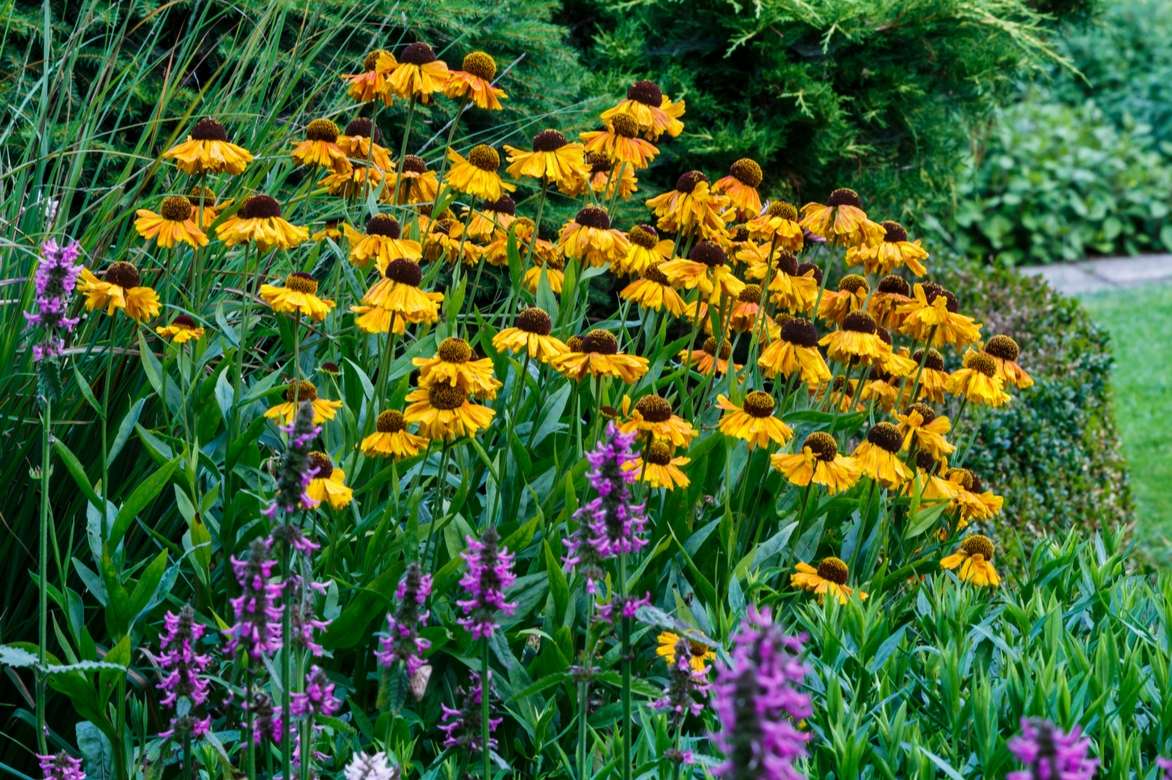
An idea for a planting combination: Helenium ‘Windley’, Miscanthus sinensis ‘Gracillimus’ and Stachys officinalis.
Grey or bluish foliage of artemisia or santolinas, hostas, and grasses (blue fescues) will be perfect to temper the heat.
It can also be paired with a euonymus or a Japanese maple with sumptuous autumn foliage.
→ Find other ideas for pairing with Heleniums in our advice sheet
Useful resources
- Discover our most beautiful Heleniums, some rare and exclusive in our Helenium collection
- Virgnie’s advice sheets: Heleniums, the most beautiful varieties, 6 ideas for pairing Heleniums
- Subscribe!
- Contents
This form is protected by reCAPTCHA - the Google Privacy Policy and Terms of Service apply.

































Comments