Main squash families
Squashes, members of the large Cucurbitaceae family, come in a multitude of varieties, each belonging to distinct botanical species. These vegetable crops, mostly native to the Americas, have spread worldwide thanks to their adaptability and nutritional value. Each species includes varieties with varied shapes, colours, flavours and culinary uses, offering unmatched richness in gardens and kitchens. Let’s discover these squashes.
The genus Cucurbita pepo, the most widely grown
This is the genus most commonly grown and eaten in Europe, and also the most diverse. It comprises several botanical species, including both summer and autumn–winter squashes. These varieties are often somewhat earlier, with a shorter growing cycle, but can be susceptible to powdery mildew and damp conditions. Among them:
- Courgettes : bushy or slightly trailing plant, fruits elongated or cylindrical, dark green, light green, striped, yellow, white or bicoloured. Harvest is very early, 45 to 60 days after sowing. Courgettes are harvested young for tender flesh. Very productive, courgettes are susceptible to powdery mildew
- Pattypan squashes : non‑trailing plant with dense foliage, squashes flattened like saucers or stars, discoid, with scalloped edges. Pattypans have skins white, yellow, orange or green, sometimes variegated depending on variety. Flesh is fine, delicate and melting, reminiscent of artichoke flavour. Pattypans should be harvested young to ensure tender flesh
- Pumpkins : vigorous trailing plant with solid stems. Fruits are spherical and ribbed, slightly flattened, attractive orange colour, sometimes streaked or marbled. Often used for Halloween, pumpkins have flesh less sweet than that of the winter squash. They keep moderately well.
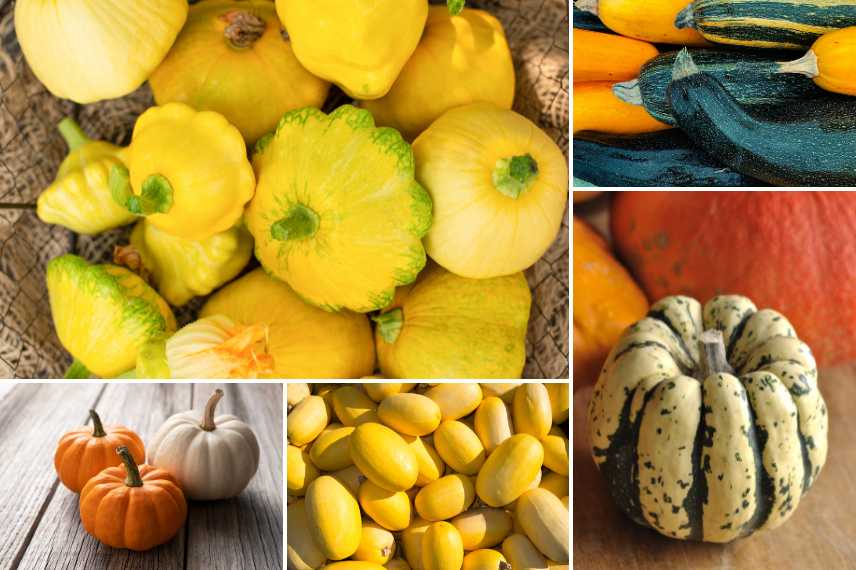
Squashes of the genus Cucurbita pepo: pattypan, courgette, patidou, spaghetti squash and pumpkin (clockwise)
- Spaghetti squashes : trailing plant with medium to long cycle. Fruits are oval to elongated, sometimes slightly barrel‑shaped, cream to bright yellow, sometimes greenish when young. Once cooked, flesh separates into spaghetti‑like strands. Flavour is relatively neutral
- Patidous : trailing or semi‑trailing plant of small stature. Fruits are round, flattened and ribbed, cream striped with green or orange. Flesh is sweet, with good hazelnut and chestnut flavour and a floury texture. Patidous keep well.
The genus Cucurbita maxima with generous shapes
This genus groups botanical species and varieties often with imposing shapes and generous flesh. These are classic winter squashes with thick skins that keep for many months. They show vigorous growth that requires plenty of space. Among them:
- Red kuri squashes (potimarrons) : trailing plant with dense foliage and thick peduncle. Fruits pear‑ or drop‑shaped, small, red‑orange, sometimes bronze. They have a chestnut flavour and dense, very sweet flesh. Red kuri are cooked with the skin on and keep excellently
- Winter squashes (potirons) : large trailing plant with ample foliage and a cylindrical, non‑hardened peduncle. Large fruits, spherical to flattened, often deeply ribbed, range from orange to bright red, sometimes salmon‑pink or blue‑grey depending on variety. Flesh is tender and sweet, perfect for soups. Winter squashes keep very well throughout winter
- Turban squashes (giraumons) : trailing plant with vigorous growth. Fruits are turban‑shaped, bonnet‑like, very ribbed. They are multicoloured (white, green, orange, red, often variegated). Flesh is sweet but slightly fibrous. Flavour is mildly sweet.
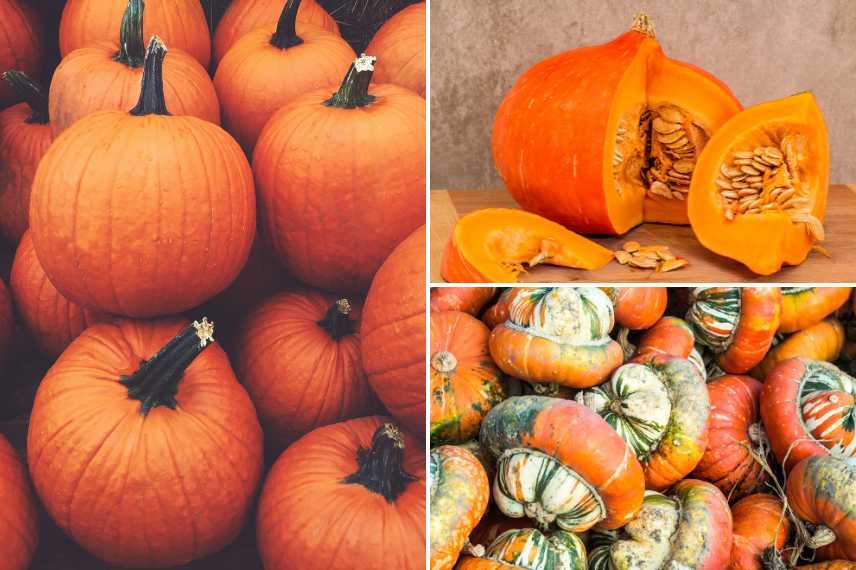
In the genus Cucurbita maxima: winter squash, red kuri and turban squash
The genus Cucurbita moschata with nutty flavour
This species includes musky squashes, butternuts and other varieties with sweet, fragrant flesh. They are renowned for good keeping quality and fine taste, much appreciated in cooking. Musky squashes are often more disease‑resistant, enjoy heat, but their cycle can be longer depending on variety.
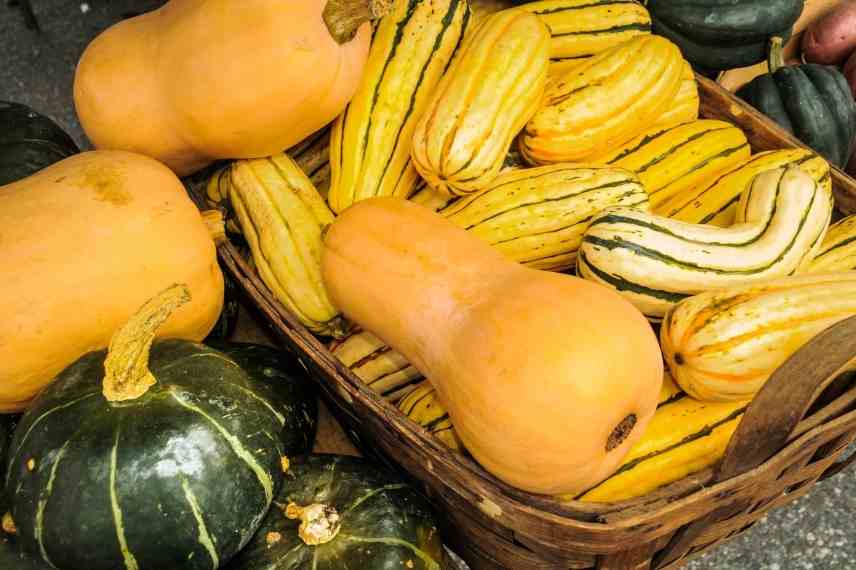
- Butternuts : very vigorous, trailing plant with angular, hard peduncle. Fruits are elongated, pear‑shaped with a swollen base, beige‑cream at maturity. Orange flesh is sweet, nutty, very little stringy. Butternuts keep up to 6 months
- Provençal musky squashes : trailing plant with abundant foliage and angular stem. Fruits are flattened, very ribbed, large, brown‑orange at maturity. Flesh is melting, sweet and full‑flavoured. It can be eaten raw grated or cooked. Excellent winter keeping
- Long Nice squashes : trailing, very productive plant with large leaves. Very elongated, club‑type fruits reaching 60 cm to 1 m, beige at maturity. Flesh is sweet and fine. The round Nice squash can be harvested young like courgettes or at maturity.
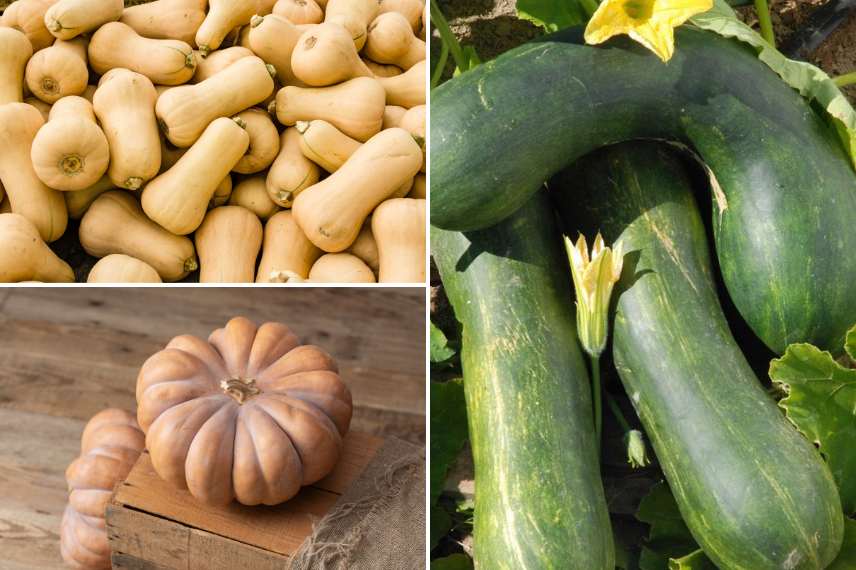
In the genus Cucurbita moschata (butternut, long Nice squash and Provençal musky squash)
The genus Cucurbita argyrosperma, little known in Europe
Cucurbita argyrosperma is little known in Europe but very widespread in Latin America. It is often used for decorative purposes or for edible seeds. Foliage is often marbled and narrow. Squashes take various shapes, pear‑shaped, oval and slightly ribbed. They are green striped or white, sometimes marbled. Flesh is pale and not very dense.
The species Lagenaria siceraria for decoration
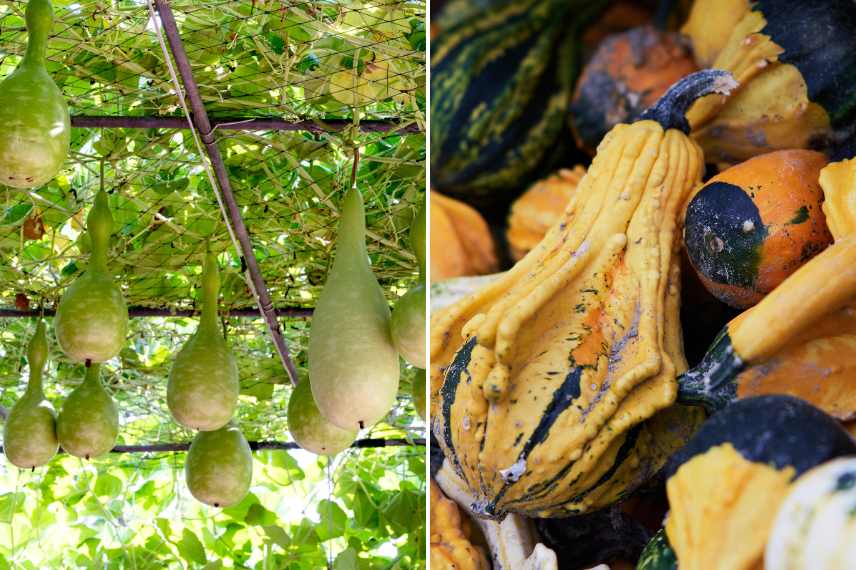
These are not classic edible squashes, but rather decorative squashes. This category includes gourds or calabashes used to make containers, craft objects or musical instruments once dried. Also included are ornamental gourds, even though they belong to the genus Cucurbita pepo. It is a highly polymorphic species.
These are climbing, very vigorous plants that produce fruits with very hard skins, not edible. These fruits, beige when dried, take the form of gourds, bottles or clubs. Interior is fibrous and dry.


































Comments