Preparing your succulent plants for winter: our tips and tricks
How to protect succulent plants and cacti in winter: complete guide for indoors and outdoors
Contents
Winter is slowly approaching, daytime temperatures are falling, and nights are cooling even more. Trees, shrubs and perennial plants are quietly preparing to face the cold. Some, more frost‑tender, need extra care. In particular the succulent plants, also known as succulent plants, and cacti. Often regarded as sturdy and self‑sufficient for part of the year, they remain sensitive to cold. Whether you have a collection on your windowsill, a well‑stocked balcony or a dry garden styled like a Mexican desert, good preparation is essential to avoid unpleasant surprises come spring. Even succulent plants grown indoors require some care.
Discover the steps to take so your succulent plants, whether grown indoors, in pots outdoors or planted in the open ground, stay warm through winter.
What are the specific needs of succulent plants in winter?
Cacti and succulent plants can live in arid conditions. That’s one reason they are favoured by both seasoned gardeners and beginners. Their graphic look and ease of care are also appreciated. However, contrary to what one might think, not all succulent plants are equipped to face winter without a helping hand.
A well-deserved winter break
As days shorten and temperatures fall, most succulent plants enter winter dormancy. Their growth slows, or even stops completely. As a result, they need much less water. Watering is sometimes stopped, and so is feeding.
Cacti often even need this cool winter rest in order to flower in spring.
Cold and damp, the two enemies of succulents
The real danger in winter is not just the cold. It is the moisture combined with the cold. Too much standing water in the pot or soil can rot roots, especially when temperatures are low. Similarly, a succulent, even a hardy one, exposed to winter storms can be seriously damaged. And the slightest frost can have devastating consequences.
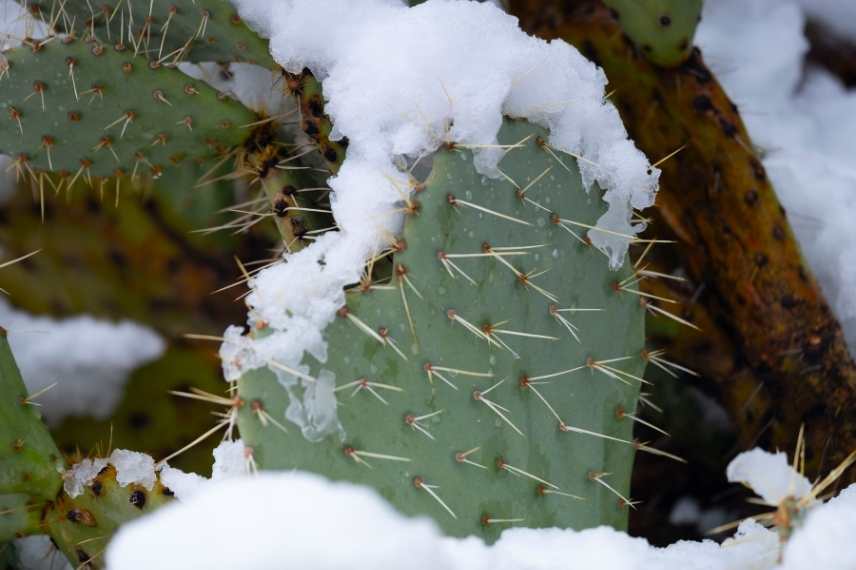
Some cacti and succulent plants tolerate cold better than others
Different hardiness depending on species
Not all succulents are equally frost-resistant:
Some, particularly hardy, can withstand very low temperatures, sometimes down to -20 °C. These are often species native to mountainous or semi-arid regions. They spend winter outdoors, provided a few simple precautions are taken:
- Sempervivum tectorum or roof houseleek: a rockery favourite, it gets through winter without issue even under snow
- Sedum spectabile or autumn stonecrop: hardy, colourful, perfect for borders
- Delosperma cooperi: forms a pretty flowering carpet in summer, and tolerates cold if soil is well drained
- Orostachys boehmeri: striking and sturdy, it withstands relatively low temperatures
- Lewisia cotyledon: a little more sensitive to moisture, but very hardy
- Opuntia compressa: pad cactus, hardy down to -20 °C
- Opuntia gregoriana: prickly pear, hardy to around -12 °C
- Cylindropuntia imbricata: ribbed cylindrical cactus, hardy to about -15 °C
Others, however, often more exotic, cannot tolerate temperatures below 5–10 °C. Left outside, they risk suffering or even perishing. Examples include:
- Echeveria elegans: its pretty blue-tinged rosettes are very sensitive to frost
- Crassula ovata or Jade plant: dislikes both cold and excess water
- Aloe vera: very popular, but bring indoors once nights turn cool.
Read also
7 hardy succulent plantsPreparing succulent plants indoors for winter
If your succulents live indoors year-round, or if you bring them in for winter, they need a little help for their winter dormancy. As weather conditions change considerably, you must adapt to their needs.
Clean and inspect succulents
Before placing succulents in the best conditions for wintering, some maintenance tasks are essential. Start by removing dead or damaged leaves, which can harbour disease. Then, inspect the foliage, especially the underside and around the collar. That is often where mealybugs, aphids, or red spider mites hide. If you notice any suspicious signs, isolate plant and apply natural treatments.
Adjust watering
The most common mistake with succulents in winter is to keep watering as in summer. In winter, succulents use much less water, or none at all for some cacti. Therefore, it is essential to:
- Reduce watering frequency to once a month, or less if ambient humidity is slightly high
- Always check that potting mix is dry right through before adding water
- Ensure pot has a drainage hole
- Never leave standing water in saucer or cachepot. This applies in summer, but even more in winter, because excess moisture is succulents’ worst enemy. For example, a jade plant (Crassula ovata), grown in a pot, can literally rot at the roots if water remains in the saucer.
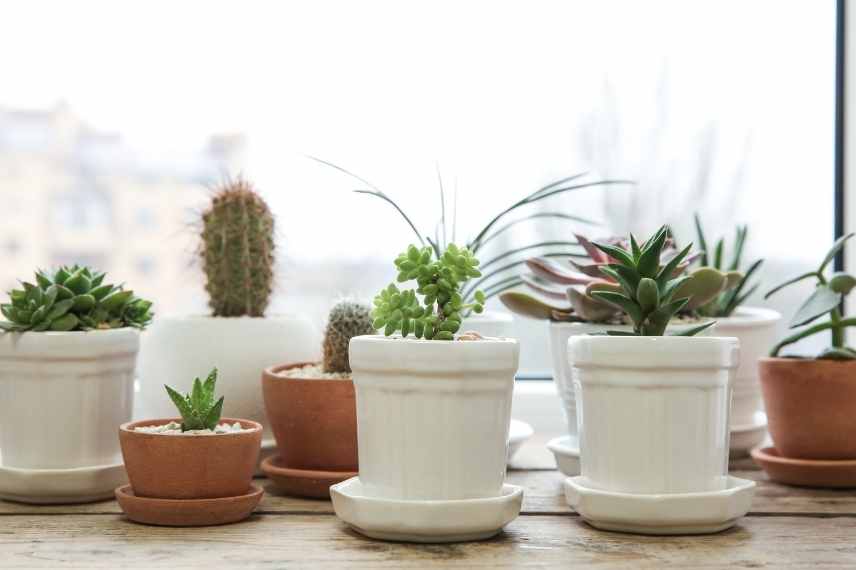
In winter, place succulents near a source of light
Optimise light and temperature
Indoors in winter is often warmer and less bright. To prevent succulents stretching, you should:
- Place near a south- or west-facing window, or in a conservatory filled with winter light
- If necessary, in the darkest homes, add a grow light to give a little extra light
- Keep well away from any heat source such as radiators, wood-burning stoves, open fires…
- Give an ideal temperature between 5 and 10 °C, for example in an unheated conservatory.
How to protect succulent plants grown in pots outdoors?
For succulent plants grown in pots in the garden, on the balcony or the terrace, winter can be a delicate period. Even the most robust and hardy species can suffer from frost combined with stagnant moisture. It is therefore essential to take a few precautions.
Bring the least hardy succulents indoors
Less hardy succulent plants and cacti such as Kalanchoe tomentosa, Senecio ficoides, or Aeonium tolerate little or no frost. They should therefore be brought inside or carefully protected in regions with mild winters.
Others, such as Sempervivums, Sedums or Delospermas are generally hardy enough to remain outdoors.
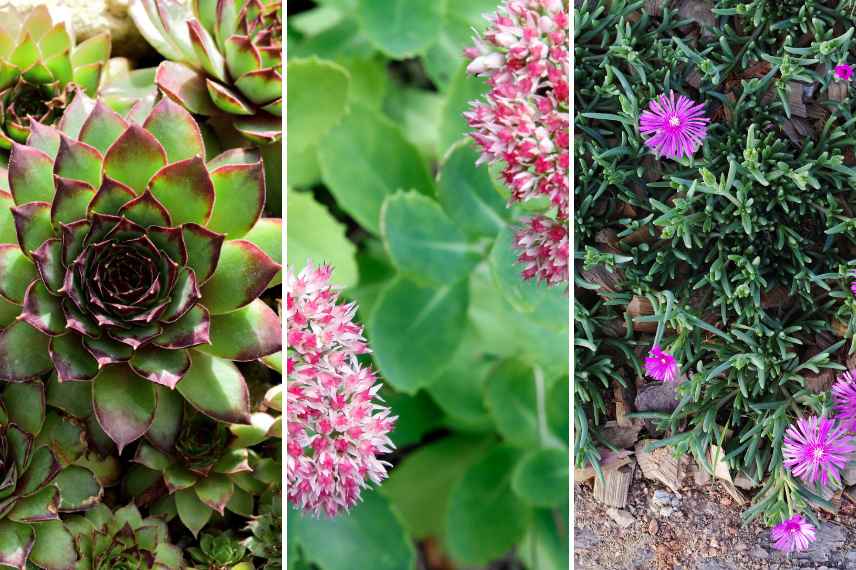
Sempervivums, Sedums and Delospermas grown in pots tolerate cold very well
Choose a sheltered location
In winter it is essential to protect succulents from cold, but above all from moisture. That is why you must move them to a spot sheltered from the elements (rain, snow) and cold winds. You can place pots where they are protected from direct rain, against a south- or west-facing wall. If you do not have such a spot, it is also possible to put them under a shelter made of wood.
Also consider raising pots to insulate them from cold coming from the ground. Pots can be placed on bricks, wooden boards, polystyrene sheets…
Finally, it may be important to remove any saucers or cache-pots that could retain rainwater. Even in tiny amounts, this standing water can cause root rot.
Provide appropriate protection
Sometimes, for succulents at the edge of their hardiness or in regions with mild winters where sudden frosts can be fatal, protection is necessary:
- A mineral mulch such as a layer of gravel or pumice around the base of plants limits splashing and keeps collars dry
- Fleece is ideal for very cold nights. Put it on in the evening and remove it when temperatures rise
- A mini greenhouse or a cloche is perfect for small, sensitive pots.
How to help succulents planted in open ground survive winter?
Planting succulents and cacti directly in open ground is a real visual treat. Often reserved for gardens in the south of the country… But winter can be a harsh test, as no region is immune to frost.
Preparing the ground
Before winter, succulent plants and cacti need perfectly drained ground, as they hate stagnant moisture, in pots as well as in open ground :
- Garden soil should be mixed with coarse sand, gravel or pumice for maximum drainage
- Plants can be placed on a slightly raised mound, bank or rockery
- Avoid planting in heavy, clay soils.
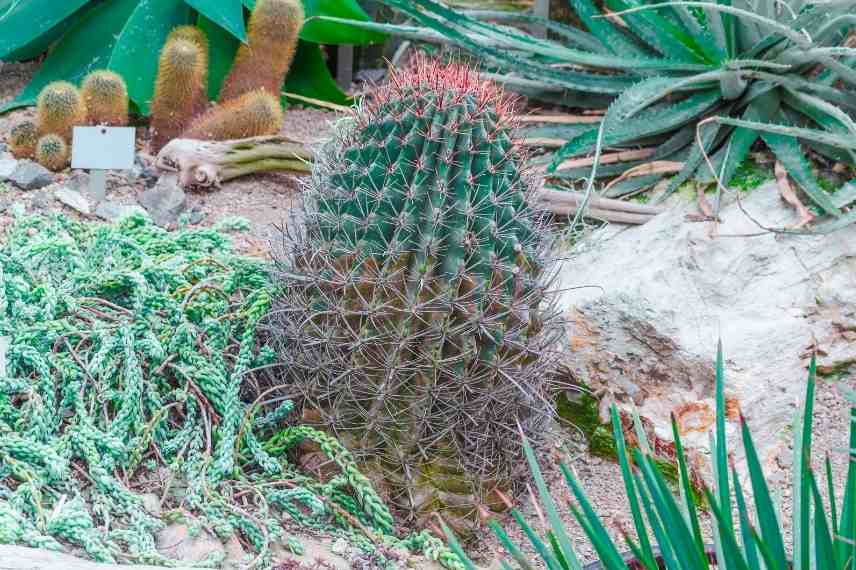
In winter, succulents grown in open ground are never safe from frost
Protect if necessary
Even hardy plants can suffer if winter is cold and wet.
- Install a transparent cloche or mini greenhouse above cacti sensitive to prolonged rain
- Use fleece to mitigate severe frosts
- No watering in winter: let them enjoy their dormancy.
- Subscribe!
- Contents
This form is protected by reCAPTCHA - the Google Privacy Policy and Terms of Service apply.

































Comments