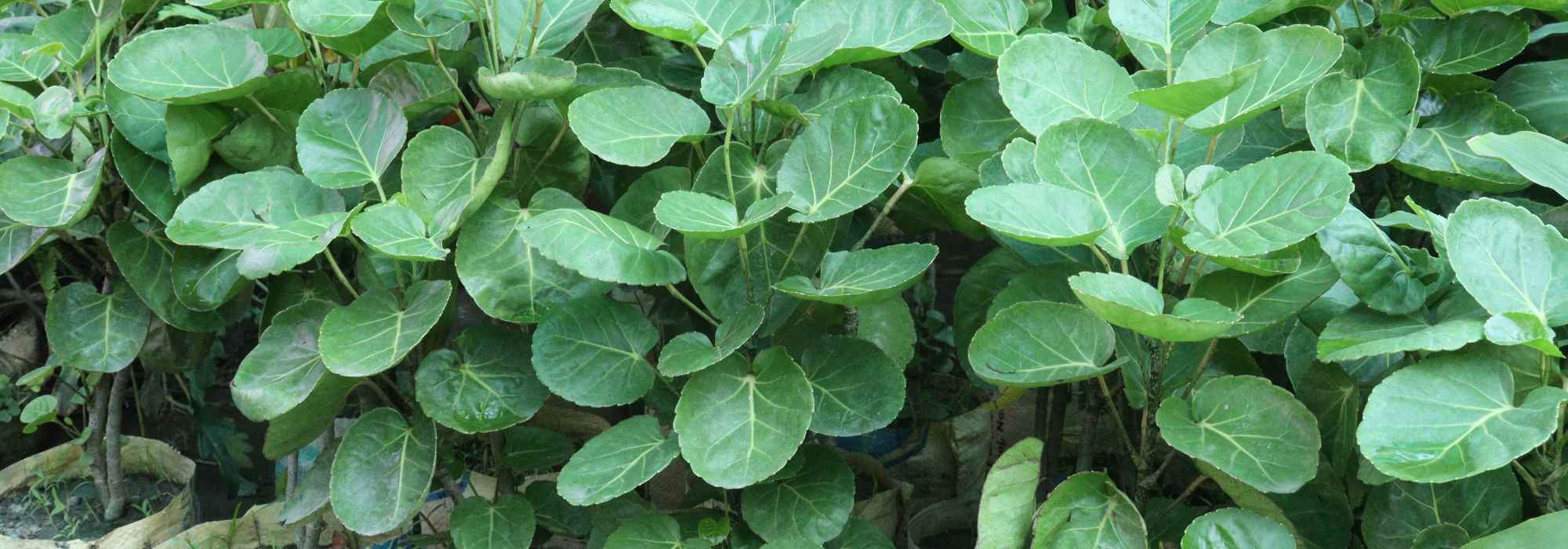
Polyscias: how to grow it successfully indoors?
Contents
All about Polyscias
- Elegant indoor plant with highly decorative, graphic foliage.
- With its shrubby habit, it is ideal for structuring a living room or an office.
- It prefers warmth, stable conditions and good ambient humidity.
- Thrives in bright light without direct sunlight.
- Sensitive to overwatering and draughts, it requires consistent growing conditions.
- Somewhat demanding, it requires moderate watering.
A word from our expert
Polyscias is a tropical houseplant of the family Araliaceae, which charms with its decorative foliage and elegant habit.
Most common species are Polyscias balfouriana, Polyscias filicifolia et Polyscias fruticosa or “Ming aralia”. All prefer bright light without direct sun, a stable temperature and moderate to high humidity.
Caring for Polyscias requires regular attention, particularly regarding watering and ambient humidity, but it remains straightforward once its needs are well understood.
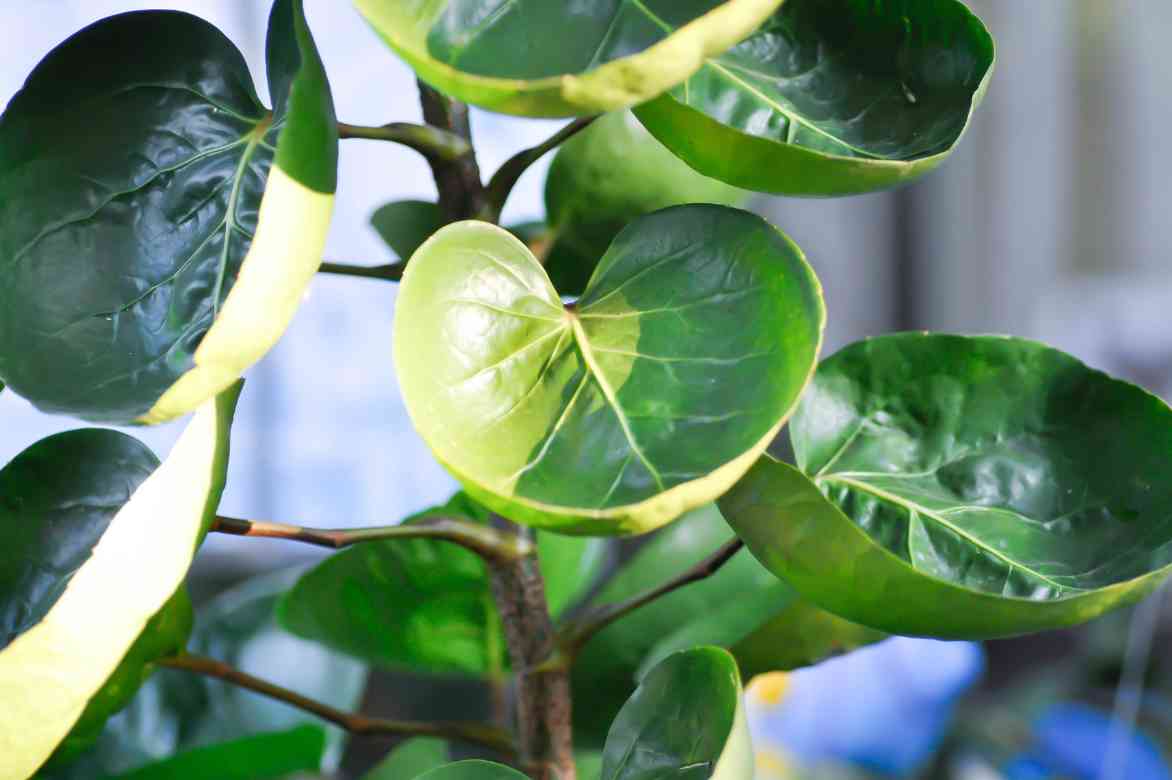
Polyscias fruticosa L. Harms
Indoor Polyscias: our tips promesse de fleurs
| Needs | Recommendation |
| Exposure | Bright to moderate light, no direct sunlight |
| Watering | Allow top 5 cm of substrate to dry between waterings; moderate, less in winter |
| Humidity | Medium to high (60–80%) |
| Temperature | 18–29 °C, minimum 15 °C |
| Substrate | Potting compost, turf, sand (well-draining) |
| Repotting | Every 2 to 3 years in spring |
Description of Polyscias
Botanical data
- Latin name Polyscias
- Family Arecaceae
- Common name False aralia, indoor aralia
- Flowering rare indoors
- Height Between 1 and 2 m
- Exposure Bright indirect light
- Soil type Light potting mix, well-draining potting compost
- Hardiness frost-tender
Polyscias belongs to the family Arecaceae, which also includes well-known ornamental plants such as Schefflera, prized for decorative foliage and ability to adapt to indoor conditions. This cousin of garden Aralias is commonly called “false aralia”. Genus name Polyscias comes from ancient Greek poly meaning “many” and skias referring to “shade”, a nod to its dense foliage forming a kind of vegetative canopy. It is also known as indoor aralia due to botanical affinity and elegant appearance.
Native to tropical regions of Asia, Africa and Pacific islands, Polyscias naturally develops in warm, humid understories, where it benefits from dappled light and consistently moist atmosphere. In native habitat it grows on rich, well-drained soils, often sheltered from wind and direct sun.
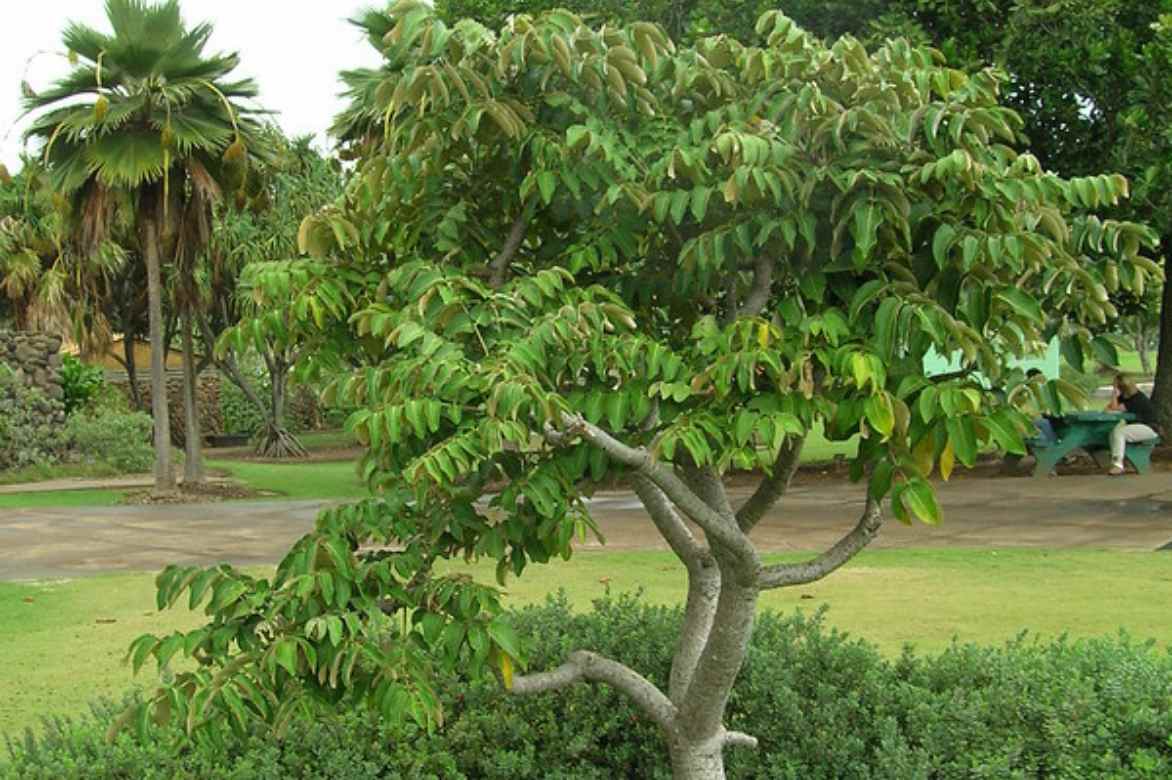
Polyscias racemosa at Maui Botanic Garden in Hawaii (© Forest and Kim Starr, Flickr)
In our climates, Polyscias is grown exclusively as a houseplant, as it cannot tolerate low temperatures. It is a frost-tender plant with hardiness around 10–12 °C. Sensitivity to cold, together with need for thermal stability and ambient humidity, makes it perfectly suited to indoor environments.
Genus Polyscias includes more than a hundred species, although only a small selection is cultivated for indoor ornamental value. Notable examples include Polyscias balfouriana, much appreciated for rounded leaves, with cultivar ‘Butterfly’ offering a uniquely lobed, blistered foliage; Polyscias fruticosa (or “Ming false-aralia”), with airy habit; Polyscias filicifolia with finely divided leaves reminiscent of fern fronds; and Polyscias sambucifolia, more hardy and sometimes grown outdoors in regions with mild winters.
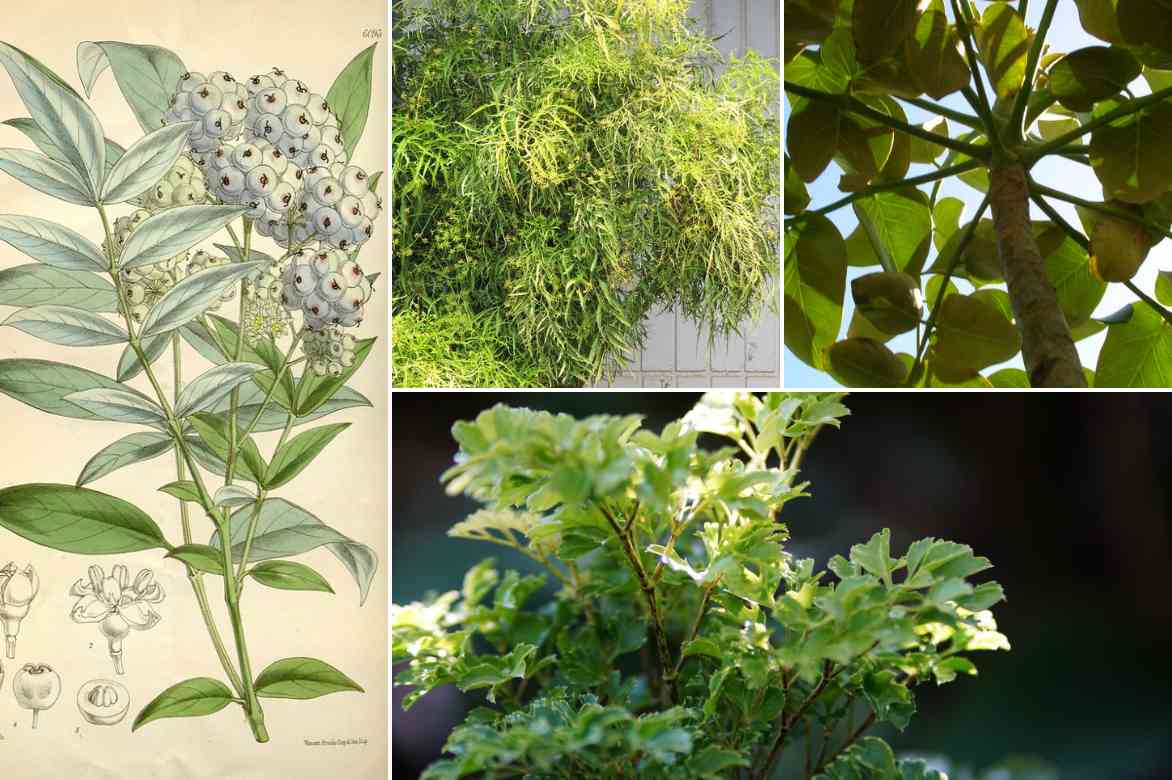
Polyscias sambucifolia (botanical plate), Polyscias filicifolia and racemosa (© Forest and Kim Starr, Flickr) and bottom right Polyscias fruticosa
Polyscias appears as an evergreen shrub with erect habit, sometimes slightly spreading with age, adopting an elegant, branched silhouette. Indoors, it typically reaches between 1 and 2 metres in height, with moderate growth. Root system is fasciculate, shallow but dense, made up of fine, fibrous roots particularly sensitive to excess moisture.
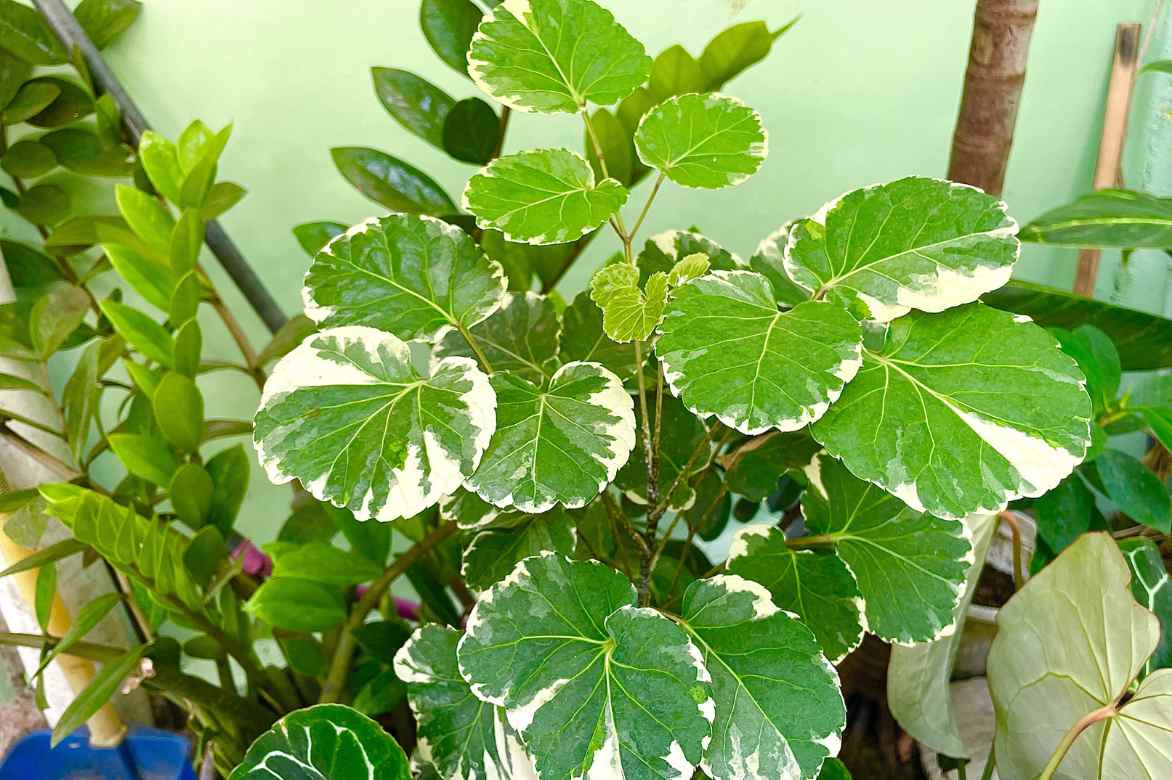
Polyscias balfouriana
Trunk, often thin in young plants, lignifies over time, turning pale brown to greyish and developing slightly fissured bark. Branches, flexible when juvenile, become progressively stiffer and branch profusely, contributing to formation of a dense crown. Branching is irregular, giving plant a natural, slightly graphic aspect.
Foliage is Polyscias’s main ornamental feature. Leaves are alternate, borne on long petioles, and show wide variation in shape depending on species and cultivars. They can be simple, rounded or oval, or finely divided into narrow segments reminiscent of a fern. Texture is generally leathery to slightly fleshy, with a smooth, glossy surface. Colour ranges from bright green to dark green, sometimes variegated with cream or white in certain horticultural varieties. Veins are discreet but well defined, structuring leaf without diminishing decorative effect.
Flowering remains exceptional indoors. In native habitat it appears as small inflorescences in umbels, typical of the Araliaceae. Flowers are very small, usually whitish to greenish, inconspicuous and of little ornamental interest. They sometimes give off a light scent, attracting insect pollinators.
Fruiting, even rarer in cultivation, results in formation of small round drupes that turn dark at maturity. These fruits contain fine seeds, but their appearance indoors remains exceptional.
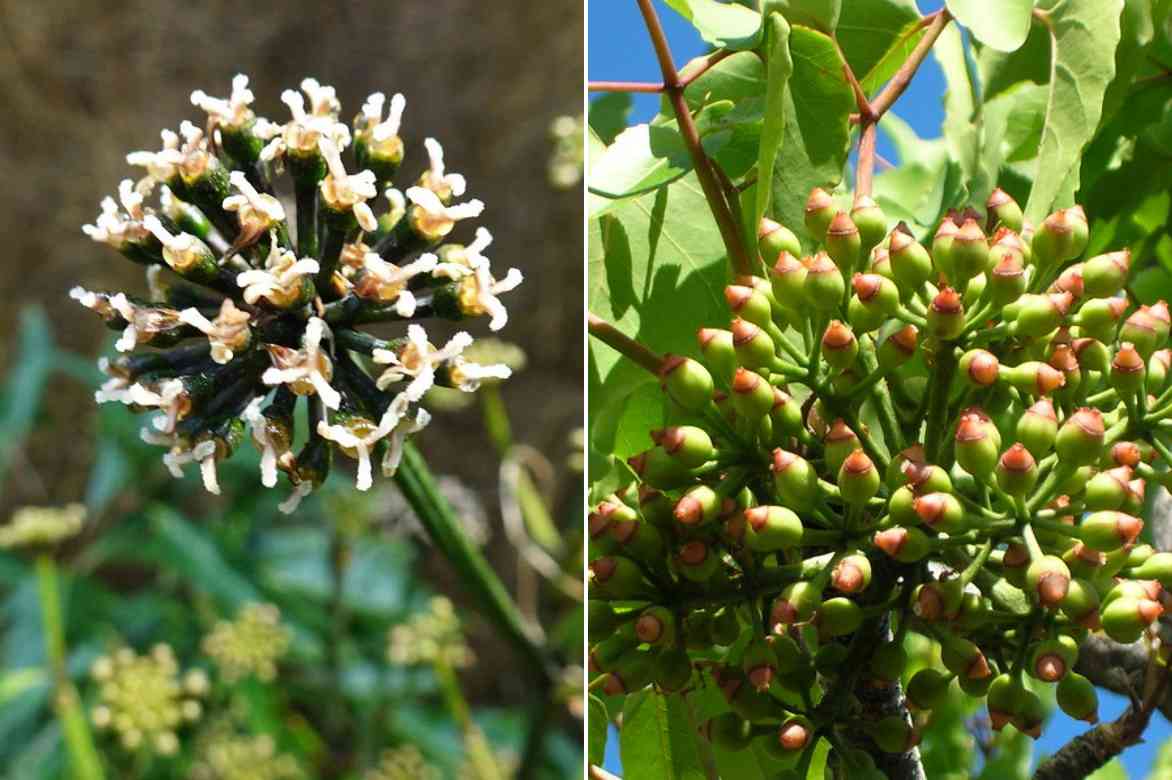
Flowering of a Polyscias fruticosa (© HQ, Flickr) and fruiting of Polyscias sandwicensis (© Forest and Kim Starr, Flickr)
Some species are also reputed to help improve ambient air quality, while bringing refined plant presence suited to contemporary interiors.
Varieties of Polyscias
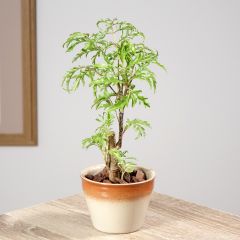
Polyscias filicifolia - Fern leaf aralia
- Height at maturity 1,50 m
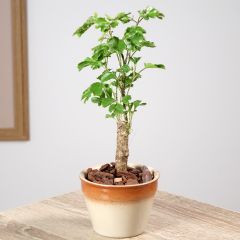
Polyscias balfouriana Butterfly
- Height at maturity 1,20 m
Planting Polyscias in a pot
When to pot it?
Planting Polyscias can be carried out year-round indoors, avoiding periods when temperature falls below 15 °C, the critical threshold for this tropical plant sensitive to cold.
Which pot to choose for planting Polyscias?
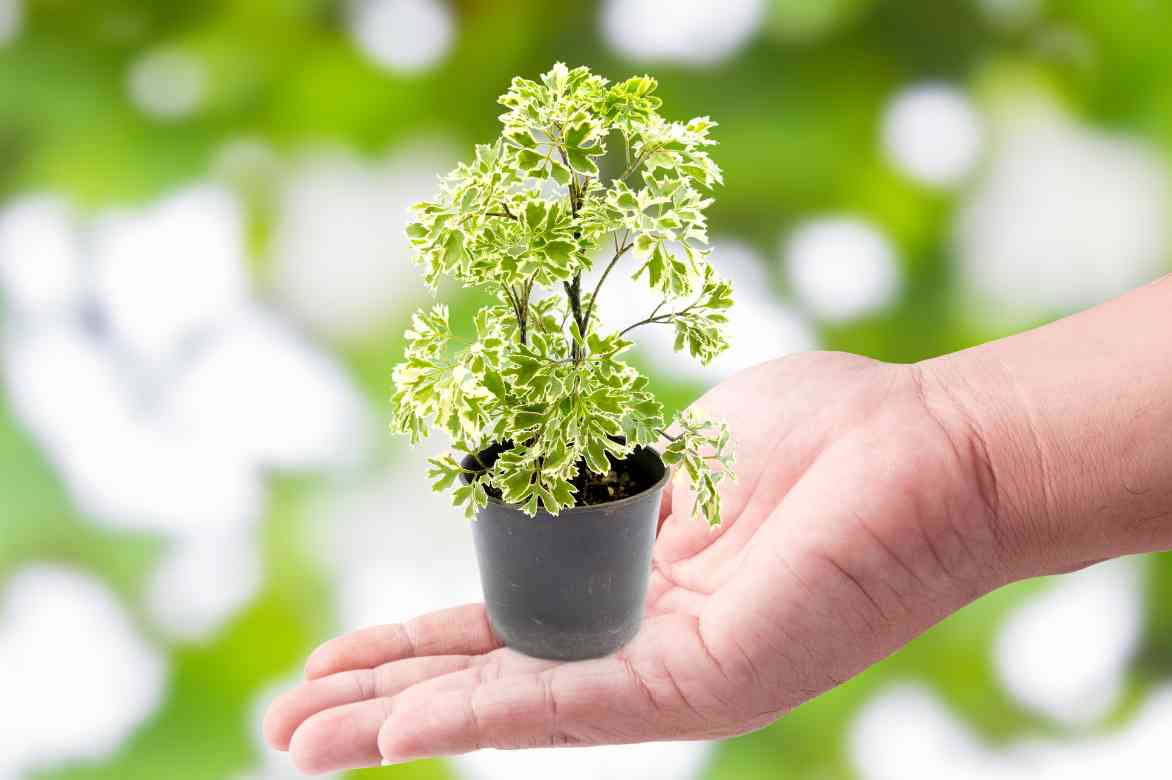
Mini-plants or plug plants we offer, easy to handle, are perfectly suited to container growing. Choose a container 7–10 cm in diameter with drainage holes, not too large or deep, to encourage good rooting and avoid excess moisture. For more developed specimens, gradual repotting into a slightly larger pot is recommended.
Where and how to position it?
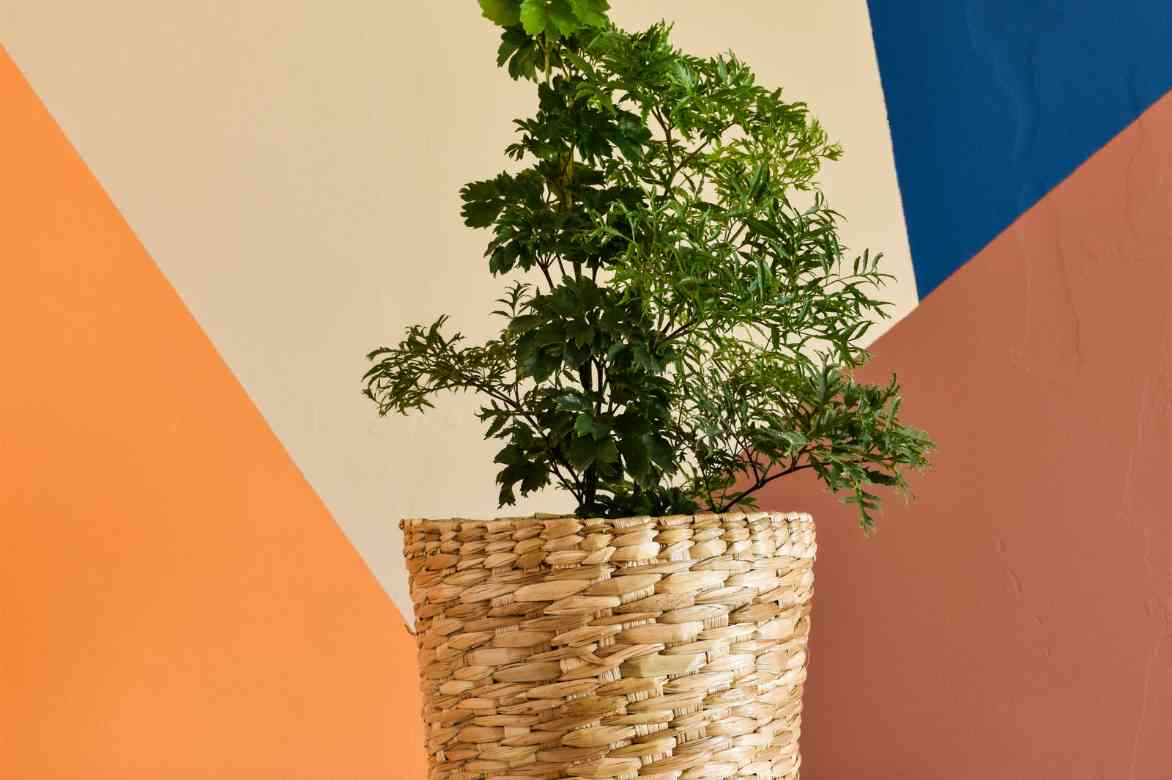
Indoors, Polyscias requires bright light without direct sun exposure, high ambient humidity and temperatures ideally between 18 and 24 °C, although it tolerates conditions up to 29 °C in a stable atmosphere. Its cold tolerance is limited, with a minimum of 15 °C (warm greenhouse conditions) and optimal growth above 20 °C, close to a tropical environment.
Recommended growing medium
Polyscias prefers a growing medium that is light, draining and slightly moisture-retentive. A balanced mix helps limit excess water while maintaining a favourable root environment. Here is a suitable composition:
60% of potting compost for houseplants
20% peat to retain slight moisture
20% perlite or horticultural sand for drainage
How to plant our Polyscias mini-plants? Our Promesse de fleurs expert advice!
- Prepare a suitable container with drainage holes.
- Place a layer of clay balls or gravel in the bottom of the pot.
- Add a first layer of growing medium.
- Gently position the plug plant without damaging the roots.
- Top up with growing medium, keeping the plant upright without over-compacting.
- Water lightly after planting to moisten the medium without waterlogging it.
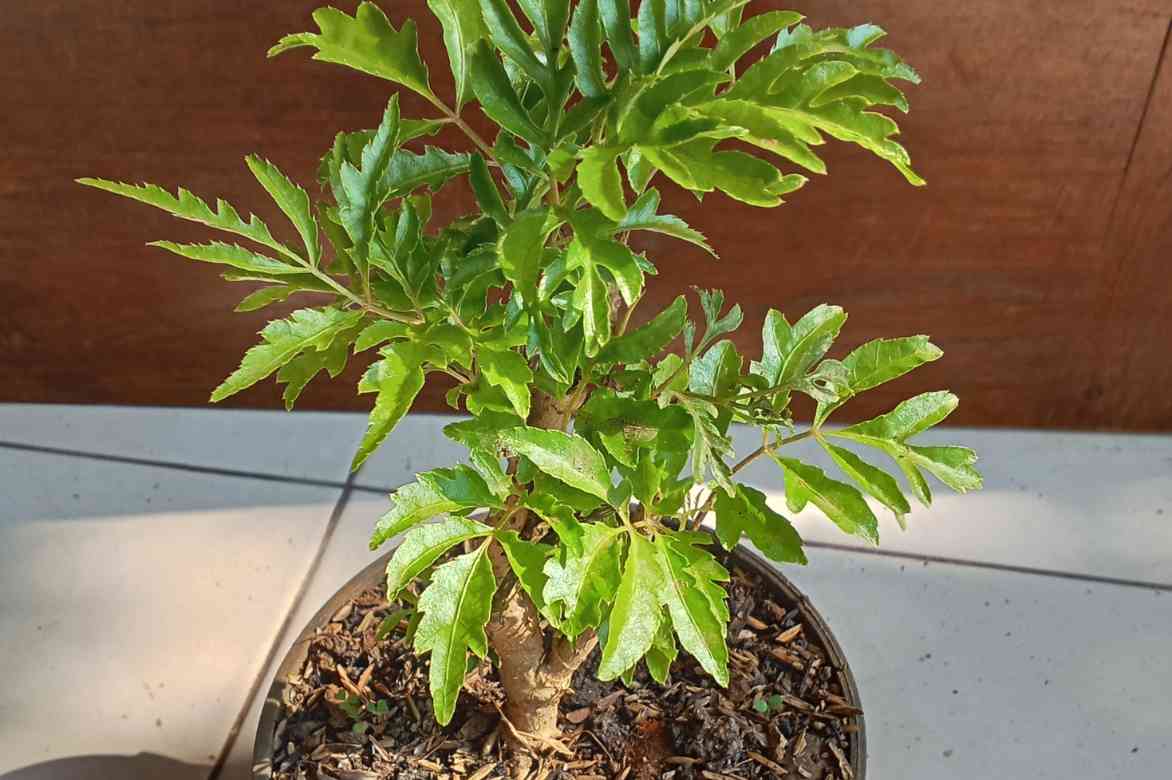
Polyscias fruticosa
See our tutorial on this topic: How to repot my indoor plug plants without making mistakes?
Growing and caring for indoor Polyscias
Watering
Watering Polyscias must be controlled and regular; this plant is sensitive both to drying out and to overwatering. Water when substrate is dry in the top few centimetres, letting around 5 cm of potting mix dry out between waterings. Water must never stand in the saucer, as this can cause root asphyxiation.
-
During growth, from spring to summer, allow about 0.2 to 0.5 litres of water per week for a pot 10 to 15 cm in diameter, letting the substrate dry out over a few centimetres between waterings.
-
In winter, reduce to 0.1 to 0.3 litres every 10 to 15 days, ensuring the substrate never becomes waterlogged.
Use non‑calcareous water, particularly for some species such as Polyscias balfouriana, which are more sensitive, to avoid yellowing of the foliage.
Light misting can be used optionally to offset overly dry air.
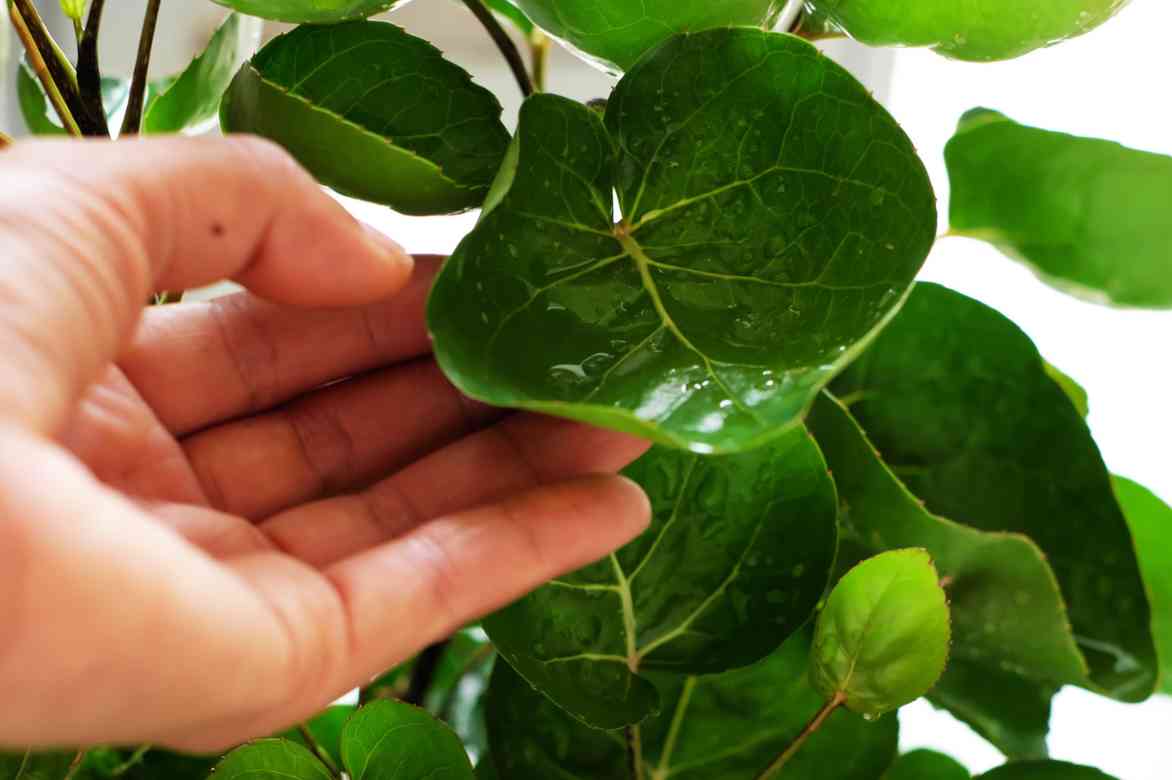
Misting should only be considered in very dry indoor air during winter.
Feeding
Polyscias benefits from regular nutrient supply during its growing period. A diluted liquid fertiliser for houseplants, balanced and slightly high in nitrogen (NPK 3-1-2), can be applied every two weeks from spring to late summer to support foliage development and maintain harmonious growth. In autumn and winter, applications should be stopped to respect the plant’s resting period.
Pruning
Pruning is ideally carried out in spring to maintain a balanced silhouette and encourage dense branching. It is advisable to pinch the tips of overly long stems to encourage new shoots. Dead, damaged or unbalancing branches should be removed regularly to preserve the plant’s appearance and vigour.
Polyscias as a bonsai?
Some species, notably Polyscias fruticosa, are particularly well suited thanks to their fine foliage and ability to branch. Its natural habit, already somewhat shrubby, makes it easy to create an elegant miniature silhouette.
However, it is not an ‘easy’ bonsai: it requires good mastery of watering, sufficient humidity and regular pruning to maintain a harmonious form. It is therefore recommended for enthusiasts with some prior experience.
Repotting
Repotting generally takes place every two to three years, in spring, when roots begin to fill the pot. Polyscias prefers to be slightly pot‑bound, which limits excess moisture and promotes a good growth balance. When repotting, choose a container slightly larger than the previous one.
What mistakes to avoid to keep Polyscias beautiful and healthy?
| Risk situation | Observed consequence | Recommended practice |
|---|---|---|
| Temperature fluctuations | Leaf drop | Maintain stable temperature |
| Drafts | Stress, foliage drop | Keep away from open windows and doors |
| Low humidity | Leaves drying out | Increase ambient humidity |
| Water stress | Yellowing, leaf drop | Water regularly without overwatering |
| Insufficient light | Sparse foliage | Place in bright light out of direct sun |
| Frequent relocations | Rapid leaf drop | Avoid moving plant frequently |
Diseases and parasitic organisms of Polyscias
Like any houseplant, Polyscias can be susceptible to certain pests and cultural imbalances, particularly when air is too dry, watering is poorly controlled or light is insufficient. Here are common problems and suitable natural remedies :
| Problem | Symptoms | Natural remedy |
| Mealybugs | Small white or brown masses; sticky residue | Wipe with soft cloth soaked in soapy water or diluted isopropyl alcohol |
| Red spider mites | Dull, discoloured foliage; fine webs | Maintain good ambient humidity and mist foliage regularly |
To learn more, read : Mealybugs: identification and natural treatments.
How to take a cutting from Polyscias?
The most effective method to multiply Polyscias is propagation by cuttings. Carried out in spring or summer, it gives good results if warm, humid conditions are present. Here’s how to proceed :
- Cut a healthy stem 10 to 15 cm long, preferably semi-woody, just below a node, using a clean, sharp tool.
- Remove lower leaves, leaving only a few at the tip.
- Allow base of the cutting to dry for a few hours to reduce risk of rot.
- Plant the cutting in a light, well-draining substrate composed of potting compost, turf and sand.
- Gently firm substrate around the stem to ensure good contact.
- Water lightly to moisten substrate without waterlogging it.
- Place the cutting in indirect light, in a warm atmosphere (20 to 25 °C).
- Cover with a clear plastic bag or place in a mini greenhouse to maintain high humidity.
- Ventilate regularly to prevent mould.
- Rooting usually occurs within a few weeks, when new shoots appear.
Note: Polyscias is sensitive to excess moisture; it is essential to keep substrate slightly moist but never waterlogged throughout the rooting phase.
Combinations and décor
Polyscias naturally finds its place in a bright living room or an office, where its elegant habit and sculpted foliage bring a refined botanical touch, integrating equally well into contemporary, exotic or more traditional settings.
The Polyscias balfouriana ‘Butterfly’, with its cut, undulating foliage, is particularly decorative in a room bathed in soft light or in a conservatory, where it recreates a soothing and elegant tropical atmosphere.
This shrubby plant is easy to showcase in a contemporary or zen-style interior, where it structures space while bringing a soft, natural note.
It pairs easily with other houseplants with contrasting foliage. It works very well with a Philodendron, for example the Philodendron ‘Xanadu’, or with a Ficus ‘Tineke’ or a Ficus elastica ‘Robusta’, whose large, glossy leaves add depth to the composition. Polyscias also pairs harmoniously with Calathea for a graphic effect, with Monstera deliciosa, or with Chamaedorea elegans.
For display, favour sober, elegant pots in matte ceramic, terracotta or natural tones to emphasise the fineness of its foliage and integrate the plant harmoniously into your interior decor.
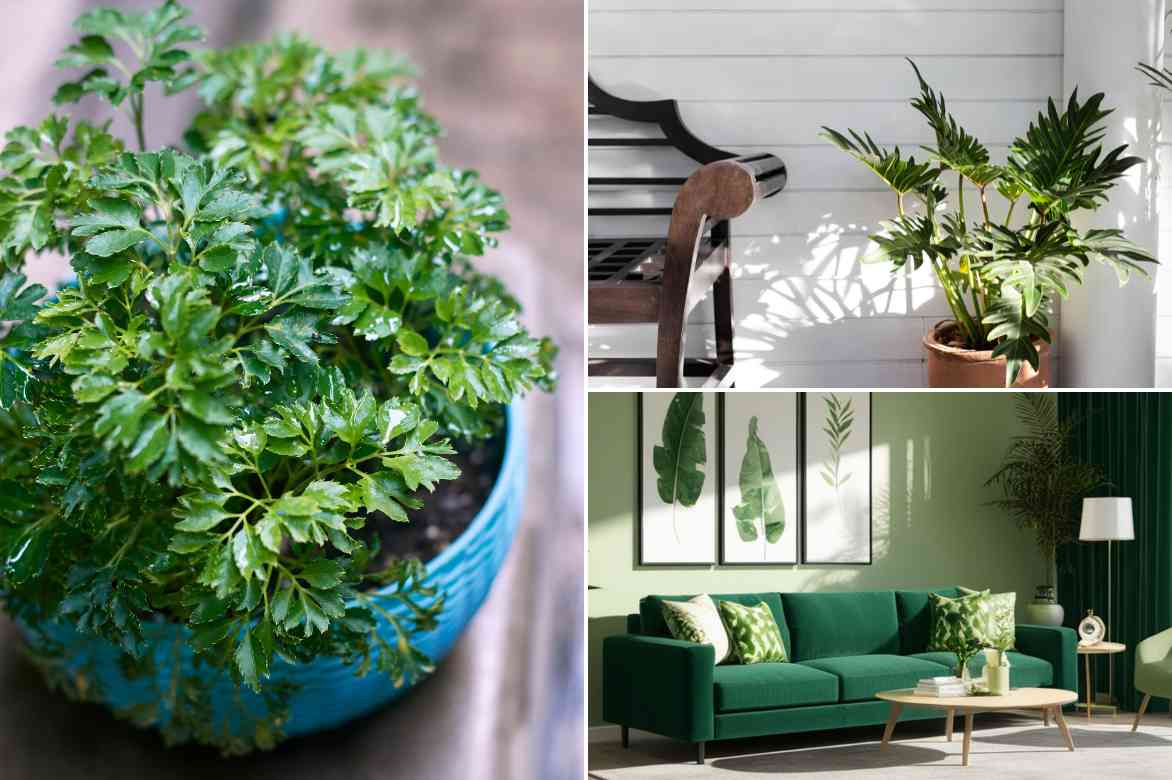
Polyscias fruticosa ‘Elegans’, Philodendron Xanadu add a tropical spirit to a contemporary interior.
See also
→ Discover our wide range of indoor young plants.
→ Our young plants indoor with decorative foliage and our indoor flowering young plants.
→ Our many books on indoor young plants.
Frequently asked questions
-
Why is my Polyscias losing its leaves?
Often due to sudden change, too-dry air or lack of light.
-
Water Polyscias when the top 2–3 cm of compost feels dry to the touch. Frequency depends on pot size, compost and conditions, but general guidance: - Spring–summer (active growth): about every 7–10 days for small/medium pots; larger pots less often. - Autumn–winter (dormant/slower growth): every 2–4 weeks, or as needed when surface dries. Best practices - Water thoroughly until excess drains from the pot and discard water left in saucer after 30 minutes. - Use lukewarm water and avoid waterlogging — Polyscias dislikes permanently soggy roots. - Improve drainage with a free-draining potting mix (e.g. loam-based mix with perlite or bark). - Increase humidity (misting, pebble tray or humidifier) rather than overwatering to avoid brown leaf edges. - Check moisture with finger or moisture meter rather than on a fixed schedule. Signs to watch - Overwatering: yellowing leaves, soft stems, mouldy compost, rotten smell. - Underwatering: wilting, dry brown leaf tips, leaf drop. Adjust watering to your home’s light, temperature and humidity for best results.
When substrate is dry to a depth of a few centimetres, about once a week.
-
Is Polyscias easy to care for?
Not really — it needs stable conditions and some attention.
- Subscribe!
- Contents
This form is protected by reCAPTCHA - the Google Privacy Policy and Terms of Service apply.

































Comments