Scilla: planting, growing and care
Contents
Scillas in a nutshell
- Scillas are among the first bulbs to flower in spring
- Easy to grow in partial shade
- Vigorous, very tolerant, very hardy plants
- Naturalize very easily in every corner of the garden
- Naturalize into large carpets or grow well in pots
A word from our expert
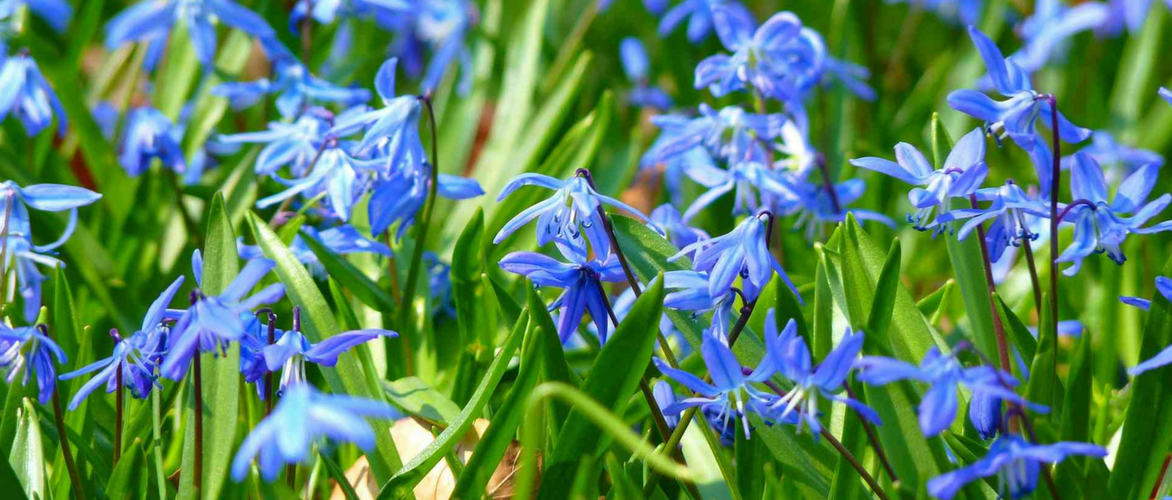
Slender, graceful, Scillas, Scilla or wood hyacinth are small bulbous spring plants, easy to grow in non-scorching sun or partial shade. Really undemanding, very hardy, they thrive in all gardens where they naturalize easily, gradually forming flowering colonies.
In February, for the earliest varieties, their clusters of usually deep-blue little bells, sometimes pink or white, emerge from lush green grassy tufts to herald spring.
Campanulate scilla or Spanish scilla, Scilla nutans, or Siberian scilla, they slip everywhere — in beds as well as in pots, along paths, in large naturalized carpets beneath deciduous trees, in rock gardens or scattered across the lawn. In mid-spring they create scenes of freshness and simplicity alongside other early spring bulbs such as crocuses, daffodils, jonquils, wood anemones, hyacinths or botanical tulips.
Their delicate flowering is also well suited to making simple, rustic bouquets.
Blue, white or pastel-pink scilla, discover all their planting and care secrets as well as our collection of spring Scillas to brighten cool woodlands, flower the garden with a very natural touch or create beautiful spring planters.

Botany
Botanical data
- Latin name Scilla
- Family Hyacinthaceae
- Common name scilla, wood hyacinth, false hyacinth
- Flowering January to May
- Height 10–35 cm
- Exposure Sun, partial shade
- Soil type All
- Hardiness From -15°C to beyond depending on species
Scilla or Scilla form a large, rather varied family, Hyacinthaceae, comprising around 90 species of bulbous perennials that are relatively little known. Close relatives of hyacinths, native to Europe, South Africa and Asia, they grow naturally in very different biotopes and climates, from mountain meadows to woodland and rocky coastal areas. In France, they acclimatise up to 1,500 m altitude.
There are many genera grouped under Scilla, especially since hyacinthoides non-scripta such as wood hyacinth or false Spanish hyacinth are associated with them because of their strong resemblance to “true” Scilla species.
Among spring Scilla, note bell-shaped Scilla or Scilla hispanica, commonly cultivated and preferring sun but tolerating partial shade; wood hyacinth or Scilla nutans; Scilla mischtschenkoana, very close to Sibirica but earlier; two-leaved Scilla Scilla bifolia, which favours cool woodlands; Scilla sibirica (Siberian squill) and Scilla litardierei, also called meadow Scilla. Besides classic lilac-blue, many cultivars of Hyacinthoides hispanica in bright white or pink have been developed.
Puschkinia scilloides Libanotica and Chionodoxa are also close relatives sometimes mistaken for Scilla.
Two species stand apart, though they are true Scilla, and behave as distant cousins by size, inflorescence appearance and growing requirements: Peruvian squill, Scilla peruviana, less hardy, preferring dry soils and very sunny Mediterranean exposures, and Urginea maritima or sea squill, a tall protected species (up to 1.5 m at maturity), moderately hardy and tolerant of salt spray, best reserved for maritime climates.
Easy to grow, tolerant except in arid climates they dislike, these welcome bulbous plants at winter’s end are very cold-hardy, sometimes withstanding temperatures well below −15°C, notably Siberian Scilla.
Scilla form more or less erect clumps, sometimes mat-forming and compact depending on species, 10–35 cm tall, spreading to around 10 cm.
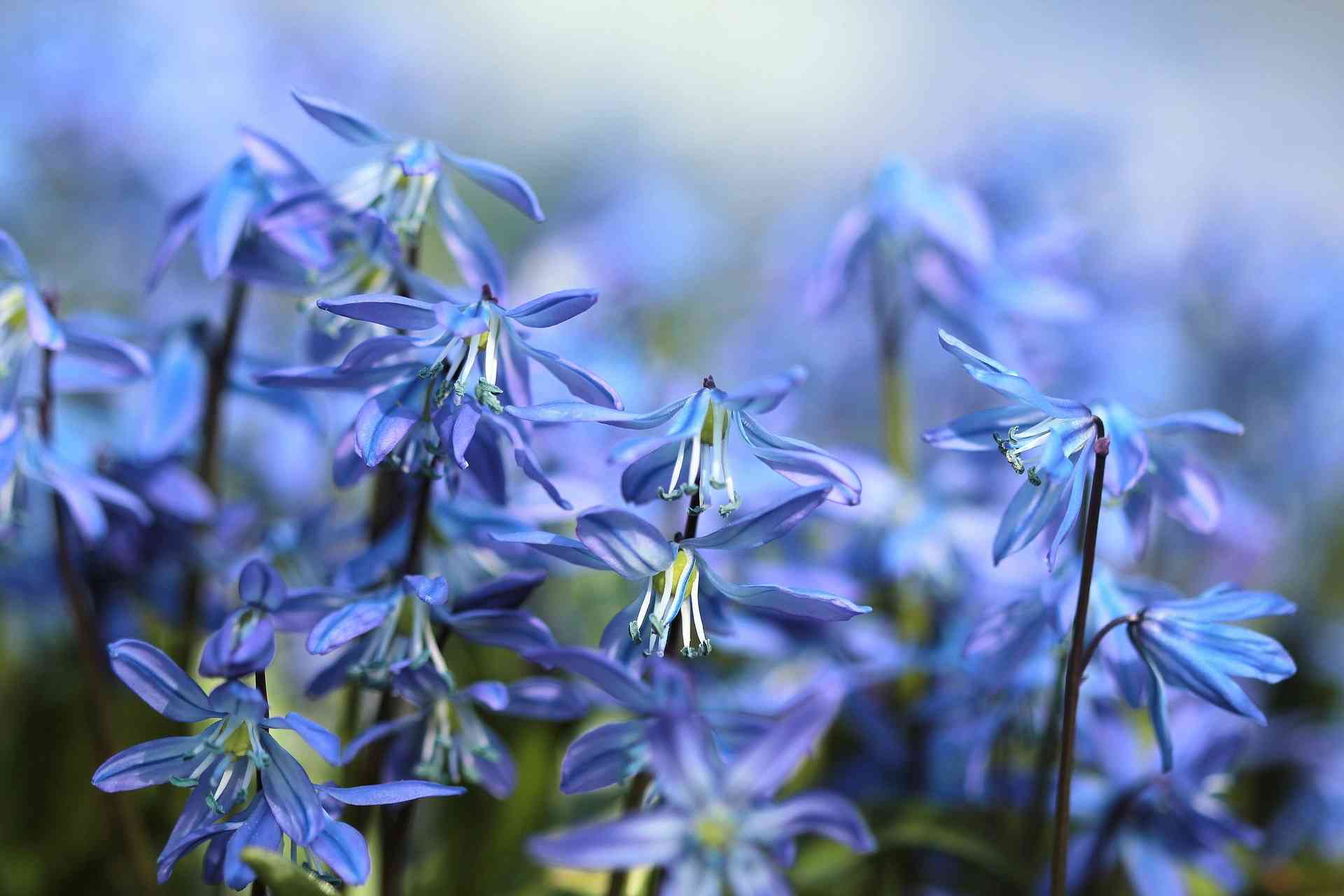
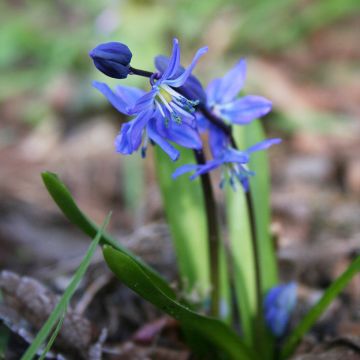
Intense blue star-shaped flowers of Scilla siberica
Once well established and undisturbed, their fleshy roots spread over time, with bulblets or stolons forming around the parent bulb. Bulbs are toxic only if ingested.
They self-seed and naturalise easily in every corner of the garden, capable of flowering along whole woodland edges. They live many years in rockeries, lawns and under trees or at the base of deciduous shrubs, forming attractive, floriferous carpets and vigorous clumps.
In late winter, as early as January for the earliest Scilla, each small bulb produces 1–4 flowering stems, thin but sturdy, green, red or brown, sometimes branching near the top. Stems arch gracefully under the weight of the bells.
Scilla are among first spring flowers, some very early, finishing bloom soon after snowdrops and at the same time as crocuses, Eranthis and primroses.
For two to three weeks, their bright, hyacinth-like flowering creates waves of sky-blue, pink or white, borne on fresh green grassy clumps.

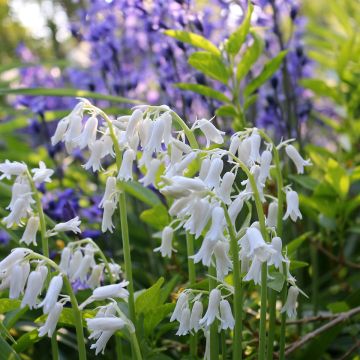
Scilla siberica ‘Spring Beauty’ – white bell-shaped Scilla – pink Spanish Scilla
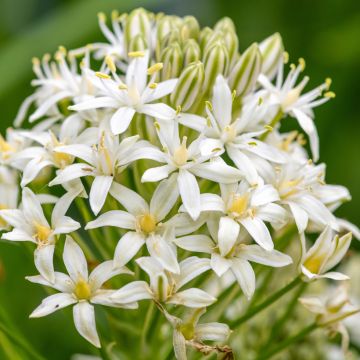
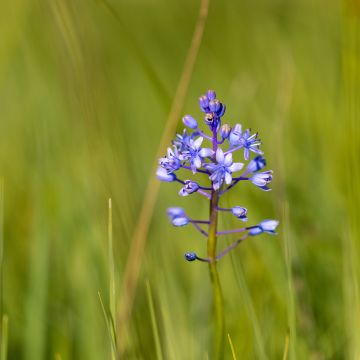
Each flower stalk bears clusters of more or less dense pendent, flat or star-shaped bell flowers usually lilac-blue, porcelain blue, intense blue, but sometimes pure white or pink, especially in bell-shaped Scilla which offer the widest colour range. Flowers, grouped from 2 to 35 at stem tip, measure from 3 mm to 2 cm in diameter. Scilla litardierei produces very compact, floriferous clusters of 15–35 small star-shaped flowers.
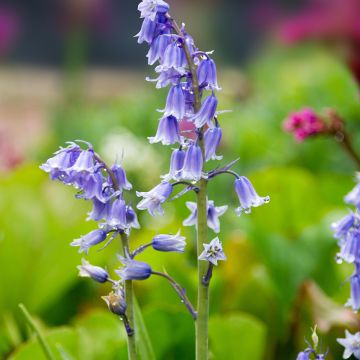
Hanging bells of Scilla nutans and bell-shaped Scilla are slightly flared, margins little or strongly turned back, and sometimes bear blue anthers.
Star-shaped flowers consist of six tepals, sometimes marked with deeper blue bands on petal backs as in ‘Tubergeniana’, a much-loved cultivar of Scilla mischtschenkoana.
Unfragrant but melliferous, they are frequently visited by pollinating insects. After flowering, faded blooms develop globular fruits that release tiny black seeds and self-sow.

Fresh to dark green foliage of Scilla is abundant and forms semi-erect clumps
Leaves emerge only in late winter and spring (April–May depending on variety). Around the flowering stem, usually at the same time as flowers, each bulb produces 2–6 basal, more or less linear leaves. 4–50 cm long, leaves are drooping in habit, narrow and smooth, shiny, broader at the base and sometimes strap- or gutter-shaped. Scilla bifolia is an exception, producing only two leaves.
After flowering, leaves collapse to the ground and foliage is deciduous, disappearing in summer from June onwards, leaving bulb in dormancy underground.
Easy to grow in non-scorching sun or partial shade, they even tolerate full shade. Some, like bell-shaped Scilla, appreciate sunny exposure to flower well. Undemanding, Scilla thrive in all well-drained, fresh humus-rich soils, ideally loam-clay.
Once conditions are met, they prosper and naturalise easily in all gardens.
With their bright bells they compose scenes of great freshness. As a groundcover in light shade, they spread limitlessly in woodland, at the foot of trees and deciduous shrubs alongside other spring bulbs for naturalising such as Crocus, cyclamen Coum, Corydalis solida, Ipheion, Muscari, Anemone nemorosa, narcissi, snowdrops, hyacinths, botanical tulips and Chionodoxa. They form abundant floriferous colonies.
Intense blue or white Scilla are also very decorative at front of border, in rockery, mixed beds, scattered in lightly mown meadows or lawns and in wilder corners of garden.
These small bulbous plants are excellent companions for early perennials such as Hellebores, primroses, periwinkles, Erica, Brunnera or Viola odorata and groundcovers like alyssum.
Their low height makes them very suitable for container use, mixed with other early-flowering bulbs.

Scilla bulbs naturalise quickly to form large colonies
Read also
Small bulbs, big impact!Species and varieties
There are essentially around ten Scilla species cultivated in our gardens, the most common being the campanulate Scilla, Scilla hispanica or Spanish squill, which has produced many white and pink cultivars, and the indispensable wood squill, Scilla nutans.
We also include Scilla Tubergeniana, very early, the montane Scilla bifolia, the very hardy Scillas of Siberia and the very floriferous Scilla litardierei, also called meadow squill.
Hyacinthoides non-scripta
- Flowering time May, June
- Height at maturity 35 cm
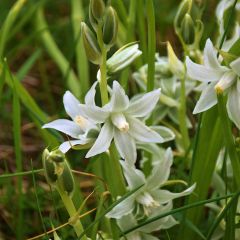
Scilla siberica Alba
- Flowering time March, April
- Height at maturity 15 cm
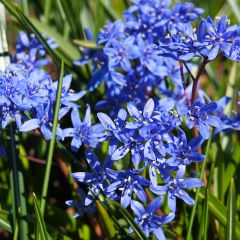
Scilla bifolia
- Flowering time April, May
- Height at maturity 12 cm
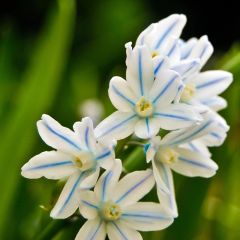
Scilla mischtschenkoana 'Tubergeniana'
- Flowering time March, April
- Height at maturity 15 cm
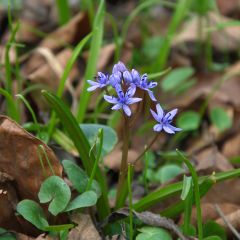
Scilla siberica Spring Beauty
- Flowering time April, May
- Height at maturity 15 cm
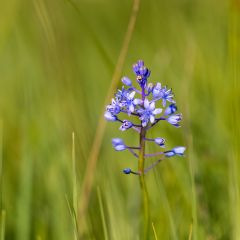
Scilla litardierei
- Flowering time June, July
- Height at maturity 15 cm
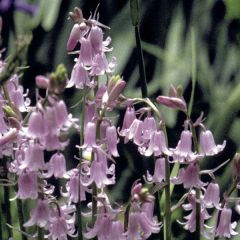
Hyacinthoides hispanica Rosea - Spanish Bluebell
- Flowering time May, June
- Height at maturity 30 cm
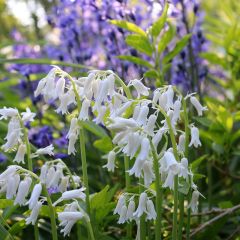
Hyacinthoides hispanica Alba
- Flowering time May, June
- Height at maturity 35 cm
Discover other Scilla
View all →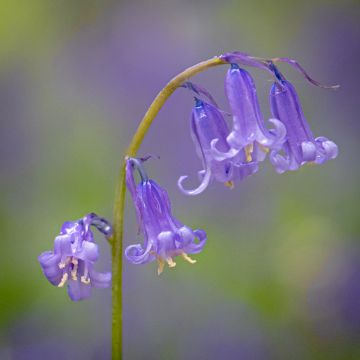
Available in 1 sizes
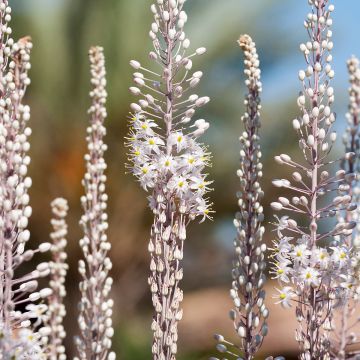
Available in 1 sizes
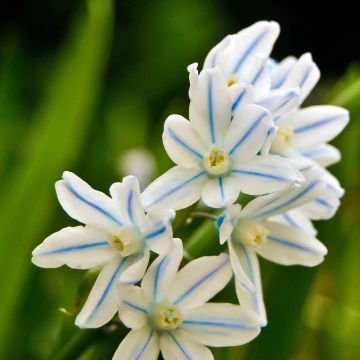
Available in 1 sizes
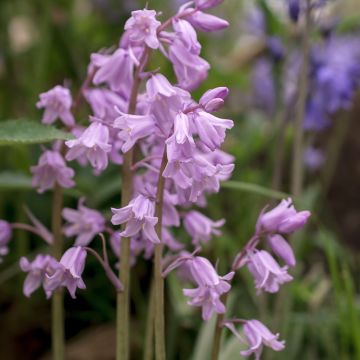
Available in 1 sizes
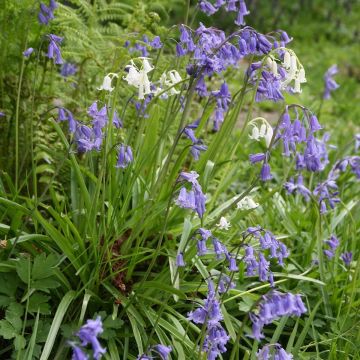
Available in 0 sizes
Available in 1 sizes
Available in 2 sizes
Available in 1 sizes
Available in 1 sizes
Available in 1 sizes
Planting
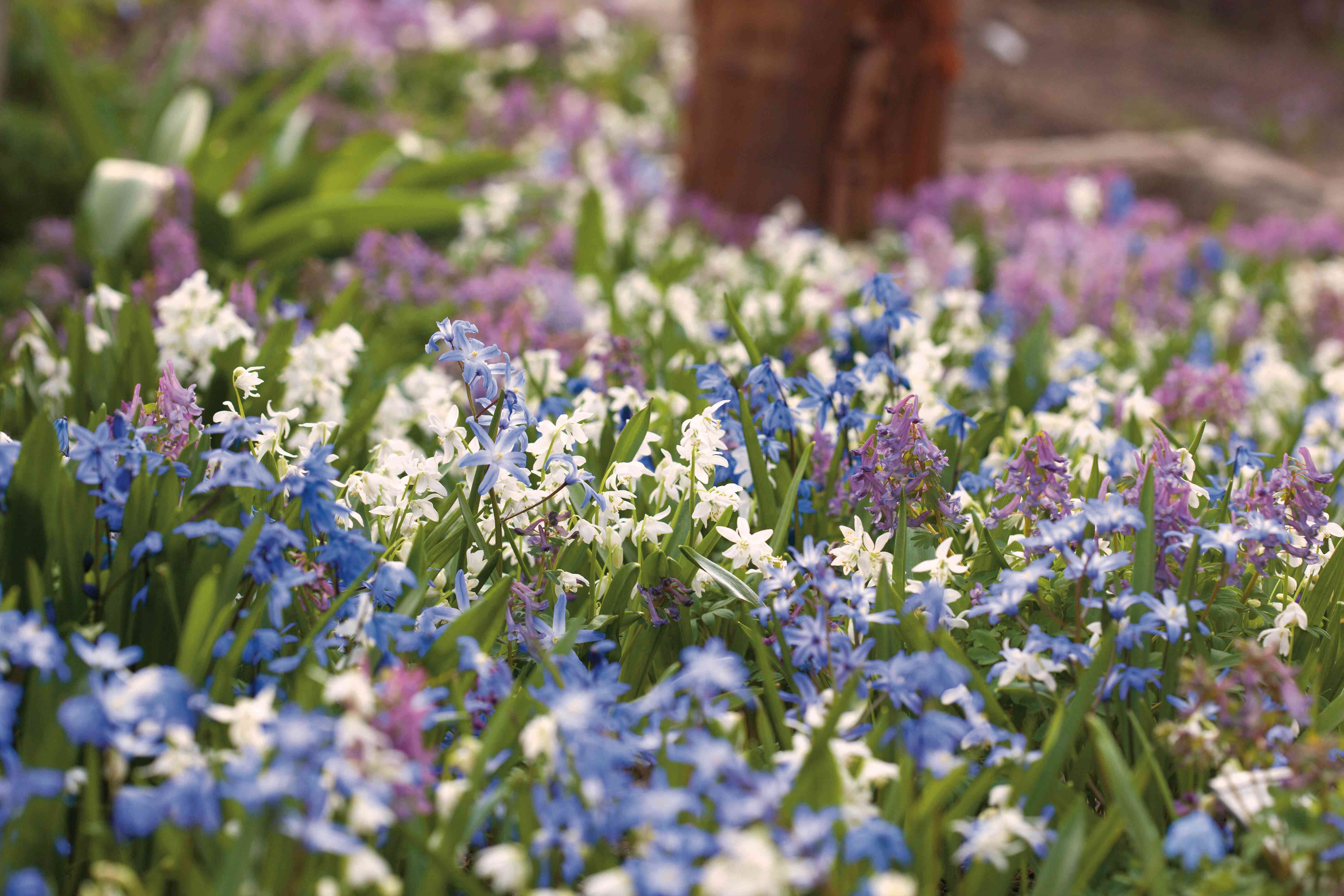
Scilla siberica ‘Alba’ – Scilla siberica ‘Spring Beauty’ – Chionodoxa ‘forbesii’ – Corydalis solida – Photos Tommy Tonsberg –
Where to plant Scillas?
Scillas are easy-to-grow plants. Undemanding, they prefer partial shade but also tolerate fully shaded areas and sunny exposures that are not scorching.
Comfortable in rather cool climates and perfectly hardy, they are not bothered by harsh winters, often surviving temperatures below -15°C: they grow in all regions, even at altitude.
Scilla bulbs establish in ordinary, fairly fertile, cool but above all well-drained soil: they dislike waterlogged ground.
Versatile, Scillas fit into any setting and will naturalise in light woodland, at the base of trees and deciduous shrubs, on a slope, along a path, in a rockery or scattered across a lawn.
After flowering, Scillas produce wilted foliage forming a slightly untidy carpet that can be easily masked by planting among them erythroniums, wood anemones, lungworts or euphorbias.
They can also create beautiful spring container displays.
When to plant Scilla bulbs?
Plant bulbs preferably in autumn, from September to November, to see them flower in early spring.
How to plant Scillas?
In open ground
Scillas should be planted abundantly (about 100 per m²), in small groups for a natural look, in a lawn or as a flowering carpet, for a spectacular effect!
Only requirement: they need well-drained, well-amended soil.
- Remove weeds and stones from soil
- Loosen soil deeply and add organic matter
- Improve drainage if necessary with gravel mixed into soil or laid in a layer beneath bulbs
- Plant 8–10 cm deep, point of bulb facing upwards
- Space bulbs 5–10 cm apart or plant in groups of 10–15, avoiding bulbs touching each other
- Cover bulbs with soil to a depth twice the height of the bulb
- Water twice a week during active growth
- Keep soil dry in summer
- Leave bulbs in place; they will spread over time
To create a flowering carpet
Scillas, which naturalise very easily, are perfect for creating floral corners around the house, in beds, on the woodland edge or at the base of trees. For an attractive effect, mark out an irregular, ovoid shape.
For a successful mass planting, allow about 100 bulbs per m². Remove soil from part of the chosen bed to a depth of 10 cm, place bulbs about 8 cm apart, then replace soil.
In a pot: a lasagne planting
Like hyacinths, Scilla bulbs can be easily grown in pots to enjoy their flowering on the patio or balcony. Opt for a “lasagne” or layered planting: a technique of planting these flowering bulbs in successive layers mixed with other spring bulbs such as daffodils, crocuses, hyacinths, botanical tulips… The advantage? Enjoy continuous flowering throughout spring.
→ Find out more in our advice sheet: How to grow scillas in a pot?
Read also
Scilla: planting and careCare and maintenance
Scillas are easy and accommodating plants that require no special care. No pruning is necessary, however to limit spontaneous sowings you can cut flower stems after flowering. Do not mow or cut foliage until it has died back, to allow bulbs time to rebuild reserves necessary for next flowering.
Divide bulbs in summer, at most every 4 years to keep plants vigorous.
In pots:
- Water regularly
- Optionally apply a special bulb fertiliser every 15 days until flowering is finished
Possible diseases
Scilla bulb offers good resistance to disease. When grown under the required planting conditions, it is not very susceptible to problems.
However, like many bulbs, it can be susceptible to viral diseases that deform and discolour the leaves. Uproot affected bulbs if infected.
Multiplication
Sowing
We do not recommend sowing, especially as Scilla naturalise readily: a plant raised from Scilla seed will take at least three years to flower.
Division
After two years, you can divide clumps of Scilla by separating the bulblets formed around the mother bulb. Do this in June when leaves yellow.
- Lift the clump with a garden fork
- Separate the bulbs by hand or with a small knife
- Replant the bulblets immediately or pot them up before transplanting the following autumn
- Water lightly
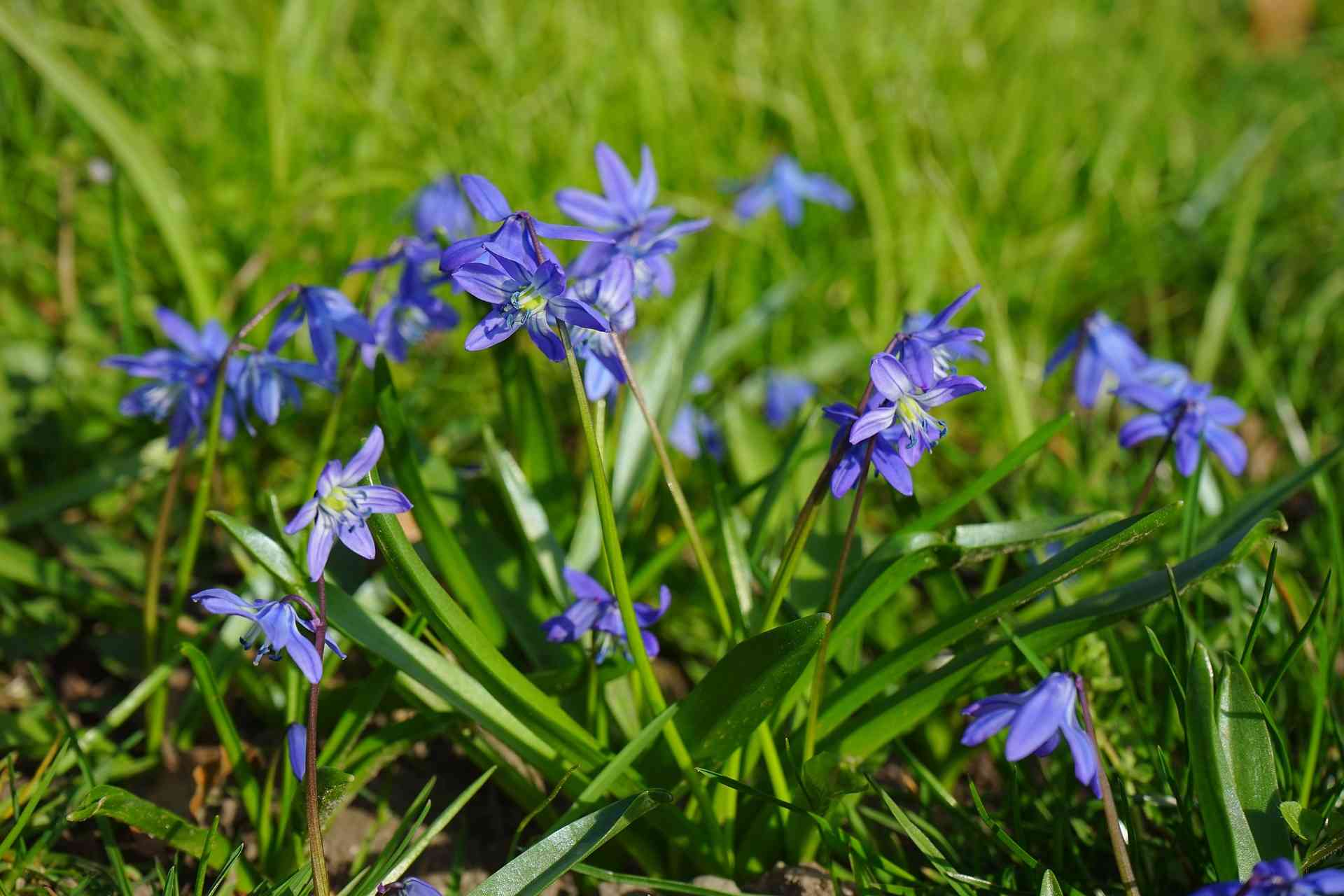
Division of Scilla is done just after flowering, when foliage dies back
Associate
Scillas find their place in a flowerbed, naturalised in woodland, beneath deciduous trees or shrubs (Forsythia) or in a rockery alongside a host of plants that, like them, require little attention.
Graceful, with richly coloured flowers, they flower in mid-spring, freely, in naturalistic, low-maintenance gardens or weekend gardens creating fresh scenes as carpets of flowers or as delicate foregrounds in borders. Available as a bright monochrome blue or in contrasting white/blue or blue/yellow combinations.
The intense blue of the little bells of a Scilla bifolia or a Scilla siberica ‘Spring Beauty’ provides a spectacular contrast with white, soft yellow and yellow‑green flowers such as early Euphorbias, Narcissi, small botanical tulips, Crocus and snowdrops. They form magnificent carpets against a backdrop of Anemone sylvestris, winter hellebores or Cyclamen coum.
Scillas are charming beneath late-leaved perennials such as Hostas, lungworts, Corydalis solida, Warley bishop’s hat or low-growing groundcovers such as bugles.
Planted in numbers for striking, dramatic effects, these luminous bulbous plants create a successful size contrast alongside larger-flowered bulbs such as daffodils. All pair well with smaller spring bulbs such as hyacinths, ipheions, violas, Anemone blanda or nemorosa, Iris reticulata or Erythroniums.
Their delicate bell-flowers make lovely fresh spring bouquets when mixed with mini narcissi and muscari.
Scillas are perfect for container growing on a windowsill or balcony, mixed with pansies, narcissi, crocuses, early tulips, hyacinths or primroses.
→ Discover more ideas for pairing with scillas in our advice sheet !
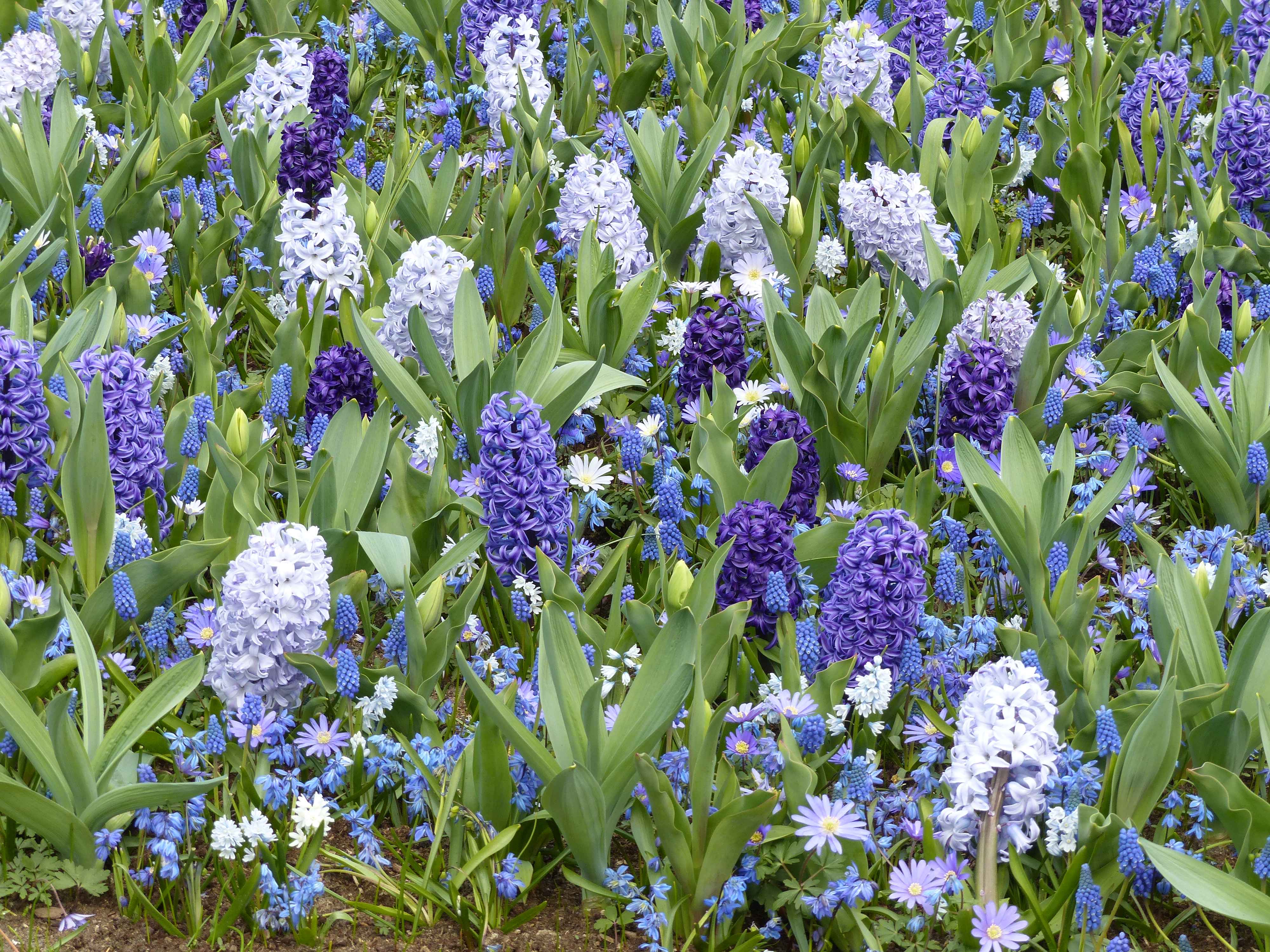
Hyacinth ‘Blue Jacket’, ‘Blue Eyes, Muscari, Scilla and Anemone blanda
Further reading
- Discover our lovely range of scillas: the best varieties for your garden
- Advice sheet: Which bulbs to force indoors?
- Advice sheet: Bulb sizes: how to choose
- Advice sheet: 6 bulbs easy to naturalise in the garden
- Advice sheet: 9 blue-flowering bulbs every garden should have
- Advice sheet: Scillas, the most beautiful varieties
Frequently asked questions
-
Plusieurs causes peuvent provoquer la déformation des feuilles chez les scilles. Voici les plus fréquentes, comment les reconnaître et que faire : Causes possibles et signes distinctifs - Excès ou manque d'eau : sol détrempé cause pourriture et feuilles molles, jaunissement et déformation ; sol trop sec provoque feuilles rabougries et cassantes. - Mauvaise ventilation / pourriture des bulbes (champignons, bactéries) : feuilles déformées, tachetées, parfois odeur de pourriture au niveau du bulbe. - Carences nutritives : carences en azote ou oligo-éléments rendent les feuilles chétives, déformées ou décolorées. - Attaque virale : mosaïques, stries, croissance anormale et déformation persistante ; souvent irréversible. - Parasites (limaces, escargots, thrips, punaises) : morsures irrégulières, perforations, feuilles tordues si jeunes pousses endommagées. - Dommages mécaniques ou gel tardif : gel ou choc physique déforme les jeunes feuilles au sortir de terre. - Brûlure solaire / stress thermique : feuilles roulées, décolorées ou tordues si exposition soudaine au soleil après période ombragée. - Dégâts liés à herbicides : déformations anormales, souvent sur plusieurs espèces alentours, bords irréguliers ou ondulations. Que faire — diagnostic et remèdes 1. Observer le sol : vérifier humidité en enfonçant le doigt. Si détrempé, améliorer drainage (ajouter sable/compost grossier), réduire arrosage et retirer bulbes pour contrôler la pourriture si nécessaire. 2. Examiner les bulbes : soulever délicatement quelques bulbes sains et malades pour vérifier odeur, tâches, moisissures. Supprimer bulbes pourris. 3. Rechercher parasites : inspecter feuilles et collet, chercher limaces la nuit, utiliser pièges/contrôle adapté (biologique ou mécanique). 4. Retirer et brûler feuilles très atteintes : évite propagation (particulièrement pour virus ou maladies fongiques). 5. Fertiliser modérément : apporter engrais équilibré au moment de la reprise (éviter excès d’azote en fin de saison). 6. Si virus suspecté : supprimer plantes atteintes et ne pas réutiliser bulbes dans le jardin ; désinfecter outils. 7. Éviter herbicide/produits chimiques à proximité : vérifier si des pulvérisations ont eu lieu près du massif. 8. Espacer/déplanter si les bulbes sont trop denses : diviser après floraison pour réduire concurrence et maladies. Si vous voulez, envoyez une photo des feuilles (plan rapproché + bulbe/collet) et précisez : espacement, type de sol, exposition, arrosage, traitements récents. Avec ces infos je pourrai proposer un diagnostic plus précis et un plan d’action adapté.
Scillas are bulbous plants fairly resistant to disease. However, as can sometimes happen with flowering bulbs, they can be subject to viral diseases that deform and discolour leaves and flowers. Unfortunately, in case of infection there is no miracle cure: affected bulbs must be lifted out. Poor planting conditions can make bulbs more susceptible; ensure, at planting, good soil drainage.
-
When can I cut back Scilla clumps?
Scilla bulbs rebuild their reserves through foliage, so do not mow or cut it until it yellows and dies back, around June. This will preserve next spring's flowering.
- Subscribe!
- Contents
This form is protected by reCAPTCHA - the Google Privacy Policy and Terms of Service apply.

































Comments