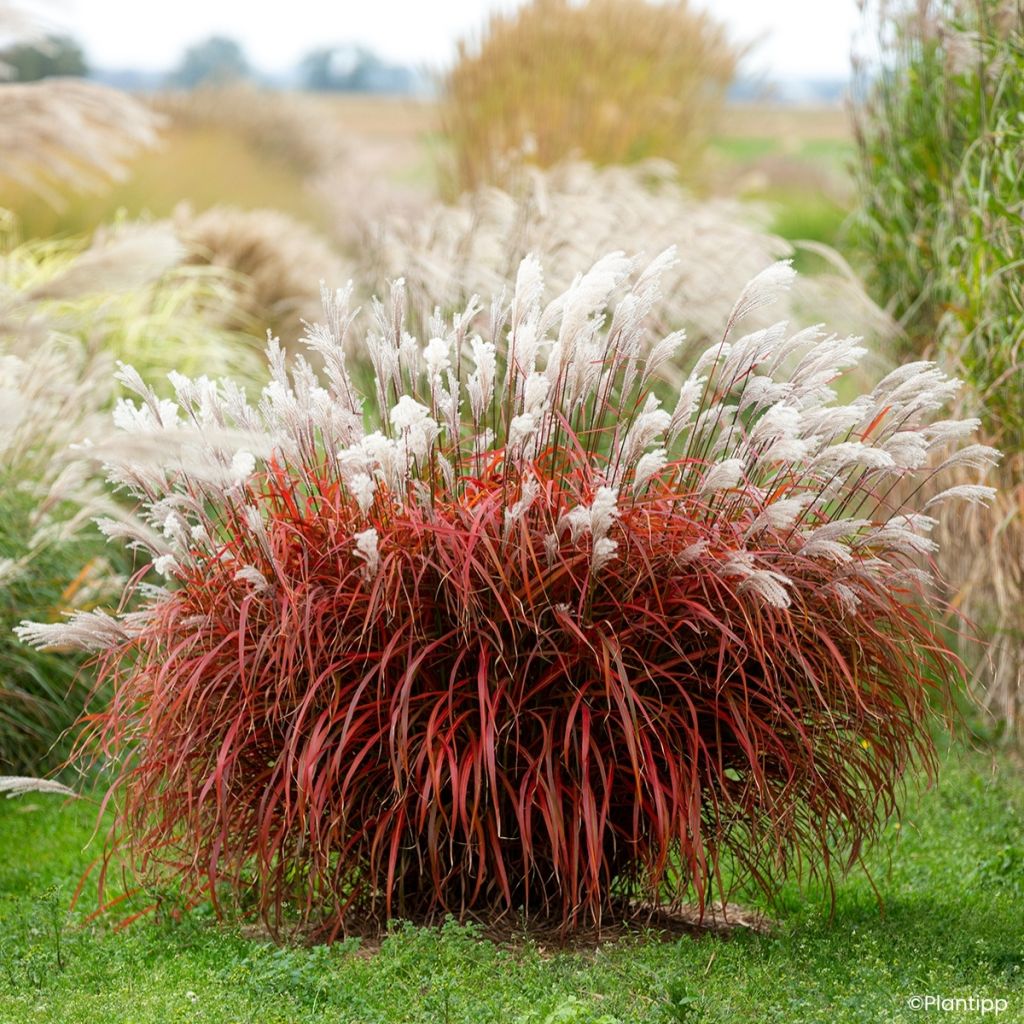
Miscanthus sinensis Lady in Red - Silvergrass
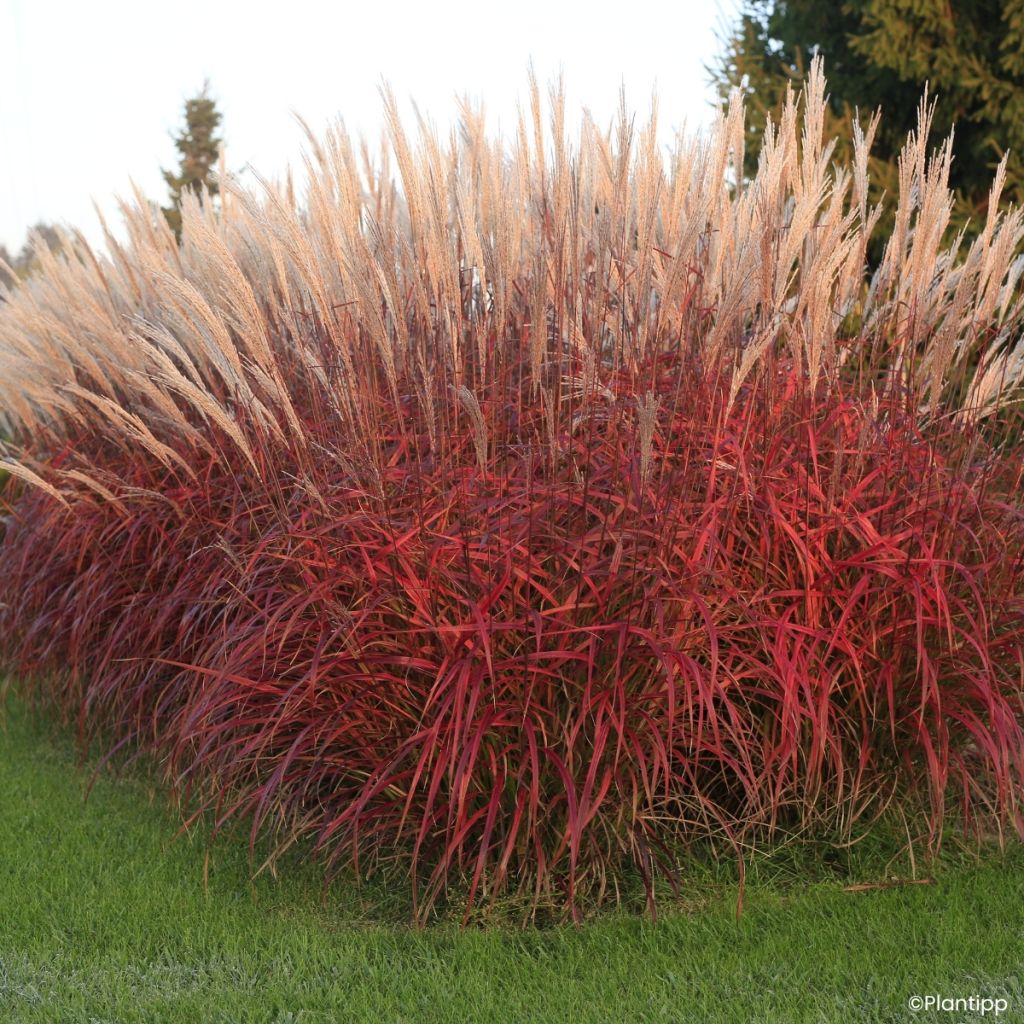
Miscanthus sinensis Lady in Red - Silvergrass
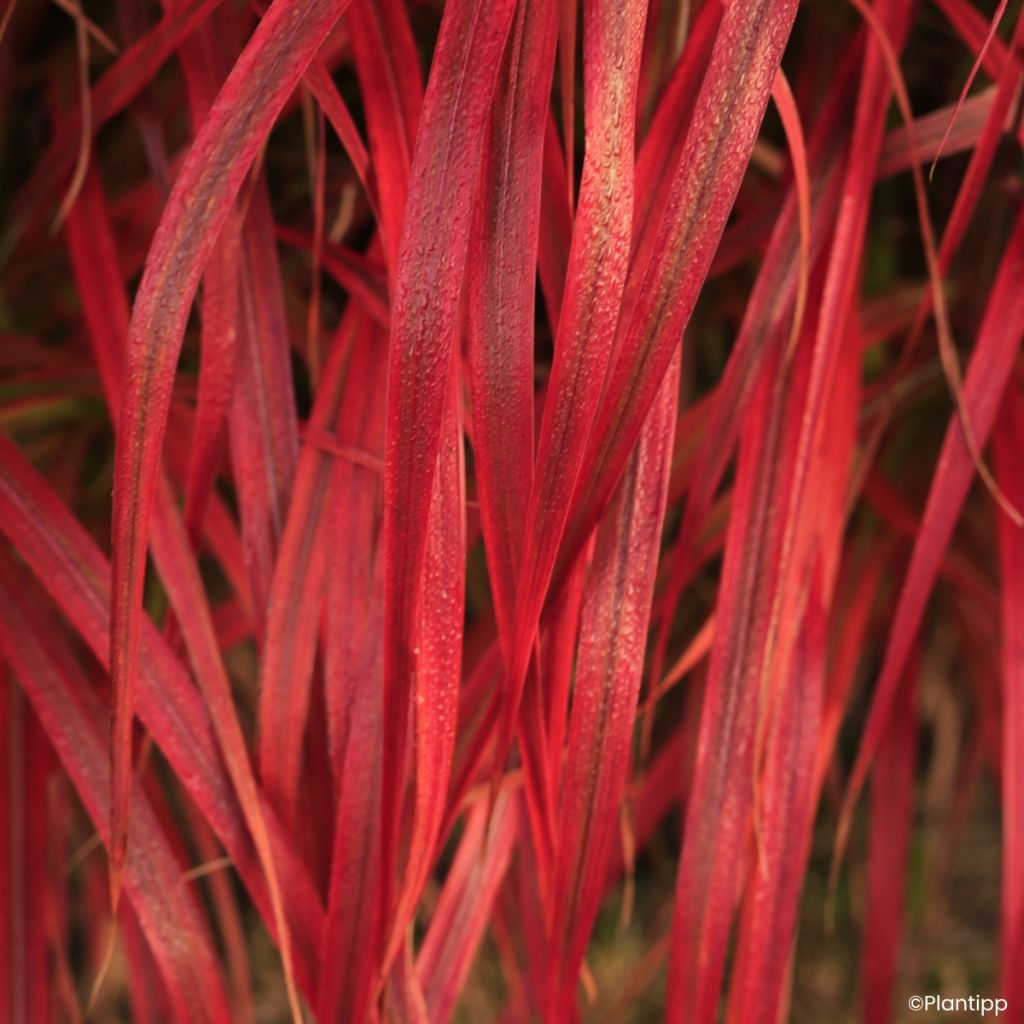
Miscanthus sinensis Lady in Red - Silvergrass
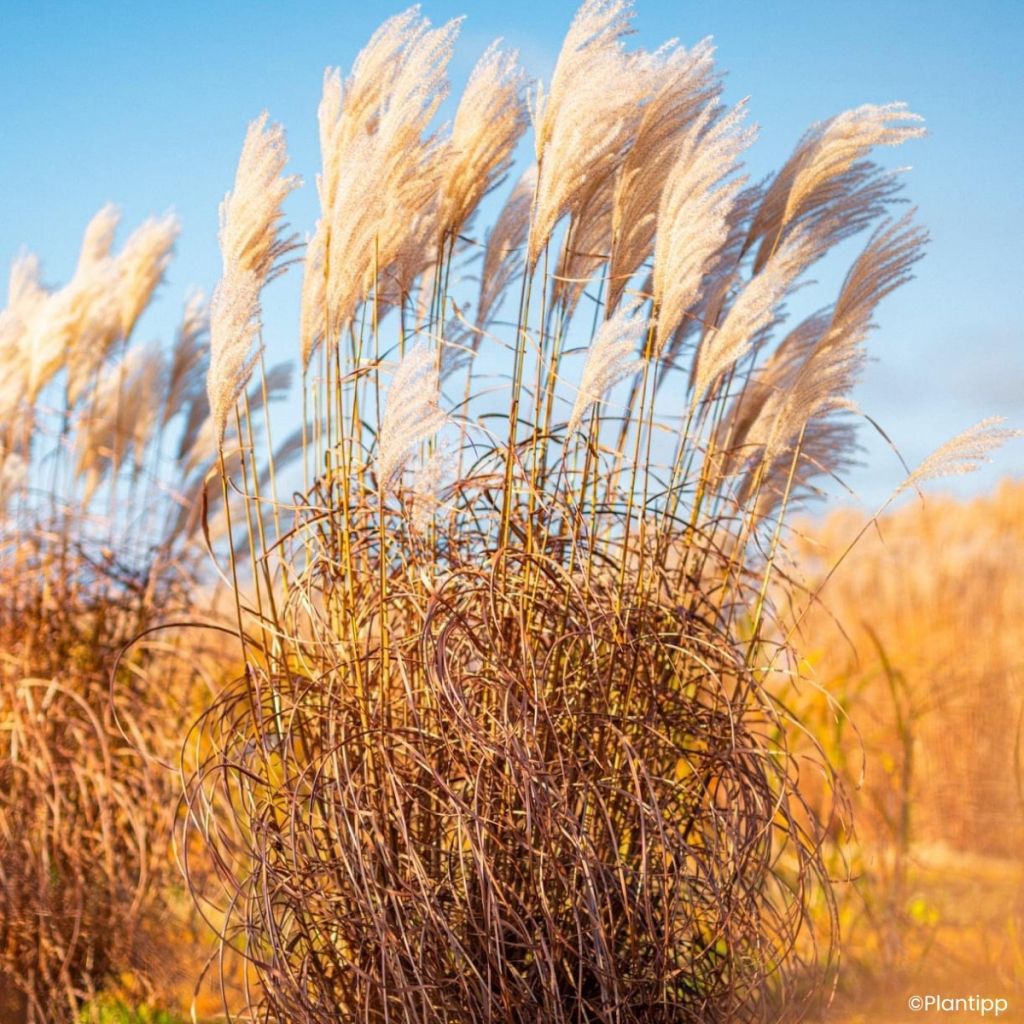
Miscanthus sinensis Lady in Red - Silvergrass
Miscanthus sinensis Lady in Red - Silvergrass
Miscanthus sinensis Lady in Red - Silvergrass
Miscanthus sinensis Lady in Red
Eulalia, Porcupine Grass, Chinese silver Grass, Maiden Grass, Zebra Grass, Susuki Grass
Back-to-school special offer!
Get €10 off for every €50 you spend! And get up to €40 off on a single order.
How does it work?
1. Shop your favourites
Add your favourite plants to your basket. For every €50 you spend (excluding delivery charges, store credit and the plastic-free option), you’ll receive a €10 voucher.
€50 spent = €10 voucher
€100 spent = €20 voucher
€150 spent = €30 voucher
€200 spent = €40 voucher
2. Place your order
Once your basket reaches one of the spending thresholds, place your order. You can even choose your delivery date!
3. Receive your voucher
As soon as your order has been shipped, you’ll receive an email containing your personal voucher code and its value.
4. Use it on your next order
Your voucher is valid for 90 days from the date you receive it. It can be used once only, on a new order worth at least the value of the voucher, excluding delivery charges.
Please note: Vouchers can be combined with other offers, but cannot be split or refunded.
Home or relay delivery (depending on size and destination)
Important: You may be charged customs duties by your country’s customs authorities upon delivery.
Schedule delivery date
and select date in basket
This plant carries a 12 months recovery warranty
More information
We guarantee the quality of our plants for a full growing cycle, and will replace at our expense any plant that fails to recover under normal climatic and planting conditions.
Would this plant suit my garden?
Set up your Plantfit profile →
Description
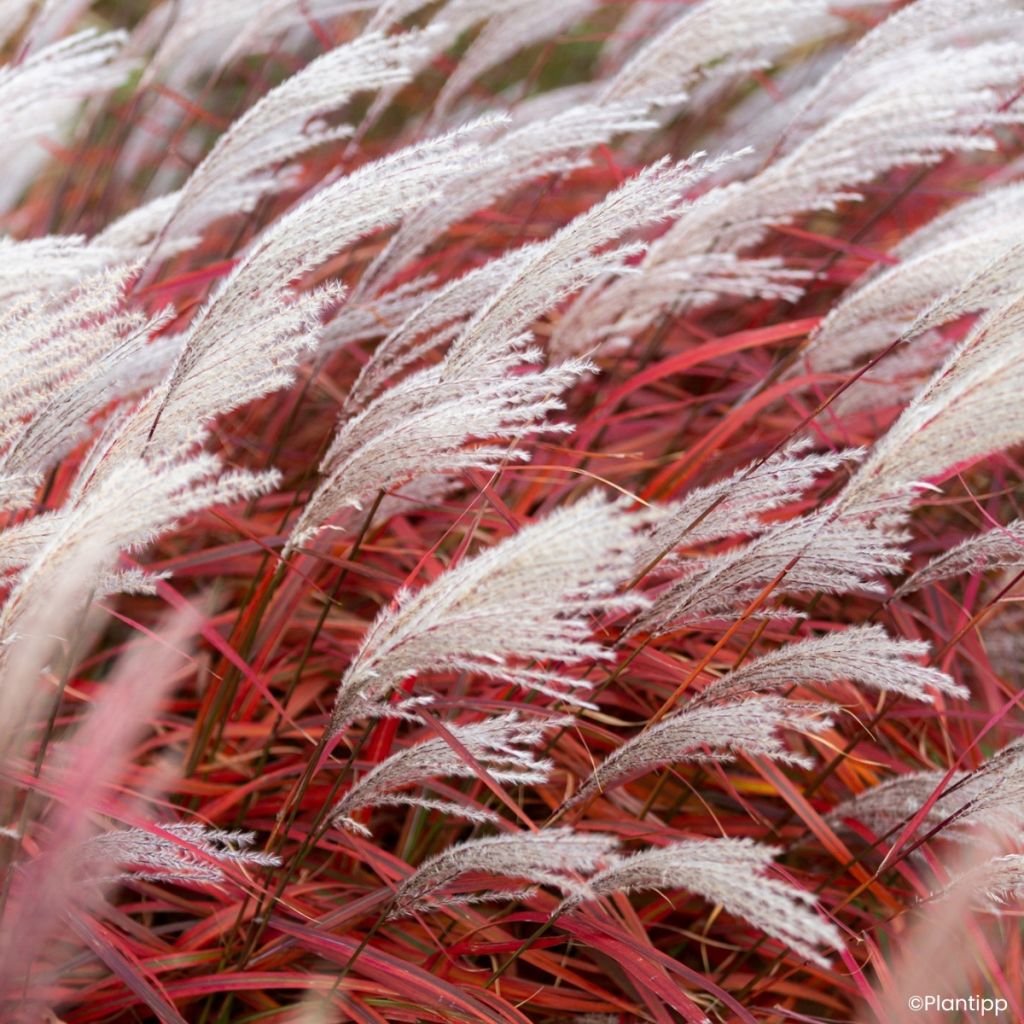
Miscanthus 'Lady in Red' is a Chinese silver grass with red foliage that revives ornamental grasses. Relatively compact, yet vigorous and quite hardy, this variety is remarkable late in the season: its foliage, which turns bright red, is topped with silvery-white plumes. In the garden, it is happy with ordinary, well-drained soil and will be more colourful in full sun. Even when dry, its vegetation and inflorescences remain interesting right into the heart of winter.
'Lady in Red' belongs to the Poaceae family. It is a cultivar of Miscanthus sinensis, known as eulalia or Chinese silver grass. The botanical species is native to East Asia, notably China, Korea, and Japan. It is a hardy perennial, but a warm-season one: growth starts late in spring, and it grows quickly once the soil warms up.
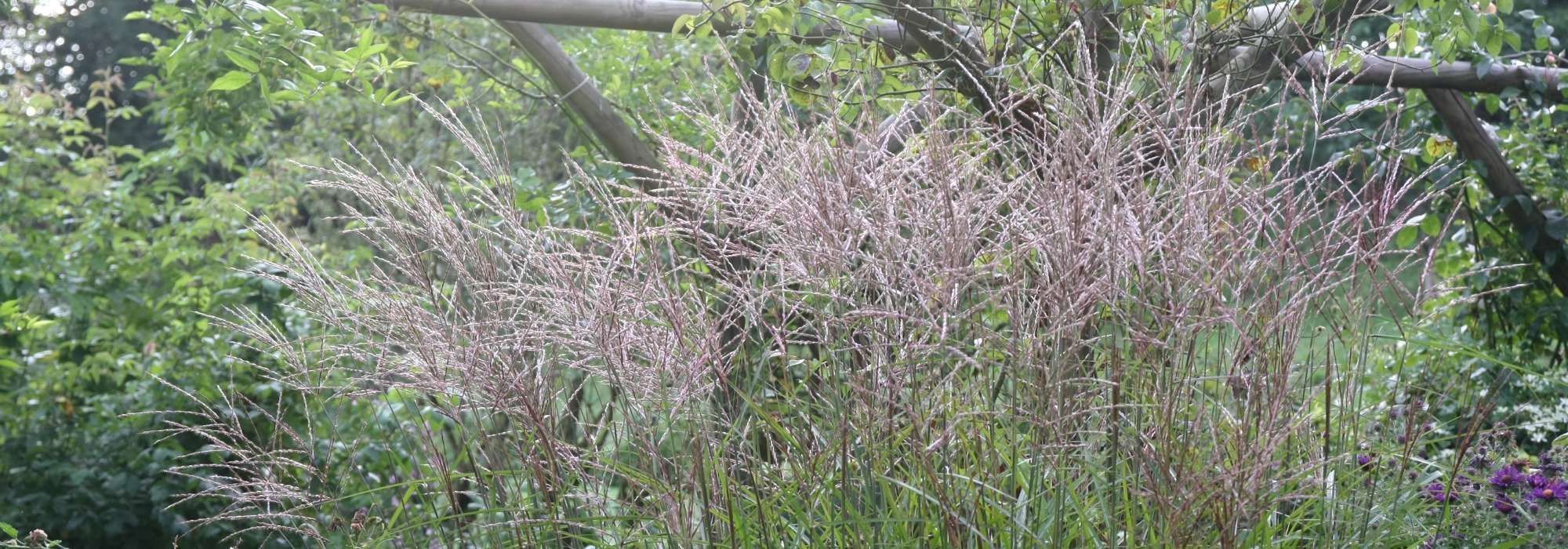
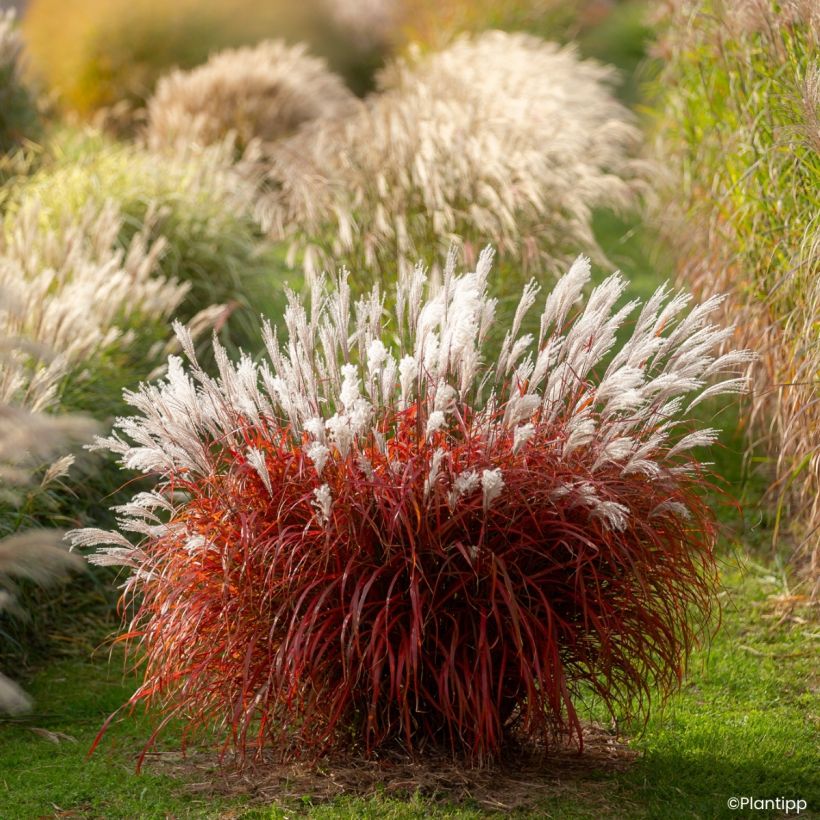
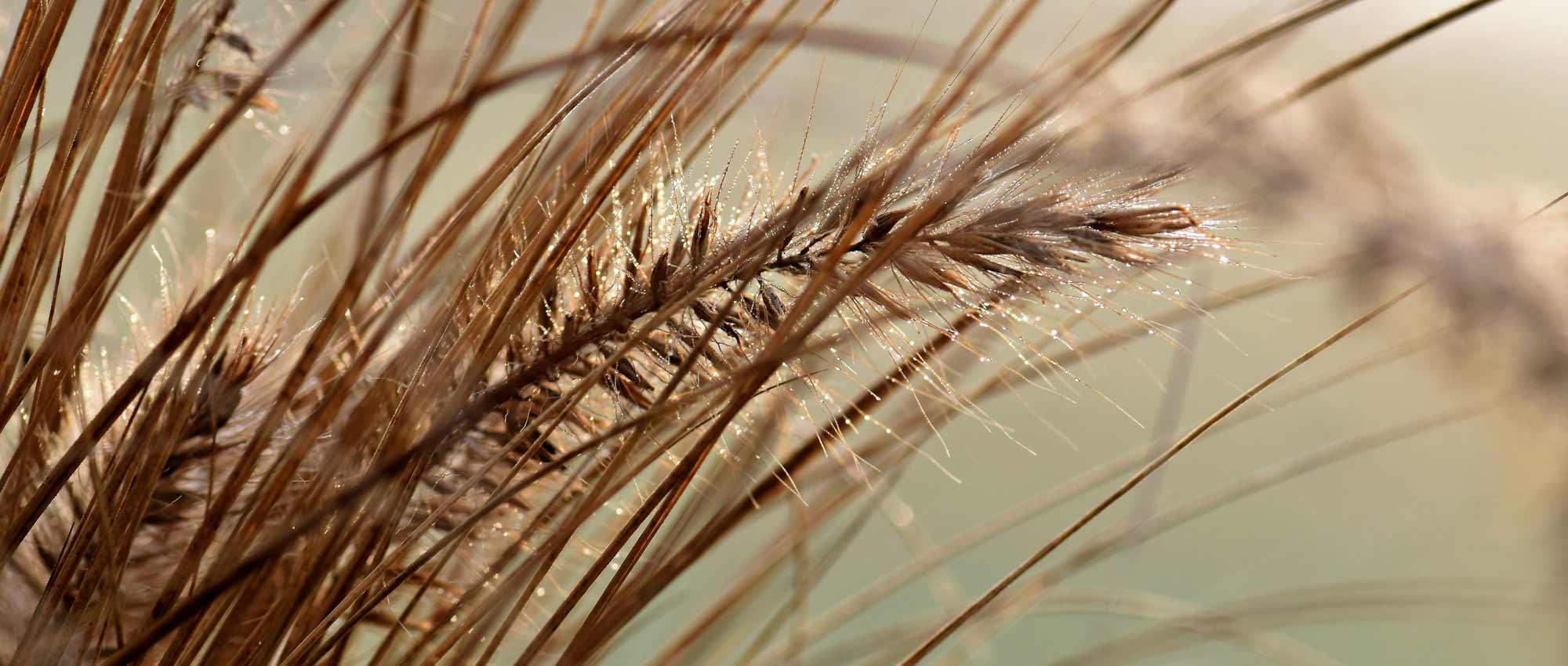
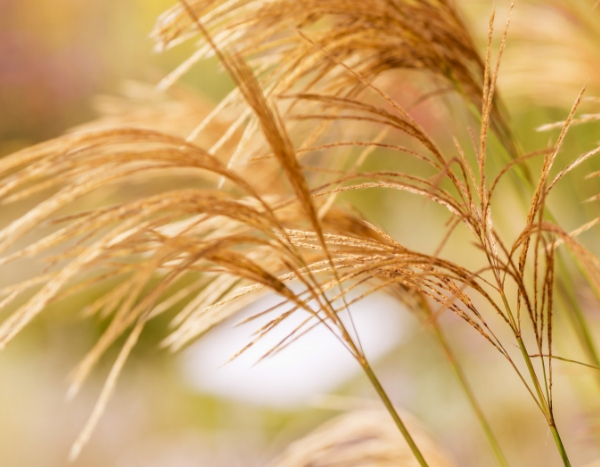
The cultivar 'Lady in Red' is a creation of Polish breeder Krzysztof Słowiński, marketed by the nursery Szkółka Słowińscy in Poland. Compared to the typical species, which is greener and taller, 'Lady in Red' flowers well above the foliage and has a succession of spectacular colours. The plant forms a dense clump, with an upright then slightly trailing habit, creating a large, soft sheaf. The linear and arched leaves are dark green, washed with purple in spring, gradually become burgundy, and then take on a scarlet red hue in autumn. In winter, the foliage dries and turns a straw-blonde colour. The plant flowers from late August until October, depending on the climate: its flowering stems bear feathery, 20 to 30 cm long panicles of a silvery-white touched with violet-purple, becoming cream to beige with age.
The root system is fibrous and deep, gathered into a tight crown: the plant widens gradually without becoming invasive. A mature clump reaches 1.50 m to 1.60 m in height and 1 to 1.30 m in width in open ground.
This very hardy (down to -20 °C and below in well-drained soil), stunning variety has been widely awarded: it has won prizes in Poland (Green is Life 2024) and has been distinguished several times at major European horticultural shows.
In the garden, Miscanthus 'Lady in Red' comes into its own planted as a specimen or in groups of three in a sunny border. Its autumn colours are fascinating. It thrives in ordinary soil, preferably damp but not waterlogged in winter, and tolerates dry periods once well-established. This plant integrates well into naturalistic gardens, town gardens, and contemporary settings. It can be grown in a large, wide, and deep container on a sheltered terrace, to enjoy it near the house. You can pair it with Miscanthus sinensis ‘Ghana’ with its coppery tones, Persicaria amplexicaulis ‘Blackfield’ with its long burgundy-red spikes, Echinacea pallida 'Hula Dancer' with its spider-like flowers, or Helianthus microcephalus for its small golden-yellow suns at the end of summer.
Miscanthus sinensis Lady in Red - Silvergrass in pictures
Flowering
Foliage
Plant habit
Botanical data
Miscanthus
sinensis
Lady in Red
Poaceae
Eulalia, Porcupine Grass, Chinese silver Grass, Maiden Grass, Zebra Grass, Susuki Grass
Cultivar or hybrid
Planting and care
Miscanthus sinensis Lady in Red thrives in sunny positions and a healthy, fairly rich and deep, well-loosened, well-drained soil that does not remain waterlogged in winter. This variety tolerates occasional summer drought and proves to be undemanding in terms of water. Prune the foliage close to the ground in early spring.
For container planting, choose a wide and deep pot with holes in the bottom, and a fertile, well-draining and flexible growing medium. A mixture formed of 20% good garden soil, 20% a blend of draining elements (pumice, gravel or coarse river sand), 60% horticultural compost. Add well-rotted compost once or twice a year (late winter and autumn) or a slow-release fertiliser. When it becomes less floriferous, divide the clump and replant the peripheral shoots.
Planting period
Intended location
Care
Planting & care advice
-

-

-

-

-
-

-
-
This item has not been reviewed yet - be the first to leave a review about it.
Recently viewed products
Haven't found what you were looking for?
Hardiness is the lowest winter temperature a plant can endure without suffering serious damage or even dying. However, hardiness is affected by location (a sheltered area, such as a patio), protection (winter cover) and soil type (hardiness is improved by well-drained soil).

The flowering period indicated on our website applies to countries and regions located in USDA zone 8 (France, the United Kingdom, Ireland, the Netherlands, etc.)
It will vary according to where you live:- In zones 9 to 10 (Italy, Spain, Greece, etc.), flowering will occur about 2 to 4 weeks earlier.
- In zones 6 to 7 (Germany, Poland, Slovenia, and lower mountainous regions), flowering will be delayed by 2 to 3 weeks.
- In zone 5 (Central Europe, Scandinavia), blooming will be delayed by 3 to 5 weeks.
In temperate climates, pruning of spring-flowering shrubs (forsythia, spireas, etc.) should be done just after flowering.
Pruning of summer-flowering shrubs (Indian Lilac, Perovskia, etc.) can be done in winter or spring.
In cold regions as well as with frost-sensitive plants, avoid pruning too early when severe frosts may still occur.
The planting period indicated on our website applies to countries and regions located in USDA zone 8 (France, United Kingdom, Ireland, Netherlands).
It will vary according to where you live:
- In Mediterranean zones (Marseille, Madrid, Milan, etc.), autumn and winter are the best planting periods.
- In continental zones (Strasbourg, Munich, Vienna, etc.), delay planting by 2 to 3 weeks in spring and bring it forward by 2 to 4 weeks in autumn.
- In mountainous regions (the Alps, Pyrenees, Carpathians, etc.), it is best to plant in late spring (May-June) or late summer (August-September).
The harvesting period indicated on our website applies to countries and regions in USDA zone 8 (France, England, Ireland, the Netherlands).
In colder areas (Scandinavia, Poland, Austria...) fruit and vegetable harvests are likely to be delayed by 3-4 weeks.
In warmer areas (Italy, Spain, Greece, etc.), harvesting will probably take place earlier, depending on weather conditions.
The sowing periods indicated on our website apply to countries and regions within USDA Zone 8 (France, UK, Ireland, Netherlands).
In colder areas (Scandinavia, Poland, Austria...), delay any outdoor sowing by 3-4 weeks, or sow under glass.
In warmer climes (Italy, Spain, Greece, etc.), bring outdoor sowing forward by a few weeks.
Shipping country and language
Your country of residence may be:
Your country of residence is:
For a better user experience on our website, you can select:
Your shipping country:
-
 Austria
-
 Belgium
-
 Bosnia & Herzegovina
-
 Bulgaria
-
 Croatia
-
 Cyprus
-
 Czechia
-
 Denmark
-
 Estonia
-
 Finland
-
 France
-
 Germany
-
 Greece
-
 Hungary
-
 Iceland
-
 Ireland
-
 Italy
Italy
-
 Latvia
-
 Liechtenstein
-
 Lithuania
-
 Luxembourg
-
 Malta
Malta
-
 Netherlands
-
 Poland
-
 Portugal
-
 Romania
-
 Serbia
-
 Slovakia
-
 Slovenia
-
 Spain
Spain
-
 Sweden
-
 Switzerland
Language:
-
French
-
 English
-
Spanish
-
Italian
-
German
-
Portuguese
-
Dutch
-
Finnish
My Account
Hello
My wish lists
My cart
Log in / Register
Existing customer?
This form is protected by reCAPTCHA - the Google Privacy Policy and Terms of Service apply.
New customer?
Create an account to track your orders, access our customer service and, if you wish, make the most of our upcoming offers.