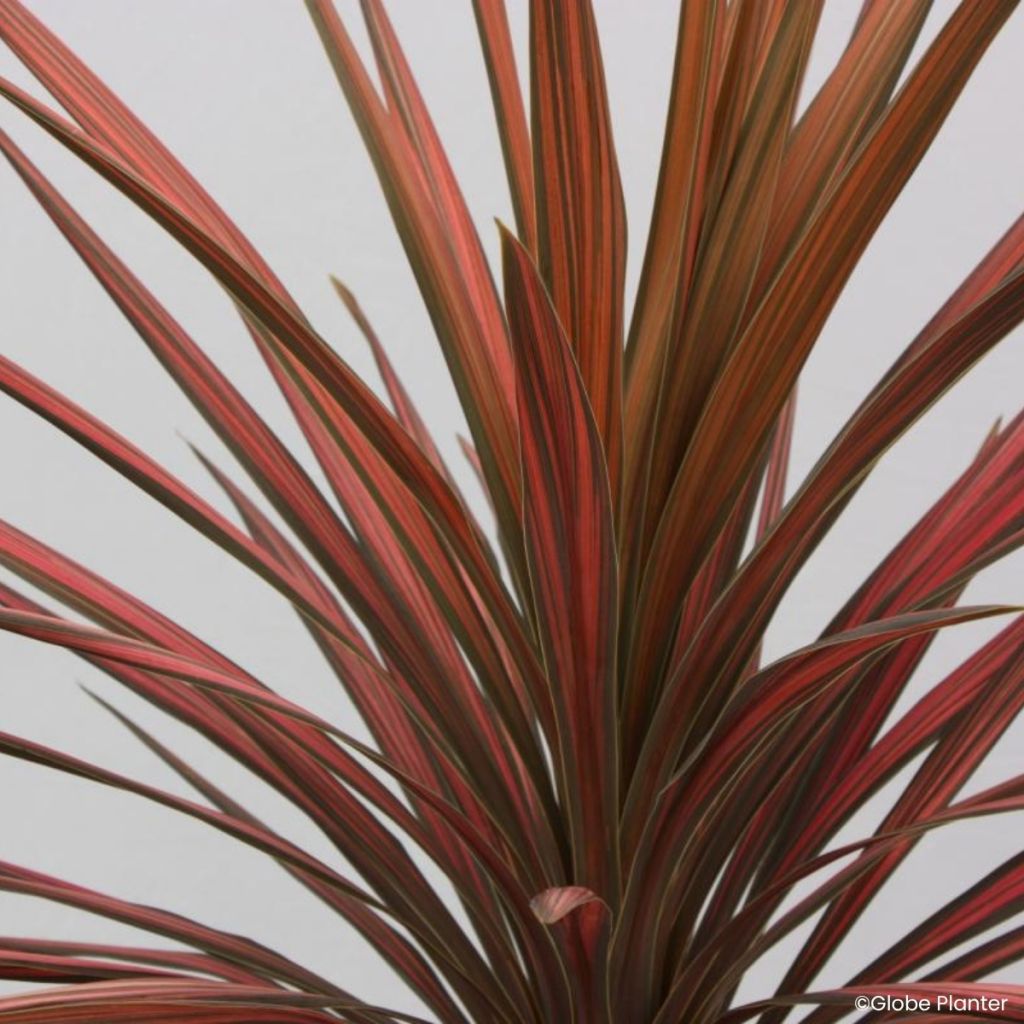
Cordyline australis Coral™
Cordyline australis Coral™
Cordyline australis × banksii 'LEL C01' Coral™
Cabbage Tree, Torbay Palm, Cabbage Palm
Back-to-school special offer!
Get €10 off for every €50 you spend! And get up to €40 off on a single order.
How does it work?
1. Shop your favourites
Add your favourite plants to your basket. For every €50 you spend (excluding delivery charges, store credit and the plastic-free option), you’ll receive a €10 voucher.
€50 spent = €10 voucher
€100 spent = €20 voucher
€150 spent = €30 voucher
€200 spent = €40 voucher
2. Place your order
Once your basket reaches one of the spending thresholds, place your order. You can even choose your delivery date!
3. Receive your voucher
As soon as your order has been shipped, you’ll receive an email containing your personal voucher code and its value.
4. Use it on your next order
Your voucher is valid for 90 days from the date you receive it. It can be used once only, on a new order worth at least the value of the voucher, excluding delivery charges.
Please note: Vouchers can be combined with other offers, but cannot be split or refunded.
Home or relay delivery (depending on size and destination)
Important: You may be charged customs duties by your country’s customs authorities upon delivery.
Schedule delivery date,
and select date in basket
This plant carries a 24 months recovery warranty
More information
We guarantee the quality of our plants for a full growing cycle, and will replace at our expense any plant that fails to recover under normal climatic and planting conditions.
Would this plant suit my garden?
Set up your Plantfit profile →
Description
Cordyline australis 'LEL C01' Coral™ is a variety of False Dracaena with a very harmonious and ornamental colour combination. Its long, narrow leaves stand upright before opening out into the shape of a small palm with a characteristic architectural silhouette. The original and stylish foliage of this cordyline is coral pink, striped with greenish brown. With moderate growth, it forms a short stipe that gradually elevates the tuft of leaves up to 1.70 to 2 m over time. After several years of cultivation, the plant flowers with impressive and attractive large cream-white panicles. Well-suited to the climate of the Atlantic coast or the south, it will need to be grown in a pot in colder regions and sheltered in winter.
Cordyline, sometimes nicknamed False Dragon Tree, is a genus that has moved through several botanical families and is now classified among the Asparagaceae, whose type genus is asparagus (Asparagus). There are about fifteen wild species of Cordyline native to a wide area of the western Pacific. Cordyline australis is a species from the south of New Zealand, the largest in the genus, as in its native land it often exceeds 6 m in height, with old specimens even reaching 20 m and forming a branched trunk like a tree. Its very slender leaves reach 1 m in length but only 5 cm in width, and the flowering in large white panicles is pleasantly fragrant. It is no wonder that breeders are interested in this naturally attractive plant to produce ever more ornamental cultivars.
John E. Bleck, an American horticulturist, fertilised a Cordyline 'Albertii' with multicoloured foliage dominated by green and yellow, with pollen from the dark purple 'Purple Tower' variety to obtain Cordyline Coral. This new variety was protected by a patent in 2009 before being released to the market. Significantly smaller than the typical wild species, this pretty Cordyline forms a plant about 1.70 m tall and 1.50 m wide in ten years. Its growth rate is moderate to relatively fast compared to other varieties. It develops long, ribbon-like leaves 40 to 90 cm long but only 2 to 3 cm wide. Their dominant hue is a coral to salmon pink, with variegations in green, brown, and purple tones. The colour of the foliage can fluctuate with the seasons, and emerging leaves are generally brighter than mature ones. The rosette is dense in its centre and opens out like a palm on the periphery, giving the plant an incomparable architectural form. It rises gradually, borne by a stipe (the equivalent in Monocotyledons, which include the Asparagaceae, just like Palms, to the trunk formed by Dicotyledon-type plants). After several years of cultivation, the plant produces spectacular flowers in the form of large, branched panicles. While the individual flowers are small, their abundance creates a real spectacle for many weeks, in cream-white tones, exuding a delicate fragrance.
Requiring very little maintenance, apart from being sheltered in winter in cold regions, Cordyline Coral is the ideal plant to create an exotic scene in gardens on the Atlantic coast and in the south. Plant it alongside palms, like the superb Syagrus romanzoffiana with its coconut palm appearance, add a few clumps of Hedychium, the magnificent ornamental Gingers with floral spikes evocative of the tropics, and why not even one or two Banana Trees to add to the sense of escape. If your climate is too harsh to consider outdoor planting, this Cordyline will adorn your conservatory or can be treated as an orangery plant, left in the garden during the fine weather and then overwintered in a cool, bright room in winter.

Cordyline australis Coral™ in pictures
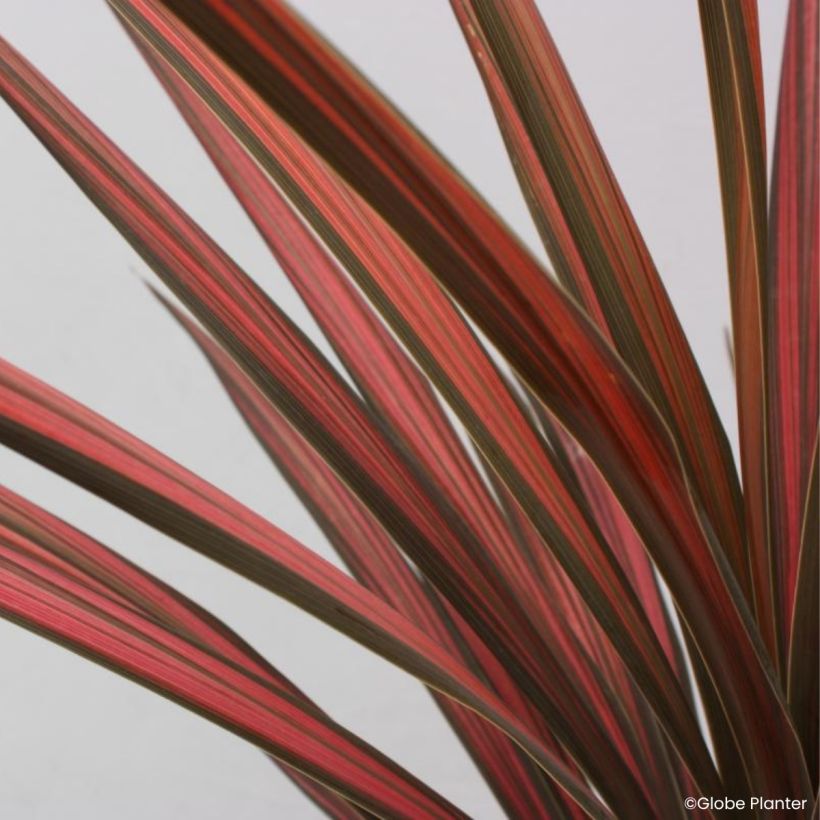
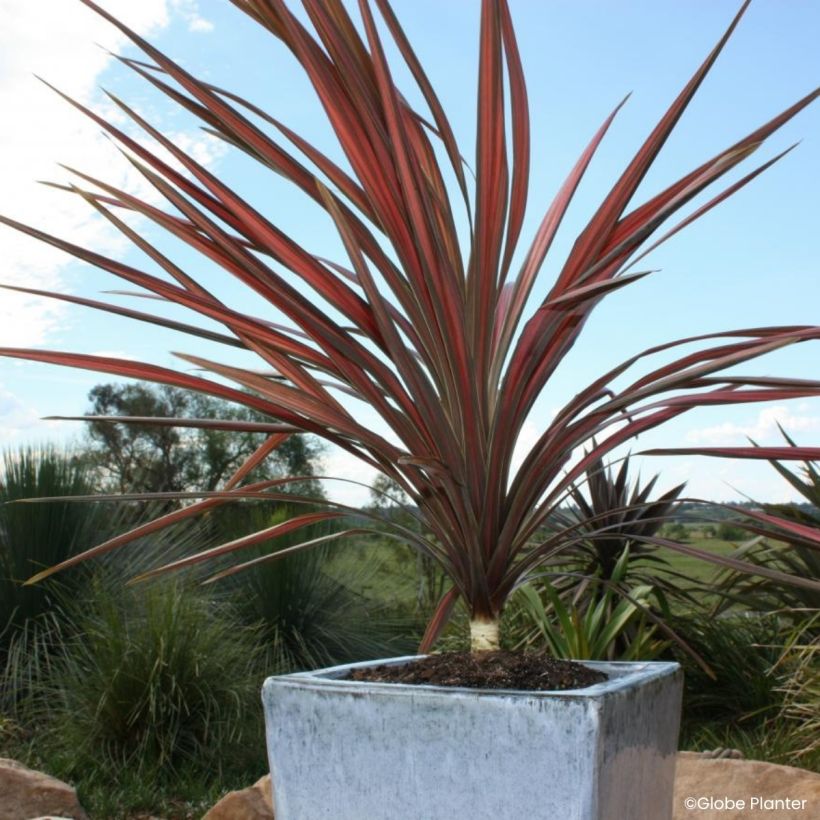
Plant habit
Flowering
Foliage
Botanical data
Cordyline
australis × banksii
'LEL C01' Coral™
Asparagaceae
Cabbage Tree, Torbay Palm, Cabbage Palm
Cultivar or hybrid
Planting and care
Cordyline australis 'Coral' thrives in sunny positions in a fairly moist, well-drained soil. It tolerates moderate drought, winds, and sea spray, but should be sheltered from cold northerly winds. This plant enjoys summer heat and dislikes waterlogged soils. When planting in spring, incorporate some sand. In winter, protect the top of the shrub with fleece. Cordyline does not require specific pruning. Simply remove dried leaves and spent flowers. Avoid overwatering; water only during dry spells. It has few pests as it does not attract insects. It grows well in a large pot, even indoors if the room is very bright and not overheated.
Planting period
Intended location
Care
Planting & care advice
-

-

-

-

-
-
-

-
This item has not been reviewed yet - be the first to leave a review about it.
Recently viewed products
Haven't found what you were looking for?
Hardiness is the lowest winter temperature a plant can endure without suffering serious damage or even dying. However, hardiness is affected by location (a sheltered area, such as a patio), protection (winter cover) and soil type (hardiness is improved by well-drained soil).

The flowering period indicated on our website applies to countries and regions located in USDA zone 8 (France, the United Kingdom, Ireland, the Netherlands, etc.)
It will vary according to where you live:- In zones 9 to 10 (Italy, Spain, Greece, etc.), flowering will occur about 2 to 4 weeks earlier.
- In zones 6 to 7 (Germany, Poland, Slovenia, and lower mountainous regions), flowering will be delayed by 2 to 3 weeks.
- In zone 5 (Central Europe, Scandinavia), blooming will be delayed by 3 to 5 weeks.
In temperate climates, pruning of spring-flowering shrubs (forsythia, spireas, etc.) should be done just after flowering.
Pruning of summer-flowering shrubs (Indian Lilac, Perovskia, etc.) can be done in winter or spring.
In cold regions as well as with frost-sensitive plants, avoid pruning too early when severe frosts may still occur.
The planting period indicated on our website applies to countries and regions located in USDA zone 8 (France, United Kingdom, Ireland, Netherlands).
It will vary according to where you live:
- In Mediterranean zones (Marseille, Madrid, Milan, etc.), autumn and winter are the best planting periods.
- In continental zones (Strasbourg, Munich, Vienna, etc.), delay planting by 2 to 3 weeks in spring and bring it forward by 2 to 4 weeks in autumn.
- In mountainous regions (the Alps, Pyrenees, Carpathians, etc.), it is best to plant in late spring (May-June) or late summer (August-September).
The harvesting period indicated on our website applies to countries and regions in USDA zone 8 (France, England, Ireland, the Netherlands).
In colder areas (Scandinavia, Poland, Austria...) fruit and vegetable harvests are likely to be delayed by 3-4 weeks.
In warmer areas (Italy, Spain, Greece, etc.), harvesting will probably take place earlier, depending on weather conditions.
The sowing periods indicated on our website apply to countries and regions within USDA Zone 8 (France, UK, Ireland, Netherlands).
In colder areas (Scandinavia, Poland, Austria...), delay any outdoor sowing by 3-4 weeks, or sow under glass.
In warmer climes (Italy, Spain, Greece, etc.), bring outdoor sowing forward by a few weeks.
Shipping country and language
Your country of residence may be:
Your country of residence is:
For a better user experience on our website, you can select:
Your shipping country:
-
 Austria
-
 Belgium
-
 Bosnia & Herzegovina
-
 Bulgaria
-
 Croatia
-
 Cyprus
-
 Czechia
-
 Denmark
-
 Estonia
-
 Finland
-
 France
-
 Germany
-
 Greece
-
 Hungary
-
 Iceland
-
 Ireland
-
 Italy
Italy
-
 Latvia
-
 Liechtenstein
-
 Lithuania
-
 Luxembourg
-
 Malta
Malta
-
 Netherlands
-
 Poland
-
 Portugal
-
 Romania
-
 Serbia
-
 Slovakia
-
 Slovenia
-
 Spain
Spain
-
 Sweden
-
 Switzerland
Language:
-
French
-
 English
-
Spanish
-
Italian
-
German
-
Portuguese
-
Dutch
-
Finnish
My Account
Hello
My wish lists
My cart
Log in / Register
Existing customer?
This form is protected by reCAPTCHA - the Google Privacy Policy and Terms of Service apply.
New customer?
Create an account to track your orders, access our customer service and, if you wish, make the most of our upcoming offers.