Fritillaria imperialis Prolifera - Grande Fritillaire, Fritillaire impériale, Couronne impériale
Fritillaria imperialis Prolifera - Grande Fritillaire, Fritillaire impériale, Couronne impériale
Fritillaria imperialis Prolifera - Grande Fritillaire, Fritillaire impériale, Couronne impériale

Fritillaria imperialis Prolifera - Grande Fritillaire, Fritillaire impériale, Couronne impériale

Fritillaria imperialis Prolifera - Grande Fritillaire, Fritillaire impériale, Couronne impériale
Fritillaria imperialis Prolifera - Grande Fritillaire, Fritillaire impériale, Couronne impériale
Fritillaria imperialis Prolifera - Grande Fritillaire, Fritillaire impériale, Couronne impériale
Fritillaria imperialis Prolifera
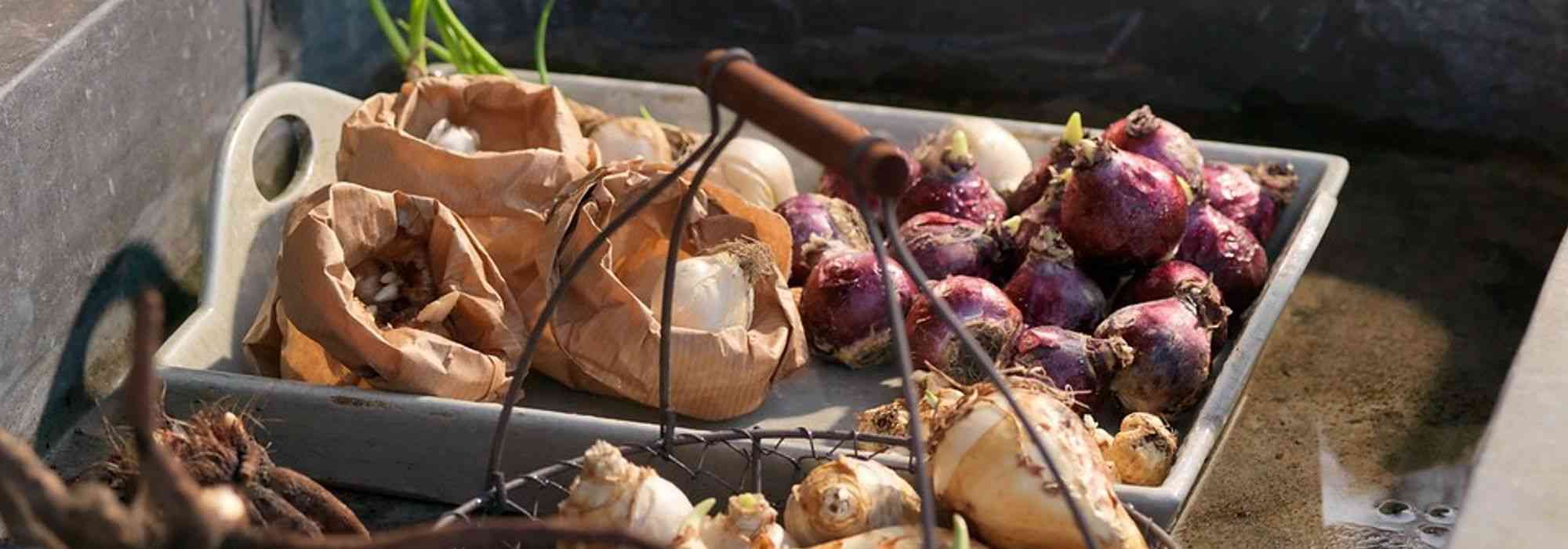
Two bulbs were rotten, so it was impossible to plant them. The third was one-third rotten; I planted it but without any hope of it taking root. Please propose a solution.
Fabienne , 01/12/2025
Back-to-school special offer!
Get €10 off for every €50 you spend! And get up to €40 off on a single order.
How does it work?
1. Shop your favourites
Add your favourite plants to your basket. For every €50 you spend (excluding delivery charges, store credit and the plastic-free option), you’ll receive a €10 voucher.
€50 spent = €10 voucher
€100 spent = €20 voucher
€150 spent = €30 voucher
€200 spent = €40 voucher
2. Place your order
Once your basket reaches one of the spending thresholds, place your order. You can even choose your delivery date!
3. Receive your voucher
As soon as your order has been shipped, you’ll receive an email containing your personal voucher code and its value.
4. Use it on your next order
Your voucher is valid for 90 days from the date you receive it. It can be used once only, on a new order worth at least the value of the voucher, excluding delivery charges.
Please note: Vouchers can be combined with other offers, but cannot be split or refunded.
Home or relay delivery (depending on size and destination)
Important: You may be charged customs duties by your country’s customs authorities upon delivery.
Schedule delivery date,
and select date in basket
This plant carries a 6 months recovery warranty
More information
We guarantee the quality of our plants for a full growing cycle, and will replace at our expense any plant that fails to recover under normal climatic and planting conditions.
Would this plant suit my garden?
Set up your Plantfit profile →
Description
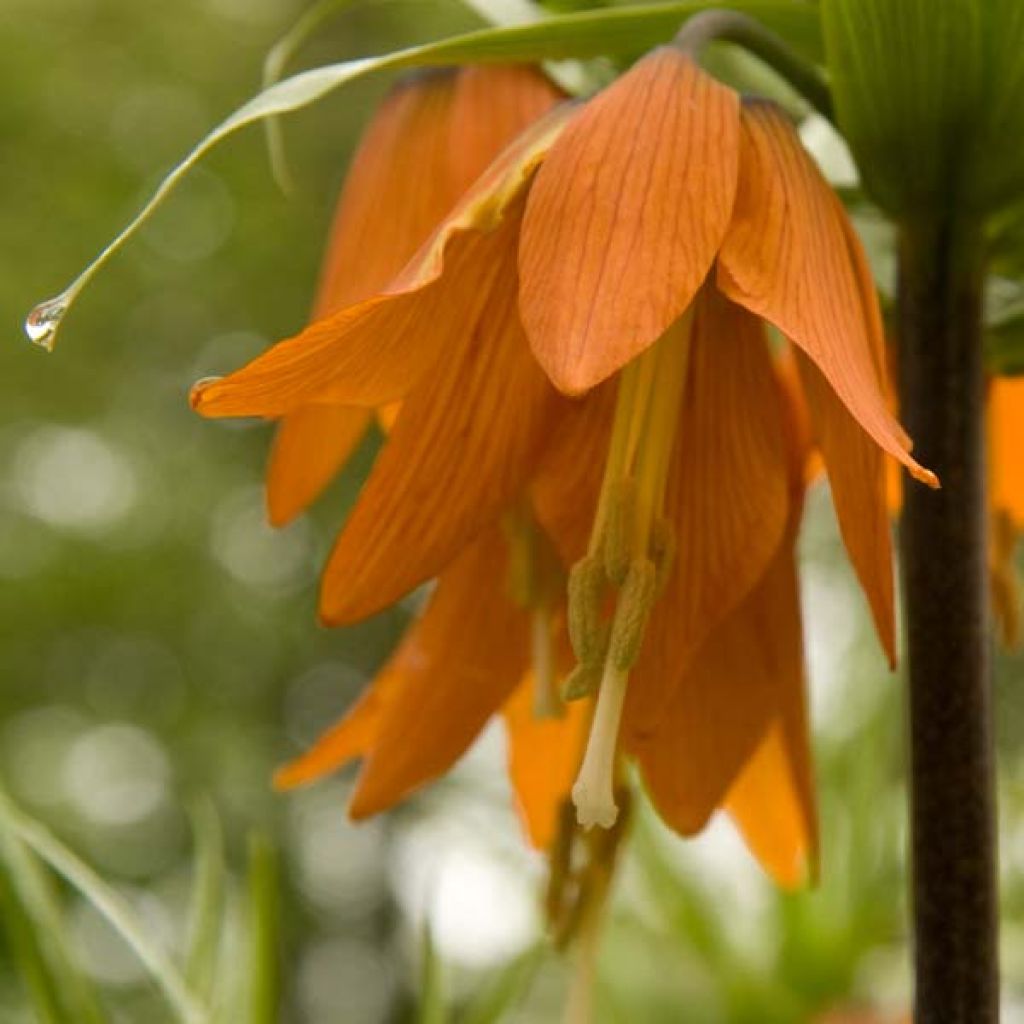
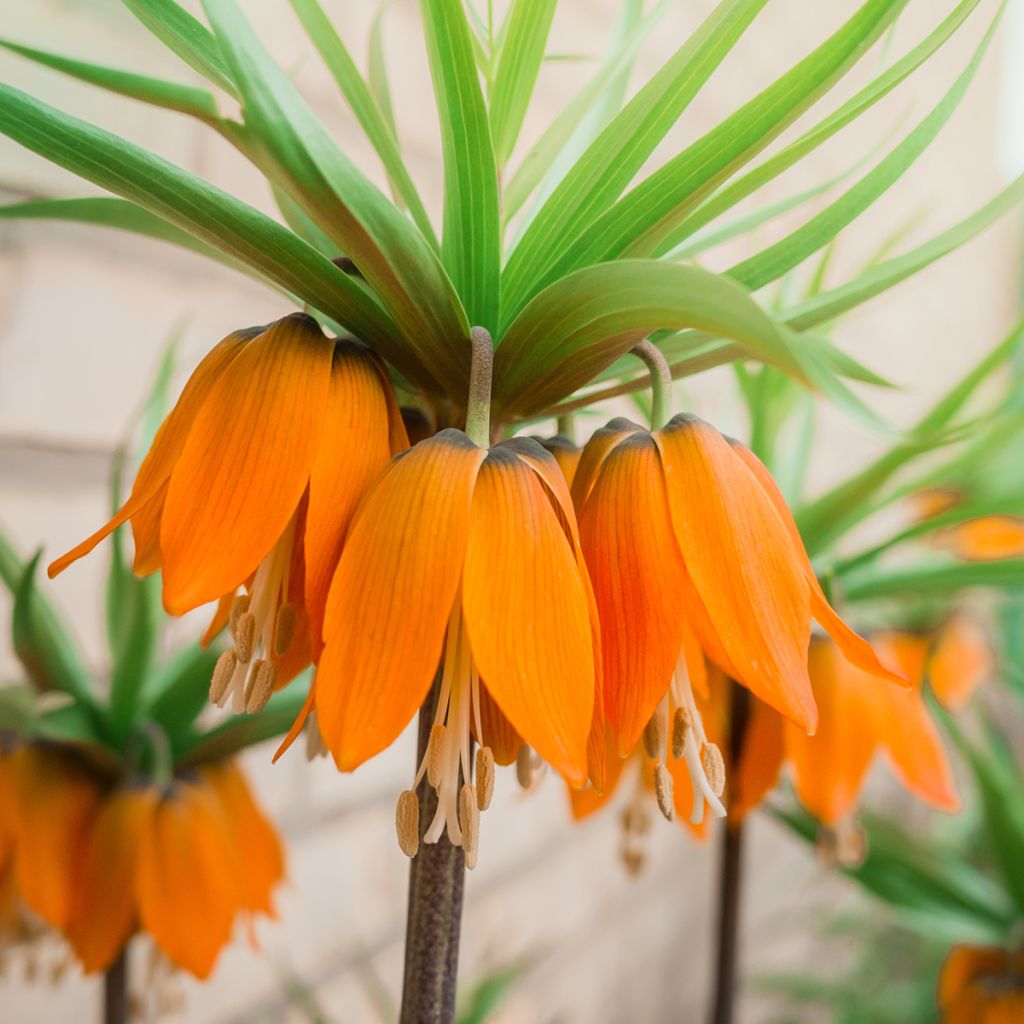
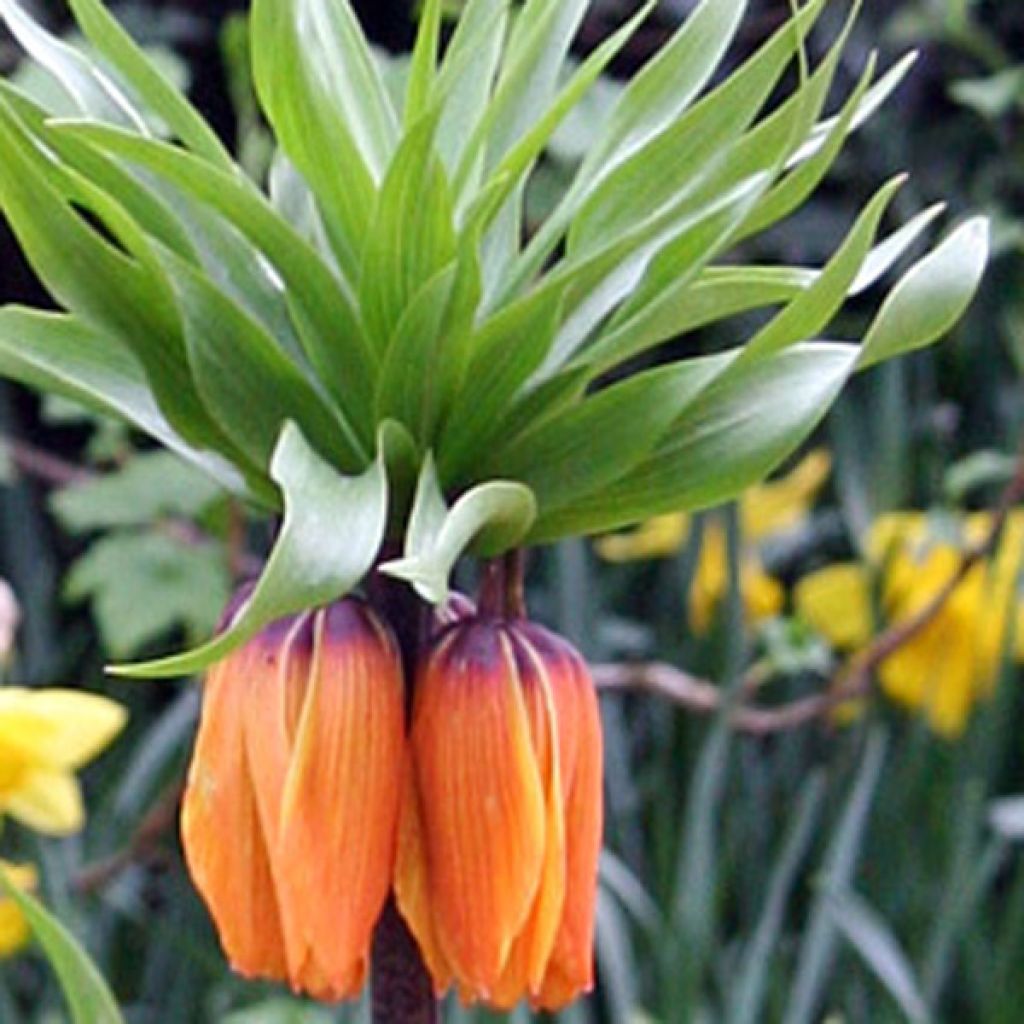
Fritillaria imperialis 'Prolifera' is an old variety of crown imperial, spectacular for its two-tiered flowering. At the top of each stem, its large, reddish-orange bells are arranged in superimposed crowns, topped by a tuft of green bracts. This very upright, emerging silhouette catches the eye in a spring border. It is planted in small groups, in deep, fertile, well-drained soil.
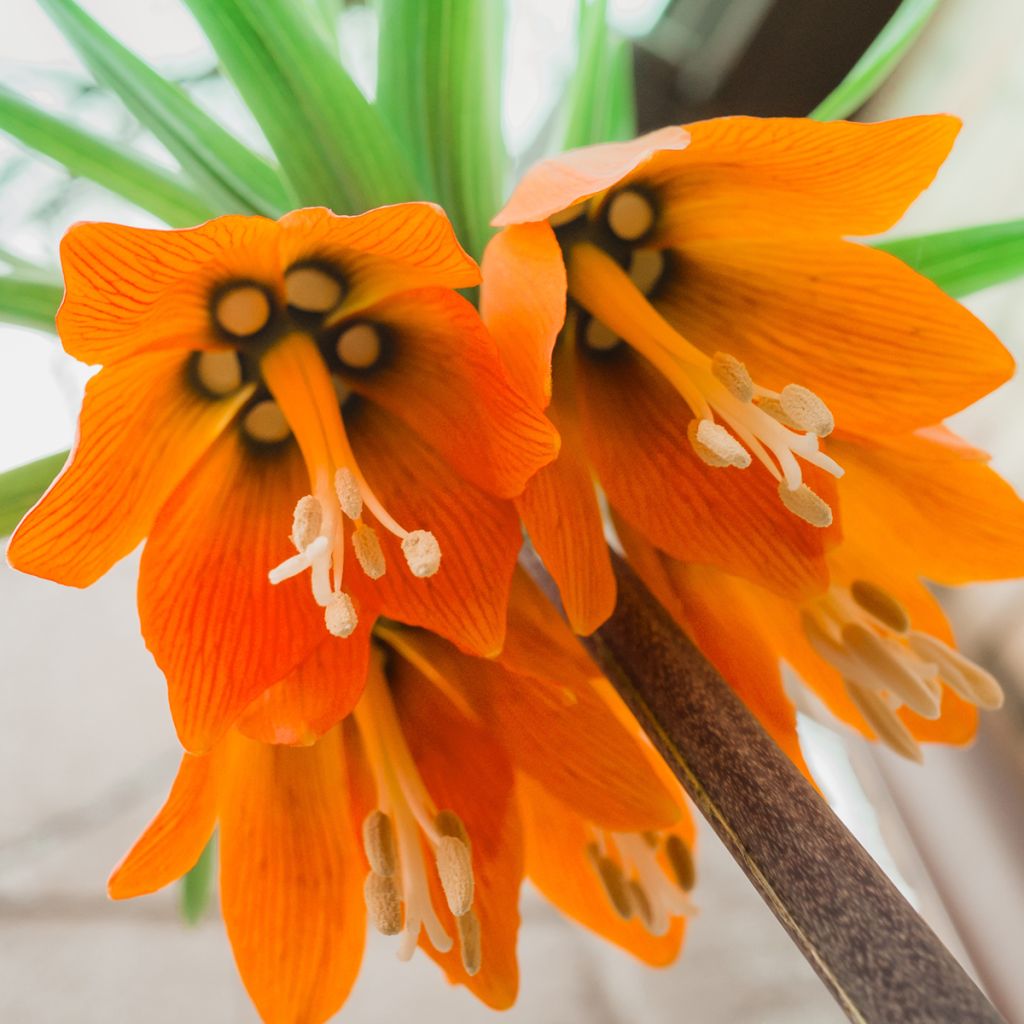
This imperial fritillary belongs to the Liliaceae family. The type species is also called crown imperial or, more locally, rattlesnake herb, on account of its large, pendulous flowers. In the wild, Fritillaria imperialis grows in mountainous regions of western Asia, from Turkey to Iran, Afghanistan, Pakistan and the western Himalayas. It is mainly found on rocky slopes, in open habitats, under a cool mountain climate and in well-drained soils. It is a bulbous perennial, or geophyte: it stores its reserves in a large scaly bulb, grows vigorously in spring, flowers, then its foliage yellows before dying back in summer. 'Prolifera' is a very old horticultural selection, noted for its so-called "crown upon crown" flowering. It differs from the type species by having a greater number of flowers and two superimposed crowns of flowers. The plant develops a thick, very straight stem, clad in bright green, glossy, lanceolate leaves arranged in tiers around the stem. At maturity it reaches 1 to 1.50 m tall in flower. The bulb may produce bulbil offsets over time, but the plant stays modestly in place. Flowering occurs in April or May, depending on the climate. The flowers, in the shape of pendulous bells, about 5 cm across, have six fleshy segments of a deep reddish-orange. They are topped by a tuft of green bracts that accentuates the crown effect. Like many imperial fritillaries, the plant gives off a strong, foxy smell, mainly from the bulb and stems when broken or crushed. The foliage is deciduous: it dries after flowering, a sign that the bulb is replenishing its reserves.
The proliferous forms of crown imperial are among the oldest bulbs cultivated in Europe, already sought after by Renaissance collectors.
In the garden, this Prolifera fritillary is best planted in groups of three or five bulbs, not too crowded. It gives substance to a border before the summer perennials arrive and slips between plants whose foliage will take over. It will look superb with the coppery flowers of the Triumph tulip 'Brown Sugar' and the orange-yellow of the daffodil 'Red Devon'. A few bulbs of Muscari latifolium 'Grape Ice' will temper this warm colour palette. The Parrot tulip 'James Last', in pinkish mauve and salmon, will form a softer, almost retro association, very suitable for a vicar's garden or a sophisticated spring border.
This fritillary likes moist, very well-drained soils, even poor ones. The stink-bug smell of the bulb deters moles but not field mice. A gravel bed at planting time will partly protect against rodents. Growing in a deep, well-drained pot, overwintered in a cold frame, is best reserved for rare species.

Fritillaria imperialis Prolifera - Grande Fritillaire, Fritillaire impériale, Couronne impériale in pictures
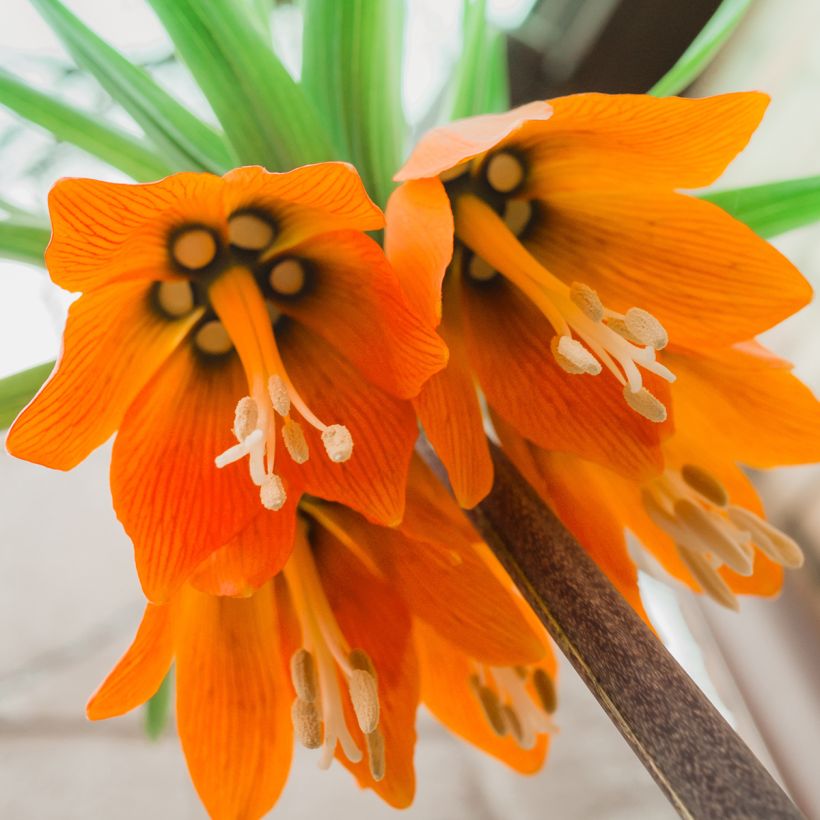
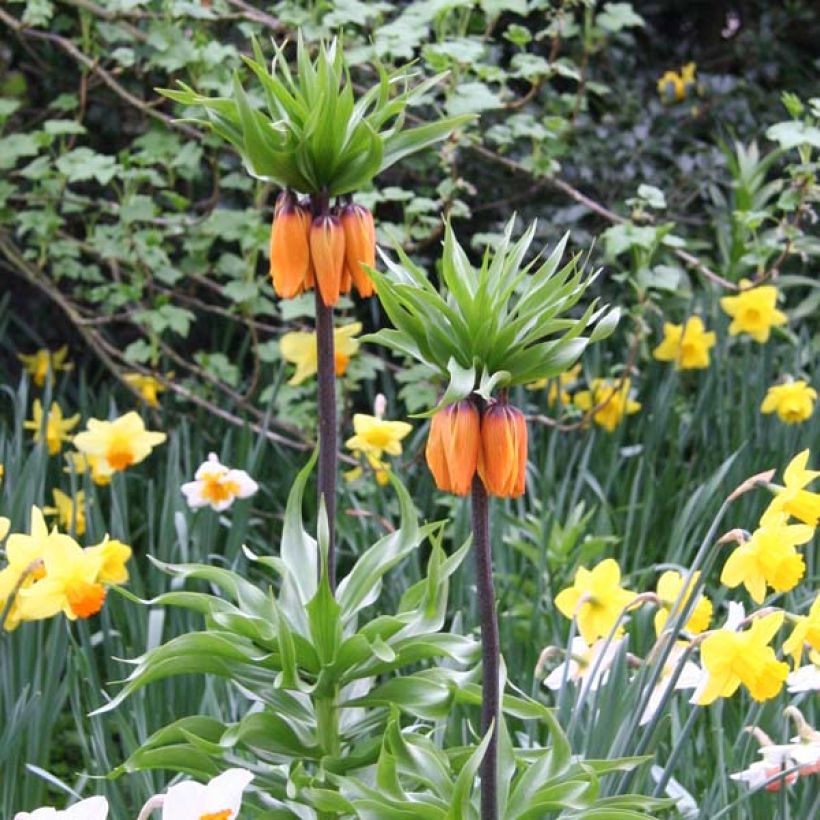
Plant habit
Flowering
Foliage
Botanical data
Fritillaria
imperialis
Prolifera
Liliaceae
Imperialis comosa, Petilium imperiale
Cultivar or hybrid
Planting and care
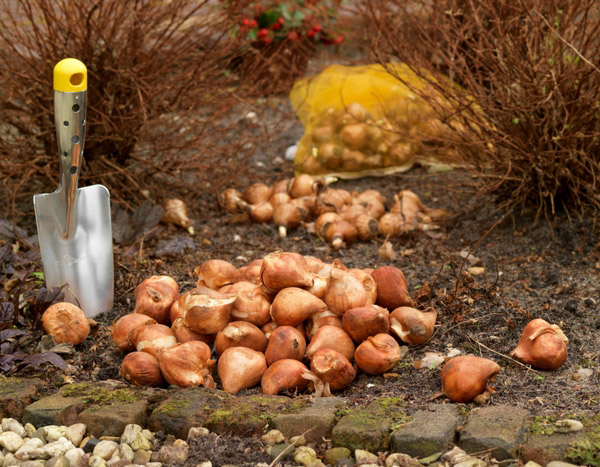
Plant the bulbs of Fritillaria imperialis Prolifera in autumn, from September to November, as soon as they arrive, as they do not tolerate prolonged storage. Choose a warm, sunny position, sheltered from strong winds that can lay the tall flower stalks. This plant requires deep, fertile soil, preferably loamy or humus-bearing, but above all very well-drained; in heavy soil, lighten generously with gravel, coarse sand or mature compost, and plant on a slight mound if water stagnates in winter. Place the bulbs 20-30 cm deep, spaced about 25-30 cm apart, positioning them slightly on their side to prevent water from collecting in the central cavity. Water after planting, then only in spring if the weather turns dry. After flowering, allow the foliage to yellow naturally: it feeds the bulb for the following year. Avoid moving the plant once established. The clumps can be divided if necessary in late summer, when the bulbs are dormant.
Planting period
Intended location
Care
Planting & care advice
-
-

-

-
-

-
-

-

-
, onOrder confirmed
Reply from on Promesse de fleurs
Recently viewed products
Haven't found what you were looking for?
Hardiness is the lowest winter temperature a plant can endure without suffering serious damage or even dying. However, hardiness is affected by location (a sheltered area, such as a patio), protection (winter cover) and soil type (hardiness is improved by well-drained soil).

The flowering period indicated on our website applies to countries and regions located in USDA zone 8 (France, the United Kingdom, Ireland, the Netherlands, etc.)
It will vary according to where you live:- In zones 9 to 10 (Italy, Spain, Greece, etc.), flowering will occur about 2 to 4 weeks earlier.
- In zones 6 to 7 (Germany, Poland, Slovenia, and lower mountainous regions), flowering will be delayed by 2 to 3 weeks.
- In zone 5 (Central Europe, Scandinavia), blooming will be delayed by 3 to 5 weeks.
In temperate climates, pruning of spring-flowering shrubs (forsythia, spireas, etc.) should be done just after flowering.
Pruning of summer-flowering shrubs (Indian Lilac, Perovskia, etc.) can be done in winter or spring.
In cold regions as well as with frost-sensitive plants, avoid pruning too early when severe frosts may still occur.
The planting period indicated on our website applies to countries and regions located in USDA zone 8 (France, United Kingdom, Ireland, Netherlands).
It will vary according to where you live:
- In Mediterranean zones (Marseille, Madrid, Milan, etc.), autumn and winter are the best planting periods.
- In continental zones (Strasbourg, Munich, Vienna, etc.), delay planting by 2 to 3 weeks in spring and bring it forward by 2 to 4 weeks in autumn.
- In mountainous regions (the Alps, Pyrenees, Carpathians, etc.), it is best to plant in late spring (May-June) or late summer (August-September).
The harvesting period indicated on our website applies to countries and regions in USDA zone 8 (France, England, Ireland, the Netherlands).
In colder areas (Scandinavia, Poland, Austria...) fruit and vegetable harvests are likely to be delayed by 3-4 weeks.
In warmer areas (Italy, Spain, Greece, etc.), harvesting will probably take place earlier, depending on weather conditions.
The sowing periods indicated on our website apply to countries and regions within USDA Zone 8 (France, UK, Ireland, Netherlands).
In colder areas (Scandinavia, Poland, Austria...), delay any outdoor sowing by 3-4 weeks, or sow under glass.
In warmer climes (Italy, Spain, Greece, etc.), bring outdoor sowing forward by a few weeks.
Shipping country and language
Your country of residence may be:
Your country of residence is:
For a better user experience on our website, you can select:
Your shipping country:
-
 Austria
-
 Belgium
-
 Bosnia & Herzegovina
-
 Bulgaria
-
 Croatia
-
 Cyprus
-
 Czechia
-
 Denmark
-
 Estonia
-
 Finland
-
 France
-
 Germany
-
 Greece
-
 Hungary
-
 Iceland
-
 Ireland
-
 Italy
Italy
-
 Latvia
-
 Liechtenstein
-
 Lithuania
-
 Luxembourg
-
 Malta
Malta
-
 Netherlands
-
 Poland
-
 Portugal
-
 Romania
-
 Serbia
-
 Slovakia
-
 Slovenia
-
 Spain
Spain
-
 Sweden
-
 Switzerland
Language:
-
French
-
 English
-
Spanish
-
Italian
-
German
-
Portuguese
-
Dutch
-
Finnish
My Account
Hello
My wish lists
My cart
Log in / Register
Existing customer?
This form is protected by reCAPTCHA - the Google Privacy Policy and Terms of Service apply.
New customer?
Create an account to track your orders, access our customer service and, if you wish, make the most of our upcoming offers.