


At the end of each year, it's an opportunity to reflect on the favourite plants of the editorial team, those that have marked our gardens, terraces, and interiors with their beauty, originality, or ease of cultivation. Behind each favourite, there is a gardener's story, a meeting with a plant that has found its place and transformed a patch of greenery into a true source of inspiration.
In this article, the editorial team shares its top plant picks for 2025, from characterful trees and shrubs to floriferous perennials, not forgetting the graphic houseplants and lesser-known species that deserve to be recognised. This selection is guided by a passion for gardening, a desire to share useful tips, and to help you find the plant that will make your heart race.
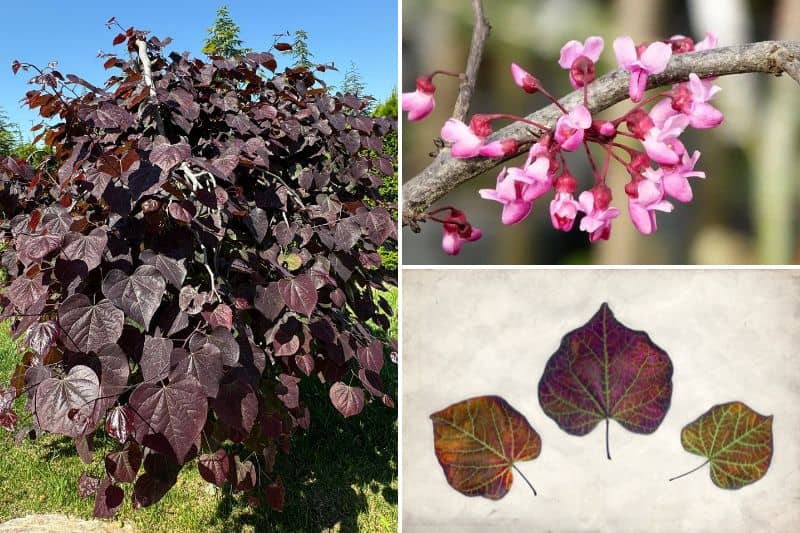
Ingrid: the Cercis canadensis 'Ruby Falls'
This year, my choice is the Cercis canadensis 'Ruby Falls', a dwarf weeping redbud that offers a poetic presence in my bordering terrace bed. Planted in partial shade, it boasts heart-shaped leaves of a deep purple mixed with green, which seem to cascade along its drooping branches. In spring, its violet-pink flowers emerge on the still bare wood, bringing unexpected colour before the young red leaves unfurl. In autumn, this foliage takes on bronze and copper hues before falling.
I particularly love the contrast of its purple foliage with that of the surrounding plants, especially the bright green and violet-blue flowers of a nearby Hardy geranium 'Rozanne'. Alongside them, my Greater celandine, more spontaneous, naturally brightens the base of the shrub with its light green foliage. A little further away, a Acer palmatum ‘Bloodgood’, with its reddish-brown foliage, echoes the Ruby Falls. This chromatic continuity, from the purple of the Cercis to the darker hue of the maple, gives a gentle coherence to the bed and creates a visual depth where the light catches differently depending on the seasons.
This little Canadian redbud easily finds its place in a garden, thanks to its weeping habit and compact size. Its good hardiness makes it simple to cultivate, as long as the soil retains some moisture in summer. At my place, it quickly integrated into the bed, bringing softness to this part of the garden without ever overshadowing the neighbouring perennials.
Virginie: the Begonia 'Rex Escargot'
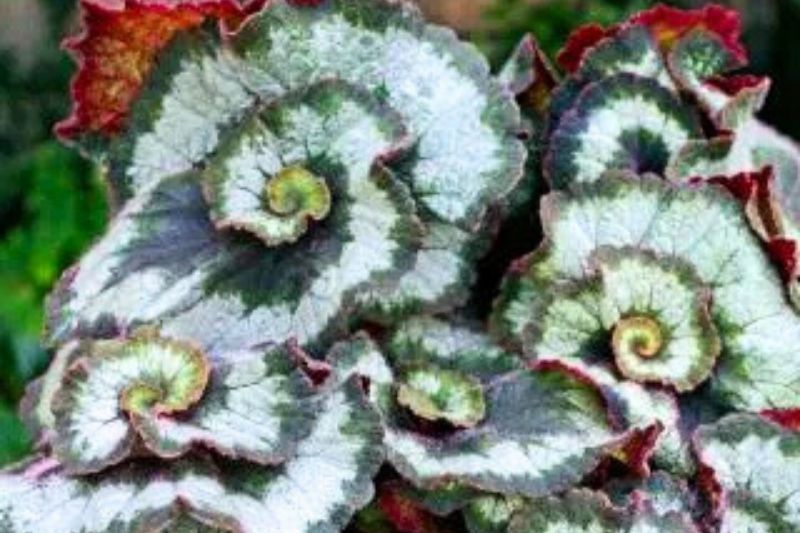
My heart undoubtedly leans towards the Begonia 'Rex Escargot'. What makes it truly special? This variety lives up to its name: each leaf spirals and seems to form a small snail shell, hypnotic and wildly graphic. We love its artistic touch with its unique colour contrasts: a blend of greens, silver, and chocolate.
With its velvety foliage, spiralled patterns, and unprecedented colours, it marks the strong return of indoor begonias, which are increasingly appealing due to their original aesthetics and diverse foliage. Long relegated to grandmothers' balconies or forgotten greenhouses, begonias now rank among the top 5 most sought-after plants for our interiors. Right in line with the major trend of decorative begonias, this variety stands out as a vintage icon brought back to life. Easy to cultivate (as long as you respect its preference for ambient humidity and filtered light), it adapts perfectly to all our interiors.
Olivier: the Hyssopus officinalis
"You, who are very sentimental, will surely appreciate this plant!" And bam! I was handed, without further ado, a clump of earth, from which only a few meagre green shoots emerged. Of course, I knew a bit about hyssop, as I have been passionate about medicinal plants since my studies. Moreover, it held a prominent place in medieval herb gardens. However, in my heavy soil, I remained… sceptical about its future. So, I decided to try it in a large container alongside my other Mediterranean plants, botanical cousins: thyme, sage, rosemary, and lavender.
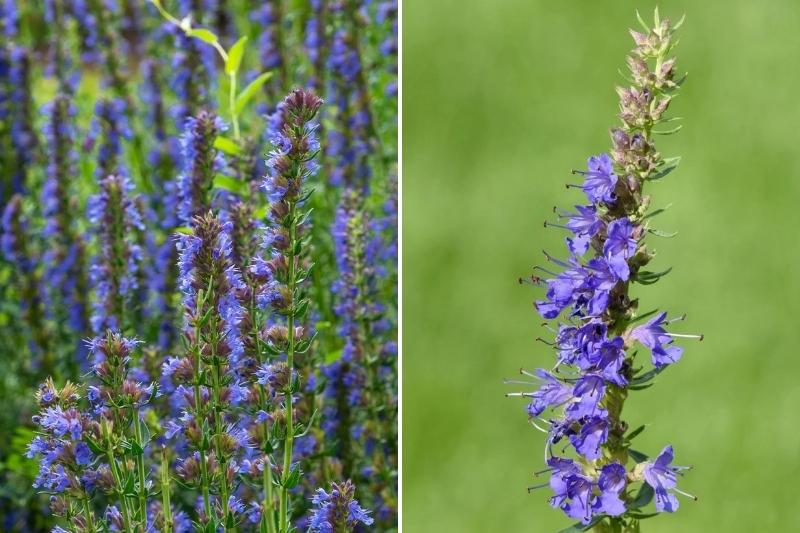
Hyssopus officinalis is a dwarf undershrub (you can use that as a somewhat original insult), ideal for very sunny spots and dry or calcareous soils. And, in just one season, mine has thrived. I particularly love its flowers, a lovely violet-blue, which bloom from July to September and are highly appreciated by pollinating insects, including butterflies. Known as "sacred herb" by the ancient Greeks, this aromatic plant can reach up to 50 cm in height and has very fragrant leaves. It is cultivated for its medicinal properties (infusion for bronchial issues and digestion) and to flavour various dishes such as salads and soups. In short, if you have a spot left in your herb garden: give hyssop a try!
Sophie: the Westringia fruticosa
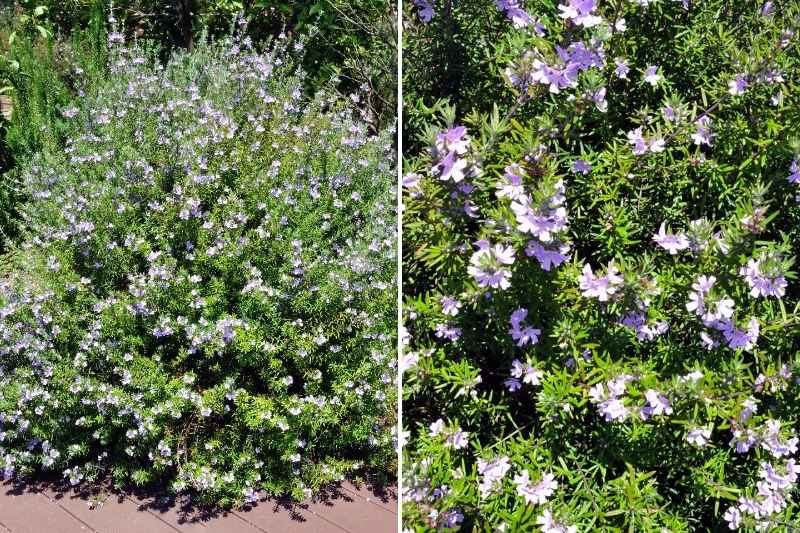
I have chosen the Westringia fruticosa, also known as Australian rosemary, as my plant pick for 2025, because it embodies the perfect companion plant, one that simplifies gardening! With its slight resemblance to rosemary, it has that familiar and sunny charm that immediately sets the tone. In my southern garden, amidst gauras, agapanthus, Leucophyllums, and lavender, it has settled in as if it has always belonged there. Its evergreen and silvery foliage captures the light, its naturally well-defined silhouette adds elegance, and its impressive resistance to heat, wind, and drought makes it a reliable choice, as I know it can thrive without any care. It tempers the exuberance of the blooms, highlights the volumes, and its light and delicate flowering brings just the right amount of freshness. What I love is its easy-going nature and its clean and bright appearance all year round.
With its 1 to 1.5 m in height and the same in spread, the Westringia fruticosa easily finds its place in the garden. Its delicate flowering extends from spring to autumn, returning in waves. It withstands light frosts down to -5 °C without flinching, sometimes even more in well-drained soil, making it perfectly suited for southern gardens, sheltered areas, and coastal climates. To thrive sustainably, it primarily requires a well-drained soil, preferably light, poor, and stony, where water never stagnates, an essential condition to preserve its longevity and natural vigour.
Gwenaëlle: the Protea 'Pink Ice'
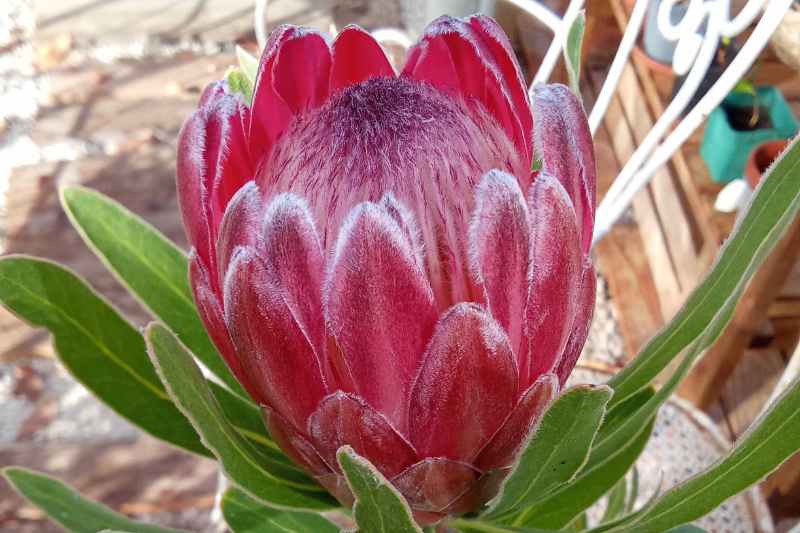
Every year, when we choose our plant of the year to share with you, I always hesitate, as several plants in my garden could claim a spot on this podium. This year, there’s no hesitation… Drumroll… It’s my Protea 'Pink Ice', brought back from Madeira in 2022, that wins all the votes! The tiny plant I bought at the flower market in Funchal and lovingly planted has seen it all, and it’s the only one of the three plants to have survived. Growing it in a greenhouse and repotting it as it grew, it suffered, two years ago, from my carelessness as a gardener when, in the middle of summer, I forgot to ventilate the greenhouse. As a result, one of the two main branches completely cooked, throwing it somewhat off balance. But, with care, it continued to grow, forming new branches to my great satisfaction. What a surprise it was in September to see three buds appear, slowly but surely transforming into those sublime pink inflorescences I had been patiently waiting for in early November.
Proteas, native to South Africa, are considered delicate plants due to their very low hardiness. Of course, I protect it in winter, wrapping it up and watching it like a hawk. I also only water it with room temperature rainwater and have provided it with an acidic and light substrate. I’m not sure I’ll plant it in the garden for a few more years, in which case I’ll need to find it a particularly sheltered spot. The arrival of these large fluffy flowers is such a spectacle that I recommend it to all gardeners who love exotic plants, as this plant literally transports me elsewhere!
Pascale: the Sedum ‘Thunderhead’
I admit, I was long among the detractors of sedums. Perhaps because these plants always seemed a bit dull and unremarkable in the beds. And then, what’s the point of growing these succulent plants at home, in a region where drought was hardly an issue? Climate change has decided otherwise, and the heatwave has taken its toll on other plants I cherished… Not to mention the numerous cultivars of stonecrop that offer new cultivation perspectives.
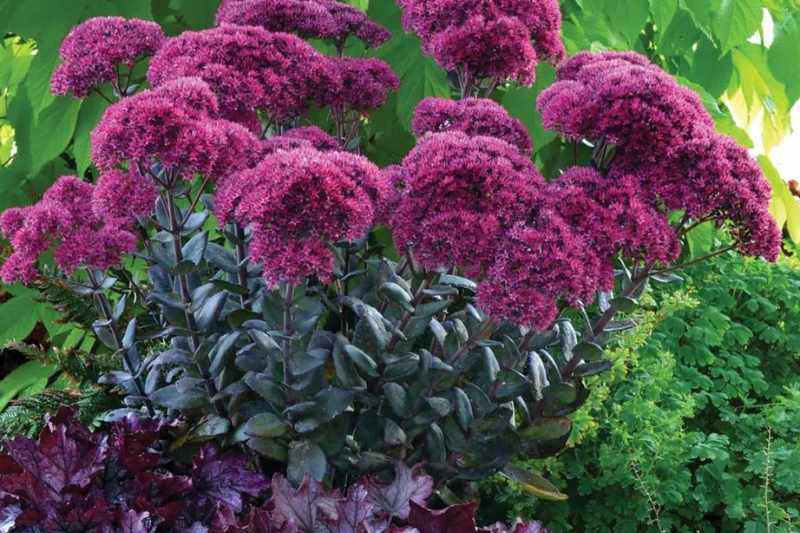
The Sedum ‘Thunderhead’ is one of the pleasant surprises. This variety has literally swept away my prejudices about sedums, thanks to its presence and vigour. From spring, its robust dark stems stand proudly, bearing very fleshy bluish-green foliage. But it’s at the end of summer that the magic happens: the dense and enormous flower heads bloom in a deep purplish-red, lasting until early winter. As these flowers, perched on purple stems, are highly melliferous and nectariferous, they attract swarms of pollinators.
And in winter, this sedum continues to put on a show with its dry inflorescences. I’ve even taken a few to enhance a bouquet of dried flowers and herbs. And already, the next spring shoots are emerging from the ground.
Paired with my beloved heucheras, this stonecrop has found its place in my semi-shaded bed. But elsewhere, it could bask in the sun all summer long.
Elisabeth: the Monstera deliciosa, 25 years of cohabitation with my "philo"
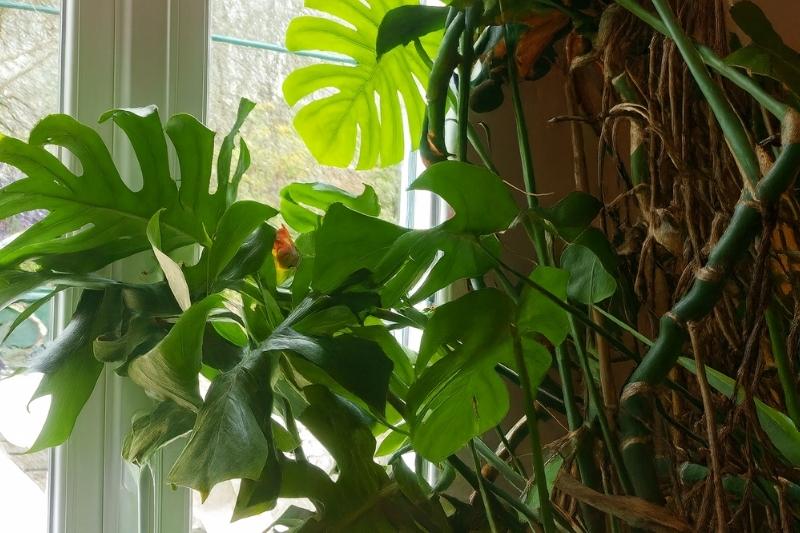
Some stories last, enduring through moves, neglect, and trends. The one I’m about to tell is that of my Monstera deliciosa, my big "philo". It’s 25 years old, and it’s a green giant, a delicious monster clinging to the wall of my living room like a reminder of beautiful holidays in Spain.
Embracing its kitsch nature, it’s a bit of a grandmother’s plant, a symbol of the 70s, the spirit of bygone interiors. One might find this Monstera outdated, with its veranda plant look and postcard charm. Yet, it’s precisely this slightly old-fashioned air that makes it endearing. It signifies comfort and nostalgia.
If this houseplant had a CV, the first line would read: "Survival Expert". I forget to water it for three weeks? No problem, it will halt its growth, and that’s that. A bit of drastic pruning in anticipation of a move? It will sulk, but it will recover. It’s the ideal green plant for busy (or lazy) people; I don’t judge, I’ve lived through both.
Despite its 25 springs, "philo" has never deigned to flower. Because yes, this plant is capable of flowering! And even fruiting! Apparently, its fruits are deliciously edible. It might be lacking some geranium fertiliser, or perhaps it sulks because my living room isn’t humid enough, or too warm. Unless it’s just being a diva. It’s a whimsical creature: its leaves, sometimes smooth, sometimes holey like Swiss cheese, tell the story of its moods. Its support, doubled with bamboo and securely fastened to the wall with a battalion of strings, has become an original element of my décor. Over time, the inhabitants of the house hardly notice it anymore. Visitors, however, never miss the opportunity to comment: “But it’s huge!” or “How old is this monster?” And I confess its age with barely concealed pride.
Why do I love it (and why you might adopt it too)? First, because it endures. Even cats can’t really kill it — at least not mine, despite its efforts and persistence. Secondly, because it’s terribly photogenic: its large, cut leaves and vines bring a little bit of South American jungle into the home. And it’s a true conversation starter. “Do you think it will flower one day?” “How do we give it a more classic shape?”… With it, we learn patience; I still hope it will flower.
My Monstera deliciosa is not “just a plant”. It’s a life companion, a silent witness to my troubles, joys, successes, and also my losses. It’s a rock, a stubborn presence you can count on. And that’s precisely why I love it.
Aurélien: the Winecup or Callirhoe involucrata
If you appreciate mallows, lavateras, and other Anisodontea, then you’ll surely fall for their perennial and ground-cover cousin, the winecup (Callirhoe involucrata)!
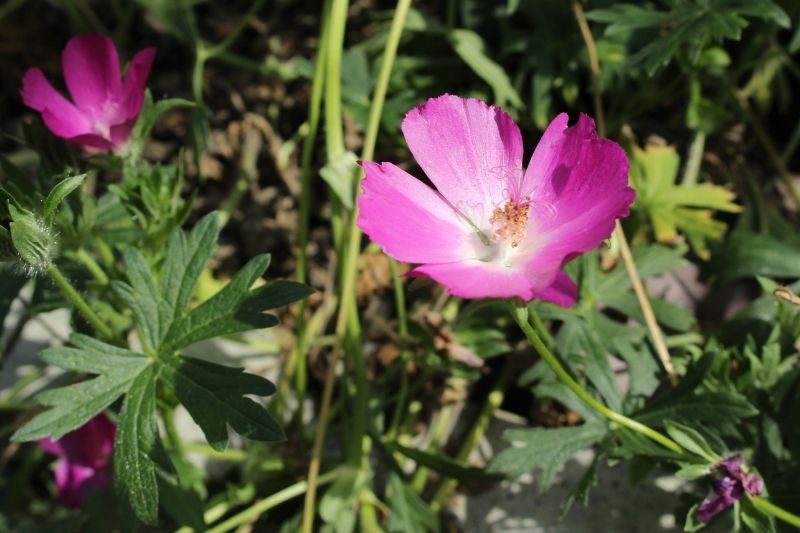
Far less common in gardens, this Mexican species produces fine creeping stems with deeply lobed leaves, which weave between neighbouring plants without bothering them in the least. It reaches about 60 cm in diameter and 20-30 cm in height. The plant can easily be forgotten until large corollas of saturated fuchsia pink appear throughout the summer. Despite their ultra-vibrant hue, they blend effortlessly, in joyful whimsy, with blues, purples, or grey foliage: shrubby sages, immortelles, and perennial verbenas, or even yuccas will make excellent companions to create a Mediterranean atmosphere or a garden that requires no watering.
Frugal, floriferous, and quite resistant to drought once established, the winecup has many qualities and will thrive in any well-drained soil, preferably calcareous. North of the Loire, a spot in a rock garden or a sloped bed facing south will make it happy, possibly with the addition of some coarse sand or gravel to improve water drainage. In good conditions, it can be expected to withstand, despite its Central American origins, temperatures down to about -12/-15°C. A lovely addition to your borders that you won’t see everywhere!
At the end of each year, it’s an opportunity to reflect on the favourite plants of the editorial team, those that have marked our gardens, terraces, and interiors with their beauty, originality, or ease of cultivation. Behind each favourite, there is a gardener’s story, a meeting with a plant that has found its place and […]
Albino plants, with their immaculate appearance and lack of green pigment, captivate with their uniqueness as much as they intrigue. Why do some plants arise without chlorophyll, and how do they manage – or fail – to survive? Between genetic mystery and conservation challenges, these botanical curiosities offer us a fascinating window into the limits and adaptations of life. In this article, we will explore their origins, their unique functioning, and the issues related to their preservation.
What is an albino plant?
Albino plants are vegetals exhibiting a total or partial absence of chlorophyll, the green pigment that plays an essential role in photosynthesis. This pigment is crucial for capturing sunlight energy and converting it into chemical energy, allowing the plant to produce the sugars necessary for its growth: this is photosynthesis. Without chlorophyll, these plants find themselves unable to produce their own food (or at least partially), which poses significant challenges for their survival.
Appearance and characteristics
- White or translucent leaves and stems: the absence of chlorophyll gives albino plants a striking white or slightly translucent appearance, as other natural pigments (such as carotenoids or anthocyanins) may also be absent or greatly reduced.
- Leaves tinged with yellow or pale pink: in some cases, albino plants retain a small amount of other pigments that give them a slightly different coloration, such as shades of yellow or pink.
- Limited or non-existent growth: most albino plants die shortly after germination, as they cannot produce the energy necessary for development.
Comparison with albinism in animals
Albinism in plants and animals shares similarities, notably a genetic mutation affecting pigment production. However, the impacts of this condition differ significantly.
- In animals, the absence of melanin (the pigment responsible for skin, fur, or feather colour) leads to increased sensitivity to sunlight and camouflage issues, but they can generally survive.
- In plants, albinism is far more debilitating: without chlorophyll, an albino plant cannot perform photosynthesis, which directly compromises its ability to survive.
Prevalence in nature: an exceptional case
Albinism is an extremely rare phenomenon in the plant kingdom. Indeed, for a plant to become albino, it requires:
- A specific genetic mutation affecting the genes responsible for chlorophyll production.
- That this mutation is not immediately fatal during germination.
In nature, natural selection quickly eliminates albino plants, as they cannot develop independently.
The causes of albinism in plants
Genetic origin
Plant albinism is often linked to mutations in the genes responsible for chlorophyll synthesis. These mutations prevent the plant from producing this essential green pigment, resulting in a lack of coloration and an inability to perform photosynthesis.
- Genetic mutation: an alteration in the genes coding for the enzymes necessary for chlorophyll production leads to a total or partial absence of this pigment. These mutations can occur spontaneously or be inherited from parents.
- Specific cross-breeding cases: in certain species, genetic crossings between individuals carrying recessive mutations can give rise to albino plants. For example, in nurseries or hybridization projects, it is not uncommon to observe albino seedlings among varieties of vegetables, fruit trees, or orchids. However, these plants often survive only a very short time without human assistance.
Environmental factors
In addition to genetic mutations, external elements can also influence plant pigmentation.
- Environmental stress: extreme conditions, such as sudden temperature changes, excessive light exposure, or prolonged drought, can disrupt chlorophyll production processes. These conditions do not cause true genetic albinism but can lead to a temporary reduction in pigmentation.
- Diseases and pathogens: certain fungal or bacterial infections can alter the health of the plant and lead to leaf discolouration, mimicking the effect of albinism.
- Exposure to chemicals: certain weedkillers, pesticides, or pollutants can disrupt the biological mechanisms of plants and inhibit chlorophyll synthesis. These chemical impacts can cause temporary or permanent loss of pigmentation.
The consequences of albinism in plants
As mentioned earlier, albinism has major consequences for plants, as the absence of chlorophyll deprives them of their ability to perform photosynthesis. This incapacity places them in a situation of great vulnerability. Many albino plants die quickly after germination, unable to meet their energy needs. However, in some cases, they can rely on a "mother plant" or shared root systems for nourishment. This is the case for albino sequoias, which depend entirely on nutrients transferred by the roots of normal trees to survive, unlike normal plants, which can thrive due to their autonomy.
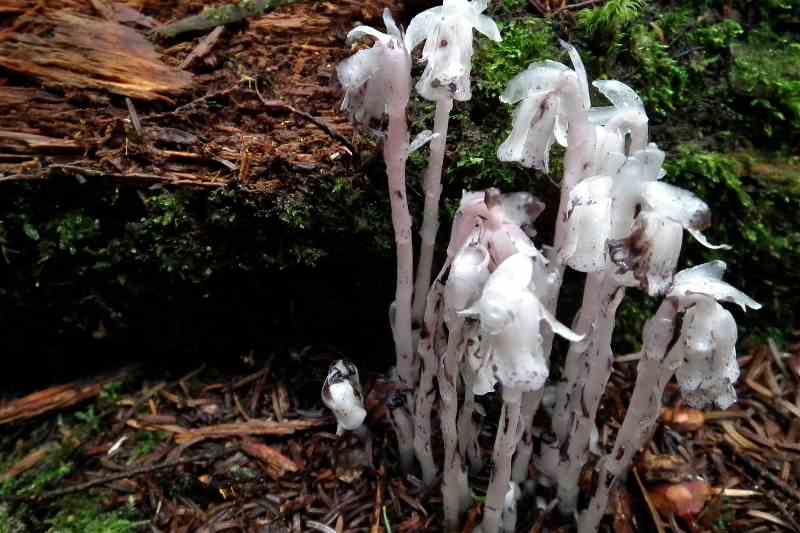
There are, however, notable exceptions. Some specific albino plants, such as Monotropa uniflora (the "ghost plant" or Indian pipe), circumvent their dependence on photosynthesis by establishing a symbiosis with mycorrhizal fungi. These fungi provide them with the necessary nutrients by tapping into the underground network of surrounding plants. This type of relationship, called mycoheterotrophy, allows these albino plants to survive and thrive despite their pigmentation defect.
This energy dependence of so-called albino plants on other plants or organisms, combined with the fragility of their state, makes their preservation difficult, especially in nature where habitat destruction further exacerbates their vulnerability.
However, these challenges come with interesting opportunities, particularly in the field of scientific research. Albino plants intrigue researchers seeking to better understand the genetic mutations responsible for their condition and their impact on plant metabolism. In horticulture, efforts are being made to maintain or even "save" certain albino varieties, for example, by using techniques such as controlled environment cultivation.
Famous examples of albino plants
Albino sequoias are probably the most fascinating examples of albino plants in nature. These rare trees, primarily located in California, survive thanks to a unique system of shared roots with normal sequoias. This underground network allows them to absorb the nutrients necessary for their survival, a dependency strategy that intrigues botanists and symbolises the interconnectedness of ecosystems.
In the horticultural world, partially albino plants, such as certain varieties of philodendrons, like Monstera deliciosa 'Variegata', have become extremely sought after. Their unique appearance, with marbled white or cream leaves, makes them prized objects for enthusiasts of slightly unusual tropical plants.
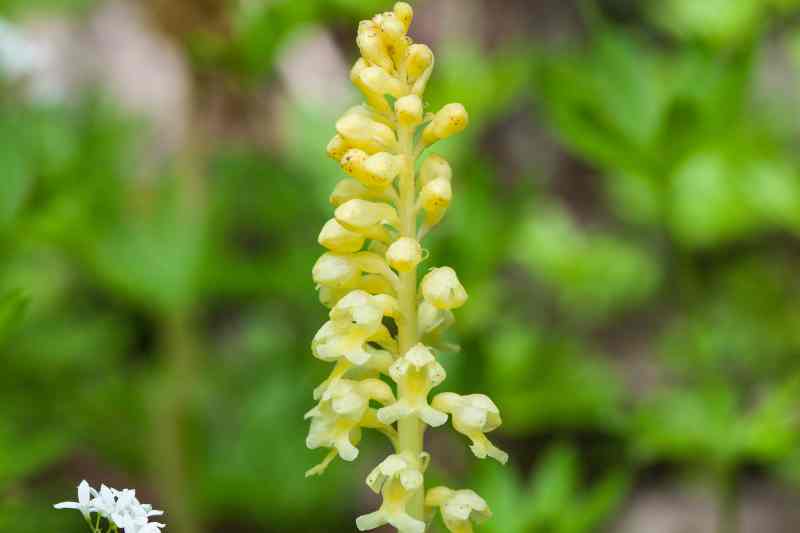
But, even within our flora, albino plants can be found. One of the most well-known cases is that of the bird's-nest orchid (Neottia nidus-avis), a European orchid devoid of chlorophyll. Like the Indian pipe, this plant derives its energy from the decomposition of organic matter in the soil, thanks to an association with mycorrhizal fungi.
Some tips on growing albino houseplants
Growing albino plants, or partially albino varieties, requires special attention. These plants should be placed in a bright environment, but especially without direct sunlight, to avoid burning the white parts of their leaves, which are particularly sensitive. Their metabolism being less efficient, they also require rich, well-drained soil, as well as appropriate fertilization to compensate for their reduced ability to produce energy.
In an ethical approach, it is also essential to respect their natural conservation. For enthusiasts, this means avoiding the collection of albino specimens from their natural habitat, as they are rare and vulnerable.
Albino plants, with their immaculate appearance and lack of green pigment, captivate with their uniqueness as much as they intrigue. Why do some plants arise without chlorophyll, and how do they manage – or fail – to survive? Between genetic mystery and conservation challenges, these botanical curiosities offer us a fascinating window into the limits […]
Do you dream of a wall covered in flowering climbing plants or a pergola overrun with lush greenery? It’s a lovely project… but things can quickly go awry if you don’t approach it correctly. Let’s be honest: between the jasmine that prefers to crawl rather than climb, the clematis that wilts in a few days, and the wisteria that turns into an invasive monster, there are plenty of stories to tell… So, if you’re ready to fail with flair, to turn your dreams of greenery into memorable plant disasters, follow the guide!
And if, along the way, you decide that planting your climbers correctly wouldn’t be such a bad idea, don’t worry: just do the exact opposite of everything we’re about to tell you here!
Let’s go, the glory of horticultural failure awaits you!
Choose your plant at random: the foundation of failure
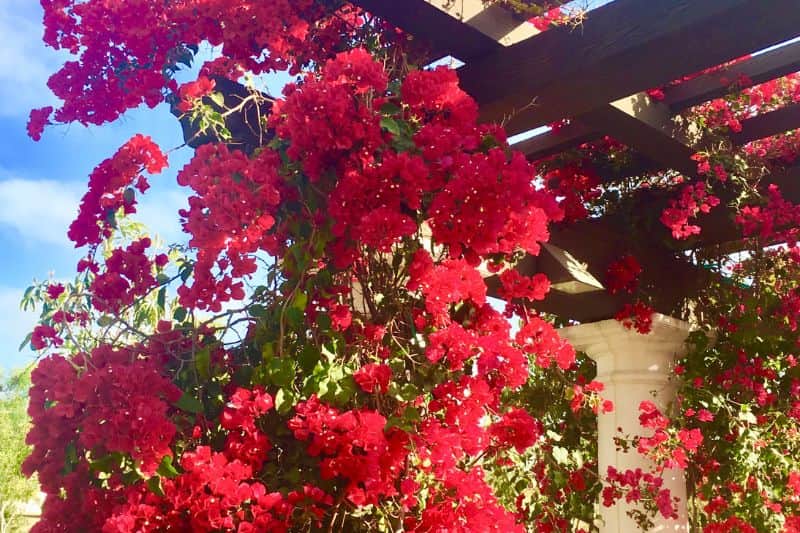
If you want to ensure your climbers don’t survive, start by choosing your plant solely based on its appearance or the impulse buy you made at the garden centre. Who needs to wonder if that stunning bougainvillea can survive in your Alsatian garden? Not you, of course!
Why rely on the ideal climate for a plant? Install a Mediterranean plant in a cold region or an alpine variety under the scorching sun of the South. Guaranteed result: a depressed (or even dying) plant and a frustrated gardener.
Don’t consider the exposure either! It doesn’t matter if your wall faces north and never sees the sun. Put a light-loving plant, like a jasmine, there and watch it languish.
Do you love that beautiful clematis, but your garden is just a succession of rocks and sand? Or do you dream of a wisteria in calcareous soil? No worries, ignore the nature of your garden soil and plant anyway. A plant that can’t find nutrients is perfect for a quick fiasco.
You’ve got it: to succeed, you need to choose plants suited to your climate, your garden’s exposure, and the quality of your soil. But that’s not what we’re here for… is it?
Plant in the wrong season, it’s much more fun
If you want to maximise your chances of failure, completely forget the calendar. Why wait for spring or autumn, those seasons when conditions are ideal? No, to fail, choose the extremes instead!
Planting in the middle of winter, when the ground is frozen, is an excellent idea to put your climbers directly to the test of survival.
Prefer to plant in the height of summer? Perfect, opt for a heatwave day. The parched soil and scorching air will provide an ideal combination to stress your plant from the very first minute. Don’t forget: a climber transplanted at 30°C (or more) is like running a marathon without water, except it will never finish the race.
So, for successful planting, just remember that mild seasons like autumn and spring are your allies.
Ignore the soil: an insignificant detail
To fail at planting your climbers, nothing could be simpler: don’t worry about the soil. After all, dirt is just dirt, right? Why waste time analysing its composition or checking its water retention?
Plant directly in compacted soil, as hard as a pavement, and watch your climber struggle desperately to push its roots in. And if your ground is waterlogged after every rain, even better: the roots will love this little permanent bath… that will suffocate them.
If you have sandy soil, leave it as it is. Nutrients wash away with the slightest drop of water? Too bad for your plant; it should have been tougher.
In summary, make no effort to improve your soil. Completely ignore the importance of good drainage or adding compost.
And if you really want things to grow… a well-prepared soil, neither too heavy nor too draining, with an addition of compost or manure to enrich it is the key to success. For that, you can read our article: How to improve water retention in garden soil?

Forget about staking: let them grow freestyle
For a climber, nothing is more effective than completely skipping the support. Why bother installing a trellis, a pergola, or taut wires? Let your plant manage on its own. After all, it’s supposed to climb, right? It will find a way… or not.
If you want to add a touch of chaos, install a completely unsuitable support. Ivy has climbing roots suited for facades and walls? Give it a fence! The clematis has tendrils? A flat surface with nothing to twine around will do! And why not a flimsy string or a wobbly stake? At the first gust of wind, everything will collapse, and your plant will end up on the ground, disheartened.
Even better: let it crawl. Without a structure to cling to, your ivy or honeysuckle will decide to spread lazily on the ground. It’s no longer a climbing plant; it’s a creeping plant, but at least you’ll have innovated.
For perfectionists of failure, place your support too far from the plant. The stems will desperately search for something to cling to, never reaching their goal. A beautiful lesson in plant frustration!
Of course, to succeed, you just need to install a solid and suitable support from the start. You could even read this article full of tips: Stakes and supports for plants: everything you need to know to choose them well. But where would the fun be without a bit of chaos?
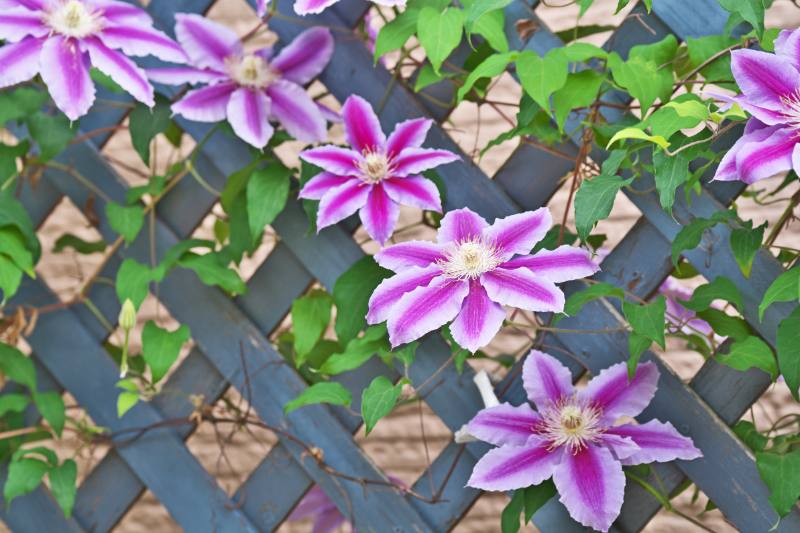
Water (or not) like a pro… of sabotage
If you dream of a climber that wilts quickly, watering is your best weapon. Two options are available: overdo it, or not at all.
For those who love excess, water generously every day, even when it rains. Ensure the soil is constantly soaked. The roots, deprived of oxygen, will slowly but surely drown. You’ll see your plant yellow, droop, and then give up all hope.
Conversely, if you prefer the dry regime, let the plant fend for itself. Forget about it during hot spells, even if it shows obvious signs of thirst. A climber that dries out is a climber that no longer climbs.
Finally, for an even more chaotic result, water completely randomly. A week of deluge followed by ten days of drought… enough to destabilise your plant and guarantee its misery.
The secret to a healthy plant? Water just the right amount, when it’s needed, taking into account the weather and the specific needs of your climber. But where would the drama be if everything went well?
Plant without considering space: long live improvisation
To ensure total failure, plant your climber anywhere, without considering what it will become in a few months or years. After all, why plan when you can improvise?
Do you dream of a wisteria? Perfect, install it at the foot of a flimsy trellis or right next to your downspout. You’ll be amazed to see this force of nature bend, break, or even tear everything in its path. If it starts invading your windows, your roof, or even your neighbour’s house, you’ve succeeded in not anticipating!
Even better: plant your wisteria or a bougainvillea right next to your plumbing! The young roots will sneak into the tiniest crevice or twine around the pipes. After a few years, your plumbing might just surprise you: leaks, blocked pipes, and why not a little flood to top it all off. After all, who would have thought a plant could have so much fun with your infrastructure?
And then, why think about the available space? Install several climbers together in the same pot or at the foot of the same support, it’s ideal for creating plant traffic jams. With a bit of luck, your climbers will suffocate together.
Never think about future maintenance. Why pruning or controlling growth? Let your plant become a wild tangle, impossible to untangle. A messy jungle, where the ambient humidity will be trapped, promoting the arrival of fungi and other moulds! It’s much more spectacular, isn’t it?
To succeed, you just need to choose the right location, sufficient space, and plan for a solid support suited to the plant’s adult size. And don’t neglect pruning.
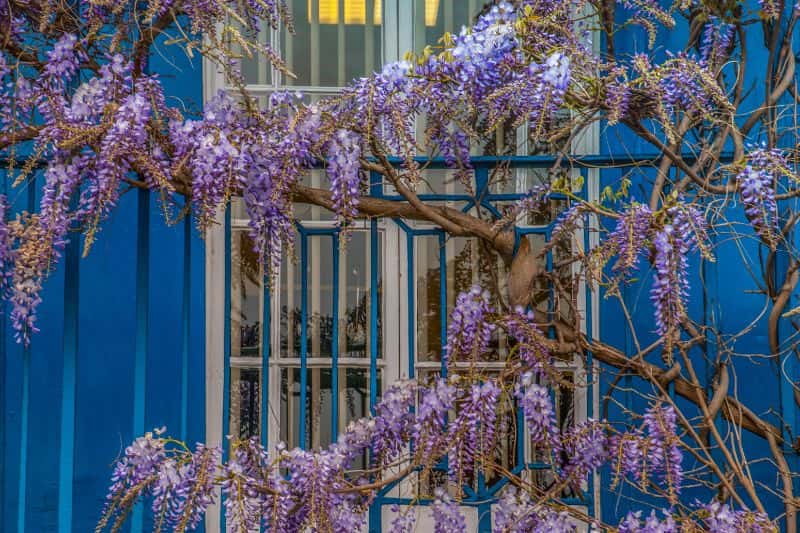
Completely ignore diseases and pests
For a climber in a sorry state, adopt a hands-off strategy. Who needs to monitor their plant for the first signs of disease or the arrival of pests? Certainly not you!
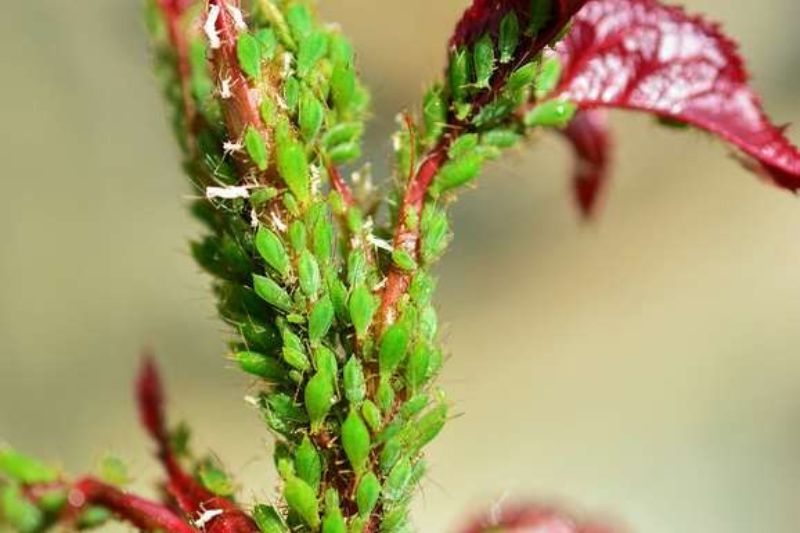
If aphids settle in and turn your young shoots into an all-you-can-eat buffet, leave them be. Maybe they’ll leave on their own… or maybe not.
Is powdery mildew covering your leaves with a lovely white veil? Consider it a natural decoration. As for slugs and snails munching on your young stems, why chase them away? They must be hungry, after all.
To top it all off, never prune the sick or damaged parts. Let these infections spread peacefully, soon turning your plant into a masterpiece of desolation. And above all, don’t disinfect your pruning shears between cuts: nothing better for transmitting diseases from one plant to another!
If you really want to perfect this method, avoid giving your plant anything to help it defend itself: no natural treatments (manures or decoctions), no black soap, and especially no mulching to keep pests away or protect the soil from temperature variations. A climber left to its own devices is a climber doomed to fail.
Of course, to succeed, you would just need to regularly monitor your plant, treat small problems quickly, and maintain a healthy environment. But that’s for cautious gardeners… not for you, right?
Do you dream of a wall covered in flowering climbing plants or a pergola overrun with lush greenery? It’s a lovely project… but things can quickly go awry if you don’t approach it correctly. Let’s be honest: between the jasmine that prefers to crawl rather than climb, the clematis that wilts in a few days, […]
The Chilean Nasturtium, scientifically known as Tropaeolum ciliatum, is raising more and more questions among gardeners. Is it an invasive plant to be feared in our gardens? While its vibrant flowering and ability to quickly cover structures make it attractive, its invasive potential can pose problems. This article aims to inform gardeners about the risks this climbing plant may represent in terms of garden invasion and effective management methods. So, should we be concerned about the Chilean Nasturtium? Let's take stock.
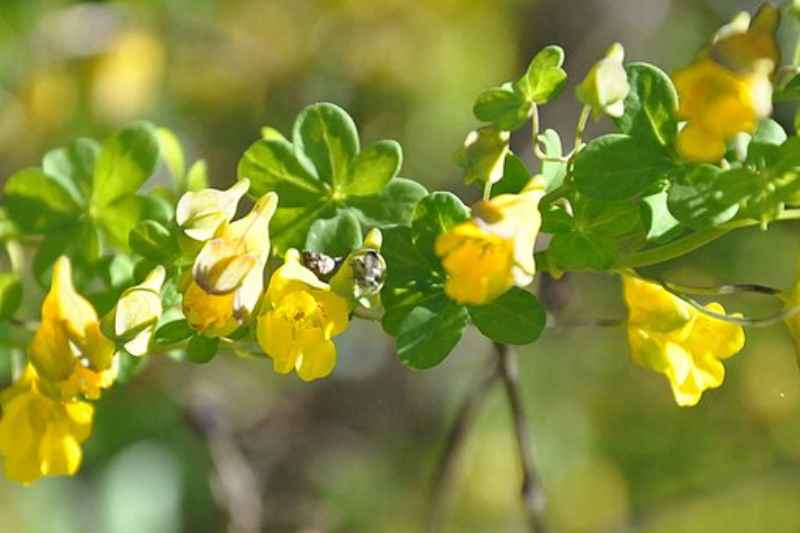
What is the Chilean Nasturtium?
The Chilean Nasturtium (Tropaeolum ciliatum) or Indian Cress is a climbing plant native to South America, particularly found in the mountainous regions of Chile and Argentina and therefore hardy down to -15 °C. Its yellow tubular flowers have a unique shape that easily distinguishes them from those of other nasturtium species. The stems of Tropaeolum ciliatum are voluble, allowing the plant to wrap around various supports, and are covered in fine hairs that give it a distinctive texture. The leaves are palmate, meaning they are shaped like a palm, adding to the plant's aesthetic with their lush green appearance and symmetrical arrangement.
Compared to the Greater Nasturtium, beloved in our gardens, the Chilean Nasturtium has several notable differences. The flowers of Tropaeolum majus are generally larger and can vary in colour from bright red to orange and yellow, while those of Tropaeolum ciliatum are exclusively yellow and more tubular in shape. In terms of growth, Tropaeolum ciliatum has a marked climbing habit, using its voluble stems to climb on supports, whereas the Greater Nasturtium often adopts a more trailing or creeping habit.
Nasturtiums are charming and easy-to-grow plants. To learn more, read Nasturtium: sowing, planting, and maintaining.
A rather invasive character!
The Chilean Nasturtium or Nasturtium is a plant known for its vigour and rapid growth. In a short time, it can spread significantly, covering large areas with its voluble stems. This ability to climb and spread makes it an ideal plant for dressing trellises, pergolas, or fences, but it can also pose a problem if not controlled. In favourable environments, particularly in temperate regions with well-drained soils, Tropaeolum ciliatum can quickly become invasive. Worse, in gardens where it is left unchecked, it can smother other plants competing for light and nutrients. Additionally, its tendency to self-seed adds another level of difficulty, as new plants can appear in unwanted areas.
Invasive or not?
To clarify, an invasive plant is an exotic plant species that spreads rapidly in a new environment, often to the detriment of local species. It can disrupt ecosystems, reduce biodiversity, and cause economic and environmental damage.
Regarding its official status, the Chilean Nasturtium is currently not recognised as an invasive plant in France and Belgium. However, this does not mean that gardeners should not be concerned. While the lack of official recognition indicates that it has not yet shown significant ecological impact on a large scale, reports from local gardeners suggest that it can exhibit invasive behaviour under specific conditions (temperate climate and well-drained but cool soil). It is therefore crucial for gardeners to stay informed and adopt appropriate management practices to control its development and prevent any potentially invasive situations.
How to manage my Chilean Nasturtium?
Regular pruning of the stems is essential to limit its expansion and prevent it from covering too large areas. This practice helps control its growth and keep the plant within desired limits. Additionally, monitoring spontaneous seedlings (and manually removing them) helps prevent new plants from establishing in unwanted areas.
Alternatively, growing in pots is a practical solution that allows for easier control of the plant's growing space and reduces the risk of spreading. Using trellises and supports to direct vertical growth can also limit the space occupied by the plant while benefiting from its aesthetic appeal.
Chilean Nasturtium: stop or go?
The question of whether to continue planting the Chilean Nasturtium in our gardens deserves careful consideration. This plant boasts abundant and beautiful flowering, which can bring a vibrant touch of colour with its yellow tubular flowers. Furthermore, its ability to quickly cover structures makes it an ideal solution for enhancing trellises, pergolas, or fences in no time. This characteristic is certainly appreciated in gardens where a decorative and lush effect is desired quickly.
However, planting Tropaeolum ciliatum requires a certain level of vigilance and maintenance. Gardeners must be prepared to closely monitor the plant's growth to prevent it from becoming invasive. Regular pruning of the stems and removal of spontaneous seedlings require time and attention. This plant may therefore not be suitable for all gardeners, especially those seeking less demanding options in terms of maintenance.
In other words, the Chilean Nasturtium is not a plant to be categorically crossed off the list, but there are so many alternatives among climbing plants that it would be a bit foolish to insist on planting it when one knows its behaviour. For now, it is not recognised as invasive (at least not officially), but caution is warranted: so let's plant something else if possible!
Want to learn more about mastering the climbing Chilean Nasturtium? Check out our video with Michaël and Olivier, who present it in detail!
The Chilean Nasturtium, scientifically known as Tropaeolum ciliatum, is raising more and more questions among gardeners. Is it an invasive plant to be feared in our gardens? While its vibrant flowering and ability to quickly cover structures make it attractive, its invasive potential can pose problems. This article aims to inform gardeners about the risks […]
Do you dream of a planter that would send shivers of horror down the spines of gardening enthusiasts? You’ve come to the right place! We’re going to reveal the foolproof secrets, with a touch of humour, to transform your planter into a true botanical disaster. Unless, of course, you want to do the opposite and learn what not to do? Follow our six essential lessons to ensure you fail at your planter with style.
Lesson 1: mixing shade and sun plants
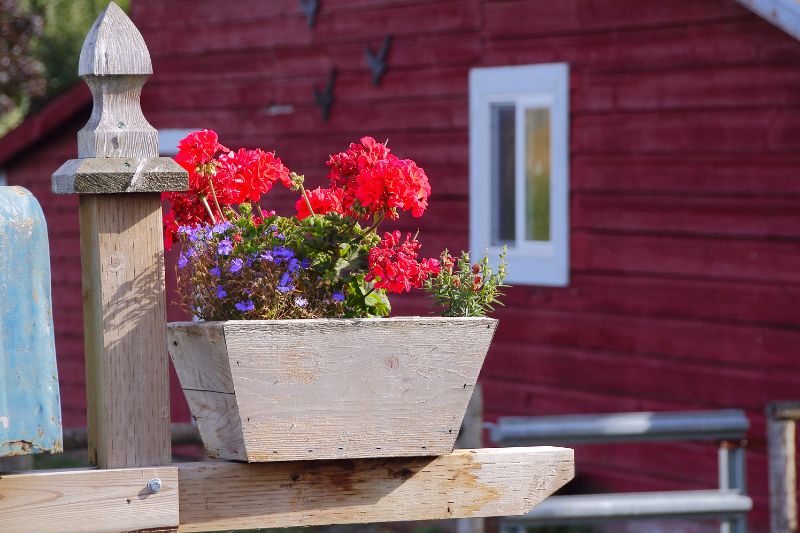
To kick off your masterpiece of a failed planter, nothing is simpler than to cheerfully mix sun-loving plants with those that prefer shade. Imagine an unlikely marriage between an elegant Hosta, which loves to bask in the shade, and a flamboyant Geranium, a sun worshipper. Well, that’s the perfect recipe for a botanical fiasco!
If you place them all in the sun, the Hosta, deprived of its beloved shade, will see its leaves burn and wilt quickly. Conversely, in the shade, the Geranium, starved of light, will become weak and stop flowering. A pairing doomed to fail from the start, but so amusing to watch to see how far it can go.
If you’re really determined to fail at your planter, why not add a semi-shade plant to the mix? A Heuchera, for example, which prefers dappled light but can tolerate a bit of sun. The confusion will be total, and your plants will go to war for the best spot where only one will truly thrive.
Lesson 2: ignoring plants' water needs
To continue your masterpiece of a failed planter, nothing is simpler than ignoring the water needs of your plants. Make sure not to choose plants with similar watering requirements. Instead, pair plants that love dry soil, like a cactus, with water-hungry plants, like an impatiens.
Then, you’ll have to juggle the watering! The cactus, drowned by excess water, will start to joyfully rot, while the impatiens, lacking moisture, will wilt sadly. It’s the perfect recipe for a horticultural disaster!
If you’re really determined to fail at your planter, why not add a plant that needs even more water, like a papyrus? The cactus and the impatiens won’t know where to turn, each trying to survive in an unsuitable environment. The chaos will be total, and your planter will be a fascinating spectacle of distressed plants.
Lesson 3: mixing colours
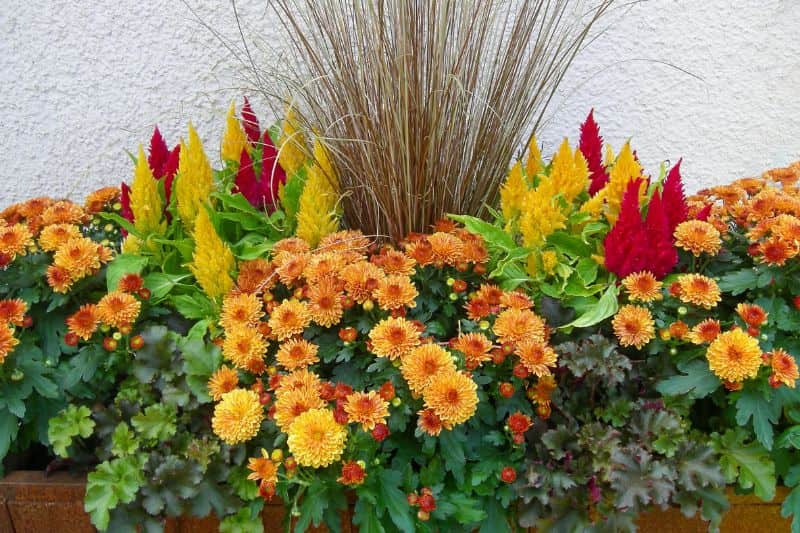
To add a touch of originality to your failed planter, cheerfully mix colours that clash with each other. Imagine a bold marriage of bright red and garish yellow or fluorescent green. Nothing like it to create a true visual festival… of bad taste! Above all, don’t choose similar colours to create a lovely gradient, nor complementary colours that work well together.
The result will be a plant patchwork where each colour seems to fight for attention, making your planter as harmonious as a Picasso painting on acid. The puzzled looks and amused smiles from your neighbours will be your reward.
To perfect this colourful cacophony, why not add pastel flowers that will be completely overshadowed by the garish colours of the other plants? The confusion will be total!
Lesson 4: mixing large and small plants
For an even more disastrous planter, mix plants of completely different sizes without hesitation. Place a bush, even a dwarf one, or a large perennial next to tiny plants. You’ll create an unbalanced composition where the small plants will be crushed by the grandeur of their neighbours. A true success… in terms of chaos!
Imagine, for example, tiny pansies desperately trying to catch a ray of sunshine, smothered by the imposing shadow of a Mexican orange blossom (Choisya). Their growth will be quickly stunted, their flowers less abundant, or even non-existent. Meanwhile, the orange blossom will thrive, spreading its branches and flowers without any consideration for its little companions.
To add to this confusion, why not introduce a climbing plant, like a clematis or ivy? It will wrap around the bush, seeking to climb ever higher. The result will be a planter where each plant will fight for its living space, creating a fascinating spectacle of plant competition.
Lesson 5: forgetting soil compatibility
To perfect your failed planter, ignore the specific soil needs of your plants. For example, joyfully plant lavenders, which love well-drained, calcareous soils, with hostas that prefer rich, moist, even heavy and slightly acidic soils. Nothing like it to create an unsuitable environment for all your plants!
The lavender, lacking drainage and dry soil, will suffer in overly moist conditions, risking root rot. On the other hand, the hosta, craving moisture, will wither in dry, poor, calcareous soil, its foliage quickly yellowing and wilting. It’s the perfect recipe for a distressed planter!
For added chaos, mix acid-loving plants with those that prefer calcareous soils, a true nightmare for them! Your plants will compete for contradictory soil conditions, ensuring a total failure of the planter.
Lesson 6: placing trailing plants at the back of the planter
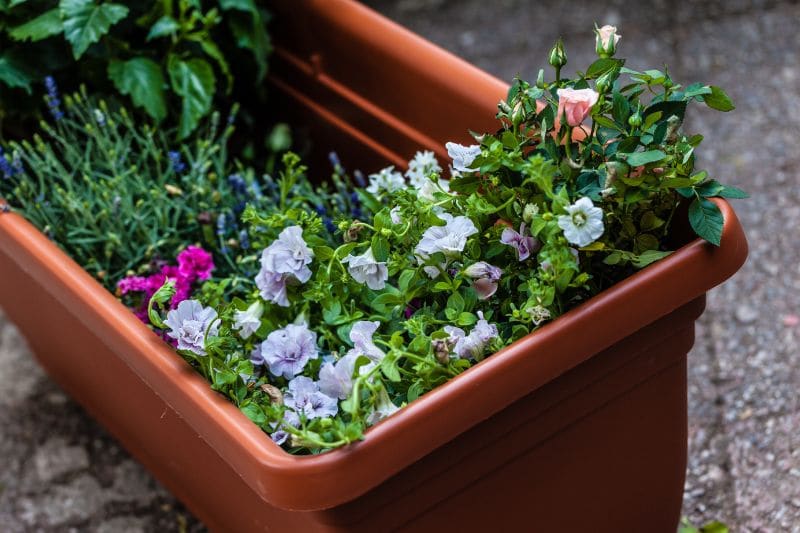
To complete your masterpiece of a failed planter, place trailing plants at the back. Nothing like it to create a completely unbalanced and unsightly composition. Imagine a planter where trailing petunias are hidden behind taller plants like heucheras, sages, or lobelias.
The trailing plants, which are meant to cascade elegantly over the front of the planter, will be invisible, their beauty masked by the taller plants. The plants at the front, with their delicate flowers and rapid growth, will become entangled and compressed, unable to showcase their charm either.
Do you dream of a planter that would send shivers of horror down the spines of gardening enthusiasts? You’ve come to the right place! We’re going to reveal the foolproof secrets, with a touch of humour, to transform your planter into a true botanical disaster. Unless, of course, you want to do the opposite and […]
Oh, look at this: a buddleia or Butterfly Bush that produces three types of flower colours! It's amazing! It's unbelievable! It's... strange, isn't it? How could such a marvel occur? A genetic aberration? A risky grafting? Or are they just pulling our leg a bit? The editorial team at Promesse de Fleurs has investigated.
The Buddleia Tricolor on paper
On paper or in online photos, this Buddleia davidii is indeed tricolour, proudly displaying (well, we can't really ask the bush) the three colours: blue, pink, and white. All in a too perfectly symmetrical arrangement (still on paper!) to be honest.
It's ugly, you might say? Well, that's subjective. But you must agree that this bush doesn't have an easy look. Let's just say it's special... Yet, it's one of the best-selling shrubs at the moment. Go figure!
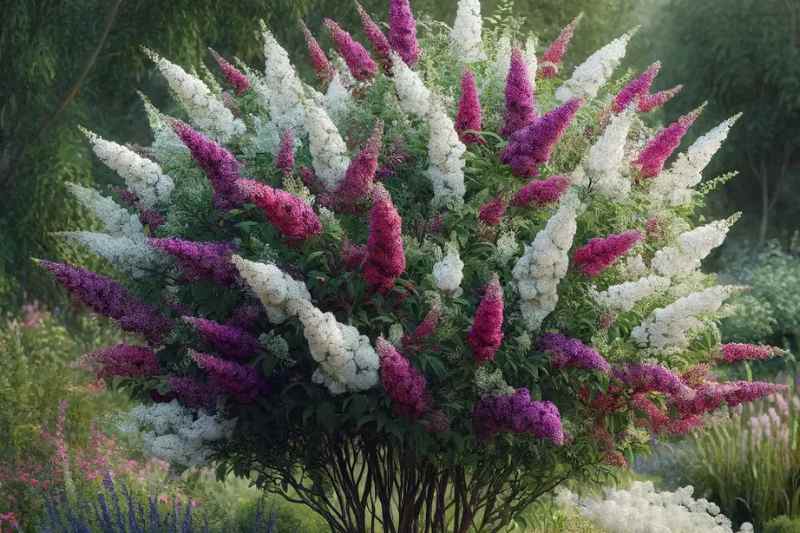
But what about in reality?
In reality, hold on to your spade, this Buddleia does not exist! At least, what you see in the doctored photos from catalogues does not exist. The Buddleia Tricolor is merely the commercial name of a "product" made up of three varieties of Buddleia: generally Buddleia 'Empire Blue', Buddleia 'Pink Delight', and Buddleia 'White Profusion'. These three fellows growing in the same pot. (please note: the varieties may actually differ depending on the market... a bit like Isio 4 oil).
Yes, but there's a "catch". The first year of planting, everything goes relatively well, but over time, one of the three shrubs, too tightly packed, will take over the other two and you'll soon find yourself with just one variety of butterfly bush. That's unfortunate! Especially at the price we pay for this Frankenstein monster.
So? Scam or not?
Yes and no. The issue does not stem from selling a pot with three different varieties. This is quite common. I’m thinking particularly of the 'Three Sisters' series: Rhododendron, Lilac, or Camellia... Yes, yes, we sell these weird things too. We’re not particularly proud of it, but they sell. It’s "trendy".
The problem lies more in the fact that horticultural professionals do not communicate clearly with the customer. 95% of gardeners do not know what these multicoloured varieties actually are, with most retailers remaining very vague, even evasive on the subject. Adding to this, they provide a poorly photoshopped illustration that bears absolutely no relation to the reality of what you will receive and attempt to grow.
Moreover, they make us believe — and it’s written in black and white on their sheets — that it’s a new variety. However, this is entirely false: placing three plants in the same pot is not enough to qualify it as a "variety". Furthermore, the commercial name should not be placed in single quotes, as is commonly seen: we do not mess around with botanical nomenclature!
So here, yes (and even a big YES), it’s deception, it’s stamping, as they clearly take the customer-gardener for a big pigeon, to put it politely...
In short, if you see this type of shrub in a catalogue, look the other way! When it seems too good to be true, in the world of horticulture or elsewhere, there’s usually something fishy going on...
Oh, look at this: a buddleia or Butterfly Bush that produces three types of flower colours! It’s amazing! It’s unbelievable! It’s… strange, isn’t it? How could such a marvel occur? A genetic aberration? A risky grafting? Or are they just pulling our leg a bit? The editorial team at Promesse de Fleurs has investigated. The […]
Basil, this beloved herb of chefs and gardeners alike, is actually a bit temperamental… and many gardeners, whether novice or experienced, make classic mistakes that lead to disastrous results. Too much water, not enough light, poor soil, neglecting pruning… the list goes on! So why stand out? Isn’t it better to follow the crowd and fail at growing basil? We’re going to show you how to spectacularly fail at growing your basil, so you can learn with humour what not to do!
Lesson 1: forget about watering
Basil is a plant that loves its substrate to remain slightly moist. But if your goal is to see it wither quickly, nothing could be simpler: completely forget to water it! After all, it’s a plant from a warm climate, right? At first, it will lose a few leaves, which will yellow before falling off… then the whole plant will dry out quickly, like a houseplant forgotten during the holidays. You can then say goodbye to your dreams of homemade pesto.
But if, in a moment of clarity, you want to save your basil, make sure to water it regularly (neither too much nor too little) with lukewarm rainwater, especially during heatwaves. Also, provide it with an organic mulch on the surface to limit the drying out of the soil.

Lesson 2: place it in a dark corner
Basil is a plant that loves light. In fact, it needs plenty of sunshine to thrive and produce its aromatic leaves. But if your aim is to fail at growing it, place it in a dark corner of your home, like between two kitchen appliances; it’s much more convenient, isn’t it?
Without sufficient light, your basil will desperately stretch in search of brightness, becoming thin and leggy. The leaves will turn pale green and fall off at the slightest touch.
But if, in a moment of compassion, you decide to give your basil a chance, place it in a sunny spot, like a south-facing windowsill or a well-exposed garden. It needs six hours of direct light per day to develop. You’ll see, it will quickly regain its vigour and vibrancy.
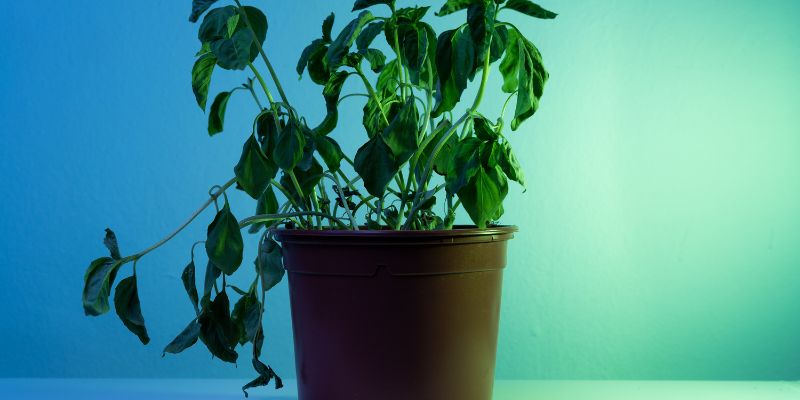
Lesson 3: forget about the ideal temperature
Basil enjoys mild and moderate temperatures but fears cold and excessive heat. To fail at growing it, forget all that and subject it to extreme temperatures. After all, why worry about its specific needs? In winter, leave it in its pot or container outside; nothing like a little cold snap to see it wilt! And in summer, leave it in the blazing sun, or better yet, in a greenhouse… The leaves will turn brown and crispy, looking literally cooked by the heat. You can then say goodbye to your salads and homemade pestos.
But if, by a miracle of common sense, you decide to give your basil a chance, keep it in an environment where the temperature is between 18 and 25 degrees Celsius. Avoid cold drafts and protect it from heatwaves. You’ll see, it will thank you by producing fresh and tasty leaves all season long.
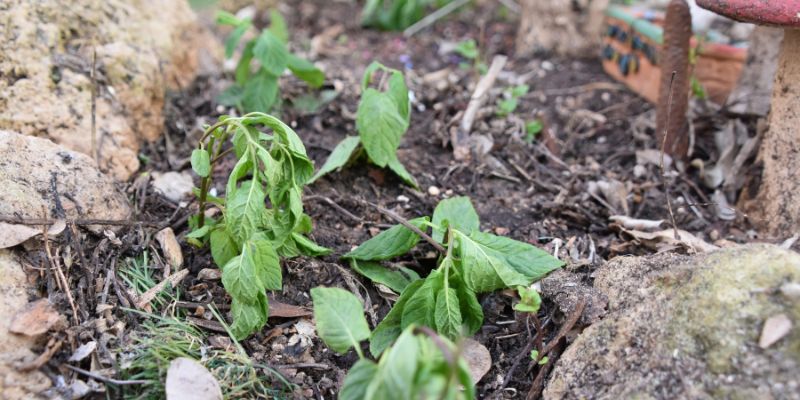
Lesson 4: give it poor, compact soil
To spectacularly fail at growing your basil, plant it in poor, compact soil. For pot planting, use clayey or poor garden soil. Compact soil does not allow the roots to breathe or spread. Your basil, trapped in this vegetative prison, will suffer from a lack of oxygen and essential nutrients. Its suffocated roots will be unable to draw the necessary water and nutrients. You’ll see its leaves yellow, shrivel, and fall one by one. A true symphony of plant suffering!
To do it right, water this clayey soil just enough to turn it into a heavy, sticky mud, but not too much, or the basil might find a few drops of comfort. And above all, don’t even think about adding compost or fertilisers; that would be cheating.
But if, in a sudden fit of kindness, you decide to save your basil, provide it with light, well-drained soil enriched with compost. Add a bit of sand to improve drainage and ensure the soil remains slightly moist.
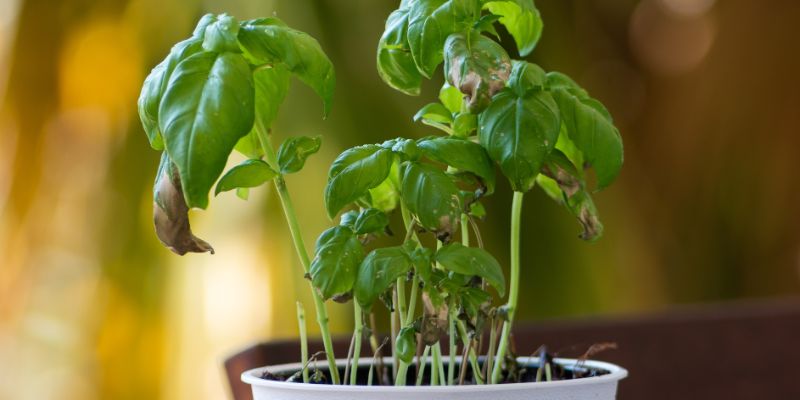
Lesson 5: never prune your basil
If your goal is to see your basil wither, never prune it! Let it grow as it pleases; it will manage on its own to become a chaotic bush.
Without pruning, your basil will become an impenetrable jungle of long, weak stems. The older, lower leaves, deprived of light, will yellow and fall, leaving behind a bare and unhealthy plant. In a few weeks, your basil will resemble a wild creature escaped from a tropical forest, but without the lushness or health. The stems will be so long and twisted that they won’t be able to stand upright, and the whole plant will eventually collapse under its own weight.
Also, let the flowers develop freely; after all, why not let the plant exhaust itself producing seeds instead of tasty leaves? Unless, of course, your goal is to obtain basil seeds. Soon, your basil will be unable to provide a single leaf worthy of being picked for your cooking.
But if, in a flash of genius, you decide to save your basil, prune it regularly. Cut the stems just above a node of leaves to encourage branching and the growth of new leaves. Remove the flowers as soon as they appear to keep the plant focused on producing leaves. You’ll see, your basil will become a dense, vigorous bush, ready to flavour your dishes all summer long.
Basil, this beloved herb of chefs and gardeners alike, is actually a bit temperamental… and many gardeners, whether novice or experienced, make classic mistakes that lead to disastrous results. Too much water, not enough light, poor soil, neglecting pruning… the list goes on! So why stand out? Isn’t it better to follow the crowd and […]
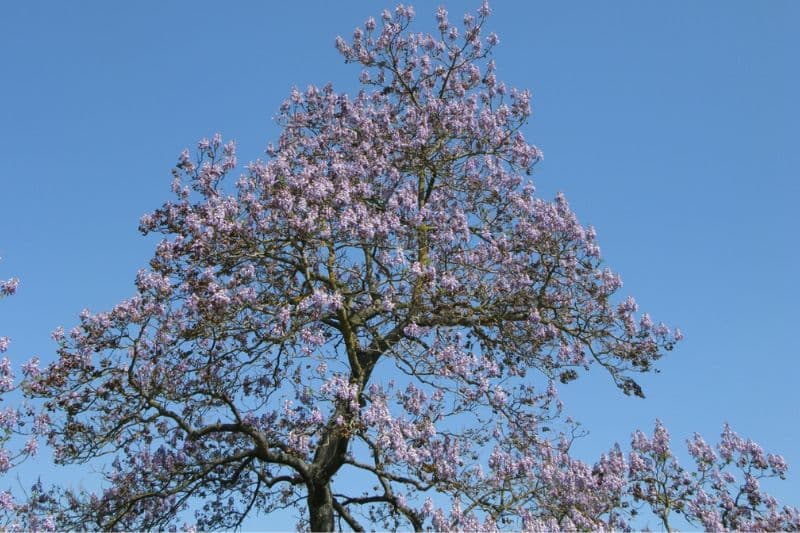
Paulownia, also known as the "empress tree" or "Kiri", is native to East Asia and is gaining increasing interest due to its exceptional qualities. Its rapid growth, disease resistance, and valuable wood make it an undeniable asset for timber production. However, its status as an invasive species in certain regions of the world raises questions about its environmental impact. What is the real situation?
The qualities of Paulownia
Paulownia possesses undeniable qualities: a lightweight and strong wood, rapid growth, making it an incredible choice for reforestation and agroforestry.
Its ability to thrive in poor soils or degraded land and its tolerance to pollution make it an ideal candidate for combating erosion and restoring soils.
Moreover, Paulownia absorbs a significant amount of carbon dioxide, thus contributing to the fight against climate change.
Finally, its giant heart-shaped leaves and purple flowers also make it a highly appreciated aesthetic choice for parks and gardens.
Is Paulownia a threat to ecosystems?
However, it is precisely the rapid growth and ability to reproduce effectively of the species type, Paulownia tomentosa, that have raised concerns about its potentially invasive nature. Indeed, this variety is considered a pioneer species, meaning it can establish itself first in a disturbed and poor area. As a result, it can supplant our native species, thereby altering the natural habitats of local wildlife. This risks reducing biodiversity, particularly in fragile ecosystems where endemic species may be threatened.
Furthermore, its reproduction by seeds and suckers facilitates its spread, making control difficult if it thrives and establishes itself in an environment.
However, its melliferous flowers are a food source for some pollinators, while its leaves help enrich soil quality as they decompose.
Currently, Paulownia is under study in Europe to assess its invasive potential. For now, it is not classified as an invasive species, but authorities and scientists are closely monitoring its impact on local ecosystems.
It is important to proceed with caution when introducing exotic species. These can lead to unexpected, sometimes adverse, consequences for native ecosystems. Promoting local species remains a wise practice, as they are generally better adapted and more beneficial for the ecological balance of the environment.
In light of these challenges, it is essential to adopt a reasoned management approach to Paulownia.
Choosing the variety: a measure to prevent Paulownia invasion
Some hybrid varieties have been created to reduce the invasive character of Paulownia. They may be less fertile, or even sterile, meaning they do not produce seeds, or produce non-viable seeds.
They may also have slower growth and lower seed production than non-hybrid species.
Here are some examples of less invasive Paulownia varieties:
- Paulownia 'Shan Tong': This variety is sterile and has rapid growth. It is well-suited to temperate climates.
- Paulownia 'Pao Tong': This variety is also sterile and has rapid growth. It is more drought-tolerant than Paulownia 'Shan Tong'.
- Paulownia 'Elongata': This variety is fertile but produces fewer seeds than non-hybrid species. It is well-suited to warm, humid climates.
- Paulownia 'Fortunei': This variety is also fertile but produces fewer seeds than non-hybrid species. It is well-suited to temperate and cold climates.
In addition to choosing a less invasive variety, it is important to plant Paulownia in an appropriate location. Avoid planting it near sensitive natural areas, such as riverbanks and cliffs.
Conclusion
Paulownia is not intrinsically "good" or "bad". Its impact depends on the species, context, and management. By using it thoughtfully and responsibly, this multi-benefit tree can contribute to sustainable timber production, environmental improvement, and biodiversity. Remember that it is wiser and more sustainable to prioritise local species, which are better adapted and more beneficial to the environment.
Paulownia, also known as the “empress tree” or “Kiri”, is native to East Asia and is gaining increasing interest due to its exceptional qualities. Its rapid growth, disease resistance, and valuable wood make it an undeniable asset for timber production. However, its status as an invasive species in certain regions of the world raises questions […]
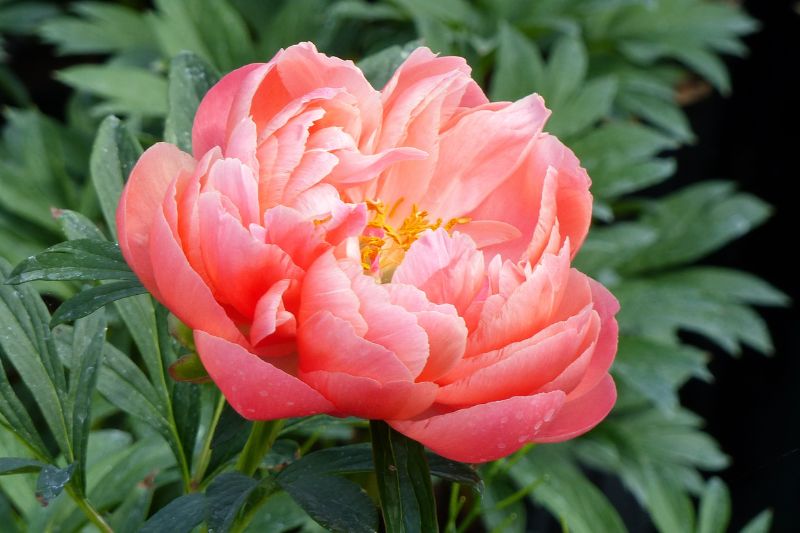
Whether shrubby or herbaceous, peonies beautify the garden every spring. With their vibrant white, cream, yellow, pink, or red dresses, they captivate and play the divas… and sometimes, they can be quite elusive when it comes to taking the stage. Imagine for a moment that you decide to deliberately sabotage the show, not out of malice, but simply for the pleasure of seeing how these grand ladies would react?
In this article, we will explore with a dash of irony and a pinch of sarcasm the most effective methods to fail with your peonies, while inadvertently slipping in the secrets to achieving success. Because yes, even in failure, there are lessons to be learned, right?
Lesson 1: Ignore the sunlight needs of the peony
To fail with your peonies right from the planting stage, placing them in the shade is a masterstroke. It is there, under the cover of trees and shielded from the sun's rays, that you unknowingly create the perfect setting for a despairing performance. Peonies, deprived of their main light source, will become leggy... or worse, may not flower at all!
But what if, in a fit of rebellion against this scenario of shade and sadness, you decided to change the script? Yes, these garden divas demand sunlight as their spotlight, and that for at least six hours a day! This is their secret to spectacular flowering.
Lesson 2: Neglect the type of soil
In this second act of our gardening opera, the soil plays the role of the conductor, dictating the tempo and quality of our plant stars' performance. By deliberately choosing compact, clayey soil that is, of course, waterlogged, you compose a dissonant symphony for your peonies. Their roots, like frustrated musicians, struggle to find their rhythm, suffocated in an environment that does not allow them to breathe… or to thrive.
Yet, in a surge of rebellion against this underground cacophony, what if you decided to tune the violins? For the secret lies in the composition of the soil! Indeed, peonies appreciate well-drained soil enriched with organic matter (compost will be your friend) and preferably with a neutral pH. The roots of the peonies will then find a vibrant echo, nourishing and allowing for a flowering worthy of the loudest ovations.
Lesson 3: Water too much or not enough
Let’s continue our improvisational theatre, with the main character being: watering. Alternate between abundant watering, worthy of a torrent, and the dryness of a desert. You will plunge your peonies into a state of constant stress. The roots of your plants, like dancers trying to follow chaotic music, are sometimes drowned by a wave of water, sometimes desperately searching for a drop to drink in cracked, thirsty soil. There, it’s certain: the dance will soon come to an end!
However, if you feel inclined not to let them drown or dry out, the key lies in seeking the middle ground. Practice the dance of measured watering, watering when the soil becomes dry to a depth of 2 cm. This balance will provide your peonies with the ideal stage to shine brightly.
Lesson 4: Ignore diseases and pests
Let’s return to our garden scene, where you decide that diseases and pests also have a role to play in this play, without being countered, thus taking centre stage. Your peonies, the main actresses, find themselves vulnerable, exposed to a scenario where they struggle alone against sometimes invisible… but dreadfully effective adversaries. Without your intervention, the garden becomes a tragic scene where fungal diseases and pests become the leading roles. That’s what you wanted, right?
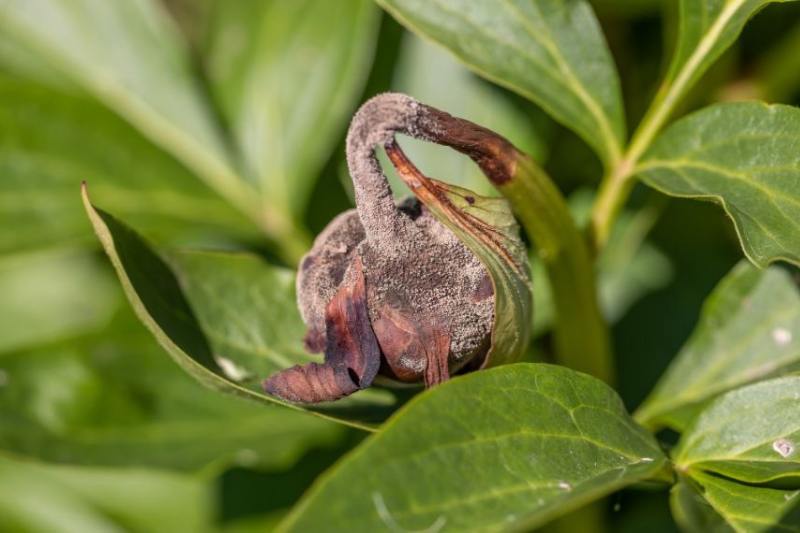
However, by taking on the role of the attentive gardener-director, scrutinising the set for signs of impending harmful intrigue, you can take the necessary measures to protect your peonies. Intervening with targeted treatments and preventive care is like rewriting the script in favour of your peonies, allowing them to play their role with brilliance.
Lesson 5: Improvised pruning
And for the final act of this article, what if you transformed into "Edgar with the silver hands," a doppelgänger of the famous Edward, but with less talent? Prune the peonies with scissors that you haven’t cleaned beforehand, without a plan or discernment. You might think you’re shaping an avant-garde masterpiece, while in reality… you’re just improvising, cutting here and there, in the middle of the flowering period! This reckless approach is the perfect scenario for a botanical drama, where the peonies, the actresses of their own tragedy, find themselves stripped and weakened… The perfect melodrama!
However, for gardeners who, in a burst of controlled creativity, aspire to sculpt their garden, wait until after flowering to intervene, when the curtain falls and the peonies are ready to regenerate backstage. This thoughtful pruning, far from being an improvisation, is a meticulous rehearsal for next year’s show. It not only helps keep the plant healthy but also encourages even more spectacular flowering, ensuring that the next act is welcomed with even more brilliance.
Whether shrubby or herbaceous, peonies beautify the garden every spring. With their vibrant white, cream, yellow, pink, or red dresses, they captivate and play the divas… and sometimes, they can be quite elusive when it comes to taking the stage. Imagine for a moment that you decide to deliberately sabotage the show, not out of […]
In a world where climate change is an unavoidable reality, the search for sustainable solutions is more crucial than ever. Every action counts, including in our gardens. Among the many ways to attenuate the effects of climate change, tree planting plays a key role. Among them, a champion from Asia stands out: Paulownia, a tree with exceptional carbon capture properties.
What is Paulownia?
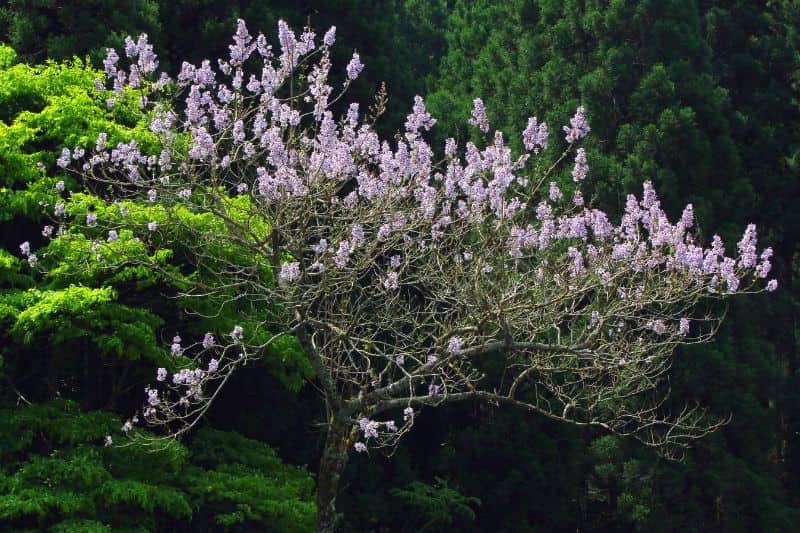
Paulownia is a deciduous tree distinguished by its large heart-shaped leaves and clusters of purple flowers. It can reach an impressive height of 10 to 25 metres in its natural habitat, making it a majestic addition to any landscape or large garden. Here in France, it will typically reach between 8 to 12 metres tall depending on the growing conditions.
It is native to Asia, particularly China and Japan, where it is known as "the emperor tree". Paulownia has been introduced to other parts of the world, including Europe and North America, where it has adapted well to various climatic conditions.
This tree is traditionally used for its wood, which is both lightweight and strong. Additionally, its ability to grow quickly makes it a popular choice for reforestation and ecological gardening projects. It is also used in traditional Asian medicine.
Note: the genus Paulownia includes six different species. However, the two most commonly cultivated species are Paulownia tomentosa and Paulownia fortunei.
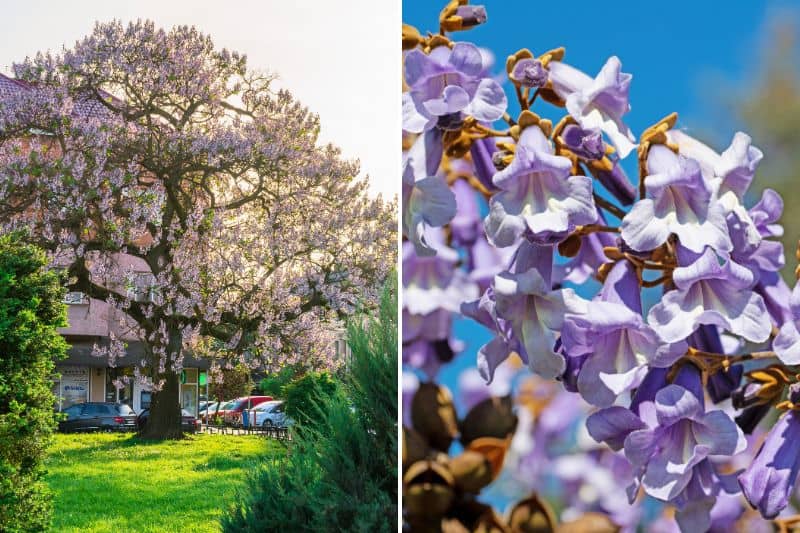
The carbon capture properties of Paulownia
Paulownia is often referred to as the "carbon capture champion", and for good reason. According to scientific studies, this tree can sequester an impressive amount of carbon dioxide (CO2) from the atmosphere. In fact, an adult Paulownia can absorb up to 48 kilograms of CO2 per year, which is about 10 times more than most other trees commonly used in reforestation projects.
This exceptional capability is partly due to its rapid growth. Paulownia can reach maturity in 10 years, meaning it starts to have a positive impact on the environment much more quickly than other trees.
When compared to other trees like oak or pine, which are typically used in reforestation projects, Paulownia stands out significantly. For example, an oak can take up to 30 years to reach maturity and captures on average only 4 to 5 kilograms of CO2 per year. Pine, although faster growing than oak, captures on average 10 to 20 kg of CO2 per year, but it still does not reach the levels of Paulownia.
Finally, Paulownia is also noted for its ability to regenerate from its stump after cutting, an asset that can promote rapid new growth and continuous carbon capture. However, this capability varies greatly depending on soil conditions, climate, and forestry management practices.
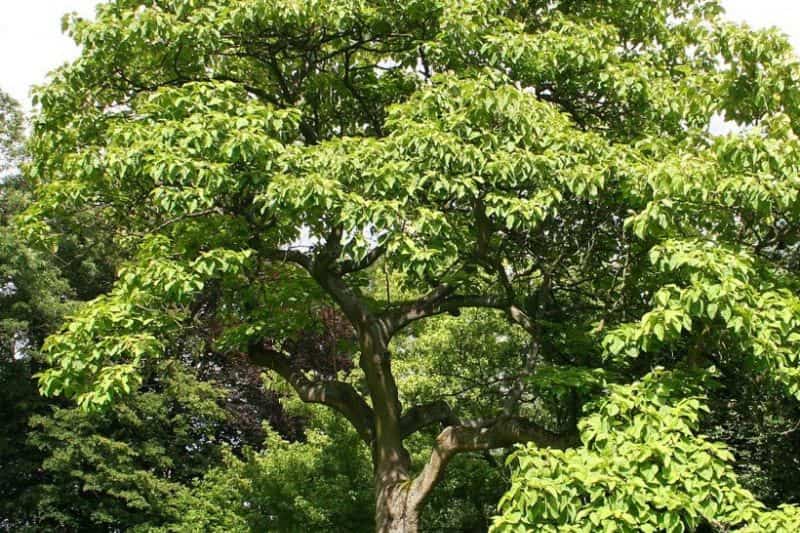
Additional benefits of Paulownia
In winter, its large, nutrient-rich leaves decompose quickly and enrich the soil. This is an additional asset for mulching, composting, and permaculture.
Resilient, Paulownia is a robust tree that easily adapts to a wide range of climatic conditions and soil types. It is also resistant to diseases and pests, making it a sustainable choice for any garden or reforestation project.
Further reading
To learn more about this tree, read our sheet on Paulownia, Imperial Tree: planting, growing, and care.
In a world where climate change is an unavoidable reality, the search for sustainable solutions is more crucial than ever. Every action counts, including in our gardens. Among the many ways to attenuate the effects of climate change, tree planting plays a key role. Among them, a champion from Asia stands out: Paulownia, a tree […]