Rhamnus, buckthorn, alder buckthorn: planting, pruning and care
Contents
Rhamnus in a nutshell
- Rhamnus are evergreen or deciduous shrubs, both charming and undemanding.
- Growing 1 to 5 m tall, they quickly form attractive, fragrant masses when in flower, in full sun, in light woodland or even in shade, and in areas difficult to plant.
- Shrubs ideal for creating informal, country-style hedges requiring no maintenance; they will delight gardener and wildlife.
- Cultivars offer the advantage of refined, very graphic foliage with a Japanese-inspired effect, suitable for all soils.
A word from our expert
Rhamnus are native shrubs of woodland edge or understorey that often go unnoticed by walkers. They are adaptable and unobtrusive, with insignificant flowering that nevertheless delights bees, rather ordinary foliage that is enjoyed by many butterfly caterpillars, and roots that take only the space other trees in the wood are willing to spare.
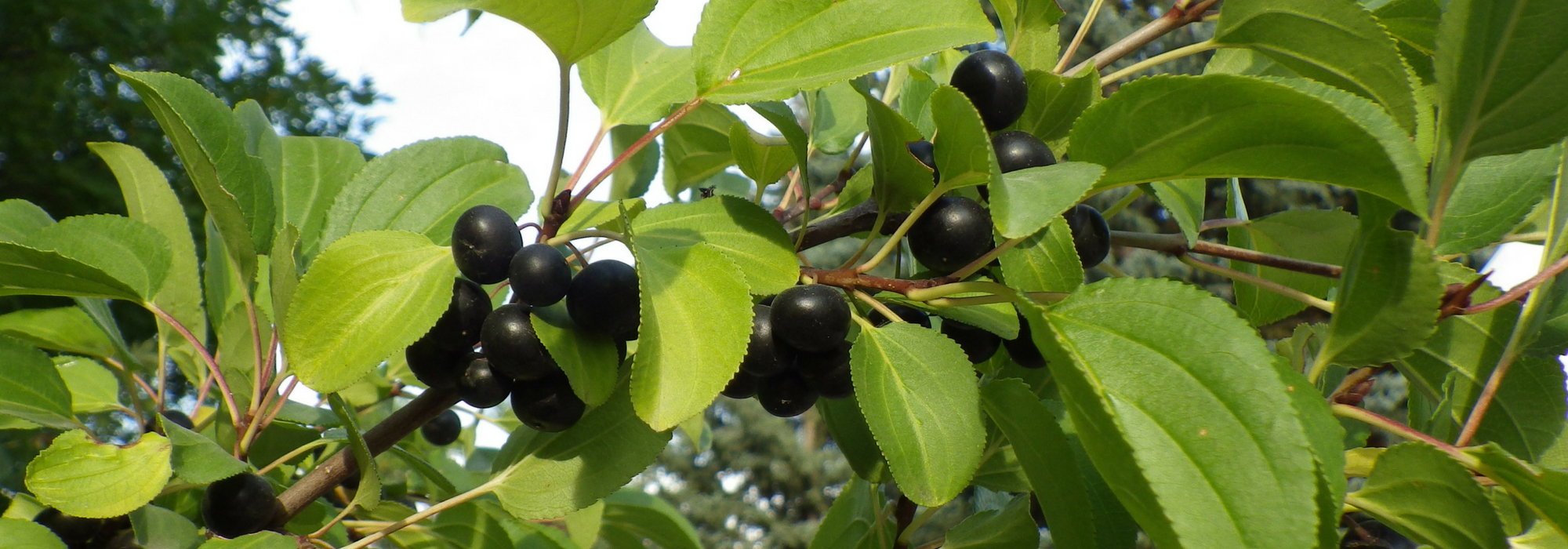
Alder buckthorn (Rhamnus frangula) is widespread throughout France on rather clay-siliceous (acidic) soils, occupying wet heathland, woods and marshes. It proves particularly tolerant of difficult understorey conditions, seasonal drought and wind, and requires no special care. It withstands temperatures down to -40°C! Greenish to white, highly melliferous flowering from May to June yields a well-regarded honey. It is followed by berries that turn green, red then black, about 12 mm, which appear throughout the summer. Growth is rapid, allowing a small shade tree up to 4.5 m tall to be obtained with no difficulty.
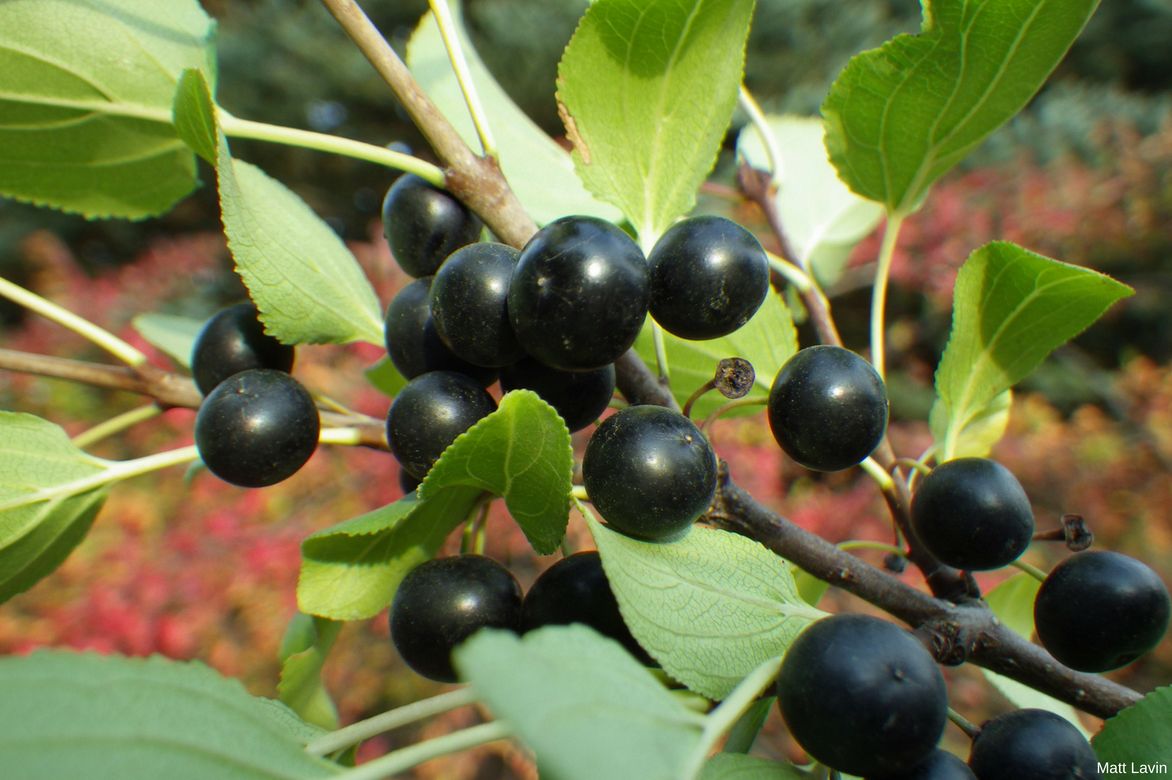
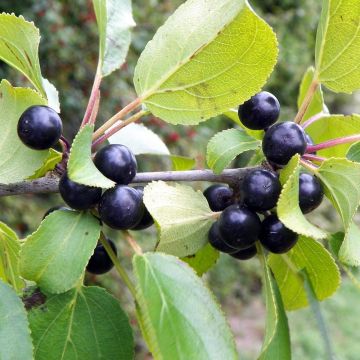
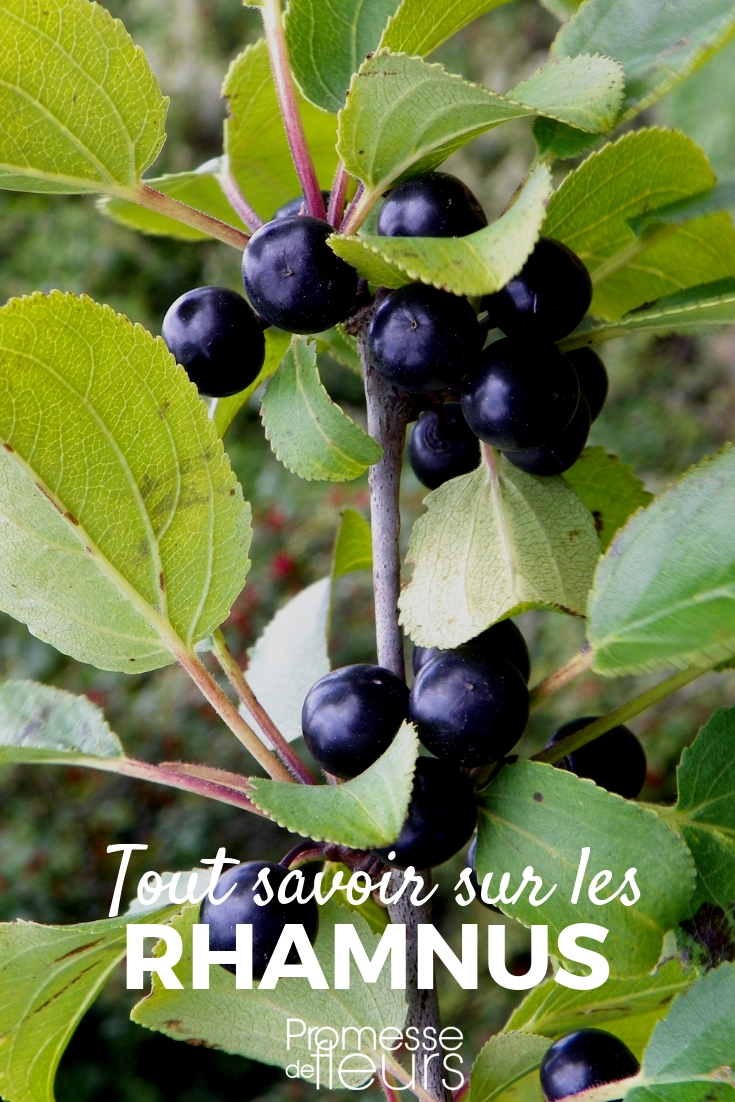
Decorative berries of Rhamnus cathartica.
Mediterranean buckthorn (Rhamnus alaternus) forms a shrub 1 to 3 m high (up to 5 m), common around the Mediterranean on rocks and calcareous slopes as it prefers warmth. It is found in garrigue, wasteland, hedgerows and at woodland edges, even in the understorey of oaks and pines. It is a valuable plant for the reforestation of burnt areas. Widespread in Provence and throughout Languedoc-Roussillon, it extends north to Isère and west to the Lot and Dordogne. It has even naturalised in Australia and New Zealand. Flowering occurs from March to May, depending on the climate, as tiny yellowish to greenish flowers, lacking petals, grouped in small clusters in the leaf axils. They are inconspicuous but pleasantly scented, attracting many foraging insects. Only female plants, when male plants are present, produce these small pretty red berries, set off by the pale foliage. It produces fleshy fruits that ripen in late spring and early summer, and thus represents an important source of water and nutrients for birds, small mammals (rodents) and ants that ensure seed dispersal. The fruits usually contain 2 or 3 seeds covered by an endocarp that opens when the fruit pulp is removed. Mediterranean buckthorn is capable of living for many years in the garden.
Description and botany
Botanical data
- Latin name Rhamnus sp.
- Family Rhamnaceae
- Common name alder buckthorn, buckthorn, alaternus, variegated spiny buckthorn, white sanguin
- Flowering between March and June
- Height between 1 and 5 m
- Exposure sun, partial shade, shade
- Soil type any soil, even dry, stony or marshy depending on species
- Hardiness Good to excellent (-10 to -40°C)
Genus Rhamnus includes nearly 125 species of shrubs or small trees. It now incorporates genus Frangula (with naked buds without scales, flowers with 4 sepals and bisexual flowers), which notably designated bourdaine (Frangula alnus) also known as Rhamnus frangula. Buds can be naked (former genus Frangula) or scaly in true Rhamnus. Vernacular names such as purging buckthorn, alaternus buckthorn or simply alaternus are also applied to other main native species. These shrubs occupy temperate or subtropical regions of northern hemisphere, mainly eastern Asia, North America and China. Species cultivated locally belong to temperate and southern zones of Europe and North Africa and are reputed to tolerate drought and sea spray. The genus gave its name to family Rhamnaceae, which notably includes Céanothes and red date trees.
Bark is smooth, dotted with numerous white lenticels on a very dark background in alder buckthorn. Purging buckthorn (Rhamnus cathartica) bears dwarf branches ending in a thorn. Leaves are simple, oval and dentate, and may be positioned alternately (R. alaternus, R. frangula), more or less opposite (R. catharticus) or even fasciculate (clustered) on short shoots. They are sometimes coriaceous, persistent and with more or less cartilaginous toothed margins in alaternus but, more often,
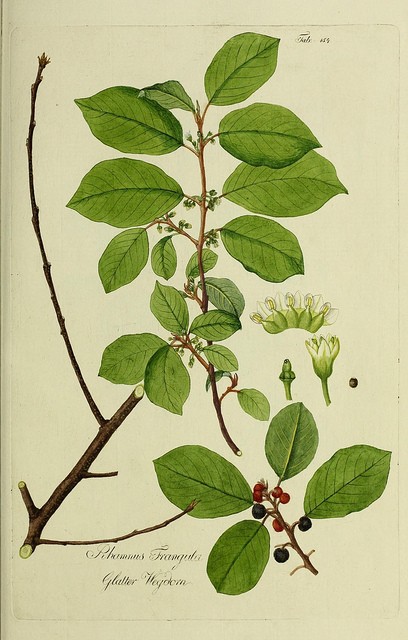
Rhamnus frangula – botanical illustration
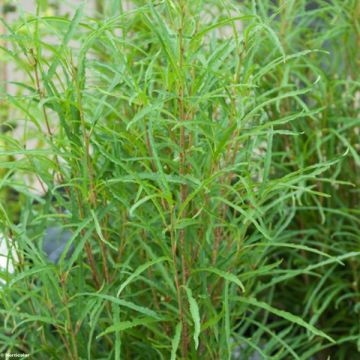
deciduous as in alder buckthorn and purging buckthorn. Prominent veins curve to follow leaf margin. Foliage with short petiole measures between 1 and 8 cm long. It is exceptionally finely divided and undulate in cultivars such as Rhamnus frangula ‘Asplenifolia’ nicknamed fern-bourdaine and Fine Line ®. Habit is compact and dense in alaternus, rather slender and open in alder buckthorn, columnar in cultivar Rhamnus frangula Fine Line ®. Young shoots are often tinged violet in alaternus. Leaves turn red in autumn in alder buckthorn and yellow in purging buckthorn, and remain dark green in alaternus.
The yellowish-green or white flowers are small, rather inconspicuous but very fragrant, attracting many pollinators between March and June depending on species. Flowers are solitary or grouped in small clusters and are often unisexual on dioecious plants (entirely male or female specimens), notably in alaternus. Calyx is cup-shaped or campanulate, with 4 or 5 sepals and corolla with 4 or 5 petals, absent in alaternus. Flowers contain 4 or 5 stamens the size of the petals or shorter, or pistils ending in 2 or 3 points. Fruits, from green through red to black, are drupes that resemble berries about 5 mm across because they contain several stones with or without a furrow. Fruiting extends throughout summer in alder buckthorn, giving a very decorative appearance of small green, red and black spheres.
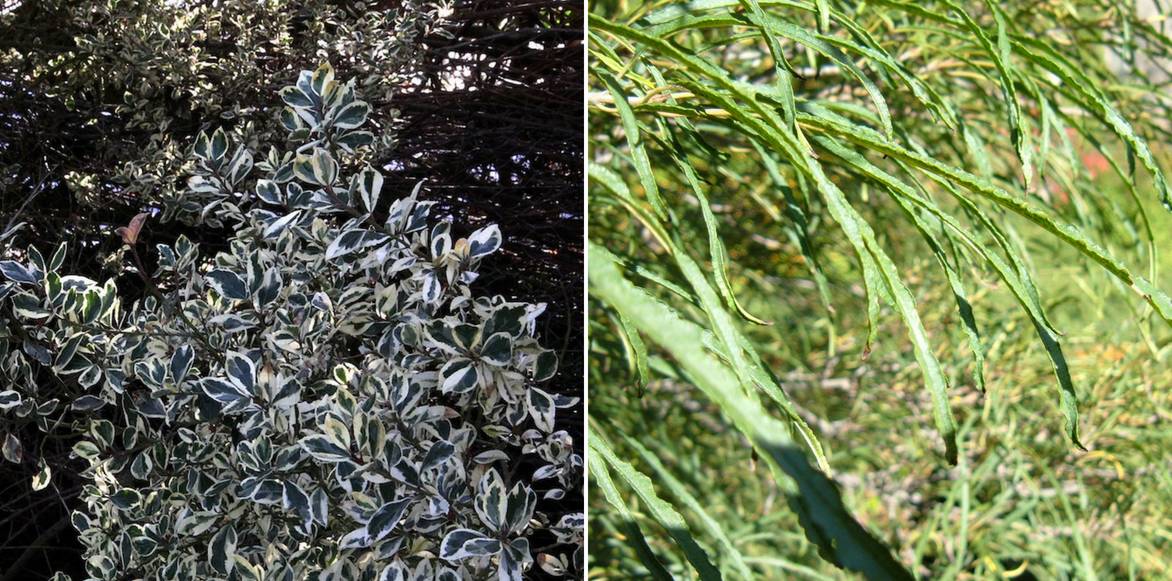
Foliage of buckthorns: Rhamnus alaternus ‘Argenteovariegata’ (Photo Gartenknorze), Rhamnus frangula ‘Asplenifolia’ (photo Jonathan Landsman).
Main varieties of Rhamnus
Native species in France are found in temperate zones, on calcareous soil such as purging buckthorn or more often in damp heathland, woods or marshes like alder buckthorn, or on Mediterranean calcareous slopes even exposed to sea spray such as alaternus buckthorn. Rhamnus generally tolerate all these situations, ranging from dry understorey to wind-blown shores and rocky banks subject to drought. To introduce these shrubs into gardens, horticulturists have worked to select more ornamental forms with cream-variegated or laciniate foliage, and columnar habit so they can decorate terraces whatever the exposure and climate.
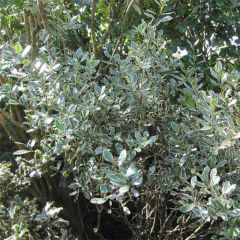
Rhamnus alaternus Argenteovariegata - Italian Buckthorn
- Flowering time April, May
- Height at maturity 3 m
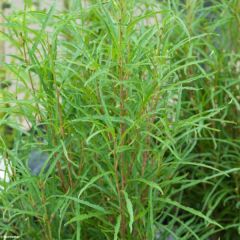
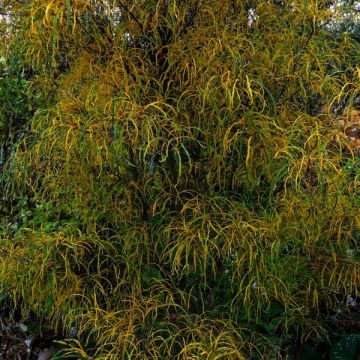
Rhamnus frangula Fine Line - Alder Buckthorn
- Flowering time June, July
- Height at maturity 2,50 m
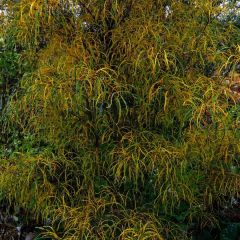
Rhamnus frangula Aspleniifolia - Alder Buckthorn
- Flowering time June, July
- Height at maturity 2,50 m
Discover other Rhamnus
View all →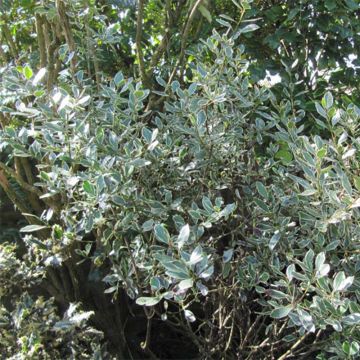
Available in 1 sizes
Available in 2 sizes
Available in 1 sizes
Available in 3 sizes
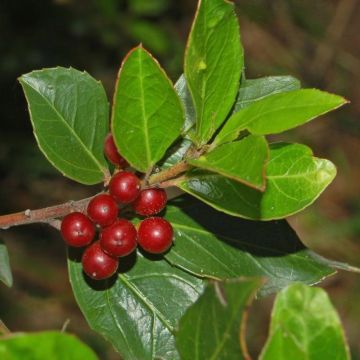
Available in 1 sizes
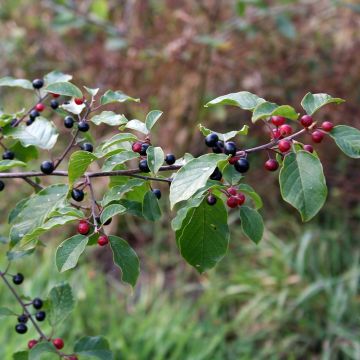
Available in 2 sizes
Planting
Where to plant Rhamnus?
Plant Rhamnus in ordinary soil, well worked and well drained. Italian buckthorn prefers rather calcareous soils, but is very undemanding and adapts to poor, clay‑limestone and stony soils. Alder buckthorn grows in sandy soils, rather neutral to acidic, tolerating conditions from marshy to dry.
Summer drought and high temperatures are not a problem once these shrubs are well established. Plant Italian buckthorn in well‑drained soil and sheltered from cold winds to ensure frost tolerance of -12 to -15°C. All tolerate sea spray well and also thrive in oceanic climates. In urban areas, they cope well with air pollution.
Plant them in full sun or, if necessary, in partial shade. Italian buckthorn even tolerates a shaded position in dry, warm climates.
When to plant?
Plant Rhamnus preferably in autumn to ensure deep rooting before summer drought. In cooler, wetter climates, planting in spring is also fine. Container‑grown shrubs can be planted at any time, but avoid periods of frost or severe drought.
How to plant?
For planting a Rhamnus :
- Immerse the root ball in a bucket of water to soak it thoroughly.
- Dig a planting hole, 50 cm in all directions or a trench for a hedge.
- Add a 10 cm drainage layer (gravel, sand… ) if your soil is heavy clay.
- Add well‑rotted manure or compost, or potting compost if soil is poor.
- Place the plant in the planting hole so the top of the root ball is level with the soil.
- Backfill with soil and firm lightly.
- Water.
- Spread a layer of gravel around the base to help keep the area around the roots cool. This will also reduce weed growth and improve drainage.
Establishment is easy and quick and requires one or two generous waterings per week.
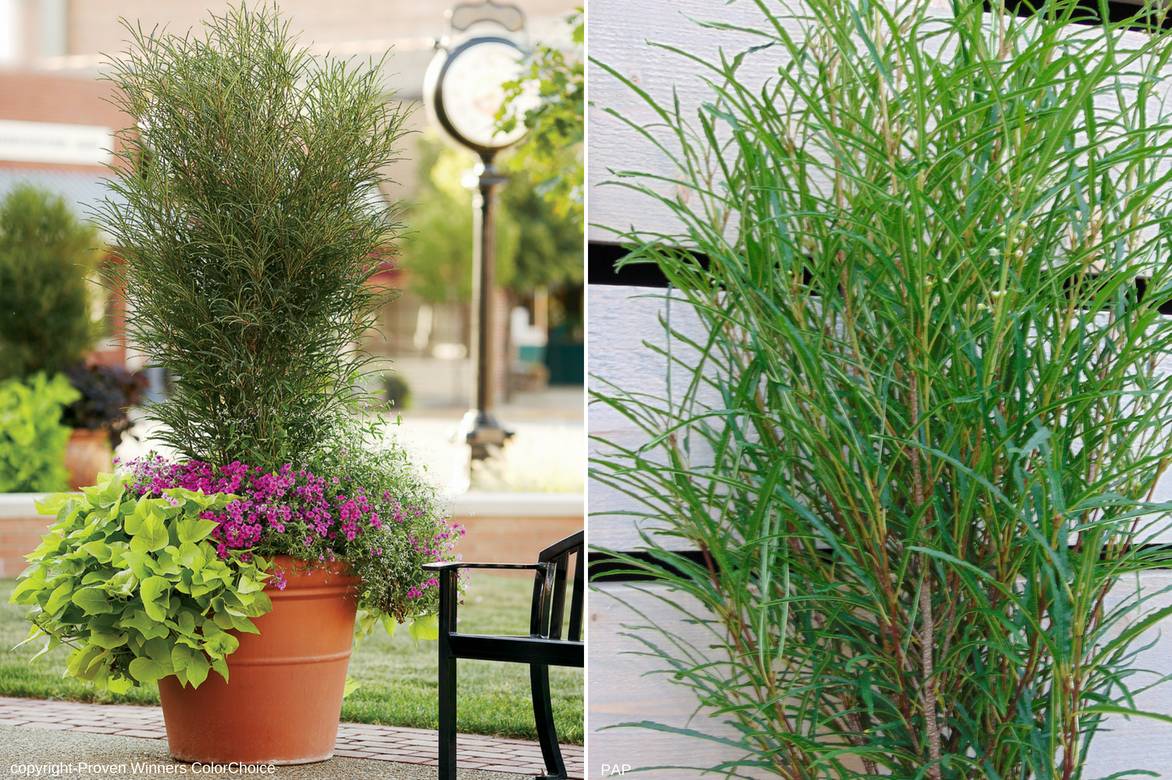
Rhamnus frangula ‘Fine Line’ is suitable for container growing.
Read also
How to plant a hedge?Care and pruning
Water only twice a month from third year onwards, and only during drought. It is a plant that requires very little maintenance and grows without difficulty once conditions are suitable. Fertiliser inputs are not essential (add just a little hornmeal to bottom of planting hole), but can be useful in very poor soil.
Pruning is not essential. You can cut back stems slightly after flowering to encourage plant to branch. Avoid severe pruning. On variegated forms, if you notice stems bearing green leaves, remove them.
Container culture:
Use a light substrate, mix of garden soil, coarse sand and potting compost. In summer, water only when soil is dry, thoroughly, but by spacing waterings. Plant can be overwintered in a cool, bright, barely or unheated place, sheltered from severe frosts. Apply a little slow-release fertiliser in spring and autumn.
Multiplication
Multiply Rhamnus by sowing, layering or by propagation by cuttings.
Propagation by cuttings
- Take tip cuttings from herbaceous shoots in spring or from semi-ripe shoots in late summer and stick them into a mixture of sand and potting compost.
- Overwinter under a cold frame.
- Plant out in the open ground in the following spring or autumn.
Layering
- Choose a long flexible twig, bury its central part and hold it in place with a peg in the soil.
- Slightly scrape the bark of the buried section to encourage rootlet growth.
- Wait 1 or 2 years before separating the layer from the parent plant.
Sowing
- Harvest buckthorn fruits as soon as they turn black in late summer to autumn.
- Separate the seeds from the pulp and rinse them.
- Sow them in a pot filled with sand placed outdoors, against a north-facing wall.
- Germination occurs the following spring or the year after. Plant out seedlings aged 6 months directly in their final position.
Uses and associations
Alder buckthorn is typical of fairly damp to marshy woodland understoreys, on deep, acidic, sandy-loam or clay soils, but it also grows on drier ground regardless of pH. It is a pioneer species on sandy and semi-peaty soils where it can form a useful windbreak.
Les formes horticoles comme Rhamnus frangula Fine Line et ‘Asplenifolia’ livrent un feuillage lacinié très original qui prend une jolie teinte dorée en automne. Elles peuvent s’installer dans un grand massif en dessous d’un arbre plus grand pour habiller élégamment le tronc de celui-ci. Leur silhouette très découpée offre un bel effet japonisant sans les contraintes de terrain habituelles de l’Erable du Japon qui requiert un sol acide. Le port colonnaire de Fine Line lui donne fière allure dans un grand pot accompagné de vivaces basses ou simplement dans une haie libre ou un grand massif arbustif en compagnie de Physocarpus, de troènes, de fusains, amélanchiers, Elaeagnus commutata Zempin, lauriers tins… De plus, les baies de ces arbustes attireront dans votre jardin les oiseaux qui en sont friands.
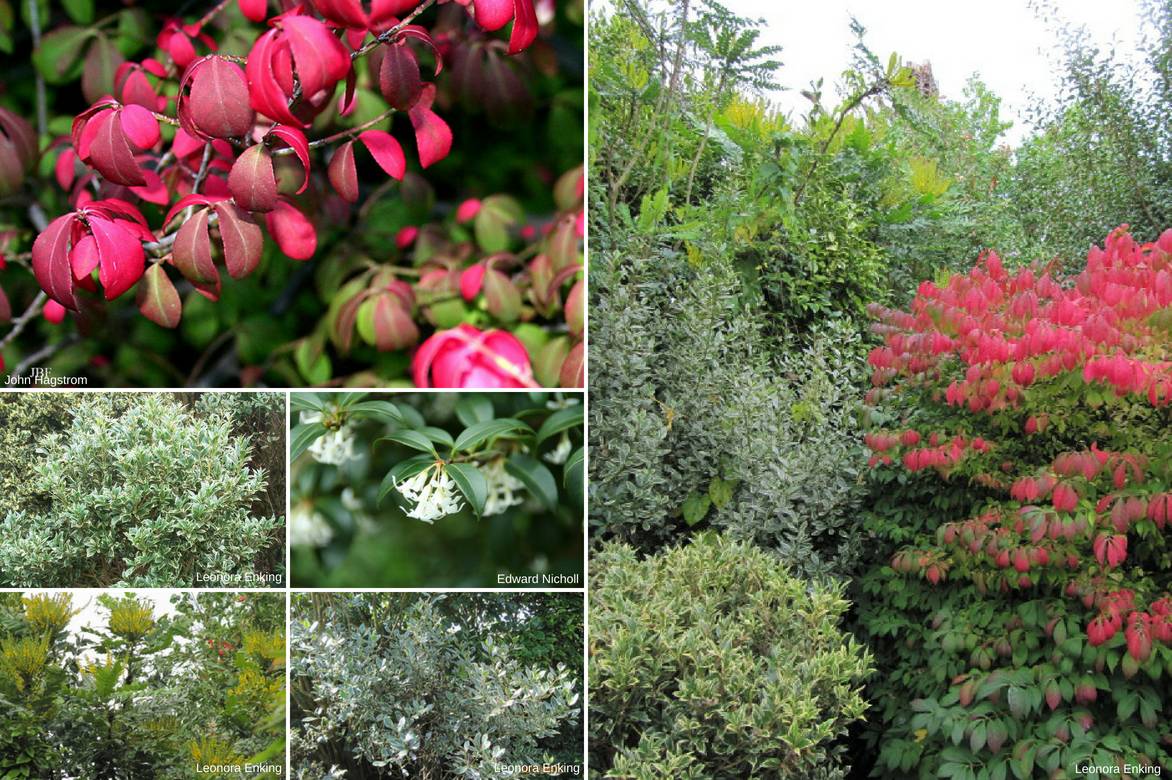
An example of a planting scheme: Euonymus alatus ‘Compactus’, Osmanthus heterophyllus ‘Variegata’, Osmanthus burkwoodii, Mahonia ‘Lionel Fortescue’ (Mahonia ‘Winter Sun’ is a similar variety with long soft yellow inflorescences), Rhamnus alaternus ‘Argenteovariegata’.
With Italian buckthorn, only female plants produce berries. The white-variegated foliage form of Rhamnus alaternus ‘Argenteovariegata’ is one of the loveliest shrubs for dry gardens in shaded spots. Both elegant, bright and dense, attractive all year and slow-growing, it is perfectly suited to areas that are particularly difficult to plant, such as root-strewn understoreys and coastal gardens exposed to sea spray. This variegated Rhamnus, a truly all-terrain shrub, is widely planted by landscape professionals in southern France, as well as in Portugal and Spain. Forming a bright silvery mass, with good hardiness down to -10°/-12°C in well-drained soil and perfectly self-sufficient once established, the variegated buckthorn makes a fine specimen to plant in a hedge or a border of easy-care shrubs in a mild climate, or even as a specimen plant, for example at the corner of a small tree clump. It is, together with Filaria, Pistacia lentiscus, laurustinus, Myrtus tarentina ‘Variegata’ and arbutus, one of those indispensable shrubs for creating the evergreen structure of a dry garden, even among the roots of oaks or pines.
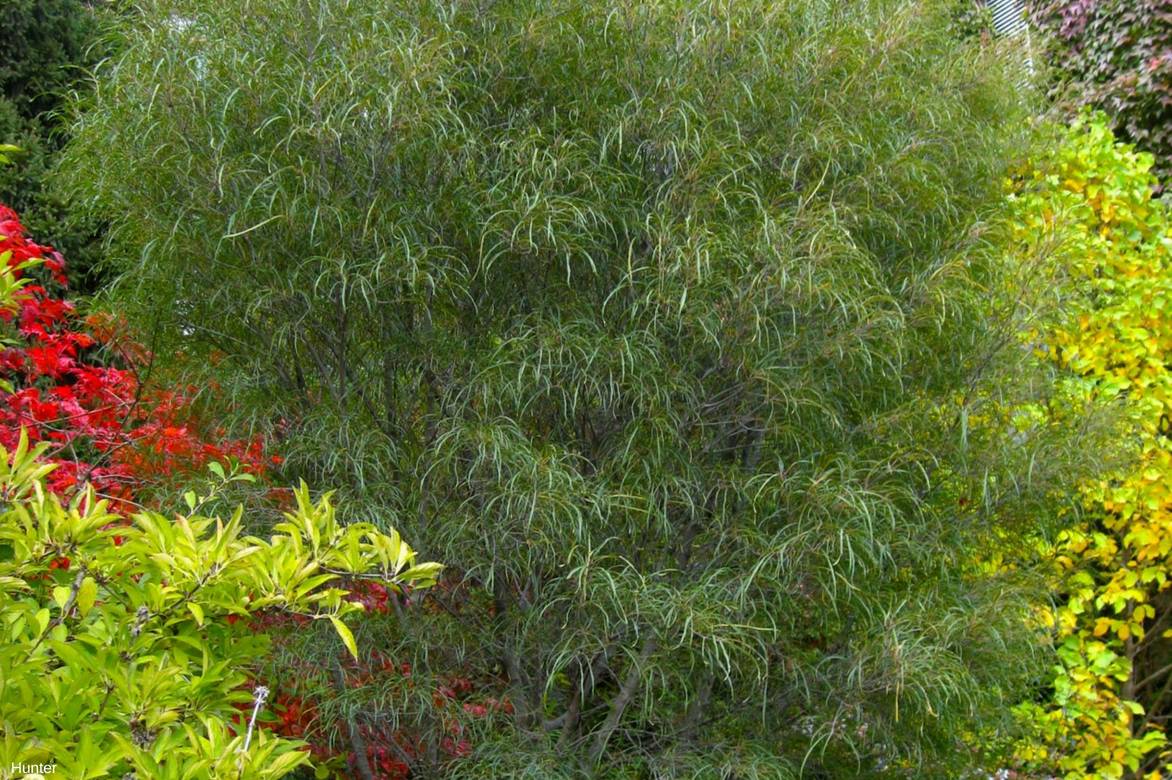
An idea for a combination playing on leaf shapes and colours: Rhamnus frangula ‘Aspenifolia’ accompanied by golden foliage (Sambucus nigra ‘Aurea’ for example) and autumnal colours (Euonymus alatus, Corylopsis pauciflora, Cornus, etc).
Did you know?
Berries of alder buckthorn (Rhamnus frangula) and purging buckthorn (Rhamnus cathartica) have a purgative effect and are used in the manufacture of laxative medicines. However, consuming them raw is not recommended because effects can sometimes be severe.
Alder buckthorn honey is renowned for its delicate aromas and a fruity, balsamic and very subtly flavoured taste.
Flexible shoots of alder buckthorn were used in basketry, notably to make beehives, and its charcoal was used to produce gunpowder, hence its nickname ‘powder wood’. Alder buckthorn wood is used in cabinetmaking.
Fruits and shoots of purging buckthorn were harvested, notably in the Comtat Venaissin (Carpentras), to obtain yellow, yellow-green and brown dyes, such as bladder-green used in the fine arts or to dye fabrics. The Brimstone butterfly and the Buckthorn Azure are among buckthorn’s hosts, so the shrub is essential to their survival.
The species cathartica, introduced to North America, has become invasive in Quebec. Alder buckthorn has also naturalized in the region.
Further reading
- Discover our wide range of Rhamnus
- Discover Olivier’s video on buckthorn, alder buckthorn or Rhamnus
- Subscribe!
- Contents
This form is protected by reCAPTCHA - the Google Privacy Policy and Terms of Service apply.
































Comments