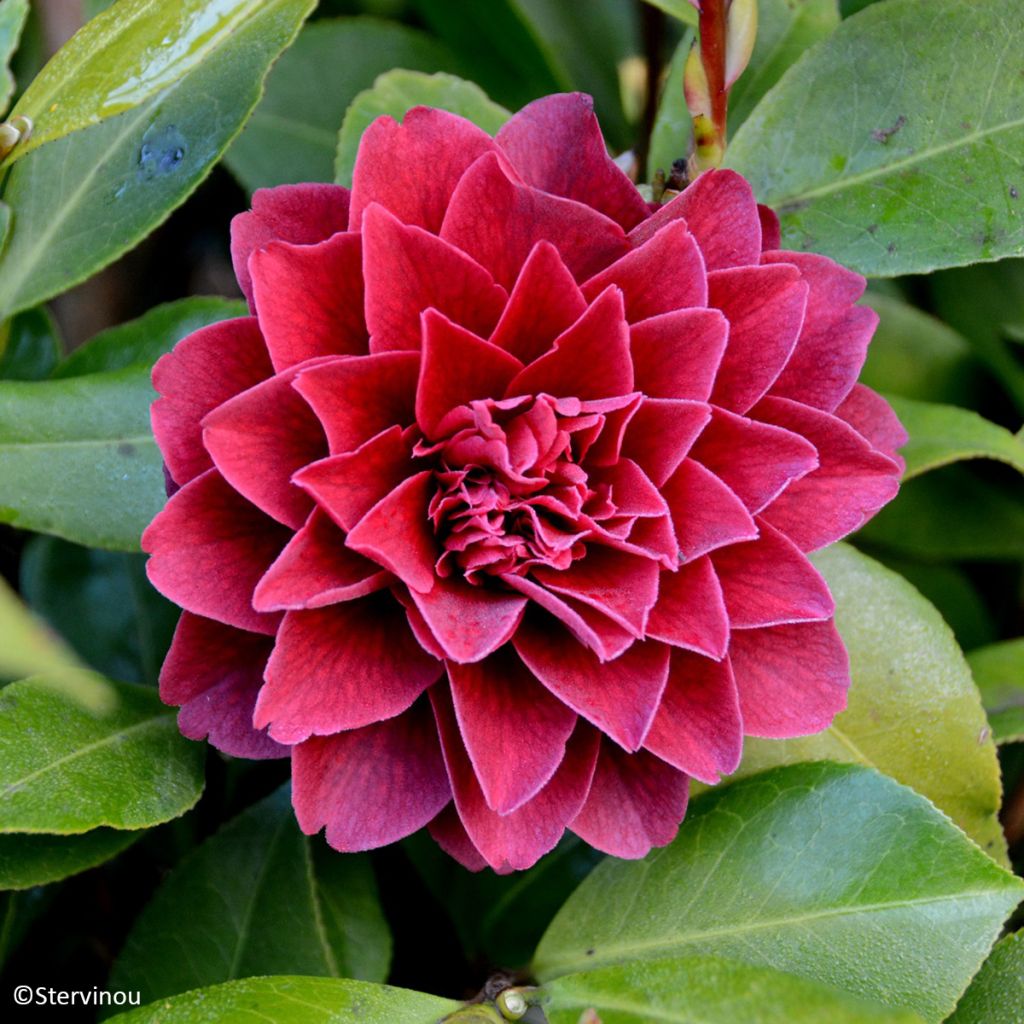
Camellia japonica Manuroa Road
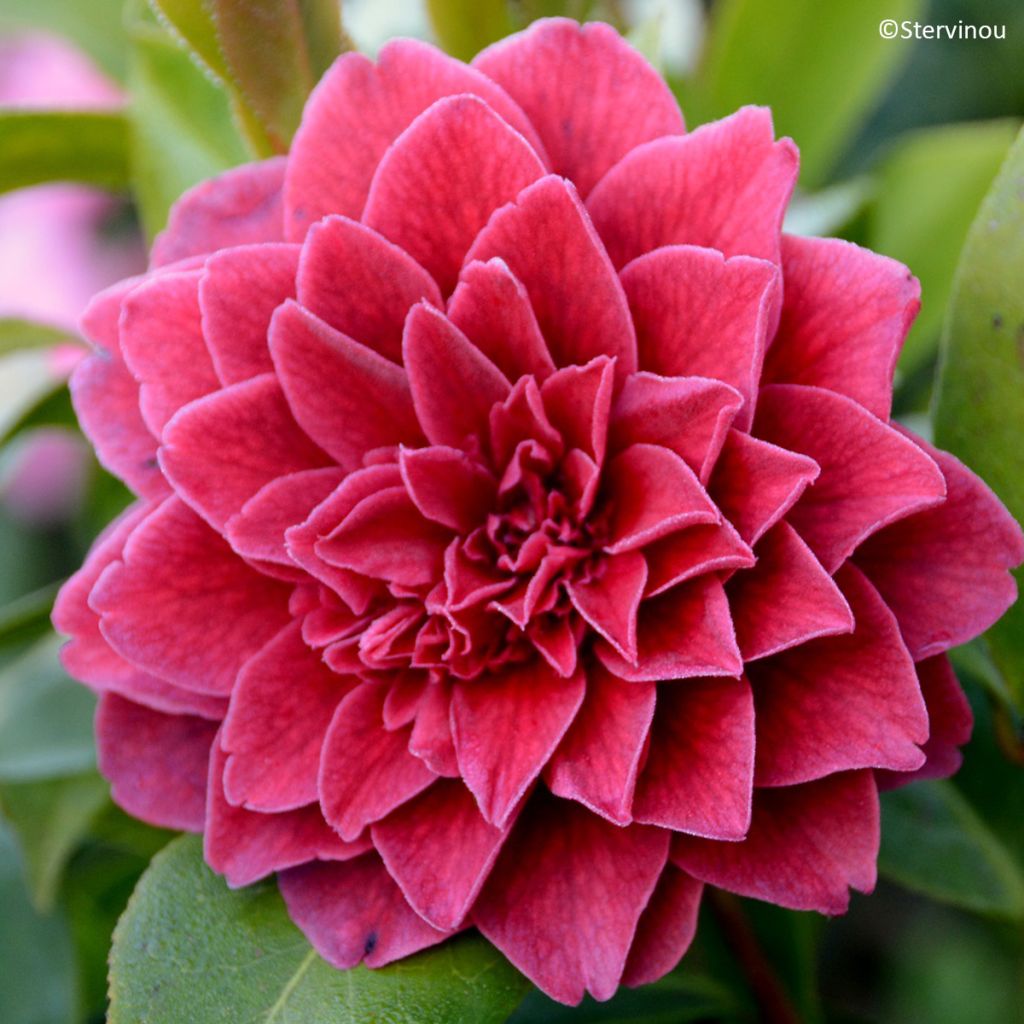
Camellia japonica Manuroa Road
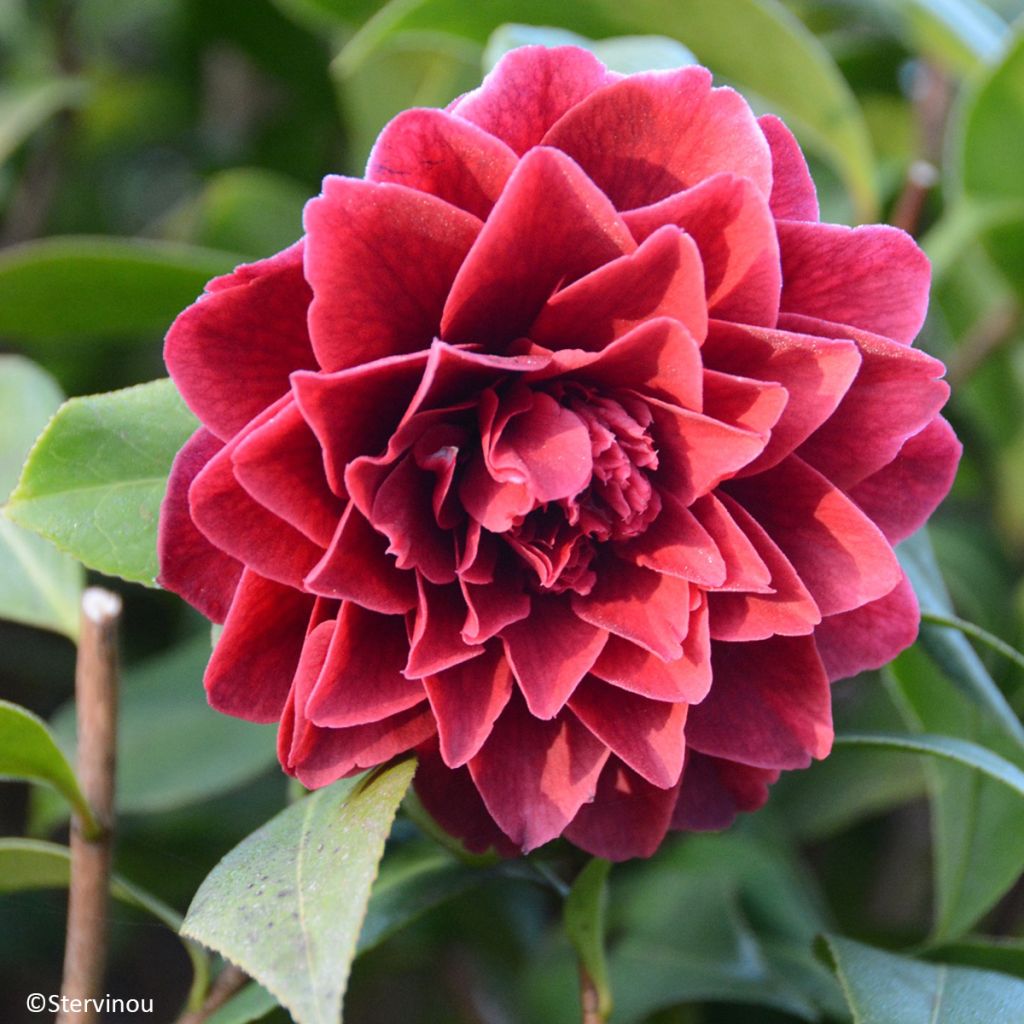
Camellia japonica Manuroa Road
Camellia japonica Manuroa Road
Camellia japonica 'Manuroa Road'
Japanese Camellia, Rose of winter
Thank you for sending the plants in good condition. However, I did not recognise the flower or the colour from the photo. In the photo, the flower looks like a dahlia, but it doesn't here. What a shame, as I found it very interesting. Thank you for your response. Kind regards,
Nath44, 26/02/2026
Back-to-school special offer!
Get €10 off for every €50 you spend! And get up to €40 off on a single order.
How does it work?
1. Shop your favourites
Add your favourite plants to your basket. For every €50 you spend (excluding delivery charges, store credit and the plastic-free option), you’ll receive a €10 voucher.
€50 spent = €10 voucher
€100 spent = €20 voucher
€150 spent = €30 voucher
€200 spent = €40 voucher
2. Place your order
Once your basket reaches one of the spending thresholds, place your order. You can even choose your delivery date!
3. Receive your voucher
As soon as your order has been shipped, you’ll receive an email containing your personal voucher code and its value.
4. Use it on your next order
Your voucher is valid for 90 days from the date you receive it. It can be used once only, on a new order worth at least the value of the voucher, excluding delivery charges.
Please note: Vouchers can be combined with other offers, but cannot be split or refunded.
Home or relay delivery (depending on size and destination)
Important: You may be charged customs duties by your country’s customs authorities upon delivery.
Schedule delivery date,
and select date in basket
This plant carries a 24 months recovery warranty
More information
We guarantee the quality of our plants for a full growing cycle, and will replace at our expense any plant that fails to recover under normal climatic and planting conditions.

Would this plant suit my garden?
Set up your Plantfit profile →
Description
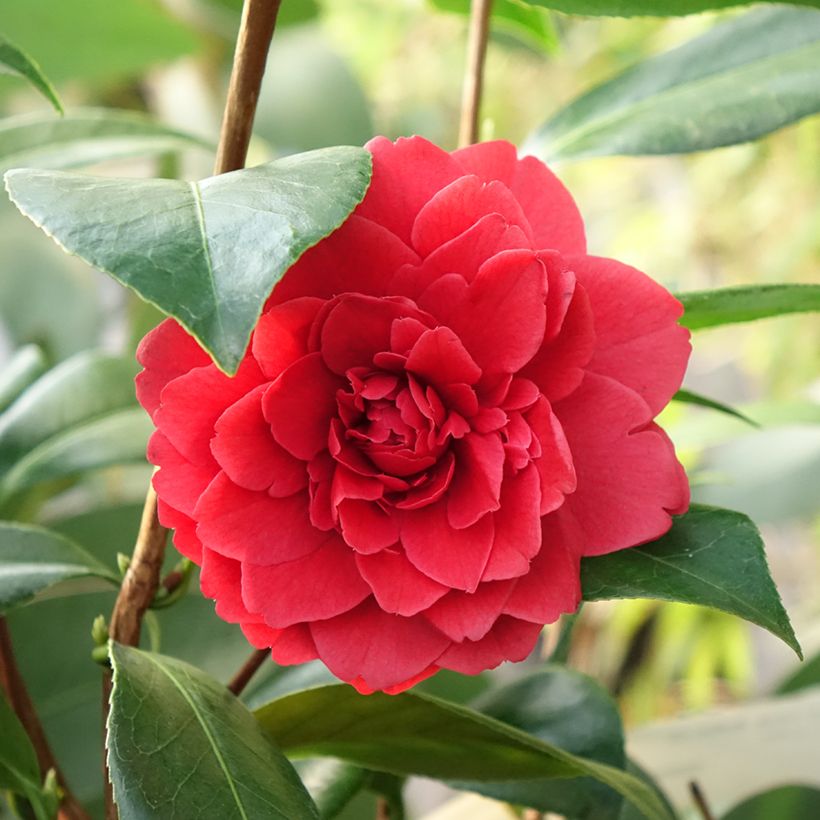
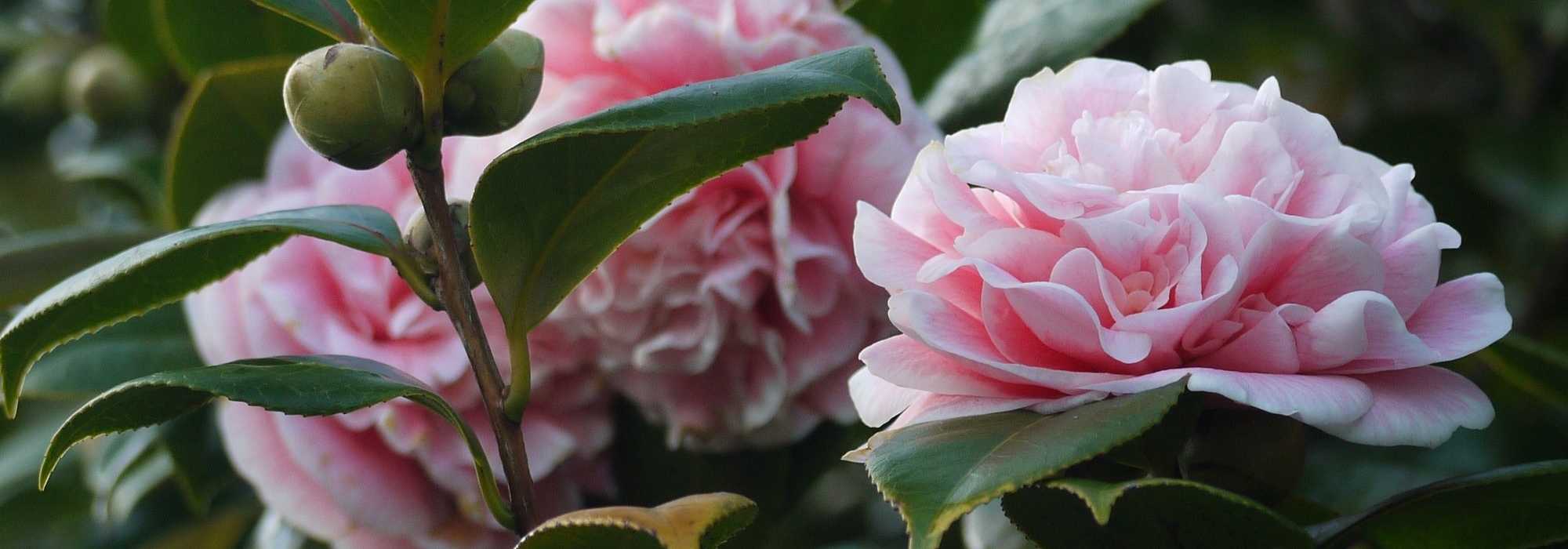
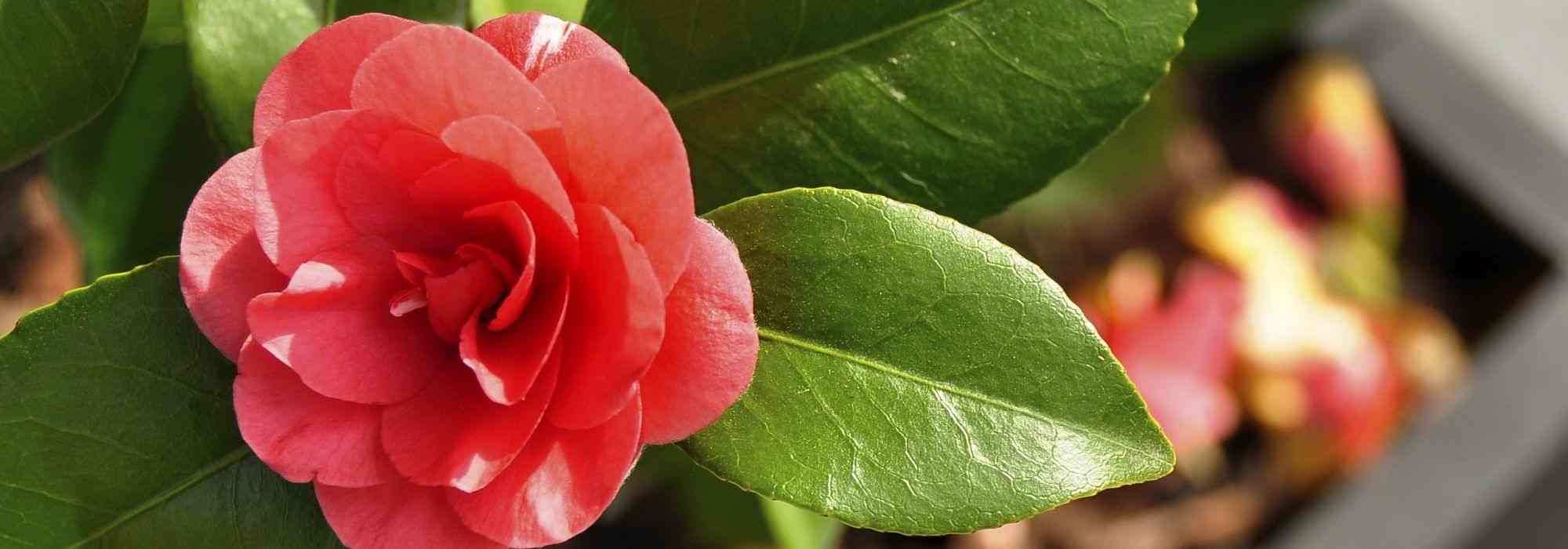
Camellia ‘Manuroa Road’ is a Japanese camellia prized for its large, perfectly overlappingflowers reminiscent of dahlias. They are beautifully showcased against its dark green, glossy foliage. In a shaded acid soil bed or a large container, this evergreen bush with its very regular habit shines in late winter and spring.
Belonging to the Theaceae family, ‘Manuroa Road’ is a cultivar of Camellia japonica. It was selected in New Zealand at Takanini/Papakura by Neville Haydon; first flowering observed in 1994 and registered in 2001 with the NZ Camellia Society. It originates from a sowing of C. japonica ‘Takanini’, from which it inherits the dark red hue while offering a fuller, more regular flower.
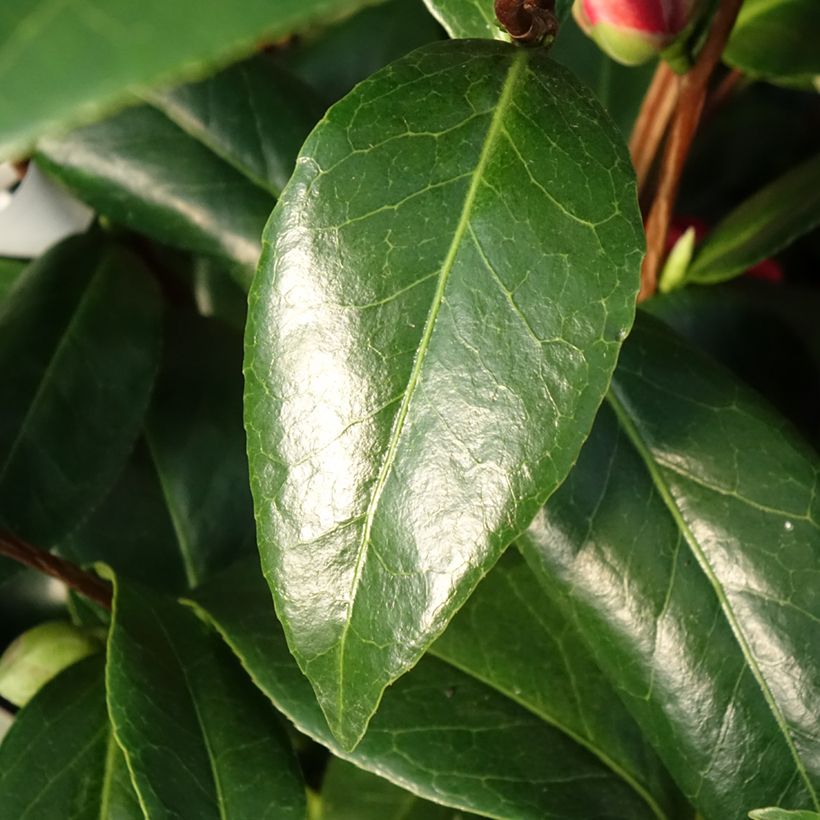
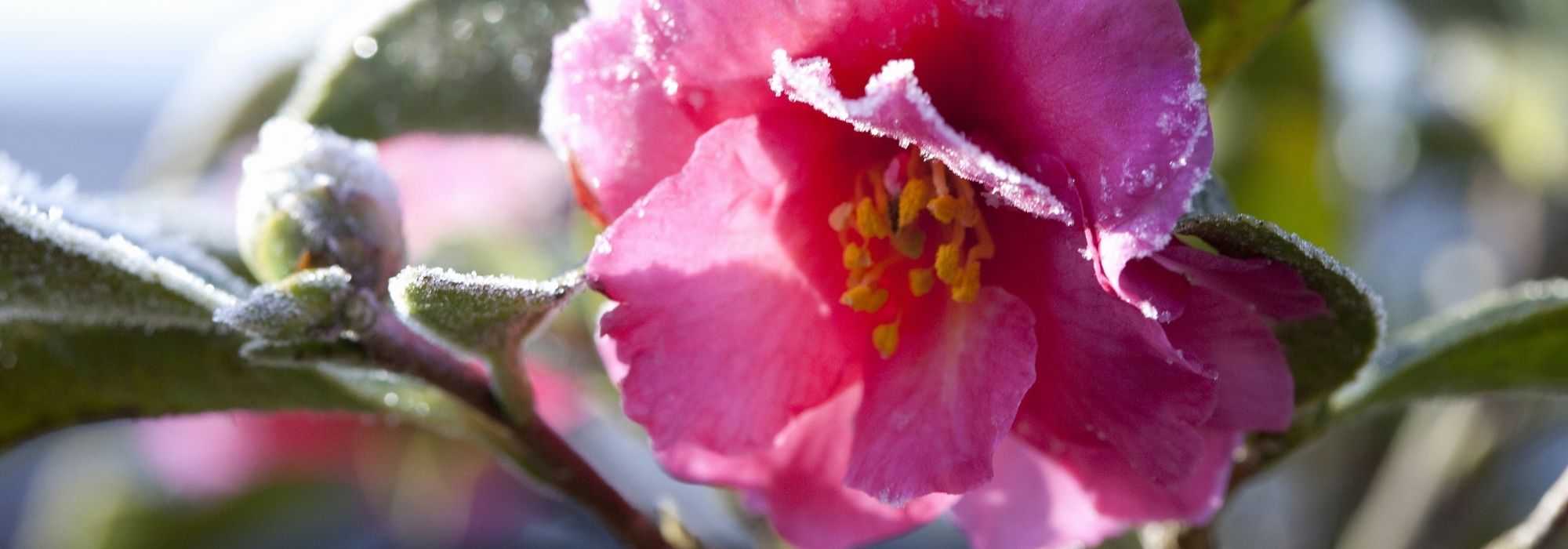
This cultivar has a dense, upright, bushy habit and medium stature; expect approximately 1.50 m in height by 0.90 m in spread in 10 years, and up to 2–2.50 m by 1.50 m at maturity in open ground. In a pot, its dimensions often remain below 1.20 m. The large flowers (around 10–12 cm in diameter) are double, very overlapping, very dark, uniform red, with no visible stamens; they bloom from March to May. The foliage is evergreen, leathery, dark green and glossy; the ovate to elliptical, finely toothed leaves measure 6 to 10 cm long. The root system is rather shallow, fibrous and spreading: avoid compact soils and deep digging near its base. It is hardy to −12 to −15 °C in a sheltered position.
Plant Camellia ‘Manuroa Road’ in an acidic, fertile, humus-bearing soil that remains moist in summer but is well-drained, in bright partial shade and sheltered from cold winds; avoid scorching sun. In a bed, pair it with other evergreen acid-loving shrubs: Pieris ‘Forest Flame’ for its colourful spring bud burst period, Rhododendron yakushimanum 'Koichiro Wada' for its apple-blossom flowering that takes over, Japanese Azalea 'Hino-Crimson' for edging, and Sarcococca confusa for its winter fragrance, to be placed in the background. At the edge, add ferns and late hellebores to cover the ground without competing with its shallow roots.
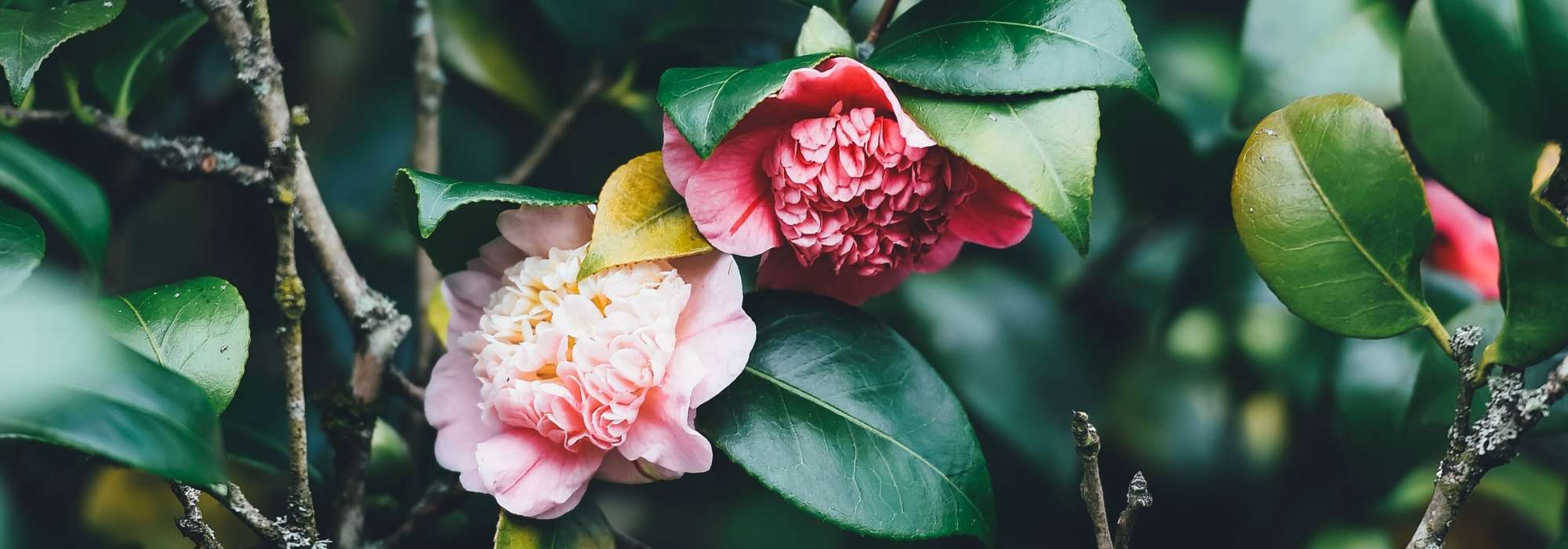
Camellia japonica Manuroa Road in pictures
Plant habit
Flowering
Foliage
Botanical data
Camellia
japonica
'Manuroa Road'
Theaceae
Japanese Camellia, Rose of winter
Cultivar or hybrid
Planting and care
Camellia japonica 'Manuroa Road' tolerates non-scorching sun in favourable climates, such as in oceanic regions. However, it will be at its best in partial shade, protected from intense sun and sheltered from strong winds. Plant it in moist, humus-bearing, acidic, and well-drained soil. Do not plant the bush too deeply; the top of the root ball should be covered by 3 cm. In winter, cover it with a 5 to 7 cm thick mulch of leaf compost and crushed bark. Beware of late frosts, which can damage the flowers and buds. During dry periods, water the bush to prevent the flower buds from dropping. It is best to plant camellias in autumn to promote good rooting and better flowering from the first year. Possible diseases are: chlorosis caused by excess lime, brown spots caused by scorching on leaves in full south exposure, sooty mould, scale insects, and vine weevils.
Camellias tolerate pot cultivation well; their root system forms a dense but not extensive network of root hairs. Annual repotting, into a slightly larger pot, is sufficient. Feed your potted camellia regularly and water it with preferably non-calcareous water. If the water is hard in your area, add a teaspoon of iron chelate to the watering water every three months, from spring to autumn.
Planting period
Intended location
Care
Planting & care advice
-
-

-
-

-

-
-
-
-
, onOrder confirmed
Reply from on Promesse de fleurs
Recently viewed products
Haven't found what you were looking for?
Hardiness is the lowest winter temperature a plant can endure without suffering serious damage or even dying. However, hardiness is affected by location (a sheltered area, such as a patio), protection (winter cover) and soil type (hardiness is improved by well-drained soil).

The flowering period indicated on our website applies to countries and regions located in USDA zone 8 (France, the United Kingdom, Ireland, the Netherlands, etc.)
It will vary according to where you live:- In zones 9 to 10 (Italy, Spain, Greece, etc.), flowering will occur about 2 to 4 weeks earlier.
- In zones 6 to 7 (Germany, Poland, Slovenia, and lower mountainous regions), flowering will be delayed by 2 to 3 weeks.
- In zone 5 (Central Europe, Scandinavia), blooming will be delayed by 3 to 5 weeks.
In temperate climates, pruning of spring-flowering shrubs (forsythia, spireas, etc.) should be done just after flowering.
Pruning of summer-flowering shrubs (Indian Lilac, Perovskia, etc.) can be done in winter or spring.
In cold regions as well as with frost-sensitive plants, avoid pruning too early when severe frosts may still occur.
The planting period indicated on our website applies to countries and regions located in USDA zone 8 (France, United Kingdom, Ireland, Netherlands).
It will vary according to where you live:
- In Mediterranean zones (Marseille, Madrid, Milan, etc.), autumn and winter are the best planting periods.
- In continental zones (Strasbourg, Munich, Vienna, etc.), delay planting by 2 to 3 weeks in spring and bring it forward by 2 to 4 weeks in autumn.
- In mountainous regions (the Alps, Pyrenees, Carpathians, etc.), it is best to plant in late spring (May-June) or late summer (August-September).
The harvesting period indicated on our website applies to countries and regions in USDA zone 8 (France, England, Ireland, the Netherlands).
In colder areas (Scandinavia, Poland, Austria...) fruit and vegetable harvests are likely to be delayed by 3-4 weeks.
In warmer areas (Italy, Spain, Greece, etc.), harvesting will probably take place earlier, depending on weather conditions.
The sowing periods indicated on our website apply to countries and regions within USDA Zone 8 (France, UK, Ireland, Netherlands).
In colder areas (Scandinavia, Poland, Austria...), delay any outdoor sowing by 3-4 weeks, or sow under glass.
In warmer climes (Italy, Spain, Greece, etc.), bring outdoor sowing forward by a few weeks.
Shipping country and language
Your country of residence may be:
Your country of residence is:
For a better user experience on our website, you can select:
Your shipping country:
-
 Austria
-
 Belgium
-
 Bosnia & Herzegovina
-
 Bulgaria
-
 Croatia
-
 Cyprus
-
 Czechia
-
 Denmark
-
 Estonia
-
 Finland
-
 France
-
 Germany
-
 Greece
-
 Hungary
-
 Iceland
-
 Ireland
-
 Italy
Italy
-
 Latvia
-
 Liechtenstein
-
 Lithuania
-
 Luxembourg
-
 Malta
Malta
-
 Netherlands
-
 Poland
-
 Portugal
-
 Romania
-
 Serbia
-
 Slovakia
-
 Slovenia
-
 Spain
Spain
-
 Sweden
-
 Switzerland
Language:
-
French
-
 English
-
Spanish
-
Italian
-
German
-
Portuguese
-
Dutch
-
Finnish
My Account
Hello
My wish lists
My cart
Log in / Register
Existing customer?
This form is protected by reCAPTCHA - the Google Privacy Policy and Terms of Service apply.
New customer?
Create an account to track your orders, access our customer service and, if you wish, make the most of our upcoming offers.