Mangave Frosted Elegance
Mangave Frosted Elegance
(x) Mangave MAD ABOUT MANGAVÉ® Frosted Elegance
Back-to-school special offer!
Get €10 off for every €50 you spend! And get up to €40 off on a single order.
How does it work?
1. Shop your favourites
Add your favourite plants to your basket. For every €50 you spend (excluding delivery charges, store credit and the plastic-free option), you’ll receive a €10 voucher.
€50 spent = €10 voucher
€100 spent = €20 voucher
€150 spent = €30 voucher
€200 spent = €40 voucher
2. Place your order
Once your basket reaches one of the spending thresholds, place your order. You can even choose your delivery date!
3. Receive your voucher
As soon as your order has been shipped, you’ll receive an email containing your personal voucher code and its value.
4. Use it on your next order
Your voucher is valid for 90 days from the date you receive it. It can be used once only, on a new order worth at least the value of the voucher, excluding delivery charges.
Please note: Vouchers can be combined with other offers, but cannot be split or refunded.
Home or relay delivery (depending on size and destination)
Important: You may be charged customs duties by your country’s customs authorities upon delivery.
Schedule delivery date
and select date in basket
This plant carries a 12 months recovery warranty
More information
We guarantee the quality of our plants for a full growing cycle, and will replace at our expense any plant that fails to recover under normal climatic and planting conditions.
Would this plant suit my garden?
Set up your Plantfit profile →
Description
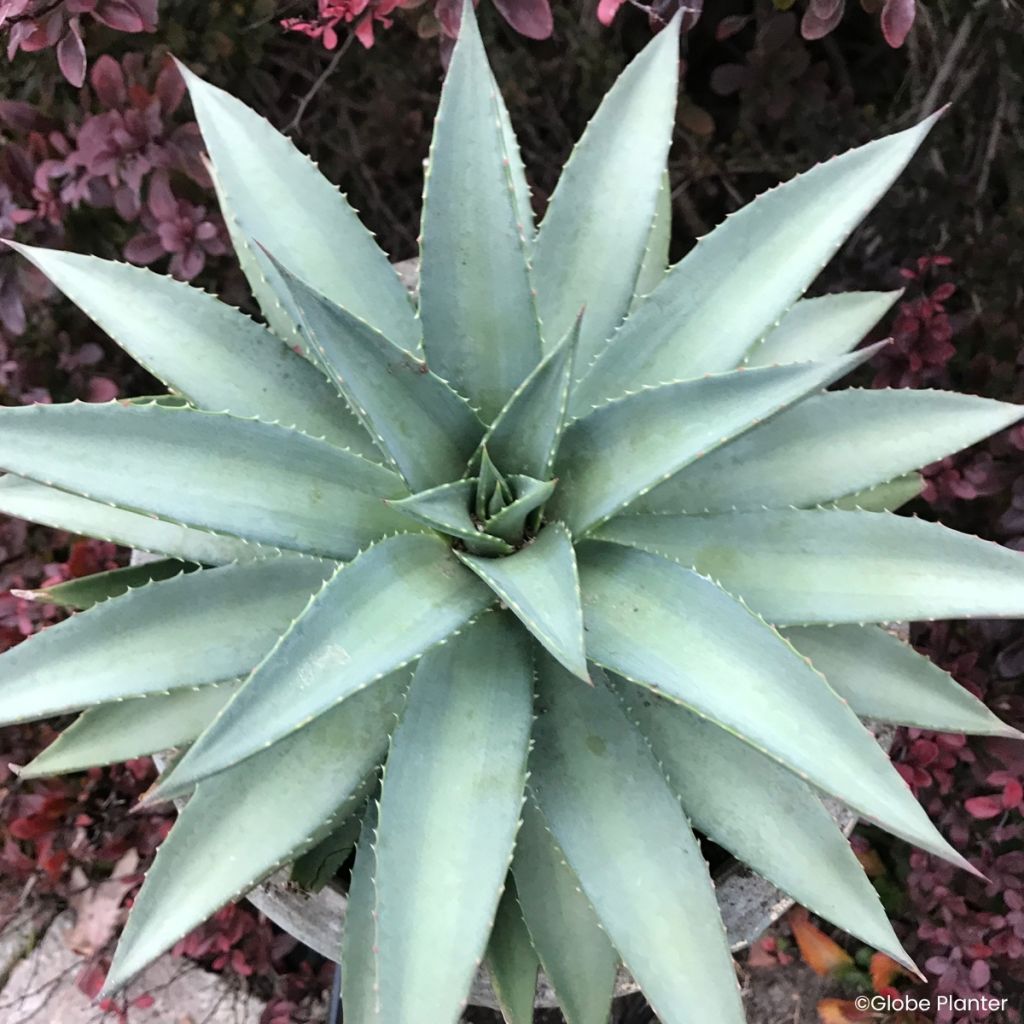
Mangave MAD ABOUT MANGAVÉ® Frosted Elegance is a collector's succulent plant that forms an elegant silvery-blue rosette, enlivened by a broad pale green band. This variety, with its frosted tones, has a minimal and contemporary style. Grown in a large pot, it will decorate a patio or terrace. This not very hardy variety, with fairly rapid growth, combines the appearance of agaves with a more sought-after colouration.
Mangave MAD ABOUT MANGAVÉ® Frosted Elegance belongs to the Asparagaceae family. It is classified among the mangaves, which are hybrids between agaves and manfredas. It is a non-hardy, succulent perennial, intended for mild climates or container cultivation.
This variety was created by breeder Hans Hansen at the Walters Gardens nursery. It was introduced to the market in 2019 and integrated into the Mad About Mangave® range. 'Frosted Elegance' shares the same parentage as another cultivar, 'Desert Dawn', but is distinguished by its cool, silvery-blue colouration and more reserved appearance. The plant adopts a regular rosette habit, wider than it is tall. At maturity, it reaches 15 to 20 cm in height and 30 to 35 cm in diameter. Its growth is significantly faster than that of many agaves. The rigid and fleshy leaves are long, narrowly lanceolate, and slightly arched downwards. Coloured blue-grey to silvery, they are covered with a fine, waxy bluish coating responsible for their "frosted" appearance. A broad band of pale green or grey-green runs down the centre of each leaf. The margin of the leaves has small, spaced teeth, more dissuasive than truly aggressive, and the tip is prickly without being as formidable as on a large agave. The foliage is evergreen in winter.
Like most mangaves, 'Frosted Elegance' can produce a flower spike adorned with cream or greenish tubular flowers after several years. This flowering occurs in summer or early autumn. The mother plant then tends to gradually decline, but will have previously formed a few offshoots that will take over.
Mangave MAD ABOUT MANGAVÉ® Frosted Elegance is perfectly suited to container cultivation on a sunny terrace or balcony. In dry climates with very mild winters, it also finds a place in a rockery or atop a low wall.
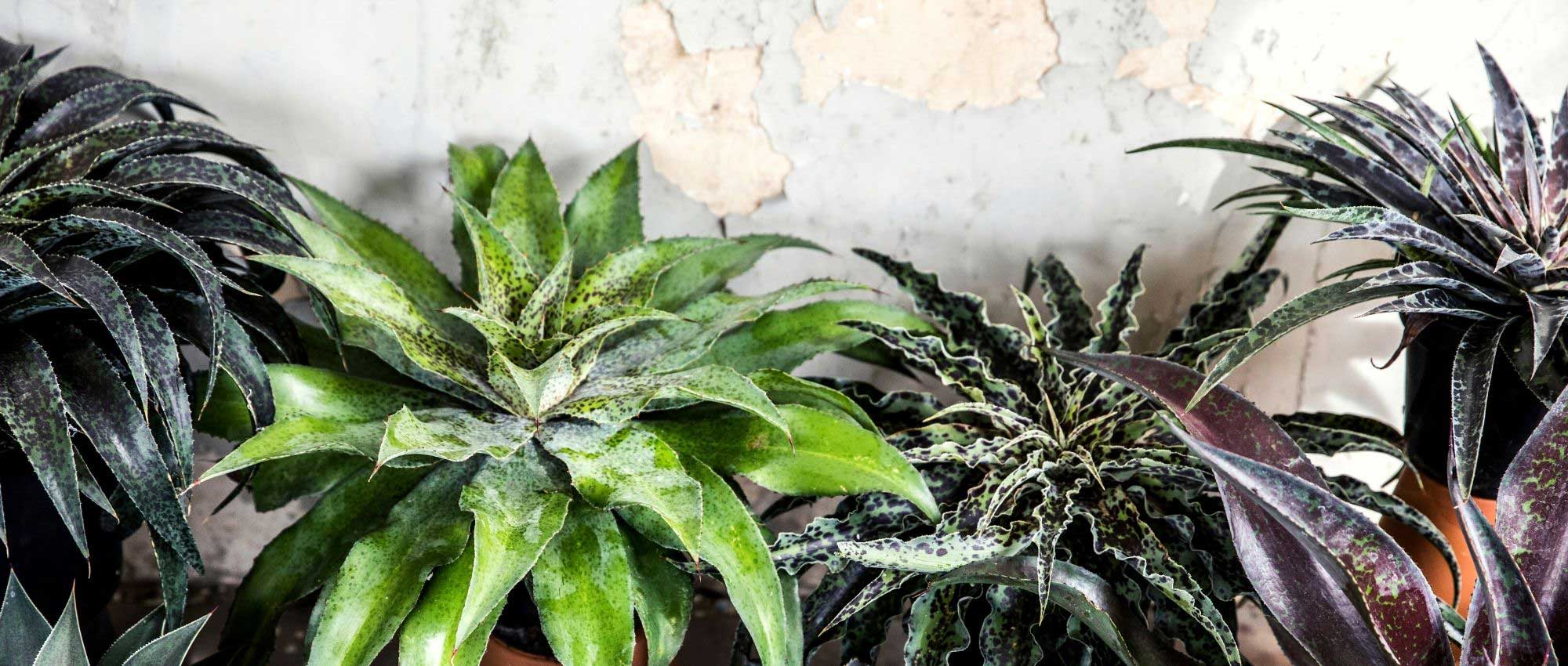
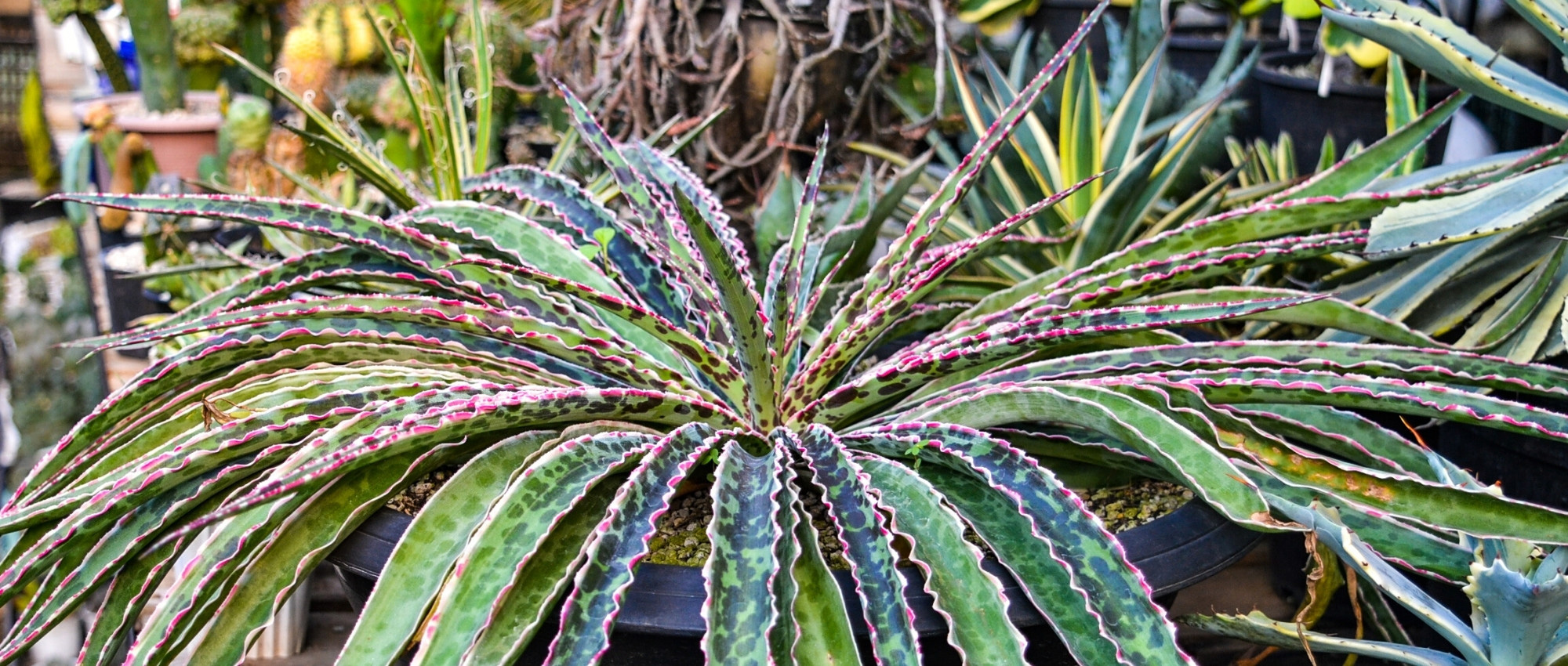
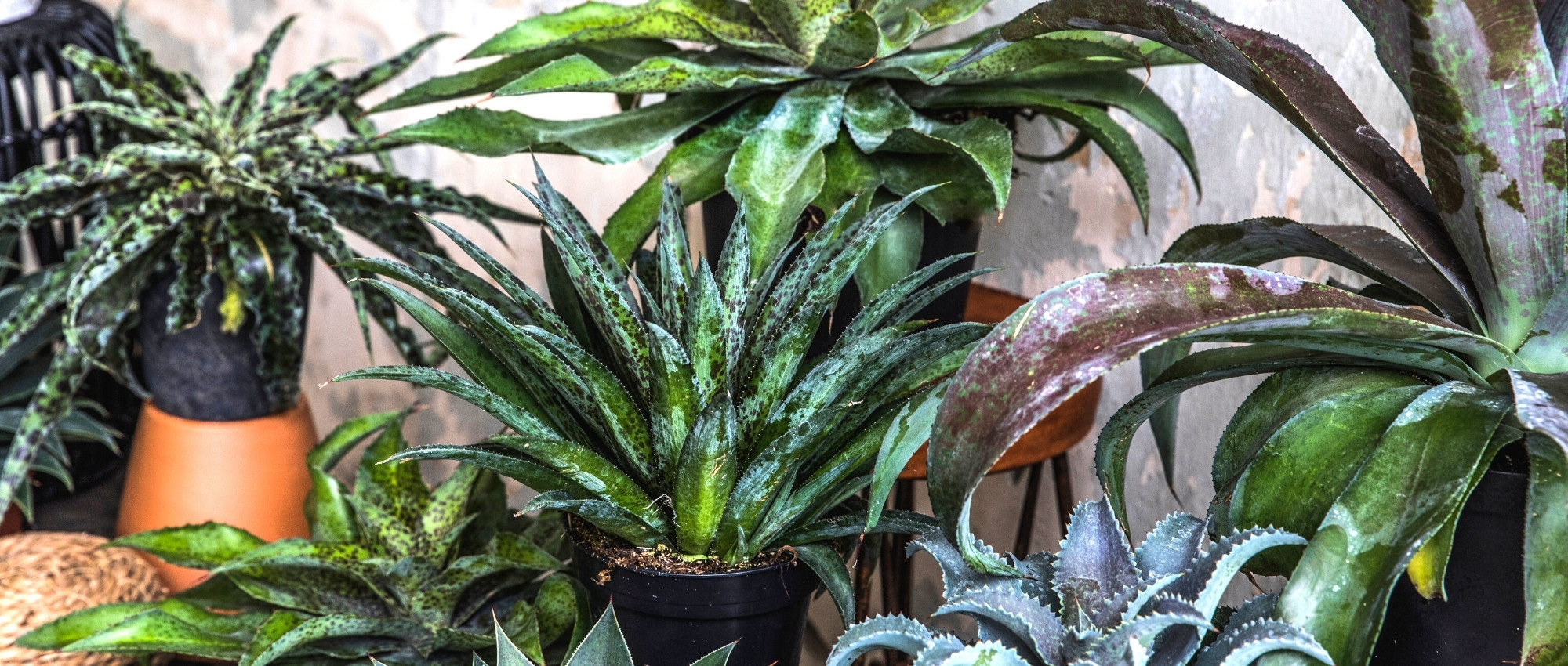
To create an original succulent ensemble, pair it with other mangaves with contrasting foliage, for example, Navajo Princess with its broad dark green leaves edged in cream, or Lavender Lady with its grey-lavender-pink rosettes. At the edge of a very large container, plant a Senecio serpens Blue Chalk, which is even bluer, and, in the background, a Yucca x 'French Flag' to add height.
Mangave, as a group, was born from a "happy accident" of pollination between an agave and a manfreda in a horticultural collection. This type of hybrid generated such enthusiasm among succulent enthusiasts that dedicated breeding programmes quickly emerged in the United States, giving rise to the entire Mad About Mangave® series. Frosted Elegance embodies this spirit well: a plant with the look of an agave, but more versatile and with unprecedented colours.
Flowering
Foliage
Plant habit
Botanical data
(x) Mangave
MAD ABOUT MANGAVÉ® Frosted Elegance
Asparagaceae
× Mangave ‘Frosted Elegance’, Mangave ‘Frosted Elegance’ PP32289, Mad About Mangave® ‘Frosted Elegance’
Cultivar or hybrid
Planting and care
Mangave Mangavé Frosted Elegance prefers full sun, or at a push, partial shade within a very sunny region. Plant it in very well-draining soil, even if poor, stony, or sandy: it tolerates winter moisture and cold poorly, but copes somewhat better with dry cold that is not too severe, in dry soil. It is therefore strongly advised to grow this plant in a pot in regions that are humid and somewhat cold in winter. As it accommodates perfectly to dry, even arid soils in summer, one can consider planting it in a rockery or on a stony slope in coastal gardens or those with a mild climate, where frosts do not drop below -4°C.
As the plant has modest development, it can very easily be grown in a pot on a terrace or balcony, in a light substrate such as cactus compost, where drainage will be particularly good, preferably in a terracotta pot. Water regularly in summer, but allow the substrate to dry out between waterings. It will then be easy to store the pot away from severe frosts and moisture, in a bright, airy room, with little or no heating. Reduce, or even stop, watering in winter. The plant can spend the warmer season, from April to October, outdoors.
Planting period
Intended location
Care
Planting & care advice
-
-
-
-
-
-
-

-
This item has not been reviewed yet - be the first to leave a review about it.
Recently viewed products
Haven't found what you were looking for?
Hardiness is the lowest winter temperature a plant can endure without suffering serious damage or even dying. However, hardiness is affected by location (a sheltered area, such as a patio), protection (winter cover) and soil type (hardiness is improved by well-drained soil).

The flowering period indicated on our website applies to countries and regions located in USDA zone 8 (France, the United Kingdom, Ireland, the Netherlands, etc.)
It will vary according to where you live:- In zones 9 to 10 (Italy, Spain, Greece, etc.), flowering will occur about 2 to 4 weeks earlier.
- In zones 6 to 7 (Germany, Poland, Slovenia, and lower mountainous regions), flowering will be delayed by 2 to 3 weeks.
- In zone 5 (Central Europe, Scandinavia), blooming will be delayed by 3 to 5 weeks.
In temperate climates, pruning of spring-flowering shrubs (forsythia, spireas, etc.) should be done just after flowering.
Pruning of summer-flowering shrubs (Indian Lilac, Perovskia, etc.) can be done in winter or spring.
In cold regions as well as with frost-sensitive plants, avoid pruning too early when severe frosts may still occur.
The planting period indicated on our website applies to countries and regions located in USDA zone 8 (France, United Kingdom, Ireland, Netherlands).
It will vary according to where you live:
- In Mediterranean zones (Marseille, Madrid, Milan, etc.), autumn and winter are the best planting periods.
- In continental zones (Strasbourg, Munich, Vienna, etc.), delay planting by 2 to 3 weeks in spring and bring it forward by 2 to 4 weeks in autumn.
- In mountainous regions (the Alps, Pyrenees, Carpathians, etc.), it is best to plant in late spring (May-June) or late summer (August-September).
The harvesting period indicated on our website applies to countries and regions in USDA zone 8 (France, England, Ireland, the Netherlands).
In colder areas (Scandinavia, Poland, Austria...) fruit and vegetable harvests are likely to be delayed by 3-4 weeks.
In warmer areas (Italy, Spain, Greece, etc.), harvesting will probably take place earlier, depending on weather conditions.
The sowing periods indicated on our website apply to countries and regions within USDA Zone 8 (France, UK, Ireland, Netherlands).
In colder areas (Scandinavia, Poland, Austria...), delay any outdoor sowing by 3-4 weeks, or sow under glass.
In warmer climes (Italy, Spain, Greece, etc.), bring outdoor sowing forward by a few weeks.
Shipping country and language
Your country of residence may be:
Your country of residence is:
For a better user experience on our website, you can select:
Your shipping country:
-
 Austria
-
 Belgium
-
 Bosnia & Herzegovina
-
 Bulgaria
-
 Croatia
-
 Cyprus
-
 Czechia
-
 Denmark
-
 Estonia
-
 Finland
-
 France
-
 Germany
-
 Greece
-
 Hungary
-
 Iceland
-
 Ireland
-
 Italy
Italy
-
 Latvia
-
 Liechtenstein
-
 Lithuania
-
 Luxembourg
-
 Malta
Malta
-
 Netherlands
-
 Poland
-
 Portugal
-
 Romania
-
 Serbia
-
 Slovakia
-
 Slovenia
-
 Spain
Spain
-
 Sweden
-
 Switzerland
Language:
-
French
-
 English
-
Spanish
-
Italian
-
German
-
Portuguese
-
Dutch
-
Finnish
My Account
Hello
My wish lists
My cart
Log in / Register
Existing customer?
This form is protected by reCAPTCHA - the Google Privacy Policy and Terms of Service apply.
New customer?
Create an account to track your orders, access our customer service and, if you wish, make the most of our upcoming offers.