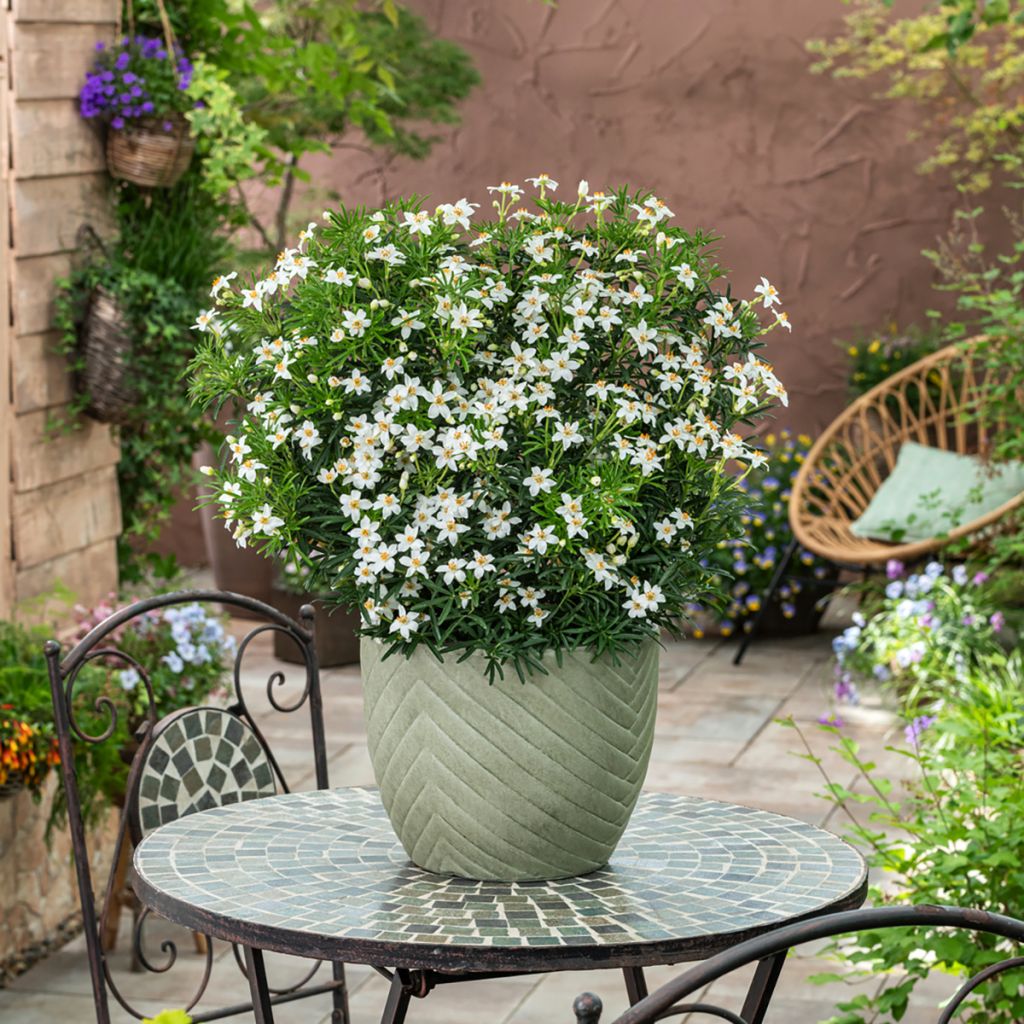
Choisya ternata Tiny Dancer - Mexican orange blossom
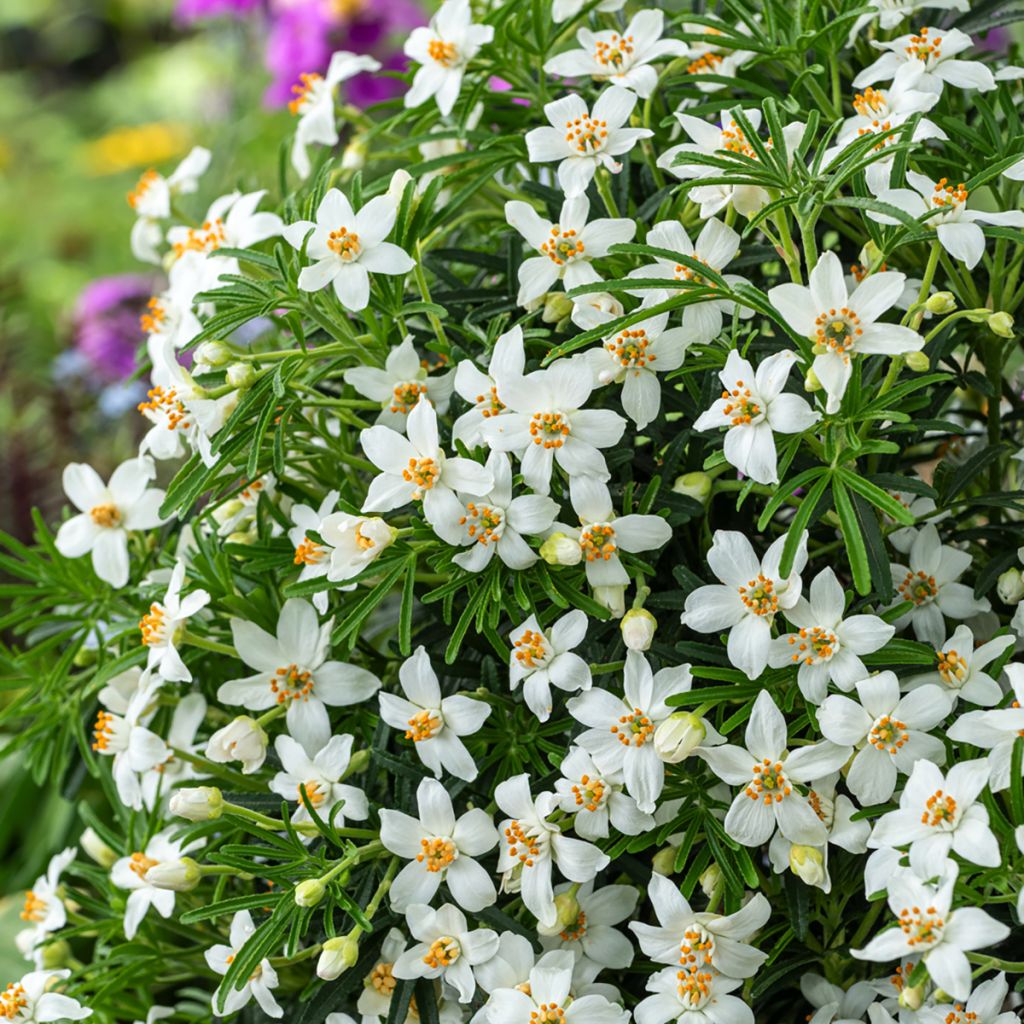
Choisya ternata Tiny Dancer - Mexican orange blossom
Choisya ternata Tiny Dancer - Mexican orange blossom
Choisya ternata ‘Paq1’ Tiny Dancer
Mexican Orange Blossom
Back-to-school special offer!
Get €10 off for every €50 you spend! And get up to €40 off on a single order.
How does it work?
1. Shop your favourites
Add your favourite plants to your basket. For every €50 you spend (excluding delivery charges, store credit and the plastic-free option), you’ll receive a €10 voucher.
€50 spent = €10 voucher
€100 spent = €20 voucher
€150 spent = €30 voucher
€200 spent = €40 voucher
2. Place your order
Once your basket reaches one of the spending thresholds, place your order. You can even choose your delivery date!
3. Receive your voucher
As soon as your order has been shipped, you’ll receive an email containing your personal voucher code and its value.
4. Use it on your next order
Your voucher is valid for 90 days from the date you receive it. It can be used once only, on a new order worth at least the value of the voucher, excluding delivery charges.
Please note: Vouchers can be combined with other offers, but cannot be split or refunded.
Home or relay delivery (depending on size and destination)
Important: You may be charged customs duties by your country’s customs authorities upon delivery.
Schedule delivery date,
and select date in basket
This plant carries a 24 months recovery warranty
More information
We guarantee the quality of our plants for a full growing cycle, and will replace at our expense any plant that fails to recover under normal climatic and planting conditions.
Would this plant suit my garden?
Set up your Plantfit profile →
Description
Choysia ternata ‘Paq1’ Tiny Dancer is a variety of Mexican orange blossom with many qualities to delight the senses. Visually, it forms a compact, more or less regular ball, with its very fine foliage being particularly graceful. It is an evergreen shrub, so its bright, glossy green vegetation is ornamental all year round. When crushed, it releases a subtle citrus fragrance. The spring flowering, in the form of charming small white star-shaped flowers, exudes a scent like orange blossom. Hardy to drought once well-rooted, it will grow in full sun or partial shade. Its compact size means it can be grown in a small garden or in a pot to adorn a balcony or terrace.
Choysia belongs to the Rutaceae family, which includes more than 150 genera, including the large group of citrus trees (Citrus and related genera) and much less well-known ornamental plants, but worthy of interest, such as the Honey Tree (Euodia danielii) or the very aromatic Sichuan Pepper (Zanthoxylum piperitum). Among the 5 to 8 species of Choysia, the most widespread in our gardens is C. ternata, known under the name of Mexican orange blossom. Identified in Mexico in 1804 by French botanist and explorer Aimé Bonpland, the plant was introduced to Europe in 1825. Native to the temperate regions of Mexico as well as the southeastern United States, it forms dense, rounded clumps 2 m tall. The shrub is now planted more widely in colder regions due to global warming. Resistant to drought once established, many cultivars with golden or very fine foliage have further increased its appeal.
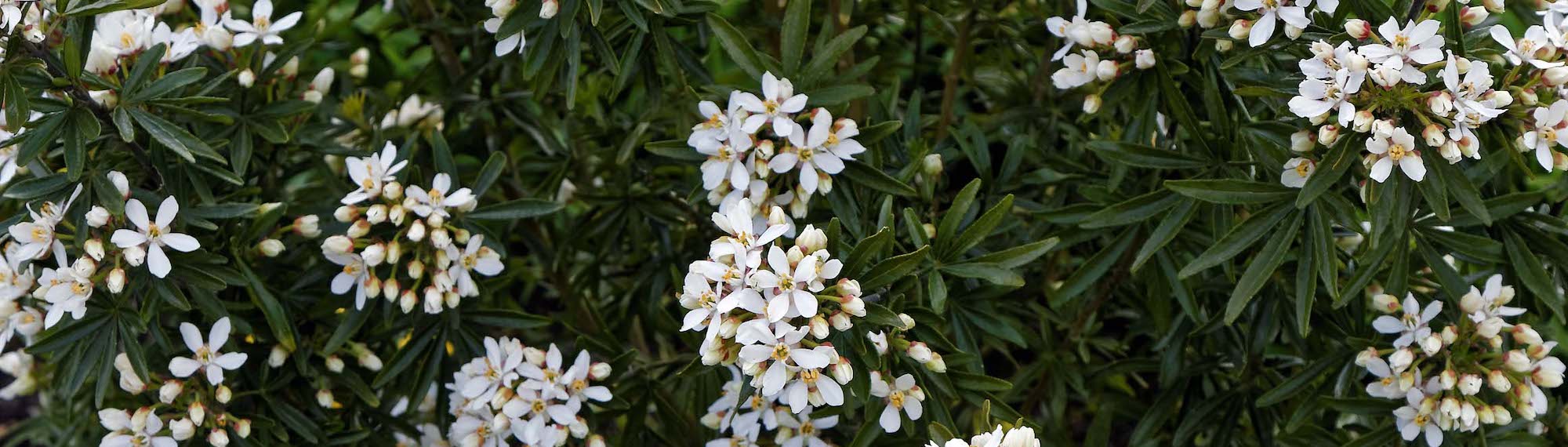
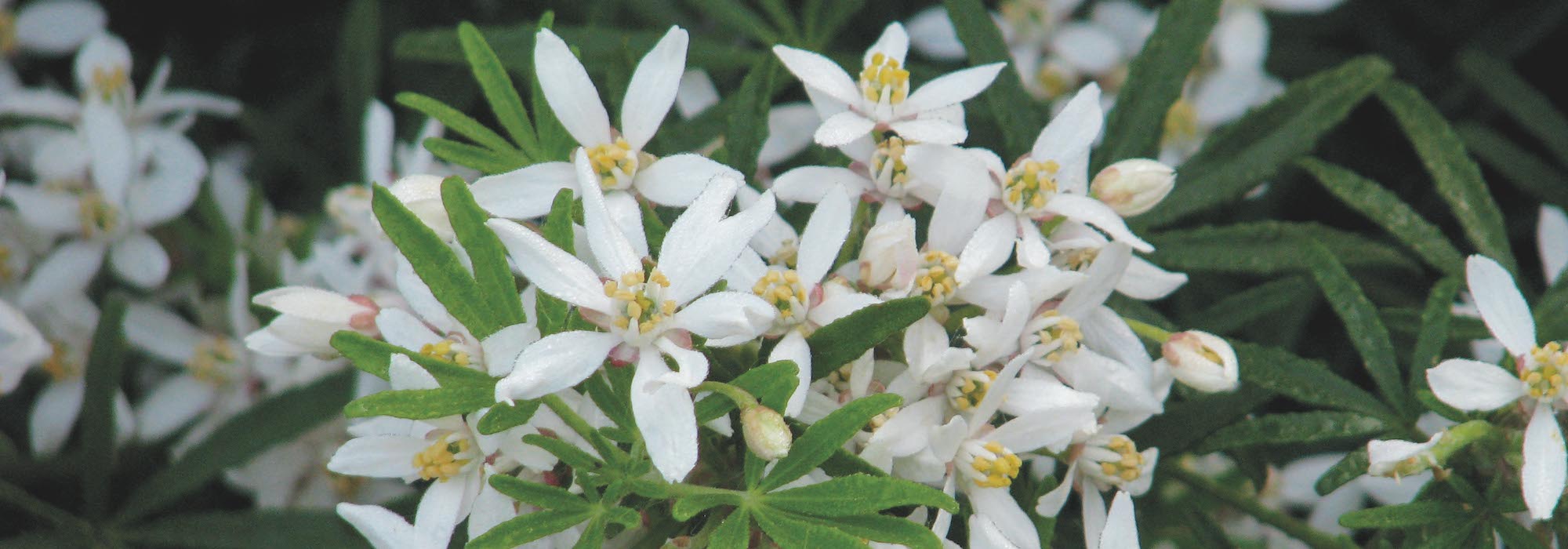
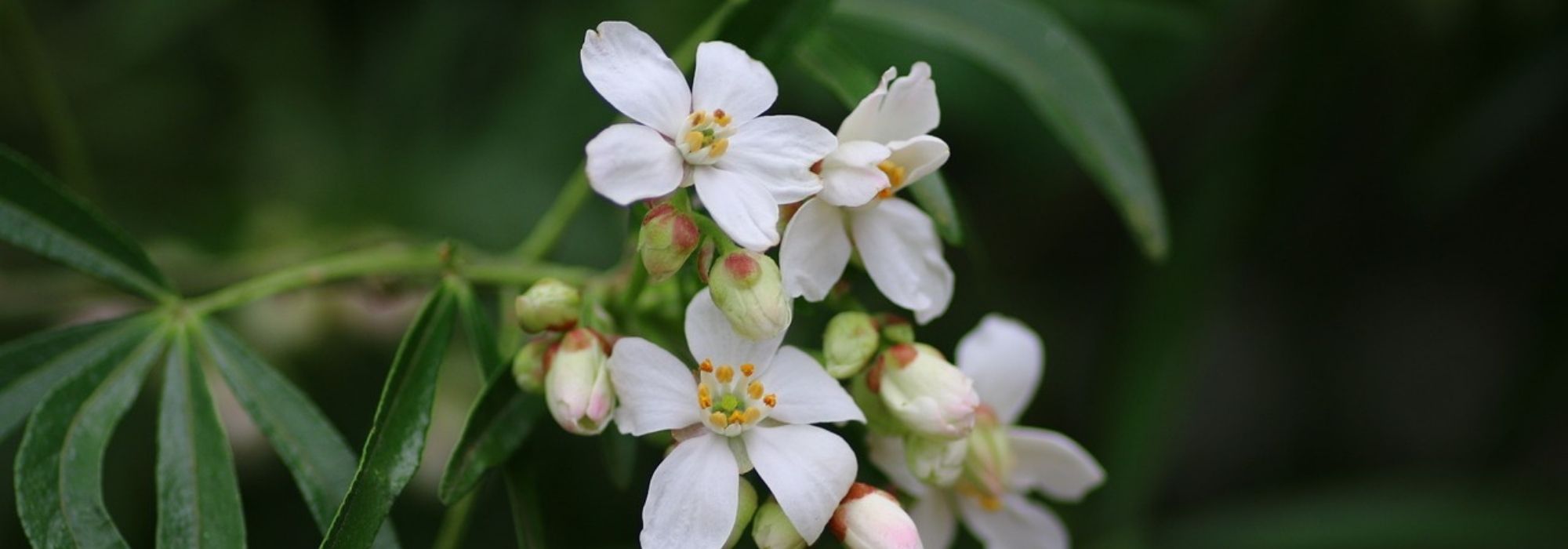
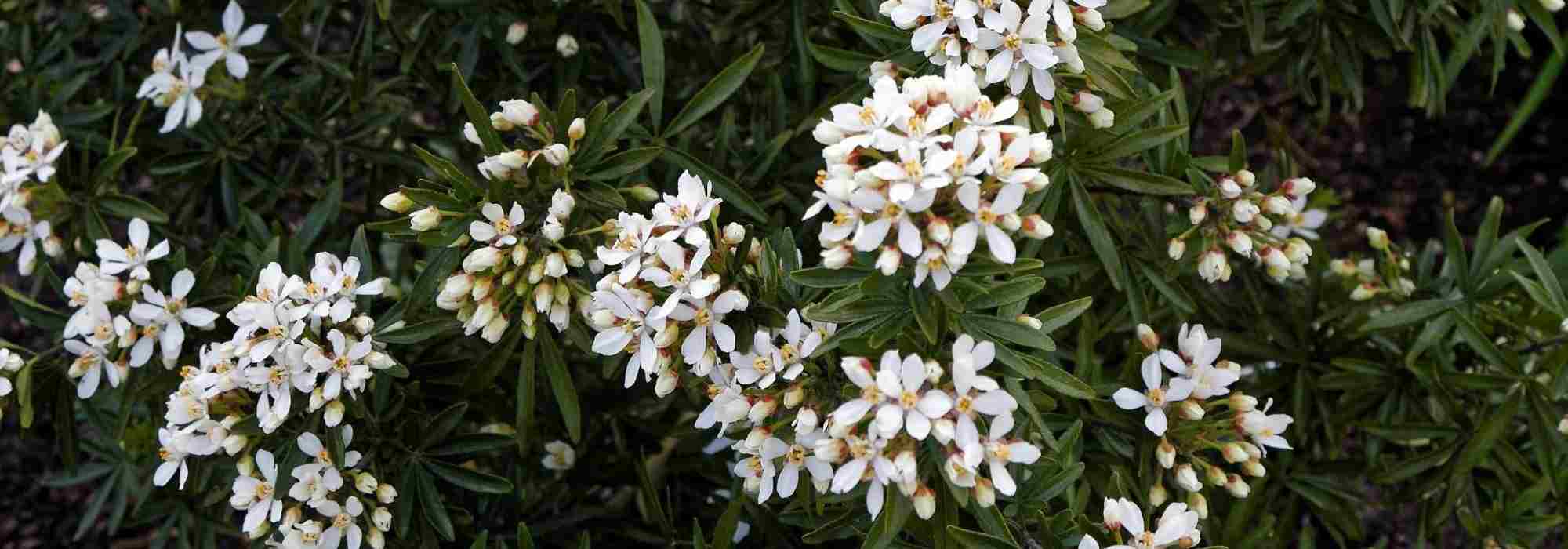
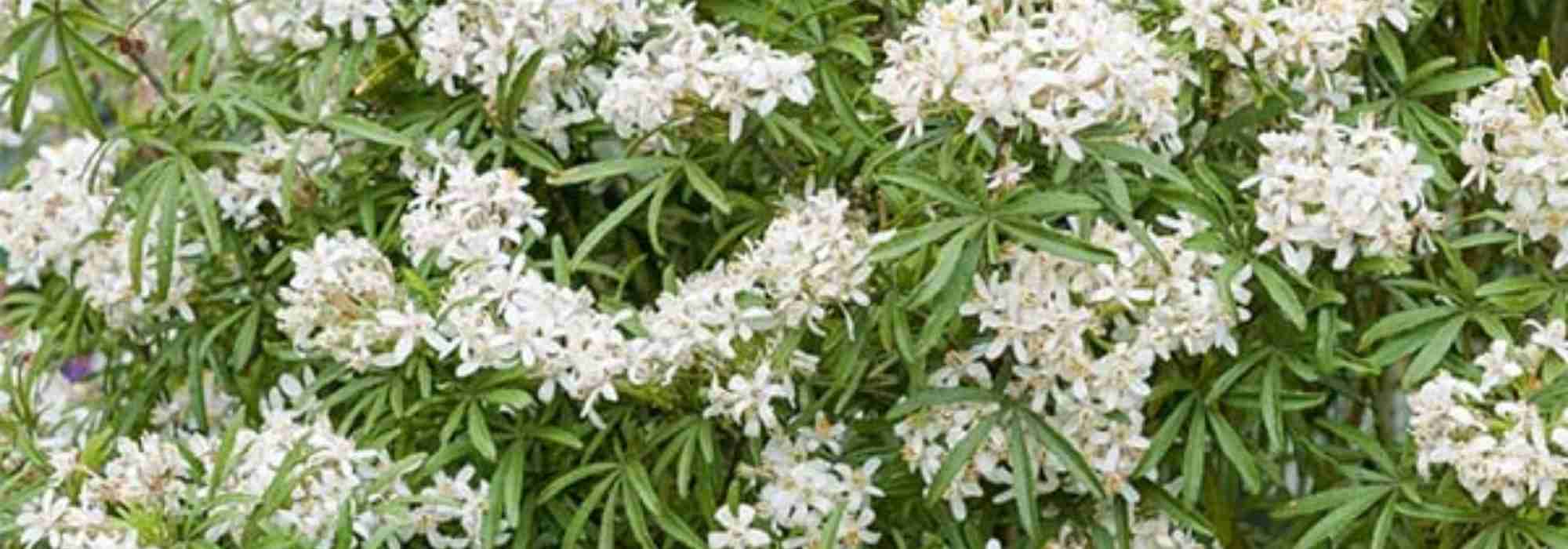
Choysia ternata Tiny Dancer is appealing in more ways than one. Much more compact than the botanical species, it forms a shrub of only 50 to 80 cm in height, with an equivalent width. Its fairly regular spherical habit, which can be further refined with a few snips of pruning shears, makes it a perfect subject for a flowering pot. it is very bushy, and the fine green stems are adorned with small evergreen leaves usually consisting of three very narrow leaflets. With an intense glossy green, their form is ornamental all year round. The aromatic foliage releases a citrus fragrance when crushed. In April and May, small star-shaped flowers open, about 3 cm in diameter, generally composed of 5 spreading, pure white petals, enhanced by a heart of golden-yellow stamens. They are very numerous, grouped in small clusters (cymes), and form a superb contrast against the dark vegetation, and above all, they perfume the air with a delicate orange blossom scent. Producing nectar and a little pollen, the flowering attracts honeybees and wild bees, bumblebees and some butterflies. Thus, in addition to its beauty and fragrance, the flowering proves useful for biodiversity. Depending on the year, it will repeat-flower to a greater or lesser degree in late summer or early autumn.
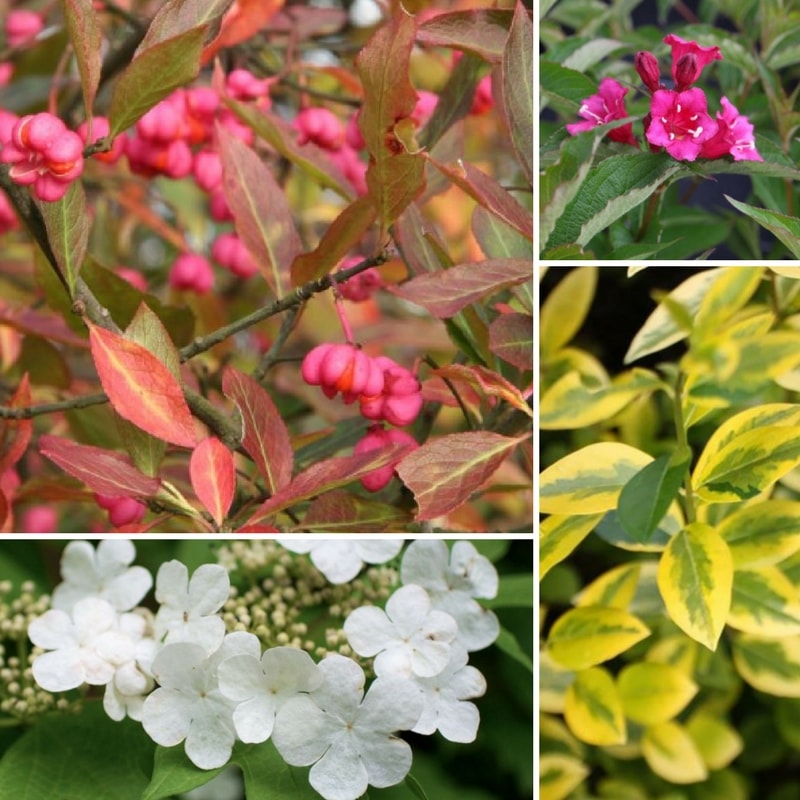
Mexican orange blossom 'Tiny Dancer' is a true gem for small gardens, and its compact dimensions mean it can be grown sustainably in a pot. Tolerating heat and drought once well-rooted, it also responds well to pruning, making it possible to create a perfect ball for a flowering topiary. It is best grown in full sun, but it also tolerates partial shade, especially in the south. However, it doesn't like hard frost and cold winter winds, so it may need to be overwintered under cover, or at least protected by a thick horticultural fleece in colder regions. Its original form makes it easy to integrate into a contemporary garden or a Mediterranean-style border. Plant alongside it distinctive plants, such as Lavender 'Platinum Blonde', whose variegated foliage will create a lovely permanent contrast with the dark green of the Choysia, while its blue flowers bloom from August to November, extending the flowering period of your composition. Santolina chamaecyparissus (Silver Santolina) will bridge the two with its bright yellow flowers from July to August, while its fine silvery-grey foliage will harmonise perfectly in your display. And to bring your scene to life at the slightest breeze, add a few clumps of ornamental grasses such as Chinese fountain grasses with their decorative bottlebrush heads...
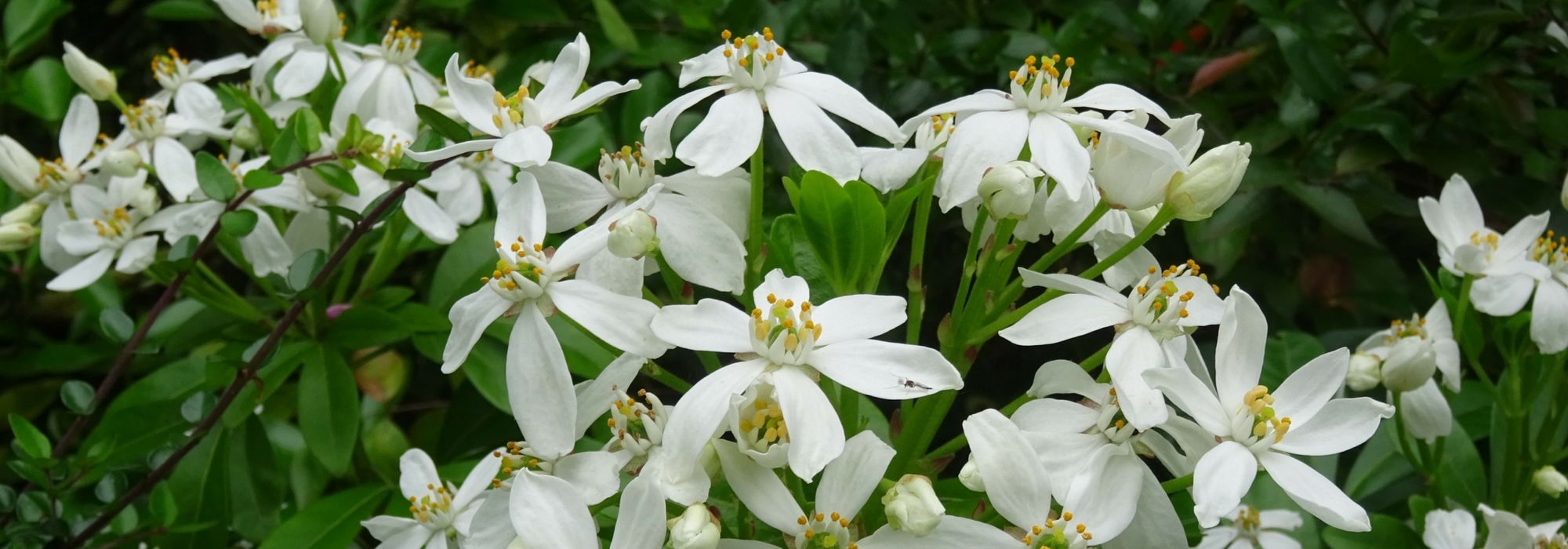
Choisya ternata Tiny Dancer - Mexican orange blossom in pictures
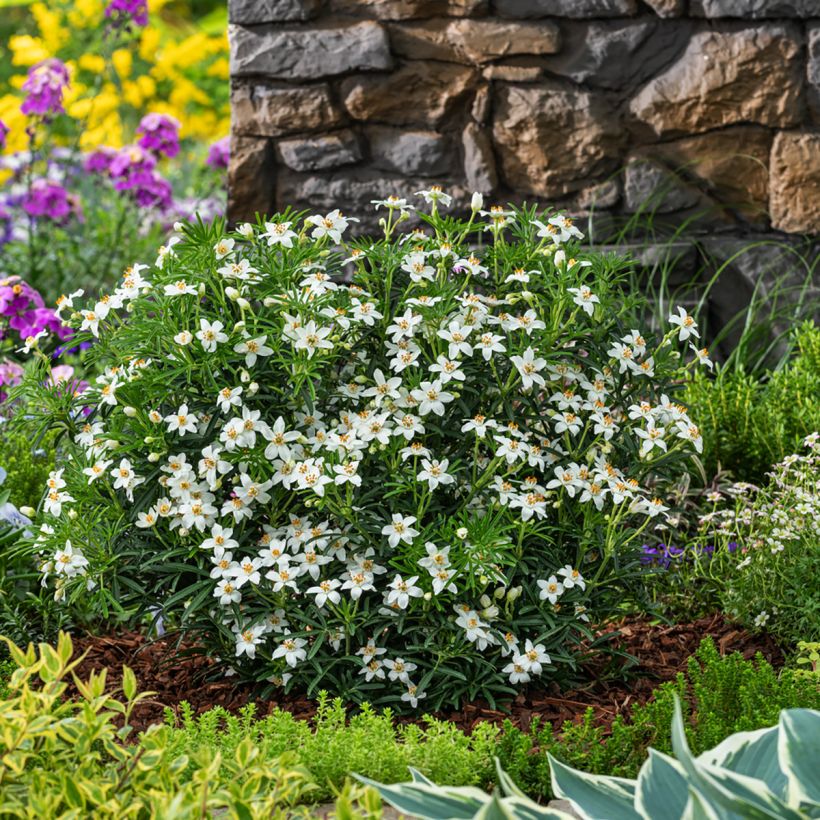
Plant habit
Flowering
Foliage
Botanical data
Choisya
ternata
‘Paq1’ Tiny Dancer
Rutaceae
Mexican Orange Blossom
Cultivar or hybrid
Planting and care
Native to the southeastern United States and, as its name suggests, Mexico, Choisya is relatively frost-hardy, with a hardiness of around -12°C, or even lower under good conditions. It enjoys warm, sunny positions but can also be placed in partial shade, always sheltered from strong winds. Plant Mexican orange blossom ‘Tiny Dancer’ in humus-rich, light, well-drained soil, ideally slightly acidic, though it will tolerate slightly calcareous soils. When planting, line the hole with gravel or clay pebbles and place it in a mixture of horticultural compost and garden soil, enriched with an organic soil conditioner. Water regularly for the first two years after planting and apply a complete fertiliser with a high potash (K) content each spring to boost its flowering.
In the first two years after planting, protect the shrub from cold with a good mulch, or even a fleece in case of severe frost. If you live in a cold region, you will need to repeat this every year.
Mexican orange blossom ‘Tiny Dancer’ can be used as a low hedge shrub as it tolerates formative pruning well. You should prune it after flowering, which will also allow you to remove faded flowers at the same time to encourage a second flowering. If your Choisya has suffered from cold during the winter, prune dead or damaged branches in March-April.
Resistant to diseases, drought-tolerant once established and low maintenance, Choisya ‘Tiny Dancer’ is an easy-going shrub that delivers good results with minimal care!
Planting period
Intended location
Care
Planting & care advice
-
-
-
-
-
-

-
-
This item has not been reviewed yet - be the first to leave a review about it.
Recently viewed products
Haven't found what you were looking for?
Hardiness is the lowest winter temperature a plant can endure without suffering serious damage or even dying. However, hardiness is affected by location (a sheltered area, such as a patio), protection (winter cover) and soil type (hardiness is improved by well-drained soil).

The flowering period indicated on our website applies to countries and regions located in USDA zone 8 (France, the United Kingdom, Ireland, the Netherlands, etc.)
It will vary according to where you live:- In zones 9 to 10 (Italy, Spain, Greece, etc.), flowering will occur about 2 to 4 weeks earlier.
- In zones 6 to 7 (Germany, Poland, Slovenia, and lower mountainous regions), flowering will be delayed by 2 to 3 weeks.
- In zone 5 (Central Europe, Scandinavia), blooming will be delayed by 3 to 5 weeks.
In temperate climates, pruning of spring-flowering shrubs (forsythia, spireas, etc.) should be done just after flowering.
Pruning of summer-flowering shrubs (Indian Lilac, Perovskia, etc.) can be done in winter or spring.
In cold regions as well as with frost-sensitive plants, avoid pruning too early when severe frosts may still occur.
The planting period indicated on our website applies to countries and regions located in USDA zone 8 (France, United Kingdom, Ireland, Netherlands).
It will vary according to where you live:
- In Mediterranean zones (Marseille, Madrid, Milan, etc.), autumn and winter are the best planting periods.
- In continental zones (Strasbourg, Munich, Vienna, etc.), delay planting by 2 to 3 weeks in spring and bring it forward by 2 to 4 weeks in autumn.
- In mountainous regions (the Alps, Pyrenees, Carpathians, etc.), it is best to plant in late spring (May-June) or late summer (August-September).
The harvesting period indicated on our website applies to countries and regions in USDA zone 8 (France, England, Ireland, the Netherlands).
In colder areas (Scandinavia, Poland, Austria...) fruit and vegetable harvests are likely to be delayed by 3-4 weeks.
In warmer areas (Italy, Spain, Greece, etc.), harvesting will probably take place earlier, depending on weather conditions.
The sowing periods indicated on our website apply to countries and regions within USDA Zone 8 (France, UK, Ireland, Netherlands).
In colder areas (Scandinavia, Poland, Austria...), delay any outdoor sowing by 3-4 weeks, or sow under glass.
In warmer climes (Italy, Spain, Greece, etc.), bring outdoor sowing forward by a few weeks.
Shipping country and language
Your country of residence may be:
Your country of residence is:
For a better user experience on our website, you can select:
Your shipping country:
-
 Austria
-
 Belgium
-
 Bosnia & Herzegovina
-
 Bulgaria
-
 Croatia
-
 Cyprus
-
 Czechia
-
 Denmark
-
 Estonia
-
 Finland
-
 France
-
 Germany
-
 Greece
-
 Hungary
-
 Iceland
-
 Ireland
-
 Italy
Italy
-
 Latvia
-
 Liechtenstein
-
 Lithuania
-
 Luxembourg
-
 Malta
Malta
-
 Netherlands
-
 Poland
-
 Portugal
-
 Romania
-
 Serbia
-
 Slovakia
-
 Slovenia
-
 Spain
Spain
-
 Sweden
-
 Switzerland
Language:
-
French
-
 English
-
Spanish
-
Italian
-
German
-
Portuguese
-
Dutch
-
Finnish
My Account
Hello
My wish lists
My cart
Log in / Register
Existing customer?
This form is protected by reCAPTCHA - the Google Privacy Policy and Terms of Service apply.
New customer?
Create an account to track your orders, access our customer service and, if you wish, make the most of our upcoming offers.