Calibrachoa Noa Princess - Trailing Petunia
Calibrachoa Noa Princess - Trailing Petunia
Calibrachoa hybrida Noa Princess
Million Bells, Trailing Petunia
I haven't had any luck with petunias from Promesse de Fleurs, none of the varieties I ordered have survived here... :-/
Elise, 06/04/2017
Back-to-school special offer!
Get €10 off for every €50 you spend! And get up to €40 off on a single order.
How does it work?
1. Shop your favourites
Add your favourite plants to your basket. For every €50 you spend (excluding delivery charges, store credit and the plastic-free option), you’ll receive a €10 voucher.
€50 spent = €10 voucher
€100 spent = €20 voucher
€150 spent = €30 voucher
€200 spent = €40 voucher
2. Place your order
Once your basket reaches one of the spending thresholds, place your order. You can even choose your delivery date!
3. Receive your voucher
As soon as your order has been shipped, you’ll receive an email containing your personal voucher code and its value.
4. Use it on your next order
Your voucher is valid for 90 days from the date you receive it. It can be used once only, on a new order worth at least the value of the voucher, excluding delivery charges.
Please note: Vouchers can be combined with other offers, but cannot be split or refunded.
This plant carries a 6 months recovery warranty
More information
We guarantee the quality of our plants for a full growing cycle, and will replace at our expense any plant that fails to recover under normal climatic and planting conditions.
Would this plant suit my garden?
Set up your Plantfit profile →
Description
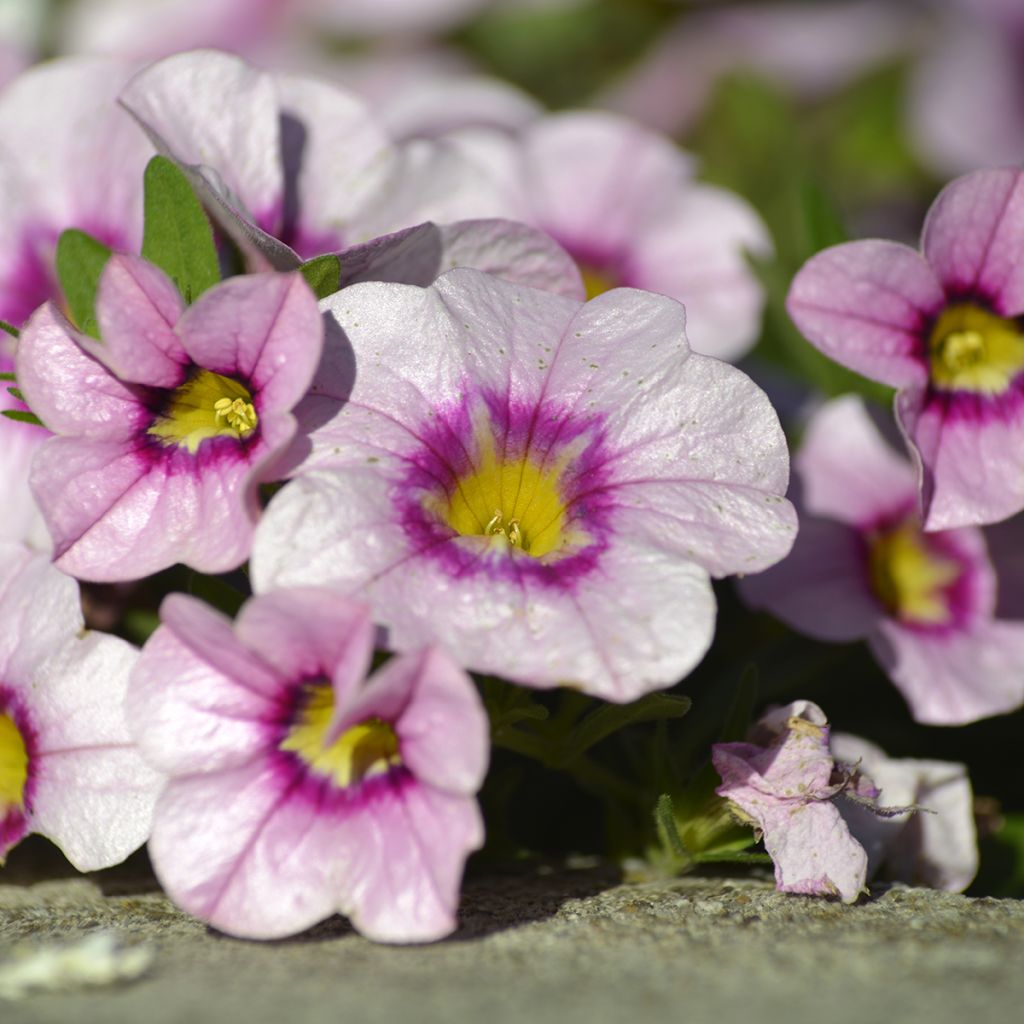
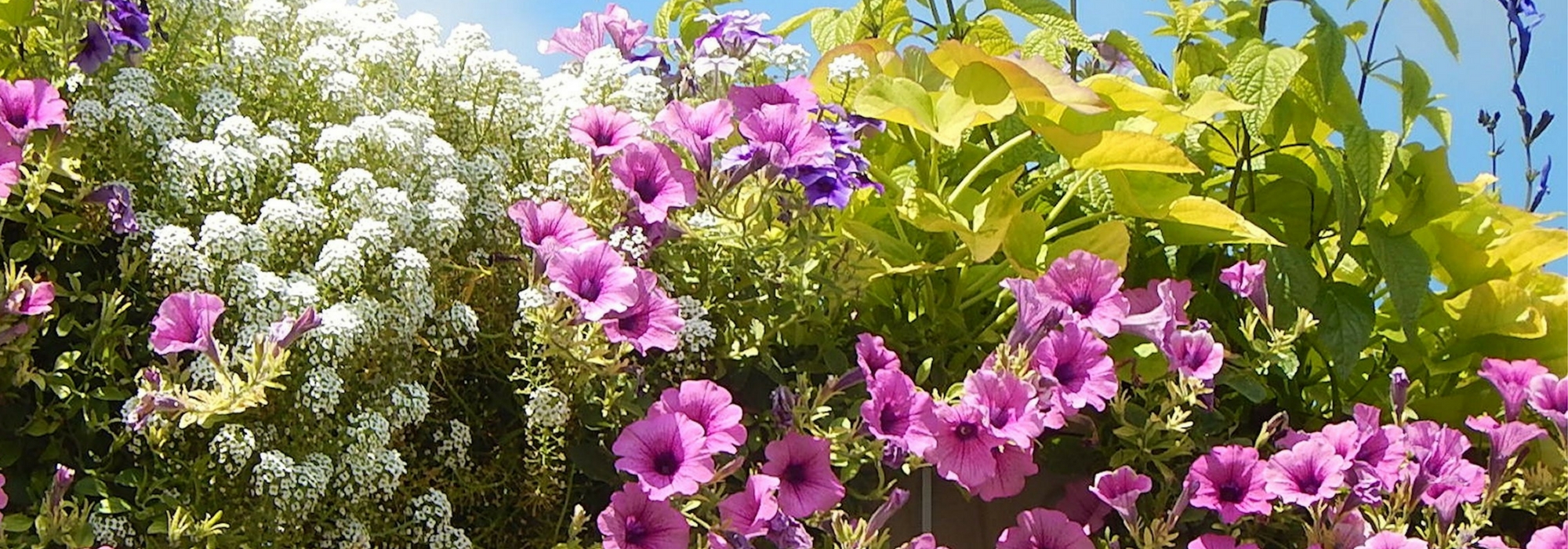
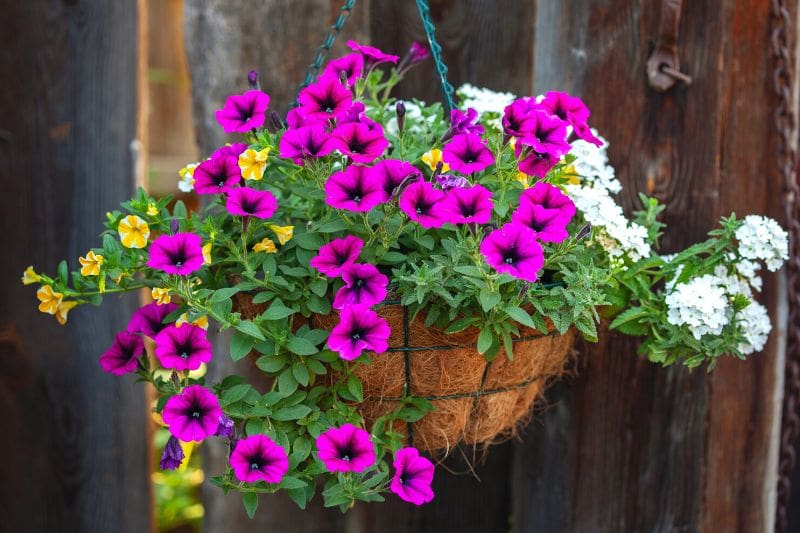
The Calibrachoa 'Noa Princess' is a recent variety very floriferous and particularly suitable for hanging baskets and borders. It offers a long and generous flowering period from late spring until the first frost, with soft tones highlighted by deeper shades. Its multiple small pale pink flowers are veined with darker pink and complemented by a lovely yellow centre. This cushion-like arrangement adds volume to summer compositions and borders pathways pleasantly. Resistant to bad weather, but not frost, this annual appreciates rich and neutral soils and full sun exposure (it also tolerates partial shade).
Calibrachoas closely resemble miniature Petunias. They are often referred to as mini-petunias. In fact, they were both part of the same genus. It was only at the end of the 20th century, after more in-depth studies that highlighted the differences, that they were separated into two distinct genera: Petunias and Calibrachoas.
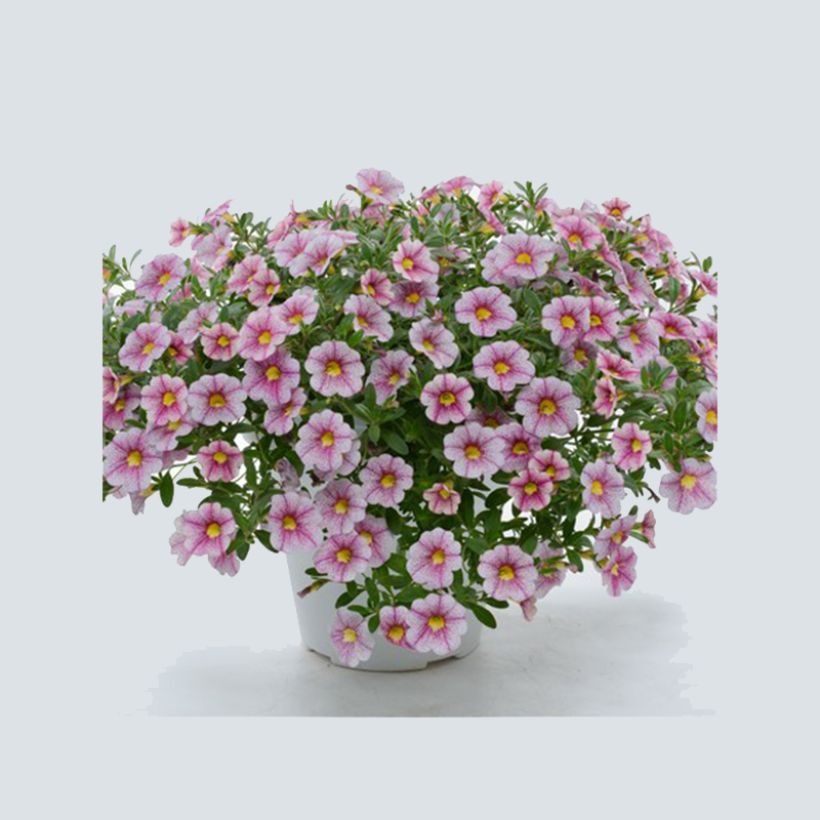
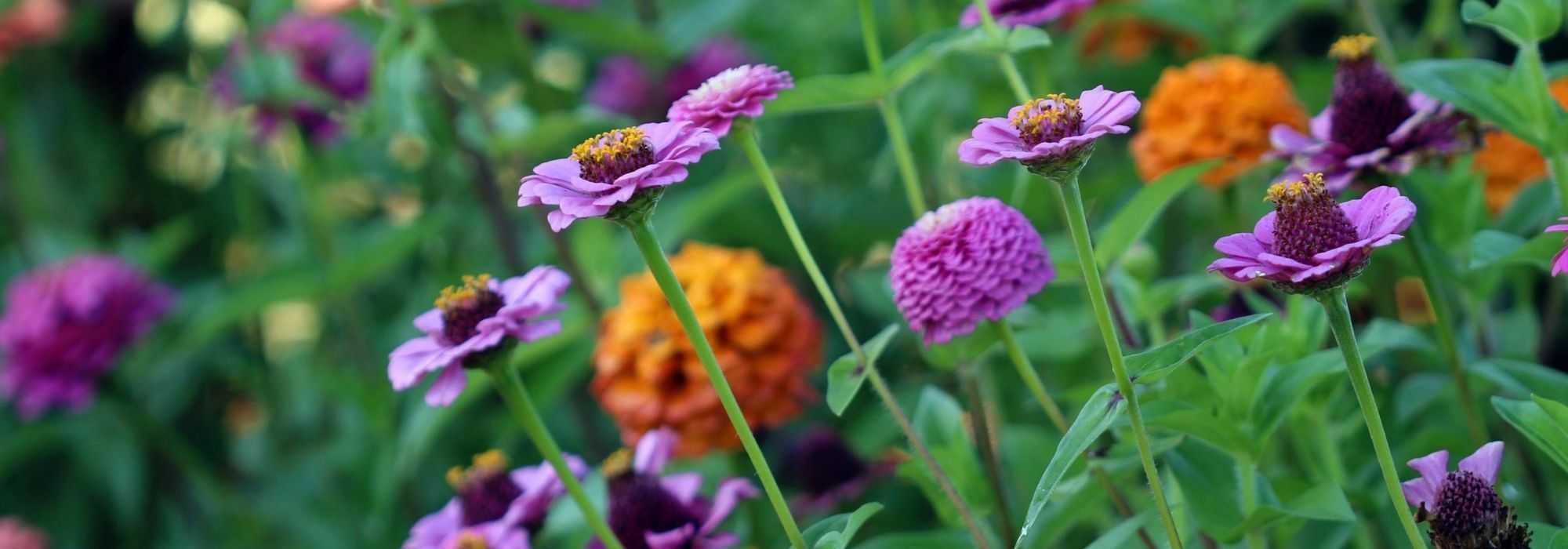
'Noa Princess' is a cultivar that quickly forms a plump and compact clump, reaching a height of 20 to 25 cm (8 to 10in) and a circumference of 30 to 40 cm (12 to 16in), with a rather flexible habit rather than truly trailing. Its numerous branched stems are covered with small lanceolate and fuzzy green leaves measuring about 1 cm (0in). From June onwards, a wave of flowers will cover the entire surface of this cushion. Multiple tubular corollas with five lobes, measuring 3 cm (1in) in diameter, will then bloom successively until autumn. Their base colour is a beautiful and very soft pale pink. It is enhanced by beautiful dark pink lines that originate from a yellow centre and stretch outwards.
Originally from America, Calibrachoas are sensitive to frost and do not withstand temperatures below -5°C (23°F). They tolerate periods of temporary drought, can withstand rain without damage, and appreciate regular fertilizer applications. They do not require much maintenance, apart from regular but moderate watering: they do not like excessive moisture.
The Calibrachoa 'Noa Princess' brings softness and romance to the summer. Mixed with Nemesias, Diascias, and Verveine x Phlox Soft Pink, it will provide floriferous containers with tender colours. If you prefer a contrasting effect, pair it with Ipomoea 'Sweet Heart purple'. Don't forget about the front of borders and create a multicoloured palette with the numerous available shades among Calibrachoas.
Note: Please be aware that our plug plants are professional products intended for experienced gardeners. Upon receipt, repot and store them in sheltered areas (veranda, greenhouse, cold frame) at a temperature above 14°C (57.2°F) for a few weeks before planting them outdoors once the risk of frost has definitively passed.
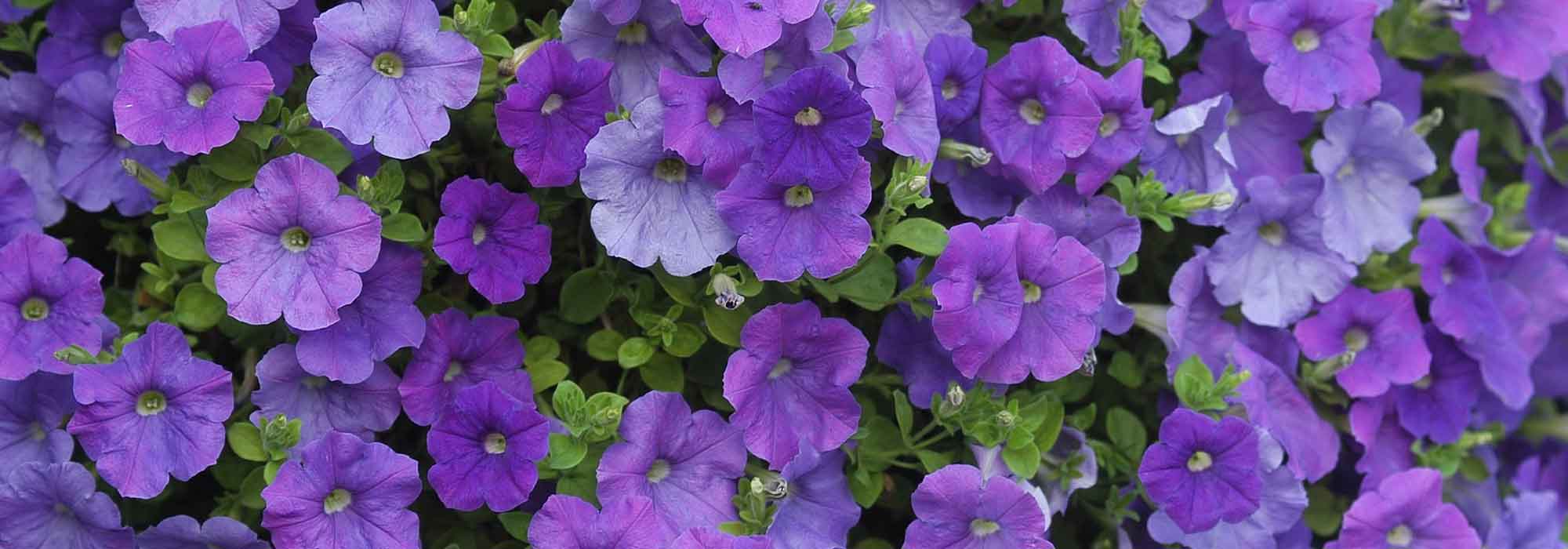
Calibrachoa Noa Princess - Trailing Petunia in pictures
Flowering
Foliage
Plant habit
Botanical data
Calibrachoa
hybrida
Noa Princess
Solanaceae
Million Bells, Trailing Petunia
Cultivar or hybrid
Planting and care
You can plant your 'Noa Princess' Calibrachoas in the ground or in a pot. If you want to plant them in the ground, wait until the last frost has passed. To keep them waiting, you can pre-cultivate them in pots or buckets in a warm and bright place to accelerate their growth. Similarly, you can place them directly in your flower beds or pots and protect them from frost. Make sure to expose them to the sun and water them during this waiting period.
Plant your Calibrachoas in a sunny location sheltered from the wind. They need a light and humus-rich soil, but above all, it must be well-draining. Don't water them too much at the beginning of the growing season as they are sensitive to excess moisture. They tolerate drought well, but will need regular watering during hot summer weather. They are highly floriferous and grow rapidly, so they are hungry plants. We recommend feeding them with a liquid fertilizer for Surfinias once or twice a week during the growing season. You can remove faded flowers and dry leaves as they appear to keep them looking good and prolong the flowering period, but new flowers will cause the old ones to fall off. The work is therefore greatly reduced.
Planting period
Intended location
Planting & care advice
-
-

-
-
-

-
-

-
-
, onOrder confirmed
Reply from on Promesse de fleurs
Recently viewed products
Haven't found what you were looking for?
Hardiness is the lowest winter temperature a plant can endure without suffering serious damage or even dying. However, hardiness is affected by location (a sheltered area, such as a patio), protection (winter cover) and soil type (hardiness is improved by well-drained soil).

The flowering period indicated on our website applies to countries and regions located in USDA zone 8 (France, the United Kingdom, Ireland, the Netherlands, etc.)
It will vary according to where you live:- In zones 9 to 10 (Italy, Spain, Greece, etc.), flowering will occur about 2 to 4 weeks earlier.
- In zones 6 to 7 (Germany, Poland, Slovenia, and lower mountainous regions), flowering will be delayed by 2 to 3 weeks.
- In zone 5 (Central Europe, Scandinavia), blooming will be delayed by 3 to 5 weeks.
In temperate climates, pruning of spring-flowering shrubs (forsythia, spireas, etc.) should be done just after flowering.
Pruning of summer-flowering shrubs (Indian Lilac, Perovskia, etc.) can be done in winter or spring.
In cold regions as well as with frost-sensitive plants, avoid pruning too early when severe frosts may still occur.
The planting period indicated on our website applies to countries and regions located in USDA zone 8 (France, United Kingdom, Ireland, Netherlands).
It will vary according to where you live:
- In Mediterranean zones (Marseille, Madrid, Milan, etc.), autumn and winter are the best planting periods.
- In continental zones (Strasbourg, Munich, Vienna, etc.), delay planting by 2 to 3 weeks in spring and bring it forward by 2 to 4 weeks in autumn.
- In mountainous regions (the Alps, Pyrenees, Carpathians, etc.), it is best to plant in late spring (May-June) or late summer (August-September).
The harvesting period indicated on our website applies to countries and regions in USDA zone 8 (France, England, Ireland, the Netherlands).
In colder areas (Scandinavia, Poland, Austria...) fruit and vegetable harvests are likely to be delayed by 3-4 weeks.
In warmer areas (Italy, Spain, Greece, etc.), harvesting will probably take place earlier, depending on weather conditions.
The sowing periods indicated on our website apply to countries and regions within USDA Zone 8 (France, UK, Ireland, Netherlands).
In colder areas (Scandinavia, Poland, Austria...), delay any outdoor sowing by 3-4 weeks, or sow under glass.
In warmer climes (Italy, Spain, Greece, etc.), bring outdoor sowing forward by a few weeks.
Shipping country and language
Your country of residence may be:
Your country of residence is:
For a better user experience on our website, you can select:
Your shipping country:
-
 Austria
-
 Belgium
-
 Bosnia & Herzegovina
-
 Bulgaria
-
 Croatia
-
 Cyprus
-
 Czechia
-
 Denmark
-
 Estonia
-
 Finland
-
 France
-
 Germany
-
 Greece
-
 Hungary
-
 Iceland
-
 Ireland
-
 Italy
Italy
-
 Latvia
-
 Liechtenstein
-
 Lithuania
-
 Luxembourg
-
 Malta
Malta
-
 Netherlands
-
 Poland
-
 Portugal
-
 Romania
-
 Serbia
-
 Slovakia
-
 Slovenia
-
 Spain
Spain
-
 Sweden
-
 Switzerland
Language:
-
French
-
 English
-
Spanish
-
Italian
-
German
-
Portuguese
-
Dutch
-
Finnish
My Account
Hello
My wish lists
My cart
Log in / Register
Existing customer?
This form is protected by reCAPTCHA - the Google Privacy Policy and Terms of Service apply.
New customer?
Create an account to track your orders, access our customer service and, if you wish, make the most of our upcoming offers.