Jasminum humile Revolutum - Italian Jasmine
Jasminum humile Revolutum - Italian Jasmine
Jasminum humile Revolutum - Italian Jasmine
Jasminum humile Revolutum - Italian Jasmine
Jasminum humile Revolutum
Italian Jasmine, Italian Yellow Jasmine
VERY SATISFIED WITH THIS JASMINE, IT HAS ALREADY FLOWERED AND REACHED A HEIGHT OF 1.80 cm
TEZAM, 21/09/2025
Back-to-school special offer!
Get €10 off for every €50 you spend! And get up to €40 off on a single order.
How does it work?
1. Shop your favourites
Add your favourite plants to your basket. For every €50 you spend (excluding delivery charges, store credit and the plastic-free option), you’ll receive a €10 voucher.
€50 spent = €10 voucher
€100 spent = €20 voucher
€150 spent = €30 voucher
€200 spent = €40 voucher
2. Place your order
Once your basket reaches one of the spending thresholds, place your order. You can even choose your delivery date!
3. Receive your voucher
As soon as your order has been shipped, you’ll receive an email containing your personal voucher code and its value.
4. Use it on your next order
Your voucher is valid for 90 days from the date you receive it. It can be used once only, on a new order worth at least the value of the voucher, excluding delivery charges.
Please note: Vouchers can be combined with other offers, but cannot be split or refunded.
Home or relay delivery (depending on size and destination)
Important: You may be charged customs duties by your country’s customs authorities upon delivery.
Schedule delivery date,
and select date in basket
This plant carries a 12 months recovery warranty
More information
We guarantee the quality of our plants for a full growing cycle, and will replace at our expense any plant that fails to recover under normal climatic and planting conditions.

Would this plant suit my garden?
Set up your Plantfit profile →
Description
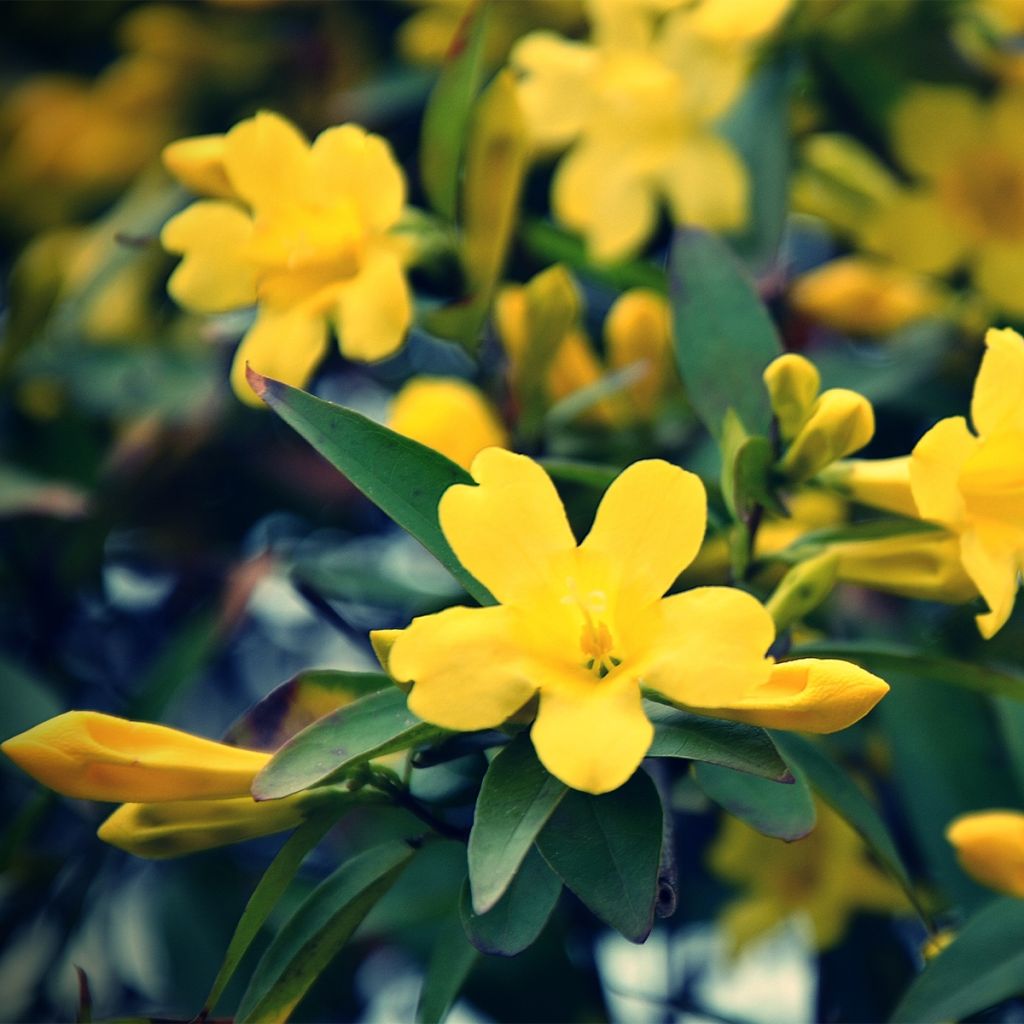
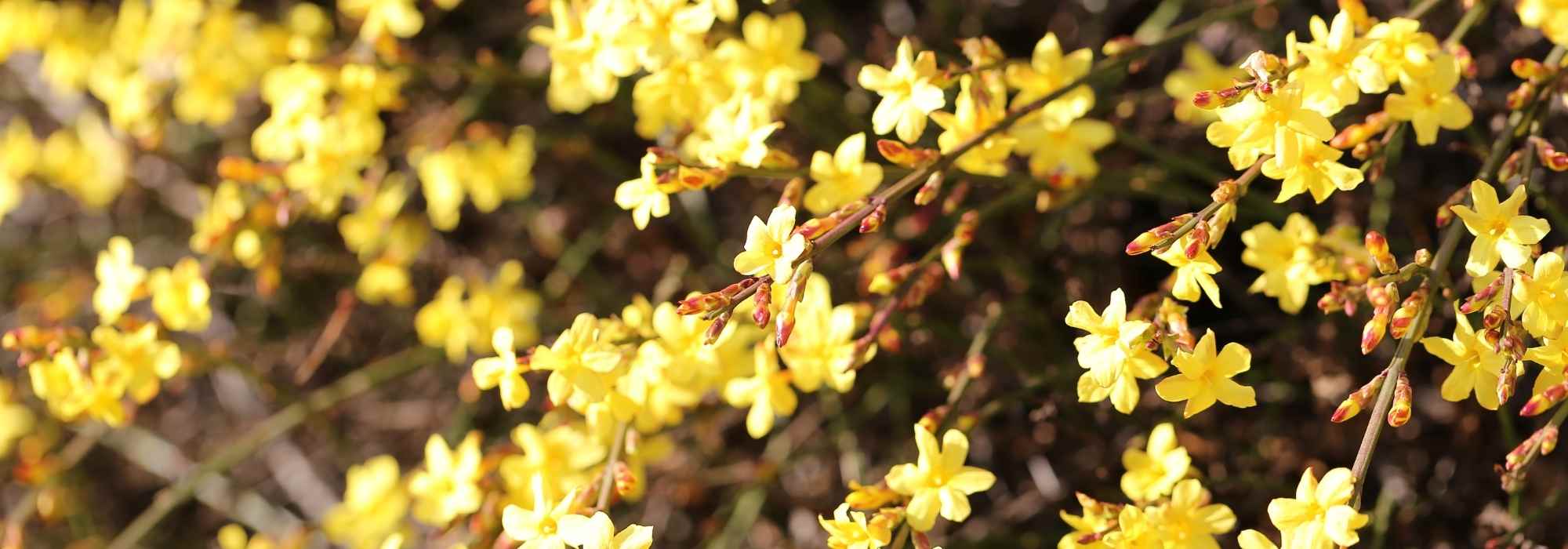
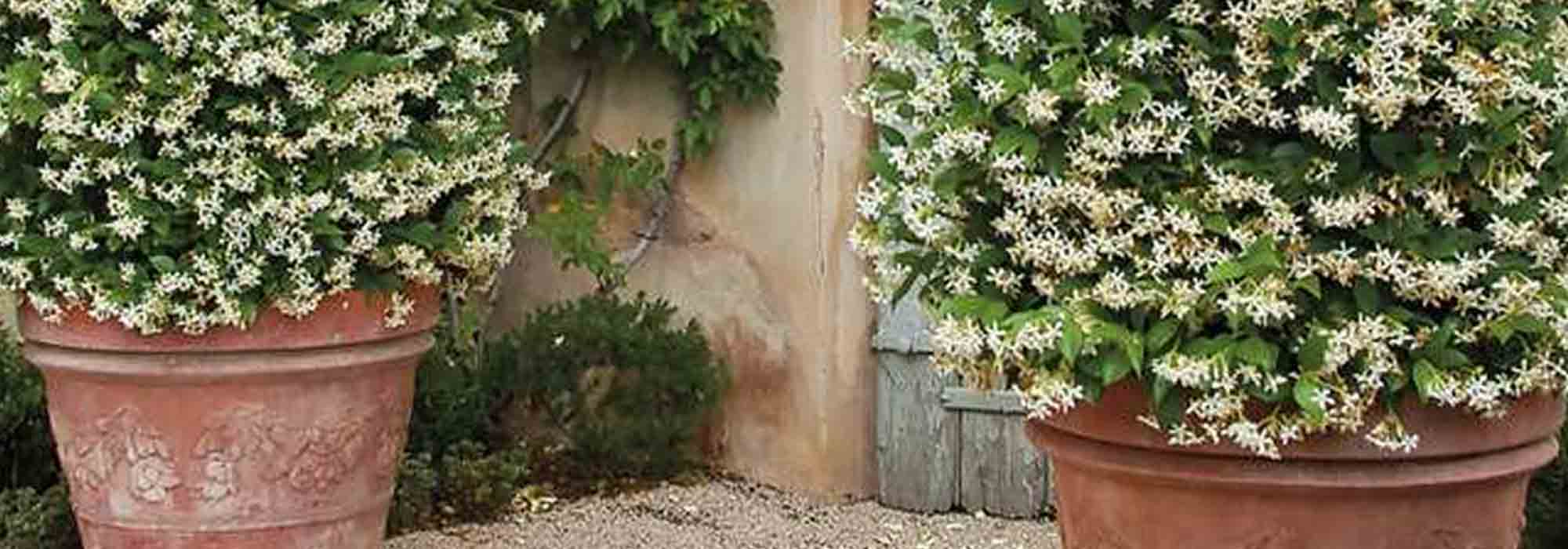
Jasminum humile Revolutum is a variety of Jasmine that is moderately hardy with semi-evergreen foliage, depending on the severity of the winter. In early summer, it produces beautiful flowers of a very bright yellow, which stands out well against the bright green foliage. A bush with a tendency to climb, it can be planted either as a standalone plant or as a hedge, where it will have a trailing habit, or against a wall where it can climb up to 2 or 3 metres (7 or 10 feet) in height. Adapting to most soils, especially limestone soils, as long as they are well-drained, it is a plant that deserves to be better known.
Jasminum humile is a plant from the Oleaceae family, which includes many ornamental genera, some very common, such as Privets, Forsythias, Lilacs, or Ash trees, and others less common, such as Abeliophyllum, Chionanthus, or Osmanthus. It is also the family of the Olive tree, Olea in Latin, which gave it its name. Despite its common name of Italian Jasmine, this bush is native to Afghanistan, the Himalayas, southwestern China, and Myanmar. Jasminum humile (synonym Jasminum reevesii) was described as a species by the famous botanist Carl von Linnaeus in 1753.
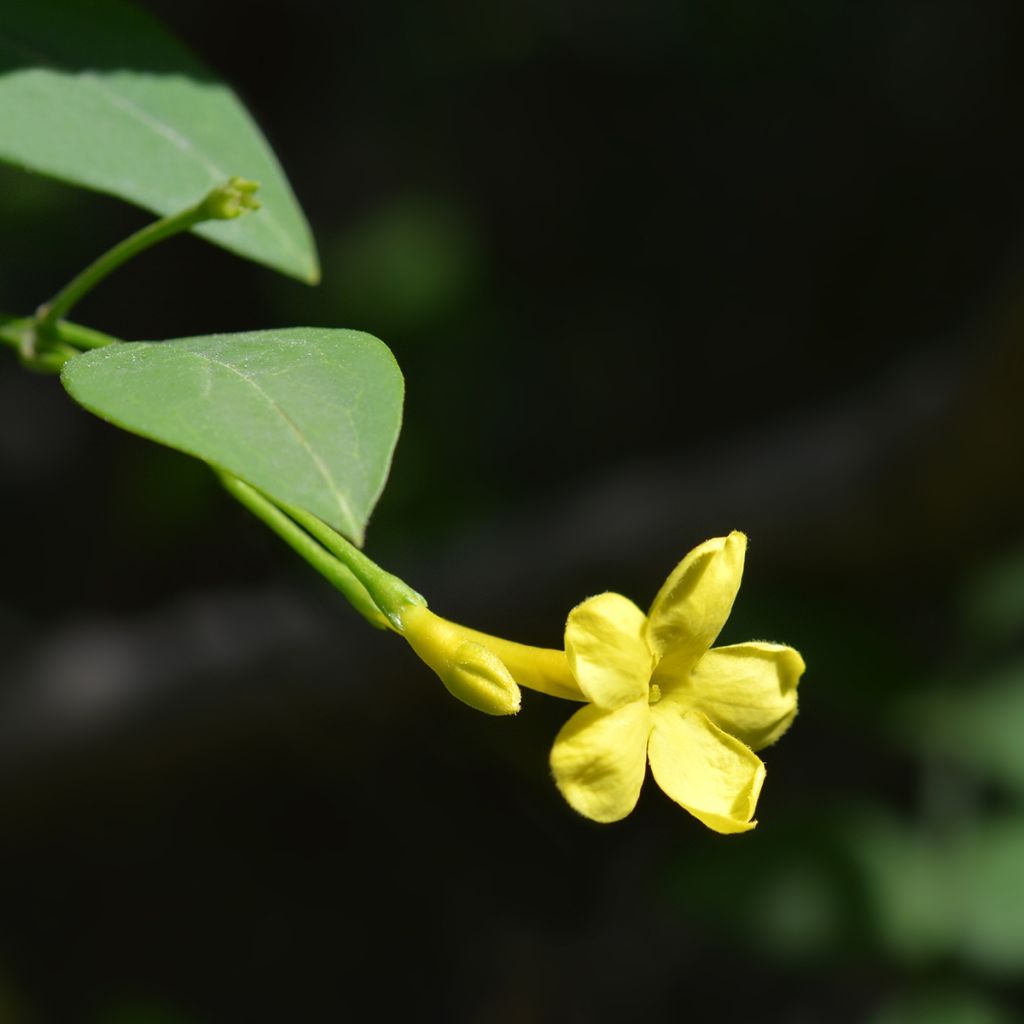
The 'Revolutum' variety stands out from the species by its larger flowers, forming small trumpets that can reach 3cm (1in) in diameter. They appear in clusters of 6 to 12 flowers in June (or May depending on the climate), lasting until July, with some possible reblooming later. literature credits them with a fragrance, but it must be very subtle or perhaps depend on the encountered clones. So, focus more on the visual aspect of its beautiful flowers, a very bright yellow, which stand out well against the beautiful bright green foliage.
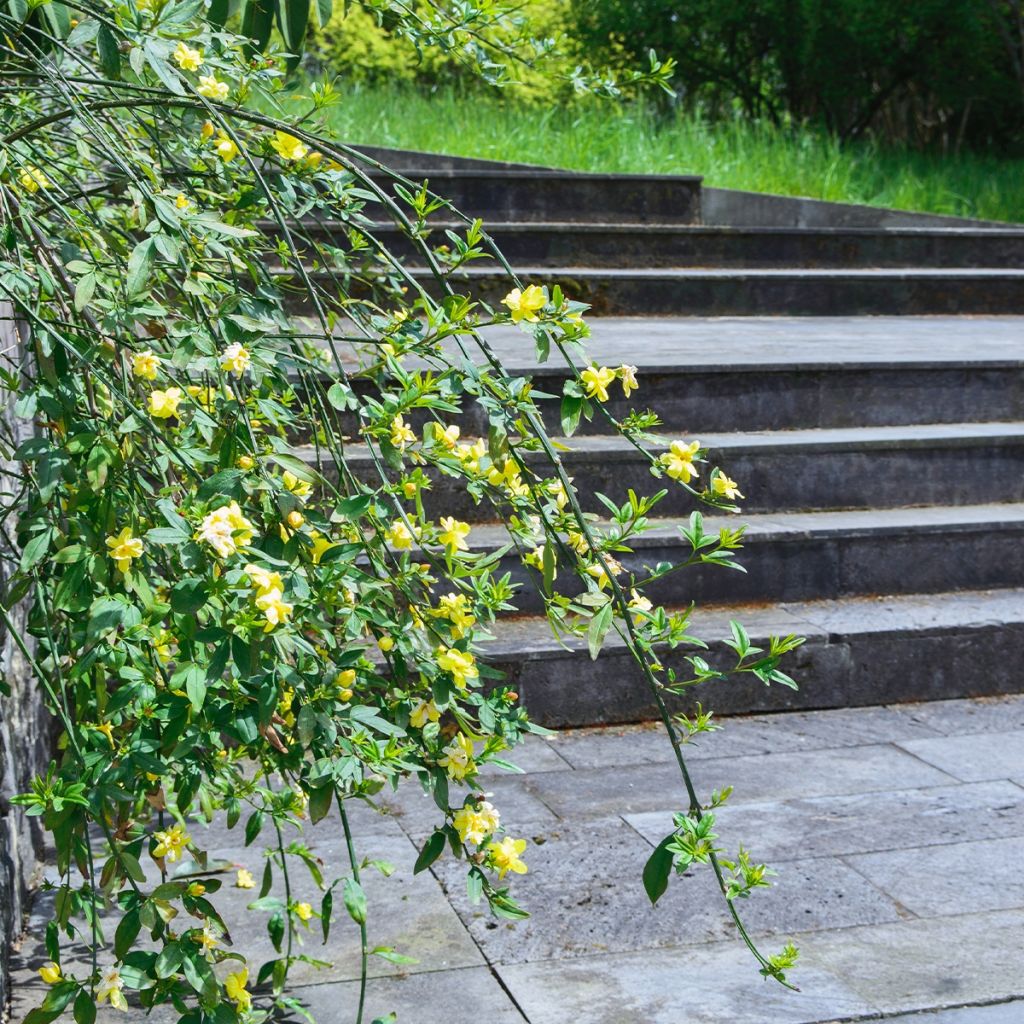
This bush has a climbing habit, it can stand upright on its own, with the ends of the branches hanging down due to their flexibility. If you plant it at the base of a wall, this support will allow the branches to climb up to 2.5 or 3 metres (8 or 10 feet) in height, with a width of 2 metres (7 feet). It tolerates pruning very well (to be done just after flowering), so it is easy to keep it at a height of 2 metres (7 feet) if you plant it against a property boundary fence.
Being moderately hardy, this Jasmine can withstand temperatures around -12°C (10.4°F), or even -15°C (5°F), as long as it is planted in well-drained soil, as excess water can enhance the freezing effect. A dry stone wall will therefore provide both mechanical support and an additional temperature boost. Its main advantage is its adaptability to all types of soil, whether acidic, neutral, or alkaline, it thrives in any of them! It will appreciate some watering in summer, but once well-established, it proves to be very resistant. In mild climates, it will retain its foliage in winter, while in other areas, colder temperatures will cause it to drop. That is why, although it tolerates partial shade, it is preferable to plant it in full sun.
Being sufficiently hardy in much of Europe, this less common Jasmine deserves to be more widely planted as it is a truly easy-to-grow bush. To conceal an unsightly wall, it pairs well with a Lonicera tatarica, the Tartarian Honeysuckle with its white-pink flowers and attractive decorative fruits. It will also fit well in a mixed hedge with its wild appearance, alongside Rosa chinensis Mutabilis, a rose with a long reblooming period and changing colours adapted to the same climatic conditions. Rhamnus alaternus can also be a good companion to form a rustic hedge even in dry climates. For a surprising effect, let a Clematis with purple flowers climb in this Jasmine, such as Shin-Shigyoku with its beautiful double flowers, which will create a strong contrast with the vibrant yellow of the 'Revolutum' Jasmine.
Jasminum humile Revolutum - Italian Jasmine in pictures
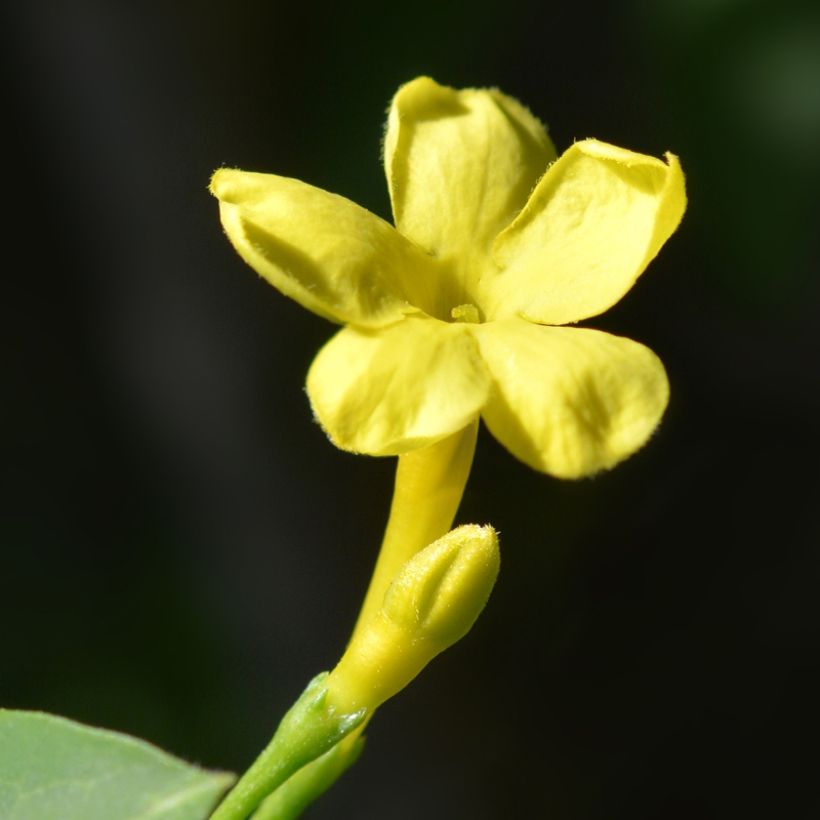
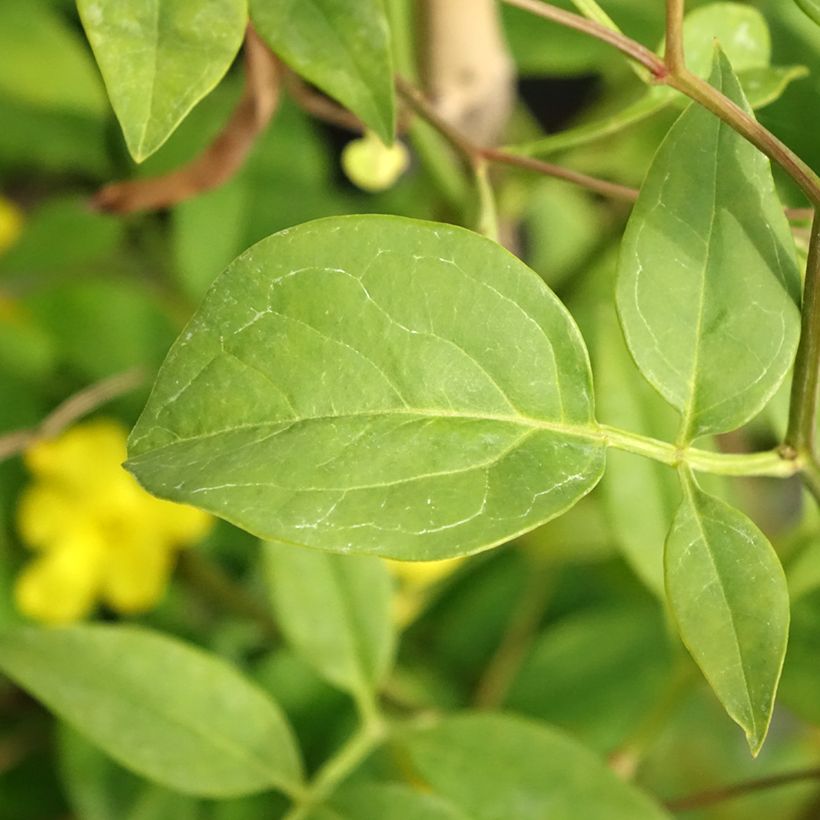
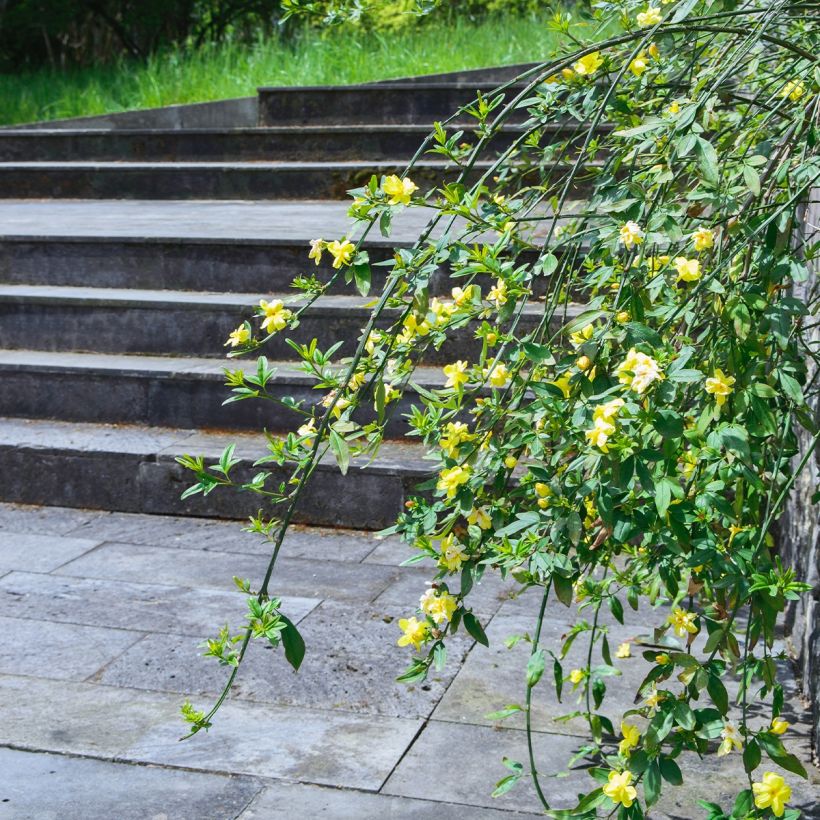
Plant habit
Flowering
Foliage
Botanical data
Jasminum
humile
Revolutum
Oleaceae
Italian Jasmine, Italian Yellow Jasmine
Cultivar or hybrid
Planting and care
Jasminum Revolutum adapts to most types of soil and particularly tolerates limestone well. Its main requirement concerns soil drainage, as it does not like excess moisture. Choose a sunny location for it, or possibly partial shade in a hot climate. In cooler climates, a south-facing stone wall will provide both support for it to climb and some warmth. Dig a hole 50cm (20in) wide and deep, and if your soil is a bit heavy, incorporate gravel at the bottom to create a drainage layer. In sandy soil, you can mix planting compost with the existing soil to improve water retention. Soak the root ball in a bucket for fifteen minutes, then position it in the planting hole so that the top of the root ball is level with the surrounding soil. Fill in and water generously. Water regularly during the first year, and make a few additional waterings in the summer.
Planting period
Intended location
Care
Planting & care advice


-
, onOrder confirmed
Reply from on Promesse de fleurs
Recently viewed products
Haven't found what you were looking for?
Hardiness is the lowest winter temperature a plant can endure without suffering serious damage or even dying. However, hardiness is affected by location (a sheltered area, such as a patio), protection (winter cover) and soil type (hardiness is improved by well-drained soil).

The flowering period indicated on our website applies to countries and regions located in USDA zone 8 (France, the United Kingdom, Ireland, the Netherlands, etc.)
It will vary according to where you live:- In zones 9 to 10 (Italy, Spain, Greece, etc.), flowering will occur about 2 to 4 weeks earlier.
- In zones 6 to 7 (Germany, Poland, Slovenia, and lower mountainous regions), flowering will be delayed by 2 to 3 weeks.
- In zone 5 (Central Europe, Scandinavia), blooming will be delayed by 3 to 5 weeks.
In temperate climates, pruning of spring-flowering shrubs (forsythia, spireas, etc.) should be done just after flowering.
Pruning of summer-flowering shrubs (Indian Lilac, Perovskia, etc.) can be done in winter or spring.
In cold regions as well as with frost-sensitive plants, avoid pruning too early when severe frosts may still occur.
The planting period indicated on our website applies to countries and regions located in USDA zone 8 (France, United Kingdom, Ireland, Netherlands).
It will vary according to where you live:
- In Mediterranean zones (Marseille, Madrid, Milan, etc.), autumn and winter are the best planting periods.
- In continental zones (Strasbourg, Munich, Vienna, etc.), delay planting by 2 to 3 weeks in spring and bring it forward by 2 to 4 weeks in autumn.
- In mountainous regions (the Alps, Pyrenees, Carpathians, etc.), it is best to plant in late spring (May-June) or late summer (August-September).
The harvesting period indicated on our website applies to countries and regions in USDA zone 8 (France, England, Ireland, the Netherlands).
In colder areas (Scandinavia, Poland, Austria...) fruit and vegetable harvests are likely to be delayed by 3-4 weeks.
In warmer areas (Italy, Spain, Greece, etc.), harvesting will probably take place earlier, depending on weather conditions.
The sowing periods indicated on our website apply to countries and regions within USDA Zone 8 (France, UK, Ireland, Netherlands).
In colder areas (Scandinavia, Poland, Austria...), delay any outdoor sowing by 3-4 weeks, or sow under glass.
In warmer climes (Italy, Spain, Greece, etc.), bring outdoor sowing forward by a few weeks.
Shipping country and language
Your country of residence may be:
Your country of residence is:
For a better user experience on our website, you can select:
Your shipping country:
-
 Austria
-
 Belgium
-
 Bosnia & Herzegovina
-
 Bulgaria
-
 Croatia
-
 Cyprus
-
 Czechia
-
 Denmark
-
 Estonia
-
 Finland
-
 France
-
 Germany
-
 Greece
-
 Hungary
-
 Iceland
-
 Ireland
-
 Italy
Italy
-
 Latvia
-
 Liechtenstein
-
 Lithuania
-
 Luxembourg
-
 Malta
Malta
-
 Netherlands
-
 Poland
-
 Portugal
-
 Romania
-
 Serbia
-
 Slovakia
-
 Slovenia
-
 Spain
Spain
-
 Sweden
-
 Switzerland
Language:
-
French
-
 English
-
Spanish
-
Italian
-
German
-
Portuguese
-
Dutch
-
Finnish
My Account
Hello
My wish lists
My cart
Log in / Register
Existing customer?
This form is protected by reCAPTCHA - the Google Privacy Policy and Terms of Service apply.
New customer?
Create an account to track your orders, access our customer service and, if you wish, make the most of our upcoming offers.