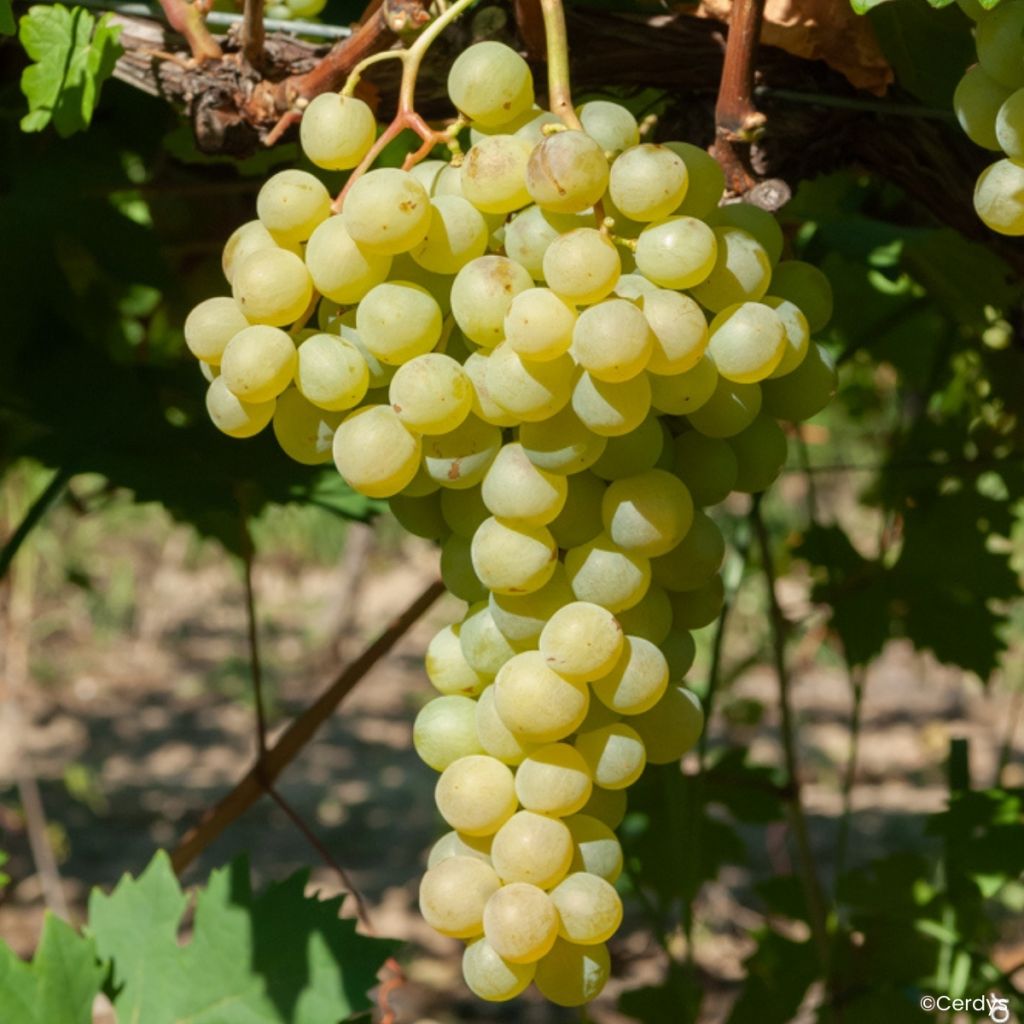
Vitis Garant - Table grape
Vitis Garant - Table grape
Vitis Garant
Common Grape Vine, European Grape, Wine Grape
Back-to-school special offer!
Get €10 off for every €50 you spend! And get up to €40 off on a single order.
How does it work?
1. Shop your favourites
Add your favourite plants to your basket. For every €50 you spend (excluding delivery charges, store credit and the plastic-free option), you’ll receive a €10 voucher.
€50 spent = €10 voucher
€100 spent = €20 voucher
€150 spent = €30 voucher
€200 spent = €40 voucher
2. Place your order
Once your basket reaches one of the spending thresholds, place your order. You can even choose your delivery date!
3. Receive your voucher
As soon as your order has been shipped, you’ll receive an email containing your personal voucher code and its value.
4. Use it on your next order
Your voucher is valid for 90 days from the date you receive it. It can be used once only, on a new order worth at least the value of the voucher, excluding delivery charges.
Please note: Vouchers can be combined with other offers, but cannot be split or refunded.
Home or relay delivery (depending on size and destination)
Important: You may be charged customs duties by your country’s customs authorities upon delivery.
Schedule delivery date,
and select date in basket
This plant carries a 12 months recovery warranty
More information
We guarantee the quality of our plants for a full growing cycle, and will replace at our expense any plant that fails to recover under normal climatic and planting conditions.
Description
The Garant vine (or Garantos) is a table grape which produces clusters of large golden berries ripening from late August to September. Vigorous and easy to manage, this climbing plant quickly covers an arbour or training wire. It yields beautiful, sweet grapes with a slight muscat flavour, to be eaten fresh. Fairly hardy, capable of producing in cool climates, and highly disease-resistant, it is a rewarding variety requiring few plant protection treatments.
Belonging to the Vitaceae family, this table grape is an interspecific hybrid from the Solaris and Muscat Bleu varieties, obtained in 1991 by Norbert Becker at the Staatliches Weinbauinstitut in Freiburg im Breisgau; it is also found under the identifiers FR 515-91 or Freiburg 515-91 and under the synonym "Garantos".
Garant is characterised by better tolerance to two types of fungal diseases (powdery mildew and downy mildew), good cold resistance and a so-called 'mid-season' ripeness. The plant develops climbing stems with tendrils, it shows good vigour and its shoots are capable of lengthening several metres per season; its growth is rapid if the soil is deep and well-drained.
Trained on a pergola or as a cordon, it can spread 2 to 4 m within a few years. At 10 years, the trunk forms a well-established plant with fruit-bearing branches. The discreet flowering consists of small greenish flowers in May-June. They are pollinated by wind, but also by bees.
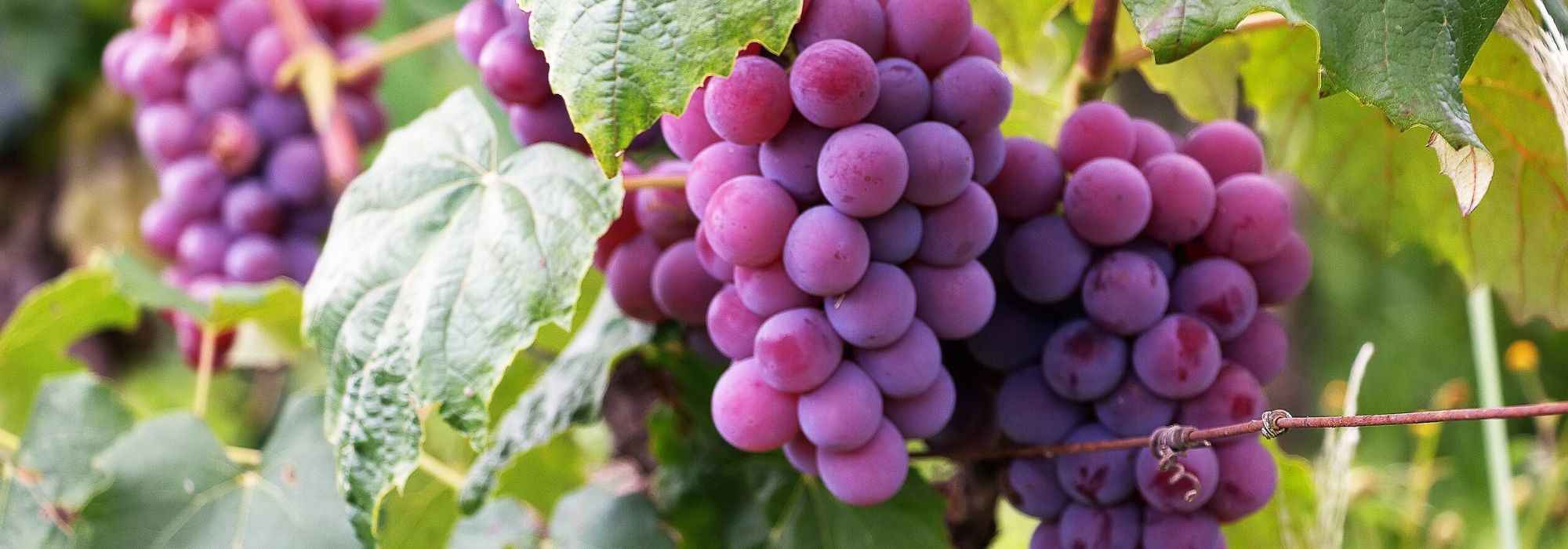
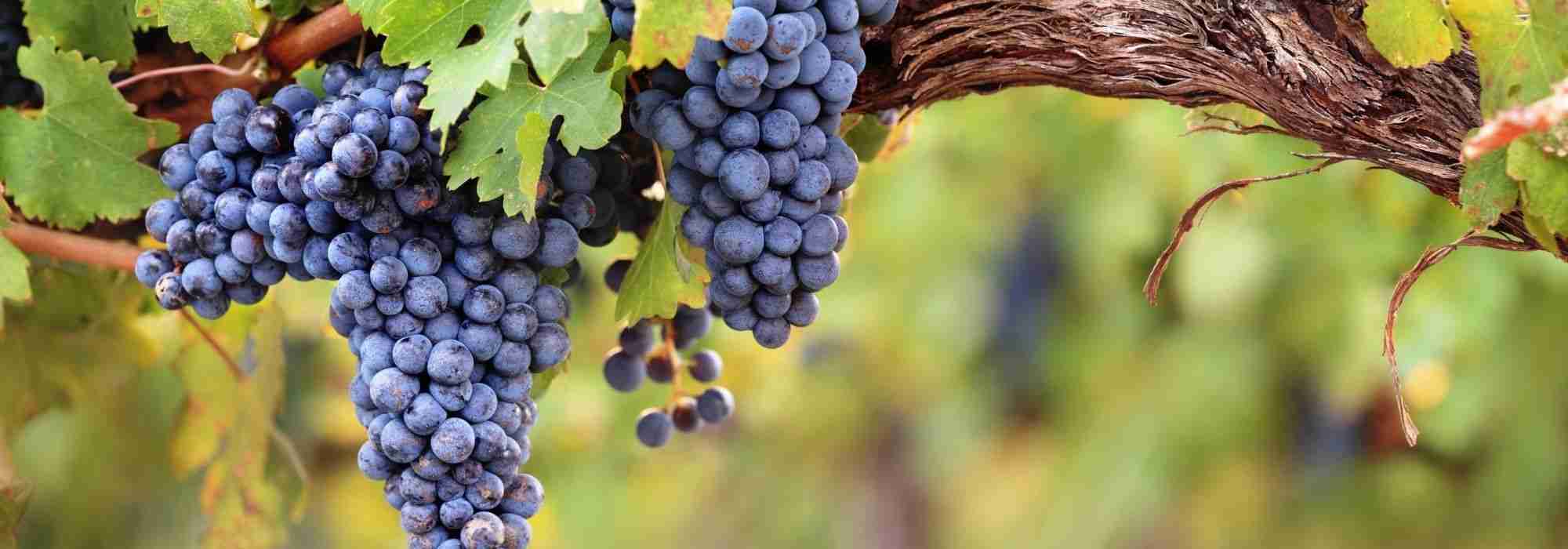
This variety produces clusters weighing around 300 grams. Each bears large, round to ovate berries, golden yellow when ripe, with a medium-thick skin. Their flesh is sweet, with a distinct muscat aroma. They ripen from late August (in warm regions) to late September; as a guide, around 25–31 August in a Mediterranean climate, early to mid-September or late September in cooler regions.
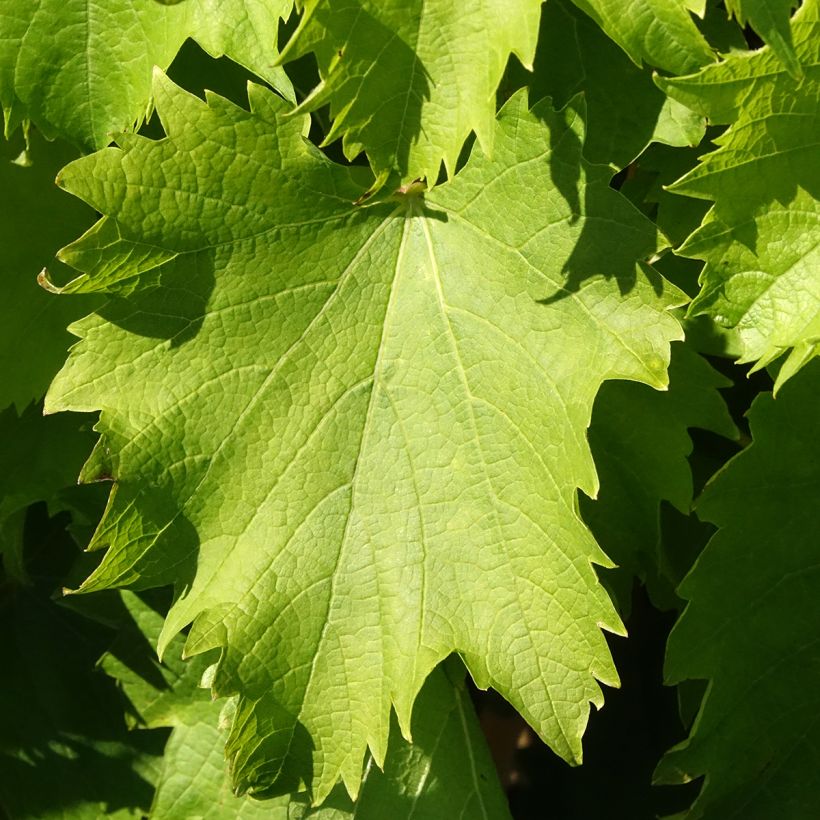
The foliage is deciduous, formed of palmate, bright green leaves, turning yellow in autumn before falling. The vine's root system is running and deep; it appreciates free-draining soils; the young plants are frequently grafted onto SO4, a medium-vigour rootstock moderately tolerant of limestone. The hardiness of this Garant variety is estimated between –15 and –18 °C, depending on exposure and wood ripening; the plant shows good resistance to powdery mildew and downy mildew, which limits the need for treatments in a home garden.
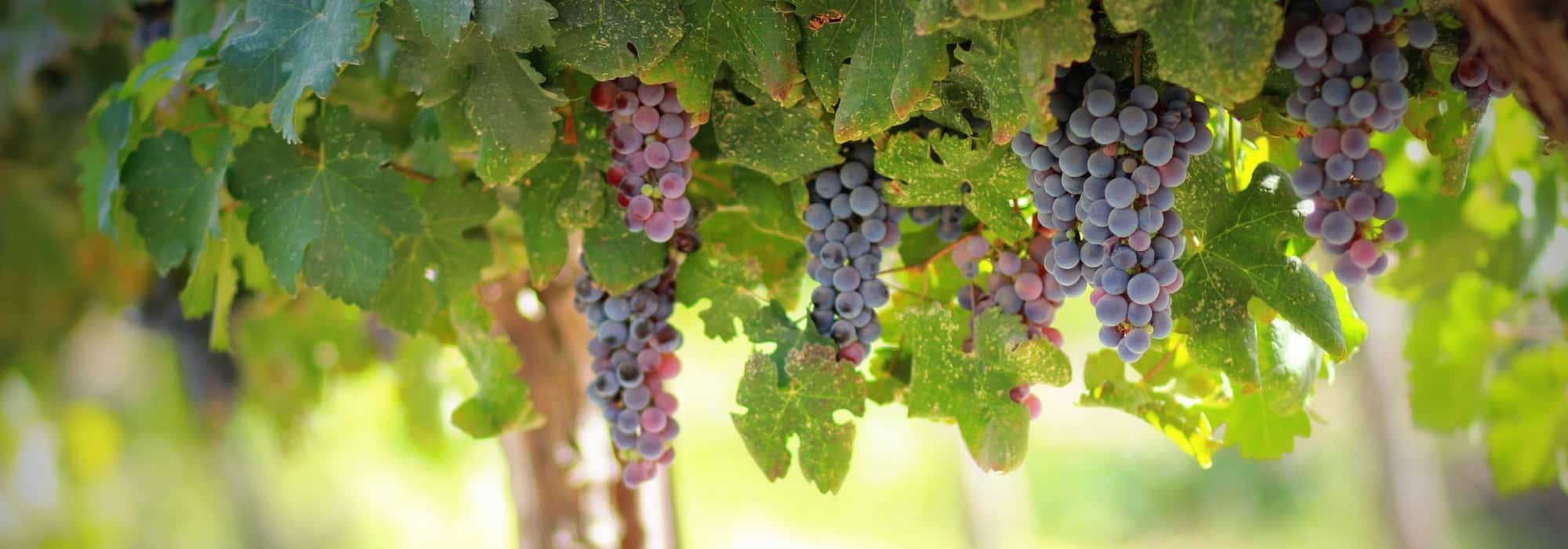
In addition to its fruiting characteristics, the Garant Vine is decorative. It can be trained on an arbour, a pergola, or sturdy wires stretched against a wall. To stagger harvests and vary pleasures, pair it with other table grape varieties like Solaris (very early, white), Muscat Bleu (blue, muscat-flavoured) and Regent (blue-black grapes for juice or light wine).
In urban areas, it is possible to grow a vine in a large container on a balcony or terrace, trained in a warm spot and well-pruned.
With the diversity offered within a wide range of vines, it is easy to find the variety that best suits your preferences.
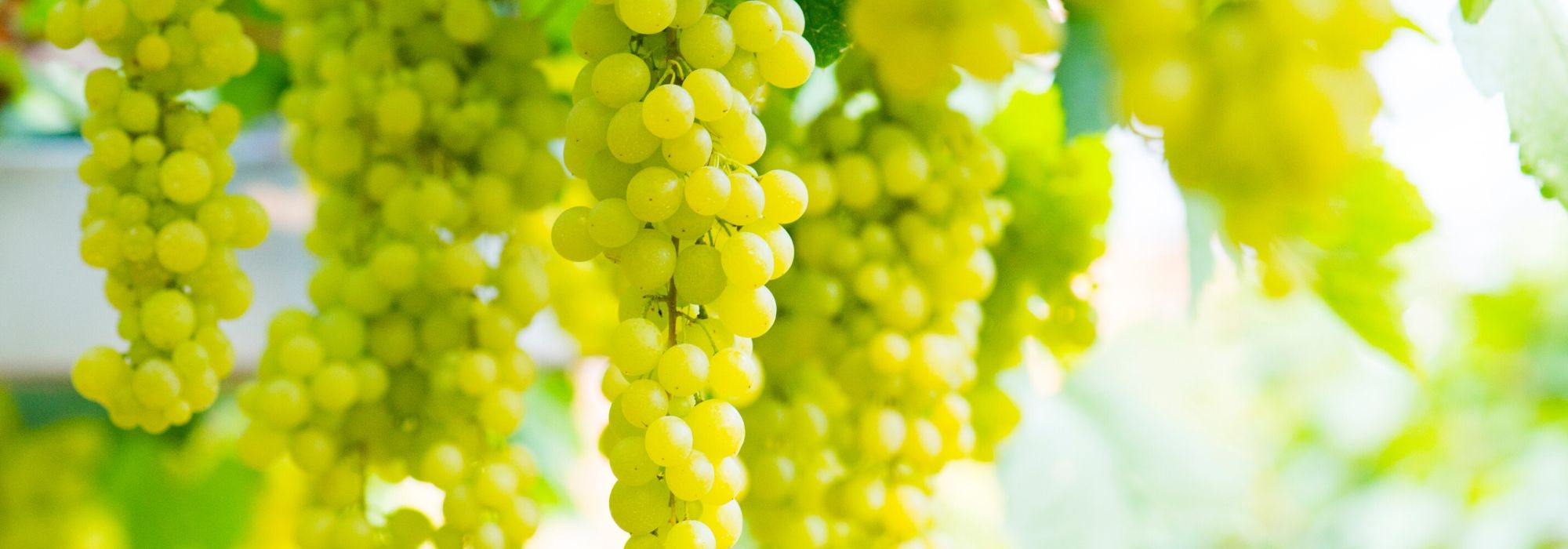
Vitis Garant - Table grape in pictures
Plant habit
Fruit
Flowering
Foliage
Botanical data
Vitis
Garant
Vitaceae
Common Grape Vine, European Grape, Wine Grape
Vitis Garant, Vitis Garantos, Vitis FR 515-91, Vitis Freiburg 515-91
Cultivar or hybrid
Planting and care
Plant the Garant vine in autumn, in deep, well-drained soil, even stony, arid, poor and calcareous, in a sunny position, sheltered from strong winds. Incorporate into the planting soil 3 or 4 handfuls of fruit tree fertiliser and 2 kg of composted manure for each vine. The roots must not come into contact with the manure. After planting, prune above 2 large buds to obtain the start of two shoots. Keep the most vigorous woody climbing stem, and tie it to a stake. This will be followed by formative pruning, in a vertical cordon.
The vine does not require a regular supply of fertiliser for a good yield, quite the contrary. Enrich the soil with potash, ground horn or iron chelate, only every 2-3 years.
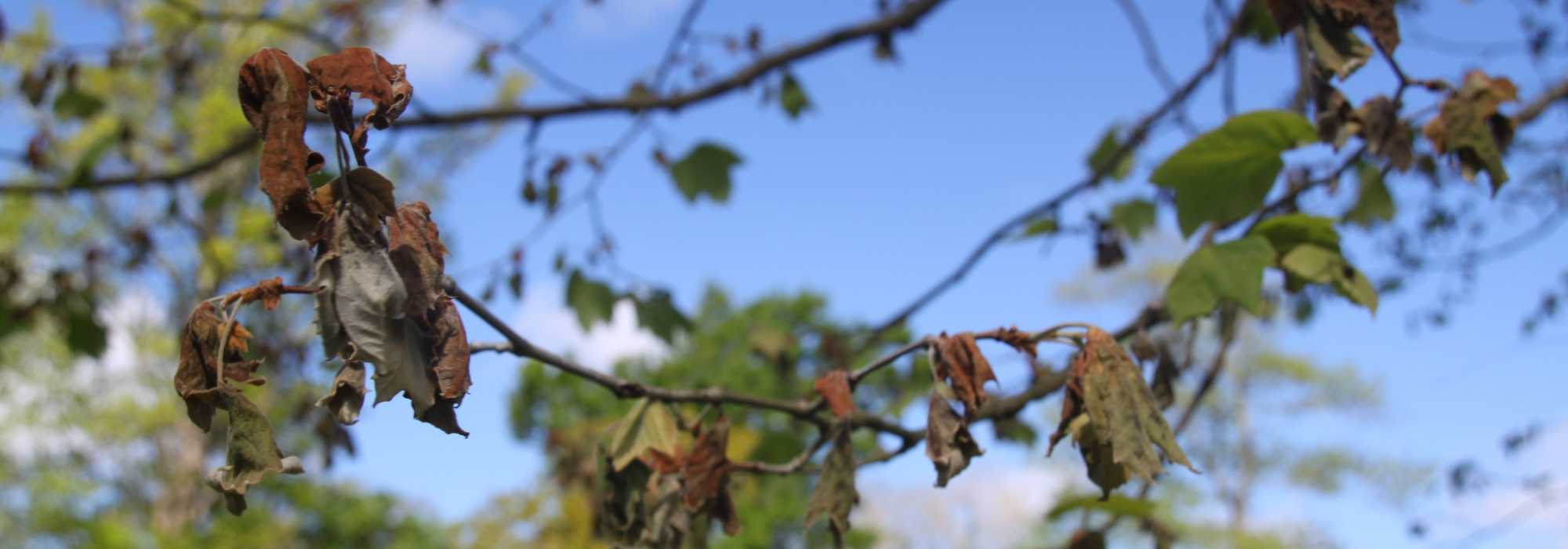
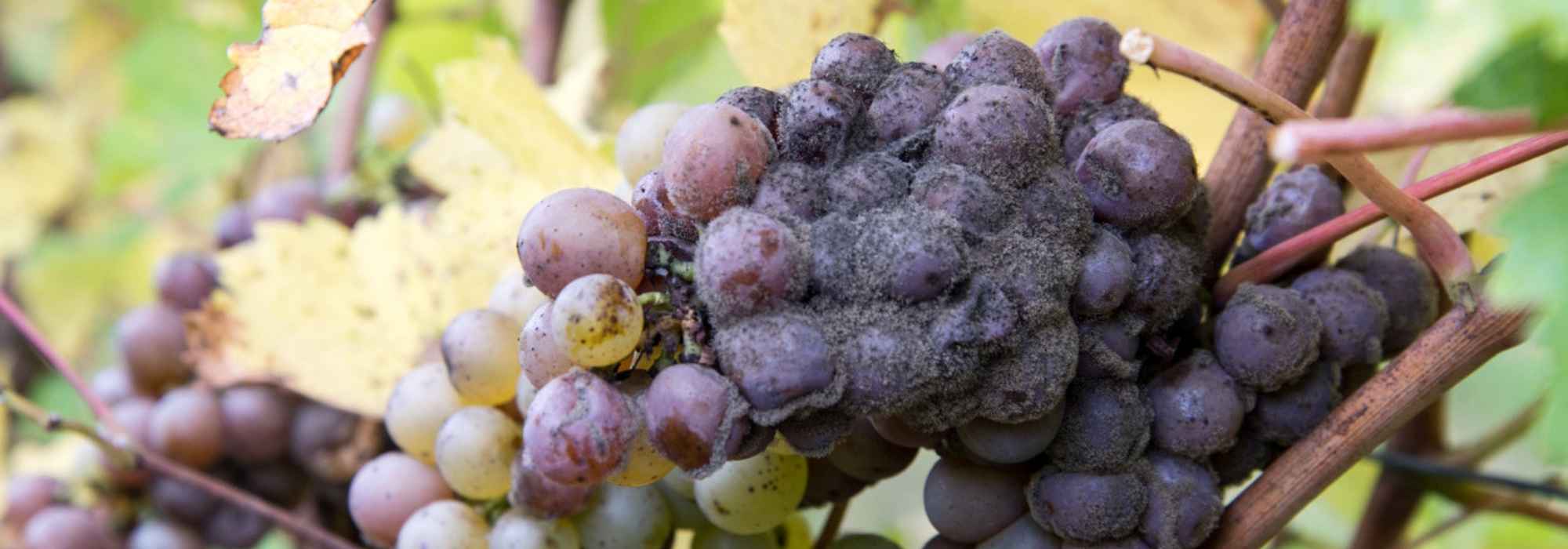
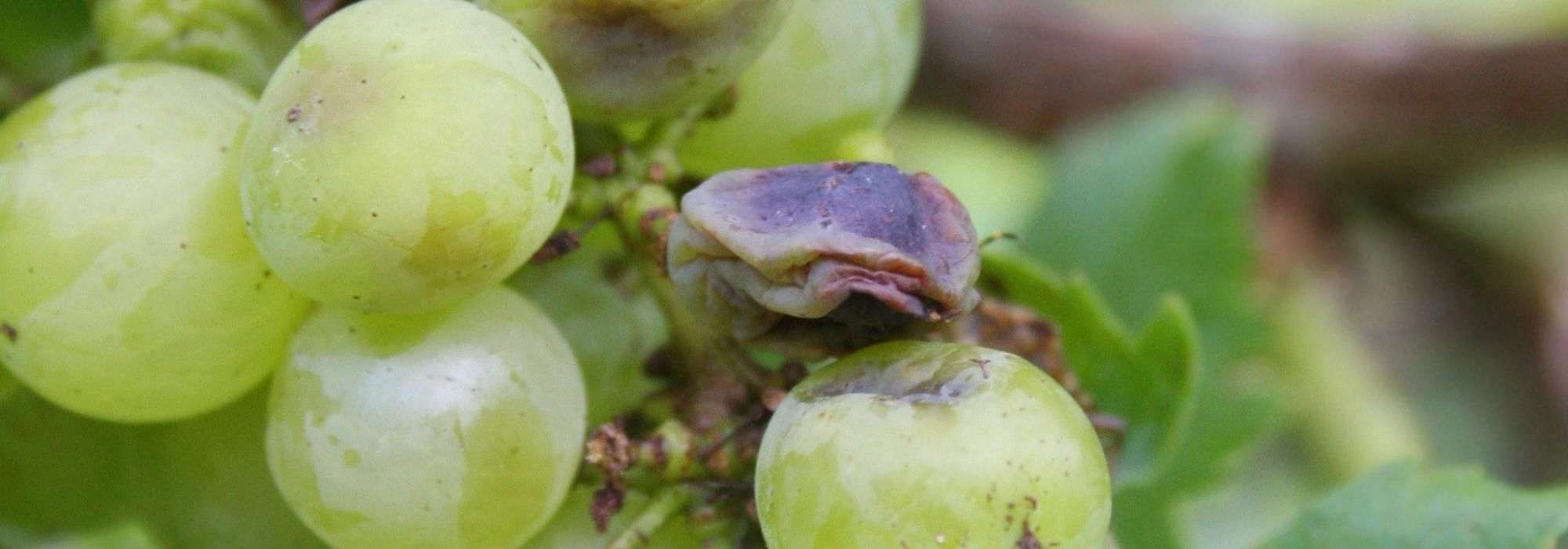
The Garant vine is naturally resistant to fungal diseases, particularly Downy Mildew. It does not require regular treatments. The most commonly encountered pests are the grape berry moths (Cochylis) and the European grapevine moth (grape berry caterpillar), which should be treated with an insecticidal spray during the growing season, twice at fifteen-day intervals. There is also downy mildew (oil spots on the leaf, underside with a white down) and grey rot Botrytis (mould on the berries in damp weather). For these two fungal diseases, use Bordeaux mixture at the first symptoms. Treat alternately with sulphur against powdery mildew (white-grey felting on the top of the leaves), in fine, not too hot weather.
Since the ravages of phylloxera at the end of the 19th century, grape vines have been obligatorily grafted onto different rootstocks resistant to this disease and adapted to different types of soil. These rootstocks come from American varieties naturally armed against this formidable parasitic pest, itself of American origin.
Planting period
Intended location
Care
Planting & care advice


This item has not been reviewed yet - be the first to leave a review about it.
Recently viewed products
Haven't found what you were looking for?
Hardiness is the lowest winter temperature a plant can endure without suffering serious damage or even dying. However, hardiness is affected by location (a sheltered area, such as a patio), protection (winter cover) and soil type (hardiness is improved by well-drained soil).

The flowering period indicated on our website applies to countries and regions located in USDA zone 8 (France, the United Kingdom, Ireland, the Netherlands, etc.)
It will vary according to where you live:- In zones 9 to 10 (Italy, Spain, Greece, etc.), flowering will occur about 2 to 4 weeks earlier.
- In zones 6 to 7 (Germany, Poland, Slovenia, and lower mountainous regions), flowering will be delayed by 2 to 3 weeks.
- In zone 5 (Central Europe, Scandinavia), blooming will be delayed by 3 to 5 weeks.
In temperate climates, pruning of spring-flowering shrubs (forsythia, spireas, etc.) should be done just after flowering.
Pruning of summer-flowering shrubs (Indian Lilac, Perovskia, etc.) can be done in winter or spring.
In cold regions as well as with frost-sensitive plants, avoid pruning too early when severe frosts may still occur.
The planting period indicated on our website applies to countries and regions located in USDA zone 8 (France, United Kingdom, Ireland, Netherlands).
It will vary according to where you live:
- In Mediterranean zones (Marseille, Madrid, Milan, etc.), autumn and winter are the best planting periods.
- In continental zones (Strasbourg, Munich, Vienna, etc.), delay planting by 2 to 3 weeks in spring and bring it forward by 2 to 4 weeks in autumn.
- In mountainous regions (the Alps, Pyrenees, Carpathians, etc.), it is best to plant in late spring (May-June) or late summer (August-September).
The harvesting period indicated on our website applies to countries and regions in USDA zone 8 (France, England, Ireland, the Netherlands).
In colder areas (Scandinavia, Poland, Austria...) fruit and vegetable harvests are likely to be delayed by 3-4 weeks.
In warmer areas (Italy, Spain, Greece, etc.), harvesting will probably take place earlier, depending on weather conditions.
The sowing periods indicated on our website apply to countries and regions within USDA Zone 8 (France, UK, Ireland, Netherlands).
In colder areas (Scandinavia, Poland, Austria...), delay any outdoor sowing by 3-4 weeks, or sow under glass.
In warmer climes (Italy, Spain, Greece, etc.), bring outdoor sowing forward by a few weeks.
Shipping country and language
Your country of residence may be:
Your country of residence is:
For a better user experience on our website, you can select:
Your shipping country:
-
 Austria
-
 Belgium
-
 Bosnia & Herzegovina
-
 Bulgaria
-
 Croatia
-
 Cyprus
-
 Czechia
-
 Denmark
-
 Estonia
-
 Finland
-
 France
-
 Germany
-
 Greece
-
 Hungary
-
 Iceland
-
 Ireland
-
 Italy
Italy
-
 Latvia
-
 Liechtenstein
-
 Lithuania
-
 Luxembourg
-
 Malta
Malta
-
 Netherlands
-
 Poland
-
 Portugal
-
 Romania
-
 Serbia
-
 Slovakia
-
 Slovenia
-
 Spain
Spain
-
 Sweden
-
 Switzerland
Language:
-
French
-
 English
-
Spanish
-
Italian
-
German
-
Portuguese
-
Dutch
-
Finnish
My Account
Hello
My wish lists
My cart
Log in / Register
Existing customer?
This form is protected by reCAPTCHA - the Google Privacy Policy and Terms of Service apply.
New customer?
Create an account to track your orders, access our customer service and, if you wish, make the most of our upcoming offers.