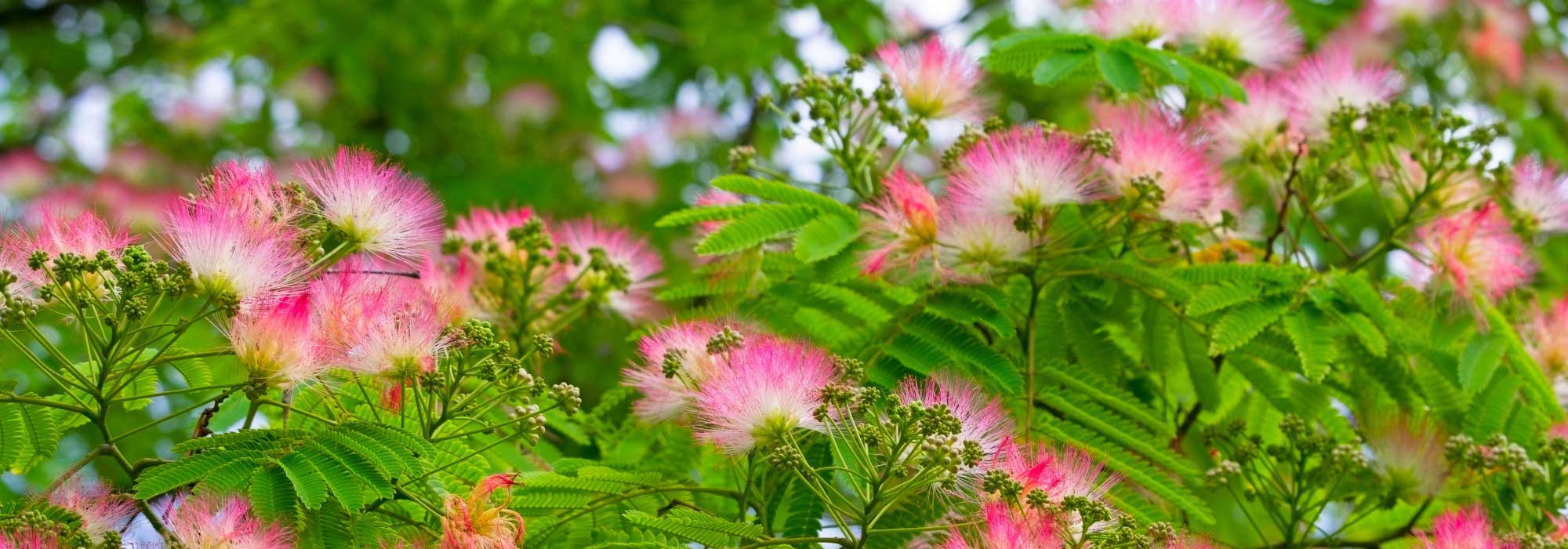
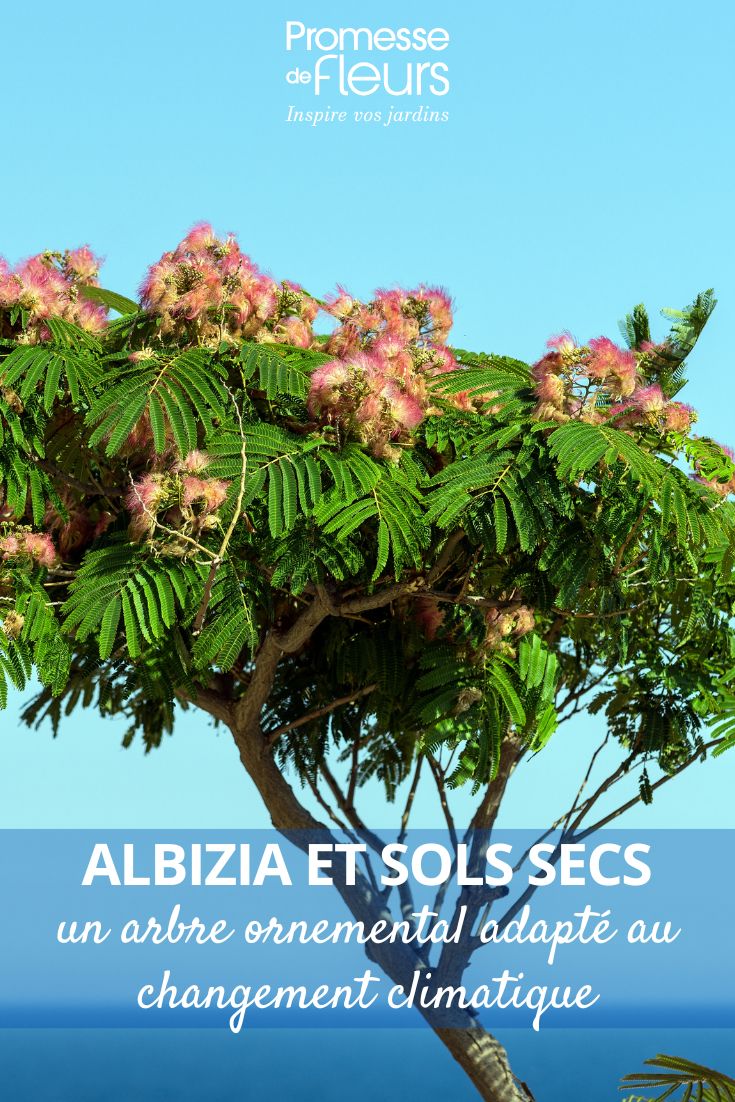
Albizia and dry soils: an ornamental tree adapted to climate change
Silk tree, highly drought-tolerant
Contents
Climate change requires a new way of thinking about the garden, particularly in regions subject to increasingly dry, hot summers. Faced with these conditions, it becomes essential to favour species able to thrive in dry soils, often stony, sandy or calcareous, where water infiltrates quickly and remains scarcely available to plants. Among the species that meet these requirements, Albizia julibrissin, or silk tree, stands out for its spreading “parasol” habit, its abundant summer flowering and its natural ability to withstand heat and thrive in well-draining soils.
Beneath its exotic appearance lies an ornamental tree that is surprisingly low-maintenance, undemanding and relatively hardy. It naturally adapts to gardens exposed to arid conditions. Albizia combines beauty and resilience, two qualities that have become essential in the current context.
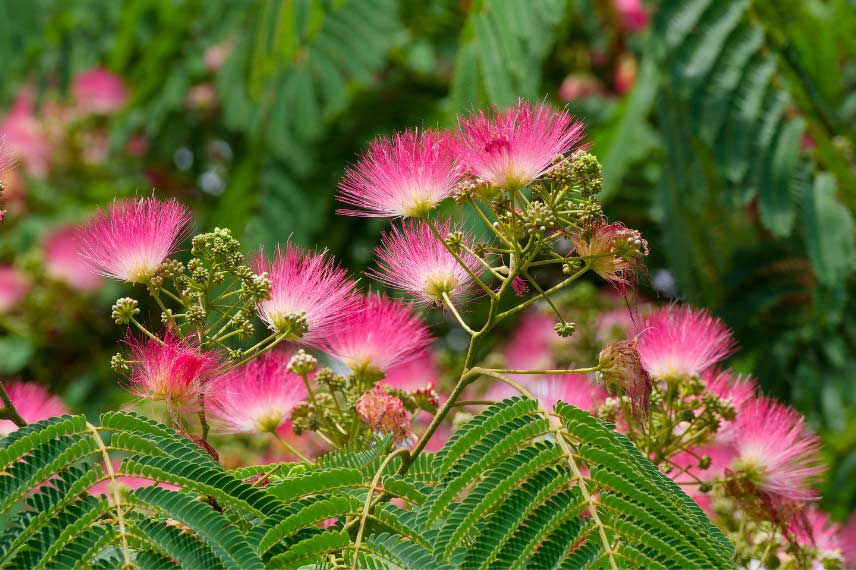

Albizia julibrissin: exotic, resilient tree
Climate change is strongly affecting horticultural balances. Winters are becoming milder and wetter, summers hotter and drier, and heatwaves more frequent. In this context, choosing plants able to withstand these extreme conditions has become necessary.
Albizia stands out for its great tolerance to extreme climatic conditions. It is both hardy and particularly drought resistant. Albizia can tolerate summer temperatures above 40 °C while withstanding down to –10 to –12 °C in well-drained soil. This remarkable resilience is explained by several botanical characteristics :
- Its powerful root system penetrates deeply into the soil, allowing it to access water at depth, even in stony, sandy or calcareous soils.
- Its light foliage, made up of fine leaflets, limits transpiration and reduces water loss, while its umbrella-like habit creates a gentle shade that helps keep soil cooler in very exposed areas of the garden.
- In periods of water stress or intense heat, its leaves naturally fold (nyctinasty), further reducing transpiration.
- Furthermore, as a member of the family Fabaceae, it benefits from the ability to fix atmospheric nitrogen thanks to symbiotic bacteria present in its roots. This mechanism enables it to adapt to poor, free-draining soils without requiring significant fertilisation.
Economical in water and undemanding, it proves to be a tree perfectly adapted to scorching summers of Mediterranean gardens or those subject to watering restrictions, and also a reliable species in more temperate regions, provided winter wetness does not compromise its root establishment.
Read also
Albizia: planting, pruning and careDry soils and Albizia: a tree naturally adapted to them
Dry soils are characterised by a very low capacity to retain moisture. Water, whether from rainfall or watering, infiltrates them rapidly and does not remain on the surface. This results in soil that feels constantly dry to the touch, whatever the season. This type of soil is also poor in organic matter and in essential nutrients for the growth of plants. Often calcareous, stony or very free-draining, they are regarded as of low fertility and inhospitable for the majority of vegetation. Yet, some species, well adapted to these conditions, find their place there and develop without difficulty, as with Albizia.
For more information on gardening on this type of ground, you can also consult our fact sheet “Gardening on dry, free-draining soil: all our tips!”
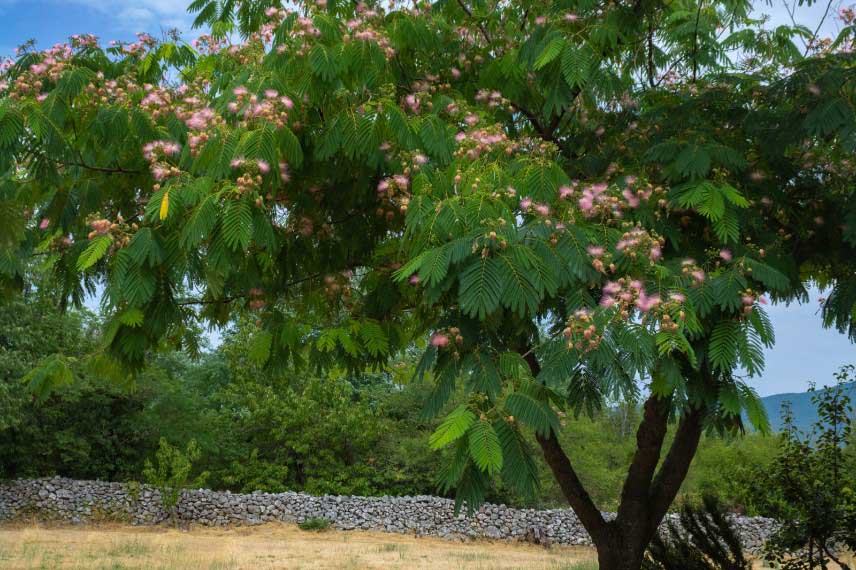
Albizia: how to plant it to withstand drought
When to plant an Albizia?
Albizia is best planted in autumn, when soil still retains some warmth and natural moisture favours root development. This head start helps it better withstand summer droughts. Spring is also possible, but will require closer attention to watering. Planting in high summer should be avoided, as water stress is then too severe.
Caring for the planting
Plant Albizia in full sun, sheltered from strong winds, in light, well-draining soil.
- Before planting, rehydrate the rootball by soaking it in water.
- Then dig a wide, deep hole into which you can mix a little well-rotted compost to aid establishment, while keeping the soil free-draining.
- Position the tree, backfill with soil, firm gently and water thoroughly.
- Create a basin at the base to hold water and apply a thick mulch (RCW, wood chips, leaf litter, straw) to reduce evaporation and keep soil cooler for longer.
To improve Albizia’s future drought resistance, favour infrequent but deep watering during the first two years. This encourages roots to grow deeper in search of moisture, making the tree much more self-sufficient and resilient during dry summers. Thereafter, watering will be unnecessary once the tree is well established, except in exceptional drought.
Albizia in a dry garden: which plants to pair it with?
As it is adapted to lack of water, in a resilient garden choose to plant alongside it an olive tree, a pomegranate, a Callistemon citrinus ‘Mauve Mist’, and other plants capable of withstanding drought such as the sedums, lavender, euphorbias, achilleas…
For more choices and ideas, discover a selection of 10 drought-resistant perennial plants and 12 shrubs for dry or free-draining soil, as well as 10 evergreen shrubs for dry soil.
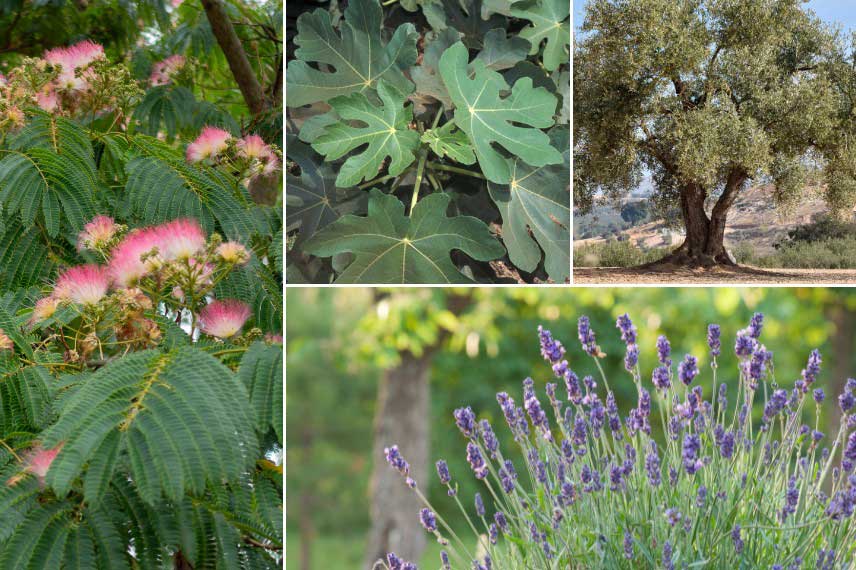
Albizia, fig tree, olive tree and lavender
- Subscribe!
- Contents
This form is protected by reCAPTCHA - the Google Privacy Policy and Terms of Service apply.

































Comments