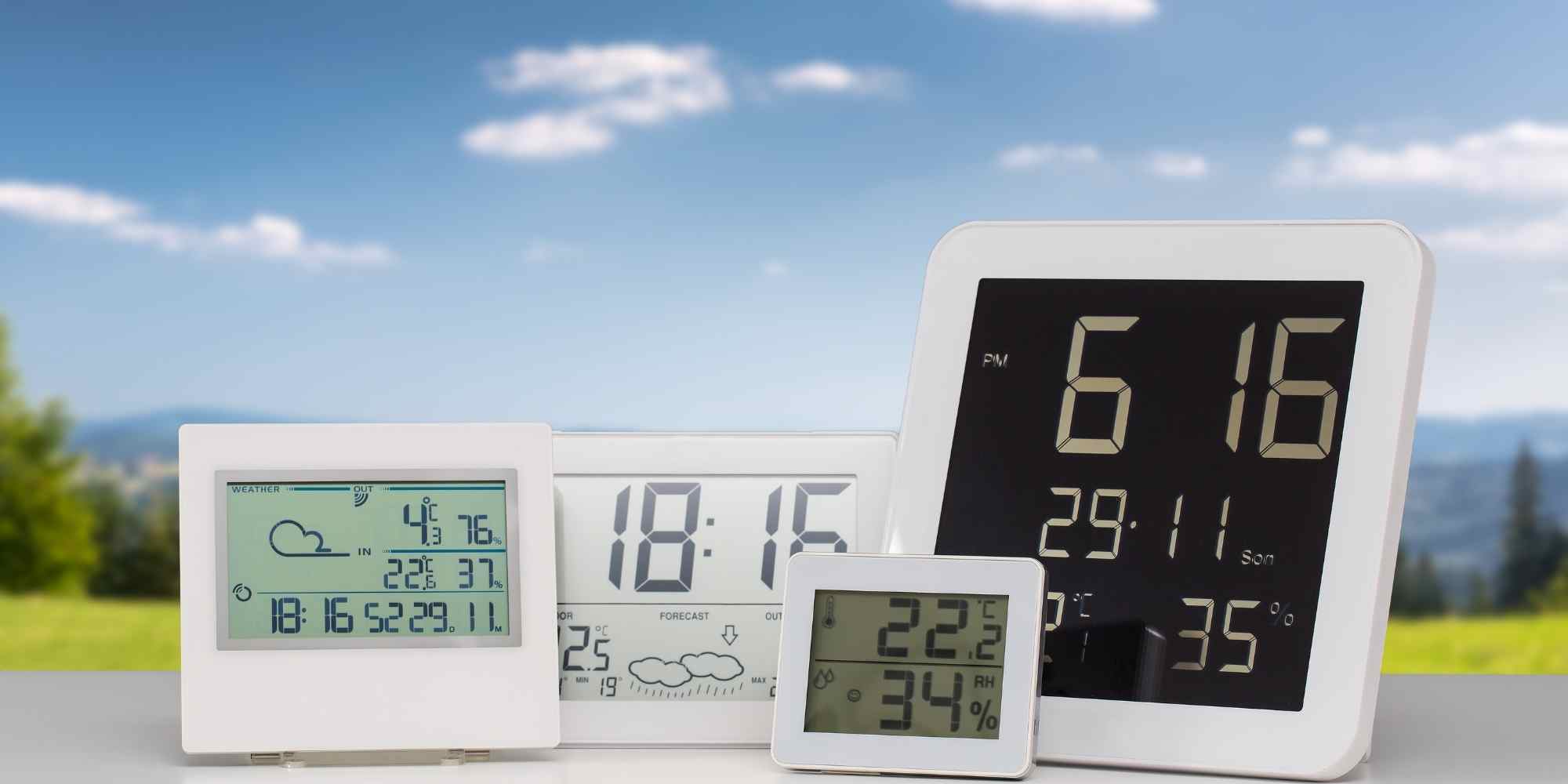
Connected weather station: what is it really for in the garden?
All you need to know about this new technology and its uses in the garden
Contents
Do you always check your weather app before sowing or planting? Do you monitor weather reports for spring frost episodes? Clearly, like most gardeners, you are hooked on weather forecasts. But you are often disappointed.
To address this frustration, gardeners can equip themselves with a new technology: the connected weather station. This home-automation gadget is becoming more widespread despite its relatively high price. It is legitimate to ask what the real usefulness of this little box is — and above all whether it is a justifiable investment for an amateur gardener or merely another toy?
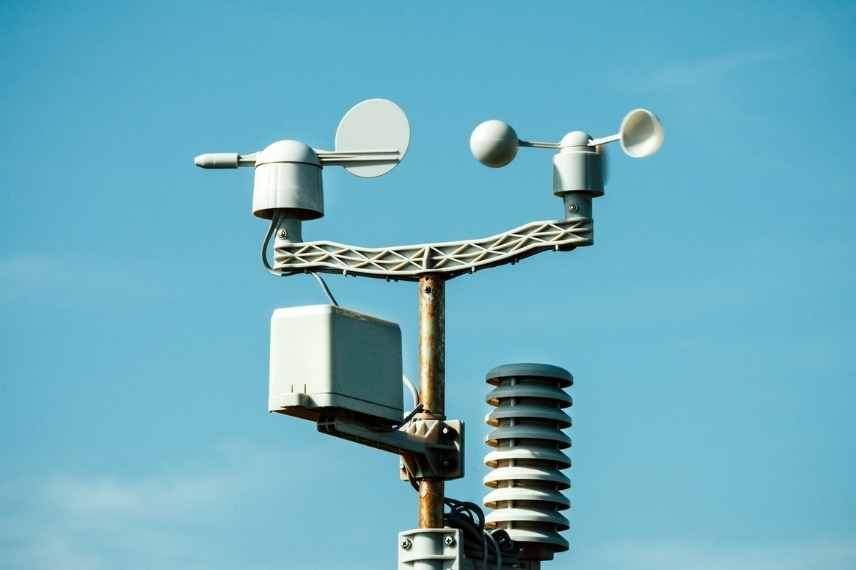
What exactly is a connected weather station?
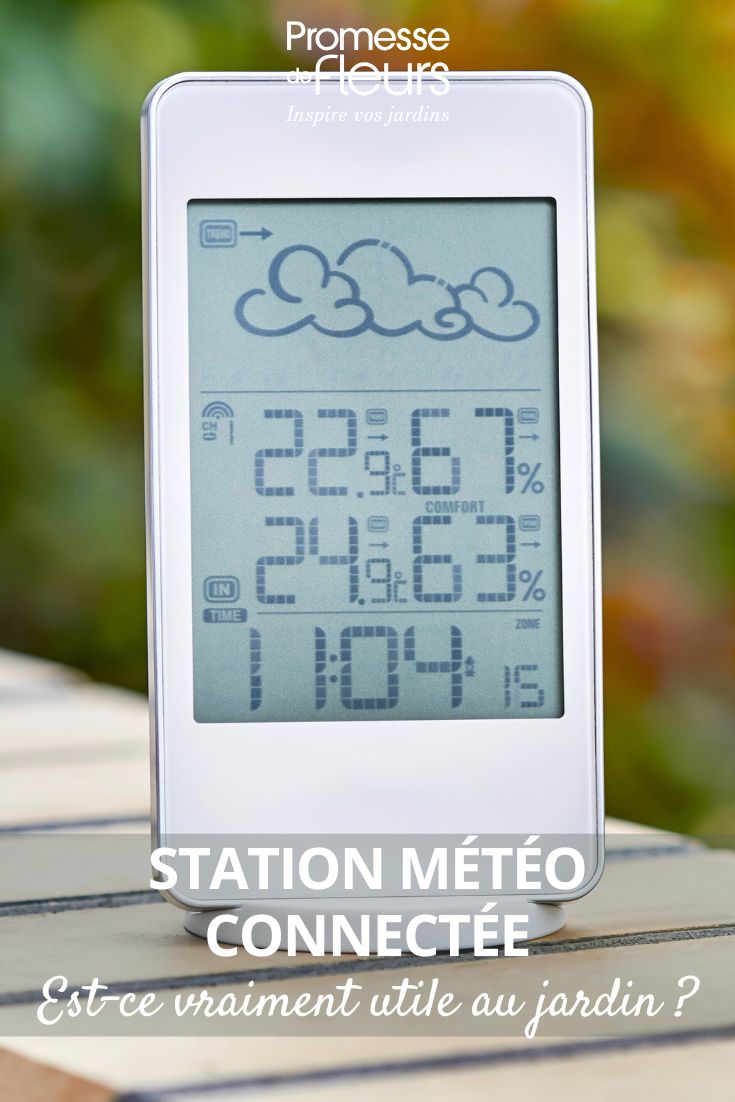
A connected weather station is a set of smart sensors installed in your garden that transmit real‑time weather data to your smartphone, tablet or computer via Wi‑Fi or Bluetooth. Unlike traditional models, it allows you to check home weather remotely, receive personalised alerts and store an accurate history of seasonal variations.
A connected weather station provides multiple data points that can be essential for a gardener:
- Air temperature and humidity that allowmonitoring frost or heatwave risk
- Rainfall: this precise measurement of rainfall enables adjustment of watering
- Wind speed and direction: these data are crucial to know when to treat plants or protect lightweight structures
- Atmospheric pressureallows predicting short‑term weather changes
- UV index and sunshineto assess exposure of your plants and for your own protection
- Soil moisture via probes, offered as an option: this is the ultimate indicator to know whether your plants are truly “thirsty”.
The connected weather station transmits weather data to smartphones
A connected weather station offers many practical uses for amateur and professional gardeners. Key applications: - Real‑time microclimate monitoring - Track temperature, humidity, wind, rainfall, solar radiation to understand conditions specific to your garden or allotment. - Spot sudden changes (frost, heat spikes, strong winds) and react quickly. - Frost and heat protection - Receive frost and high‑temperature alerts to protect tender plants (covering, moving potted plants, shading). - Use minimum/maximum temperature logs to identify risk periods and select appropriate species or varieties. - Irrigation optimisation and water management - Combine rainfall and soil moisture data to avoid over‑watering and reduce water bills. - Automate irrigation schedules based on real‑time soil moisture, evapotranspiration or recent rainfall. - Disease and pest prevention - Use humidity, temperature and leaf‑wetness data to predict conditions favourable to fungal diseases (e.g. rust, blight) and time treatments or cultural controls. - Monitor conditions that favour pest outbreaks and act earlier. - Greenhouse and polytunnel control - Automate ventilation, heating, shading and irrigation for stable growing conditions. - Improve crop yields and reduce energy use by running systems only when needed. - Timing of cultural operations - Plan sowing, planting, pruning, mulching, fertilising and mowing using local, reliable data (e.g. soil temperature for seed germination). - Use recent rainfall totals to decide whether to apply fertiliser or weed control. - Forecasting and planning - Short‑term forecasts and trend data inform work scheduling (planting, harvesting, construction). - Long‑term records help assess microclimate changes and choose suitable plants or rootstocks. - Automation and smart integration - Integrate with smart home platforms, irrigation controllers or alert services (SMS, push notifications) for automated responses. - Trigger actions via IFTTT or APIs (e.g. close greenhouse vents if high winds detected). - Data logging and analysis - Keep historical records to evaluate performance of cultivars, adjust practices and demonstrate compliance (for professional growers). - Share data with local networks or citizen‑science projects to improve regional forecasts. - Protection from extreme events - Monitor wind gusts and hail warnings to secure structures, protect trees and prevent crop loss. Practical tip: choose a station with sensors suited to your needs (soil moisture and leaf‑wetness sensors are very useful for gardeners), reliable connectivity and easy integration with your irrigation or greenhouse systems.
By reading the various data provided by connected weather stations, gardeners can quickly relate them to gardening — and, above all, see what this technological tool can be used for!
Understanding the microclimate of your garden
We all tend to do the same thing: rely on TV weather forecasts or on weather apps on our phones. And often reality is quite different from what we expected. Simply because these data come from regional stations, often located in open areas kilometres from your home, such as airports. For example, my own garden sits 400 m higher than the weather station I depend on. Needless to say, the forecasts are not very reliable for me…
Added to these differences is your garden’s own microclimate. Presence of a hedge, shade from a house, a stone wall that radiates heat… all create local variations that can be very significant for the garden.
The advantage of a connected weather station is therefore obvious: it measures precisely what is happening at your place. It can pinpoint conditions within your garden that are often very different from those predicted. This precision is essential to anticipate late frosts in spring, which are often fatal to young plants.
Learning to manage water
In summer, do you water every evening out of habit, without really considering soil and plant needs? Rest assured, you are not alone! But that is not ideal, because you are probably wasting a precious resource.
The connected weather station can help you save water and garden more ecologically. Often paired with soil probes, it provides a direct readout of plant needs.
-
It tells you exactly how many millimetres of water fell during the night. If you received 10 mm of rain, there is no need to switch on irrigation.
-
It prevents overwatering and risk of root rot. For instance, it can show that soil is still moist at 10 cm depth.
Thus, thanks to these data, you avoid irrigating unnecessarily. You can even go further by linking your station to an irrigation controller that cancels watering automatically if it has rained or if soil moisture is sufficient.
Preventing diseases and pest attacks
This is certainly a little-known but real advantage of the connected weather station. It helps prevent very common diseases such as downy mildew and powdery mildew, which are caused by very specific combinations of temperature and humidity. By monitoring these parameters, the station sends notifications as soon as conditions are “favourable” for these diseases to develop. You can then take appropriate preventive measures, such as ventilating greenhouses, planting less densely, or applying a curative treatment like horsetail manure or bicarbonate of soda before spots appear.
Similarly, the emergence of certain harmful insects such as thrips is directly linked to weather conditions and temperature. Knowing these data allows you to take necessary measures, such as setting up coloured sticky traps.
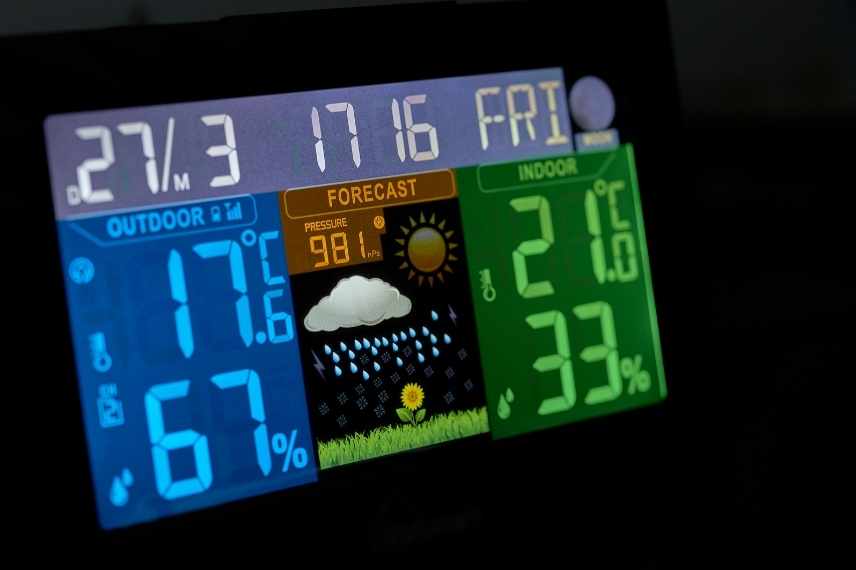
The connected weather station transmits multiple data in real time
Optimise greenhouse growing
For those with a greenhouse, a connected weather station is practically vital. In an enclosed space like a greenhouse, temperature can soar within minutes when the sun shines. Conversely, humidity can saturate the air and encourage damping-off of seedlings. With a connected weather station, you can receive an SMS if the greenhouse exceeds 35°C, allowing you to open vents promptly.
The station also calculates the dew point, helping you understand when condensation will form on leaves — a sign that ventilation is needed.
Garden more comfortably
Admittedly not the most important point… but gardening in comfortable conditions is essential.
Thanks to UV sensors and comfort index readings, the station helps you plan tasks. For example, you can check wind speed to know whether a biological spray can be applied without drifting to the neighbour. Monitoring the UV index tells you when pruning is better done in the shade rather than weeding in full sun!
Keep data in memory
One of the greatest pleasures of owning a connected station is the data archive. The app stores history month after month, year after year. The anecdotal aspect of these data is always entertaining, especially during gardener get-togethers!
But beyond this, this digital memory allows you to adapt plant varieties to the actual climate of your site, rather than to a garden centre label that is too general.
So, is a connected weather station useful or not?
Objectively, the usefulness of a connected weather station depends mainly on your gardener profile and on how sensitive your crops are.
It’s a real asset if you manage fragile spaces such as a greenhouse, if you run a precision vegetable garden, or if you have an automatic irrigation system you want to optimise to save water.
By contrast, for a hardy ornamental garden, a small vegetable plot or a simple lawn, it can come across as a gadget: visual cues such as dry soil and free weather apps are often enough for routine maintenance.
In short, it is not vital for growing plants (after all, you’ve done without one until now!), but it becomes an ally for anyone who wants to garden in an almost scientific, optimised way, anticipate cryptogamous diseases and drastically reduce their water footprint.
- Subscribe!
- Contents
This form is protected by reCAPTCHA - the Google Privacy Policy and Terms of Service apply.






























Comments