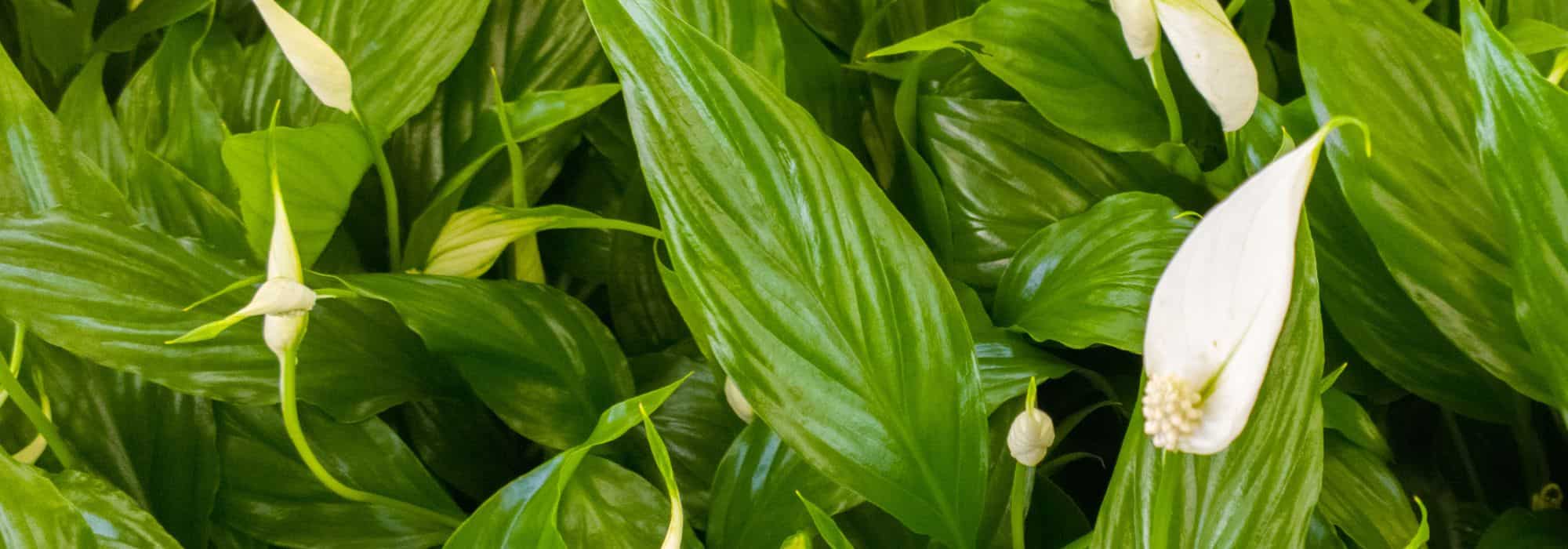
Diseases and pests of peace lily or Spathiphyllum
Identify, prevent and treat naturally
Contents
Spathiphyllum, also known as peace lily, is a popular houseplant prized for its glossy green foliage and elegant white flowers. Hardy and easy to care for, it thrives indoors when given good growing conditions. However, like all plants, it can fall prey to pests or diseases, especially if its environment becomes too dry, too wet or poorly ventilated. Learn to recognise signs of decline, prevent them and intervene with natural solutions so that your peace lily stays in good health.
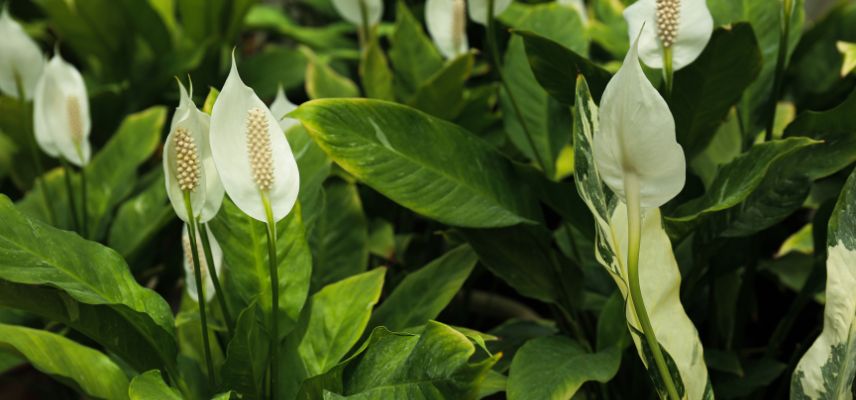
Flowers and foliage of peace lily or Spathiphyllum

Moonflower pests
Even indoors, some pests can infest Spathiphyllum. These are mainly insects and mites that feed on the sap of the peace lily, gradually weakening the plant.
Mealybugs
Among the most common, these mealybugs form small white cottony clusters, often hidden in the axils or on the underside of leaves or along the veins of Spathiphyllum. Their presence causes a general weakening, yellowing foliage, wilting, and sometimes the appearance of sooty mould linked to the honeydew they secrete.
For more information, see our article: “Mealybug: identification and treatment“.
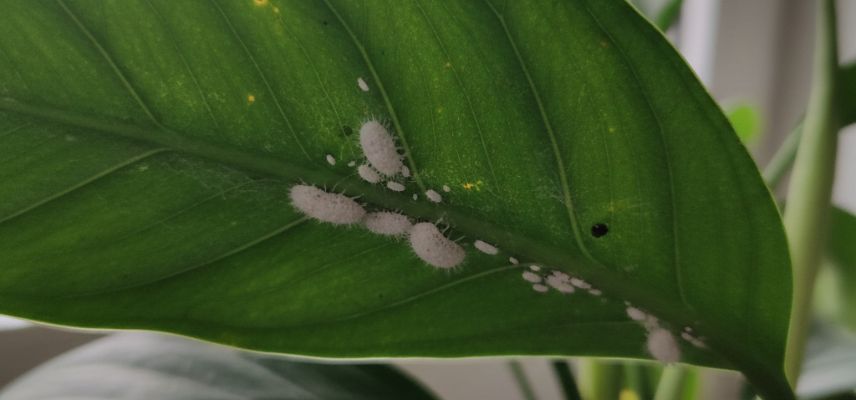
Mealybugs under a peace lily leaf (photo generated by AI)
Red spider mites
These tiny mites prefer warm, dry conditions. They are betrayed by the presence of fine webs under the leaves and discoloured or yellowish spots on the lamina of the peace lily. Without sufficient ambient humidity, their population can quickly explode.
For more information: “Red spider mite: identification and treatment“.
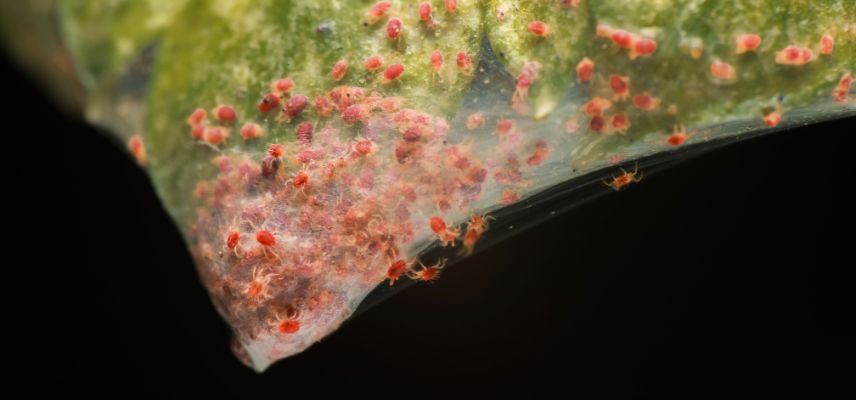
Photo of red spider mites (Tetranychus) (photo credit: BirdShutterB for Canva)
Thrips
Small discreet insects, black or translucent, they cause silvering spots, leaf deformities and slowed growth. Their presence often goes unnoticed until damage becomes visible.
For more information, read our article: “Thrips: identification and natural treatment“.
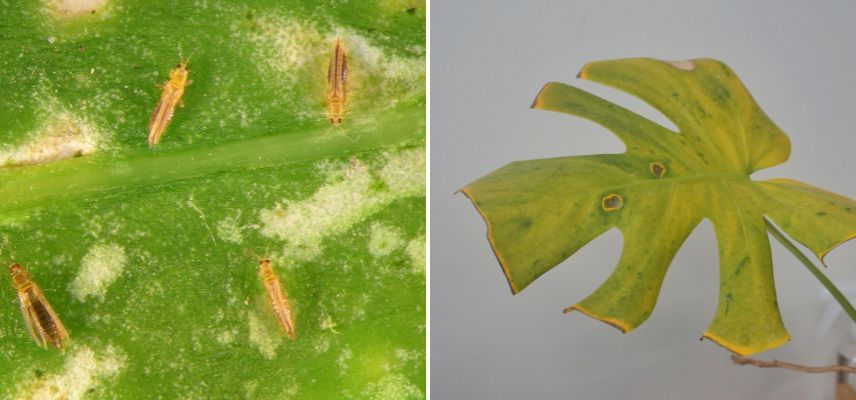
On left: photo of thrips on a leaf. On right: Monstera leaf affected by thrips.
Fungus gnats
If the potting mix remains too wet continuously, these small flying insects can proliferate. While mainly a visual nuisance, their larvae sometimes attack roots of young plants and indicate overwatering.
For more information, see our article: “Fungus gnats in pots: how to effectively prevent their spread?“
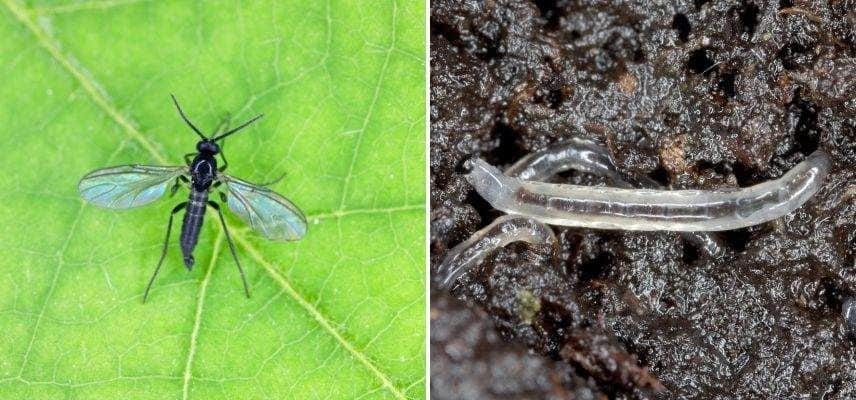
Photo of a fungus gnat and its larvae
Prevention and natural treatments for peace lily pests
- Check your plant regularly, especially the undersides of leaves and the base of stems.
- Manage watering to prevent disease spread :
- Water the peace lily with soft water (ideally rainwater).
- Allow the surface of the potting mix to dry between waterings, keeping the substrate slightly moist without excess.
- Always empty the saucer 10–15 minutes after watering to avoid standing water.
- A slight wilting of leaves indicates a lack of water and should be corrected promptly.
- Maintain light ambient humidity by occasionally misting foliage.
- In case of infestation :
- Start by cleaning leaves with a soft cloth or cotton pad soaked in 70% alcohol.
- Then spray a black soap solution (1 tablespoon soap per 1 litre of lukewarm water) over the whole plant, concentrating on infested areas.
- Repeat application every 7 days if necessary.
- A warm shower can also help remove early-stage pests.
Diseases of the moonflower
Spathiphyllum is particularly susceptible to diseases linked to excess moisture, poor-quality potting compost or inadequate aeration. These conditions encourage the development of pathogenic fungi.
Root rot
This is the most common disease. It occurs when roots remain too long in waterlogged potting compost. Roots turn brown, become soft and eventually rot, sometimes giving off a foul odour. Plant yellows, wilts and no longer responds to watering.
You should then urgently remove your peace lily from its pot, cut away affected roots with a clean tool and repot into a free-draining mix: light potting compost, mixed with perlite or river sand (ready-to-use light mixes are also available). Also choose a pot with drainage holes, and remember to place clay pebbles at the bottom of the pot. Then reduce watering and wait for the compost to dry at the surface before watering again.
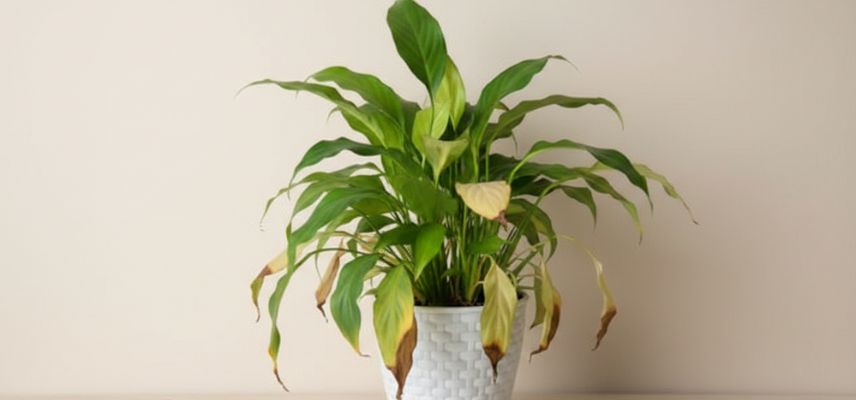
Foliage that yellows and wilts? Often a sign of overwatering.
Leaf spots
They appear as brown or black spots on leaves. Sometimes ringed with yellow, they are caused by fungi or bacteria. They can spread rapidly if air is stagnant and humidity is too high.
In that case, remove affected leaves immediately. Space out misting or avoid splashing leaves when watering to limit spread. If necessary, move the plant to another room. A spray treatment with nettle manure or horsetail helps strengthen plant defences. You can make it yourself by following our tutorial: “How to make nettle manure“.
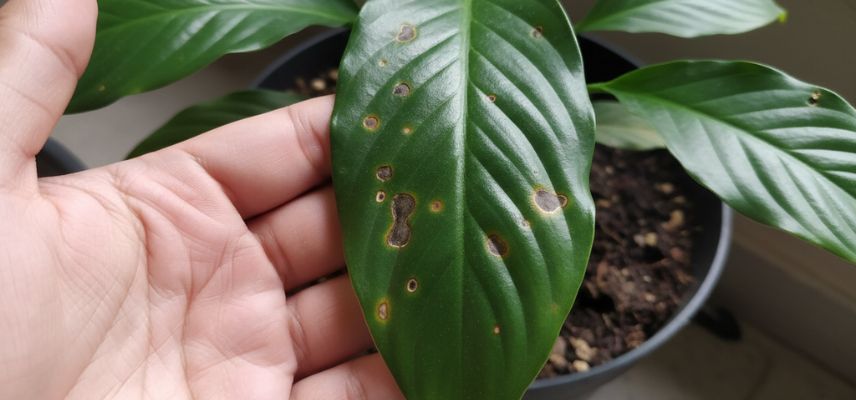
Leaf spot disease on a Spathiphyllum (AI-generated image)
Botrytis (grey mould)
Less frequent but possible, especially in winter, Botrytis shows as a greyish fuzz on leaves or stems. It attacks weakened or decaying tissues.
Remove affected parts, then improve air circulation around the plant. Do not let water stand in the saucer. A spray of garlic decoction, known for antifungal properties, can limit fungus development.
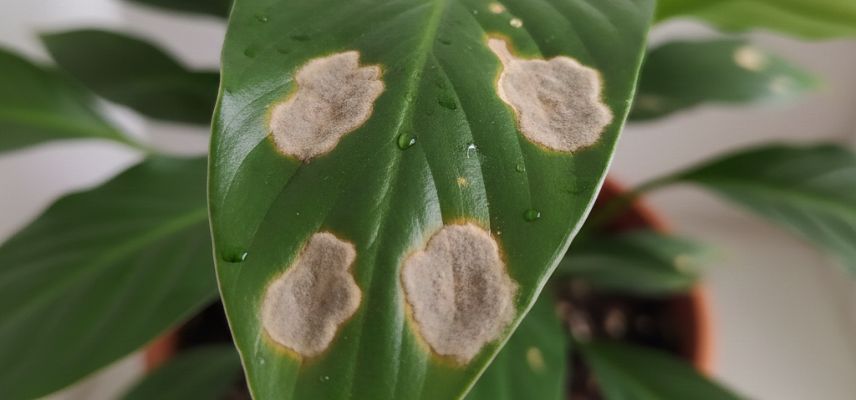
Peace lily leaf affected by Botrytis (AI-generated image)
Preventing peace lily diseases
A well-cared-for Spathiphyllum is naturally more resistant. To achieve this, follow our expert advice:
- Place the Spathiphyllum in a bright spot without direct sun, near an east- or north-facing window, or behind a light sheer curtain.
- Maintain adequate ambient humidity by misting foliage occasionally, but avoid water pooling in the pot.
- After watering, empty the saucer 15 minutes later.
- Use an airy, well-draining potting compost.
- Repot every two to three years your peace lily, or consider annual top-dressing to renew nutrients: each year replace surface compost in the pot with fresh potting compost to feed the plant.
- Always disinfect pruning tools to limit disease spread between plants.
- Do not leave dead leaves on the surface of the potting compost.
- A light feed in spring and summer with a houseplant fertiliser helps support growth and improve natural defences.
- Subscribe!
- Contents
This form is protected by reCAPTCHA - the Google Privacy Policy and Terms of Service apply.

































Comments