Diseases and pests of Phlebodium
Identification, prevention and natural solutions
Contents
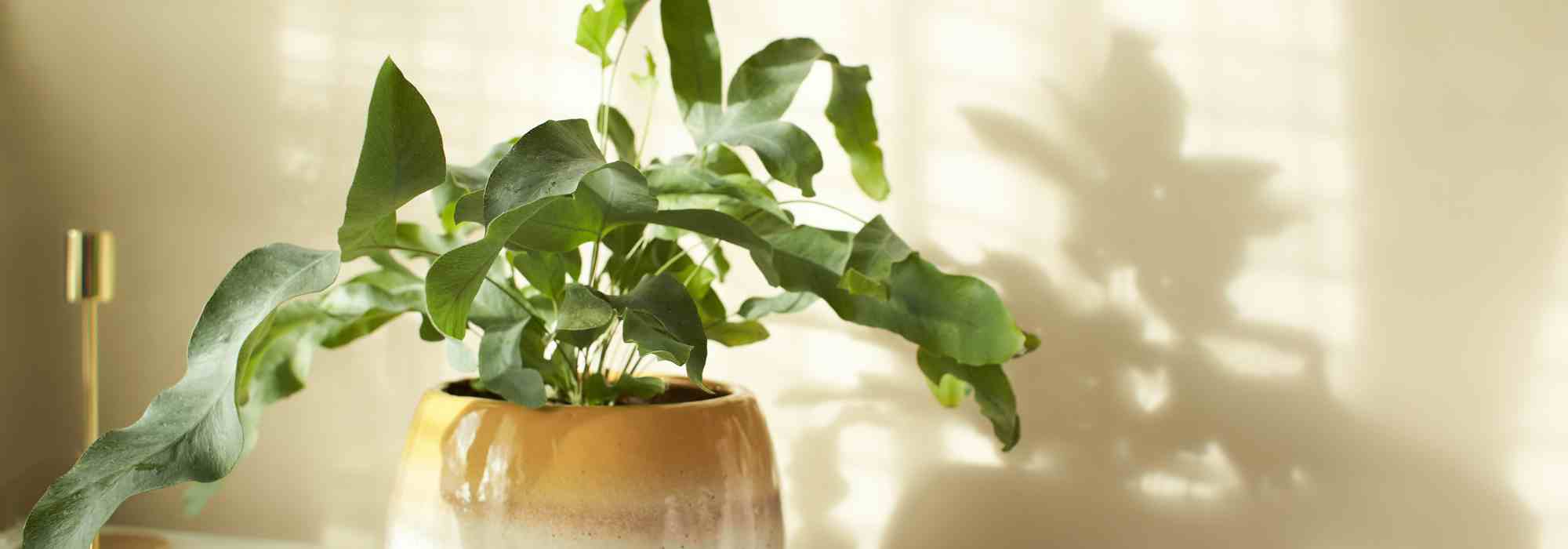
Phlebodium are houseplants valued for their distinctive, lobed, bluish foliage, as well as for their elegant silhouette. Also known as « blue ferns » or « golden polypodies », they are easy-to-care-for plants, ideal for damp rooms at home and requiring little maintenance.
However, they can in some cases be susceptible to diseases or pests that affect their appearance and health. We will look at how to identify symptoms, prevent risks and treat a Phelbodium naturally.
Parasitic organisms of Phlebodium
Phlebodium is not original in this respect: parasites affecting it are the same as those most commonly found on indoor plants. These are mites or sap-sucking insects that feed on sap. A few individuals do not endanger the plant but can cause aesthetic damage. Above all, they multiply easily and an infestation can, over time, seriously weaken Phlebodium. Finally, bites from these little pests can also open the way to other pathogenic agents, such as bacteria, viruses or fungi (fungal diseases).
Thrips
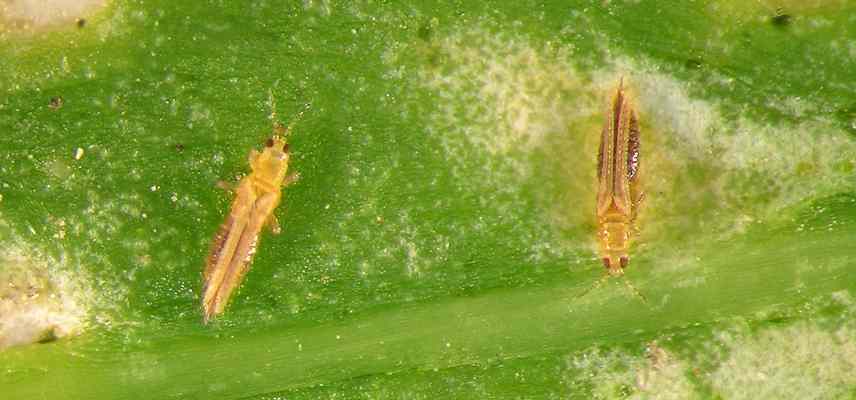
If thrips are generally among the most feared pests, it is because they are difficult to spot and eradicate. They are small black or translucent insects that often hide on undersides of leaves or along stems, coming out more when light levels are low. Symptoms are brown or silvery discolourations on Phlebodium foliage, and aborted development of new shoots. You will also notice small black dots, which are the pests’ droppings.
For more information: Thrips: identification and natural treatment.
Mealybugs
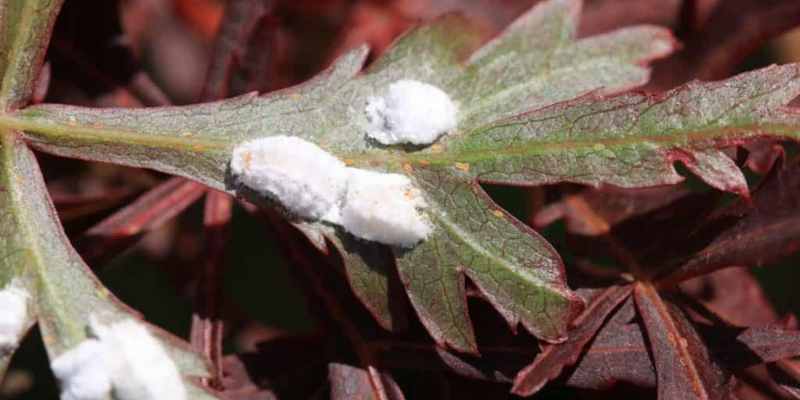
Their name gives a useful clue to their main characteristic: they are white insects with a cottony or mealy texture. Like thrips, they position themselves under leaves or along stems to feed on Phlebodium sap. Symptoms? Yellowing of foliage and overall weakening.
Mealybugs pose another problem: they produce honeydew, a sticky substance that allows a fungal disease to develop. This is sooty mould, which forms blackish sooty deposits on leaves and stems. This condition limits photosynthesis and thus affects plant health and development.
For more information: Mealybug: identification and treatment.
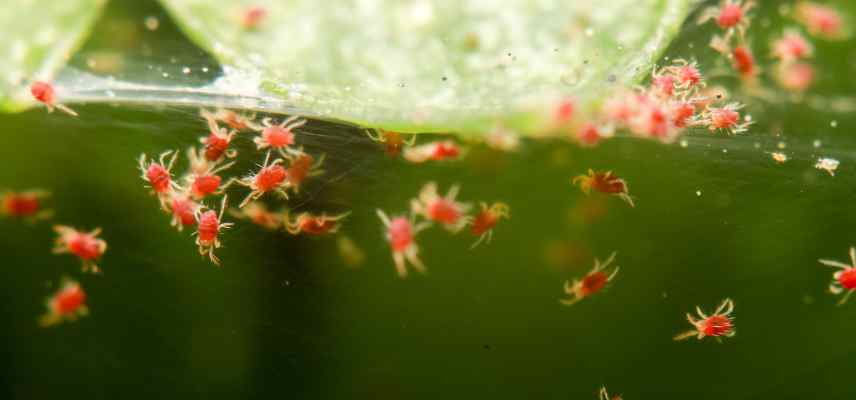
Red spider mites
These are tiny mites, barely visible to the naked eye. They cause leaf discolouration, which turns yellow to brown. Their presence is mainly detected by fine webbing, like spider silk, covering aerial parts of Phlebodium.
For more information: Red spider mite: identification and treatment.
Prevention against Phlebodium pests
First reflex is to inspect indoor plants regularly to detect any infestation early. It will be much easier to manage than once infestation is established. Take advantage of watering or dusting to check foliage (upper and lower surfaces) and stems.
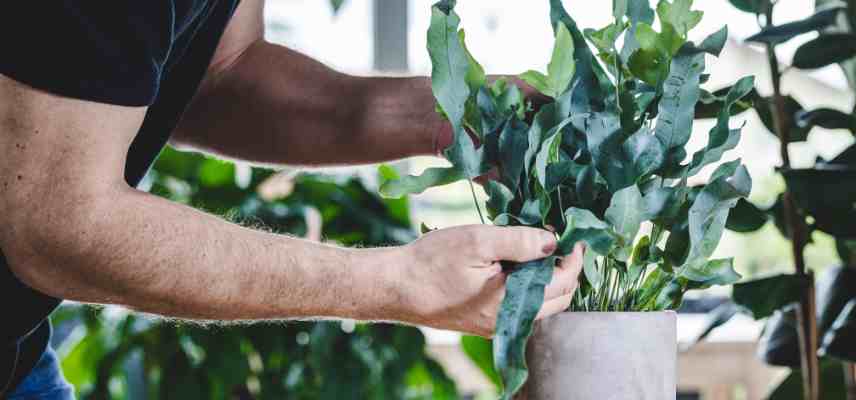
Most pests prefer warm, dry conditions but fare less well when humidity is high. This suits Phlebodium, native to tropical forests of Central and South America, which appreciates high humidity. To encourage a humid environment, you can spray room-temperature water on foliage. Additionally, place an organic mulch at fern base using plant husks or clay balls. Finally, placing plant in kitchen, bathroom or WC is generally a good choice.
Care for Phlebodium growing conditions. A plant with needs met is more resistant to pest attacks. Position plant in bright, indirect light, for example facing east, strictly without direct sun. Being epiphytic in its natural habitat (growing on trees rather than in soil), it needs a perfectly drained, light substrate that lets water run through. Provide fairly constant indoor temperature between 18 and 25°C: it cannot survive outdoors all year but can be placed outside during warm season. Also protect from draughts and proximity to heating appliances.
Natural solutions for pest attacks
Spotted early? Don’t panic — you can act before they proliferate. Place Phlebodium in shower tray or bath and spray foliage with shower to wash off unwanted visitors.
If they persist, choose a natural insecticidal treatment based on black soap. Mix 1–2 tablespoons of pure black soap into 1 litre of warm water. Let solution cool, pour into sprayer, shake, then spray mixture over foliage. Be sure to treat both upper and lower leaf surfaces. Treatment can be repeated if necessary after 7 days.
Cryptogamous diseases of Phlebodium
Phlebodium can also be affected by cryptogamous or fungal diseases, that is, caused by fungi. It is very often overwatering that will favour their development.
Root rot
It occurs if the plant is overwatered, placed in too heavy a substrate or if it sits in a saucer full of water.
This disease first affects the roots, causing them to blacken and soften. It then spreads to the rest of the plant, causing leaf drop and overall collapse. An unpleasant mouldy smell may also come from the soil.
Leaf spots
These are brown or black spots that appear on the foliage. In time, this disease can cause leaves to fall. The symptoms differ from browning at the tips of fronds, which is often caused by an environment that is too dry. Here it is an excessively humid atmosphere and a lack of ventilation that favour development of the disease.
Prevention against cryptogamous diseases
It is mainly poor growing conditions that will favour disease development in Phlebodium.
To begin with, it is essential to give the plant a suitable substrate at planting. Choose a mix made of one third potting compost for houseplants, one third orchid compost or pine bark and one third perlite or coarse sand. Prefer terracotta pots, which allow the substrate to breathe better, even though they require more frequent watering. Remember that the container, whether a standard pot, a trough or a hanging basket (fern and its trailing fronds being well suited to this use), must have drainage holes in its base. If there is a cachepot or a saucer, empty it 15 to 20 minutes after watering if water remains. Regarding watering frequency, the substrate should remain slightly moist, but never waterlogged. Water as soon as the top few centimetres of soil are dry. Prefer non-hard water: rainwater or filtered water.
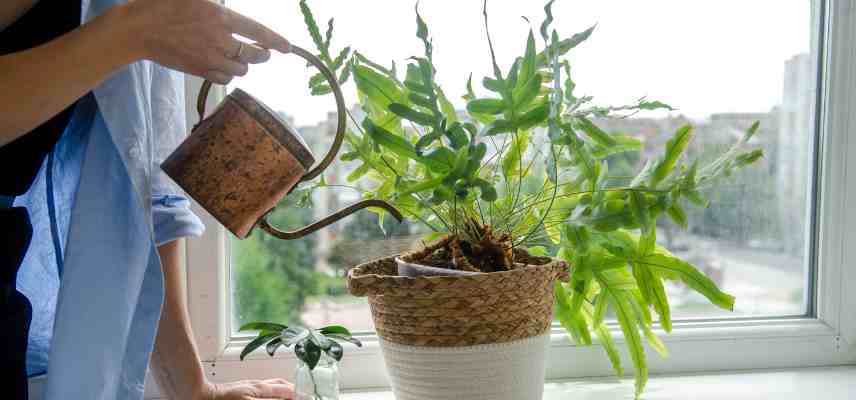
When watering, return the pot to its cachepot once the plant has drained
If you prune Phlebodium to remove dried or damaged fronds, clean your cutting tools beforehand with 70% alcohol. This limits the risk of disease spreading between plants.
Every two to three years, depending on Phlebodium growth, you can repot. At maturity, the plant usually reaches 1 metre in height with a 50 cm spread. In years without repotting, during the growth period between spring and autumn, you can apply fertilisers suited to houseplants or foliage plants. Be careful to avoid excess. Too much fertiliser can indeed make the plant more fragile, and therefore more susceptible to diseases or pests.
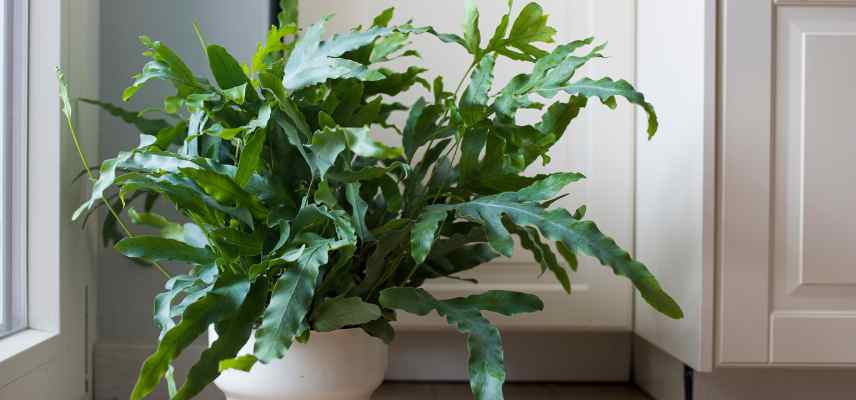
Repot regularly as the plant becomes more substantial over time
Natural remedies for diseases
In case of root rot, remove the plant from its pot and cut away affected parts. Then repot in a healthy, well-draining substrate. Reducing watering frequency will also be necessary.
In case of leaf spots, cut off affected leaves immediately to limit spread of the disease. Space out foliar misting and place the plant in a better-ventilated location.
There are no real cures for cryptogamous diseases. However, nettle manure is a natural product reputed for its fungicidal properties. It can be used on houseplants, both preventively and curatively. Ready-to-spray products are easily found in garden centres or online, but you can also make your own by following our tutorial: How to make nettle manure?
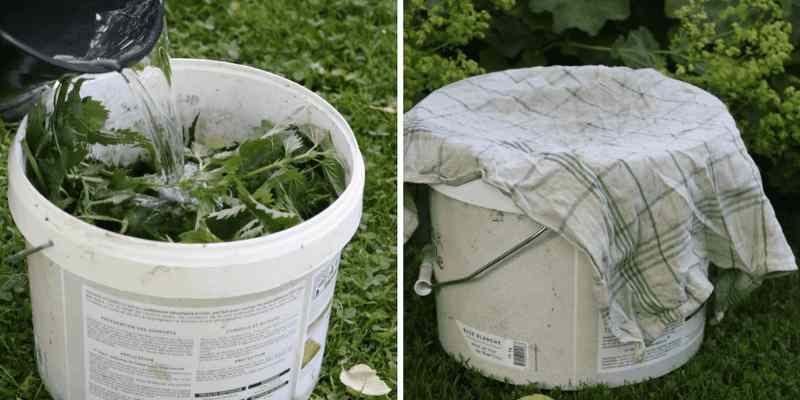
Spring is the ideal time to make your own nettle manure
- Subscribe!
- Contents
This form is protected by reCAPTCHA - the Google Privacy Policy and Terms of Service apply.

































Comments