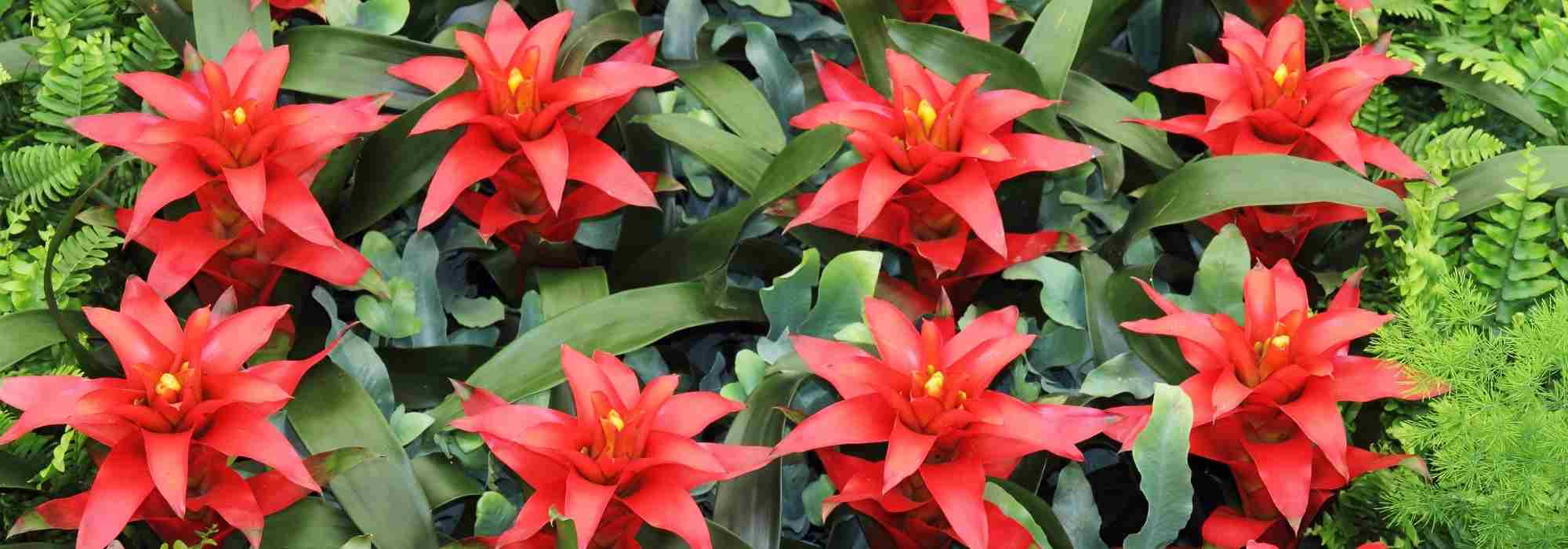
Guzmania: Diseases and pests to watch for to keep your plant healthy
How to care for Guzmania?
Contents
Indoor plant with attractive ribbon-like foliage and colourful bract-shaped inflorescences, often red, yellow or orange, Guzmania is prized for its exotic charm. Native to the tropical forests of Central and South America, this plant from the Bromeliad family also appeals for its relative ease of cultivation indoors. Dead flower on Guzmania or flower turning brown, as with all plants grown in pots, it can be susceptible to diseases or attacked by various pests.
Discover the proper treatment and prevention measures to keep your indoor Guzmania healthy.
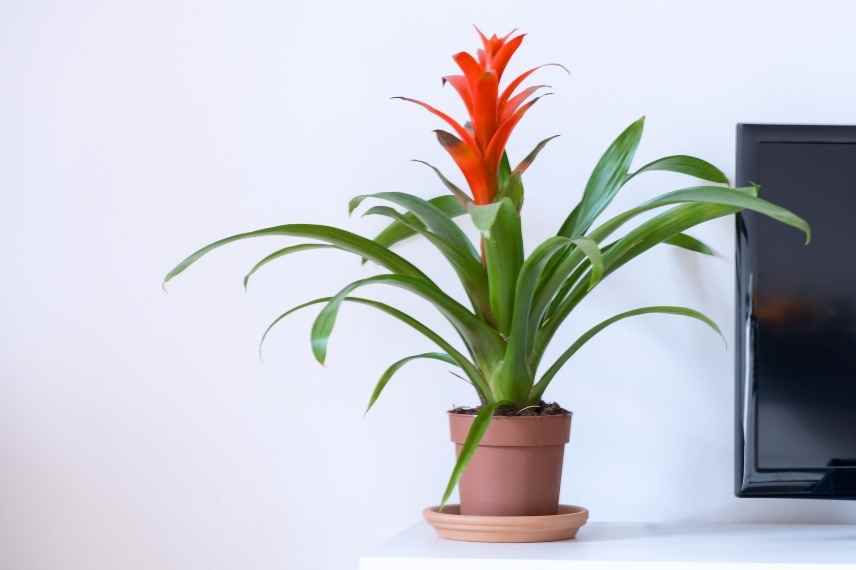
Guzmania is a plant with ribbon-like foliage and colourful inflorescences

Main diseases of Guzmania
Guzmania grows naturally in tropical, humid, bright but sheltered environments with constant air circulation. Grown indoors, it sometimes faces less ideal conditions: air that is too dry, stagnant excess water, lack of light or, conversely, exposure to scorching sun. These stress factors weaken plant and make it more vulnerable to cryptogamous diseases.
Root and rosette rot
One of the most common ailments of guzmania is rot of the root system and rosette, linked to excess moisture. In nature, this epiphytic plant absorbs water mainly through leaves thanks to a funnel-shaped rosette. In cultivation, overly frequent watering or stagnant water at the bottom of the pot create conditions favourable to the development of pathogenic fungi.
Symptoms
Rot can affect roots, which turn brown and soft, but also the centre of the Guzmania rosette, causing collapse of foliage and rapid dieback.
What to do?
To prevent this disease, use a pot with drainage holes and a light, very free-draining potting mix. Also ensure residual water can drain away. It is therefore essential not to let water stagnate in saucer or cache-pot. Potting mix should be moist without being waterlogged.
Watering should be moderate (once a week in summer, once every two weeks in winter), using soft, low-calcium water, poured directly into the rosette. This water should be regularly replenished to avoid prolonged stagnation.
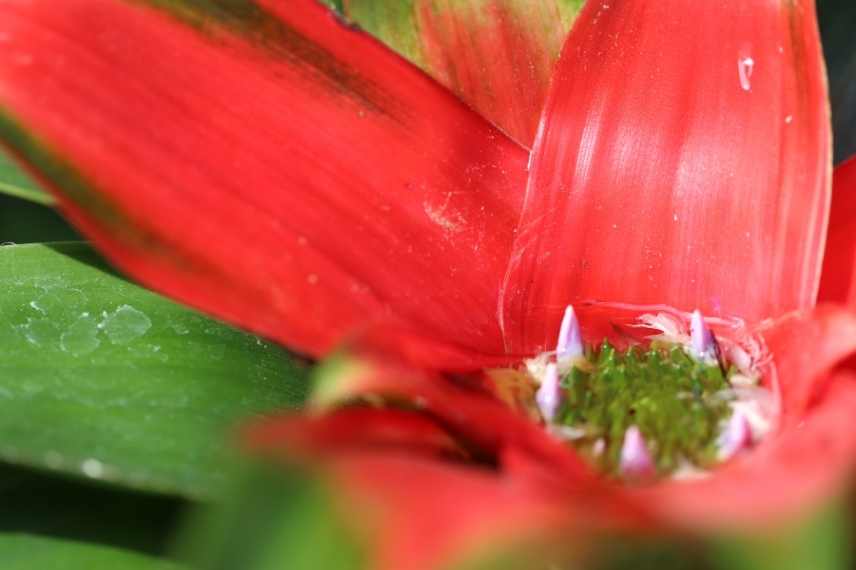
It is recommended to water moderately via the rosette or the flower
Guzmania turning brown
Aside from rot, Guzmania can be affected by various fungal attacks such as anthracnose or leaf spot diseases.
Symptoms
These fungal diseases show as brown spots, yellowish halos or lesions that spread over leaves. Symptoms often appear in conditions of high humidity combined with poor air circulation.
What to do?
To limit their appearance, place Guzmania in a bright, airy spot without exposing it to cold drafts. Remove affected parts and, if infection is limited, occasional biological copper-based treatments may suffice.
Leaves of Guzmania drying out
When leaf tips of Guzmania dry out, it is not necessarily a sign of disease. It is most often a reaction to growing conditions. Too-dry indoor air, especially in winter with heating, causes this leaf desiccation. Hardness of water used for watering can also exacerbate the problem, as can too-sunny exposure that slightly scorches leaf tips.
What to do?
This phenomenon is generally cosmetic and does not threaten plant health. Simply trim dry tips neatly with sharp scissors. At the same time, increase ambient humidity by misting foliage or placing plant on a tray of moist clay pebbles. Also use soft water to limit recurrence of the problem.
Dead Guzmania flower
Guzmania being semelparous, it dies naturally after flowering. This is a normal cycle for this member of Bromeliaceae, which also includes pineapple. When inflorescence fades, main rosette stops growing and eventually dries out. This process should not be confused with a pathogenic attack.
What to do?
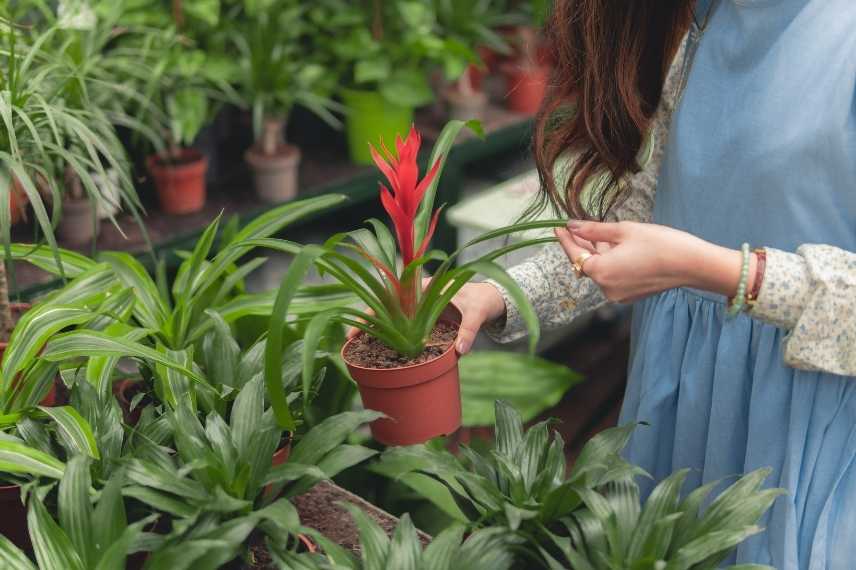
Guzmania being semelparous, it dies naturally after flowering
The aim is then to encourage development of offshoots that appear at the base and will allow continued cultivation. These young shoots can be detached and potted up separately once they have reached sufficient size.
Read also
Guzmania: care, planting, and adviceMost common pests of Guzmania
Like all houseplants, Guzmania can be attacked by pests that often appear under poor growing conditions.
Mealybugs
Among the most common pests of Guzmania, mealybugs are particularly feared. These small sap-sucking insects attach to Guzmania leaves and secrete a conspicuous white cottony substance. They weaken the plant by sucking its sap and promoting the development of sooty mould, a blackish fungal deposit that grows on the honeydew they excrete.
What to do?
- Regular inspection of the foliage allows detection of their presence at the first signs
- Cleaning leaves with a cotton bud soaked in 70% alcohol or diluted black soap remains an effective method. This treatment can be supplemented by spraying a solution made of water, 70% alcohol, black soap and vegetable oil. Use one teaspoon of each ingredient per 1 litre of water. This treatment can be repeated three times at weekly intervals
- In case of a heavy attack, plant pyrethrum, a natural insecticide, can be used.
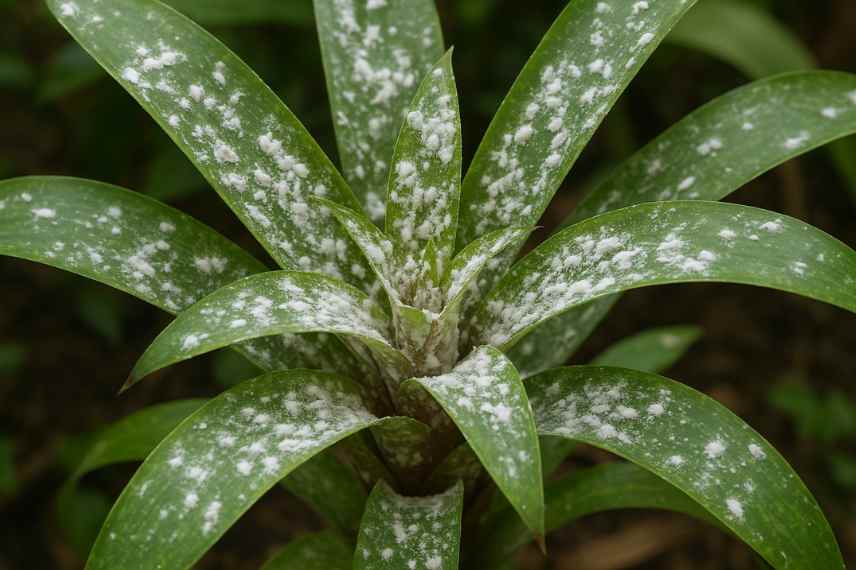
Heavy mealybug infestation on a Guzmania (Image generated by AI)
Aphids
The aphids can also colonise a Guzmania, especially during periods of high heat and active growth. They gather in colonies on young leaves or near the colourful bracts. Like mealybugs, they withdraw sap and weaken the plant while secreting honeydew that favours the development of sooty mould.
What to do?
A jet of lukewarm water may be enough to dislodge them initially. In case of a larger infestation, sprays of diluted black soap effectively reduce their numbers. Use a teaspoon per litre of water.
Red spider mites
In too dry and warm air, tetranychid mites, commonly called red spider mites, become a frequent problem. They cause fine yellow speckling on the leaves, which eventually dry out. Their presence can also be detected by fine webbing on the underside of the foliage.
What to do?
Increasing ambient humidity is the best preventive measure against these mites. Misting the foliage or placing a tray of moist clay pebbles under the pot improves the microclimate. If infestation is confirmed, cleaning with lukewarm water can stop their development.
Thrips
The thrips are small elongated black insects that attack both leaves and flowers. They cause discolouration, silver streaking and deformation of the foliage. Guzmania may lose vigour and its bracts may be damaged.
What to do?
Control relies on careful monitoring, removal of the most affected parts and the use of blue sticky traps to capture the flying adults. Treatments based on natural pyrethrum can be used in cases of heavy infestation, always observing safety precautions.
Tips for prolonging Guzmania's lifespan
The best way to protect a Guzmania against diseases and pests is prevention. A plant grown in good conditions is better able to withstand external threats:
- Placement in a bright room, out of direct sunlight
- Planting in a light, well‑draining potting mix in a pot with a drainage hole, bottom filled with clay pebbles
- Moderate watering, avoiding stagnant water in the leaf rosette
- Maintaining adequate humidity by misting or by placing the pot on a bed of moistened clay pebbles
- Regular airing of the room.
And above all, frequent inspection of leaves, underside of foliage and central rosette helps detect any abnormality quickly. The sooner intervention, the greater the chances of saving the plant.
- Subscribe!
- Contents
This form is protected by reCAPTCHA - the Google Privacy Policy and Terms of Service apply.

































Comments