How to attract beneficial spiders to your garden?
All our tips for creating a garden or vegetable patch welcoming to beneficial spiders
Contents
Spiders… does merely reading that word make you break out in a cold sweat? Rest assured, you are not alone, but I’ll try to help you make peace with these arachnids.
Often feared (unjustly!) or regarded negatively, spiders nonetheless play an essential role in natural gardens and vegetable gardens. They are valuable allies and beneficial organisms for regulating populations of pest insects. They hunt aphids, flies, mosquitoes and other parasitic insects without disrupting ecological balance. By attracting spiders to your garden, you rely on an autonomous, effective and sustainable biological control system.
Discover our tips to encourage spiders in your garden, create simple habitat features and avoid common mistakes.
Get to know beneficial spiders
Clearly, knowing what we fear helps change perspective. In life as in the garden! By learning to tell each spider species apart, understanding their role in the garden and discovering their life cycle, we see these arachnids in a different light. And above all, we understand that spiders are not only completely harmless but also essential for promoting and supporting biodiversity. Quite simply because they limit outbreaks of pests such as aphids, caterpillars, flies, certain small beetles… in their larval or adult stages.
Many spider species inhabit our gardens, and some are particularly useful:
- Diadem spider, with its large geometric web, is arguably the most visible. It often waits at the centre of its vertical web
- Crab spiders, often motionless on a flower, effectively capture flies and aphids
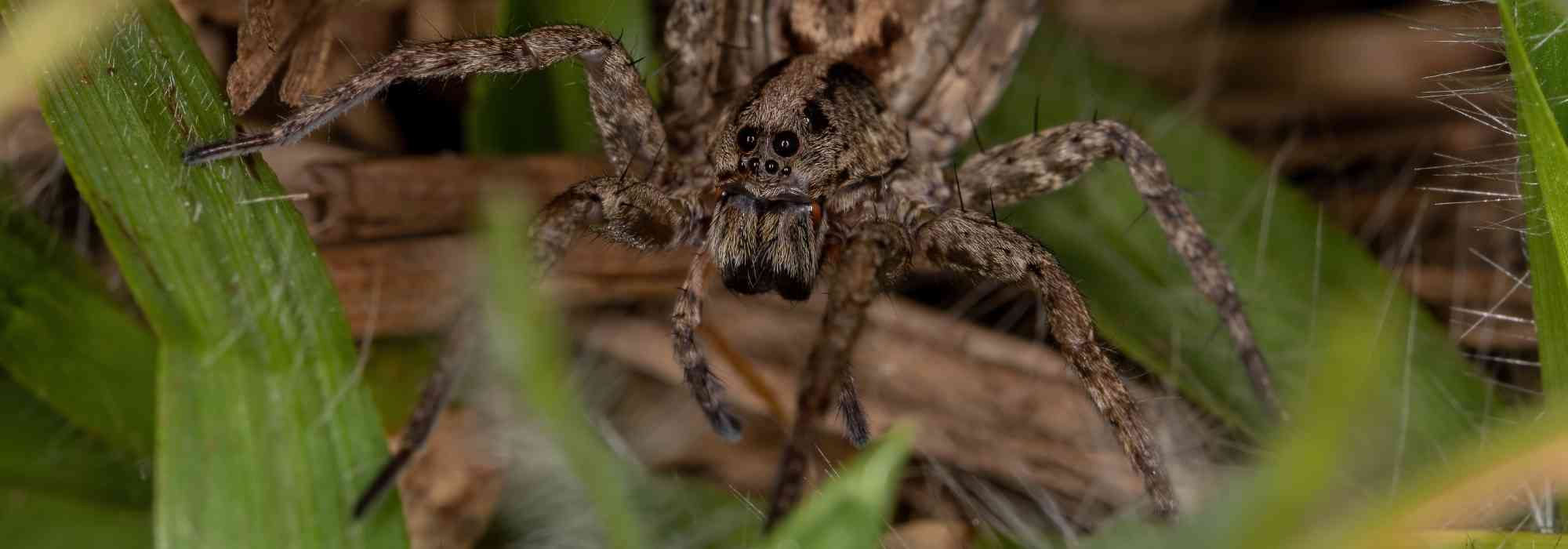
- Wolf spider (lycosid) hunts on the ground without a web, active at dusk
- Jumping spiders are also common: small, lively and curious, they move from leaf to leaf to find prey
- Green Micrommata spiders go unnoticed on foliage where they wait for prey
- Tegenaria spiders, recognisable by their long legs, are more common indoors, but can also be seen in vegetation
- Argiopes weave vertical, circular webs in meadows and copses.
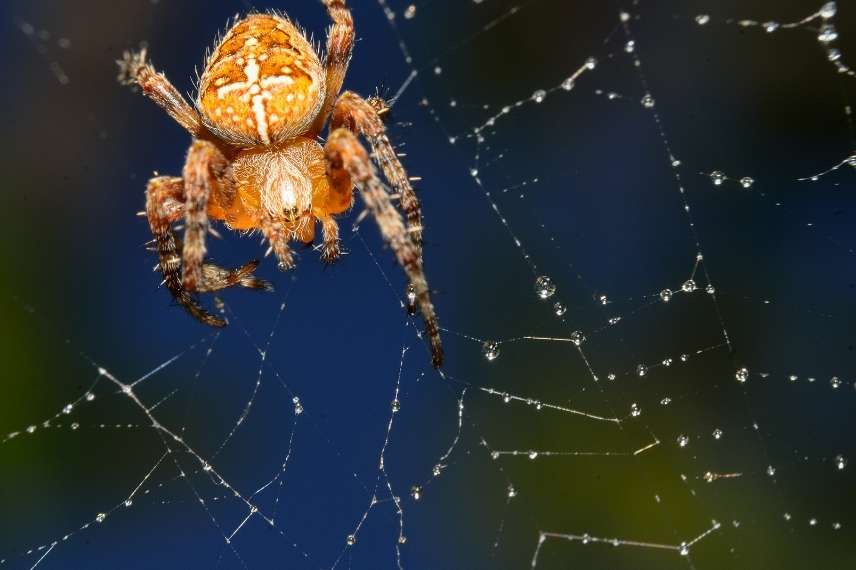
Diadem spider is arguably the most visible in the garden
None of these species pose any danger to humans and fully deserve their place in a natural garden. Only the European black widow, found in southern France and Corsica, is venomous, potentially fatal to people with allergies. Recognisable by its black and yellow colouring, it bites when disturbed.
Further reading : Spiders in the garden: why you should leave them be?
Create an environment conducive to biodiversity
Spiders favour gardens rich in varied vegetation, which provide shelter and food sources. It is therefore essential to encourage floral diversity by growing a range of species. Wildflowers, aromatic plants (sage, mint, lavender…), perennials, umbellifers (Apiaceae) and plants with structured foliage (carrot, parsley, celery…), leafy vegetables (lettuce, curly kale, kale…), attractive shrubs (elder, hawthorn…) are all elements that attract insects and offer ideal hiding places. You can also sow or plant companion plants renowned for their attractiveness such as coriander, fennel, borage, cosmos…
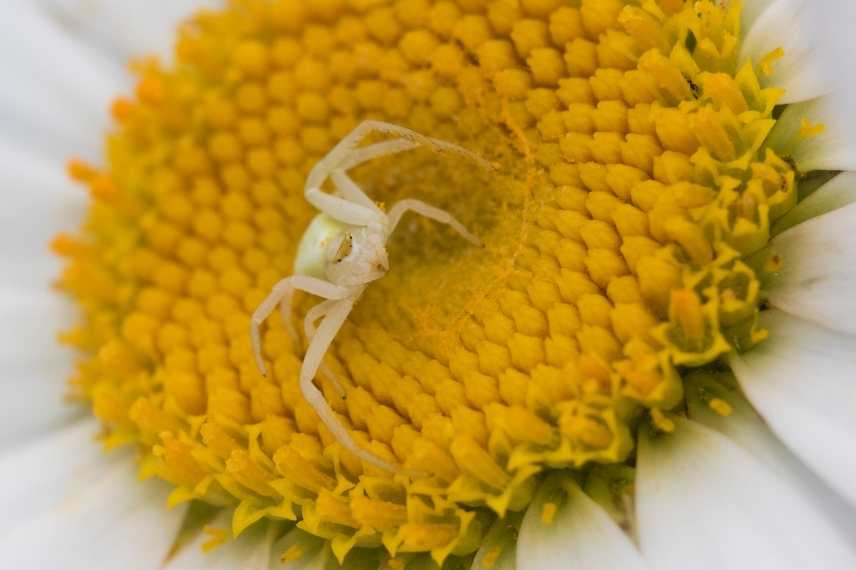
Crab spiders lie in wait on vegetation
Prioritise intercropping with green fertilisers (phacelia, white clover, alfalfa…) and flower strips between vegetable beds to attract both prey and spiders.
Tall grasses, unmown areas and deliberately “wild” spaces become essential hiding places for these discreet predators, allowing them to conceal themselves or build webs while providing varied prey.
Creating natural refugia
In addition to vegetation, spiders need quiet areas to spin their webs or hunt on the ground. Place simple elements in the garden such as :
- Flat stones, pieces of wood or stacked logs
- Bundles of cut stems, possibly hollow ones such as fennel stems
- A pile of dead branches
- Organic mulches of dead leaves or straw laid on untilled soil
- Simple insect hotels with natural cavities.
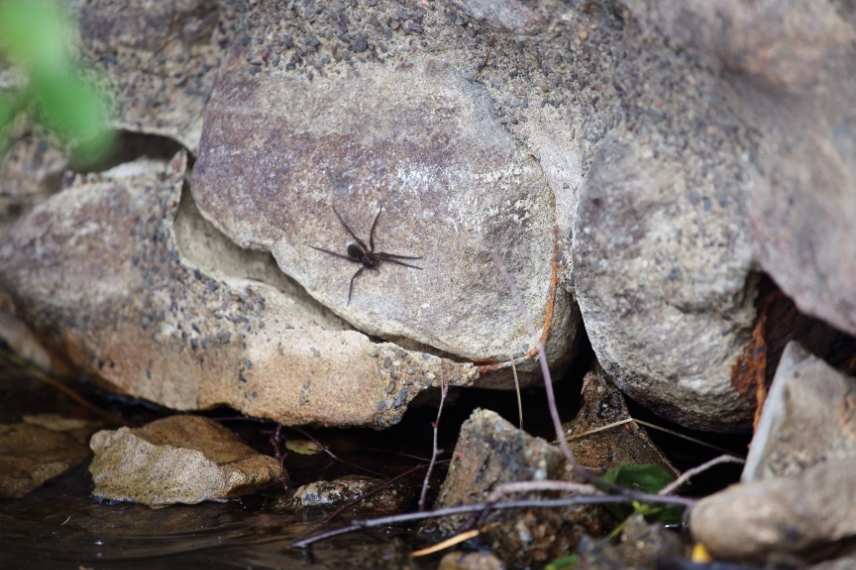
Flat stones are much appreciated by some spiders
These structures become safe refuges, especially in winter. All these elements are also effective, as they shelter different species, notably those that do not use webs to capture their prey. Avoid over-cleaning these areas at the end of the season: spiders find shelter there and sometimes breeding sites. Also, make sure to place these shelters in varied locations (shade, partial shade, near crops).
Reduce disturbances and chemical treatments
Spiders are very sensitive to plant-protection products. Even treatments described as “natural” can have devastating effects on their balance. It is therefore crucial to ban insecticides and weedkillers from the garden, or at least to limit their use drastically. To protect them and welcome them long-term, you should:
- Favour gentle control methods such as black soap, plant decoctions or plant manures that are not aggressive
- Spray these natural products in a very localised, targeted way, at night or early morning, outside web-building periods in spring and summer
- Accept a tolerated level of pests, as some caterpillars and aphids provide food for spiders
Also consider limiting mechanical interventions and unnecessary disturbance. The calmer and more stable a garden is, the more spiders will take up residence, build webs and regulate harmful insects for you. Avoid deep digging and intensive soil turning, heavy pruning and mowing, and favour manual, targeted weeding.
Encourage their presence all year round
Spiders need constant resources and shelter, even in winter. To encourage them to stay, leave some faded plants in place, mulch beds generously and keep some areas intentionally unmanaged.
In summer, make sure to keep a little moisture in dense areas: dewdrops are enough to keep them hydrated. A few damp stones or shallow dishes will suffice without risk of drowning. By regularly observing your garden you can monitor changes in spider populations and adapt your practices as the seasons change. They will be your most faithful allies if you provide a welcoming, stable environment.
- Subscribe!
- Contents
This form is protected by reCAPTCHA - the Google Privacy Policy and Terms of Service apply.

































Comments