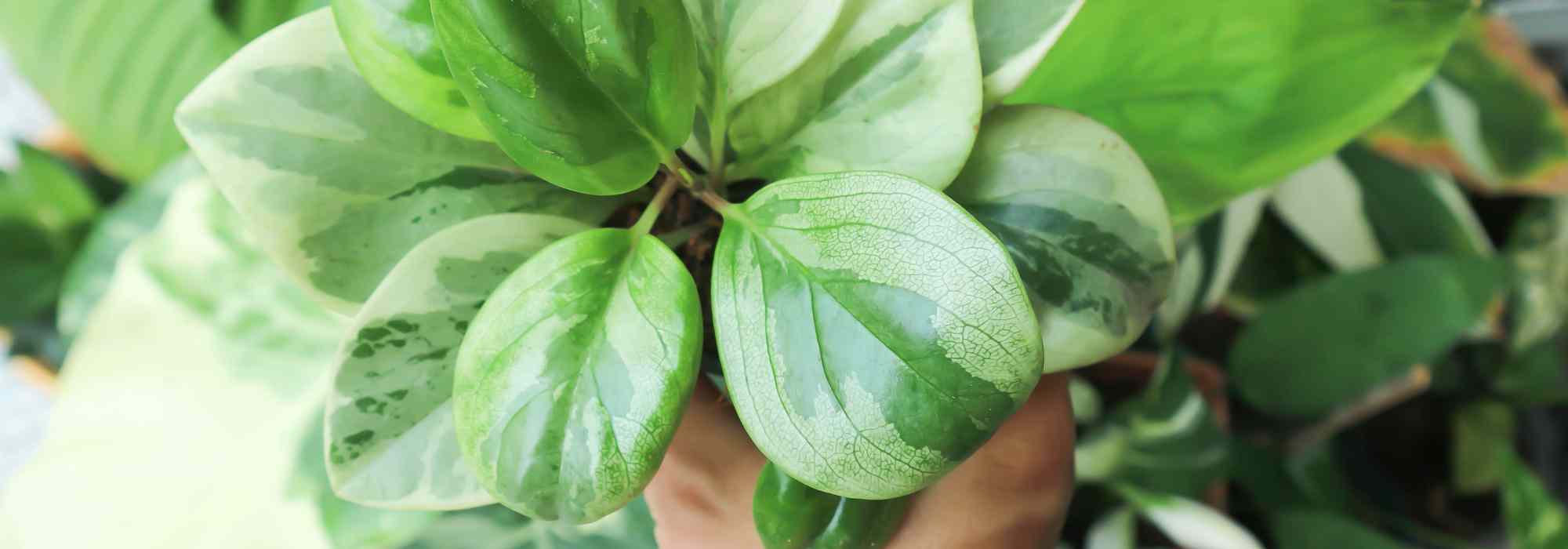
Peperomia: care throughout the seasons
Watering, light and appropriate care all year round
Contents
Peperomia, with its many species of tropical origin (more than 1,000!), is a common genus of houseplants in garden centres. They are mainly mat-forming or trailing species, and all are very easy to care for. To ensure healthy growth and an attractive appearance for your Peperomia grown in an apartment, house or greenhouse, it is essential to adapt care according to the seasons.
Repotting, feeding, pruning and handy tips… In this article we summarise the care schedule required by this charming houseplant.
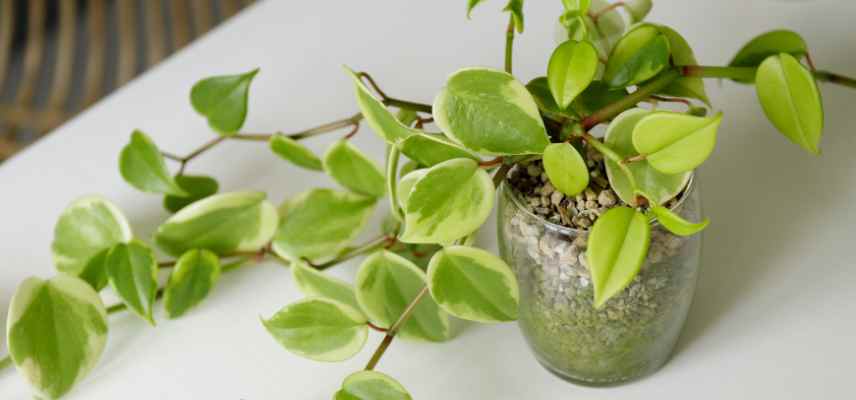
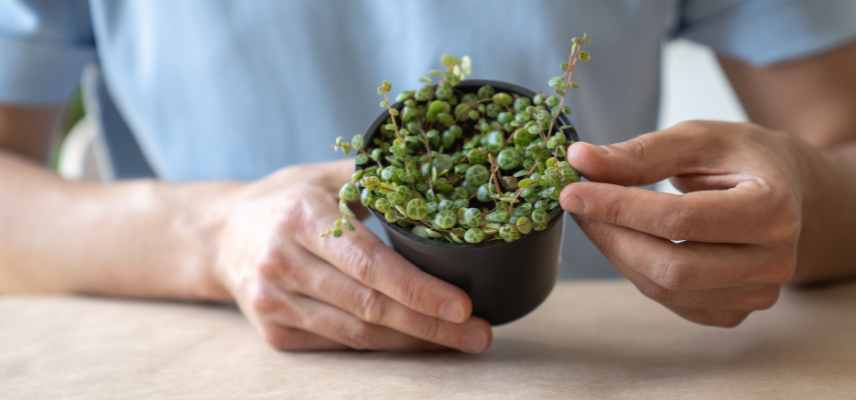
Peperomia scandens
Spring: resumption and active growth of Peperomia
Spring is the time when most happens in Peperomia’s life! It is a period of renewal for it as for many plants. It begins to produce new leaves and prepares for active growth.
- Resume watering : after a drier winter period, time to resume regular but always moderate watering for this plant that stores water in its thick leaves. Ensure compost is well drained and allow it to dry out between waterings (normally once a week). Preferably use rainwater, otherwise tap water at room temperature (this applies to all seasons).
Also keep atmosphere slightly humid until September. Try to recreate conditions Peperomia finds in its natural environment. Provide enough humidity by placing under its pot a container filled with clay pebbles and a little water.
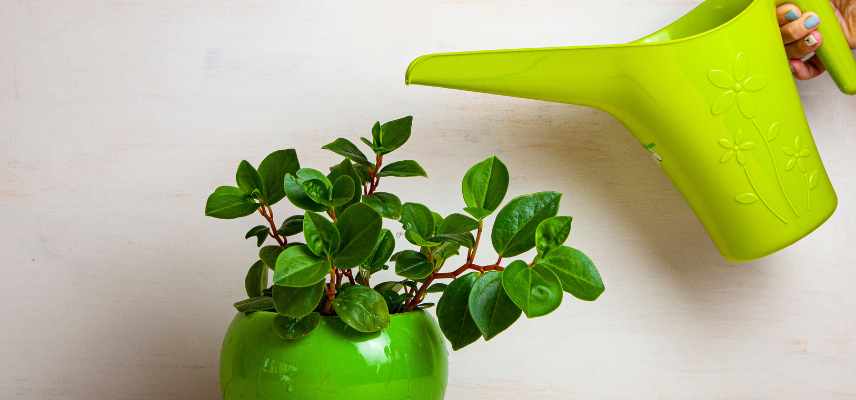
- Light exposure : in spring, your Peperomia needs a bright spot, avoiding direct sunlight that could scorch its leaves.
- Repotting : April is the preferred month for repotting. This is the time of year to repot a well-established Peperomia. However, this operation should be spaced out (generally repotting every three to four years is sufficient), as it likes having its roots a little confined. If necessary, when you notice signs of stress in the plant, repot it using a light, well-drained potting compost mix.
For more, see our tutorial: How to repot a Peperomia?
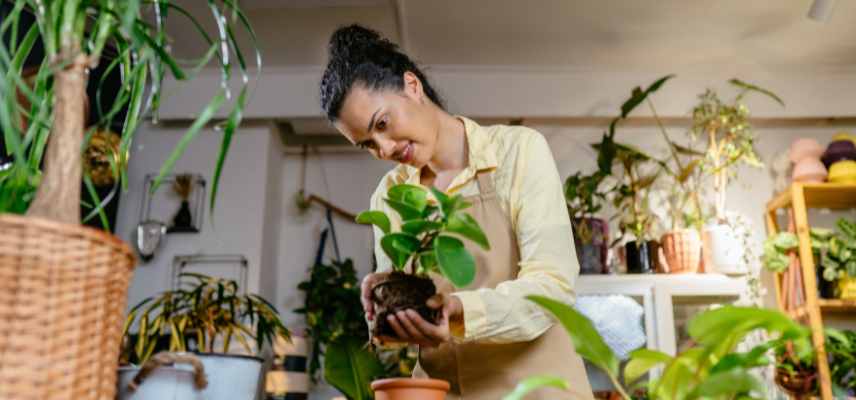
In April, repot a Peperomia several years old
- Fertilisation : only resume feeding your plant from May, using a balanced liquid fertiliser to encourage leaf growth. Fertiliser should always be applied to moist compost.
- Cleaning : with a soft cloth or cotton pad, gently clean each leaf that has accumulated dust over winter to promote photosynthesis, and regularly remove yellow or damaged leaves to avoid risk of disease.
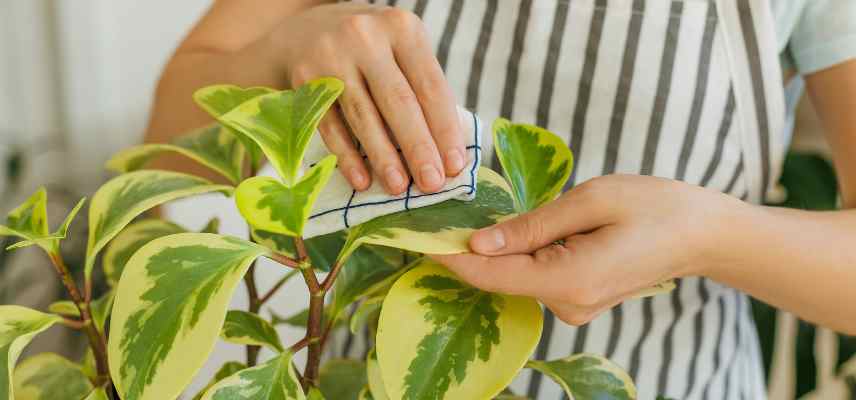
Very gently, remove dust that has accumulated on the leaves, allowing photosynthesis to work more effectively
Summer: flowering, pest prevention and pinching
During summer, Peperomia sometimes produces flower spikes and requires regular care to stay healthy. It should be given some ventilation on hot days by allowing air to circulate around the pot.
- Regular watering : keep substrate slightly moist, but avoid standing water to prevent root rot. Bear in mind Peperomia’s fine roots do not tolerate excess water. Watering once a week is normally sufficient. Bottom-watering is recommended in very hot weather, leaving the plant to drain thoroughly and ensuring no water remains in the saucer. Never mist this plant, as that could encourage fungal diseases. In summer, you can also place Peperomia on a tray or saucer of clay balls, which you should moisten. Peperomia will receive the moisture it needs by capillarity.
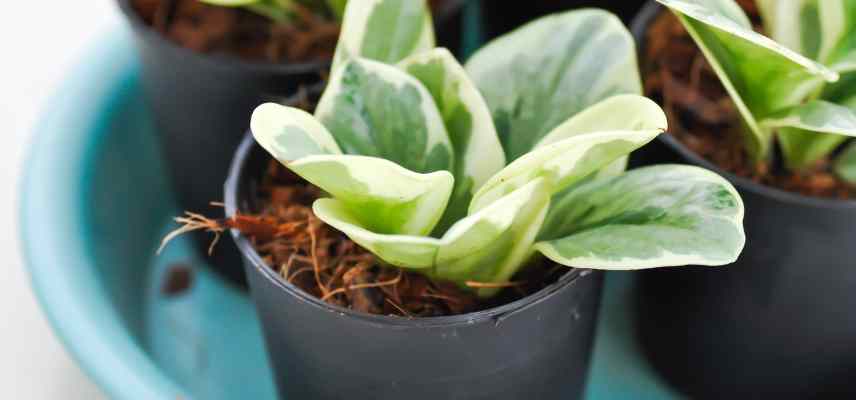
Capillary watering, such as bottom-watering, is useful in summer
- Taking outdoors and shading : many indoor plants, including orchids or crassulae, enjoy being outdoors in summer under suitable conditions. During hottest months, you can take Peperomia outside, always protecting plant from direct sun, especially during the warmest hours of the day. You will often need to provide shade if you give it a short stay outdoors, ensuring exposure to partial shade rather than direct sun, otherwise foliage will scorch quickly. Outdoors, always acclimatise it gradually from shade to partial shade.
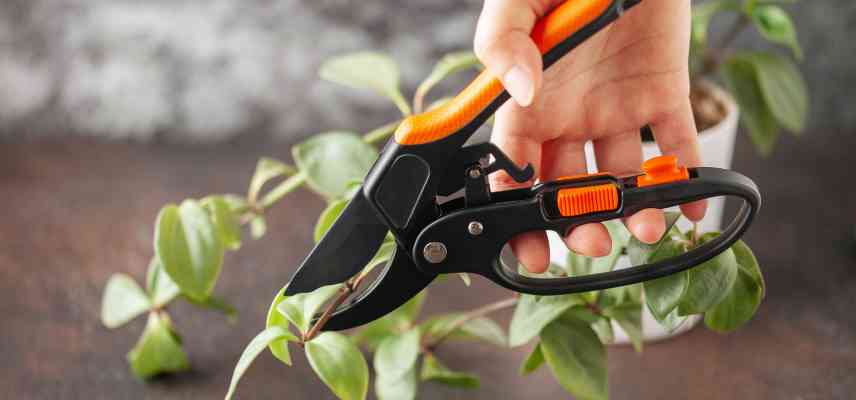
→ For more information, read Taking plants outdoors in warmer months: all our tips. - Pruning : at start of summer, carry out a light prune or rather pinch the tips of stems of trailing species such as Peperomia obtusifolia, Peperomia scandens and Peperomia magnoliifolia. Cut just above a node (leaf insertion point). This simple operation stimulates branching and thus produces a more compact habit. If done in early summer, use these trimmings as cuttings to propagate Peperomia!
- Ongoing feeding : continue feeding monthly until September to support growth and flowering.
- Pest monitoring : regularly inspect leaves for pests such as mealybugs or red spider mites. Mealybugs and aphids are generally more common during warm months, that is in spring and summer. These pests thrive in warm, humid conditions typical of these seasons. Plants are in active growth during these periods, providing abundant food for these insects. It is therefore important to check plants regularly and take preventive measures during these seasons to avoid infestations.
Autumn: preparing Peperomia for slowdown
Autumn marks the start of a period of transition and slowed growth for Peperomia. It is important to gradually reduce care.
- Moving indoors : Bring plant indoors if not already done. Once heating is on, monitor ambient air; Peperomia does not tolerate overly dry conditions. Maintain slight humidity in heated living space.
- Reduce watering : Reduce frequency of watering as temperatures fall. Water only every two weeks in autumn, then gradually every three weeks in December.
- Stop fertilising : Gradually reduce fertiliser applications to prepare plant for winter dormancy.
- Watch for signs of dormancy : Monitor signs of slowed growth and adjust care accordingly.
Read also
Comment to take a cutting of a PeperomiaWinter: rest and minimal care for Peperomia
In winter, Peperomia, like many houseplants, enters dormancy. Growth slows, water needs decline significantly and, logically, fertilisation stops.
- Minimal watering : water very lightly, only when potting mix is completely dry in the top few centimetres, typically every three weeks to once a month.
N.B.: in Peperomia scandens, excess humidity causes leaf drop in winter. To prevent this, use water at room temperature to slightly warm for all winter waterings. - Light: in winter, sunlight reaches interiors very differently. You can place Peperomia in different spots, as they need maximum light at this time. Position pot(s) in the brightest possible spot, avoiding direct sun.
- Temperature : keep Peperomia at a stable temperature, ideally between 15 and 20°C for most species. Avoid exposing it to temperatures below 10°C, which is a critical survival threshold. Peperomia scandens and Peperomia argyreia tolerate cooler temperatures, around 13°C, but never below. As in autumn, monitor ambient humidity and do not place Peperomia near a radiator.
- Avoid draughts : protect plant from cold draughts that could stress it.
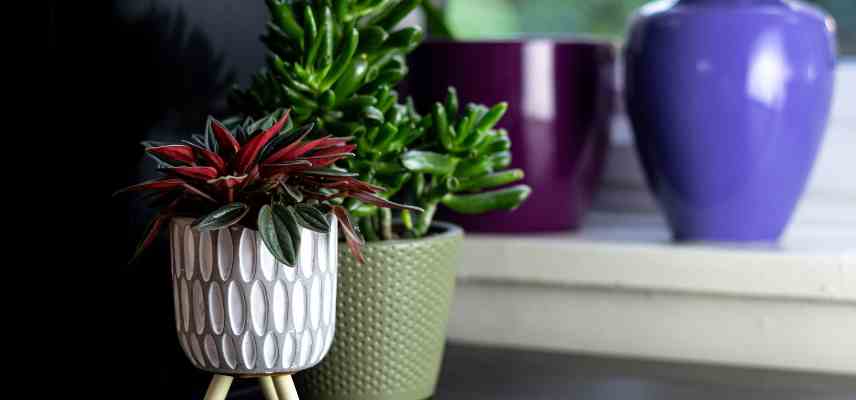
In winter, with reduced light, move pot as close as possible to a window
- Subscribe!
- Contents
This form is protected by reCAPTCHA - the Google Privacy Policy and Terms of Service apply.

































Comments