
Planting a tree on St Catherine's Day: a ritual to (re)discover
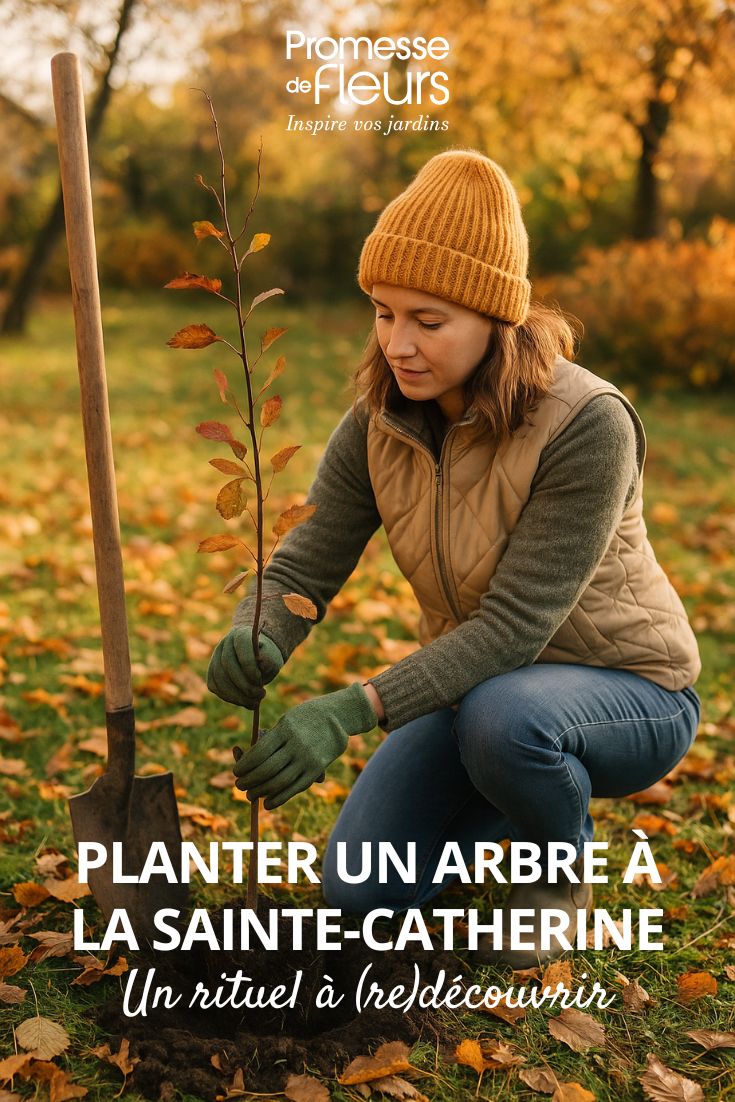
25 November is approaching... Planting a tree is a symbolic act
Contents
Autumn is undeniably here, and winter is already on its way. It is nature’s immutable cycle. For gardeners, 25 November, St Catherine’s Day, stands out. Marked in red in farmers’ calendars, celebrated with extravagant yellow-and-green headdresses by single people over 25, and, above all, enshrined in a popular folk saying, this date holds both an ancestral gesture and deep significance.
Indeed, far more than a gardening recommendation, planting a tree on St Catherine’s Day is a genuine symbolic ritual that allows one to look to the future and commit to preserving our environment. When rural wisdom meets ecology and belief in a bright future.

Behind a proverb, farmers' wisdom
At Saint Catherine’s, every wood takes root.” This famous saying, surely known to all gardeners, experienced or amateur, does not come from superstition or belief. Far from it. It is the outcome of several centuries of observation of nature and plant cycle by our ancestors. An observation summed up in a few words, not always understood by modern gardeners. Whatever the case, Saint Catherine remains ideal time to plant trees.
A period of vegetative dormancy
On 25 November, most trees and shrubs with deciduous foliage have lost their leaves. In practical terms, they have entered a period of vegetative rest or winter dormancy. This means they have completed their summer growth cycle. Sap no longer flows to leaves and plant concentrates nutrient reserves in roots and wood. This is the fundamental reason why this period around 25 November is favourable for planting trees and shrubs. Why ?
- Without leaves, a tree does not need to mobilise energy for photosynthesis or evapotranspiration. It therefore undergoes far less trauma, less stress when lifted and transplanted.
- A young tree or shrub will have all winter to develop its root system. In cool, moist soil, but not yet frozen deeply, roots can quietly branch out and anchor firmly.
- When spring returns and sap rises, a tree already well rooted is ready to burst into life. It benefits from better establishment and more vigorous growth than if planted later.
That said, no need to rush to spade on 25 November, in driving rain or bitter cold! This ideal period continues until March, because dormancy lasts throughout winter.
A tradition for bare-root trees
Historically, the saying specifically referred to practice of propagation by cuttings on dry wood, also called propagation by cuttings on dormant wood. This cutting method consisted of driving a simple lignified, denuded stem into soil so it would take root. Over centuries, the maxim widened to include all plantings of trees and shrubs, and in particular plants sold as bare roots. For more on propagation by cuttings on dormant wood : Propagation by cuttings on dry wood: when and how to do it?
More broadly, 25 November refers to planting of trees, fruit trees, roses and ornamental shrubs as bare roots. These plants, pulled from open ground, must be replanted quickly, while still dormant. That way they can better survive such sudden change. For further reading : Planting trees and bushes in bare roots

25 November marks start of bare-root plantings
Read also
10 good reasons to plant a treePlanting a tree: a symbolic gesture
Beyond the purely horticultural aspect, planting on St Catherine’s Day is a highly symbolic gesture. The tree, by its nature, is a universal symbol: that of life, strength, the connection between heaven and earth, and the passage of time…
The tree, symbol of rootedness in life
Planting a tree is no trivial act. St Catherine’s marks the start of winter, a period when nature seems asleep. Yet it continues to live, simply in a different way. Planting a tree at this precise moment is entrusting something precious and a new life to this nature that appears to have withdrawn.
By planting this tree that will take root in the soil, one shows belief in the future. Indeed, this young tree, even when without leaves, even in dormancy, even exposed to inclement weather and cold, will be reborn at spring’s return.
Finally, in many cultures, a tree is planted to celebrate a life event such as a birth, a wedding, or even a death. The tree thus becomes a tree of life and a witness to a family or personal story, passed down to future generations. For that may be the essence…

Planting a tree celebrates life and passes it on
A symbol of longevity
Of course, one plants a tree for oneself: to adorn a garden, to provide shade, to offer shelter and food to birds and insects, to harvest its fruit… But this planting goes far beyond that simple act. By putting a tree in the ground, one commits to sustainability. The tree planted today will only give shade and fruit at a time when the gardener may no longer be here. But children, grandchildren, or other men and women will benefit.
With this St Catherine’s ritual, there is no focus on immediacy or the ephemeral. It is about longevity, commitment, and passing things on.
Planting a tree, an eco-friendly act
In the current context of climate crisis and biodiversity loss, Saint Catherine’s ritual takes on a new resonance. Planting a tree becomes an ecological and activist act. Indeed, each tree planted is a gesture for the preservation of our environment.
Trees help fight climate change, as they contribute to reducing greenhouse gases in the atmosphere. Indeed, a tree absorbs and stores CO2 and releases surplus oxygen. Through this ability, a tree becomes a carbon sink, essential for climate regulation.
A tree is also a pillar of biodiversity, as it provides shelter, food and habitat for a multitude of insects, birds and micro-organisms. By planting local, well-adapted species, resilient ecosystems are recreated.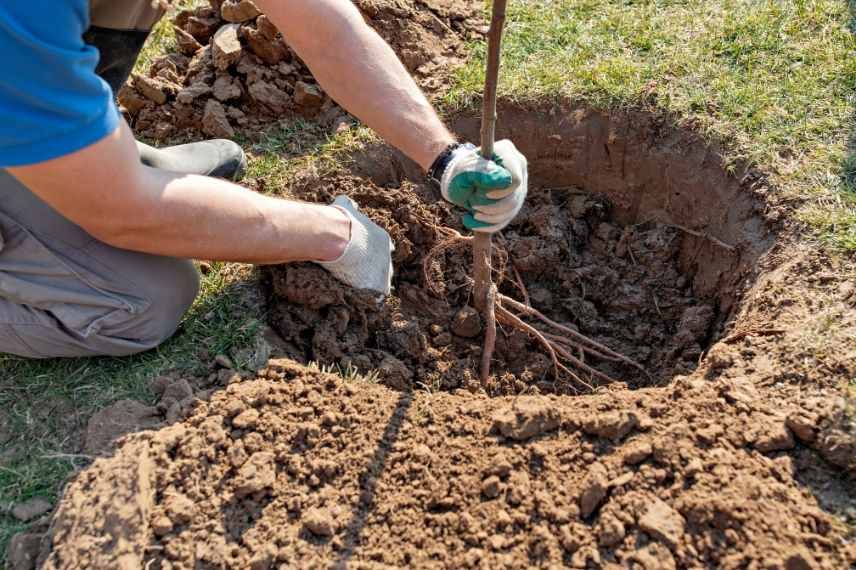
A tree can also be a food resource. By planting fruit trees, people move towards a form of food self-sufficiency.
Moreover, some municipalities and inter-municipal communities make this date a period of collective, eco-citizen mobilisation. For example, in 2025, the Métropole de Lyon, which comprises 58 communes, launched a scheme to distribute 2,000 free trees to plant at home. The aim was to green the urban area to cool the territory. The tree distribution took place on 22 November!
Read also
What is the best season to plant a tree?Don't take the saying at face value if you want your planting to succeed!
If the saying clearly refers to 25 November, planting your trees can wait… Indeed, St Catherine doesn’t work miracles! Successful tree planting is not solely linked to the calendar.
A few precautions should be taken :
- Avoid planting if soil is frozen or completely waterlogged. You must wait for the thaw or for better weather so soil is drained and not too cold. Practically, if soil sticks to your boots or is hard as a rock, better to wait for a more favourable time.
- The saying mainly applies to deciduous trees and shrubs planted as bare roots. By contrast, conifers and trees and shrubs with evergreen foliage are best planted slightly earlier, in October, or later, in March.
- Planting must be done carefully : dig a hole wide and deep enough, possibly a few days before planting. Then, loosen the base of the hole thoroughly and add some compost or well-rotted manure. When planting, remove damaged or broken root sections with a disinfected pruning shear, praline the roots, never bury the collar and water thoroughly to remove air pockets around the roots.
- Subscribe!
- Contents
This form is protected by reCAPTCHA - the Google Privacy Policy and Terms of Service apply.

































Comments