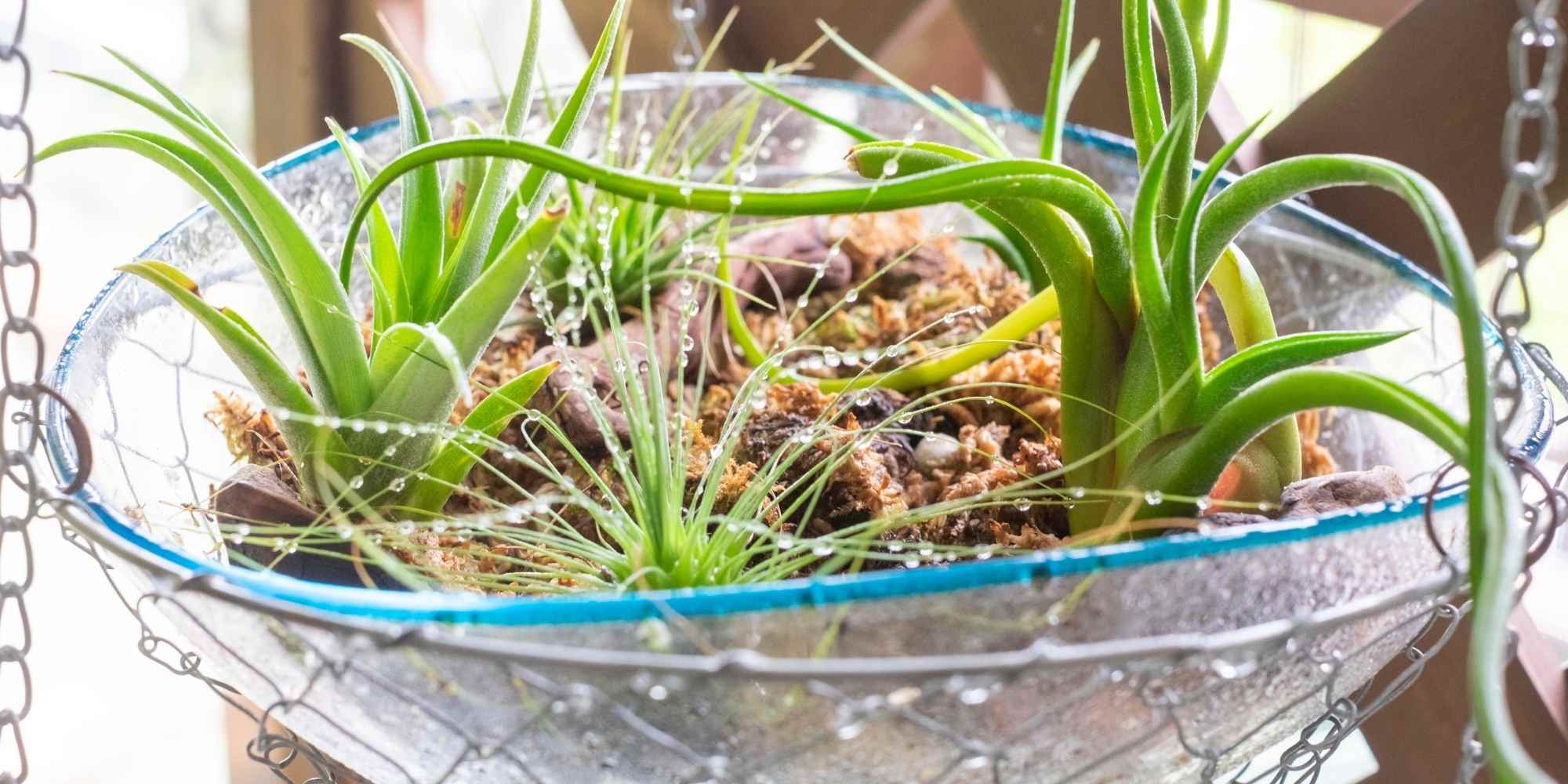
Tillandsia: how to care for it through the seasons?
Season-by-season care for this air plant
Contents
Tillandsia, poetically nicknamed “daughter of the air”, is a fascinating plant that challenges our traditional notion of gardening. A member of the Bromeliaceae family, this epiphytic plant has evolved to live without soil, drawing its moisture and nutrients directly from the atmosphere thanks to tiny silver scales called trichomes. Simply place it on a decorative mount or hang it.
Growing a Tillandsia means trading the watering can for a mister, and adapting care to this distinctive plant. Discover our complete guide to help your Tillandsia through the seasons.

Tillandsia, a distinctive plant
Before turning to the calendar, it is crucial to understand how this plant works. Unlike typical houseplants, Tillandsia is an epiphytic plant that owes everything to its leaves. They possess trichomes, i.e. absorbent hairs that capture water from dew or rain. When the plant is dry, they stand upright, giving a frosted or silvery appearance. When it is hydrated, they flatten, revealing the plant’s green colour.
Most Tillandsias also use a specialised metabolism that allows them to open their stomata at night to limit evaporation during the day.
Spring, season of awakening
Spring is the time when light returns and growth accelerates.
Light
Now is the time to move your plants closer to windows. An east-facing aspect is ideal: gentle morning sun warms plant tissues without dehydrating them. But Tillandsias can also be placed on west-facing windows. They need bright but filtered light. Beware of first direct sun rays which, through a window, can scorch tissues still tender after winter.
Watering
Return to a more regular routine after a period of restrictions! A weekly soak of 20 to 30 minutes in room-temperature water is ideal. Use rainwater or spring water, because chlorine in tap water eventually clogs trichomes.
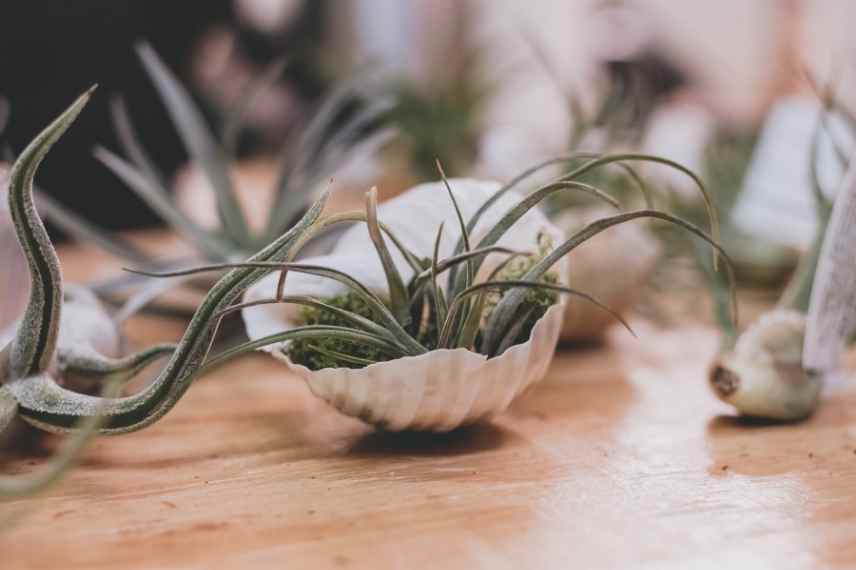
In spring, Tillandsia needs weekly soaks
Fertilisation
Now is the time to feed your plant. Use a special Tillandsia fertiliser, or, failing that, a special orchid fertiliser or bromeliad fertiliser, diluted to a quarter of the recommended dose. Spray this solution once every two weeks. This will stimulate spring flowering or production of offshoots.
Summer: managing heat
Summer is a period of rapid growth, but it requires increased vigilance on two fronts: temperature and humidity. The main challenge is desiccation. Tillandsia likes heat, but hates stagnant, scorching air.
Putting Tillandsias outdoors
If you have a garden or balcony and conditions allow, put your Tillandsias outside! Hang them in the shade of a tree or pergola; they will benefit from natural air movement and night-time humidity. They will love the temperature differences between day and night.
Watering
During a heatwave, you must mist Tillandsia daily, preferably in the evening or early morning. After a soak or heavy misting, Tillandsia must dry within 4 hours. If water remains in the centre of the rosette, the plant will rot from the inside. Hang it upside down after watering.
If leaves curl in on themselves or tips turn brown and brittle, your plant is dehydrated. Give it a soak lasting several hours.
Fertilisation
Fertilisation continues as in spring.
Autumn, preparation for rest
Autumn is a delicate transitional season. Temperatures fall and light levels drop. Prepare for winter’s return.
Moving back indoors
As soon as night temperatures fall below 10 to 12 °C, bring your Tillandsias indoors. Because this change of environment can cause stress, watch for appearance of pests such as farinose mealybugs that often take advantage of this transition to settle between tight leaves.
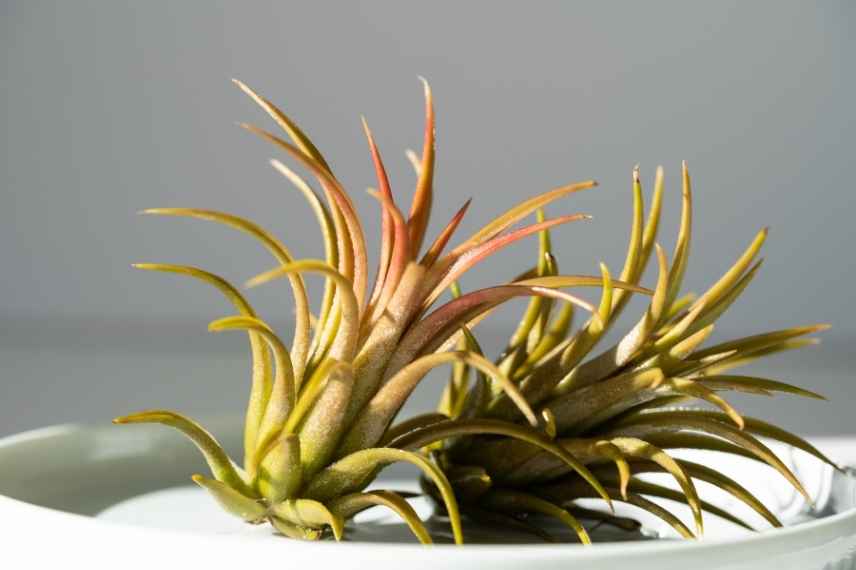
In autumn, inputs are reduced, fertiliser applications stopped
Gradual reduction of inputs
With light levels declining, the plant slows its activity. Reduce frequency of baths accordingly and switch to a soak every 10 or 15 days. As evaporation is slower, the plant needs less external input. It’s also time to stop any fertiliser application.
Winter: surviving in dry air
This is the most perilous season for indoor Tillandsias, not because of cold, but because of the heating.
Combating dry air
Radiators dry out the air in our homes, humidity is often below 30%, which is fatal for a Tillandsia.
-
Never place a Tillandsia above a radiator or heat source. Keep them at temperatures between 15 and 22 °C.
-
In winter, place it as close as possible to windows, south-facing if possible, as winter light is weak.
Winter watering
Prefer frequent misting to prolonged soaks. If air is very dry, a quick soak once a month is enough, provided the plant dries in a well-ventilated room.
Fatal mistakes to avoid
-
Use treated or softened tap water: the salt from water softeners kills Tillandsias.
-
Forgetting to dry: a wet plant that stays damp all night is doomed.
-
Lack of ventilation: Tillandsia needs air to circulate around it. Completely closed terrariums should be avoided.
What if your Tillandsia flowers?
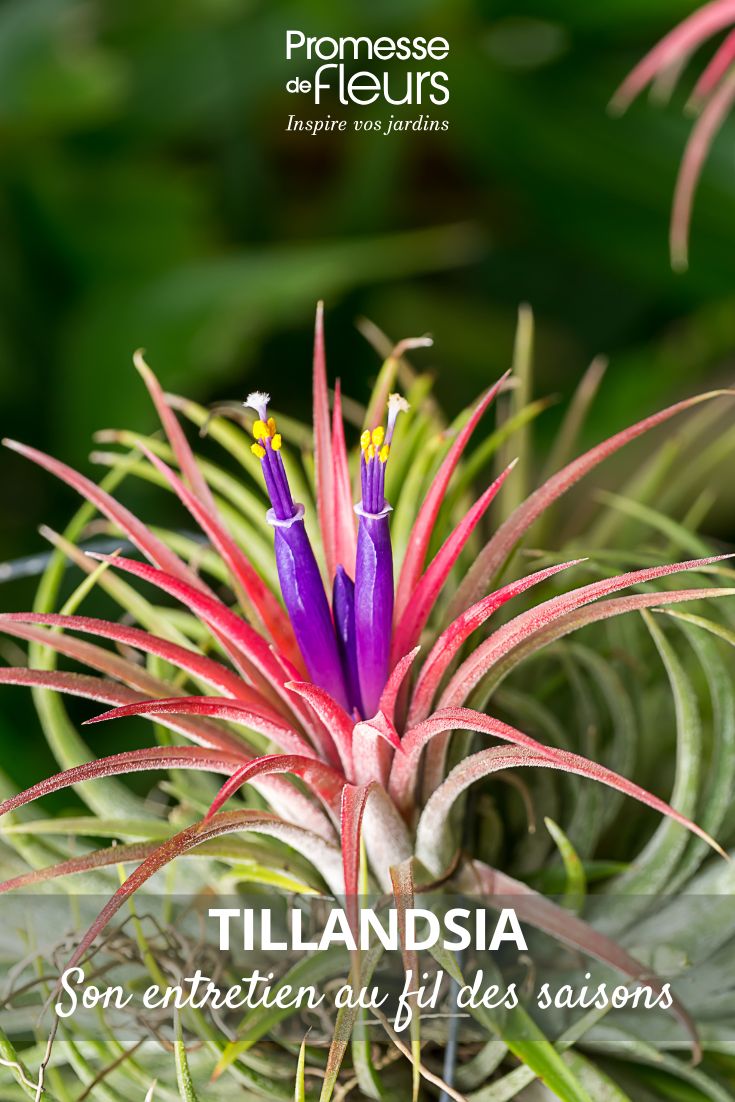
Tillandsia flowering is a spectacular but unique event: the plant flowers only once in its life.
- Some species have their central foliage change colour, often turning red or pink, to attract pollinators.
- The flower emerges from the centre. It can last a few days or several weeks. Avoid wetting the flower directly when watering to prolong its lifespan.

A flowering Tillandsia
- After flowering, the mother plant will slowly declinate over one or two years and stop producing new leaves. However, it will produce offshoots at its base to ensure its survival.
- You can leave the offshoots to form a beautiful clump, or separate them when they reach one third of the mother plant’s size. Cut one off with a sterilised blade. The young Tillandsia will then begin its own life cycle.
- Subscribe!
- Contents
This form is protected by reCAPTCHA - the Google Privacy Policy and Terms of Service apply.

































Comments