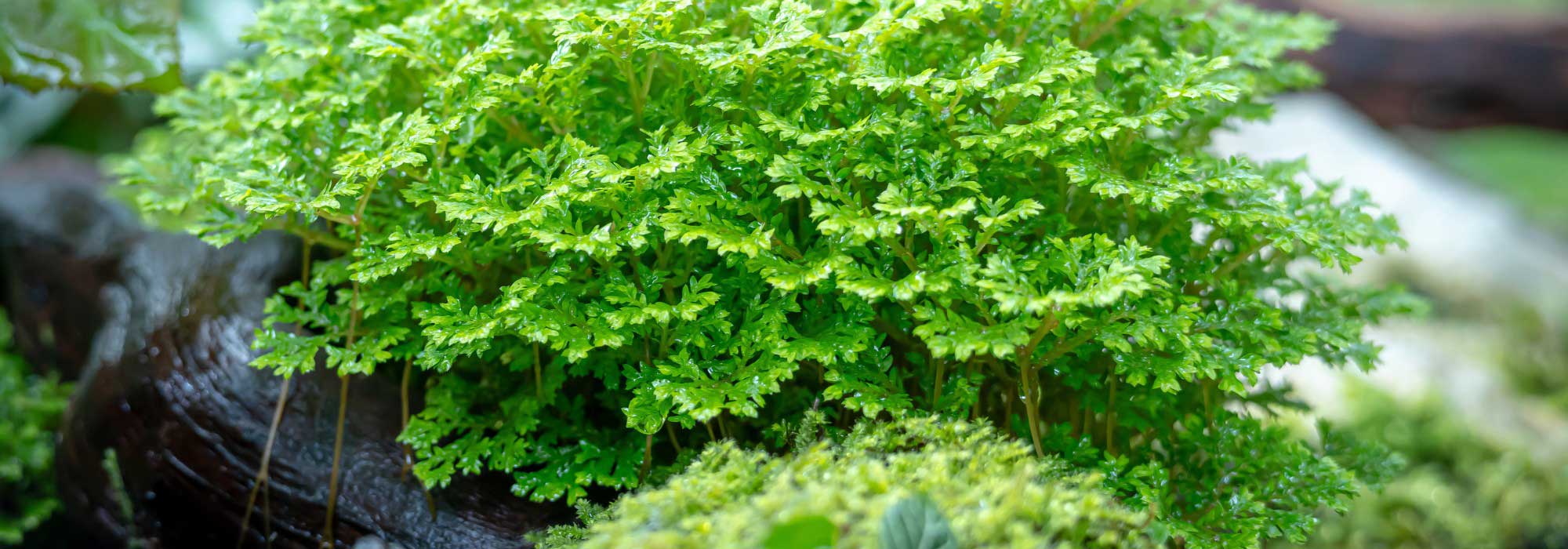
How to grow and care for indoor Selaginella
Contents
Indoor Selaginella in a nutshell
- Selaginella charms with finely divided foliage
- With its creeping habit, it quickly forms a luxuriant carpet
- It brings a sense of coolness and greenery, perfect for creating a woodland atmosphere
- Well suited to dimly lit rooms, it fits easily indoors
- Ideal for terrariums and tropical arrangements
A word from our expert
Indoor Selaginella is a little-known plant, highly decorative thanks to its delicate, finely divided foliage that closely resembles moss. It belongs to a very ancient botanical group, the lycophytes, which appeared long before flowering plants. It charms with its dense, carpet-forming appearance, supple texture and intense green, sometimes tinged with bluish, golden or bronze highlights depending on species. It immediately brings a sense of freshness and a damp woodland understorey, making it an ideal plant for creating a natural, calming atmosphere in the home.
Selaginella is particularly suited to low-light environments and rooms where humidity is relatively high, such as bathroom or kitchen. It is perfect in terrariums, and in plant arrangements combining ferns and other understorey plants. Its low, spreading habit makes it useful as a decorative groundcover in large containers or at the base of taller plants.
Selaginella requires a good understanding of its natural needs: constant humidity, dappled light and a growing medium that remains slightly cool. When given suitable conditions, it quickly forms a lush, long-lasting carpet.
Discover all the characteristics of this plant, the different Selaginella species grown indoors, and our advice for successful planting, care and propagation.
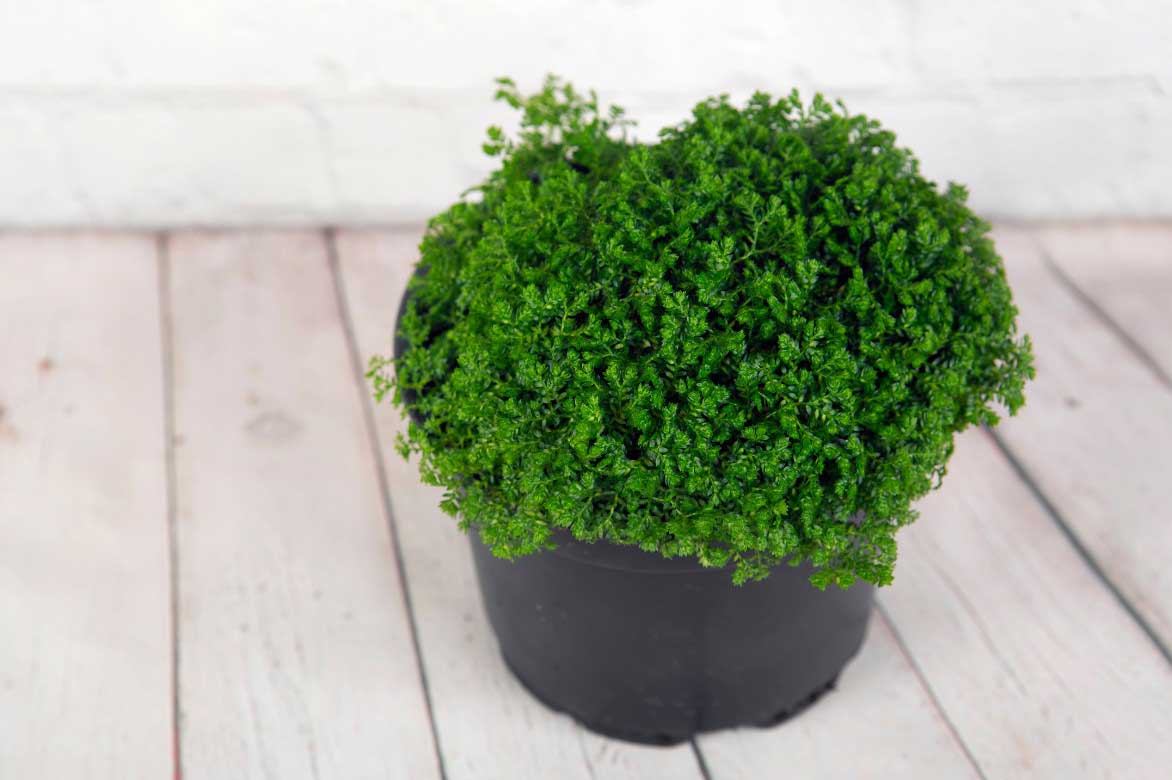
Selaginella martensii
Description and botany
Botanical data
- Latin name Selaginella sp.
- Family Selaginellaceae
- Common name Selaginella
- Flowering None
- Height 5 to 15 cm depending on species
- Exposure bright, indirect light, avoid direct sun
- Soil type light, rich in organic matter, moist and well drained
- Hardiness Tender, does not tolerate frost
Selaginella belongs to genus Selaginella, which includes more than 700 species distributed worldwide. It is part of family Selaginellaceae and of group of lycophytes, primitive vascular plants that appeared more than 300 million years ago. Botanically, they are quite close to ferns, and reproduce like them by spores, producing neither flowers nor seeds.
Selaginella species are mostly native to tropical and subtropical regions of Central and South America, Africa, Southeast Asia and some areas of North America. They develop mainly in moist understoreys, sheltered from direct sun, on soils rich in organic matter. In natural habitat they often grow at ground level, forming dense groundcover mats on shaded terrain, along rivers, at tree bases or on damp rocks. This origin explains their marked preference for high atmospheric humidity and filtered light when grown indoors.
Most species grown as houseplants are not very hardy. They do not tolerate frost and suffer once temperatures fall below 10 °C. Ideal growing range is generally between 18 and 24 °C. Some species from temperate regions can tolerate occasional cooler temperatures, but Selaginella remains overall a tender plant. In temperate climates, it is therefore cultivated exclusively indoors or in a greenhouse.
Selaginella displays a low, creeping or slightly trailing habit depending on species. It quickly forms a compact mat thanks to fine, flexible stems that spread horizontally. These stems can root where they contact substrate, thus favouring expansion.
Indoors, the plant generally reaches between 5 and 15 cm in height, with a spread of 20 to 30 cm or more in good conditions. Growth is relatively fast if humidity is adequate. Overall appearance is very dense, almost moss-like. This compact texture makes it an excellent groundcover in planted compositions.
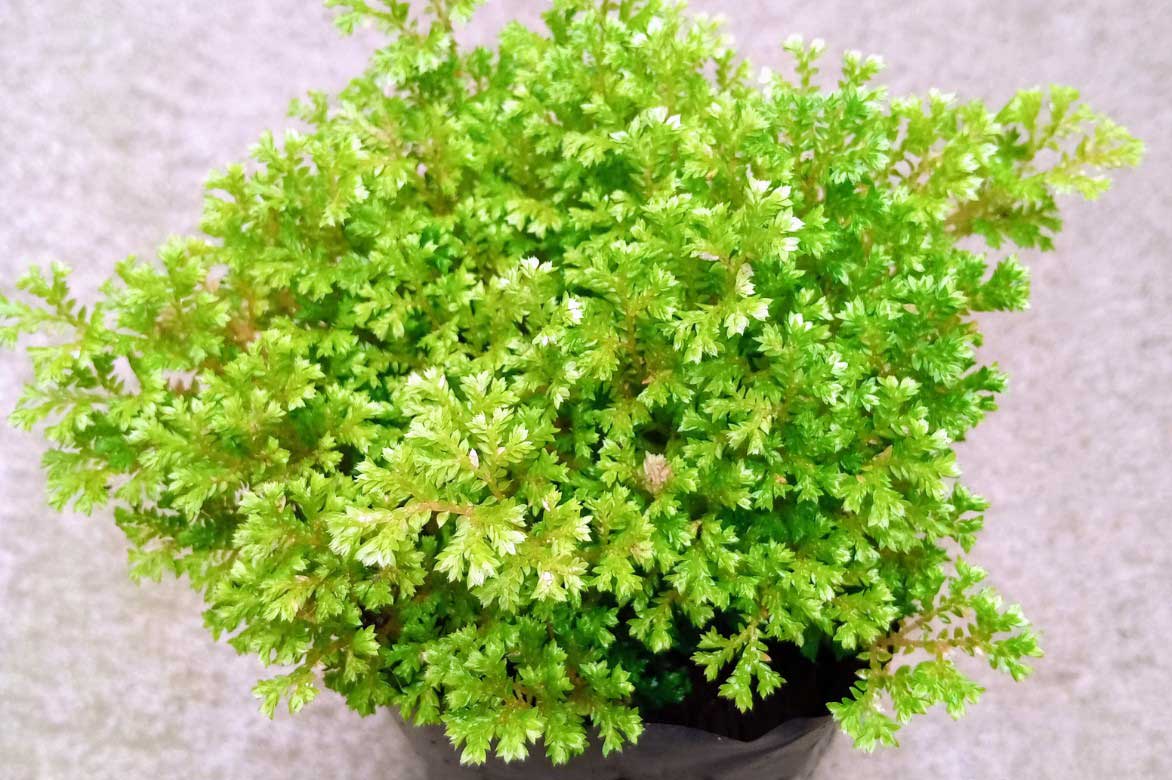
Foliage is Selaginella’s main attraction. Leaves are very small (a few millimetres) and are arranged imbricately along stems. They are oval or scale-like and have a fine, delicate texture.
Depending on species and cultivars, foliage comes in rich shades of green: it can be light or dark green, bright emerald green, tinged with bronze or gold, or iridescent with metallic blue reflections. These iridescent highlights, particularly spectacular in some tropical species, are due to microscopic structure of leaf cells that reflect light.
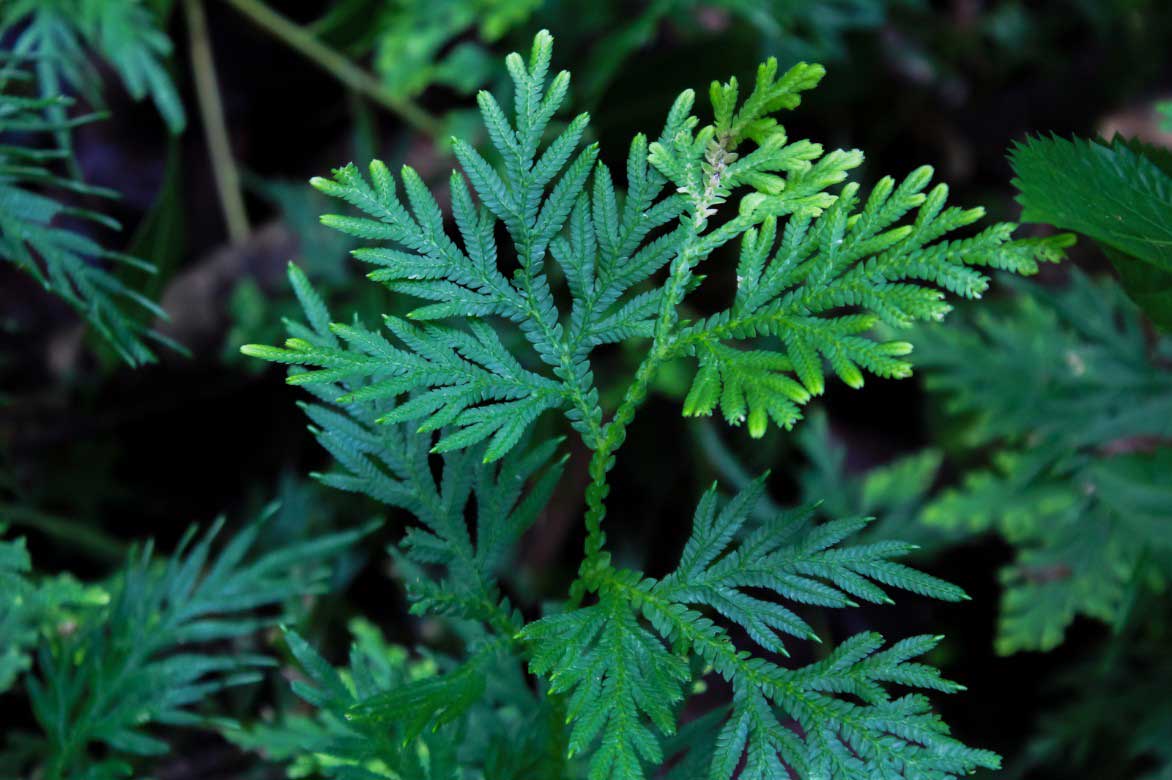
Selaginella doederleinii
Selaginella has a shallow, relatively fine root system. It also develops rhizophores, specialised structures capable of producing roots when they contact soil. This characteristic favours development into a dense mat and explains ease of propagation by division.
Unlike flowering plants, Selaginella produces neither flowers nor seeds. It reproduces by spores, an ancestral reproductive mode shared with ferns and mosses. Spores are produced in structures called sporangia, grouped in discreet terminal spikes. When cultivated, Selaginella is most often multiplied by division of clumps or by propagation by cuttings of stems.
Some Selaginella species, such as Rose of Jericho, Selaginella lepidophylla, possess a remarkable ability called reviviscence. They can enter dormancy during extreme drought, their tissues becoming almost completely dehydrated, then revive after rehydration.
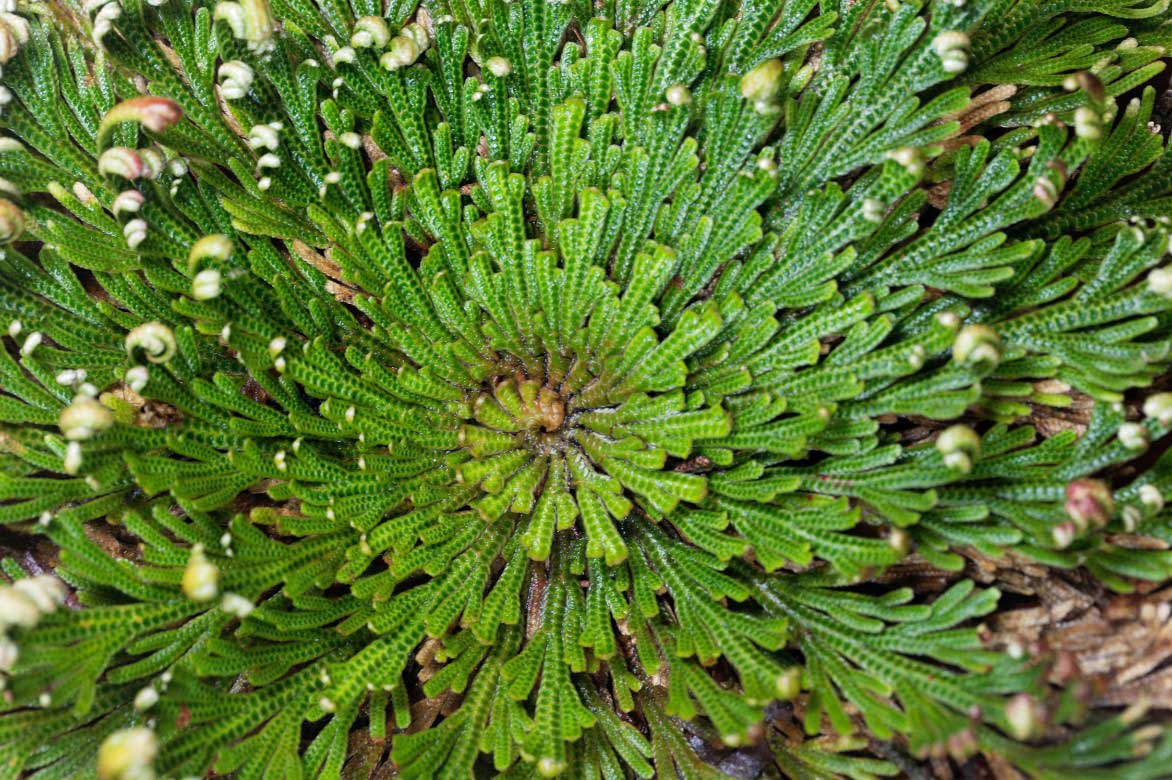
Rose of Jericho, Selaginella lepidophylla
Main varieties of Selaginella
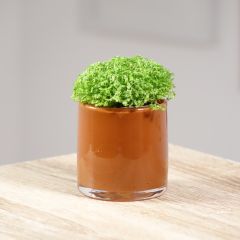
Selaginella apoda - Meadow spikemoss
- Height at maturity 10 cm
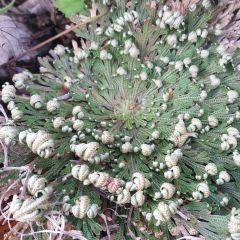
Selaginella lepidophylla
- Height at maturity 5 cm
Planting Selaginella in pots
Where to place Selaginella?
Selaginella appreciates good light, but most of all needs indirect light. Direct sun can scorch its very fine foliage. In its natural habitat it grows under forest canopy, sheltered from the sun. Indoors, place it near a north- or east-facing window. It tolerates moderate light, but growth will be slower.
Species with iridescent sheen, such as Selaginella uncinata, develop their bluish hues mainly in filtered light.
Ideal temperature is between 18 and 24 °C. Avoid cold draughts, proximity to radiators and sudden temperature fluctuations. Below 12–15 °C, growth slows markedly.
Selaginella needs a humid atmosphere (minimum 60%). It does particularly well in a bright bathroom, in a terrarium or in a mini-greenhouse. In a dry interior, regular misting or use of a humidifier may be necessary.
When to plant or repot Selaginella?
Ideal period is in spring, between March and May, or possibly in early summer. This corresponds to the plant’s natural growth restart, which eases establishment.
Repotting can be considered every 1–2 years, especially when roots fill the pot, substrate becomes compacted or plant shows signs of decline.
Avoid repotting in winter, when growth is slowed.
How to plant Selaginella?
Choosing a pot
- Choose a wide rather than deep pot, as root system is superficial.
- Ensure it has drainage holes.
- Plastic pots retain moisture better than terracotta pots, which suits Selaginella.
Don’t hesitate to place Selaginella in a terrarium, alongside other understorey plants (ferns, mosses, etc.) and natural elements such as driftwood or stones, for a very decorative effect.
Ideal substrate
Selaginella likes a soil rich in organic matter, light and well-draining but able to retain moisture.
Plant it in a mix of two thirds potting compost for houseplants and one third coco coir or peat, with a little perlite or sand to improve drainage.
Substrate must remain consistently moist, without being waterlogged.
Planting steps
- Place a thin drainage layer (clay pebbles or gravel) at the bottom of the pot.
- Add a layer of substrate.
- Gently place the rootball without breaking fragile stems.
- Top up with potting compost around the plant.
- Firm lightly with fingers.
- Water thoroughly to moisten whole substrate.
Finally, place plant in a humid, bright environment without direct sun.
Special case: terrarium planting
Selaginella is particularly suited to closed terrariums, where humidity remains stable. Species such as Selaginella kraussiana or Selaginella martensii quickly form a lush carpet there.
If you choose terrarium planting, provide a drainage layer and moderate watering to avoid excess moisture at the roots. Also remember to ventilate occasionally to limit risk of mould and maintain a healthy environment.
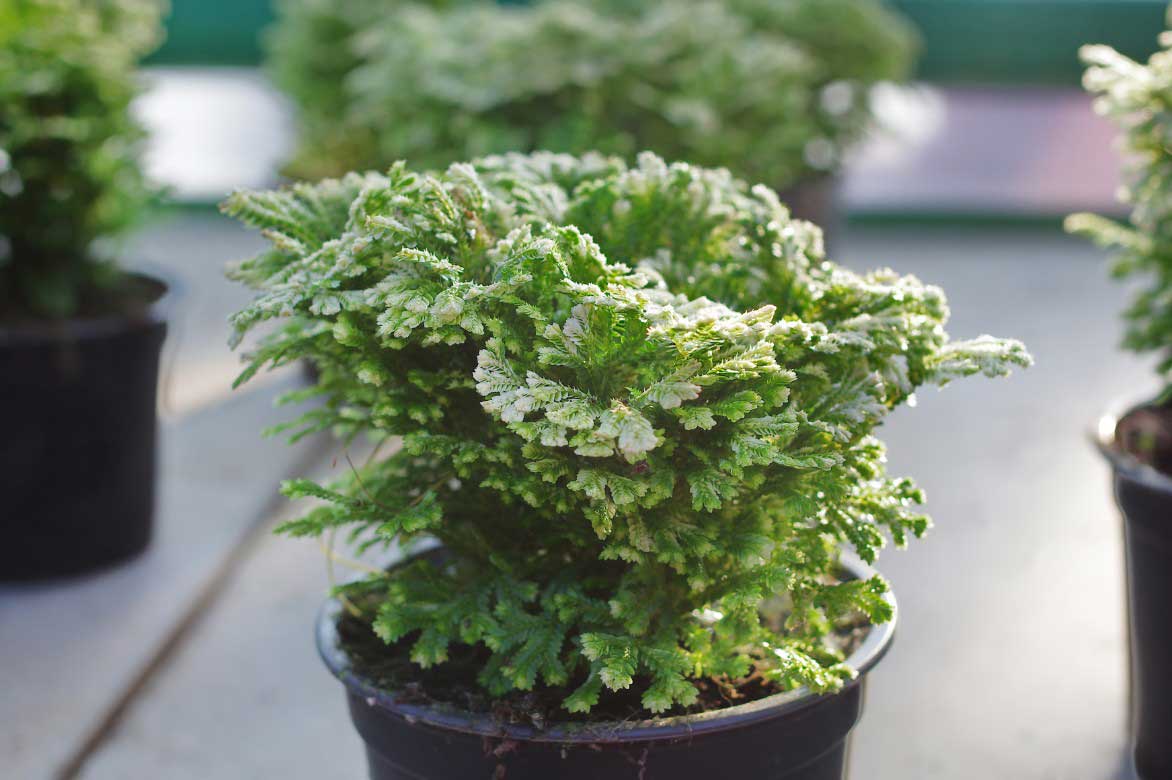
Selaginella jori
Read also
How to make an open terrarium?How to care for it?
Regarding care, most important is to maintain adequate humidity. Selaginella prefers that substrate be kept slightly moist at all times and tolerates neither prolonged drought nor stagnant water. Watering should be adjusted to season, more frequent in spring and summer, and slightly reduced in winter, but never let root ball dry out completely. Foliage is very sensitive to lack of water and folds or yellows quickly when humidity is insufficient.
Selaginella prefers humid conditions. In dry interiors, best to mist regularly, place tray of moist clay pebbles nearby, use humidifier or keep in terrarium. It is not very demanding in nutrients: liquid fertiliser for houseplants applied at half strength every two weeks in spring and summer is sufficient to support growth. We recommend pruning dry or damaged parts as soon as they appear, and repotting plant every one to two years when substrate becomes depleted or root system becomes pot-bound.
Diseases and parasitic organisms
Indoor Selaginella is sensitive to humidity imbalances. The most common problem is root rot, caused by overwatering or a poorly drained substrate. In that case, stems become soft, foliage turns yellow and substrate may give off an unpleasant odour. Excess moisture also favours fungus gnats and mould growth on the substrate surface, especially in poorly ventilated terrariums. Conversely, overly dry air causes foliage to dry out, becoming brown and brittle.
Regarding pests, red spider mites may appear if air is dry. They show as fine webs and pale foliage. Scale insects can also settle on the stems. They are easily spotted by their cottony or waxy appearance.
How to propagate Selaginella?
Propagation of Selaginella is relatively simple and is mainly carried out by division of clumps.
When to divide?
Division is preferably carried out in spring, during repotting, or possibly in early summer. Work on dense, well-developed plants.
How to divide Selaginella?
- Gently remove the plant from its pot.
- Divide the rootball into several sections, by hand or with a knife.
- Ensure each piece has roots and a few stems.
- Replant immediately into fresh, moist substrate.
- Water lightly to moisten thoroughly.
After division, it is essential to place young plants in a warm environment, sheltered from direct sun, with high humidity. Regular misting can help encourage establishment and reduce stress.
How to showcase it and which plants to pair it with?
Selaginella is particularly interesting in plant composition thanks to its fine, dense foliage and mat-forming habit. In a tropical terrarium, species such as Selaginella kraussiana or Selaginella uncinata pair perfectly with small ferns and mosses, easily creating an understorey atmosphere. You can also place alongside them Fittonias with their attractively coloured foliage, wandering jews (Tradescantia zebrina), Pileas, as well as Asparagus plumosus, whose fine foliage evokes fern fronds.
Potted, it can be placed at the base of taller tropical plants, such as calatheas or spathiphyllums, forming a verdant understorey and reducing evaporation of the substrate. Its fine foliage contrasts nicely with the broad, ribbed leaves of these plants and highlights their graphic shapes. It is ideal for accompanying ferns and ornamental begonias with decorative foliage, bringing a natural, structured effect. Some trailing varieties can also be hung, creating a delicate cascade that softens the pot’s lines.
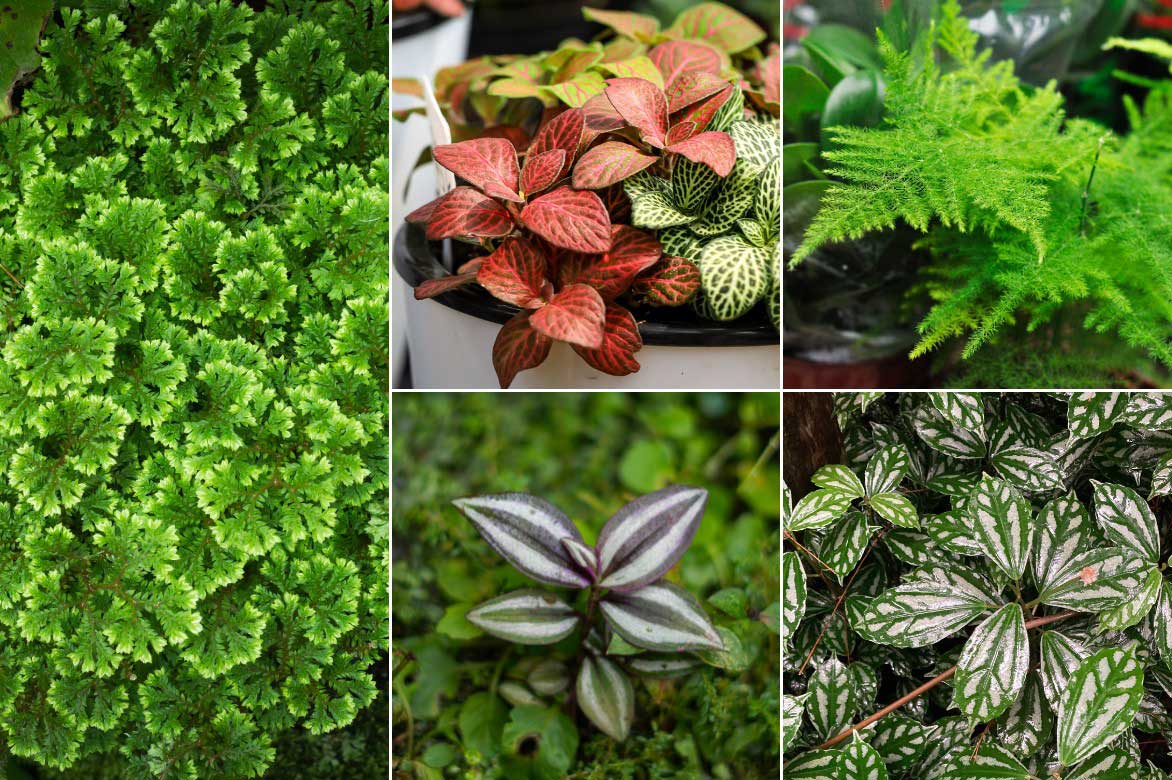
Selaginella, Fittonia, Asparagus plumosus, Tradescantia zebrina and Pilea cadierei
Useful resources
- Discover our full range of houseplants.
- Our books on houseplants.
- Subscribe!
- Contents
This form is protected by reCAPTCHA - the Google Privacy Policy and Terms of Service apply.

































Comments