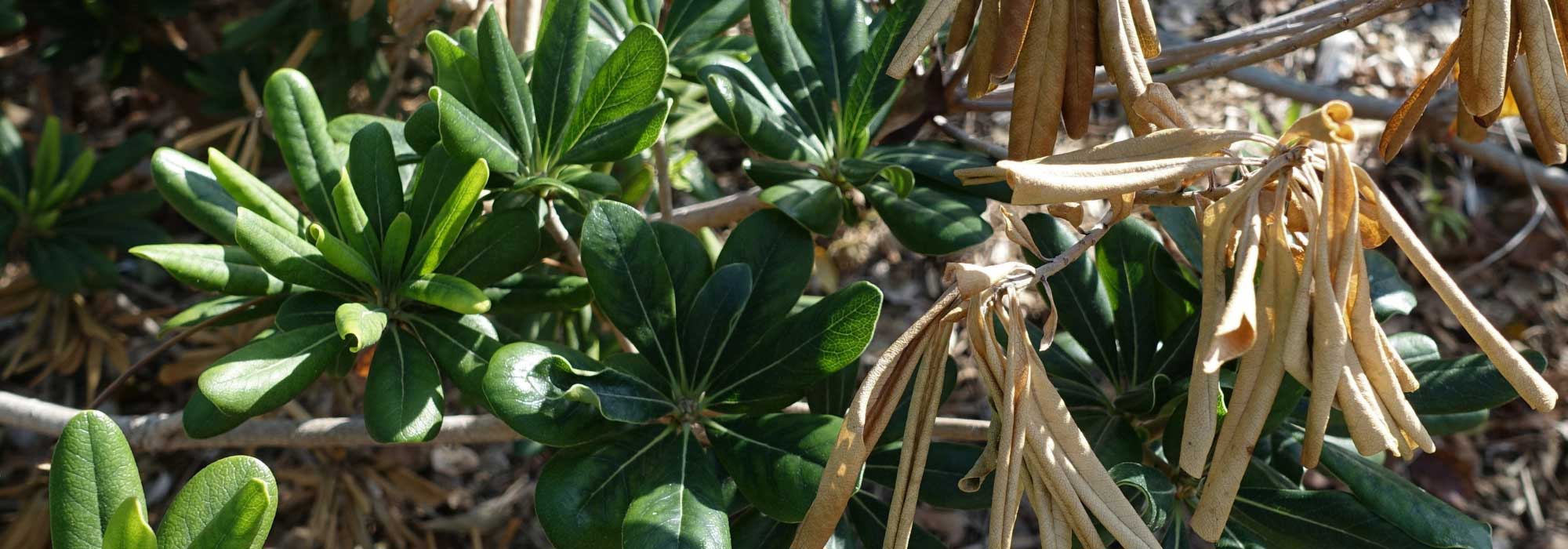
Diseases and parasitic organisms of Pittosporum
How to recognise and treat them?
Contents
Pittosporum is a shrub much appreciated in gardens for its evergreen foliage, its rapid growth and its good resistance to wind and drought. Whether Pittosporum tobira, Pittosporum tenuifolium or other varieties, these shrubs are generally robust. However, certain cryptogamous diseases and parasitic organisms can weaken the plant and make it less attractive. Discover the main problems affecting Pittosporum, how to identify them and what solutions to implement to preserve your shrub’s health.

Most common diseases of Pittosporum
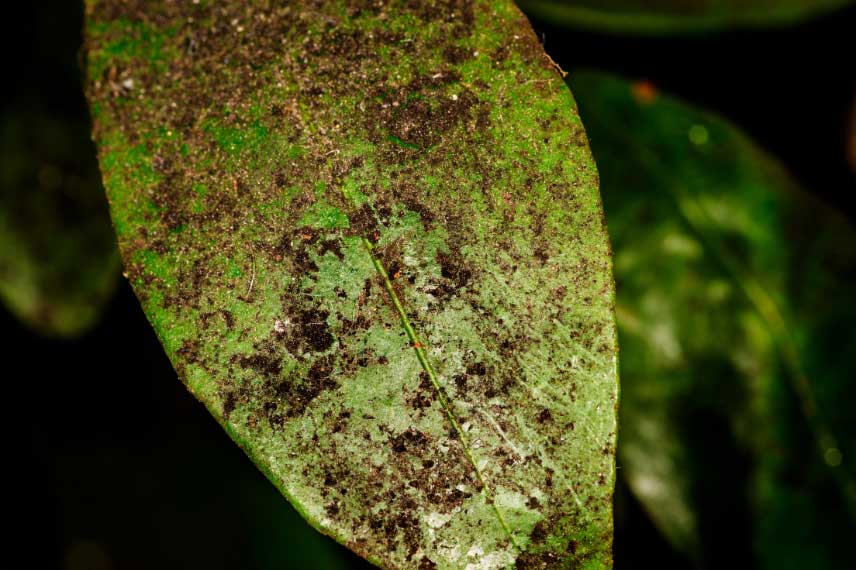
Sooty mould
Sooty mould is a fungus that develops on honeydew, a sweet substance produced by certain insects such as scale insects or aphids. If left untreated, it limits photosynthesis and gradually weakens the shrub.
Symptoms
- Appearance of a black, soot-like deposit on leaves.
- Foliage sticky to the touch.
- Loss of foliage shine.
- Growth slowed when infestation is severe.
Treatment
- Start by eliminating insects responsible for honeydew (aphids, scale insects…).
- Clean leaves using a damp cloth or a black soap solution.
- Remove severely affected leaves if necessary.
Tip : as long as scale insects or aphids are present, sooty mould may reappear. It is therefore essential to treat the cause before cleaning foliage.
Discover our complete guide with all our advice: “Sooty mould: what is it?”
Powdery mildew
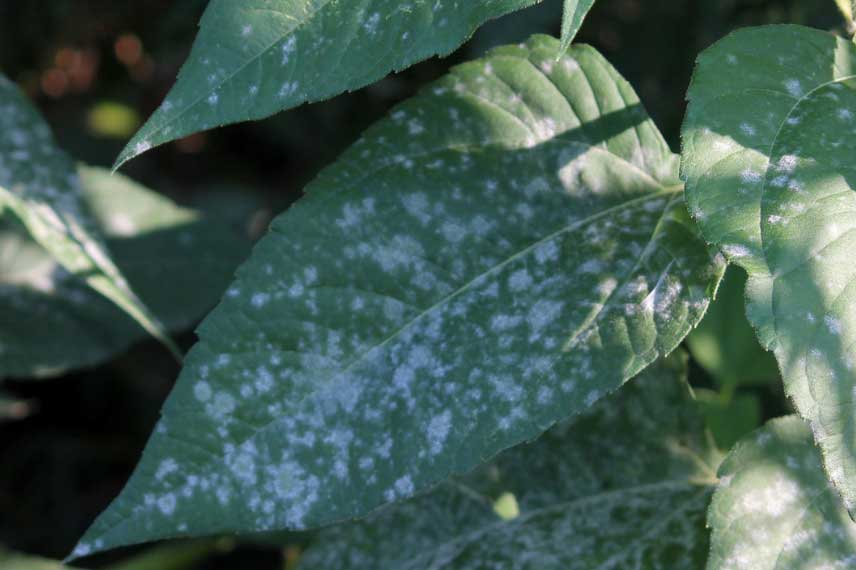
Powdery mildew is a cryptogamous disease (caused by a fungus) favoured by alternations of heat and humidity and by poor air circulation within vegetation. It is relatively uncommon on Pittosporum but can appear during wet summers.
Symptoms
- White, powdery coating on leaves and young shoots.
- Deformation of new leaves.
- Yellowing then premature leaf drop.
- Growth slowed.
Treatment
- Remove affected parts at first signs.
- Lightly thin out branches to improve air circulation.
- Avoid watering foliage.
- Spray with a fungicidal treatment, for example sulphur-based, if attack is severe.
Tip : a light pruning at the end of winter helps naturally ventilate Pittosporum and limit development of fungal diseases.
For more information, see our advice sheet: “Powdery mildew or white disease”
Root rot
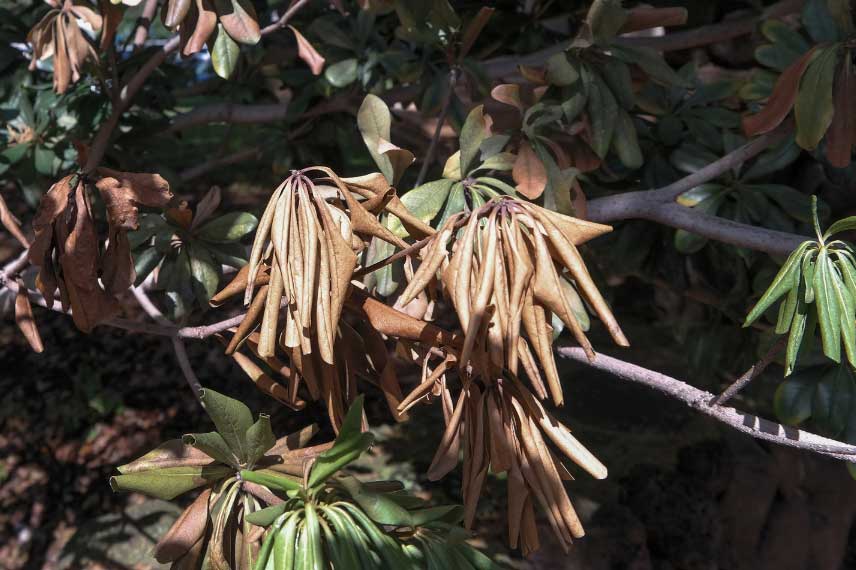
Pittosporum copes relatively well with drought, but it is susceptible to soils that are constantly waterlogged. When roots remain for a long time in waterlogged soil, they become asphyxiated and can be attacked by various fungi responsible for rots.
Symptoms
- Leaves that yellow, wilt and drop.
- Young shoots that dry out.
- Roots dark brown, soft or emitting a rotten smell.
Solutions
- Reduce watering immediately.
- Check soil drainage.
- If plant is in a pot, repot into a more draining substrate.
- Cut damaged roots before repotting.
If shrub is severely affected, it may be difficult to save.
Tip : when planting, adding gravel or coarse sand greatly improves drainage and reduces risk of rot.
Main parasitic pests of Pittosporum
Mealybugs
Mealybugs are the most common pests on Pittosporum, especially in mild climates. They settle on stems and undersides of leaves where they feed on plant sap.
Symptoms
- Small cottony white masses or brownish patches on stems.
- Sticky leaves.
- Appearance of sooty mould.
- Reduced growth.
Treatment
- Remove mealybugs using a cloth or cotton wool pad soaked in 70% alcohol.
- Spray a black soap solution over whole plant.
- Repeat treatment several times at intervals of a few days.
Consultez notre dossier complet : “Mealybug: identification and treatment”.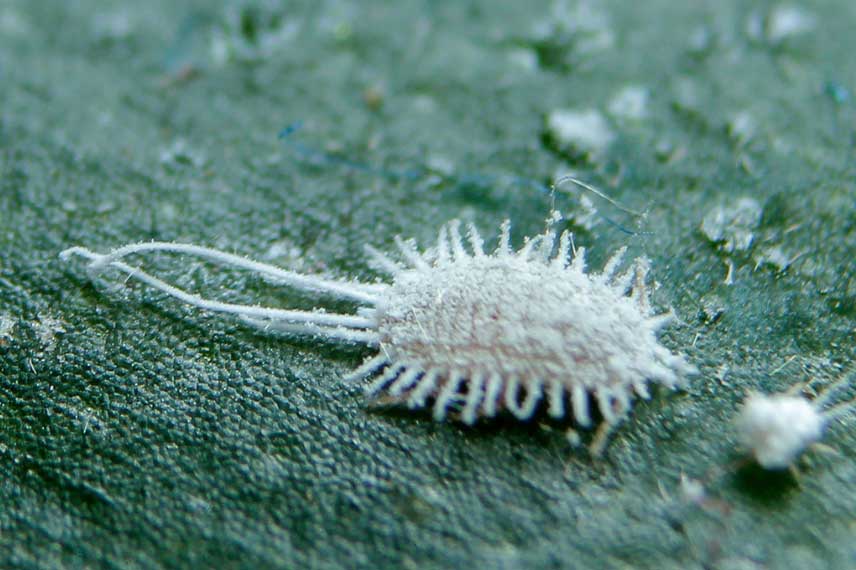
Aphids
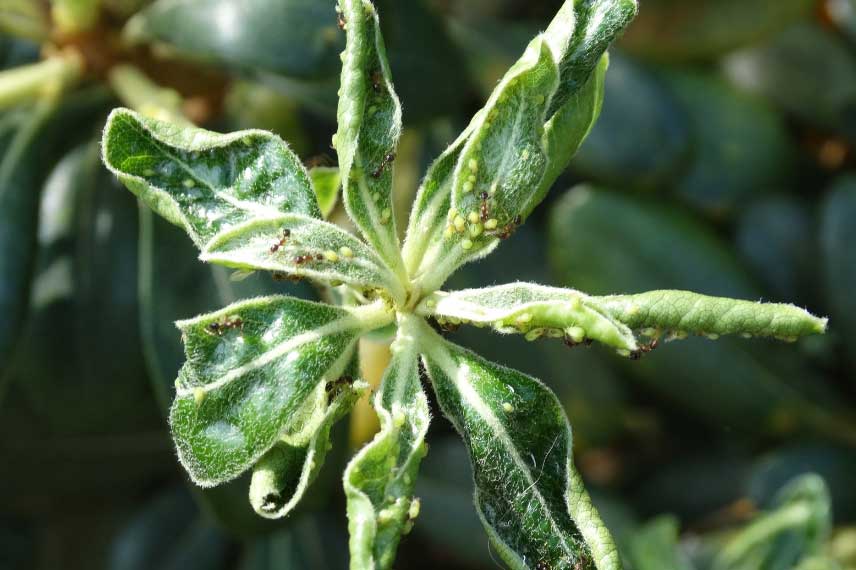
Aphids pierce foliage, especially young shoots, and feed on sap. They slow plant development and also promote sooty mould.
Symptoms
- Young leaves curled or deformed.
- Presence of small green or black insects, often accompanied by ants.
- Sticky foliage (honeydew).
Treatment
- Spray black soap diluted in water.
- Encourage presence of ladybirds and other beneficial insects.
- Avoid excess nitrogen-rich fertilisers.
Pour en savoir plus, consultez notre fiche : “Aphid: identification and treatment”
Red spider mites
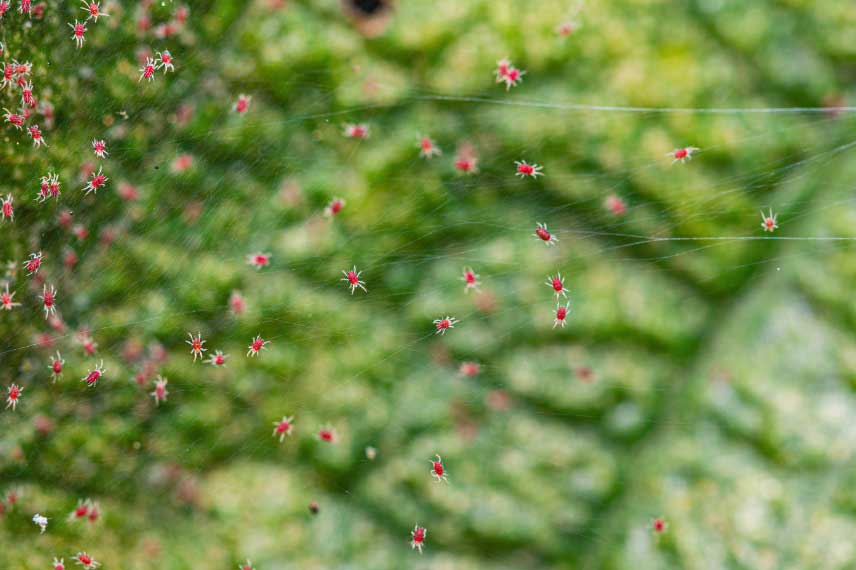
Red spider mites are tiny mites that appear mainly during hot, dry periods. They are often difficult to detect before initial damage appears.
Symptoms
- Small yellow speckling on leaves.
- Foliage gradually losing colour.
- Presence of fine webs between leaves.
- Gradual drying of foliage.
Treatment
- Increase humidity around plant and hose down foliage, as red spider mites dislike humidity.
- Use an organic acaricide if infestation becomes severe.
Notre dossier complet : “Red spider mite: identification and treatment”
Thrips
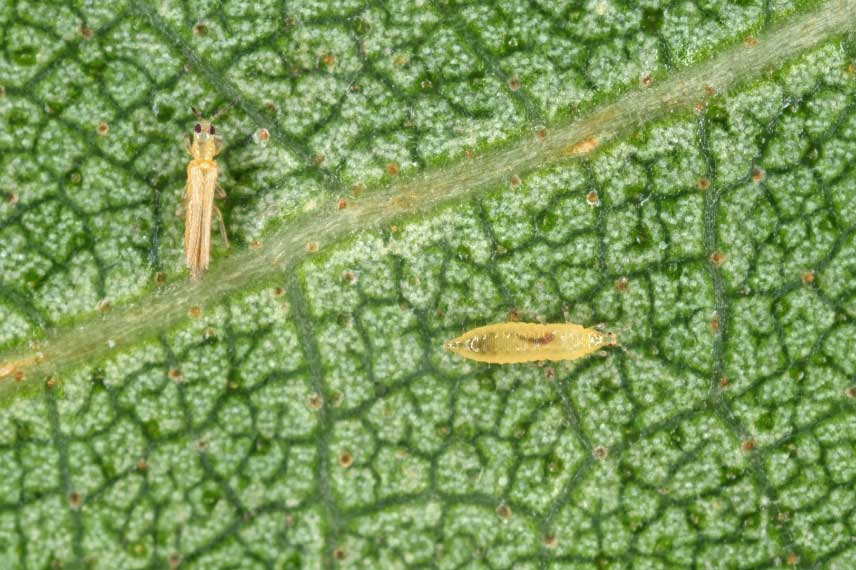
Thrips are very small piercing insects that attack foliage and young shoots. They are particularly active during hot, dry periods.
Symptoms
- Leaves showing silvery or greyish patches.
- Deformed young leaves.
- Slowed growth.
- Presence of tiny slender insects on underside of foliage.
Treatment
- Install blue sticky traps to monitor presence.
- Spray black soap or a neem oil-based treatment.
- Repeat treatments for several consecutive weeks to eliminate new generations.
Découvrez notre fiche : “Thrips: identification and natural treatment”
To keep Pittosporum healthy: - Site and light - Plant in full sun to partial shade. Most varieties flower and hold foliage colour best with plenty of light; variegated cultivars need brighter conditions. - Soil and drainage - Use well-drained, fertile soil. Avoid waterlogged positions — poor drainage leads to root rot. - Watering - Water regularly while establishing. Once established, many Pittosporum tolerate short dry periods, but avoid prolonged drought. Reduce watering in winter. - Feeding - Apply a balanced, slow-release fertiliser in spring. A light feed again in midsummer helps container-grown plants. - Mulching - Mulch around roots in spring to conserve moisture and suppress weeds, keeping mulch away from the stem. - Pruning and shaping - Lightly prune after flowering to maintain shape and encourage bushy growth. Pittosporum tolerates pruning well, but avoid severe cuts into old wood on slower-growing varieties. - Protection from cold and wind - Hardiness varies by species and cultivar; protect young plants and tender cultivars from severe frost and cold drying winds. Planting in a sheltered spot helps. - Pests and diseases - Watch for scale insects and aphids; treat early with horticultural oil or insecticidal soap. Prevent root problems by ensuring good drainage. Brown leaf tips can result from salt spray or drought. - Container care - Use a free-draining potting mix, water more frequently than in ground, and repot or top-dress every 2–3 years. - Propagation and renewal - Take semi-ripe cuttings in summer for true-to-type plants, or plant seed for variation. Replace very leggy or frost-damaged specimens by taking cuttings from healthy shoots. General tip: choose a Pittosporum species or cultivar suited to local climate and site conditions — correct siting and drainage are the keys to long-term health.
As with most evergreen shrubs, best protection is suitable cultivation. A Pittosporum established in favourable conditions is much less prone to diseases and pest attacks.
Best practices
- Plant your Pittosporum in light, well-drained soil.
- Water regularly during first year, then only in dry spells.
- Avoid excess water, especially in winter.
- Prune shrub lightly to improve air circulation through foliage.
- Rake up fallen leaves and cut out diseased shoots.
- Avoid excessive applications of nitrogen-rich fertilisers, which encourage aphid and scale insect outbreaks.
Regular monitoring
Inspect your Pittosporum regularly, especially in spring and summer.
Check for:
- Underside of leaves, where scale insects and red spider mites often hide.
- Young shoots, much favoured by aphids.
- Any sticky deposits or sooty mould.
- Overall condition of foliage to spot early yellowing or suspicious spots.
An intervention at the first signs usually stops most diseases and pests quickly, while avoiding recourse to more drastic treatments. This regular monitoring is the best way to keep a Pittosporum vigorous, attractive and long-lived in the garden.
- Subscribe!
- Contents
This form is protected by reCAPTCHA - the Google Privacy Policy and Terms of Service apply.

































Comments