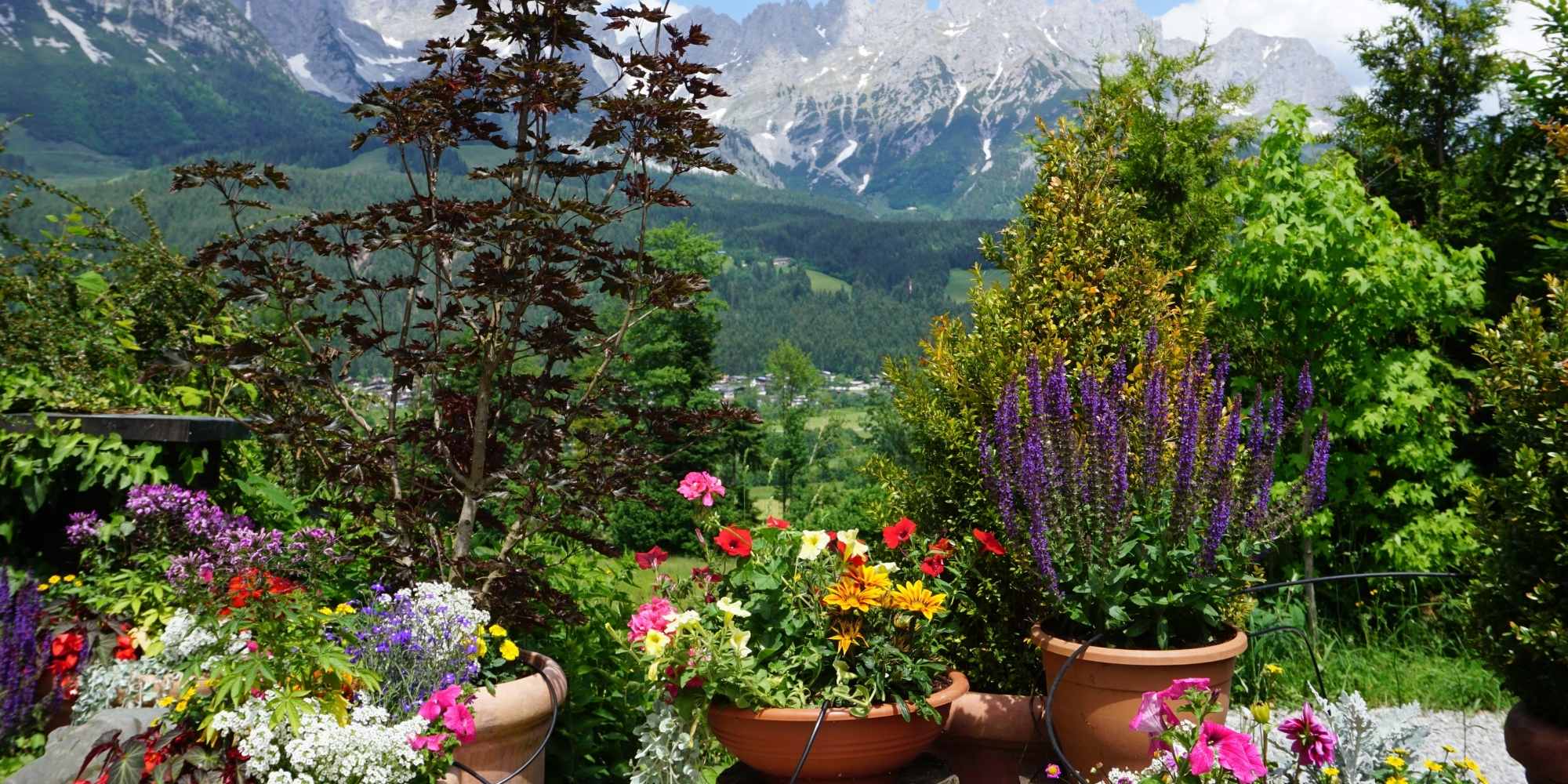
Medium-altitude garden: which plants are suitable and mistakes to avoid?
Our tips for successful gardening at medium altitude
Contents
Generally, mid-altitude is defined at around 500 to 1,000 metres. Needless to say, a gardener benefits from particular climatic conditions. At this altitude, nature dictates the rules and sets the pace. Seasons are shorter, nights remain cool even in mid-July, and wind can turn a gentle breeze into a cold, drying draught. Yet at the same time, light is intense. That’s why perseverance, humility and adaptability are the gardener’s foremost qualities. Yet, growing a mountain garden offers unique rewards. Flower colours are often more vivid there thanks to UV rays, and vegetable flavours more concentrated.
To succeed with a mid-altitude garden, it’s not about fighting the elements but learning to work with them. We guide you to avoid major mistakes.

What are the constraints of medium altitude?
Before sowing any seed or planting a shrub or vegetable plant, it is essential to understand the differences between a mid-altitude garden and a lowland garden, as constraints are greater.
A short growing season
In a low-altitude garden, you can often start sowing as early as February, or in March in cooler regions. Sowings and plantings can continue until October or even November.
At mid-altitude, spring arrives much later, often in May or even June, and winter sets in early, sometimes as soon as September. Gardeners have a reduced window of opportunity of about 90 to 120 days without severe frost. This means every day counts. Variety choice must therefore favour short cycles.
Temperature swings
That is the biggest challenge. Indeed, in spring or autumn at mid-altitude, temperatures can easily range from 25°C during the warmest part of the day to 4°C in the early morning. Needless to say, many plants, particularly those of exotic or tropical origin, can experience stress. Alpine plants, however, naturally adapt to these temperature swings thanks to protective mechanisms such as hairs on leaves or a creeping habit.
Moreover, at mid-altitude, winters can be cold, with varying amounts of snowfall, periods of severe frost, and damp fog. Frosts can be late in spring and early in autumn.
UV intensity
It may be less obvious, but in mid-mountain areas ultraviolet rays are stronger and therefore more hazardous, as they can cause sunburn on young plants.
Which plants are essential at medium altitude?
For a medium-altitude garden, choose tried-and-tested plants that are cold-hardy and relatively early. Above all, robust. Here is a short selection of reliable plants for a medium-altitude garden.
Ornamental shrubs and trees
- Black elder (Sambucus nigra) : extremely hardy, provides flowers for syrups and berries for birds
- Hawthorn (Crataegus) : very hardy, tolerates wind and offers a magnificent spring display
- Lilac (Syringa) : a mountain-garden classic. Late flowering often helps it avoid the last frosts
- Rhododendron : ideal for mountain beds, likes altitude moisture and is hardy down to -30°C
- Larch (Larix) : if space allows, king of the mid-mountain. Only conifer to shed needles, brings a golden light in autumn
- Small fruit bushes such as the redcurrant, raspberry and blackcurrant: native to cool regions, flower relatively late and dislike heatwaves
- Apple ‘Belle fille de Salens’ : an old variety from the Jura that flowers late (end of May) and produces crunchy apples in October that store well
- Common hazel (Corylus avellana) : grows naturally in mountain woods up to 1,700 m. One of the first to flower, heralding spring, and gives generous autumn harvests.
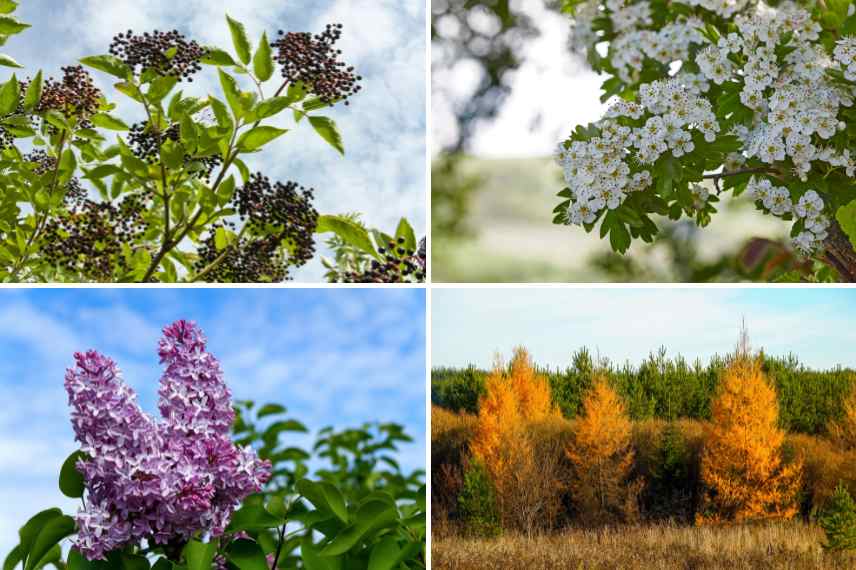
Black elder, hawthorn, lilac and larch do well at medium altitude
Perennials
Perennials are preferable to annuals because they develop a deep root system capable of surviving winter.
- Columbine : self-seeds and loves cool nights
- Lupin : nitrogen-fixing, it structures the garden with colourful spikes
- Gentian : for more acidic soils, a symbol of resilience
- Yarrow : extremely hardy, tolerates drought and wind
- Mountain cornflower : indestructible and returns every year
- Japanese anemone : wonderful late-season flowering
- Autumn sedum : very resistant to desiccating winds.
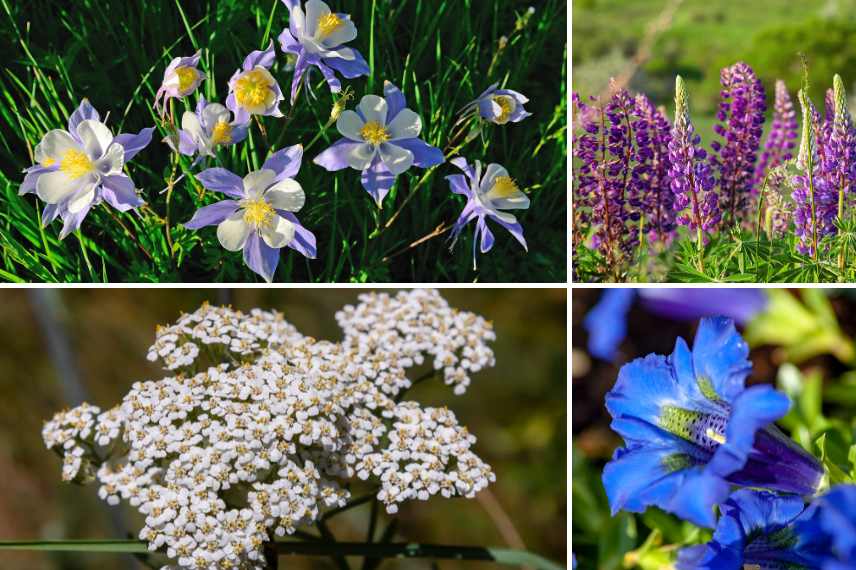
Columbine, lupin, yarrow and gentian thrive at medium altitude
Vegetables for the vegetable garden
In the vegetable garden, choose early or hardy varieties:
- Root vegetables: radishes, carrots, turnips and potatoes (‘Charlotte’ or ‘Bintje’) do very well at altitude
- Leafy vegetables: spinach, chard and salad leaves bolt less quickly than on the plains thanks to cool nights — and don’t forget cabbages
- Rhubarb: easy to grow at altitude.
Summer vegetables can also be grown, but favour early-maturing varieties.
Common mistakes to avoid
Some gardening habits can be disastrous at mid-altitude.
Planting too early in spring
This is mistake number one. Warm sun in April can be deceptive. In mountains, the “Ice Saints” (mid-May) are often a very real occurrence.
Wait until soil is truly warmed. A young tomato plant put into soil at only 8°C will suffer a growth arrest it may never recover from, whereas a young plant put into soil at 15°C in June will catch up within two weeks.
Underestimating wind’s drying effect
Wind in mountains is not only cold; it evaporates moisture from leaves at a rapid rate. Soil can be moist, but young plant may wilt because it loses water faster than it can take it up. The main mistake is failing to provide windbreaks such as hedgerows, trellises, low walls…
Neglecting winter mulching
People often assume snow is enough. It is true: snow is an excellent insulator because it keeps soil around 0°C even when it is −15°C outside. But if winter is cold and snowless, roots can freeze. So mulch generously with dead leaves or straw before first major drops in temperature.
Which strategies should be adopted in montane areas?
To gain a few degrees or a few extra growing days that can make the difference, high-altitude gardeners must be resourceful :
- Make the most of best exposure : a south-facing dry-stone wall stores heat and releases it at night. It is the ideal spot to try more delicate crops. Conversely, avoid the bottom of slopes where cold air settles
- Invest in cold frames and greenhouses which may be necessary for summer vegetables such as tomatoes, peppers and cucumbers. If you choose a greenhouse, it must be extremely sturdy to withstand snow load and strong gusts of wind. Polycarbonate or reinforced horticultural glass models are preferable to flexible plastic polytunnels that can be blown away or torn
- Container growing is also a good solution. Growing in raised containers gains valuable degrees because the soil warms more quickly than in open ground.
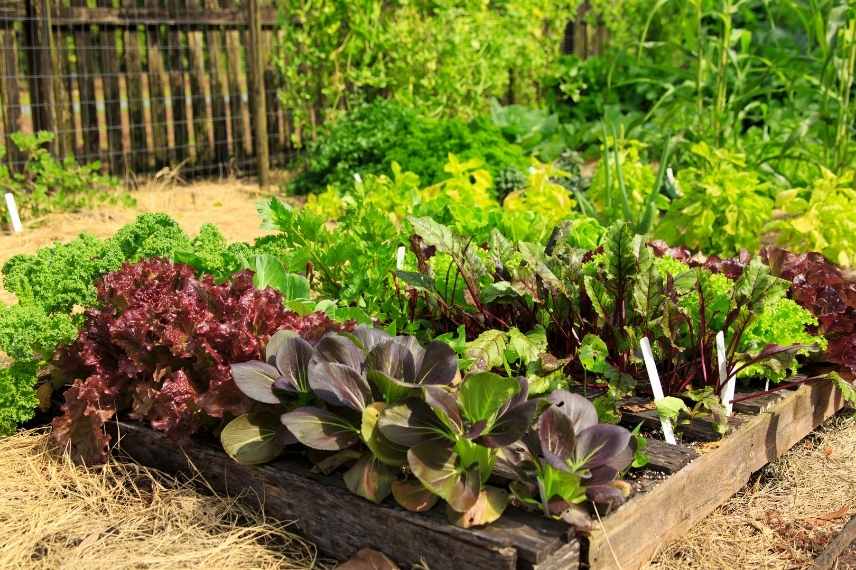
Container growing is ideal for mid-altitude
Crop calendar for montane areas
- March-April: sowing indoors, behind a south-facing window or under a lamp, summer vegetables
- May: soil preparation. Add compost. Sow peas and broad beans that tolerate light frosts
- Mid-June (after 10 June): planting tomatoes (with night-time protection at first), squashes and beans
- July-August: care, watering and watching for hailstorms
- September: harvest tender crops. Start covering growing beds to extend season
- October: tidying, planting spring bulbs (tulips, daffodils) that need winter cold to flower.
- Subscribe!
- Contents
This form is protected by reCAPTCHA - the Google Privacy Policy and Terms of Service apply.


































Comments