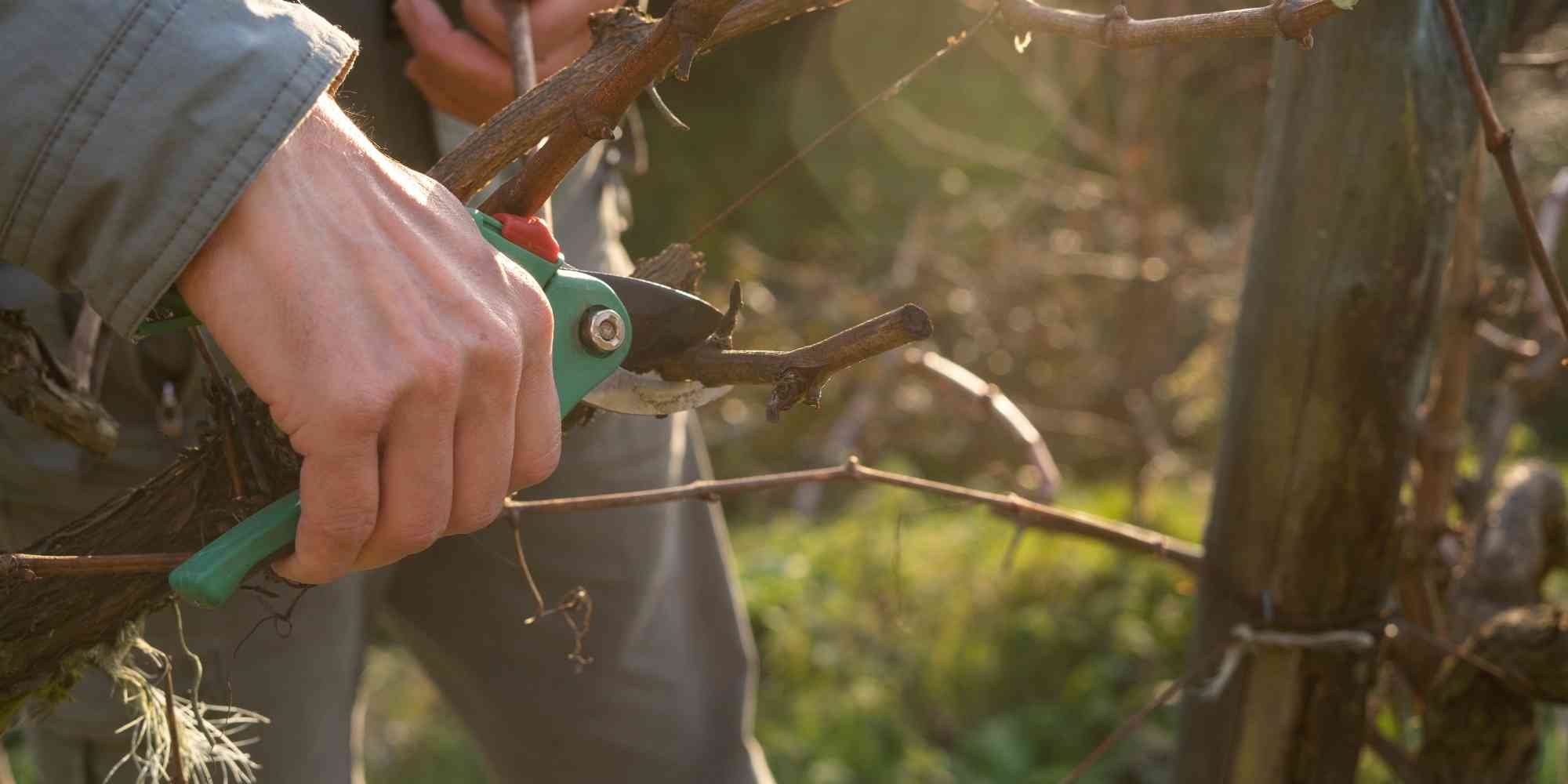
To prune or not to prune?
All our tips to avoid pruning mistakes
Contents
To prune or not to prune? That is the question that fuels passionate discussions among gardeners at every change of season, and it divides opinion too. On one side are devotees of a neat, by-the-book garden who swear by controlling plant growth. On the other are advocates of natural gardening who champion respect for plant life cycles and protection of biodiversity. Ultimately, it is all about balance. Because pruning is not a trivial act. It is a wound inflicted on plants that affects their health, growth, flowering and fruiting.
We present a simple yet comprehensive guide to know what and when to prune, without making mistakes
Perennials: balancing aesthetics and winter protection
Perennial plants are essential in our beds, borders, rockeries, and even in pots and containers. They enliven garden, balconies and terraces all year long with their flowering or coloured foliage. Their cycle is simple: they grow, flower, then their aerial part withers, allowing stump to rest over winter.
Why prune?
Cutting back perennials, often called rabattage, primarily serves to stimulate vigorous new growth. It can be done in summer or at end of season. Concretely, a perennial’s mission is to reproduce, and to do so it forms seeds as soon as flowers fade. It therefore spends a lot of energy on this task. By cutting back, that energy is redirected towards strengthening root system or producing new shoots or repeat flowering.
Beyond flowering, cutting back plays an important role in keeping garden tidy. In height of summer, many perennials, such as hardy geraniums or Alchemilla, end up with foliage looking a little tired, stained by powdery mildew or yellowed by heat. Cutting away dead parts helps to aerate plant crown or maintain a dense, compact habit.
Why not prune?
Nowadays, trend is towards winter gardening. Dry skeletons of plants, such as those of Echinacea, Phlomis or autumn sedums, have a graphic beauty under frost. More importantly:
-
Dry stems protect the stump from severe cold.
-
Hollow stems provide refuge for beneficial insects, and seeds feed birds during months of scarcity.
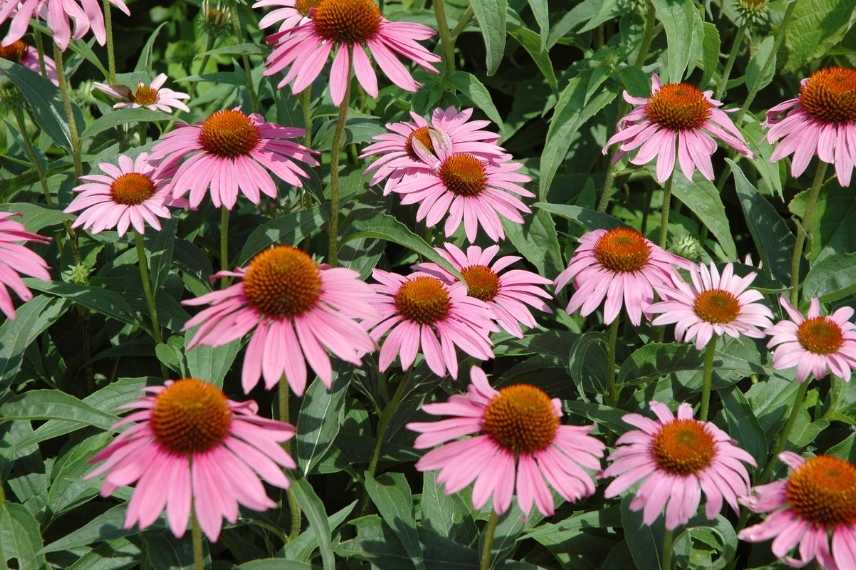
For cutting back perennials such as Echinacea, wait until late winter, between February and March
When and how to intervene?
During season, you can do light pruning by cutting only faded flowers or spent flower stems above a leaf to keep a neat appearance and stimulate repeat flowering.
For cutting back, wait until late winter, between February and March depending on region, to tidy up beds. You will benefit from winter structure and let nature take its course. Only exception is for plants susceptible to cryptogamous diseases such as powdery mildew, where it is better to remove diseased foliage as soon as autumn.
Read also
6 good reasons to prune faded flowersGrasses: movement above all
Grasses bring lightness and movement to beds and borders. But faced with a clump of Miscanthus that is browning off, the temptation to reach for the shear is great. Yet, for some grasses, that action can be fatal.
Deciduous-foliage grasses
In this category are Miscanthus, Pennisetum and Panicum. These plants die back completely above ground each winter, but the stump remains relatively hardy and resistant to cold. New shoots appear as soon as spring arrives.
Key points to remember :
- Do not prune in autumn : this is a common mistake. Dry foliage protects the heart of the plant from stagnant moisture, its worst enemy. In addition, the rustle of dry grasses in the wind is one of the charms of the winter garden.
- When to prune? Cut back hard to 10–15 cm from ground level just before growth resumes, around March.
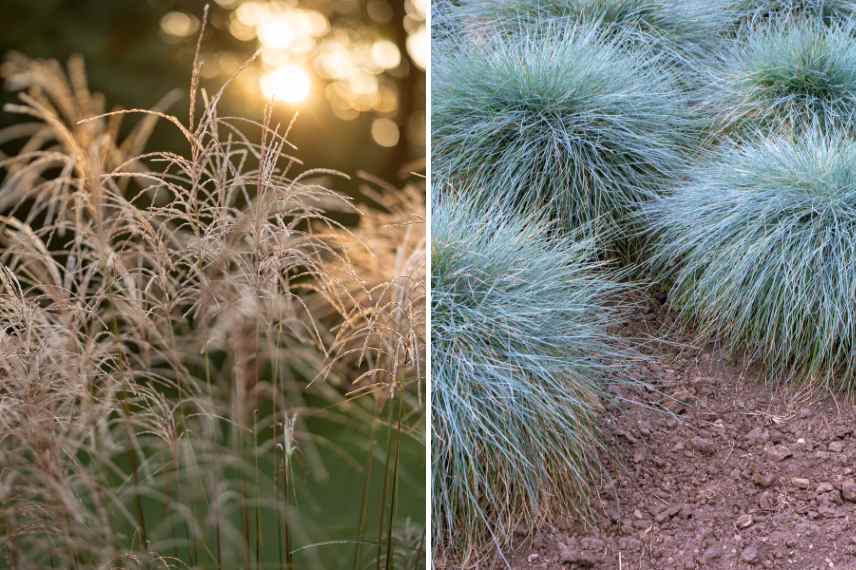
Deciduous grasses are pruned in March, evergreen grasses are combed.
Evergreen-foliage grasses
This category includes Stipa tenuifolia, Carex and fescue. These grasses are not pruned the same way as those with deciduous foliage. For example, if you prune a Carex, it may never recover.
What should you do exactly? Rather, comb them out. With gloves, run your hands through the tussock to remove dead blades and spent inflorescences. This helps aerate the plant without breaking its natural habit.
Shrubs: it's all about good timing!
Pruning mistakes are most common with shrubs. Pruning at the wrong time can deprive you of flowers for a whole year. To work it out, bear in mind it all depends on flowering.
Spring-flowering shrubs
Forsythia, lilac, mock orange, Japanese quince, weigela, spirea, amelanchier… These shrubs set their flower buds as early as the previous summer on last year’s wood.
Key points :
-
Never prune in winter. Pruning in February removes flowers.
-
Prune immediately after flowering has finished. The aim is to remove old wood to make room for young shoots that will carry next year’s flowers.
Summer-flowering shrubs
Buddleia, althaea, hydrangea, oleander, crape myrtle, St John’s-wort, potentilla… Unlike spring shrubs, these shrubs flower on this year’s wood, i.e. on new spring shoots.
Key points : You can prune in late winter, in February or early March. Hard pruning often encourages larger flowers, while light pruning tends to produce a larger, fuller bush with smaller flowers.
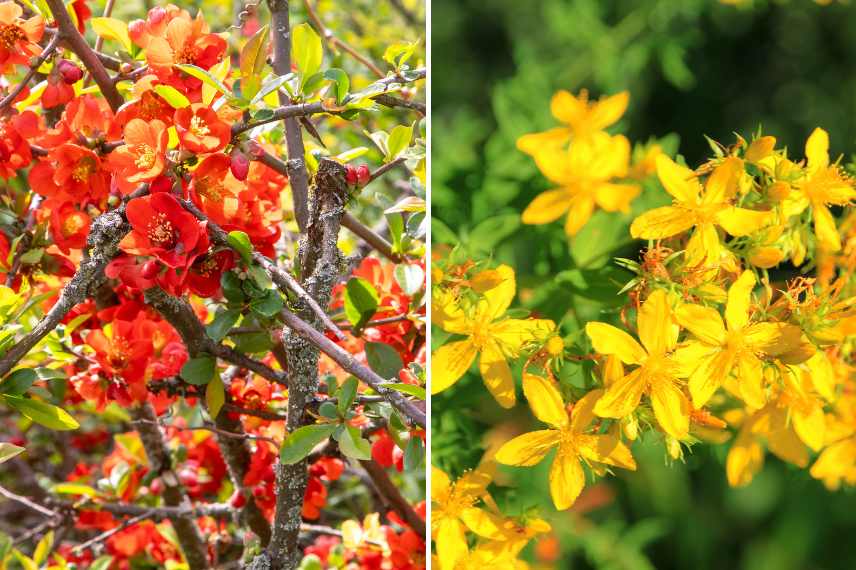
Spring-flowering shrubs such as Japanese quince are pruned after flowering; summer-flowering shrubs such as St John’s-wort are pruned in February.
Hedge shrubs
Pruning hedges is somewhat different from pruning individual shrubs. Here the objective is not only flowering but, above all, density, shape and the long-term health of your hedge. As a rule, laurel, privet and thuja hedges are pruned twice a year, when plant growth is most active:
- In spring (April to May) : this is the post-winter prune. Prune just after the first growth surge. This helps structure the hedge so it stays dense throughout summer.
- Between late summer and early autumn (September to October) : this is the tidy-up prune before winter. Sap flow slows and growth reduces. Pruning at this time keeps hedge neat and well-shaped through the winter months.
By contrast, photinia hedges are usually pruned in late spring, in June, to take advantage of those lovely red shoots.
To protect birds, LPO recommends not pruning hedges between 15 March and 31 July. This is nesting season. Pruning during these months risks destroying nests or exposing chicks to predators. If your hedge does not require a millimetre-perfect shape, favour a single prune in August or September.
Read also
Do not prune these plants in springTrees: respect for structure
For trees, the matter is more serious: poor pruning can compromise a tree’s safety and health for decades to come. Cutting a branch creates an entry point for fungi and pests. The larger the wound, the harder it is for the tree to heal properly.
A tree well chosen for its location should, in theory, never need drastic pruning. If your tree has become too large, it may be because it was not the species suited to that spot.
When to prune?
- Formative pruning: essential during early years to ensure a strong structure.
- Safety pruning: to remove dead wood that could fall.
- Pruning for light: to thin an overly dense crown without altering the overall shape.
5 golden rules to get it right
Here are the five basic rules to avoid making a mistake :
- Observe before acting: ask yourself why you want to prune. Is it for the plant, or for your need for order? If the plant is healthy and flowers well, abstaining is often the best option.
- Disinfect your tools: this is the most neglected piece of advice. A dirty blade spreads disease from one specimen to another. Use methylated spirits between each specimen.
- Respect the natural habit: each plant has an architectural “personality”. A shrub with a weeping habit will be disfigured by pruning into a ball.
- The “3 Ds” rule: Before any aesthetic pruning, start by removing what is Dead (dead), Damaged (damaged) or Diseased (diseased). Sometimes that is more than enough.
- Less is more: it is always possible to cut back a branch the following month, but it is impossible to reattach it. Proceed in stages.
- Subscribe!
- Contents
This form is protected by reCAPTCHA - the Google Privacy Policy and Terms of Service apply.

































Comments