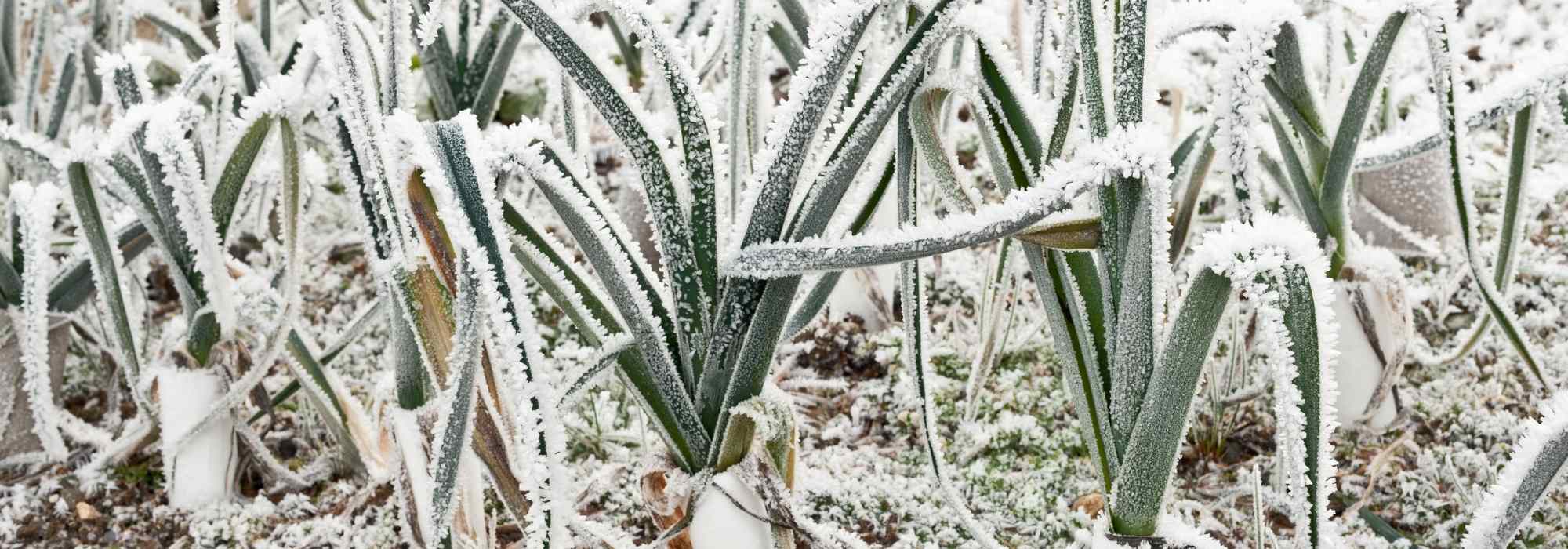
Which vegetables to grow when it freezes in the vegetable garden?
Discover all plants for the winter vegetable garden
Contents
Autumn is here and the vegetable patch has emptied of summer crops. You may be longing for some peace and rest, especially as frosts will soon set in. Not to upset you, don’t put your tools away just yet! Indeed, growing your garden doesn’t stop at the first frosts. On the contrary, cold, far from being an enemy, can prove a valuable ally for gardeners. And a whole range of hardy vegetables manage to defy the cold. Some even see their flavour improve after a good frost!
Discover all vegetables capable of withstanding below‑freezing temperatures in the vegetable patch.
Why grow vegetables in winter?
Soil and foliage are covered in frost, thermometer reads temperatures below 0 °C, maybe it’s even snowing? So a gardener may legitimately wonder what the point is of growing vegetables in the vegetable patch. In fact, growing hardy vegetables offers several advantages :
- Eat fresh vegetables even when nature seems dormant, helping to improve self-sufficiency
- Enjoy vegetables with incomparable flavour. Indeed, cold has a beneficial effect on the flavour of many vegetables such as kale, Brussels sprouts and parsnip, because it triggers conversion of starch into simple sugars, making these vegetables sweeter and less bitter. This is the phenomenon of winter sweetness, due to cold hardening
- Face winter more easily by stocking up on nutrients. Cabbages are rich in vitamins C and K, Jerusalem artichokes are a source of inulin, root vegetables supply minerals, and leafy vegetables such as lamb’s lettuce and spinach provide essential vitamins for our bodies
- Garden more easily because the winter vegetable patch experiences less pest and disease pressure than in summer, which greatly simplifies maintenance.
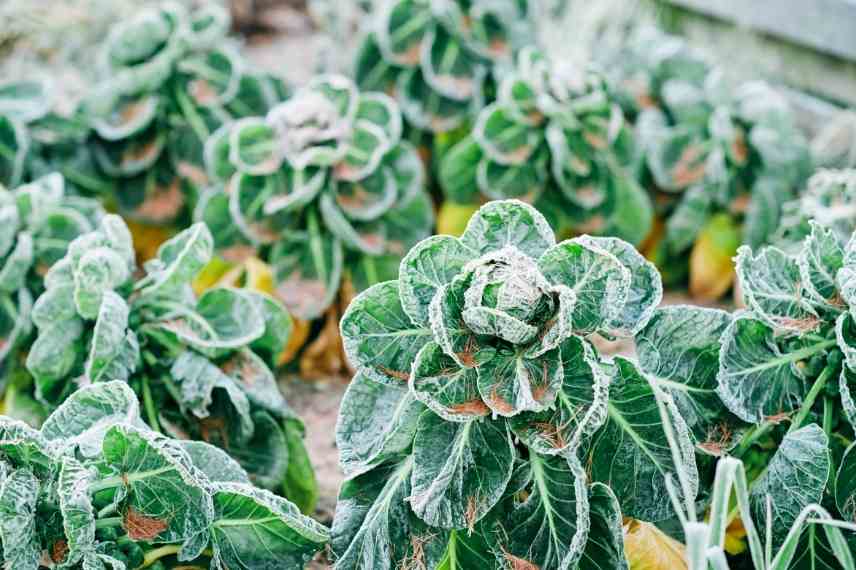
Growing hardy vegetables offers several advantages
Champion frost-resistant vegetables
Some vegetables are particularly insensitive to cold, capable of withstanding temperatures well below -5°C. Their secret often lies in their cellular composition, where conversion of starch into sugars acts as a natural antifreeze, also improving their flavour.
Cabbage family
Cabbages are undoubtedly stars of the winter vegetable garden. They offer a diversity of shapes and flavours that often improve with frost.
- Kale : This ancient vegetable is legendary for its hardiness. Its leaves, crunchy, become sweeter and less bitter after frost. It can withstand very low temperatures, sometimes beyond -15°C.
- Brussels sprouts : Harvested in winter, they are renowned for their ability to tolerate cold. The little sprouts are traditionally better after the first frosts.
- Cabbage and late broccoli : Some winter varieties, like the ‘De Brunswick’ cabbage, can overwinter in the garden for an early spring harvest or be kept under light protection.
Root vegetables and tubers
Soil is an excellent insulator. Root vegetables protect themselves naturally against frost, and many can be left in the ground until harvest, the cold not reaching their vital parts:
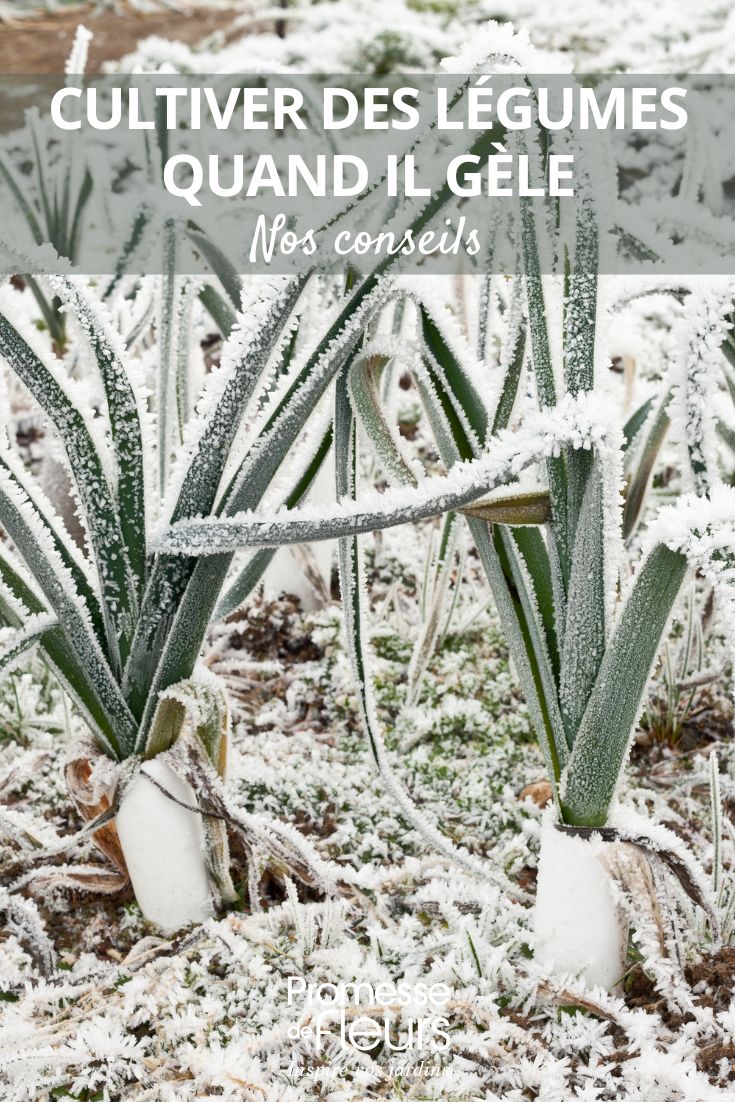
- Leek : One of the hardiest vegetables. Winter leek can withstand very severe frosts. Harvest as required.
- Parsnip : Close to carrot, parsnip sees its flavours intensify and sweeten considerably after frost, making it much milder. It is harvested throughout winter, on demand.
- Salsify and scorzonera : These ancient root vegetables are extremely hardy and can remain in the ground for the whole cold season, keeping their freshness.
- Jerusalem artichoke : This tuber, often called “Jerusalem artichoke”, is exceptionally hardy. It is harvested from autumn to spring, and leaving it in the ground (where it is fully protected by the thermal inertia of the soil) is the best way to keep it fresh all winter, even under intense frost.
- Carrots (winter varieties such as ‘Eskimo’ or ‘Chantenay à cœur rouge’) : Well mulched, they keep well in the soil and can be harvested until spring.
Evergreen leafy vegetables
Even in winter, it is possible to harvest fresh leaves for salads and soups, thanks to the resistance of certain species.
- Winter spinach : A more robust variety than summer spinach, it is incredibly hardy and can produce leaves even under a light snow cover. For example ‘Giant Winter’ or ‘Monstrueux de Viroflay’.
- Lamb’s lettuce : Its rosette growth close to the ground allows it to benefit from soil warmth. Sown in autumn, it provides a continuous harvest during the coldest months, resisting moderate frosts well.
- Sorrel : As a perennial plant, sorrel is extremely hardy. Although growth slows, it retains its leaves and can supply greenery all winter, especially if planted in a sheltered spot or in a milder climate.
- Winter chicories : Varieties such as winter frisée or escarole are robust and can get through the cold season, often under a simple fleece to protect them from damp and drying wind that exacerbates frost damage.
- Winter lettuces : Winter lettuces, such as the famous ‘Merveille d’Hiver’ or ‘Brune d’Hiver’, are bred specifically for their high hardiness. They provide an early harvest of fresh leaves from late winter and cold is essential to their future development. They therefore occupy ground during frosts without suffering. Planted from September to November depending on region, they are intended to overwinter in the soil.
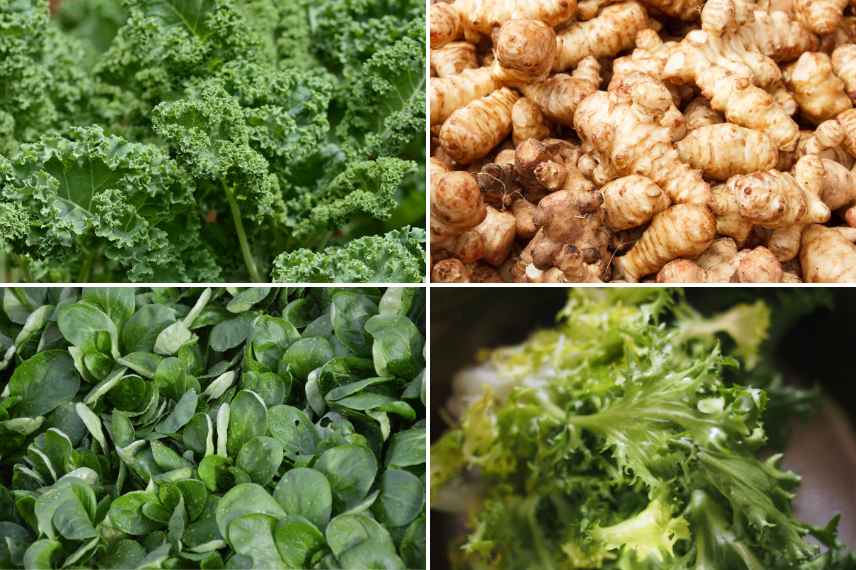
Winter champions in the vegetable garden!
Bulbs
Garlic, onion and winter shallot are not harvested during frost but are in a phase of active dormancy, and cold is essential to their future development. They therefore occupy ground during frosts without suffering. Planted from September to November depending on region, they are designed to overwinter in the soil.
Protect vegetables from cold to optimise harvests
Even the hardiest vegetables can benefit from a little help to survive severe, prolonged frost. Protective measures not only save plants, they also make harvesting easier when soil is frozen or snow-covered.
- Mulching : It’s the simplest and most effective protection. A thick layer of mulch (straw, dead leaves, RCW) around root vegetables (carrots, parsnips, Jerusalem artichoke, turnips) prevents soil freezing deeply, making them easier to harvest. For low-growing leafy vegetables such as lamb’s lettuce or spinach, mulching can also help stabilise temperature at the collar.
- Horticultural fleece : Light and permeable to water and light, it creates a microclimate a few degrees above ambient temperature and protects against drying wind. It is ideal for winter salad crops (lamb’s lettuce, chicory) and cabbages.
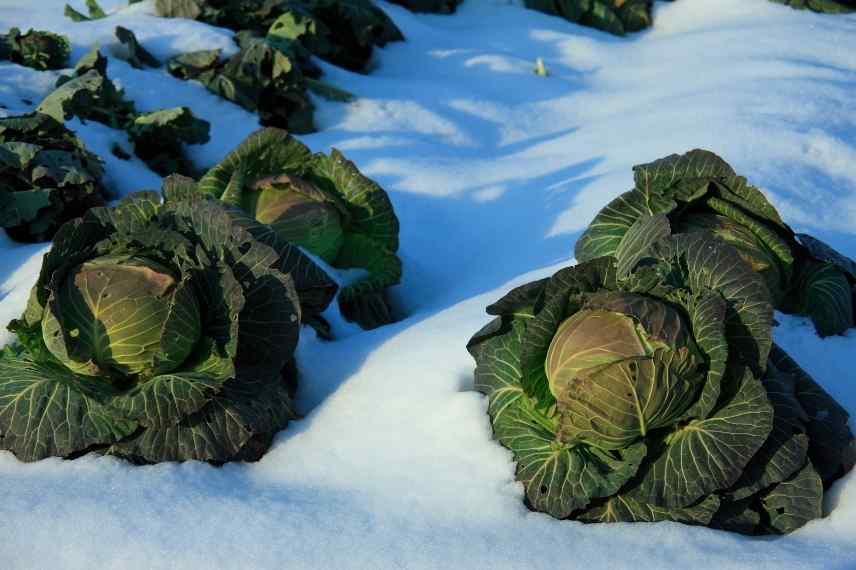
Cabbages are undoubtedly the stars of the winter vegetable patch
- Tunnels and cold frames : These structures offer better insulation and are often essential for growing certain vegetables in midwinter, such as winter lettuces, or for protecting slightly more tender crops.
- Earthing up : For leeks, drawing soil up around the bole provides extra protection against cold and produces a longer, more tender white section.
- Subscribe!
- Contents
This form is protected by reCAPTCHA - the Google Privacy Policy and Terms of Service apply.

































Comments