The world is unfair, even in the vegetable garden. Chicory is the perfect example : as tasty and easy to grow as lettuce, it is far less popular and, consequently, rather scarce in our gardens. Is it because of the texture of its leaves? Its slight hint of bitterness? Or could it be that we simply haven't really discovered it yet? So, let's make introductions...
Chicory? No — chicories. And a real botanical conundrum!
Taking an interest in chicories means, first of all, facing a little botanical puzzle. There are countless varieties. Although they all belong to the large family Asteraceae, they are divided into two main species. And then everything gets complicated — judge for yourself :
1) Cichorium endivia
Grouped under 'Cichorium endivia' are the endive chicories, or true endive in the botanical sense :
- Frisée chicories (Cichorium endivia crispum) with very finely cut leaves. Some varieties : 'Fine de Meaux', 'Frisée de Ruffec'
- Scarole chicories (Cichorium endivia latifolium) with upright, crinkled leaves, such as, for example, 'Cornet d’Anjou', 'Géante maraîchère', 'Casque d'Or'.
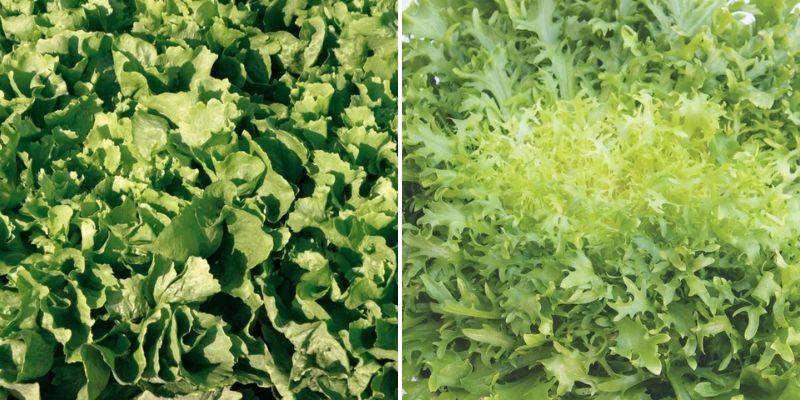
But by no means the Endive known as Chicon in the North. Confused? That's normal — Carl Linnaeus must have had quite a sense of humour...
2) Cichorium intybus
Cichorium intybus corresponds to the wild chicories : logically, the chicory that grows wild in my meadow (the chicory that grows wild in my meadow), but also varieties cultivated for ages that are anything but wild! Consider yourselves warned.
Under the name Cichorium intybus the following varieties are grouped :
- The Monk's-beard chicories (Cichorium intybus foliosum) which resemble dandelions a little. Their delicate flavour has a slight bitterness. These chicories benefit from forcing.
- The Sugarloaf chicories (Cichorium intybus foliosum) form superb elongated heads with a very white heart.
- The Italian chicories (Cichorium intybus partim) are often coloured (e.g. 'Rouge Trévise', 'Rouge de Vérone') or display pretty rose-shaped heads ('Grumolo verde'),
- the endive or Witloof chicory, (Cichorium intybus foliosum) as good raw as cooked... drowned in an ocean of béchamel for children 🙂
- The coffee chicory, industrially known as Ami Ricoré (Cichorium intybus sativum), whose root can be baked in a gratin like the chicory gratin version of 'Tête d’Anguille', a local variety that almost disappeared and which Promesse de Fleurs is offering this year.
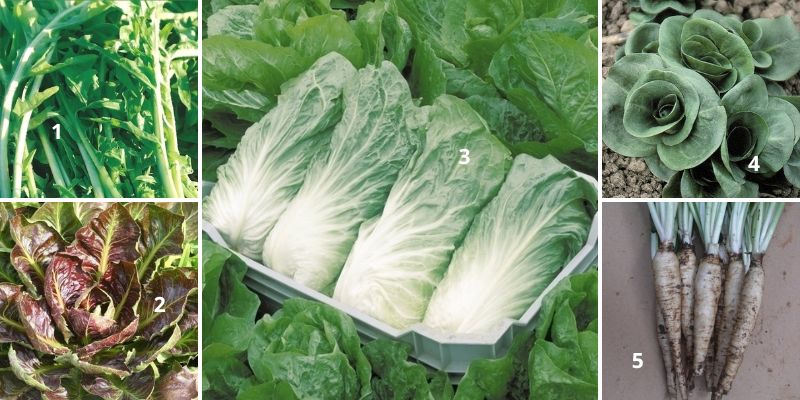
But rest assured, whether you've grasped all the botanical subtleties or not, I encourage you to grow them, here's why…
In the vegetable garden, an easy crop… A light frost? No fear!
In the vegetable garden, sowing chicories is easier than sowing lettuce (everything is explained here: How to grow chicory successfully and blanch it). The seeds, unlike those of other salad leaves, have the huge advantage of germinating above 20 °C and warmth speeds up their start.
When the first frosts arrive, there is little to fear because chicories are rather hardy. And even if frisée and scarole types are less hardy than wild chicories, a fleece, which can be put on in a flash, is enough to protect them.
Blanch chicory? Simple and optional…
Blanching chicory is not always necessary because many varieties such as the scarole chicories 'Ronde Verte à cœur plein' or 'Grosse Bouclée' blanch naturally.
Blanching consists of blocking photosynthesis by depriving the leaves of light. It is essential for endive (see here : How to grow endive successfully) and produces leaves with a more tender texture and milder flavour. But don't panic, it's very simple: about ten days before harvest, choose one of the following:
- cover the head with a terracotta pot or an opaque cloche,
- tie the head with string so that the heart of the chicory is covered by the surrounding leaves,
- shelter chicories under an opaque plastic tunnel or, if you grow them under a cold frame, place plastic, cardboard or mats over it.
One precaution to take: do not blanch if frost is forecast, that would be certain rot.
There you go, you know everything… or almost everything about chicories, all that's left is to sow them! Don't wait too long, it's the right time.


































Comments