If you read us regularly on promesse de fleurs, you know planting a tree is a pivotal moment in its life and ensures, when done correctly, longevity in garden. Certain trees need a specific substrate and particular care, because they grow in acidic soil and often have a shallow root system; they belong to ericaceous plants.
Follow our tutorial to carry out this planting like a pro!
In short: plant your heather soil tree in autumn, in a mix of two-thirds heather soil and one-third potting compost, with good drainage.
Which trees grow in acidic soil?
Many ericaceous shrubs are commonly referred to as heather-soil plants, such as rhododendrons or heathers, far fewer trees, yet several of these are also acidophilous. They likewise require soil with low pH, below 7 on scale that goes up to 14 for alkaline ground.
These soils are acidic, but also light-textured. Most trees needing such substrate also require well-drained soil that stays cool, especially in summer.
Among popular trees with these requirements are many maples, conifers such as pines (Corsican pine, Scots pine and maritime pine in particular), Tsuga and many magnolias, as well as chestnuts, willows and some oaks (cork oak) and beeches, plus Sassafras albidum.
Read also: What is soil pH? and 7 trees to grow in acidic soil.
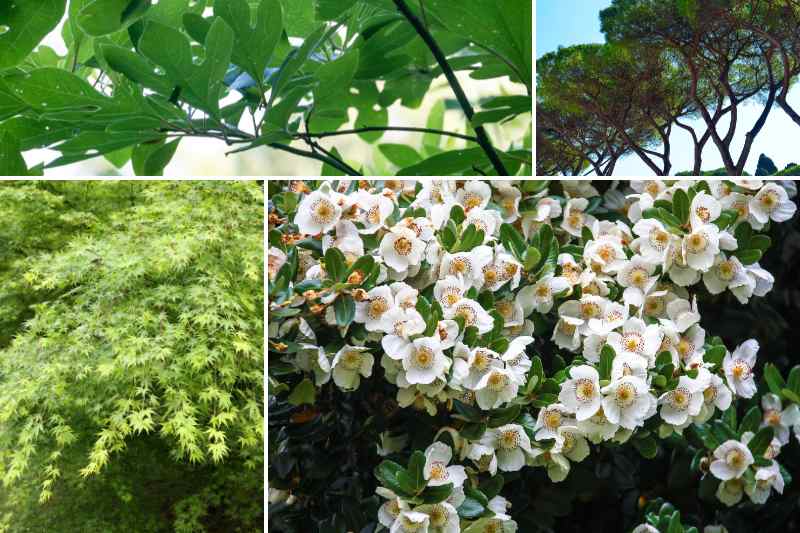
When to plant acidophilous trees?
We always recommend planting in autumn, ideally October to November (but never during frost). This gives trees best chance to establish and develop root system before following summer. For slightly more tender trees, such as Eucryphia for example, and generally for evergreen trees, plant rather in spring, between mid-March and late April.
How to plant a tree in acidic ground?
Proceed in stages, taking care to prepare substrate well, here essential to obtain mix that is light, free-draining and fertile!
Equipment
- tarpaulin
- large bucket or container
- spade or trenching spade
- stake
- heather soil and potting compost
- clay balls or gravel for drainage (if soil too heavy)
- watering can
- organic mulch
Planting step by step
- Soak rootball in large container for at least 20 minutes to rehydrate (even if raining);
- Prepare planting hole: depending on tree size and rootball, depth and width 50 cm to 1 m, but always make hole wider than deep for this type of tree. Hole should be at least 1.5 times size of rootball to encourage rooting;
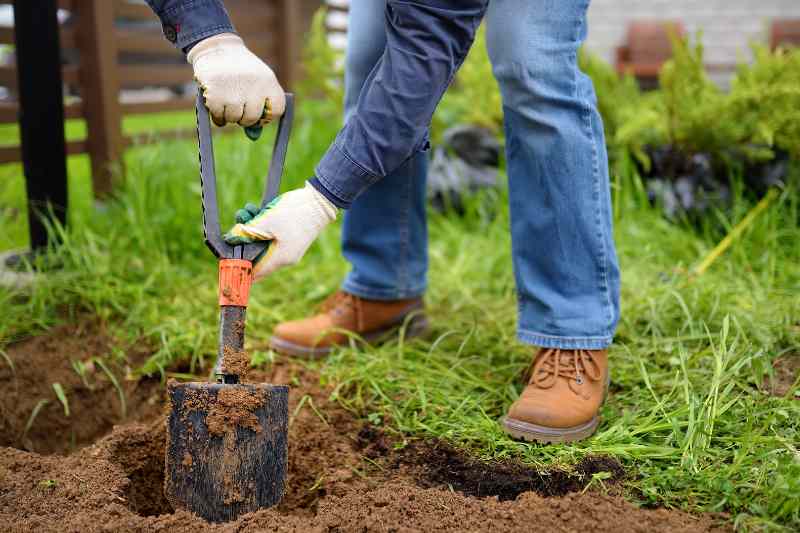
- Keep topsoil layer, it is darker, richer. Remove remaining soil, especially if garden soil is calcareous;
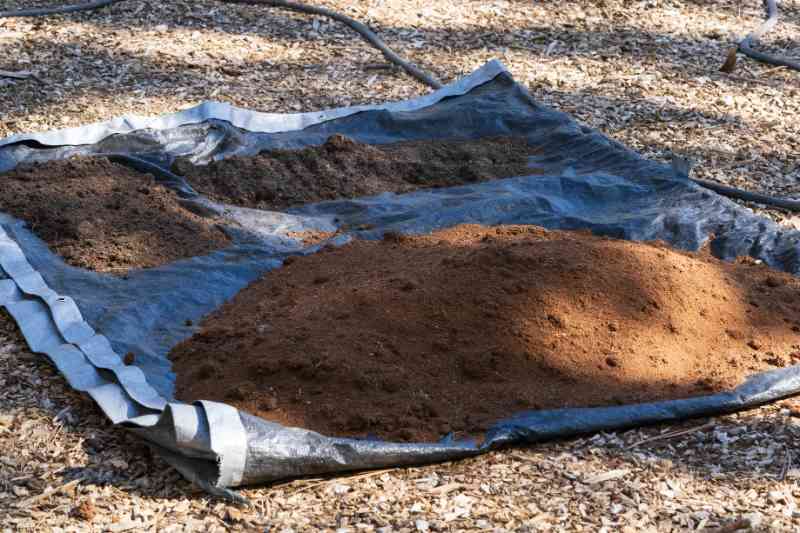
- Prepare substrate mix on large tarpaulin (or in big container) next to planting hole: two-thirds true heather soil, top arable layer recovered from garden soil and one-third peat or good-quality potting compost. Mix well with spade. Incorporate base fertiliser (horn meal);
- Lay drainage layer of gravel 5–8 cm thick at bottom of hole, cover with geotextile felt to prevent mixing and clogging, then add layer of substrate mix;
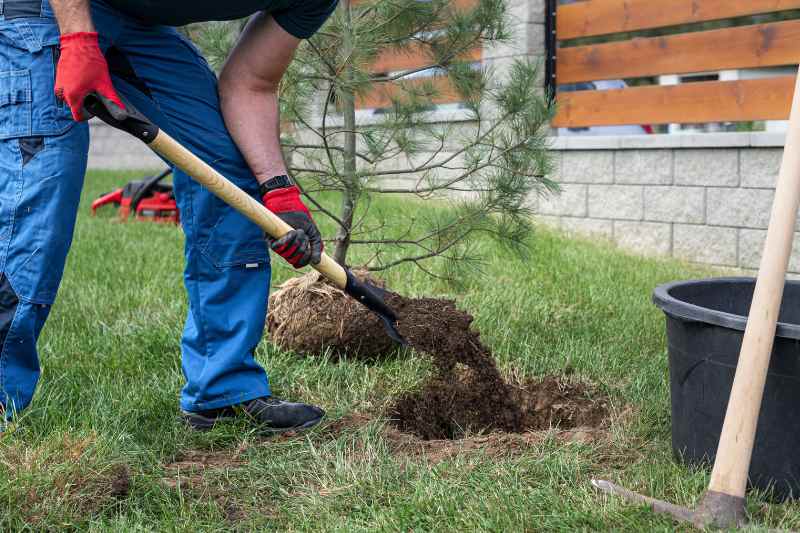
- Place tree centrally, checking with long stake that collar of tree (junction between trunk and roots) is correctly positioned, neither too deep nor raised (prefer slight mound rather than burying collar);
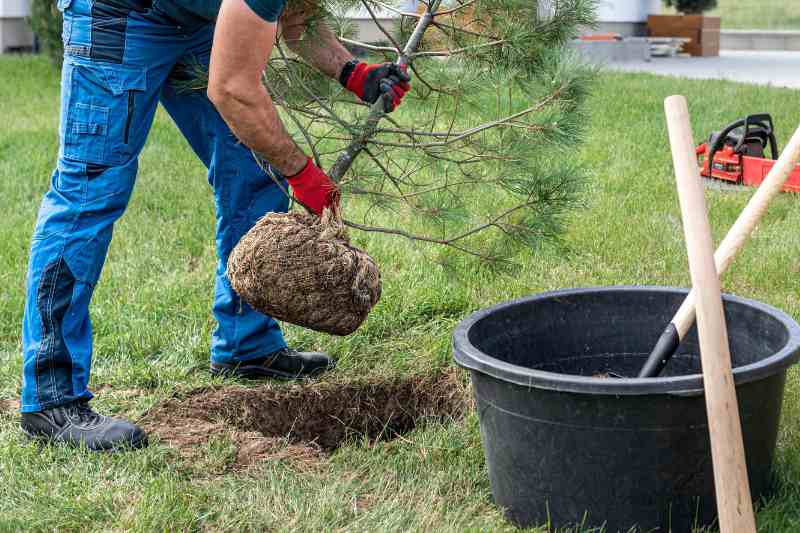
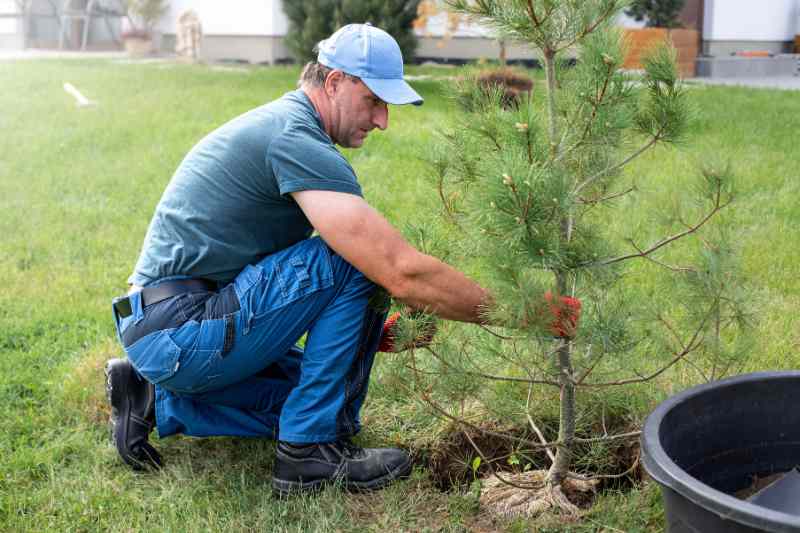
- Backfill all round with substrate mix and firm lightly around trunk to remove air pockets, shaping circular watering basin;
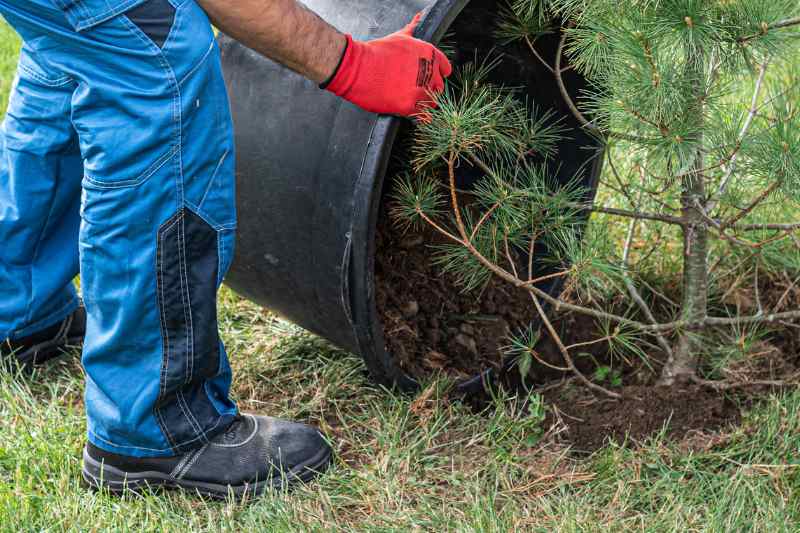
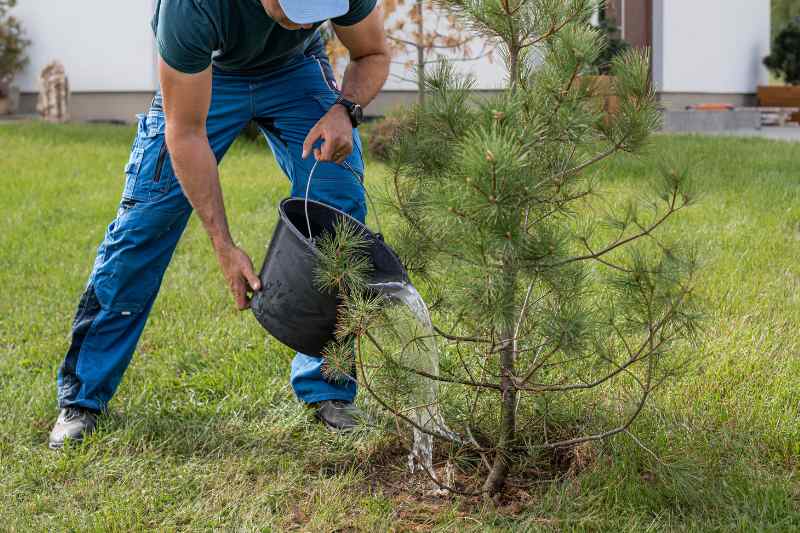
- Water well at planting, at base, with 20-litre watering can, whatever weather, then regularly during first year, especially in dry spells and hot summer (heather soil holds less water and dries quickly, so be vigilant);
- Mulch with thin layer (RCW and garden leaf litter mixed, optionally pine bark).
Learn more in video!
We demonstrate planting an ericaceous tree visually in this video.


































Comments