Alliums delight us in late spring, with their mauve or white globes. Although often planted in borders, they are equally ornamental in large pots or planters, ideal for a balcony or terrace.
Here’s how to plant alliums in containers the right way to enjoy their divine flowering next year!
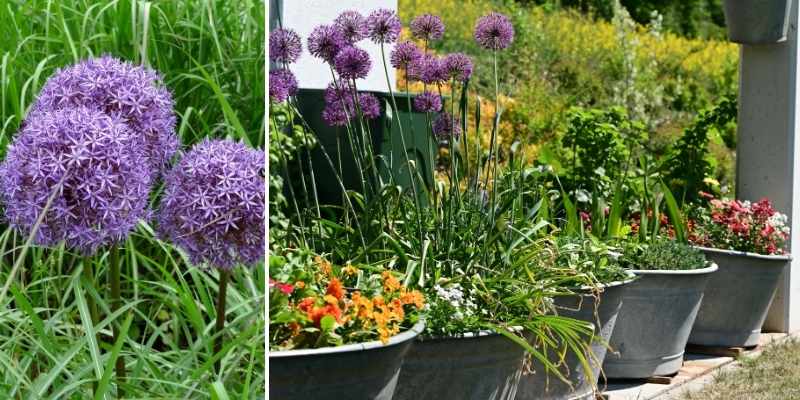
Why are they suitable for container planting?
Alliums are perfectly suited to container or planter culture for several reasons:
- Their visual impact is guaranteed with spherical flowers borne on straight stems that give structure to small spaces.
- They are undemanding bulbs with a compact root system, ideal for medium-sized containers (20 cm depth is sufficient for some Alliums).
- They tolerate occasional missed waterings, perfect for exposed balconies.
The alliums best suited to containers are those of a small to medium bulb size*, that is between 4 and 12: Allium christophii, Allium x schubertii, Allium sphaerocephalon, Allium karataviense, etc.
My tip: for small and/or narrow planters, avoid bulbs larger than size 10. Prefer dwarf or medium varieties for a balance of aesthetics and practicality.
*: bulb size is always indicated on packets or online, and of course at Promesse de fleurs!
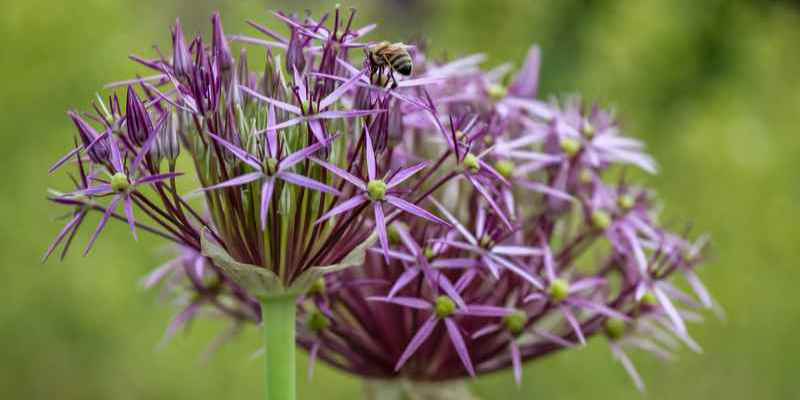
When to plant alliums in pots?
Plant from September to November: as with all spring-flowering bulbs, autumn allows bulbs to root before winter and be ready for flowering, mainly between April and June for alliums.
You can plant some late Alliums in March for summer flowering, such as Allium millenium.
How to plant alliums in a pot or planter?
Required materials
- Pots or planters with drainage holes, minimum depth 20 cm.
- Universal compost, or potting compost for pots and planters (or good garden soil).
- Sand.
- Gravel, small stones, clay pebbles or broken pottery for drainage.
- Trowel (or bulb planter for large sizes).
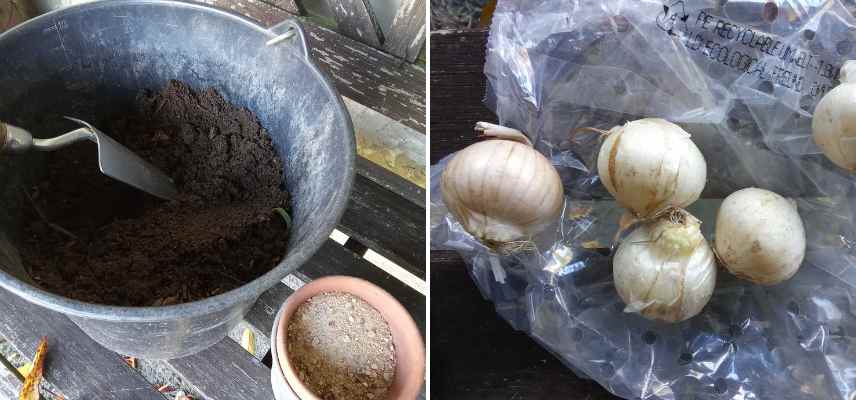
1- Prepare the pot or planter
- Place a 3 cm layer of clay pebbles or gravel at the bottom of the pot to ensure good drainage;
- Fill the pot two-thirds full with an equal mix of universal compost and sand to lighten it. If you don't have sand but have sandy soil, use garden soil instead for the mix. If your soil is poor (light in colour), add a little compost (10%) to the planting mix to enrich it.
My tip: soil from molehills is excellent for this type of planting.
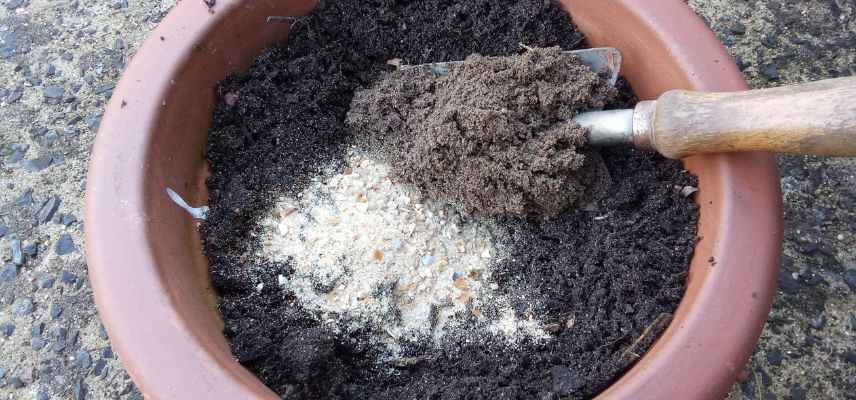
2- Plant the bulbs
- Check bulb condition: they should be firm to the touch, with no sign of mould;
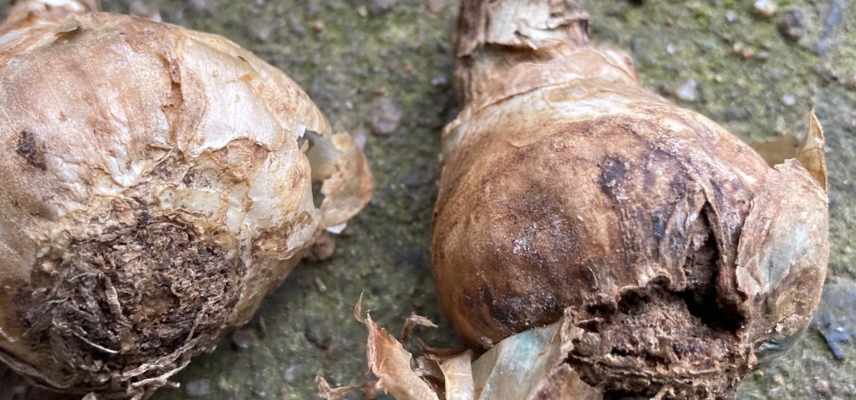
- Bury bulbs at 2–3 times their height (e.g., a 5 cm bulb should be planted 10–15 cm deep). Position bulbs point upwards (roots downwards);
- Plant densely, leaving only 4 to 10 cm (4–5 cm for small sizes, 10 cm for sizes over 12) between bulbs so they have room to develop.
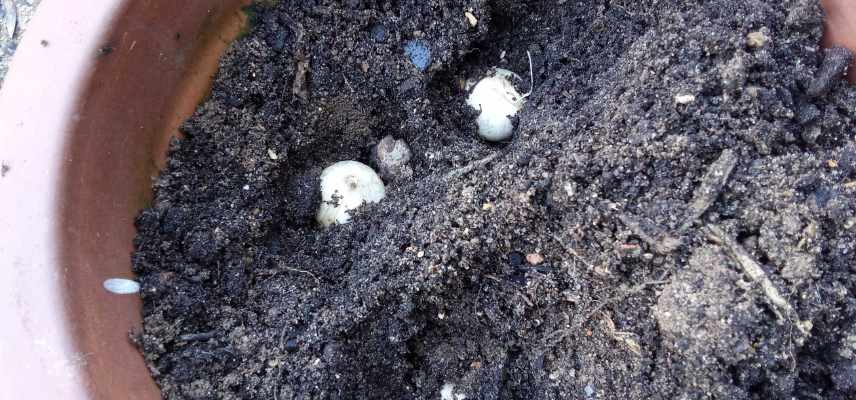
3- Cover and manage watering
- Cover bulbs with the remaining compost mix.
- Watering: with a well-prepared substrate mix you normally do not need to water after planting, but this can vary by region or pot location.
- In dry, warm climates: a light watering after planting helps trigger rooting.
- In wet climates or rainy autumns: no need to water — ambient moisture is sufficient. Bulbs are more at risk from excess water than drought at this time!
- Finally, if your planters are sheltered from rain (covered balcony, protected terrace), water moderately at planting time (to settle the substrate), then resume regular watering from March (when shoots appear), allowing the substrate to dry out between waterings (bulbs need relative dryness to avoid rot).
What to plant with Alliums in a container or planter?
When planting in containers, it’s useful to hide allium foliage, which isn’t always attractive. Surround them at planting with perennials such as Sedum spectabile, nepeta, a hardy geranium or airy grasses like Stipa tenuifolia to conceal the dry leaves.
We give more ideas in Allium: 9 successful pairing ideas.

































Comments