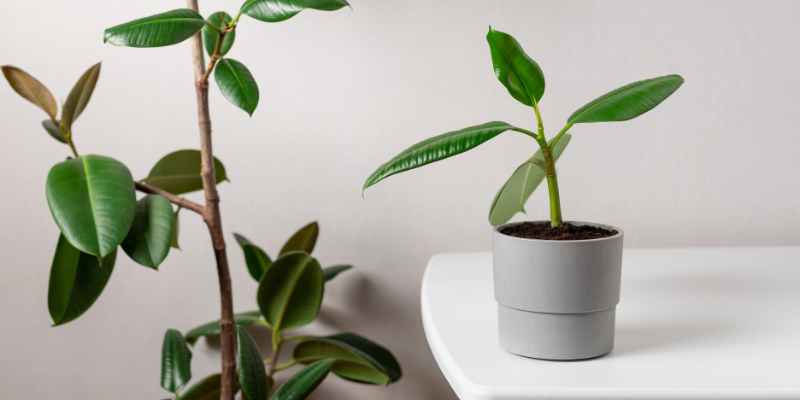
Ficus ficus is an essential houseplant, prized for its decorative foliage. Whether Ficus elastica, "rubber plant", a timeless classic, Ficus benjamina, Ficus lyrata or Ficus microcarpa, these species charm with vigorous growth and ease of adaptation. Easy to care for, they appreciate bright light without direct sunlight and moderate watering, with good drainage to avoid waterlogging. Ficus also has the advantage of being easy to multiply. Ficus cutting is a simple way to obtain new plants while retaining characteristics of the parent plant. Here’s how to propagate ficus in a few steps!
When to propagate ficus?
The ideal period runs from spring to early summer, when natural light is abundant and ambient warmth stabilises around 20 to 25 °C. These conditions favour root formation and reduce risk of rot. To maximise success, avoid taking cuttings in autumn or winter unless you have suitable artificial lighting and a warm, stable environment.
How to take ficus cuttings?
There are mainly two simple techniques: Ficus cuttings in water and cuttings in soil, under cover.
Ficus cuttings in water
Required materials :
- A pruning shear or disinfected scissors
- A glass container (jar or glass)
- Room-temperature water
- Take a healthy stem about 10 to 15 cm long, with at least two or three leaves.
- Remove the leaves at the base of the stem.
- Place the cutting in a glass of water, ensuring the leaves do not sit in the water.
- Set the container in a bright place, out of direct sunlight.

- Change the water every two to three days to prevent mould growth.
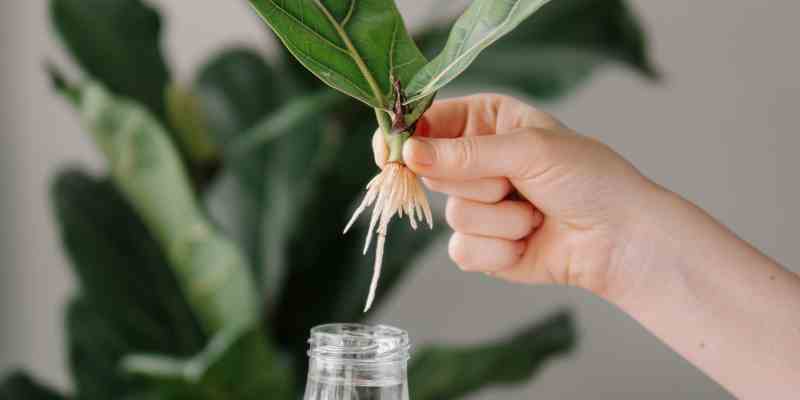
- When roots reach 3 to 5 cm long (after 2 to 4 weeks), pot up the cutting.
Propagating ficus under cover
This method is particularly suitable if you want the plant to acclimatise directly to its final potting medium.
Required materials
- A pot with some seed and potting compost
- Optional: a rooting activator
- A cloche, a plastic bag or a mini greenhouse
- Prepare a ficus cutting 10 to 15 cm long, with two or three leaves, as for the water method. Remove lower leaves to expose the base of the stem.
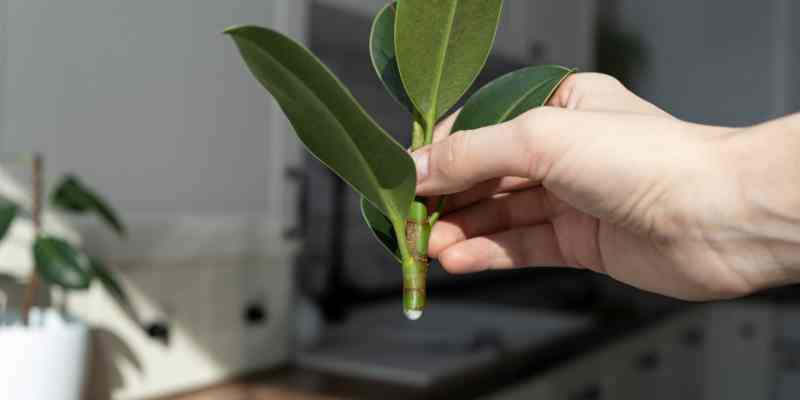
- If desired, dip the base of the cutting in rooting activator to stimulate root formation.
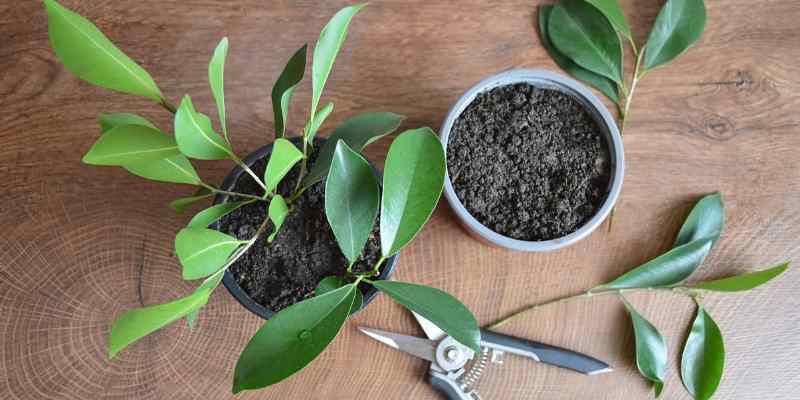
- Fill a small pot with a light, well-draining compost (seed and potting compost or houseplant compost), then moisten without waterlogging.
- Plant the cutting by gently inserting the stem into the compost, then firm the compost around the base to ensure good contact.
- Cover the pot with a clear plastic bag or the mini greenhouse without letting it touch the leaves. Small stakes can hold the plastic away. This creates a warm, humid atmosphere favourable to rooting.
- Place the setup in a bright spot, sheltered from direct sun to avoid overheating inside the bag.
- Water moderately if the compost starts to dry, taking care not to saturate the soil. Vent the bag for 10 to 15 minutes every two to three days to prevent mould development.
- After 3 to 6 weeks, check for roots by gently tugging the stem: if you feel resistance, the cutting has taken.
Good to know
Ficus produces a white latex at the cut. This is natural. To limit sap flow, rinse the stem with warm water immediately after cutting.

Caring for a Ficus cutting
Once cuttings are potted on, keep them sheltered from drafts and direct sun. Maintain moderate humidity without overwatering. Overly soggy compost may cause young roots to rot. Ideal temperature is between 20 and 25 °C, with generous indirect light.
Mist regularly if air is dry, especially during the first weeks. When you see new growth, rooting has succeeded. You can then begin to space out waterings and gradually remove the plastic protection.
When the plant reaches 15 to 20 cm in height, pot on into a larger pot containing a compost suited to houseplants. At this stage, your new ficus is ready to grow on.



































Comments