Sowing coriander isn't the easiest to get right, but with good technique and proper care you will harvest your own coriander to flavour oriental and Asian dishes.
Follow my tips to grow this aromatic plant successfully!
Characteristics of coriander
Although often called Chinese parsley or Arabic parsley (it has Near Eastern and Mediterranean origins), coriander -Coriandrum sativum is a more delicate aromatic plant than common parsley, wilting faster once cut. Like cumin, it doesn't much like being transplanted.
This herb is an annual plant, meaning it completes its life cycle in a single year and dies back with frosts. Therefore, if you want to enjoy it in cooking, sow it again every year.
Coriander is one of those aromatics that self-seed, so if you already have a large patch in the vegetable garden, let some plants self-sow!
NB: some people dislike this herb, finding it has a strange flavour. Are they influenced by the Greek etymology koris (bug), referring to the smell of its leaves? That's certainly not my view — tastes differ…
When to sow coriander?
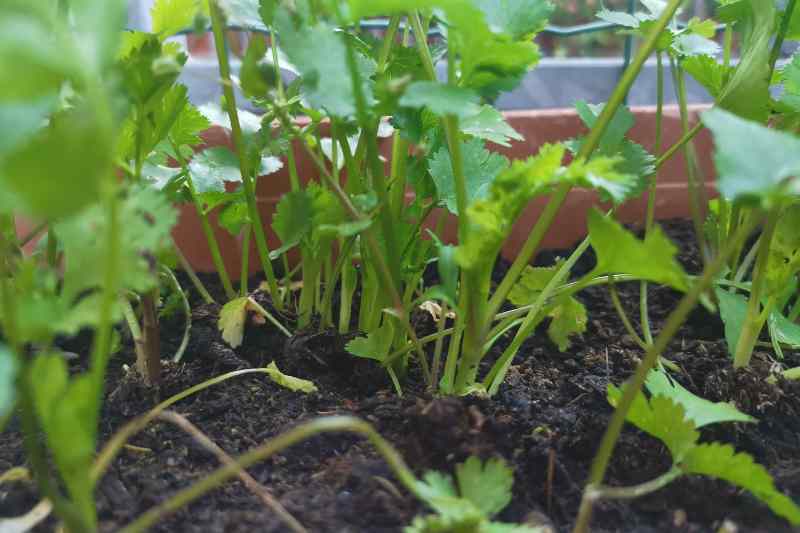
Sow between April and May outdoors, when soil warms to at least 12°C, or carry out early sowings in seed trays between February and April, under heated cover or indoors (but transplanting is delicate!).
Another approach recommends early sowing in August–September for an earlier harvest the following spring.
Buy or harvest coriander seeds?
As with many Apiaceae (umbellifers), you can harvest your own seeds at end of summer, around August, when the small globular seeds from the flowers turn brown. Otherwise, it's very easy to find seeds for sale… or from your favourite online nursery!
Where to sow coriander?
- Exposure: coriander is one of sun-loving aromatics. It needs a sunny or semi-shaded spot, avoiding hot afternoon sun (which would make it bolt quickly). Fragile with thin stems, avoid windy positions. On a balcony, favour west-facing exposure.
- Soil: whether in ground in vegetable garden or herb bed, or in a pot or planter, always keep soil fresh. Coriander likes drained, humus-bearing soils! Sandy soils suit it well.
- Companion plants: it pairs well with vegetables having similar needs for warmth and freshness (tomatoes, beans, peas, cucumber and beetroot). Note that coriander is repellent, so very useful in the vegetable garden.
How to sow coriander?
In open ground
- Prepare soil by loosening it and, if you have compost, spread some and fork it in;
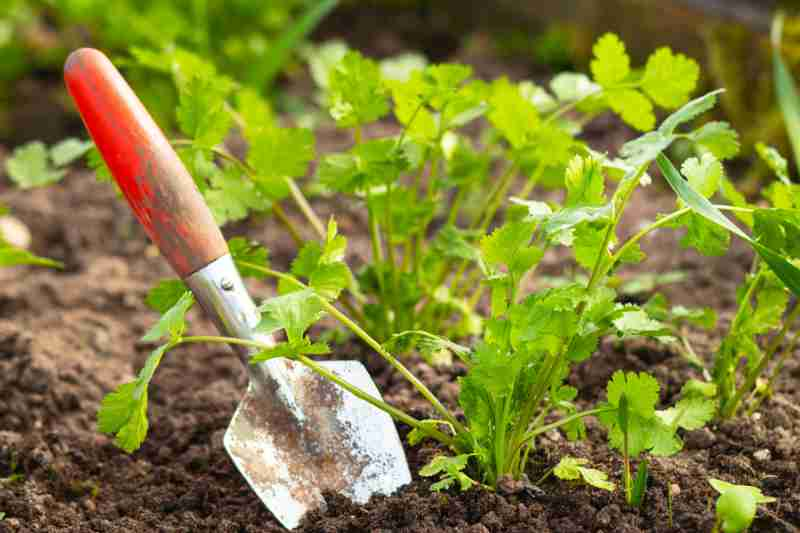
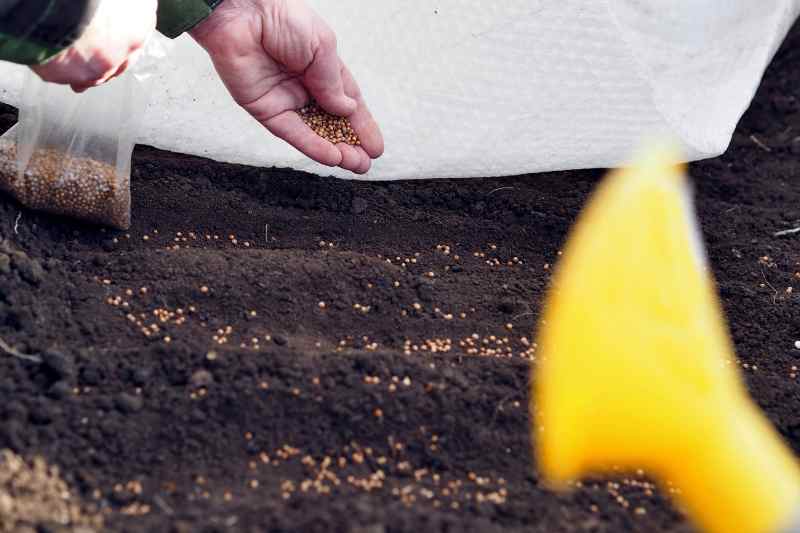
- Sow in situ in small groups, in rows 15 cm apart (broadcast over large areas);
- Cover seeds only lightly with sieved soil; firm down with back of rake;
- Water with a fine-rosette watering can and keep soil moist (but never waterlogged) until germination, which generally takes around 15 days, depending on mildness of climate;
- Thin out in spring to 20 cm spacing once shoots are 7–8 cm tall;
- After thinning, mulch to retain soil freshness.
In a pot
You can also grow coriander in a pot (deep enough, as it has a taproot) provided the substrate is kept moist, otherwise it will become leggy.
- Place some clay pebbles at bottom of pot/planter;
- Prepare a mix of equal parts potting compost and sand;
- Fill substrate to 1 cm below rim of pot/planter;
- Place seeds in small groups or in a line and cover them lightly with substrate;
- Water regularly.
→ Read also our detailed advice in Growing coriander in a pot.
Secret to success: barely cover the seeds.
My tip: sow at regular intervals, every two to three weeks, to have leaves throughout the season if you use a lot!
Harvest and culinary use
Alexandra gives lots of information in her tutorial How to harvest, dry and use coriander?
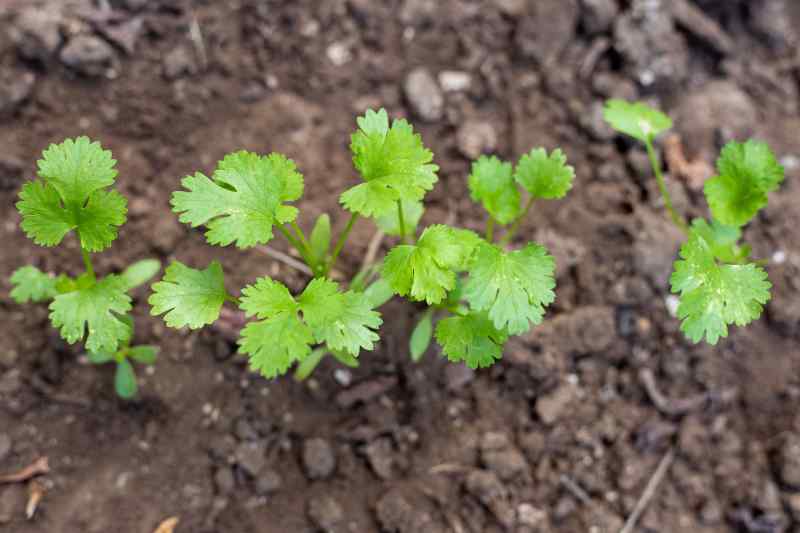
Always harvest before flowering, from late spring until August (or in September–October for seeds). Coriander is mainly used fresh, by finely cutting the leaves with scissors to release their full flavour.
I use it a lot myself, having a soft spot for Oriental and Asian cuisine. Coriander lifts all my Moroccan, Indian and Thai dishes, always added as a finishing touch to garnish plates or the main dish, because its delicacy cannot withstand cooking.
It's perfect on lentil dahls, in an Indian curry, in Thai prawn and coconut milk soups, finely chopped over lamb or chicken tagines or in Moroccan chorba.
I also find it pairs very well with lemon. Add a few sprigs to a mango salad or pineapple carpaccio.
You can of course use the seeds as a condiment in some sauces and curries, in meat marinades and in the famous mushrooms à la grecque, very seventies! Also used in liqueurs, although this use is less common.

































Comments