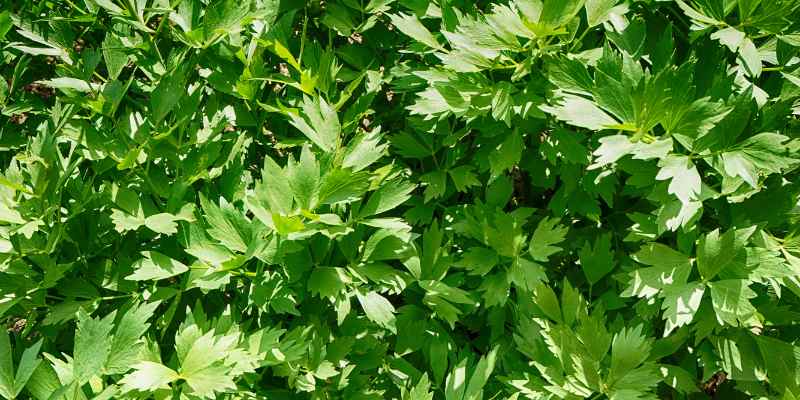
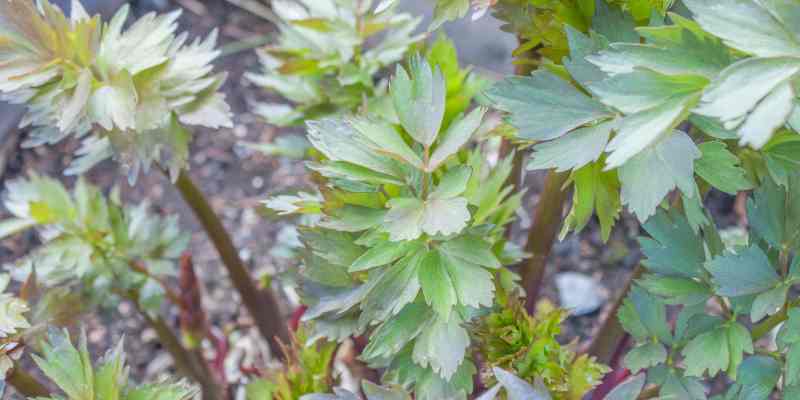
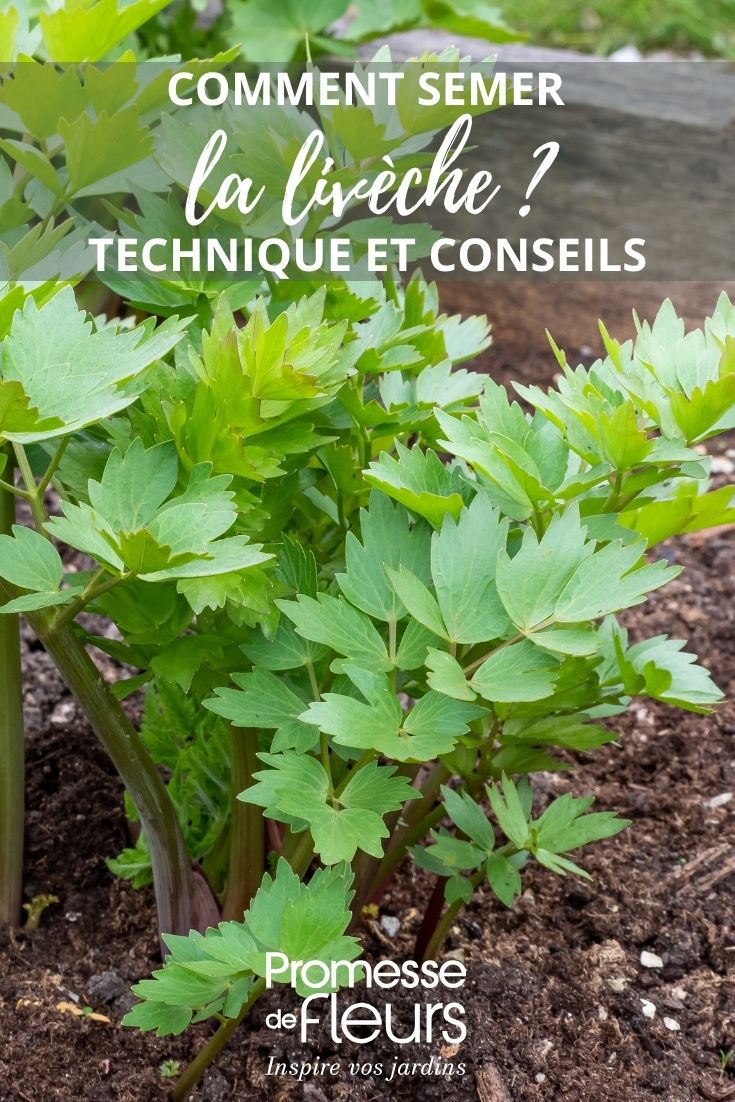
Do you know the lovage? This large deciduous perennial, also called mountain lovage, mountain angelica or perennial celery (and Levistichum officinale in Latin), is a medicinal and aromatic plant that is sown in spring. Discover how to sow lovage in the vegetable garden!
When to sow lovage?
Sowing lovage in open ground is done from March to June. It needs a minimum of 15°C to germinate.
An earlier sowing under a cold frame can be carried out from February or March, but we do not recommend it, this plant being somewhat delicate for indoor sowing.
Where to sow lovage?
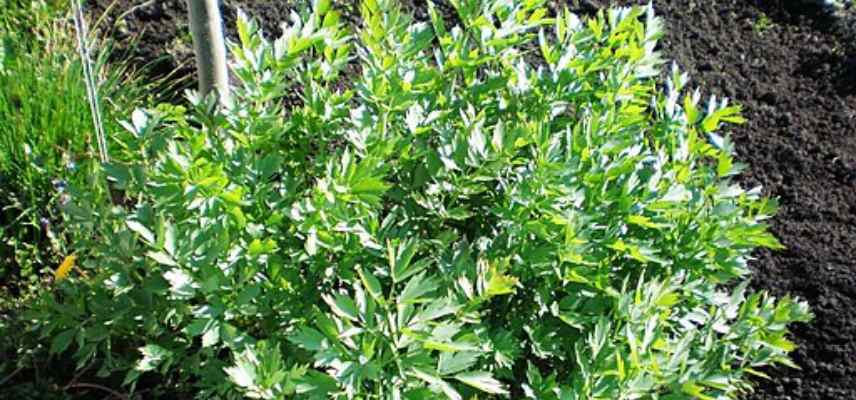
Once sown, lovage behaves like a perennial. It will persist for at least 15 years if happy in the spot where you planted it, returning faithfully each spring! Choose its location carefully, giving it enough space (it grows up to 1.50–2 m when in flower, with an 80 cm spread).
Hardy (down to −15°C), it can be planted in many regions, in any good garden soil.
- Soil: lovage needs soil that remains fresh, loose, well drained and rich in humus to grow well.
- Position: a perennial of semi-shade, or full sun in the most northerly regions.
- Companions: lovage's strong scent repels pests but inhibits the growth of some plants. Pair it ideally with blackcurrant or chilli, or plant it alongside other aromatic herbs in a physic garden.
How to sow lovage?
Equipment
- Lovage seeds from commercial sources or from your own harvest
- Rake
- Watering can
- Labels
- Make furrows 60 cm apart, 0.5–1 cm deep;
- Sow in rows, thinly (very open);
- Cover seeds with the displaced soil;
- Firm down with the rake;
- Water and label;
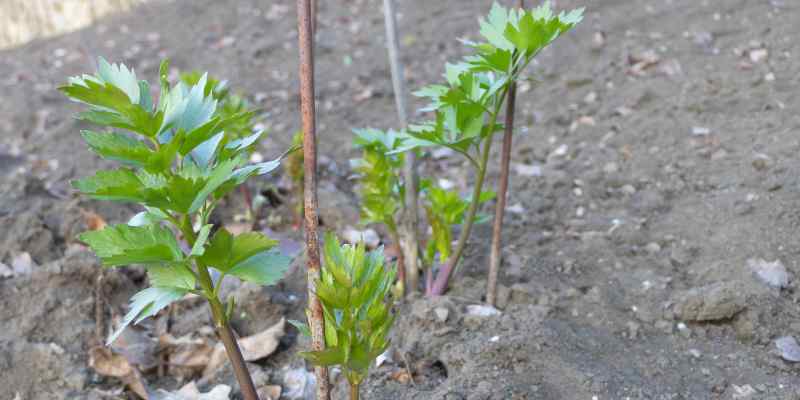
- Emergence takes between 2 and 3 weeks, rather long for this plant;
- Prick out when seedlings have 4 leaves, usually 5–6 weeks after sowing, keeping only the healthiest;
- Cut flower stems in summer to prevent the leaves from toughening and to obtain a bushier plant. Keep one head if you want seeds to sow again;
- Water weekly, moderately.
Harvest and uses
Slow to grow and establish, harvesting lovage leaves will only be possible after one year, roots after three years. Harvest as needed, almost all year, from March to October–November. As with other aromatic herbs, use immediately in cooking, or dry for later use.
The greenish flowering looks very similar to that of angelica, but smaller. Seeds are harvested once dry and brown.
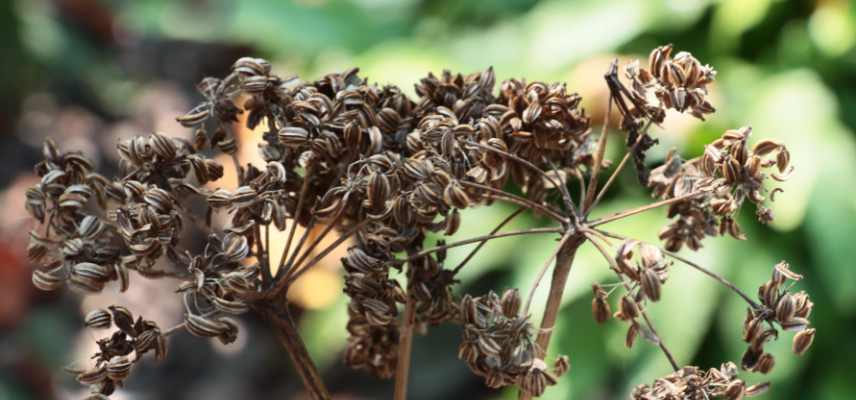
Once the plant has flowered, the flavour of the leaves becomes bitter.
Lovage is mainly eaten raw and finely chopped to flavour salads and spring soups or omelettes. Its seeds are used as a spice in sauces, marinades, stews, celery salt and homemade breads (somewhat like ground elder). To enjoy the plant's diuretic, depurative, carminative benefits, and its action on digestion, dried leaves or seeds brewed as an infusion are preferred (roots are infused for a diuretic indication).

































Comments