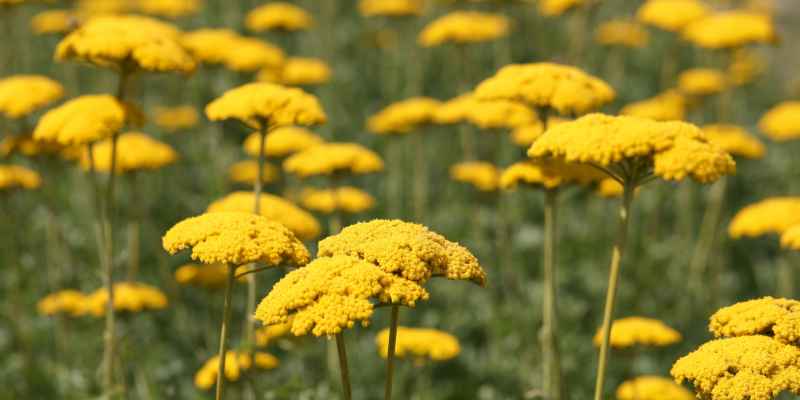
Ideal plant for our gardens of the future, perfectly heat- and frost-resistant, melliferous, colonising poor areas in need of planting, yarrow is winning over more and more gardeners. Its slightly wild look and the bright colours of many hybrids make it a companion for very diverse gardens, from dry or gravel gardens to naturalistic and country gardens. It is easy to sow this cheerful perennial to enjoy for many years.
Here are the steps for a successful sowing!
When to sow yarrow?
Common yarrow, Achillea filipendulina and mat-forming groundcover yarrows are sown early in spring, or between September and October. In fact, they can be sown all year round, as seeds enter dormancy and only wake when soil warms.
Sowing in March should be done under cover in a greenhouse or cold frame; sowing later in May or June can be done directly in situ. Only an autumn sowing generally produces flowering the following summer. Spring sowings will only flower the year after.
Where to sow yarrow?
Fond of poor, very well-drained soils, sandy to stony and calcareous, yarrow is a tough plant and thrives in full sun (including hot exposures).
Ideal planted in the ground, although you can have fun sowing it in a pot on a south- or west-facing balcony. Sow it in large naturalistic areas and meadows that it enlivens with its charming flat corymbs, but also more traditionally in a vicar's garden, in a border for the lower varieties or in a cut-flower garden, as it complements summer bouquets wonderfully with its fine foliage and excellent vase life. It will obviously be happy in a scree or dry garden without watering!
How to sow yarrow?
This technique applies to common yarrows, the most widespread, but also to other species such as Achillea filipendulina, Ptarmica and groundcover yarrows.
Equipment
- yarrow seeds or your own seed harvest
- seed compost or a light growing medium (mix of compost + sand or grit)
- a seed tray with lid (or a cell tray)
- a greenhouse or a cold frame
- a spray bottle
Method
- If possible, harvest ripe yarrow seeds in September or October when they are nicely brown – seeds are white inside. Viability lasts about 3–4 years.
- Fill the seed tray with a well-draining substrate mix.
- Sow seeds on the surface and barely cover them.
- Water with a spray bottle. Then keep the medium moist (not waterlogged) with a spray until germination.
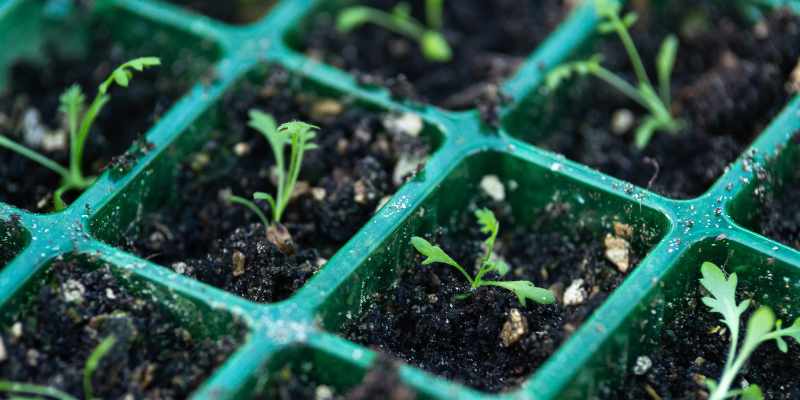
- Place the tray in a cold frame or an unheated greenhouse (15–20°C), sheltered from direct sun.
- Keep the medium moist under cover until germination, then remove cover to avoid excess moisture.
- Prick out seedlings when they have 4–5 leaves, spacing them 30 cm apart to give them room to develop.
- When plants reach 10 cm tall, pinch out tips to obtain bushier plants.
- Continue watering to keep soil just moist, and water during the first summer in case of drought.
- Do not fertilise! The poorer the soil, the happier the yarrow! Excess nutrients favour foliage at the expense of flowering.
My tip: for a natural effect in a wild garden area, mix two or three yarrow varieties and sow them broadcast.
Note: another frequently used propagation method is dividing clumps and offshoots, but sowing yarrow is very economical and produces large numbers of plants. If you have plants to divide, see our tutorial: How to divide yarrow?



































Comments