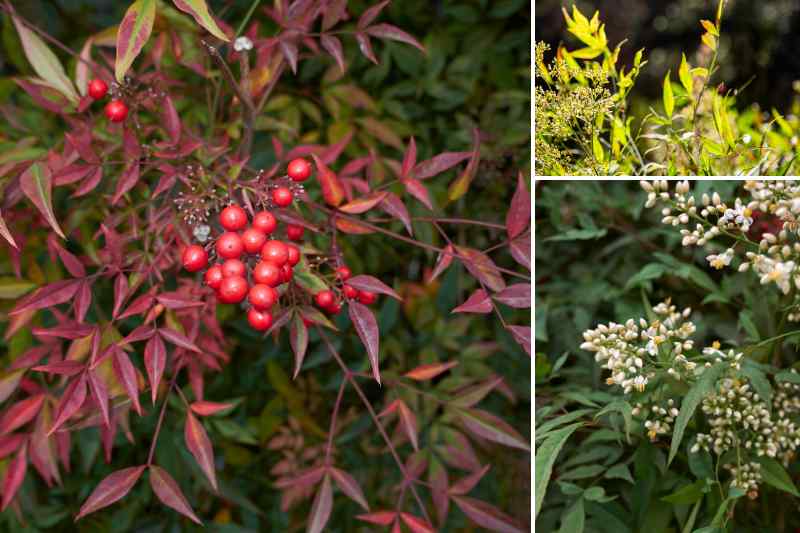
Nandina domestica, or heavenly bamboo, is an evergreen shrub appealing for its decorative foliage that changes with the seasons: red in spring, green in summer and purple in autumn, as seen with Nandina domestica 'Firepower'. In height, Nandina domestica typically reaches between March and April 1 and 2 metres, with some dwarf varieties remaining much more compact. Pruning Nandina is not mandatory, but useful to stimulate growth, promote density, correct an unbalanced habit, or rejuvenate old clumps. Discover when, why and how to prune your Nandina correctly.
When to prune Nandina?
The ideal time to prune heavenly bamboo is late winter or early spring, usually between March and April. This timing avoids frosts while allowing work before new growth starts.
A light prune of heavenly bamboo can also be carried out in late summer or early autumn, once flowering has finished, to encourage fruiting and tidy the silhouette.
Avoid pruning during hard frost or in mid-spring, as this can disrupt development of new shoots.
Why prune Nandina?
Here are the main benefits of pruning Nandina:
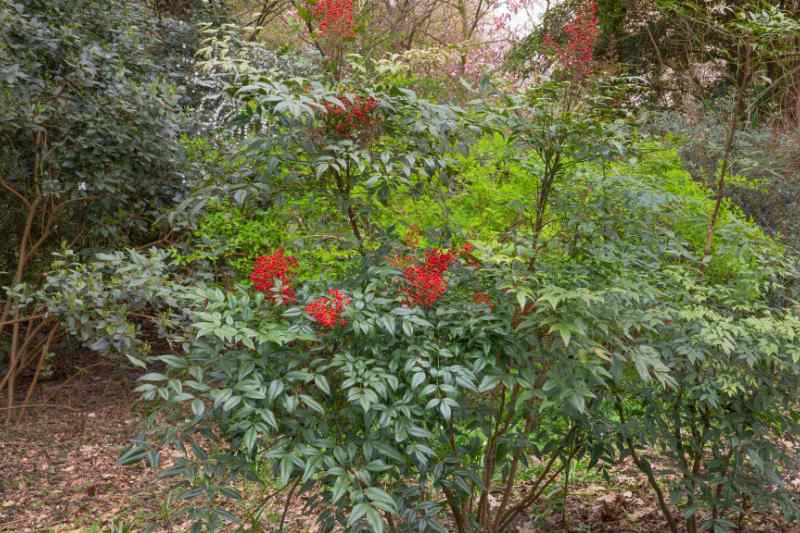
- Improve shape: removing untidy, poorly oriented or overly long stems helps keep a balanced, decorative habit.
- Stimulate growth: pruning encourages emergence of new shoots at the base, rejuvenating the clump.
- Encourage flowering and fruiting: a sensible cut increases vigour of productive stems.
- Remove dead wood: this reduces disease risk and aerates the plant for better overall health.
- Repair after frost: if stems have been damaged by cold, a clean-up prune is often necessary.
Avoid : do not prune during frost, as this weakens the plant; never cut all stems at once, which risks destabilising the branches and delaying recovery; and do not prune too frequently, Nandina being naturally slow-growing.
How to prune Nandina?
Required equipment
- Pruning shear clean, sharp
- Pruning saw for thick branches
- Gardening gloves
Steps to properly prune a Nandina
- Cut all dead, damaged or dry stems at their base, flush with the soil.
- Identify the oldest stems: thick, dark, often bare at the base. Remove about one third of these, cutting 2 to 5 cm from the soil.
- If the clump is too dense, also remove some crossing stems or those growing towards the centre, always at their base.
- To rebalance the silhouette, shorten overly long or disruptive stems. Cut just above a node or a leaf junction pointing outwards.
- Keep a mix of heights to preserve a natural, airy habit.
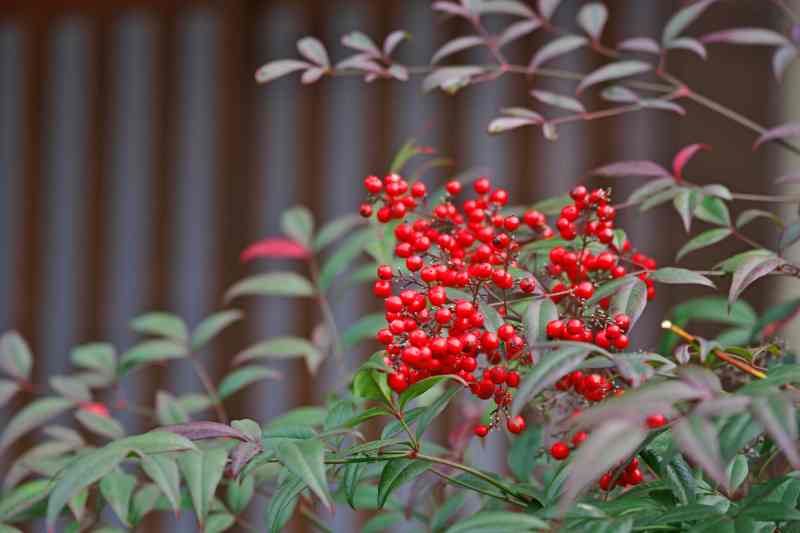
- On compact or dwarf varieties (‘Fire Power’, Nandina domestica ‘Obsessed’...), simply remove dry or poorly positioned stems, always at the base.
Care of Nandina domestica after pruning
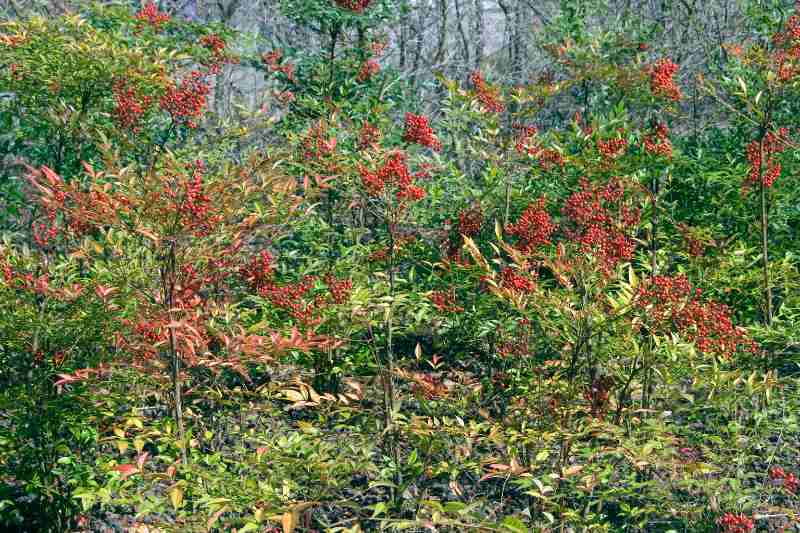
After pruning Nandina, tidy soil at the plant base, then spread a layer of organic mulch (dead leaves, well-rotted compost, RCW...). This protects new shoots, reduces evaporation and gradually feeds the soil.
Water moderately if soil is dry, especially when growth restarts in mild weather. A well-hydrated plant regrows faster and more evenly.



































Comments