Cacti are often grown in pots in this country, except for the lucky few who live in the south and in very sheltered gardens. After a few years of cultivation, it is always a good idea, as with any potted plant, to consider repotting them. How not to hurt your hands during this operation, since cacti, by definition… are prickly, and how to repot them properly? We tell you everything!
Why repot a cactus?
Although slow-growing, cacti always benefit from repotting to renew their substrate, which becomes exhausted over time as with all plants.
Usually sold in small plastic nursery pots, cacti will also do better in a porous material such as terracotta, which has the advantage of being stable and allows better evaporation of water, thus reducing risk of root rot.
Repotting also allows inspection of the roots to detect any disease or pests. Finally, large upright cacti gradually become unstable in pots that have become too small. Time to repot!
When to repot a cactus?
As with many plants, it is best done at the end of winter or the start of spring. Around March–April, cacti emerge from winter dormancy and this operation is favourable to help them recover from stress, at a time when cells wake up and the plant resumes growth.
How often should you repot?
The good thing about cacti is their ability to require little care and to remain several years in their pot without complaint.
But repotting about every three years, depending on their development in the pot, is a good rule of thumb. Check root condition: if roots are cramped and have colonised the pot, it is time to repot. If substrate has become too compact, that is also a sign.
Equipment required
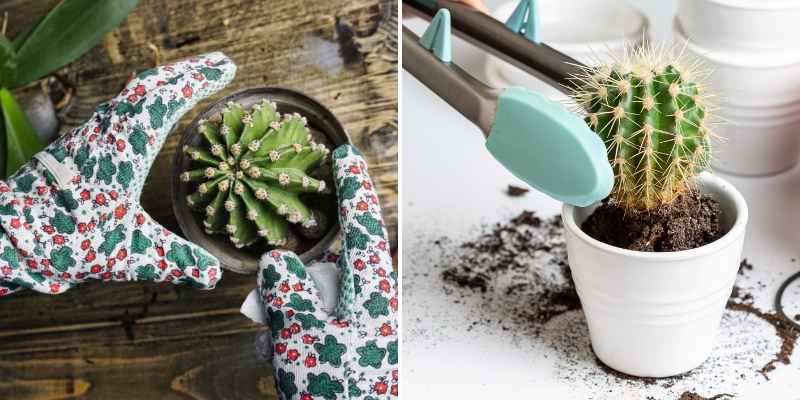
- Thick gloves, tongs or several sheets of newspaper
- A pot slightly larger than the old one (approx. 2 cm larger), with drainage holes
- Clay pebbles, gravel or small stones
- A special cactus potting compost or a mix of equal parts potting compost, lava grit, perlite or sand and garden soil.
How to repot a cactus?
- Stop watering at least one week before repotting: this reduces stress for the cactus and minimises risk of root rot after repotting.
- Place a shard of pottery over the drainage hole and pour a draining layer (clay pebbles or gravel) into the bottom of the pot to about one-third of its height.
- Fill the pot with a good layer of compost so that the cactus rootball sits 1–2 cm below the rim of the pot once placed.
- Remove the cactus from its pot, using very protective gloves, a pair of tongs or, for larger specimens, sheets of newspaper folded and formed into a large handle or a thick towel. This step requires care, as you must avoid the sometimes sharp spines of certain species. Tap the pot gently to help free the rootball without damaging the roots.
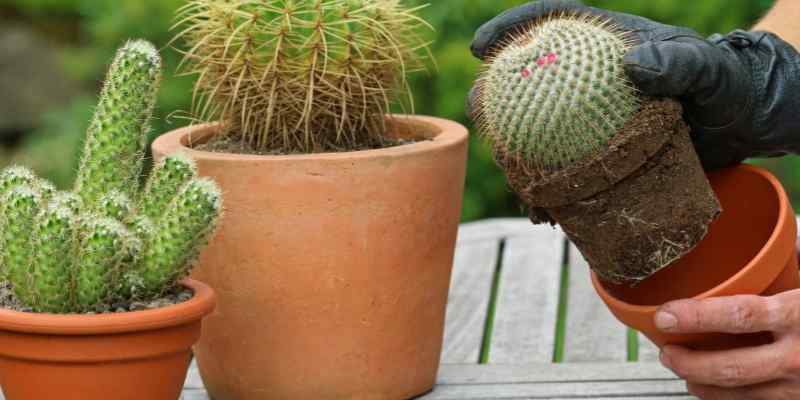
- Place it in the centre of the pot, upright
- Fill around the rootball with a light, free-draining compost, without burying the collar
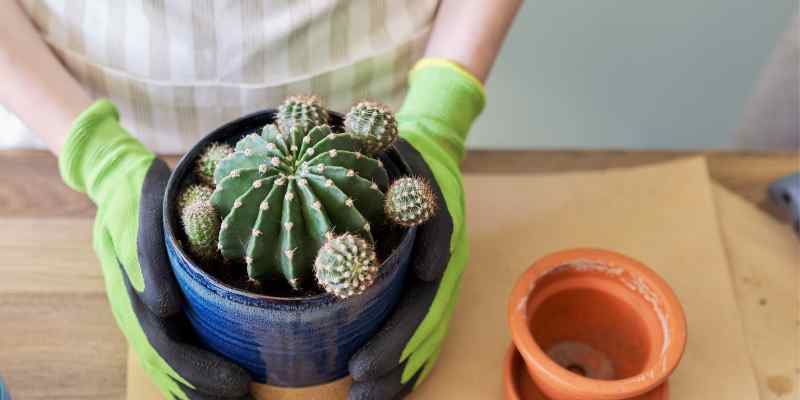
- Firm the compost lightly around the edge while keeping the plant vertical with your gloves or tongs.
- Only water after 10 days to two weeks to allow roots to recover from repotting, and avoid direct sun for a few days to further reduce stress on the plant.



































Comments