Hosta Big Daddy

Hosta Big Daddy
Hosta Big Daddy
Hosta Big Daddy
Hosta Big daddy
Plantain Lily, Funkia
Well packaged in good condition, quickly planted, now we wait for spring!
Muriel , 17/10/2024
Back-to-school special offer!
Get €10 off for every €50 you spend! And get up to €40 off on a single order.
How does it work?
1. Shop your favourites
Add your favourite plants to your basket. For every €50 you spend (excluding delivery charges, store credit and the plastic-free option), you’ll receive a €10 voucher.
€50 spent = €10 voucher
€100 spent = €20 voucher
€150 spent = €30 voucher
€200 spent = €40 voucher
2. Place your order
Once your basket reaches one of the spending thresholds, place your order. You can even choose your delivery date!
3. Receive your voucher
As soon as your order has been shipped, you’ll receive an email containing your personal voucher code and its value.
4. Use it on your next order
Your voucher is valid for 90 days from the date you receive it. It can be used once only, on a new order worth at least the value of the voucher, excluding delivery charges.
Please note: Vouchers can be combined with other offers, but cannot be split or refunded.
Home or relay delivery (depending on size and destination)
Important: You may be charged customs duties by your country’s customs authorities upon delivery.
Schedule delivery date,
and select date in basket
This plant carries a 12 months recovery warranty
More information
We guarantee the quality of our plants for a full growing cycle, and will replace at our expense any plant that fails to recover under normal climatic and planting conditions.


Would this plant suit my garden?
Set up your Plantfit profile →
Description
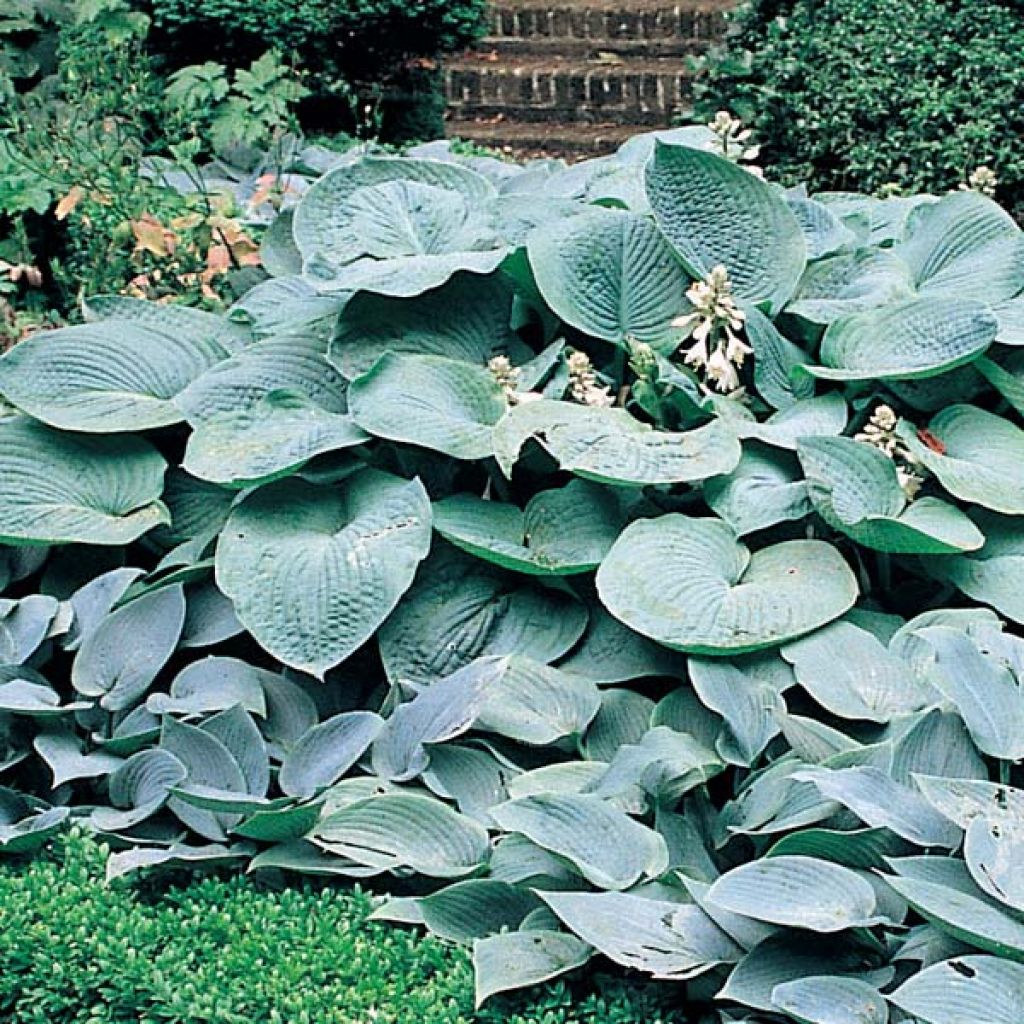
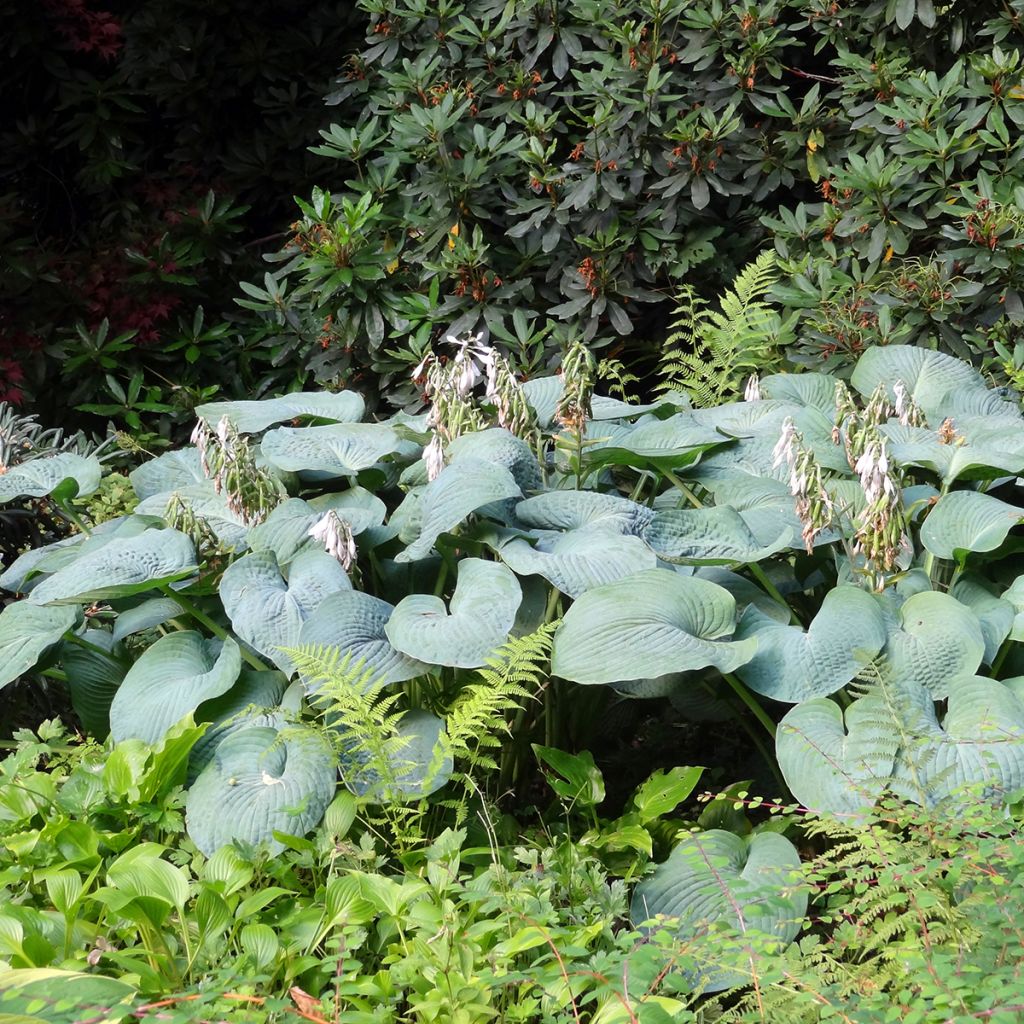
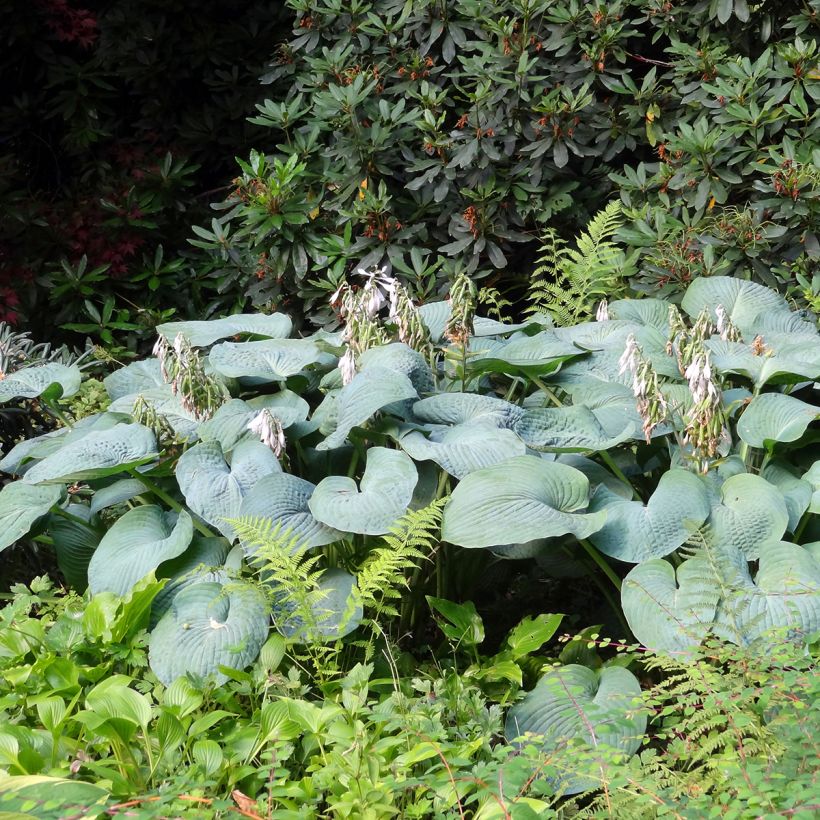
Hosta 'Big Daddy' is a large and beautiful variety with blue-tinged foliage, particularly valued for the texture of its leaves. Rounded, thick and deeply puckered, they become concave at maturity and form a broad clump. This opulent foliage gives character to partial-shade beds, even when it is not in flower. This hosta takes several years to reach its full potential, but with a little care and patience, it will become a truly beautiful plant.
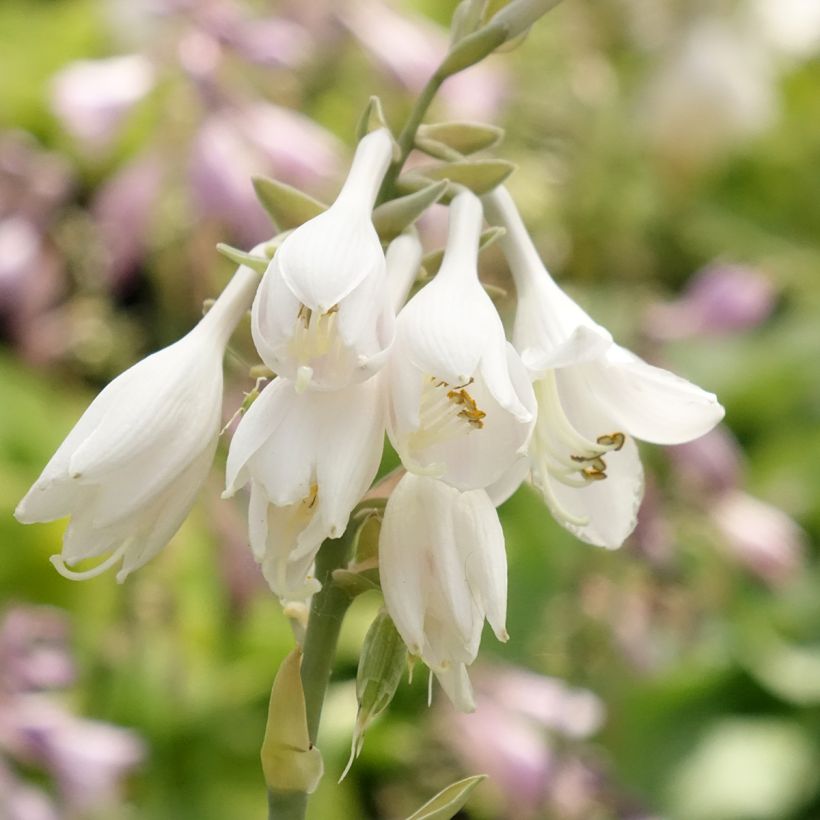
'Big Daddy' belongs to the Asparagaceae family. It is an American horticultural selection attributed to Florence Shaw and registered by Paul Aden in 1978. It is often sold under the name Hosta sieboldiana 'Big Daddy', but its precise parentage has not been established with certainty. This variety received the RHS Award of Garden Merit in 2012. It also received two awards from the American Hosta Society in 1978, including the Midwest Blue Award. The plant forms a dense clump, with foliage reaching 60 to 65 cm in height and 1 to 1.50 m in spread at maturity. Its growth is rather slow. The broadly oval to rounded leaves have a heart-shaped base and a pointed tip. They can measure 25 to 35 cm in length. Their surface has prominent veins and slight puckering. Their thickness makes them less vulnerable to slugs than the leaves of many other hostas, although it does not protect them completely. The blue colour comes from a thin waxy layer called bloom on the surface of the leaves. It is particularly beautiful in spring and early summer, then fades as the season progresses: the foliage becomes greener. A shady position preserves this blue-tinged colour for longer. The leaves emerge in spring, develop during the growing season, then turn yellow and die back in autumn. Flowering takes place between June and August, depending on the growing conditions. The flower stems, which can reach 80 cm in height, bear pendulous, almost white bell-shaped flowers, sometimes lightly tinged with lavender. They rise only modestly above the mass of foliage. The crown is hardy down to −28 °C.
Hosta 'Big Daddy' is particularly beautiful in Japanese-inspired gardens and shady beds where foliage takes centre stage. Its large, blue-tinged and puckered leaves combine well with Hakonechloa macra 'All Gold', the evergreen fern Polystichum polyblepharum and Astilbe chinensis 'Purpurlanze'. Their finer foliage and flowers bring lightness to this display. Over the years, the hosta will fill out and take its rightful place. This variety can also be grown in a large, wide pot on a shady terrace, with regular watering.

Hosta Big Daddy in pictures

Flowering
Foliage
Plant habit
Botanical data
Hosta
Big daddy
Asparagaceae
Plantain Lily, Funkia
Hosta sieboldiana ‘Big Daddy’
Cultivar or hybrid
Planting and care
Hosta 'Big Daddy' should be planted in partial shade or light shade, in fertile, humus-rich, moist soil. Loamy or clay soil loosened with compost allows it to develop large leaves. It tolerates an acidic to slightly alkaline pH and does not require ericaceous compost. Scorching sun and drying winds damage the foliage.
Plant in spring or September-October, with the top of the rootball level with the soil. Water regularly to help it establish, and continue watering during dry periods. An organic mulch limits evaporation; apply compost in spring to maintain soil fertility. Division is only necessary to propagate the plant or when the clump is running out of space: this plant does not like being disturbed too often.
In a pot, a container with drainage holes and a diameter of 50 to 60 cm is recommended for a mature plant. Repot progressively as the plant grows. A rich, well-drained growing medium, kept moist by regular watering, is essential. Do not allow water to stand in the saucer.
The flower stems can be cut back at the base after flowering. Remove the foliage when it has completely yellowed and dried in autumn.
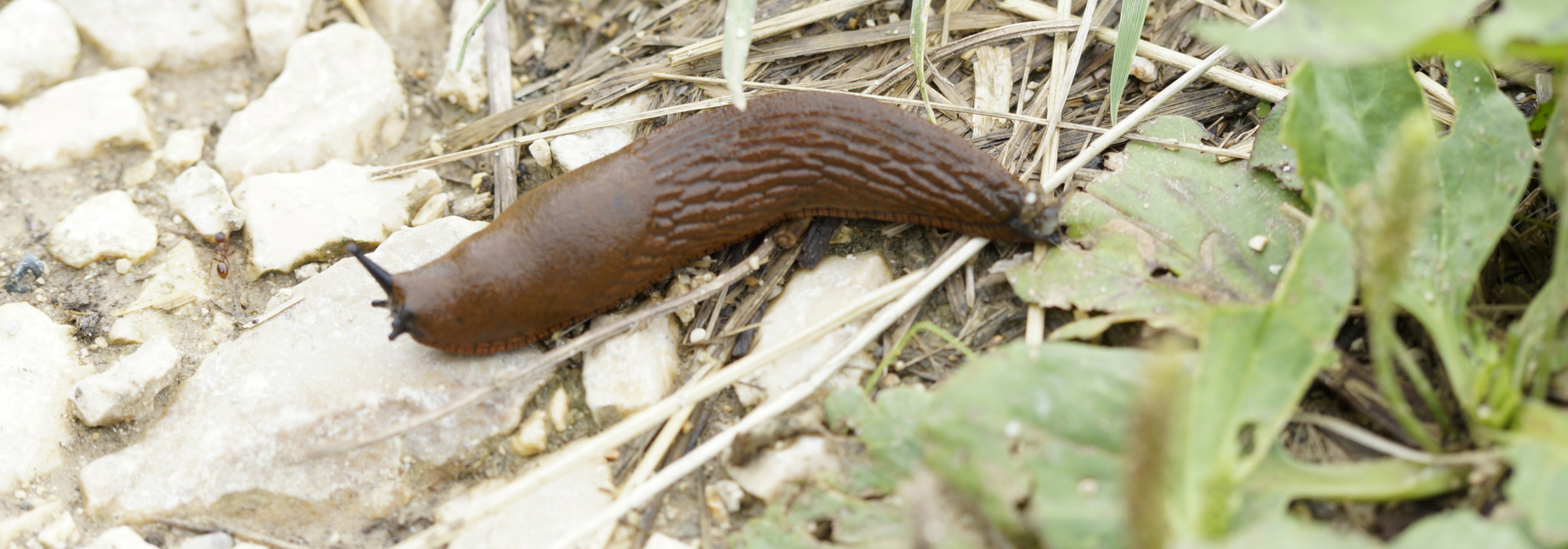
Because slugs and snails share a preference for damp places, they are never far from hostas. Although blue or variegated hostas often have thicker, tougher foliage and are therefore less appetising to slugs, these plants must still be protected from gastropods. Protect your hostas by surrounding them with Ferramol-based pellets (approved for organic farming), crushed eggshells, coffee grounds, shredded material or any other dry, rough natural substance that deters them. Hedgehogs are the gardener's best allies when it comes to controlling gastropods. Unlike chickens, they do not turn over the soil or attack the bright green shoots of young plants. Finally, some plants have a scent that repels slugs, such as wormwood and garlic.
Planting period
Intended location
Care
Planting & care advice
-

-
-

-

-

-

-

-

-
, onOrder confirmed
Reply from on Promesse de fleurs
Recently viewed products
Haven't found what you were looking for?
Hardiness is the lowest winter temperature a plant can endure without suffering serious damage or even dying. However, hardiness is affected by location (a sheltered area, such as a patio), protection (winter cover) and soil type (hardiness is improved by well-drained soil).

The flowering period indicated on our website applies to countries and regions located in USDA zone 8 (France, the United Kingdom, Ireland, the Netherlands, etc.)
It will vary according to where you live:- In zones 9 to 10 (Italy, Spain, Greece, etc.), flowering will occur about 2 to 4 weeks earlier.
- In zones 6 to 7 (Germany, Poland, Slovenia, and lower mountainous regions), flowering will be delayed by 2 to 3 weeks.
- In zone 5 (Central Europe, Scandinavia), blooming will be delayed by 3 to 5 weeks.
In temperate climates, pruning of spring-flowering shrubs (forsythia, spireas, etc.) should be done just after flowering.
Pruning of summer-flowering shrubs (Indian Lilac, Perovskia, etc.) can be done in winter or spring.
In cold regions as well as with frost-sensitive plants, avoid pruning too early when severe frosts may still occur.
The planting period indicated on our website applies to countries and regions located in USDA zone 8 (France, United Kingdom, Ireland, Netherlands).
It will vary according to where you live:
- In Mediterranean zones (Marseille, Madrid, Milan, etc.), autumn and winter are the best planting periods.
- In continental zones (Strasbourg, Munich, Vienna, etc.), delay planting by 2 to 3 weeks in spring and bring it forward by 2 to 4 weeks in autumn.
- In mountainous regions (the Alps, Pyrenees, Carpathians, etc.), it is best to plant in late spring (May-June) or late summer (August-September).
The harvesting period indicated on our website applies to countries and regions in USDA zone 8 (France, England, Ireland, the Netherlands).
In colder areas (Scandinavia, Poland, Austria...) fruit and vegetable harvests are likely to be delayed by 3-4 weeks.
In warmer areas (Italy, Spain, Greece, etc.), harvesting will probably take place earlier, depending on weather conditions.
The sowing periods indicated on our website apply to countries and regions within USDA Zone 8 (France, UK, Ireland, Netherlands).
In colder areas (Scandinavia, Poland, Austria...), delay any outdoor sowing by 3-4 weeks, or sow under glass.
In warmer climes (Italy, Spain, Greece, etc.), bring outdoor sowing forward by a few weeks.
Shipping country and language
Your country of residence may be:
Your country of residence is:
For a better user experience on our website, you can select:
Your shipping country:
-
 Austria
-
 Belgium
-
 Bosnia & Herzegovina
-
 Bulgaria
-
 Croatia
-
 Cyprus
-
 Czechia
-
 Denmark
-
 Estonia
-
 Finland
-
 France
-
 Germany
-
 Greece
-
 Hungary
-
 Iceland
-
 Ireland
-
 Italy
Italy
-
 Latvia
-
 Liechtenstein
-
 Lithuania
-
 Luxembourg
-
 Malta
Malta
-
 Netherlands
-
 Poland
-
 Portugal
-
 Romania
-
 Serbia
-
 Slovakia
-
 Slovenia
-
 Spain
Spain
-
 Sweden
-
 Switzerland
Language:
-
French
-
 English
-
Spanish
-
Italian
-
German
-
Portuguese
-
Dutch
-
Finnish
My Account
Hello
My wish lists
My cart
Log in / Register
Existing customer?
This form is protected by reCAPTCHA - the Google Privacy Policy and Terms of Service apply.
New customer?
Create an account to track your orders, access our customer service and, if you wish, make the most of our upcoming offers.