Camellia x reticulata Lasca Beauty
Camellia x reticulata Lasca Beauty
Camellia x reticulata Lasca Beauty
Back-to-school special offer!
Get €10 off for every €50 you spend! And get up to €40 off on a single order.
How does it work?
1. Shop your favourites
Add your favourite plants to your basket. For every €50 you spend (excluding delivery charges, store credit and the plastic-free option), you’ll receive a €10 voucher.
€50 spent = €10 voucher
€100 spent = €20 voucher
€150 spent = €30 voucher
€200 spent = €40 voucher
2. Place your order
Once your basket reaches one of the spending thresholds, place your order. You can even choose your delivery date!
3. Receive your voucher
As soon as your order has been shipped, you’ll receive an email containing your personal voucher code and its value.
4. Use it on your next order
Your voucher is valid for 90 days from the date you receive it. It can be used once only, on a new order worth at least the value of the voucher, excluding delivery charges.
Please note: Vouchers can be combined with other offers, but cannot be split or refunded.
Home or relay delivery (depending on size and destination)
Important: You may be charged customs duties by your country’s customs authorities upon delivery.
Schedule delivery date,
and select date in basket
This plant carries a 24 months recovery warranty
More information
We guarantee the quality of our plants for a full growing cycle, and will replace at our expense any plant that fails to recover under normal climatic and planting conditions.
Would this plant suit my garden?
Set up your Plantfit profile →
Description
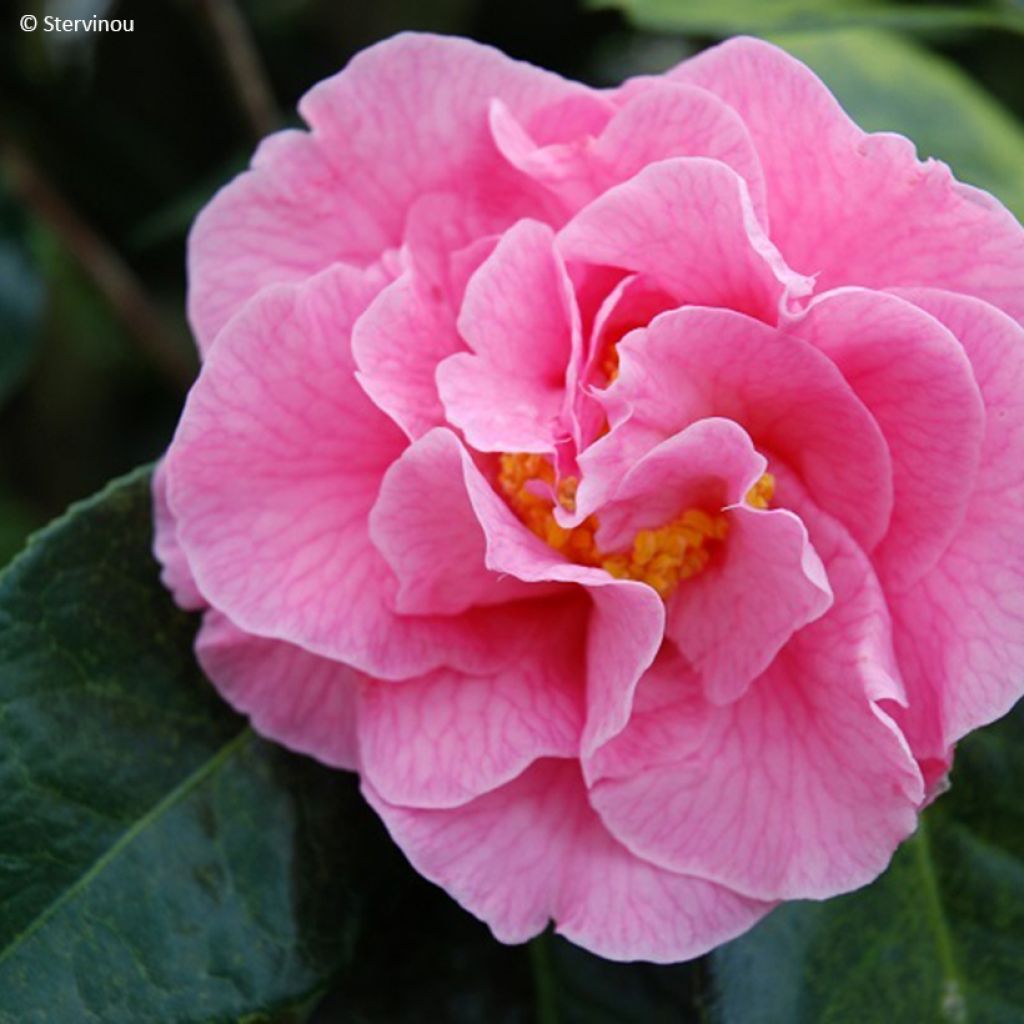
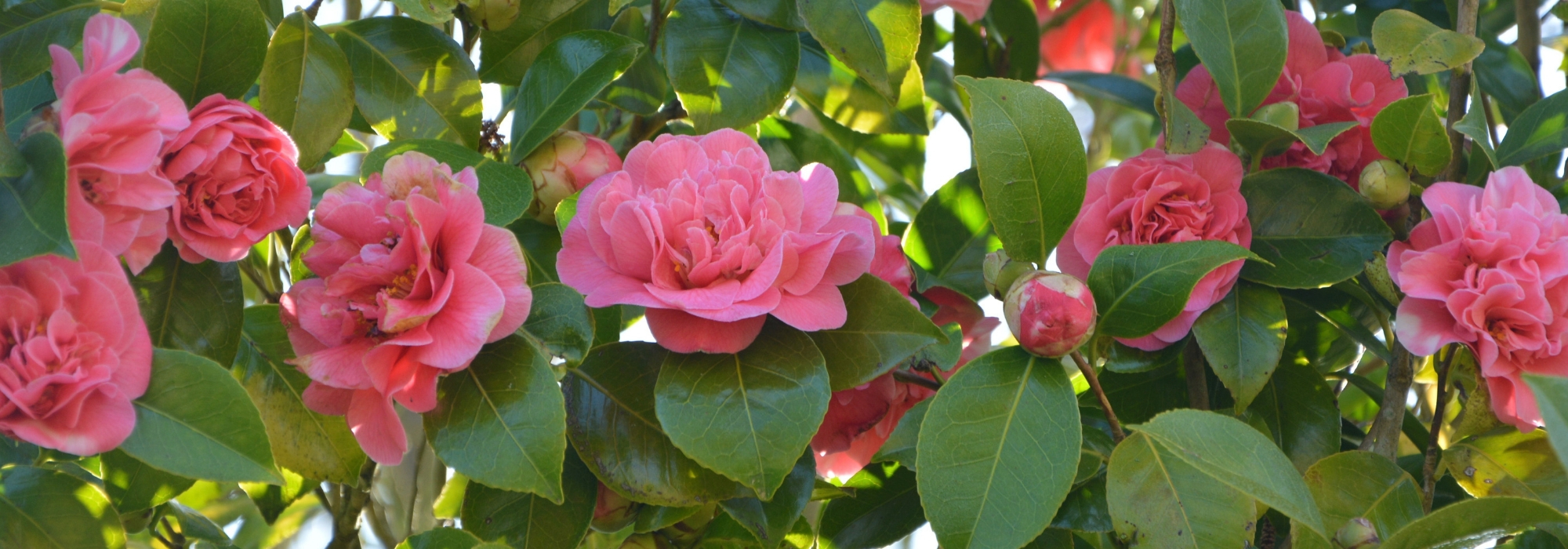
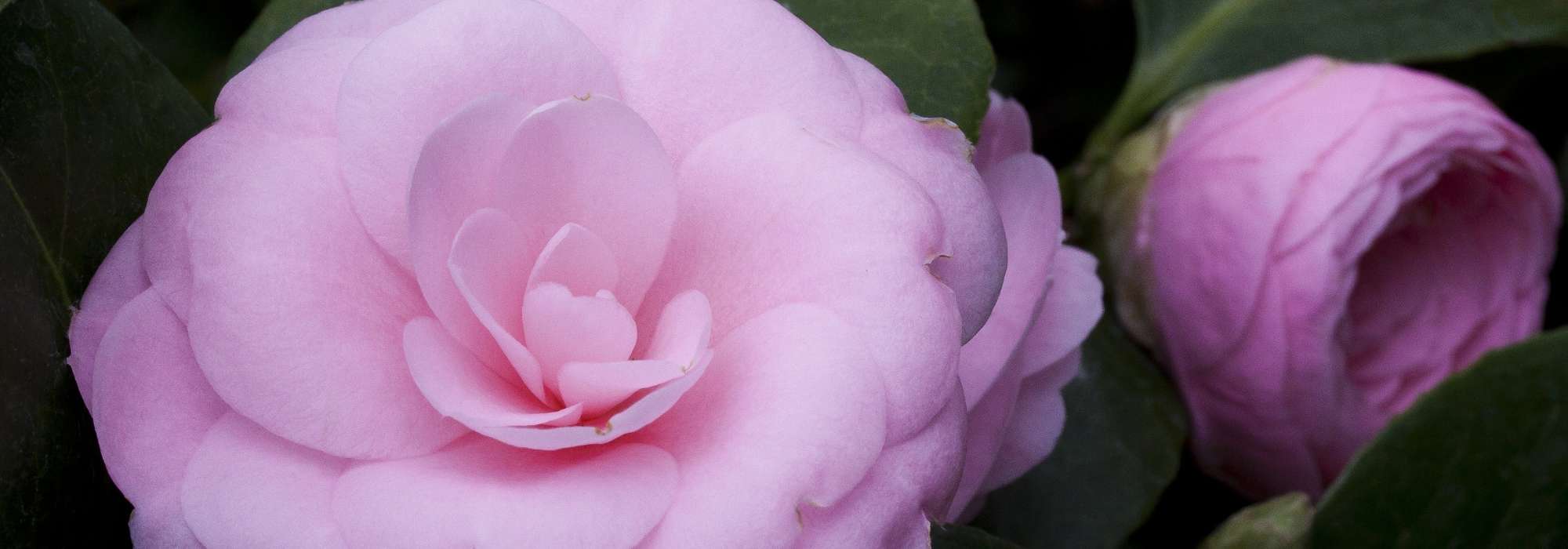
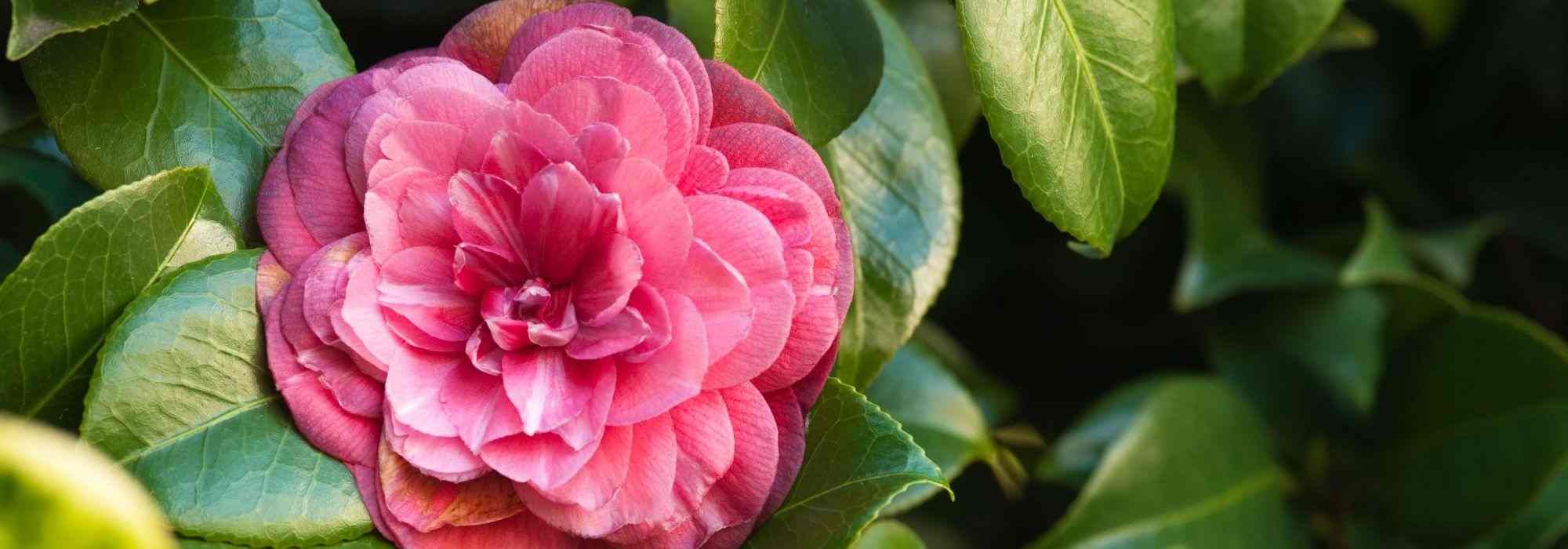
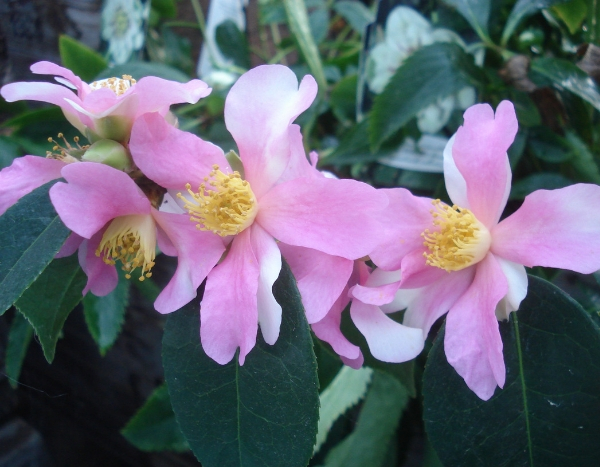
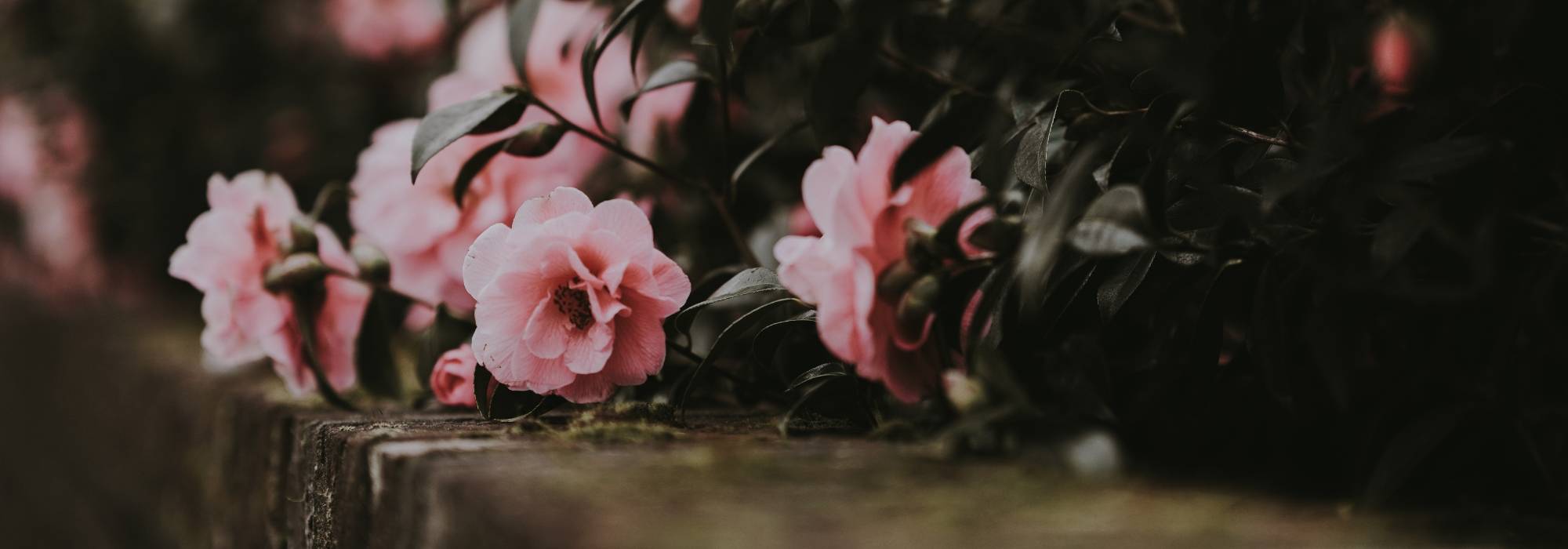
The Camellia reticulata 'Lasca Beauty' is a medium-sized bush, with dark green evergreen foliage that is particularly ornamental all year round. At the end of winter, it also provides a beautiful setting for the absolutely charming flowering. The large diameter flowers are semi-double, and the pink petals undulate delicately against the golden stamens in the center. The abundant and imposing flowers truly catch all eyes and herald spring in the most beautiful way. Its hardiness slightly lower than that of other varieties restricts its planting possibilities to the Atlantic coastal area where it will find the mild and humid conditions it appreciates, without excessive sunlight as in the southern region. Elsewhere, it can be grown in a large pot to be sheltered during winter.
The Camellia is the main genus of the small Theaceae family, both in terms of ornamental and economic value, with the Camellia sinensis, whose young leaves are used to produce tea. However, this plant family also includes some other ornamental plants such as Franklinia alatamaha or Stewartia, whose flowers strongly resemble those of Camellias. The Camellia genus comprises between 100 and 250 wild species (according to botanical classifications), originating from Asia. Revered for centuries in Japan, this favorite plant of breeders and collectors now comes in nearly 40,000 horticultural varieties!
'Lasca Beauty' is the result of the cross-breeding between 'Mrs. D. W. Davis', a variety of Camellia japonica with very large semi-double flowers (15.5 cm in diameter), very pale pink, introduced to the market in the 1950s, and the Camellia reticulata 'Cornelian', with large semi-double flowers in dark pink to red intermingled with white, imported from China to the United States in 1948. The C. reticulata is a Chinese species that grows in the mountainous regions of the Yunnan province, where it can grow into true small trees of 10 m in height in this humid subtropical climate, tempered by altitude. Dr. Clifford Parks obtained this hybrid in California, during his work at the Los Angeles arboretum where a 6-year-old plant bloomed for the first time in 1970. This new variety was then registered in 1973 and cultivated by David L. Feathers in Lafayette, also in California.
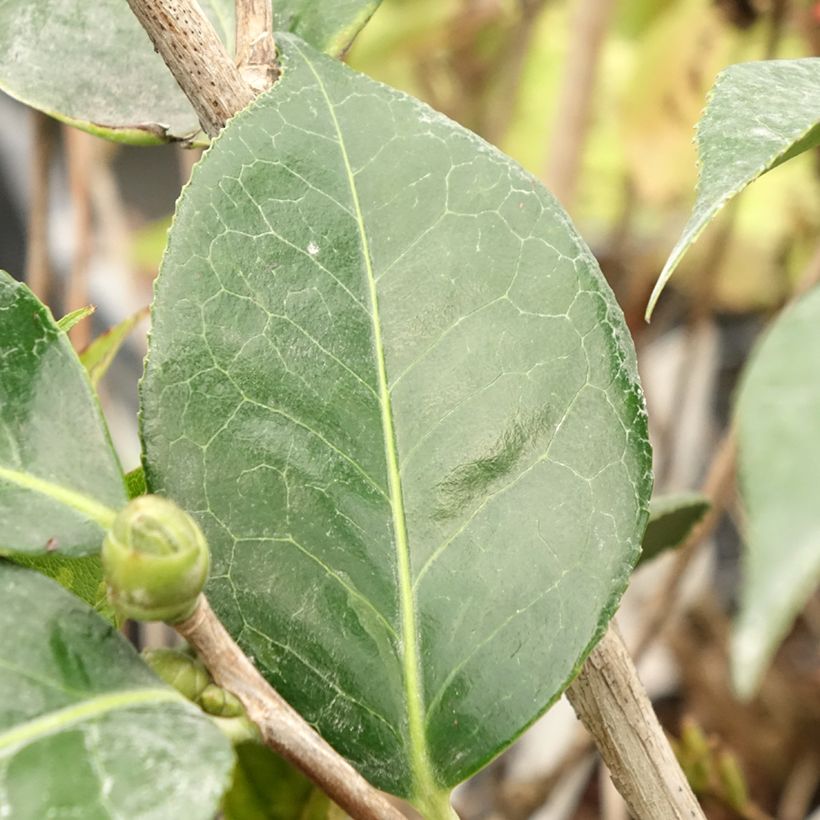
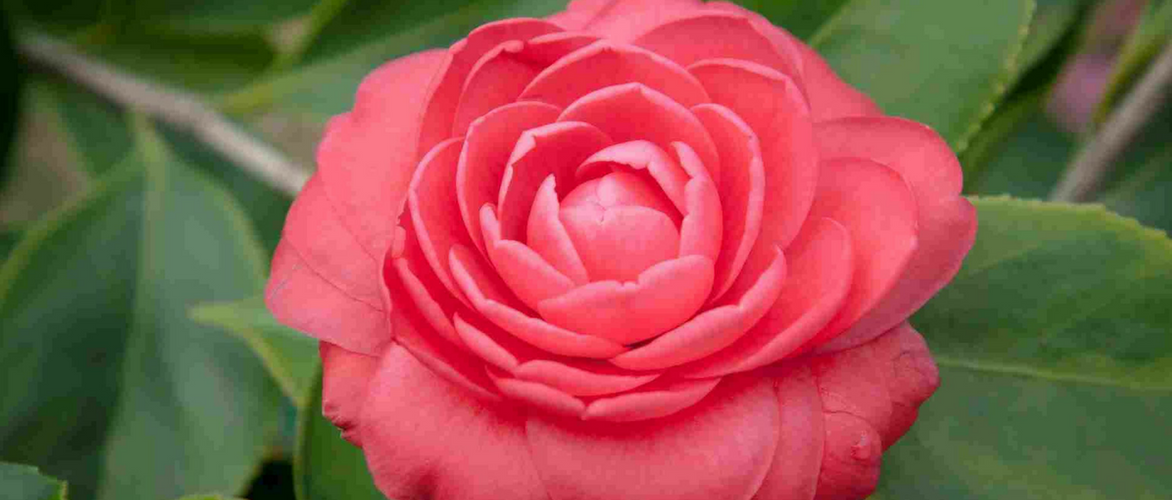
'Lasca Beauty' has a much more limited development than the botanical species, forming in 10 years of cultivation a bush about 1.50 m high and 1.20 m wide. In our latitudes, it generally reaches a height of 2 m at maturity, but can grow significantly taller in other climates, and then become a large, well-branched bush. Its foliage is truly ornamental throughout the year, consisting of evergreen leaves of a beautiful dark green, with a shiny surface, of a very regular elliptical shape measuring approximately 13 cm long by 8 cm wide. This dark vegetation is a perfect setting to enhance the flowering which usually starts in February and extends into early spring. The bush produces at this time very large flowers of 15, even 16 cm in diameter, in a more or less intense bright pink. The semi-double corolla consists of 15 petals with undulations reminiscent of certain peonies. In the center, numerous stamens with white filaments topped with golden anthers create a subtle and harmonious contrast against the pink of the corolla. Spectacular and generous, the flowering brightens the garden at a time when the sky is still often dark.
The 'Lasca Beauty' reticulated Camellia should be grown in a pot to be sheltered from the cold in regions where frost is too severe, as it can only withstand temperatures around -9°C. It will be particularly comfortable in the humid and moderately sunny Atlantic coastal area, and preferably in partial shade in the southwest. Plant it in a border massif, alongside other plants with staggered bloomings to enjoy flowers for a good part of the year. Rhododendrons and Azaleas that share the same needs will then take over with panache, the countless available varieties offering an extremely diverse range of colors, until late spring. The Hydrangeas will then flourish all summer, offering perhaps an even wider range of flowers in flat, spherical, or conical heads, ranging from white to blue through all shades of pink and red. Camellia sasanqua varieties, or Autumn Camellias, will enliven this season, while for winter, you can rely on Hamamelis, with their astonishing flowers elongated in narrow yellow, red, orange, or purple filaments.
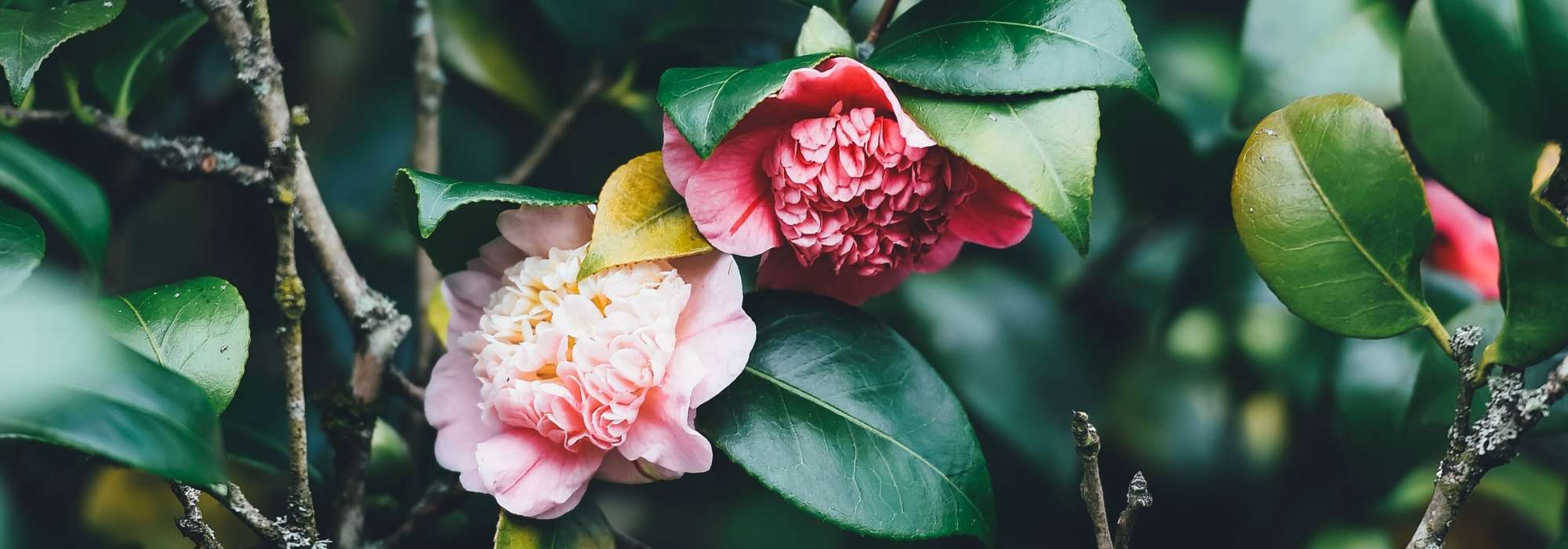
Camellia x reticulata Lasca Beauty in pictures
Plant habit
Flowering
Foliage
Planting and care
The Camellia 'Lasca Beauty' thrives in full sun in a favourable climate, such as in Atlantic regions, but it performs best in partial shade, protected from scorching sun and sheltered from strong winds. Plant it in a cool, humus-bearing, acidic, and well-drained soil. Avoid planting the bush too deeply; the top of the root ball should be covered by 3 cm of soil. In winter, cover it with a 5 to 7 cm thick layer of mulch made of leaf compost and crushed bark. Beware of late frosts that can damage the flowers and buds. During dry periods, water the bush to prevent the dropping of flower buds. In mild climates, it's recommended to plant the camellia in autumn to promote good root development and better flowering in the first year. However, if winters are slightly colder, it's better to wait until spring before planting it in the ground so it has time to establish its root system before facing the next winter. This variety is indeed slightly less hardy than others, tolerating temperatures down to about -9°C.
Possible diseases include chlorosis caused by excess limestone, brown spots caused by leaf scorching in south-facing exposure, sooty mould, scale insects, and vine-plant weevils.
Pruning is not necessary and should only be done if needed just after flowering, before the emergence of new spring shoots, and sparingly. Most camellia hybrids do not recover from overly severe pruning.
Planting period
Intended location
Care
Planting & care advice
-
-
-
-
-
-
-
-
This item has not been reviewed yet - be the first to leave a review about it.
Recently viewed products
Haven't found what you were looking for?
Hardiness is the lowest winter temperature a plant can endure without suffering serious damage or even dying. However, hardiness is affected by location (a sheltered area, such as a patio), protection (winter cover) and soil type (hardiness is improved by well-drained soil).

The flowering period indicated on our website applies to countries and regions located in USDA zone 8 (France, the United Kingdom, Ireland, the Netherlands, etc.)
It will vary according to where you live:- In zones 9 to 10 (Italy, Spain, Greece, etc.), flowering will occur about 2 to 4 weeks earlier.
- In zones 6 to 7 (Germany, Poland, Slovenia, and lower mountainous regions), flowering will be delayed by 2 to 3 weeks.
- In zone 5 (Central Europe, Scandinavia), blooming will be delayed by 3 to 5 weeks.
In temperate climates, pruning of spring-flowering shrubs (forsythia, spireas, etc.) should be done just after flowering.
Pruning of summer-flowering shrubs (Indian Lilac, Perovskia, etc.) can be done in winter or spring.
In cold regions as well as with frost-sensitive plants, avoid pruning too early when severe frosts may still occur.
The planting period indicated on our website applies to countries and regions located in USDA zone 8 (France, United Kingdom, Ireland, Netherlands).
It will vary according to where you live:
- In Mediterranean zones (Marseille, Madrid, Milan, etc.), autumn and winter are the best planting periods.
- In continental zones (Strasbourg, Munich, Vienna, etc.), delay planting by 2 to 3 weeks in spring and bring it forward by 2 to 4 weeks in autumn.
- In mountainous regions (the Alps, Pyrenees, Carpathians, etc.), it is best to plant in late spring (May-June) or late summer (August-September).
The harvesting period indicated on our website applies to countries and regions in USDA zone 8 (France, England, Ireland, the Netherlands).
In colder areas (Scandinavia, Poland, Austria...) fruit and vegetable harvests are likely to be delayed by 3-4 weeks.
In warmer areas (Italy, Spain, Greece, etc.), harvesting will probably take place earlier, depending on weather conditions.
The sowing periods indicated on our website apply to countries and regions within USDA Zone 8 (France, UK, Ireland, Netherlands).
In colder areas (Scandinavia, Poland, Austria...), delay any outdoor sowing by 3-4 weeks, or sow under glass.
In warmer climes (Italy, Spain, Greece, etc.), bring outdoor sowing forward by a few weeks.
Shipping country and language
Your country of residence may be:
Your country of residence is:
For a better user experience on our website, you can select:
Your shipping country:
-
 Austria
-
 Belgium
-
 Bosnia & Herzegovina
-
 Bulgaria
-
 Croatia
-
 Cyprus
-
 Czechia
-
 Denmark
-
 Estonia
-
 Finland
-
 France
-
 Germany
-
 Greece
-
 Hungary
-
 Iceland
-
 Ireland
-
 Italy
Italy
-
 Latvia
-
 Liechtenstein
-
 Lithuania
-
 Luxembourg
-
 Malta
Malta
-
 Netherlands
-
 Poland
-
 Portugal
-
 Romania
-
 Serbia
-
 Slovakia
-
 Slovenia
-
 Spain
Spain
-
 Sweden
-
 Switzerland
Language:
-
French
-
 English
-
Spanish
-
Italian
-
German
-
Portuguese
-
Dutch
-
Finnish
My Account
Hello
My wish lists
My cart
Log in / Register
Existing customer?
This form is protected by reCAPTCHA - the Google Privacy Policy and Terms of Service apply.
New customer?
Create an account to track your orders, access our customer service and, if you wish, make the most of our upcoming offers.