Clematis tangutica Helios
Clematis tangutica Helios
Clematis tangutica Helios
Clematis tangutica Helios
Clematis tangutica Helios
Clematis tangutica Helios
Clematis tangutica Helios
Back-to-school special offer!
Get €10 off for every €50 you spend! And get up to €40 off on a single order.
How does it work?
1. Shop your favourites
Add your favourite plants to your basket. For every €50 you spend (excluding delivery charges, store credit and the plastic-free option), you’ll receive a €10 voucher.
€50 spent = €10 voucher
€100 spent = €20 voucher
€150 spent = €30 voucher
€200 spent = €40 voucher
2. Place your order
Once your basket reaches one of the spending thresholds, place your order. You can even choose your delivery date!
3. Receive your voucher
As soon as your order has been shipped, you’ll receive an email containing your personal voucher code and its value.
4. Use it on your next order
Your voucher is valid for 90 days from the date you receive it. It can be used once only, on a new order worth at least the value of the voucher, excluding delivery charges.
Please note: Vouchers can be combined with other offers, but cannot be split or refunded.
Home or relay delivery (depending on size and destination)
Important: You may be charged customs duties by your country’s customs authorities upon delivery.
Schedule delivery date
and select date in basket
This plant carries a 6 months recovery warranty
More information
We guarantee the quality of our plants for a full growing cycle, and will replace at our expense any plant that fails to recover under normal climatic and planting conditions.
Would this plant suit my garden?
Set up your Plantfit profile →
Description
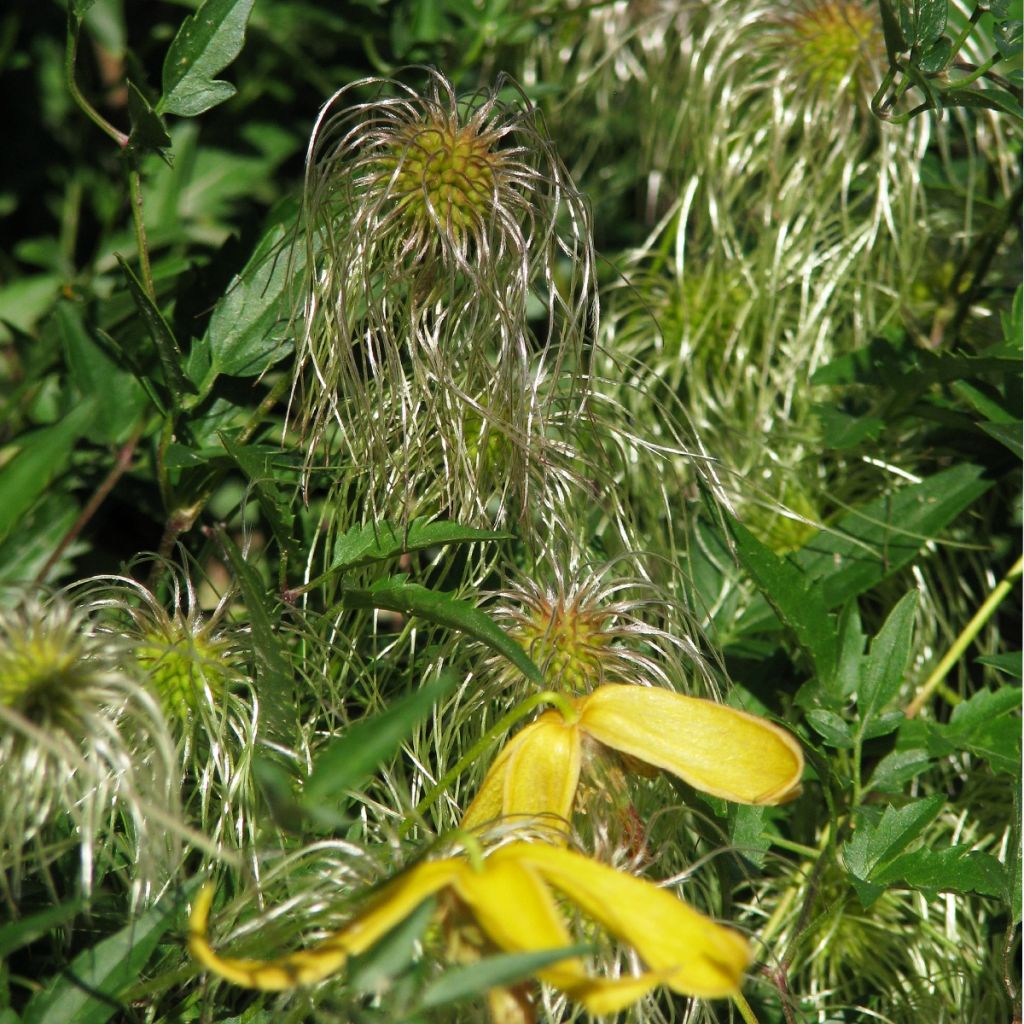
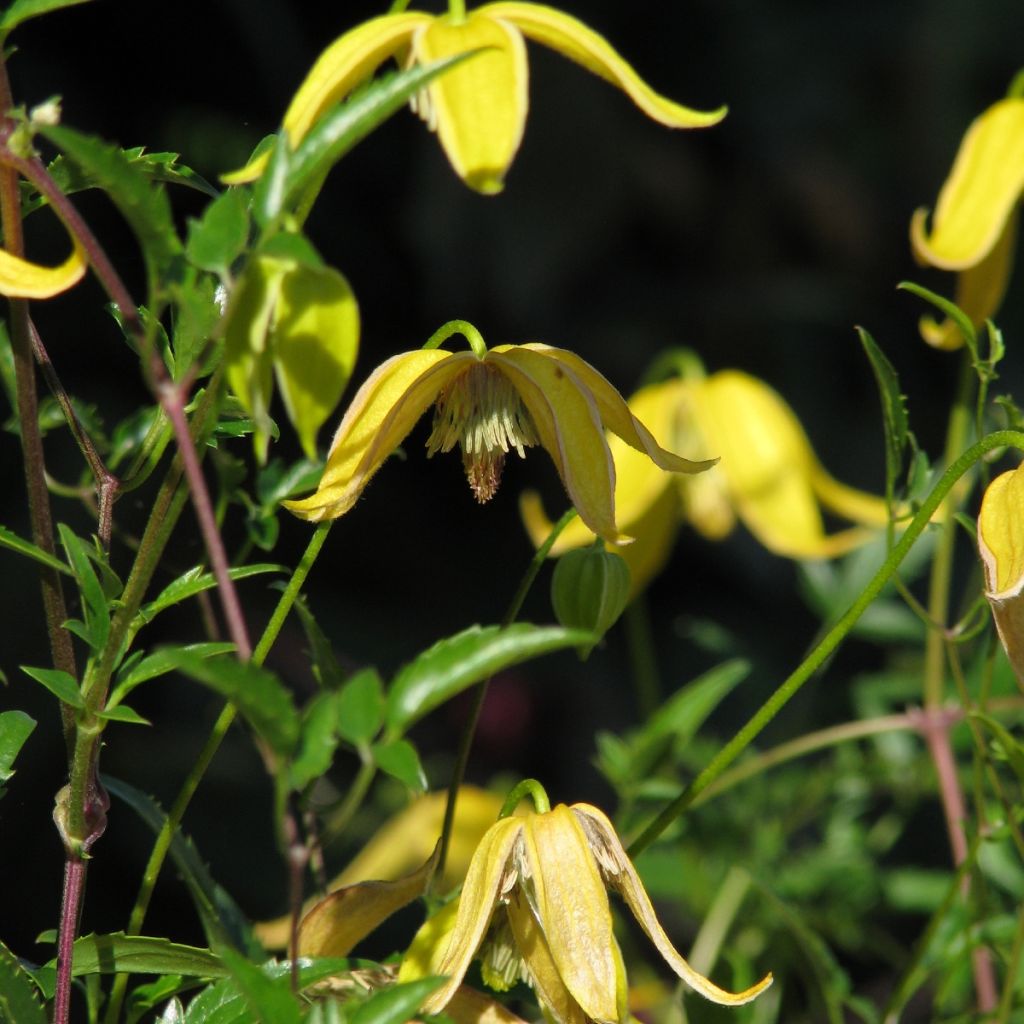
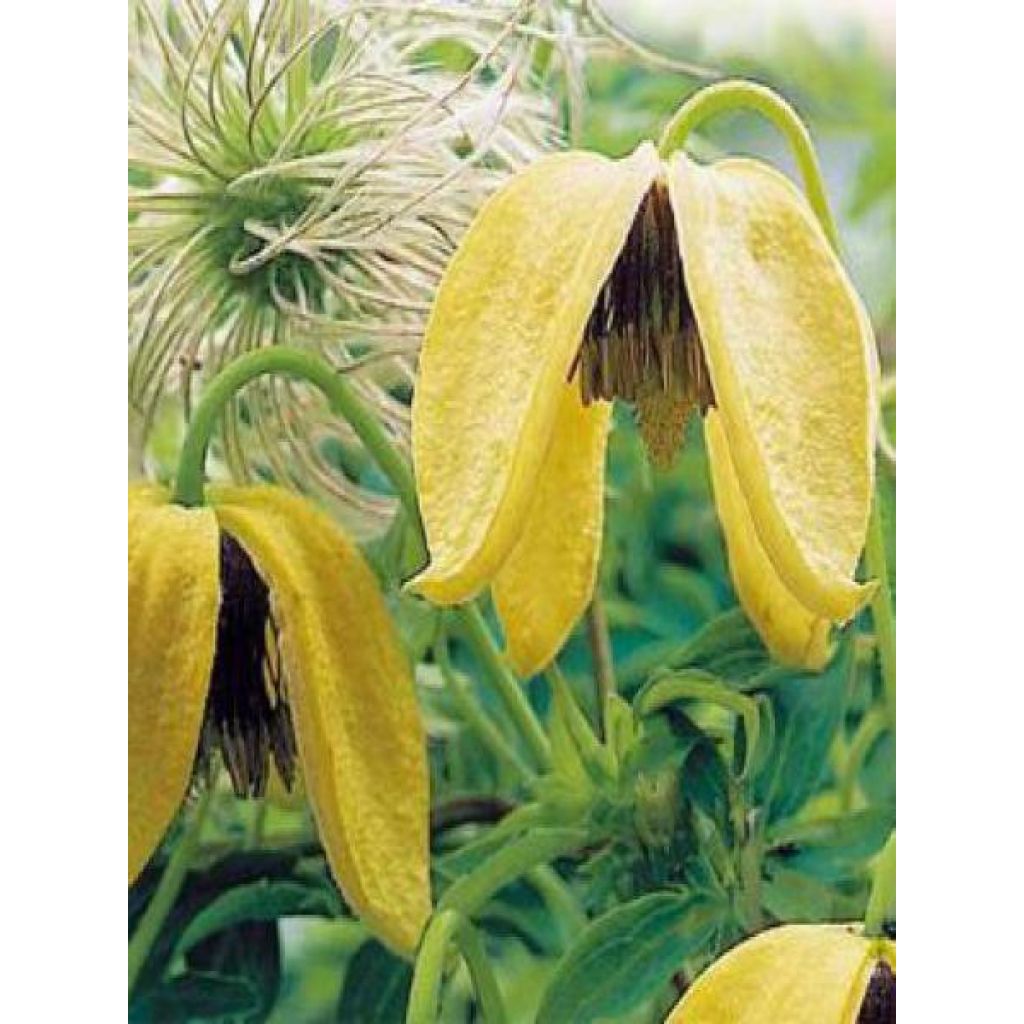
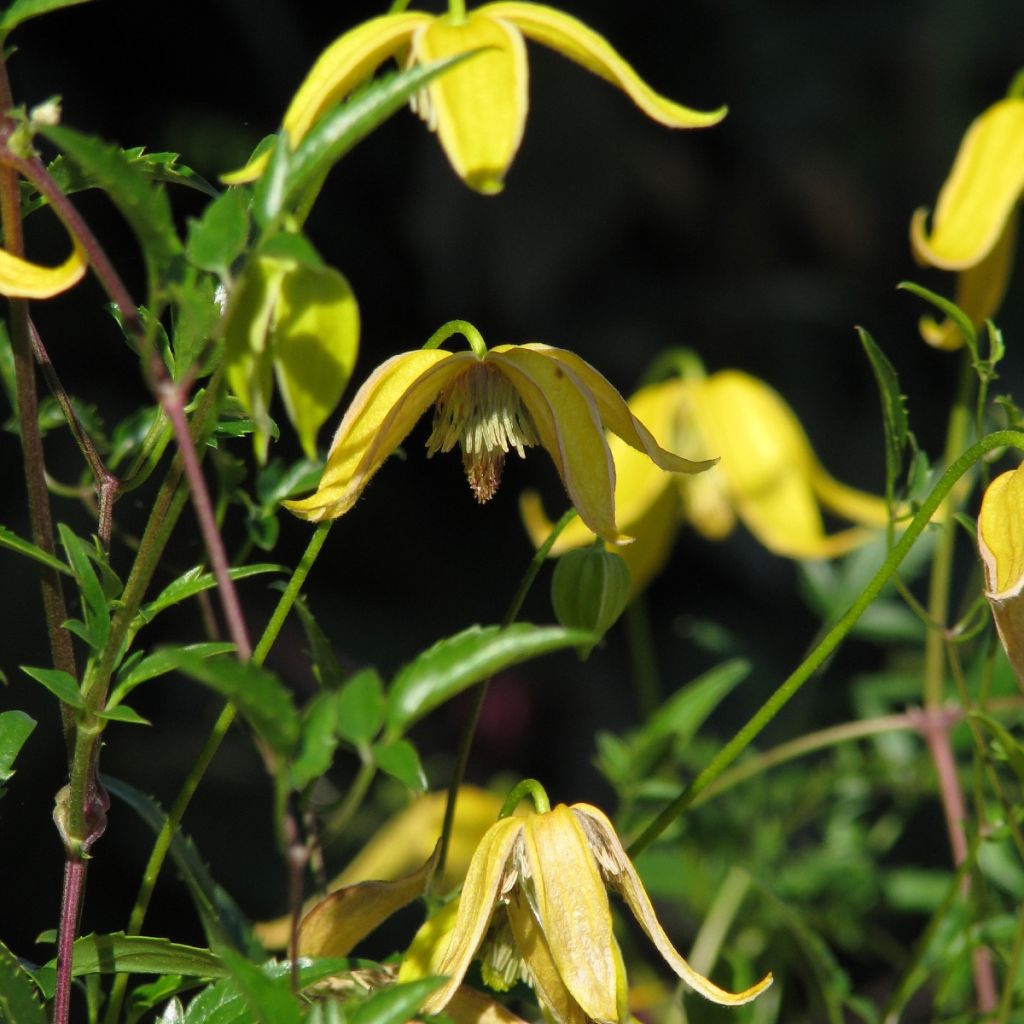
Clematis tangutica 'Helios' is a vigorous clematis whose ancestors roamed the thickets from Mongolia to China, up to an altitude of 4900m (16076ft), taking on the appearance of vigorous climbing plants or bushy shrubs in drier areas. It amazes with its long and beautiful flowering period that starts in May-June and ends very late in the season, offering curious bright yellow campanulate flowers composed of fleshy petals that open fully to reveal a heart of purple-dark anther stamens. Its feathery and silvery fruits are extremely decorative. Like many clematis, it appreciates having cool roots in well-drained soil, with its head in the sun. It is one of the hardiest and most generous, both in the garden and in pots.
Clematis tangutica 'Helios', sometimes marketed under the name C. 'Radar Love', is sometimes nicknamed Tangut clematis. This form, slightly more compact than the species and with larger and more colourful flowers, was discovered in 1988 in a research station in Boskoop, Netherlands. All clematis belong to the Ranunculaceae family.
'Helios' is a woody, deciduous climbing plant, clinging to its support through petioles transformed into tendrils. Its stems will reach 3 to 5m (10 to 16ft) in length, with a ground coverage of 1 to 2m (3 to 7ft), so a strong support will be required to accommodate the plant's volume and weight. Flowering on the current year's shoots is very long: it timidly starts in May, reaches its peak in July-August, and then continues more sporadically until October. Its trailing flowers, 6 to 8cm (2 to 3in) wide, are composed of 4 large, thick and waxy petals with turned-up edges, in canary yellow, surrounding a heart of purple-dark stamens. They are solitary or grouped in 2 or 3 in the axils of the leaves. The flowers give way to fluffy and silky fruits, 8 to 10cm (3 to 4in) wide, composed of seeds with persistent styles in the form of long silver filaments. The foliage offers a rather unusual aspect: it is composed of dark green leaves singularly cut into toothed petioles measuring 2 to 6cm (1 to 2in).
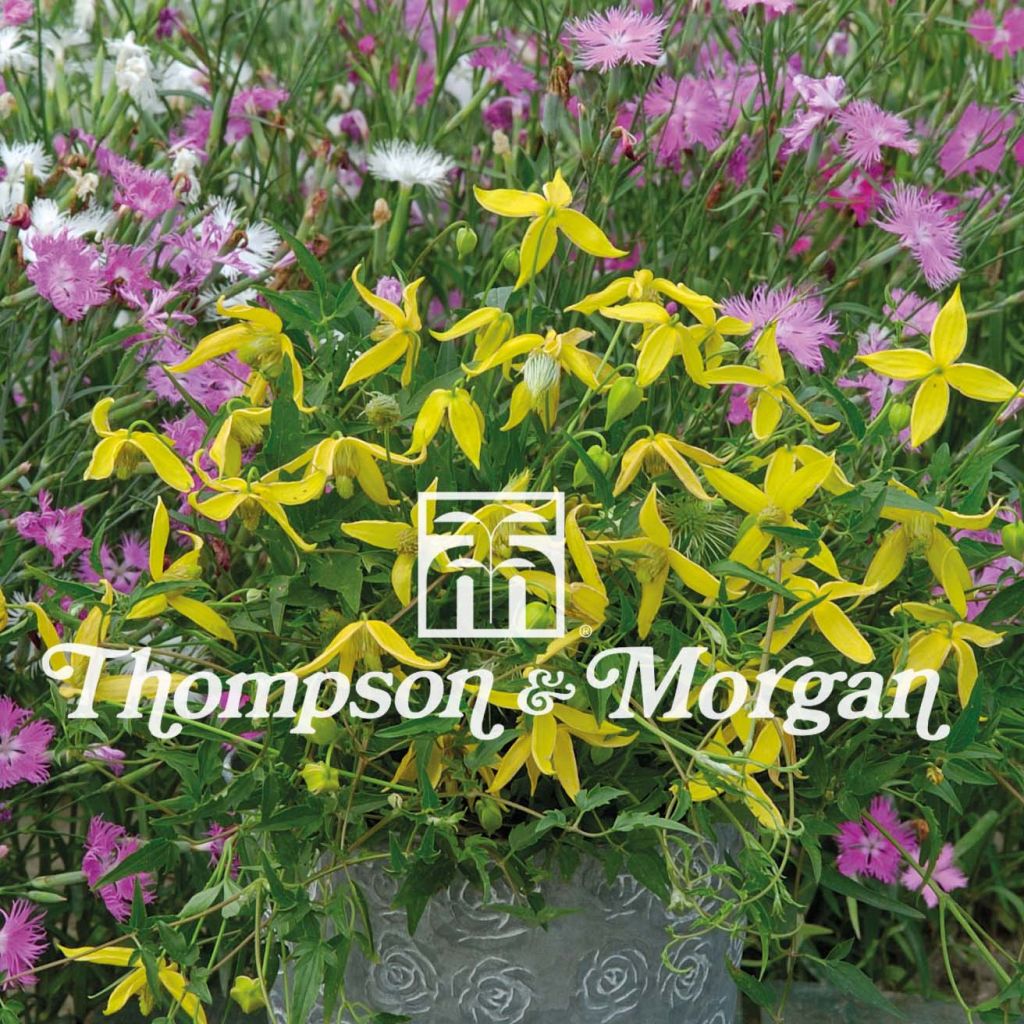
This clematis is capable of flowering 3 months after being sown. It will quickly cover a trellis or a fence. It can also cover a shrub with dark foliage (Black Lace Elderberry, purple hazelnut) or with beautiful autumn colours (deciduous spindle tree, smoke tree, or witch hazel). It can also dress up a slightly neglected embankment, like a blue periwinkle with which it will blend well. The unique beauty of its flowers, their abundance, and the duration of the flowering make this clematis a star of the garden and patio. It can, for example, be planted with a climbing rose, preferably a perpetual one with yellow or orange blooms like Rosa 'Ghislaine de Féligonde', with creamy-white like R. 'Iceberg', or with mauve flowers like R. 'Purple Skyline'. It can also elegantly dress up a dead tree.
Report an error about the product description
Flowering
Foliage
Plant habit
Botanical data
Clematis
tangutica
Helios
Ranunculaceae
Cultivar or hybrid
Planting and care
Sowing:
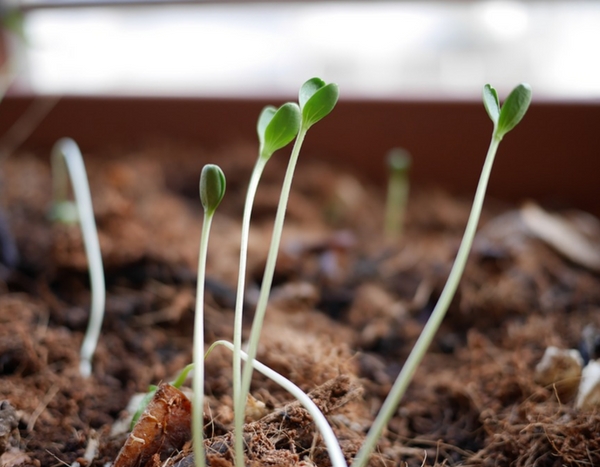
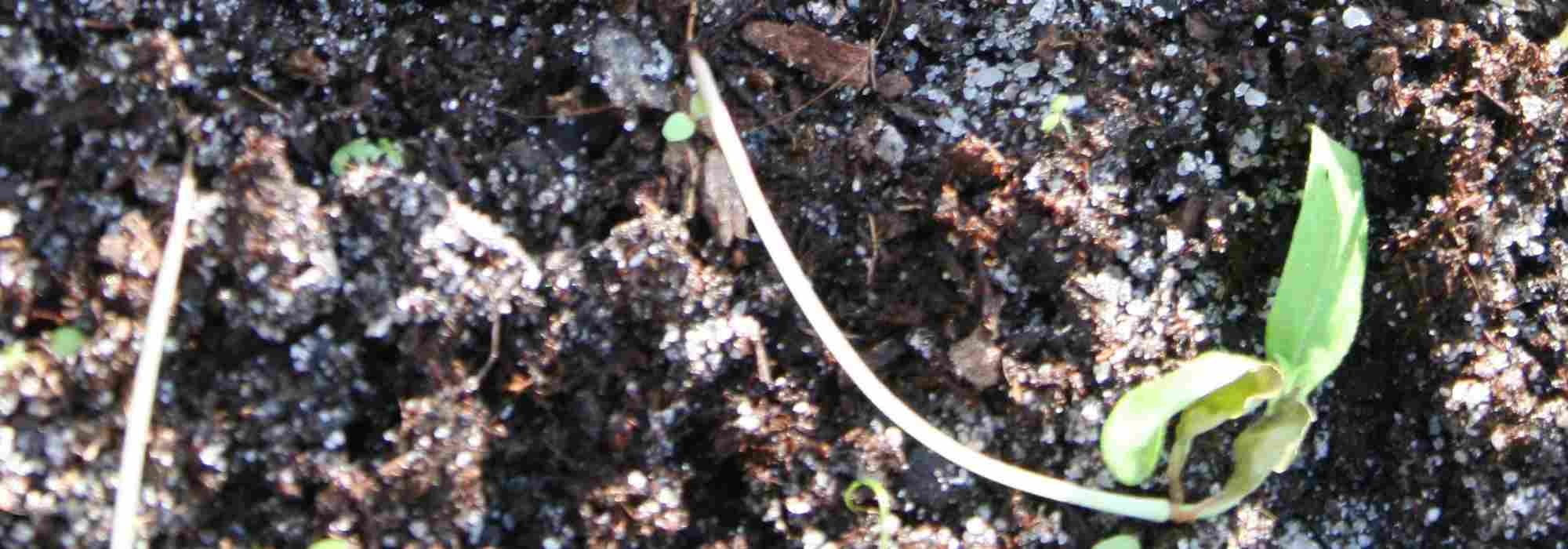
Sow at around 20°C (68°F), in late winter or early spring or in late summer/early autumn. Sow in good seedling soil, covering the seeds with a little sifted soil or vermiculite. Germination usually takes 30 days at 20°C (68°F).
Alternatively, soak the seeds in warm water for 24 hours. Place the seeds in moist vermiculite in a mini-greenhouse or in a transparent bag and keep them warm at 20 to 22°C (68 to 71.6°F).
When the seedlings are large enough to handle, transplant them into 7 to 9cm (3in) diameter pots. Gradually acclimatise them to outdoor conditions and plant them in open ground, keeping a distance of 30 to 45cm (12 to 18in) between each plant. This clematis grows in ordinary, well-drained soil. Make sure its base remains in shade, but the foliage is exposed to sunlight. A ground cover plant such as hosta or heuchera can be installed to shade the base of the clematis. The installation of a thick mulch near the base (not on top) can also serve as a parasol. This plant has a fibrous root system that does not appreciate transplanting. Therefore, choose its location carefully from the start.
Cultivation:
It requires a sunny exposure. Young plants need water to establish themselves. Monitor watering during the first two or three years, especially in summer. It is better to water in the evening, often and in small quantities. During winter, the roots should be kept moist but not waterlogged. An adult plant is quite tolerant to drought. Good soil drainage is essential for successful cultivation of Clematis tangutica, which does not tolerate stagnant moisture in winter.
Sowing period
Intended location
Planting & care advice
-
-
-
-
-

-

-

-

This item has not been reviewed yet - be the first to leave a review about it.
Recently viewed products
Haven't found what you were looking for?
Hardiness is the lowest winter temperature a plant can endure without suffering serious damage or even dying. However, hardiness is affected by location (a sheltered area, such as a patio), protection (winter cover) and soil type (hardiness is improved by well-drained soil).

The flowering period indicated on our website applies to countries and regions located in USDA zone 8 (France, the United Kingdom, Ireland, the Netherlands, etc.)
It will vary according to where you live:- In zones 9 to 10 (Italy, Spain, Greece, etc.), flowering will occur about 2 to 4 weeks earlier.
- In zones 6 to 7 (Germany, Poland, Slovenia, and lower mountainous regions), flowering will be delayed by 2 to 3 weeks.
- In zone 5 (Central Europe, Scandinavia), blooming will be delayed by 3 to 5 weeks.
In temperate climates, pruning of spring-flowering shrubs (forsythia, spireas, etc.) should be done just after flowering.
Pruning of summer-flowering shrubs (Indian Lilac, Perovskia, etc.) can be done in winter or spring.
In cold regions as well as with frost-sensitive plants, avoid pruning too early when severe frosts may still occur.
The planting period indicated on our website applies to countries and regions located in USDA zone 8 (France, United Kingdom, Ireland, Netherlands).
It will vary according to where you live:
- In Mediterranean zones (Marseille, Madrid, Milan, etc.), autumn and winter are the best planting periods.
- In continental zones (Strasbourg, Munich, Vienna, etc.), delay planting by 2 to 3 weeks in spring and bring it forward by 2 to 4 weeks in autumn.
- In mountainous regions (the Alps, Pyrenees, Carpathians, etc.), it is best to plant in late spring (May-June) or late summer (August-September).
The harvesting period indicated on our website applies to countries and regions in USDA zone 8 (France, England, Ireland, the Netherlands).
In colder areas (Scandinavia, Poland, Austria...) fruit and vegetable harvests are likely to be delayed by 3-4 weeks.
In warmer areas (Italy, Spain, Greece, etc.), harvesting will probably take place earlier, depending on weather conditions.
The sowing periods indicated on our website apply to countries and regions within USDA Zone 8 (France, UK, Ireland, Netherlands).
In colder areas (Scandinavia, Poland, Austria...), delay any outdoor sowing by 3-4 weeks, or sow under glass.
In warmer climes (Italy, Spain, Greece, etc.), bring outdoor sowing forward by a few weeks.
Shipping country and language
Your country of residence may be:
Your country of residence is:
For a better user experience on our website, you can select:
Your shipping country:
-
 Austria
-
 Belgium
-
 Bosnia & Herzegovina
-
 Bulgaria
-
 Croatia
-
 Cyprus
-
 Czechia
-
 Denmark
-
 Estonia
-
 Finland
-
 France
-
 Germany
-
 Greece
-
 Hungary
-
 Iceland
-
 Ireland
-
 Italy
Italy
-
 Latvia
-
 Liechtenstein
-
 Lithuania
-
 Luxembourg
-
 Malta
Malta
-
 Netherlands
-
 Poland
-
 Portugal
-
 Romania
-
 Serbia
-
 Slovakia
-
 Slovenia
-
 Spain
Spain
-
 Sweden
-
 Switzerland
Language:
-
French
-
 English
-
Spanish
-
Italian
-
German
-
Portuguese
-
Dutch
-
Finnish
My Account
Hello
My wish lists
My cart
Log in / Register
Existing customer?
This form is protected by reCAPTCHA - the Google Privacy Policy and Terms of Service apply.
New customer?
Create an account to track your orders, access our customer service and, if you wish, make the most of our upcoming offers.