

































Clematis atragene Octopus
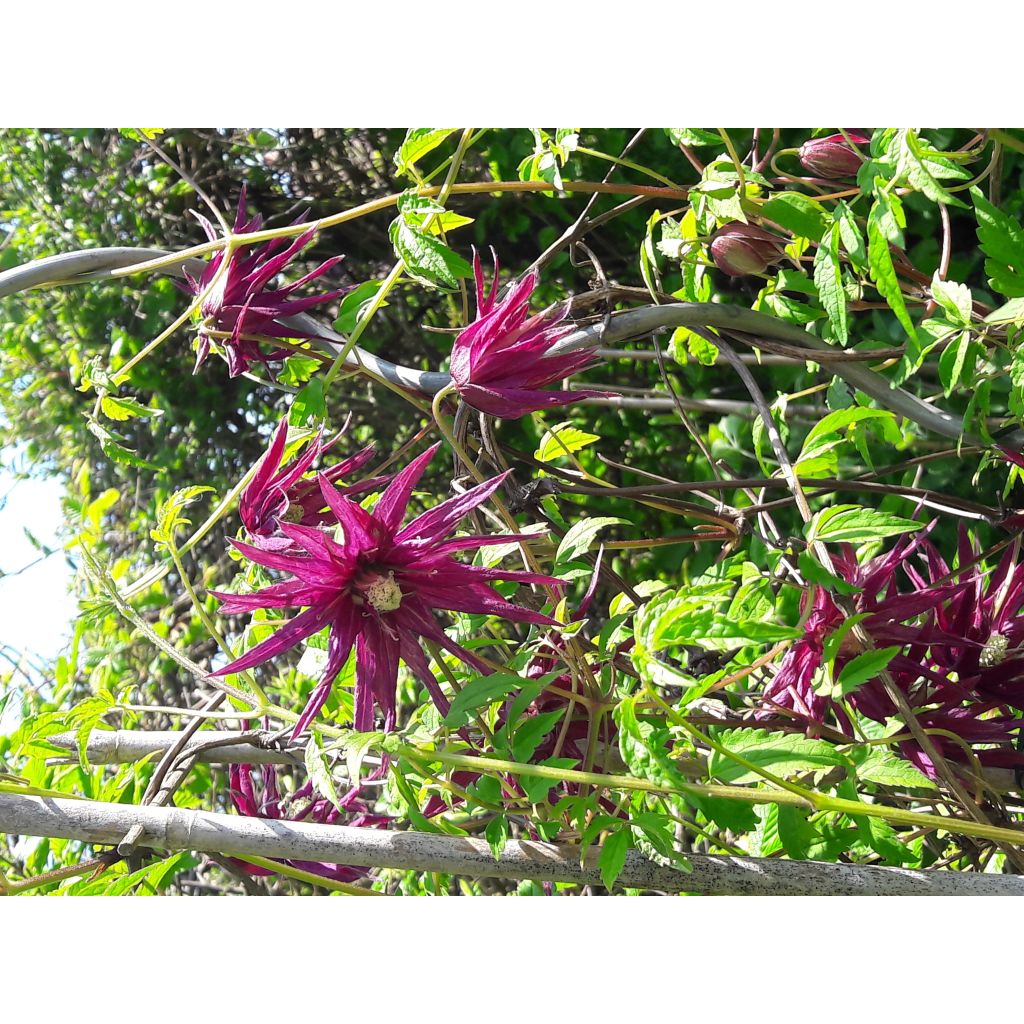
Clematis atragene Octopus
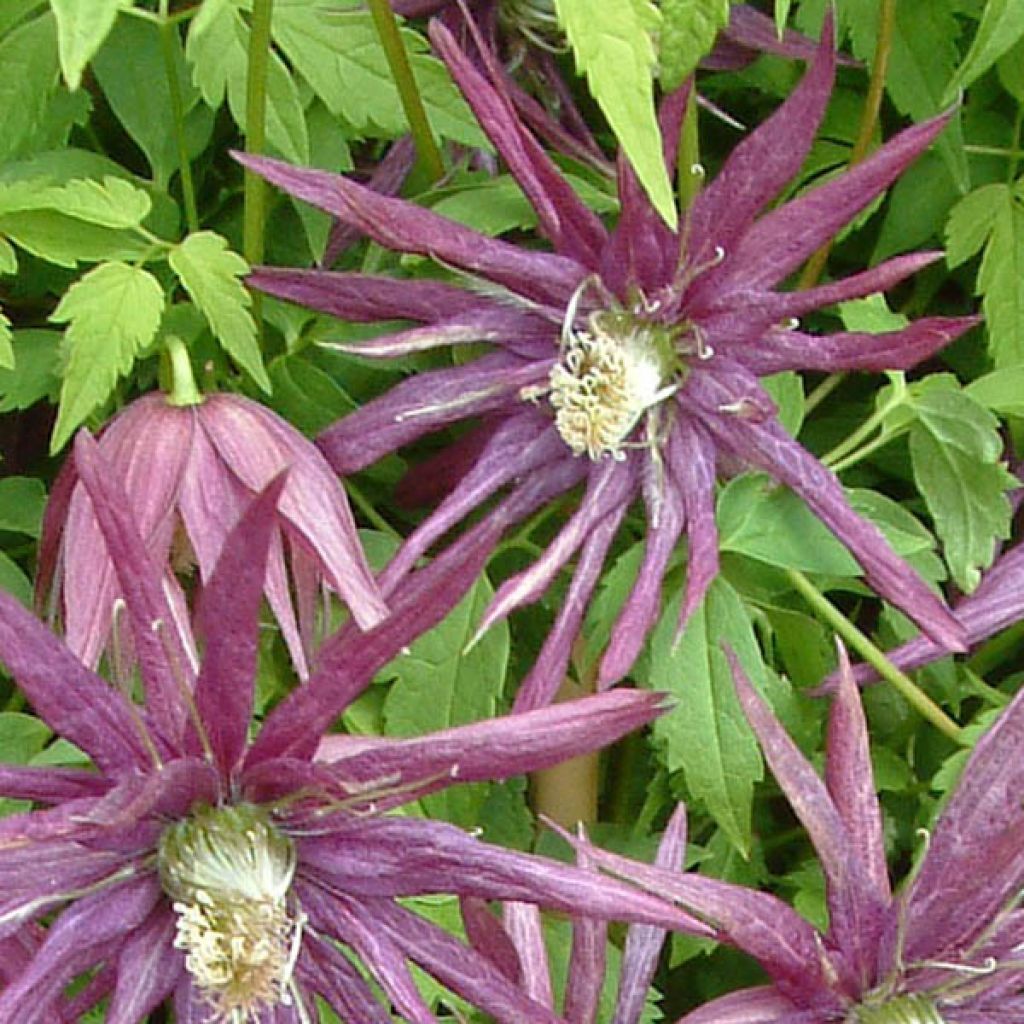
Clematis atragene Octopus
View more pictures
Hide images
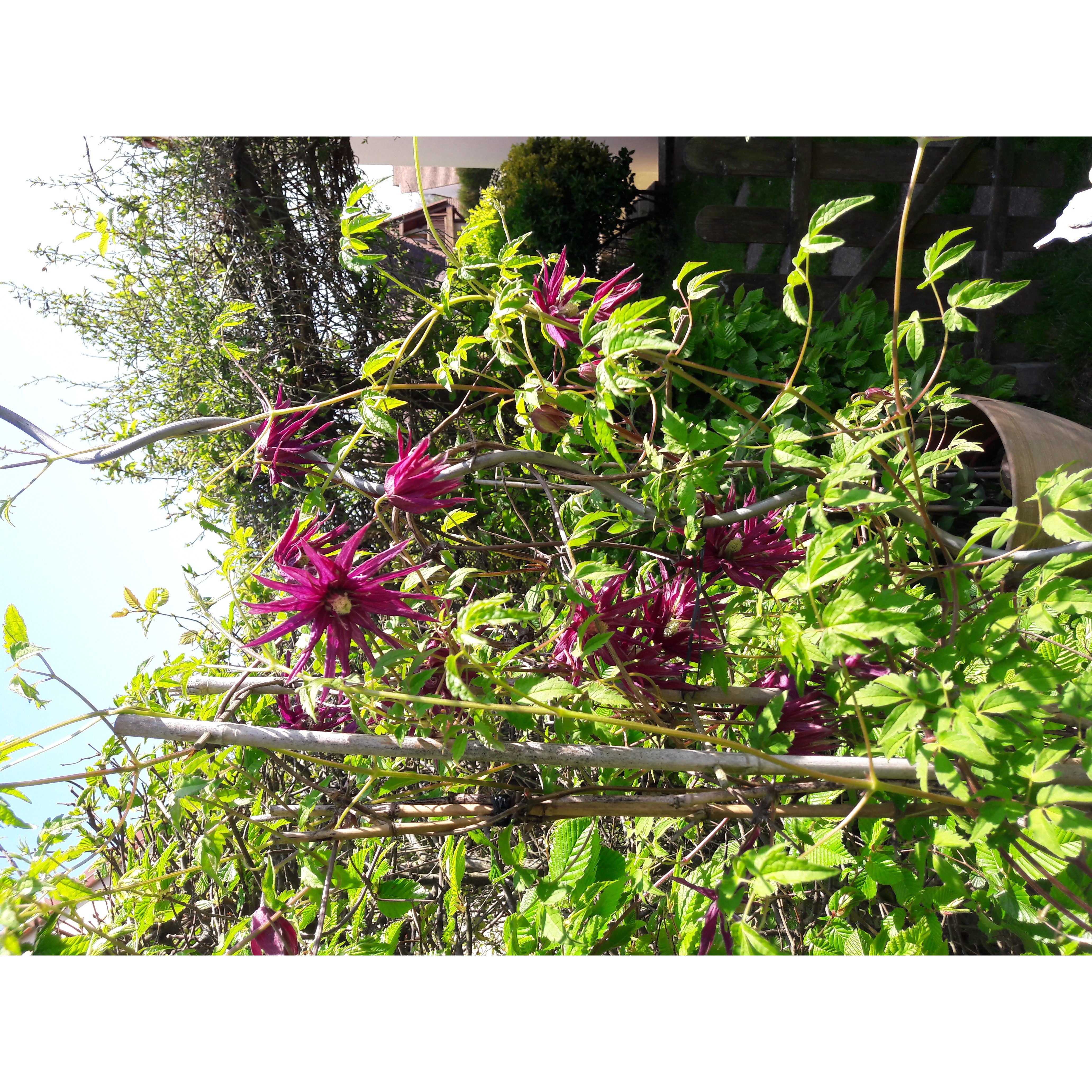
Sandrine C.
Clematis atragene Octopus
Sandrine C. • 61 FR
Clematis atragene Octopus
Clematis ‘Zooct’ Octopus
Early-flowering clematis, Atragene clematis
Plant arrived in excellent condition. A bit skinny... Already blooming... I'm expecting good growth...
Brigitte, 06/06/2021
Special offer!
Receive a €20 voucher for any order over €90 (excluding delivery costs, credit notes, and plastic-free options)!
1- Add your favorite plants to your cart.
2- Once you have reached €90, confirm your order (you can even choose the delivery date!).
3- As soon as your order is shipped, you will receive an email containing your voucher code, valid for 3 months (90 days).
Your voucher is unique and can only be used once, for any order with a minimum value of €20, excluding delivery costs.
Can be combined with other current offers, non-divisible and non-refundable.
Why not try an alternative variety in stock?
View all →
Available in 1 sizes

Available in 1 sizes

Available in 1 sizes
Available in 1 sizes

Available in 1 sizes

Available in 1 sizes

Available in 1 sizes

Available in 1 sizes

Available in 2 sizes

Available in 1 sizes
This plant carries a 12 months recovery warranty
More information
We guarantee the quality of our plants for a full growing cycle, and will replace at our expense any plant that fails to recover under normal climatic and planting conditions.
Would this plant suit my garden?
Set up your Plantfit profile →
Description
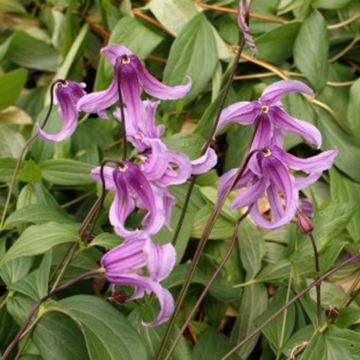
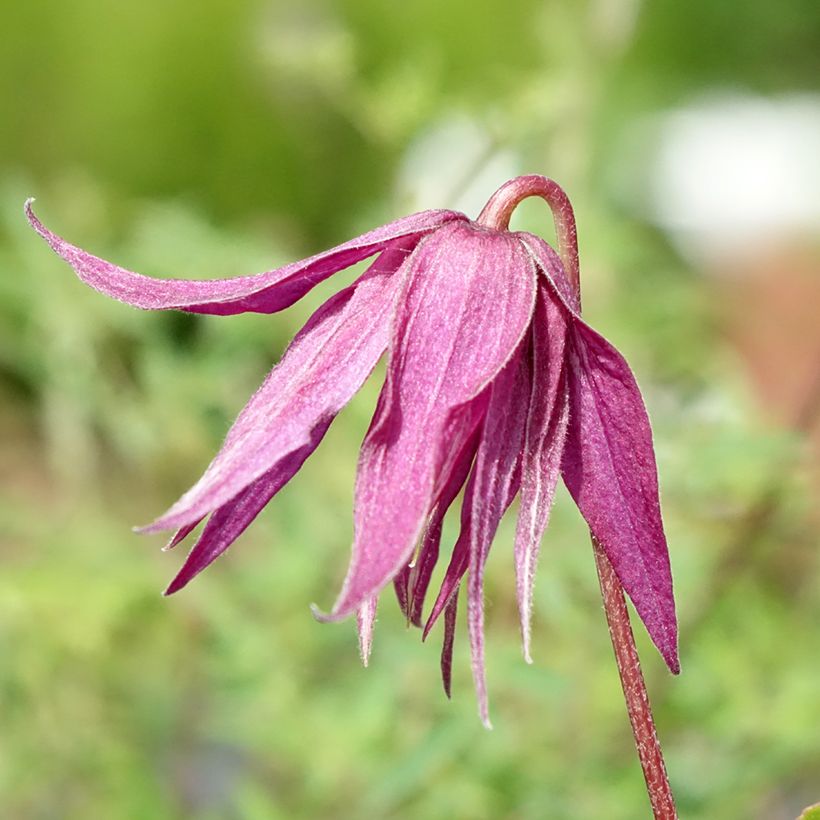
Clematis Octopus (‘Zooct’) is an early-flowering variety whose flowers resemble no classic clematis. Its nodding bells are formed of long, pointed, slightly twisted floral segments in a purplish pink, spreading out like tentacles around a ruffled centre. This strange flowering no doubt inspired its name. Of moderate vigour and very hardy, it will adorn a trellis, a wire fence, or the fine branches of a shrub.
This woody climbing plant belongs to the Ranunculaceae family and the Atragene group, which includes clematis adapted to cool climates and known for their spring flowering on stems formed the previous year. OCTOPUS is the trade name of the Dutch cultivar ‘Zooct’, selected by Wim Snoeijer in 1999. Its foliage is deciduous: it appears in spring, remains green through the growing season, then falls in autumn, while the brown stems persist in winter. These climb by twining the petioles of their leaves around twigs, wires, or fine mesh. A bare wall will therefore not allow it to climb without support. The plant reaches 2.50 to 3m in height with a spread of 1 to 1.50m making it easier to integrate into the garden than the large Clematis montana. Its medium green leaves are divided into toothed leaflets and form a fairly light cover. In April and May, the nodding buds open into double flowers 8cm in diameter. The purplish mauve outer sepals with reddish-violet hues are long, narrow, and tapered. They surround several rows of petaloid staminodes, i.e., stamens transformed into small petal-like pieces. Their colour ranges from violet to whitish violet towards the centre. The flower remains pendulous, but its sepals spread and gradually curve back, accentuating its spider- or octopus-like appearance. After flowering, silvery, feathery seed heads appear and are decorative for several weeks. This clematis flowers on old wood: winter pruning would remove a large proportion of the buds. Hardy down to –20 °C, it appreciates moist, well-drained soil.
Plant this Octopus variety against a fine-mesh trellis, a narrow arch, or a wire fence where its unusual, nodding flowers can be admired up close. It can also weave through the branches of the climbing rose ‘New Dawn’, which takes over in early summer; guide their stems separately to facilitate pruning. On a nearby support, Clematis ‘Albina Plena’ will flower in spring with creamy white blooms. To cover the ground, plant, for example, lungwort ‘Blue Ensign’, with deep blue flowers, and Lamium maculatum ‘White Nancy’, a robust plant with silvery foliage and white flowers. These low-growing plants will shade the base of the clematis without competing with its roots.

Clematis atragene Octopus in pictures

Plant habit
Flowering
Foliage
Botanical data
Clematis
‘Zooct’ Octopus
Ranunculaceae
Early-flowering clematis, Atragene clematis
Clematis ‘Zooct’, Clematis OCTOPUS
Cultivar or hybrid
Planting and care
Plant Clematis Octopus from March to May or September to November, in non-scorching sun or partial shade in deep, humus-bearing, moist and well-drained soil. It grows in acidic, neutral or lime-bearing soil and tolerates clay if water does not stagnate around the roots in winter. Loosen the soil widely, add mature compost and place the root ball slightly inclined towards its support. Water regularly during the first two summers, then during dry periods once the plant is established. An organic mulch limits overheating and evaporation.
Tie the first shoots to wires, twigs or fine mesh. Do not prune it in winter or early spring, as it flowers on the previous year's shoots. In a container, use a pot at least 45 cm deep, with drainage holes, and a fertile, well-draining substrate.
Planting period
Intended location
Care
Planting & care advice








-
, onOrder confirmed
Reply from on Promesse de fleurs
Recently viewed products
Haven't found what you were looking for?
Hardiness is the lowest winter temperature a plant can endure without suffering serious damage or even dying. However, hardiness is affected by location (a sheltered area, such as a patio), protection (winter cover) and soil type (hardiness is improved by well-drained soil).

Photo Sharing Terms & Conditions
In order to encourage gardeners to interact and share their experiences, Promesse de fleurs offers various media enabling content to be uploaded onto its Site - in particular via the ‘Photo sharing’ module.
The User agrees to refrain from:
- Posting any content that is illegal, prejudicial, insulting, racist, inciteful to hatred, revisionist, contrary to public decency, that infringes on privacy or on the privacy rights of third parties, in particular the publicity rights of persons and goods, intellectual property rights, or the right to privacy.
- Submitting content on behalf of a third party;
- Impersonate the identity of a third party and/or publish any personal information about a third party;
In general, the User undertakes to refrain from any unethical behaviour.
All Content (in particular text, comments, files, images, photos, videos, creative works, etc.), which may be subject to property or intellectual property rights, image or other private rights, shall remain the property of the User, subject to the limited rights granted by the terms of the licence granted by Promesse de fleurs as stated below. Users are at liberty to publish or not to publish such Content on the Site, notably via the ‘Photo Sharing’ facility, and accept that this Content shall be made public and freely accessible, notably on the Internet.
Users further acknowledge, undertake to have ,and guarantee that they hold all necessary rights and permissions to publish such material on the Site, in particular with regard to the legislation in force pertaining to any privacy, property, intellectual property, image, or contractual rights, or rights of any other nature. By publishing such Content on the Site, Users acknowledge accepting full liability as publishers of the Content within the meaning of the law, and grant Promesse de fleurs, free of charge, an inclusive, worldwide licence for the said Content for the entire duration of its publication, including all reproduction, representation, up/downloading, displaying, performing, transmission, and storage rights.
Users also grant permission for their name to be linked to the Content and accept that this link may not always be made available.
By engaging in posting material, Users consent to their Content becoming automatically accessible on the Internet, in particular on other sites and/or blogs and/or web pages of the Promesse de fleurs site, including in particular social pages and the Promesse de fleurs catalogue.
Users may secure the removal of entrusted content free of charge by issuing a simple request via our contact form.
The flowering period indicated on our website applies to countries and regions located in USDA zone 8 (France, the United Kingdom, Ireland, the Netherlands, etc.)
It will vary according to where you live:- In zones 9 to 10 (Italy, Spain, Greece, etc.), flowering will occur about 2 to 4 weeks earlier.
- In zones 6 to 7 (Germany, Poland, Slovenia, and lower mountainous regions), flowering will be delayed by 2 to 3 weeks.
- In zone 5 (Central Europe, Scandinavia), blooming will be delayed by 3 to 5 weeks.
In temperate climates, pruning of spring-flowering shrubs (forsythia, spireas, etc.) should be done just after flowering.
Pruning of summer-flowering shrubs (Indian Lilac, Perovskia, etc.) can be done in winter or spring.
In cold regions as well as with frost-sensitive plants, avoid pruning too early when severe frosts may still occur.
The planting period indicated on our website applies to countries and regions located in USDA zone 8 (France, United Kingdom, Ireland, Netherlands).
It will vary according to where you live:
- In Mediterranean zones (Marseille, Madrid, Milan, etc.), autumn and winter are the best planting periods.
- In continental zones (Strasbourg, Munich, Vienna, etc.), delay planting by 2 to 3 weeks in spring and bring it forward by 2 to 4 weeks in autumn.
- In mountainous regions (the Alps, Pyrenees, Carpathians, etc.), it is best to plant in late spring (May-June) or late summer (August-September).
The harvesting period indicated on our website applies to countries and regions in USDA zone 8 (France, England, Ireland, the Netherlands).
In colder areas (Scandinavia, Poland, Austria...) fruit and vegetable harvests are likely to be delayed by 3-4 weeks.
In warmer areas (Italy, Spain, Greece, etc.), harvesting will probably take place earlier, depending on weather conditions.
The sowing periods indicated on our website apply to countries and regions within USDA Zone 8 (France, UK, Ireland, Netherlands).
In colder areas (Scandinavia, Poland, Austria...), delay any outdoor sowing by 3-4 weeks, or sow under glass.
In warmer climes (Italy, Spain, Greece, etc.), bring outdoor sowing forward by a few weeks.