8 Flowering Shrubs with Blue Flowers to Have in Your Garden
Discover our selection!
Contents
From sky blue to cyan, midnight blue to ultramarine or indigo, blue-flowering shrubs are always highly sought after in a garden. Here, we are talking about true blue: the colour that softens overly bright tones or beautifully enhances the green of foliage, adds intensity or creates contrast, for example alongside plants with yellow flowers, and can also form part of a blue garden display. Whether subtle or intense, borne in clusters or star-shaped, the flowers of these shrubs always create charming, soothing scenes. Blue-flowering shrubs are perfect for cottage gardens and naturalistic gardens. Easy to pair, whether in a hedge or border, planting blue flowers is essential! To help you choose, we have selected the 8 most beautiful blue-flowering shrubs: discover them!

Buddleja davidii, or butterfly bush
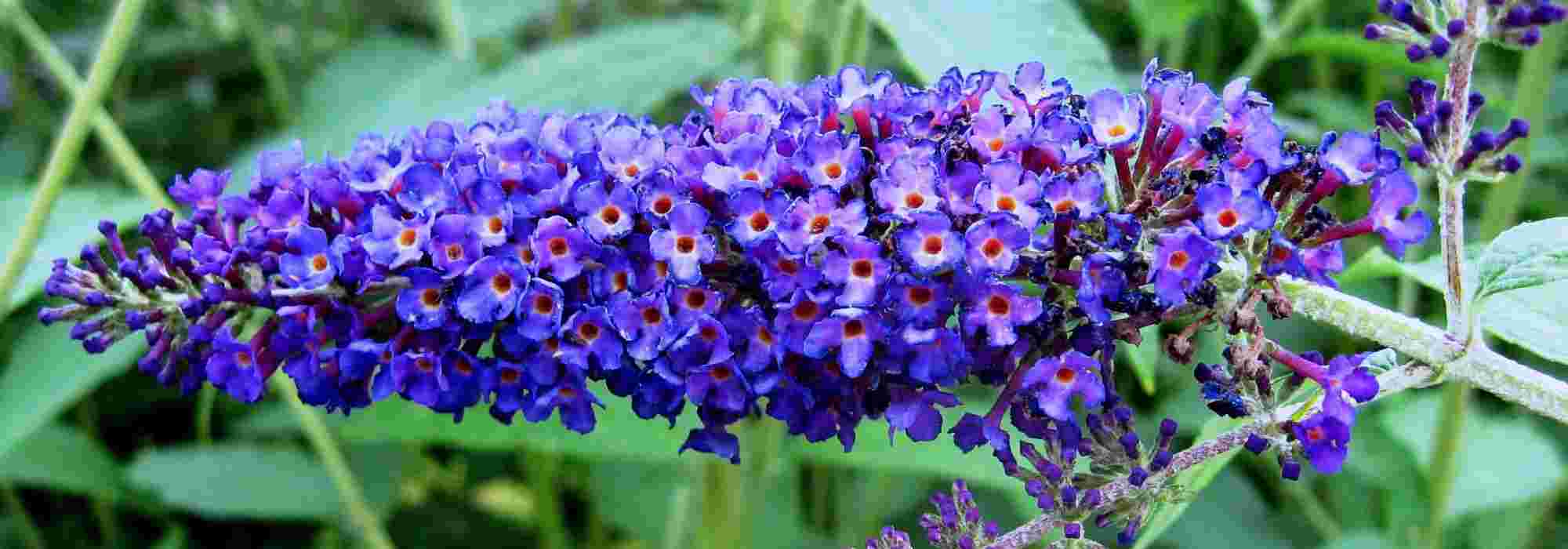
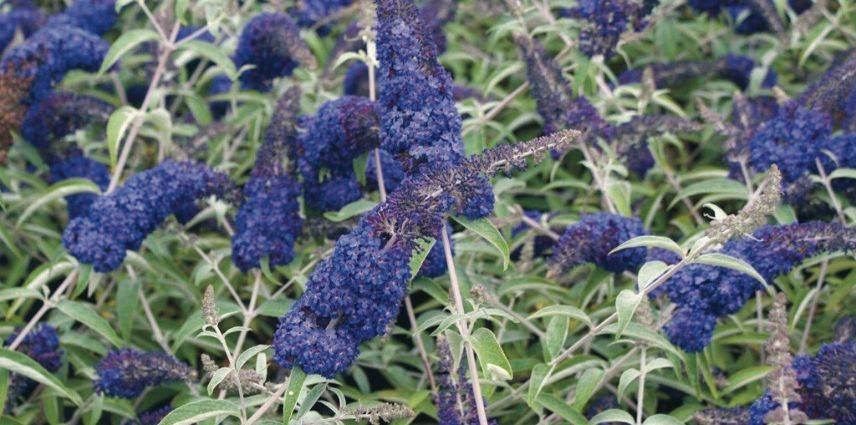
From June to October, Buddleia produces abundant spikes of fragrant flowers, topped with numerous butterflies attracted by their scent. It comes in a range of colours, including some beautiful blues, such as Buddleia davidii ‘Adonis Blue’, with large panicles of flowers measuring 20 to 30cm long in an intense midnight blue, and the lavender-blue panicles of Buddleia davidii ‘Nanho Blue’. Buddleia is one of the easiest flowering shrubs to grow and thrives in full sun in any well-drained soil, even the poorest. Fast-growing, it quickly forms beautiful flowering screens. You can plant it in groups or as a standalone specimen, at the back of shrub borders or in a natural-looking informal hedge. It is perfectly suited to natural gardens, low-maintenance gardens and scented gardens alike. It combines well with all kinds of shrubs, such as Ceanothus or California lilacs, Althaeas and lavateras, which flower at the same time. You can also pair it with other Buddleias to create a range of blue shades, or with full-sun perennials such as purple salvias, lupins or delphiniums.
Explore all our Buddleias with blue flowers in our online nursery, along with all the information you need to grow them in this advice guide: “Buddleia, Butterfly Tree: planting, pruning and care”.
Ceanothus or California lilac
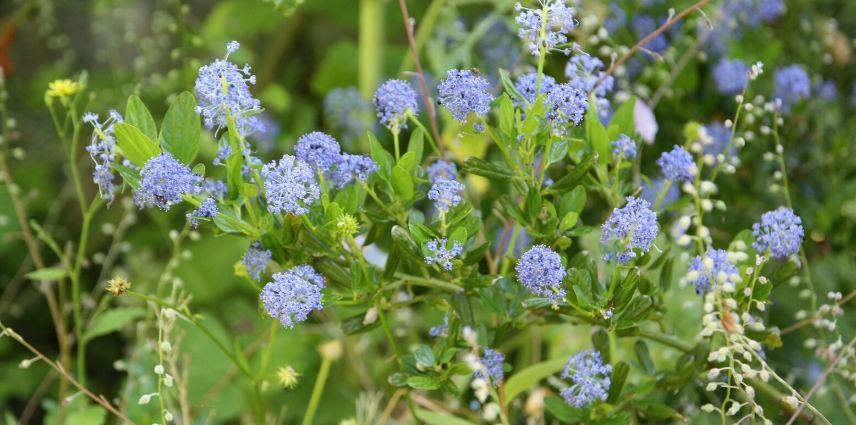
Whether deciduous or evergreen, this is a shrub much loved for its generous, fragrant spring or summer flowering, reminiscent of lilacs. It produces some of the garden’s finest blue flowers. Its beautiful pyramidal inflorescences come in countless shades of blue, as seen in Ceanothus ‘Blue Diamond®’ and Ceanothus ‘Skylark’, with their deep blue flowers. Undemanding, it grows in any ordinary, well-drained soil, in full sun or partial shade, and even in a pot! It thrives in every garden, as a standalone plant or grouped in informal hedges with other shrubs such as buddleias, mock oranges and rose of Sharons, or in a border alongside the beautiful foliage of hydrangeas or Mexican orange blossom. It makes a lovely backdrop for bush roses and offers particularly beautiful complementary planting with yellow-flowering shrubs such as broom and laburnum.
Discover all our blue-flowering Ceanothus in our online nursery, along with advice from our garden experts in our guide: “Ceanothus: planting, pruning and care”.
Caryopteris or "bluebeard
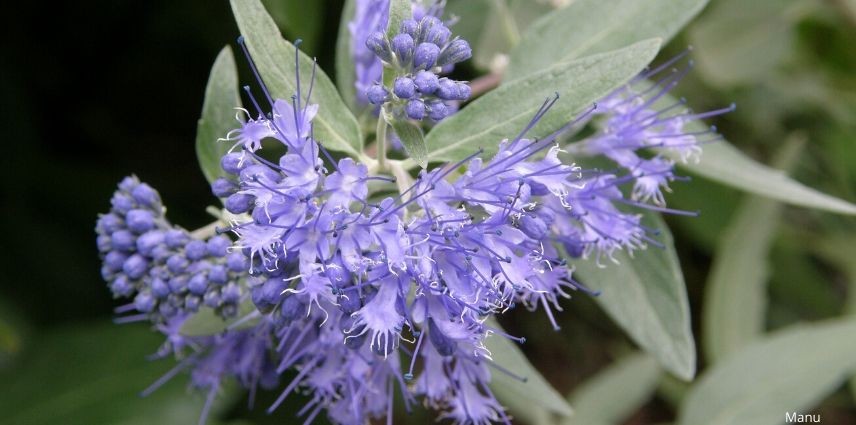
Caryopteris, or “bluebeard”, is an elegant shrub prized for its airy flowers in endless shades of azure, and for its aromatic, silvery, variegated or golden foliage, which releases its scent when crushed. Its rather late flowering, from August to October, follows on from the summer-flowering plants. This small shrub, rarely exceeding 1.50 m in height, brings a touch of freshness right up to the onset of winter, both to English gardens, naturalistic or wild gardens, and urban gardens. This is a sun-loving shrub that thrives in dry soil. Hardy and easy to grow, it fits readily into a flowering hedge, a bed or even a sunny terrace!Create a range of blue shades by pairing the particularly intense blue-violet summer flowers of Caryopteris (x) clandonensis ‘Heavenly Blue’ or Caryopteris ‘Grand Bleu’ with Russian sage (Perovskia atriplicifolia), which flowers at the same time, asters in the same azure shades, Ceanothus, buddleias or create contrasts by combining it with the yellow flowers of autumn daisies and Helenium.
Discover all our Caryopteris, or “bluebeard”, in our online nursery, along with our 7 ideas for pairing Caryopteris and our complete guide: “Caryopteris, Bluebeard: planting, pruning and care”
Perovskia, or Russian sage
The Perovskia is a graceful little shrub that produces beautiful aromatic silvery foliage and airy azure-blue flowering that lasts throughout the summer, sometimes until the first frosts. A centrepiece in dry, wild gardens scorched by the sun or exposed to sea spray, its vibrant silhouette, reminiscent of a false lavender, brings a refreshing blue note. With its light, branched spikes, it adds a sense of movement to sunny banks and large summer beds. The ultimate drought-tolerant plant, it grows in full sun and in poor, stony soils. We particularly recommend the giant ‘Blue Spire’, which reaches 1.20 m in height, and the small ‘Lacey Blue’, with purplish-blue flowers, not exceeding 50 cm in height. They work very well in wild-looking beds, combined with Verbena bonariensis, lavenders, its cousins the sages and grasses (Stipa, Miscanthus…).
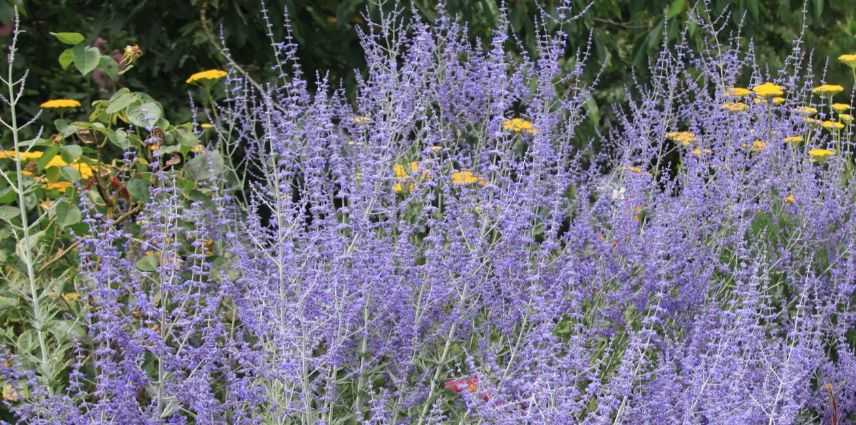
Discover all our Perovskia in our online nursery, as well as our full guide: “Perovskia: planting, pruning and care”
Hydrangea, or hortensia
The hydrangea is a deciduous shrub that instantly evokes the seaside and Brittany! In summer, it produces impressive flowers, in rounded heads, cones, flat heads or large panicles, depending on the variety. Traditionally blue varieties turn pink in neutral or chalky soil. In alkaline soil, it is therefore best grown in a pot, in an acidic mixture of heather soil, compost and potting compost, where you can be sure of enjoying beautiful blue flowers. Versatile, the hydrangea will find its place in a bed, as a standalone plant near the entrance, in an informal hedge or in a large pot on the terrace.
Hydrangea macrophylla and serrata are better suited to shady positions, ‘Nachtigall’, ‘Nikko Blue‘, ‘Benelux’ will easily find a place in a woodland garden and will surprise you with their vivid blue flower heads, as will the hydrangea ‘Blue Deckle’, with its soft blue flowers. They will be perfect in partial shade in a cottage garden or a romantic garden. Plant them, for example, with foxgloves, hostas, ferns, azaleas and thalictrums.
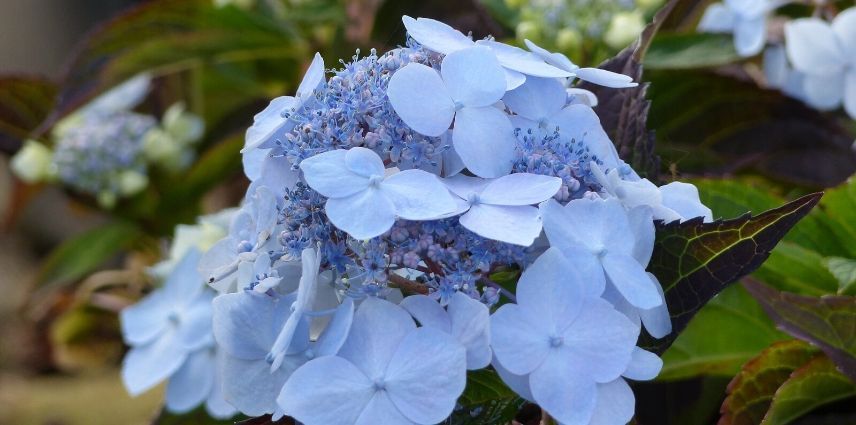
Discover all our blue-flowered hydrangeas in our online nursery, as well as our complete guide: “Hydrangeas: planting, pruning and care”
Ceratostigma or leadwort
Depending on the species, leadwort is a creeping, ground-covering perennial plant or a shrub (1.20 m in all directions), flowering from July until October-November. It is recognised by the star-shaped form of its flowers and, above all, by their intensely vivid electric-blue colour. It thrives in warm positions and grows easily in gravelly soils, even in dry, stony ground. With its long-lasting flowering in an extremely vivid gentian blue, Ceratostigma plumbaginoides will create superb combinations at the foot of the yellow or orange flowers of shrubby cinquefoils, Sternbergia lutea (the false autumn crocus) and the golden foliage of witch hazel, or with grasses. Willmott’s leadwort ‘Forest Blue’, with its cloud of extraordinary cobalt-blue stars, will combine in a large bed with the yellow flowers of tickseed, goldenrods and heleniums.
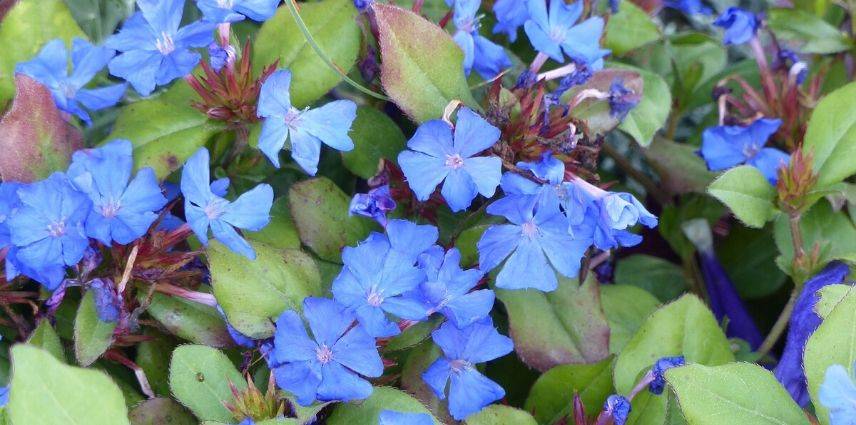
Discover all our leadworts in our online nursery, as well as our guide: “Ceratostigma: planting, pruning and care”.
Hibiscus
Hibiscus or Althea is a beautiful shrub that stands out for its magnificent summer flowering, with corollas that keep appearing from July to October. While its single or double cup-shaped flowers come in every shade of pink, some varieties, such as Althea ‘Oiseau Bleu‘, produce bright blue trumpet-shaped flowers with deep red centres, while Hibiscus syriacus ‘Ultramarine’ bears lavender-blue flowers with purple centres, and Hibiscus syriacus ‘Blue Chiffon’ has double lavender-blue flowers. It is easy to grow in rich, moist, well-drained, neutral soil in a sunny position, although it also tolerates partial shade.
It can reach 3 m in height when fully grown and looks wonderful as a solitary specimen in the middle of a lawn, but it can also be incorporated into a flowering hedge with other flowering shrubs such as buddleia or abelia. It also has a place at the back of a summer bed with cottage-garden perennials such as gauras, phlox or asters. It adds an exotic touch to English cottages and even to urban gardens, as it tolerates pruning well.
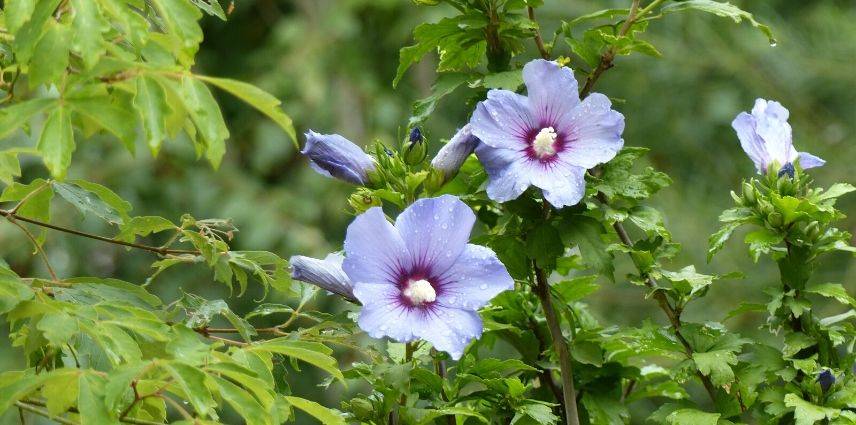
Select your blue-flowered hibiscus from our online nursery, and discover our guide: “Hibiscus, Althea: planting, growing and care”.
Vitex, or chaste tree
Vitex is a beautiful shrub with fragrant flowering, most often in very bright blue, in summer, and attractive foliage that gives off a peppery scent. From July to October, when flowering is less abundant in the garden, its spike-like flowers, reminiscent of those of buddleias, develop into magnificent shades of lavender blue or deep violet-blue, as with ‘Blue Puffball’ and Vitex agnus-castus ‘Delta Blues’.
This versatile plant grows anywhere, in full sun and even in poor soils. It can be used in both large and small gardens, as a standalone plant, at the back of a perennial border, grouped in informal hedges or in a container. It pairs easily with all kinds of plants in a natural garden or a coastal garden because it tolerates salt-laden winds well. It works wonderfully in a flowering hedge mixed with all kinds of flowering shrubs, such as ceanothus or Californian lilacs, weigelas, a smoke tree, buddleias and blue-flowering perennials such as delphiniums, Knautia arvensis, echinops, Perovskia.
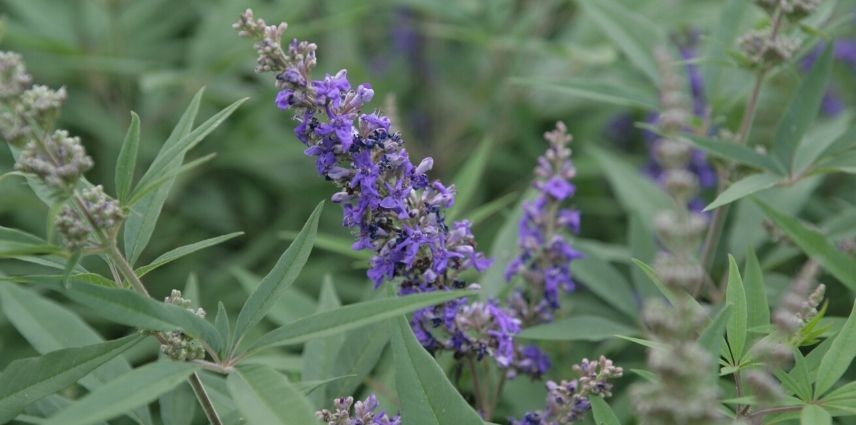
Discover our range of Vitex from our online nursery, along with our advice on how to grow it successfully in our comprehensive guide: “Vitex agnus-castus, Chaste tree: planting, growing and pruning”
- Subscribe!
- Contents
This form is protected by reCAPTCHA - the Google Privacy Policy and Terms of Service apply.

































Comments