
After the snow, how to look after your plants?
Simple steps to help plants through winter and keep them healthy
Contents
In winter, plants face harsh trials: wind, sometimes very heavy precipitation and frost can damage them and affect future growth. Snow, even if becoming rarer due to climate change, also affects plants. But this is not inevitable. A few simple steps will help plants recover better after a snowfall. Discover our tips in this article.
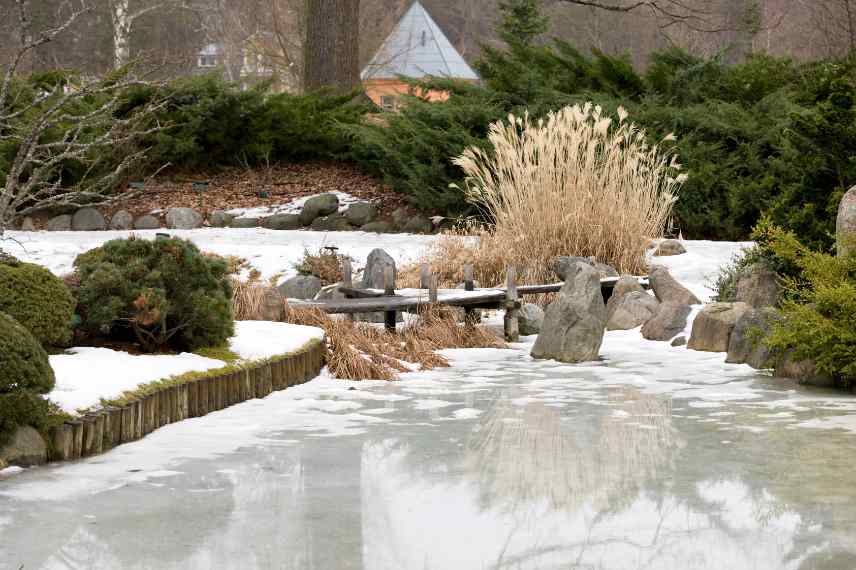
Admittedly, snow enhances gardens in winter, but it needs careful management

Snow and its impacts on the garden
Protective snow
Snow is often seen as an enemy of plants. Yet it can also have advantages. When it falls in such quantities that it forms a true, thick snow mantle but light (powdery), it acts as an insulating, protective blanket. It helps regulate soil temperature by trapping air, preventing it from falling below zero. Perennials and bulbs in particular have their underground parts better protected from possible frost, from the impact of heavy rain on the soil or from desiccation caused by cold winds.
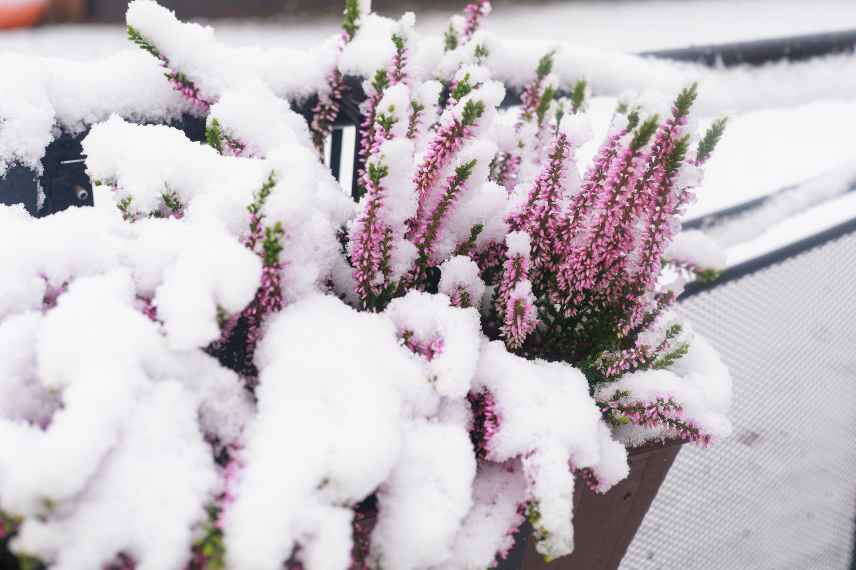
Snow creates a protective cover for plants
Damaging snow
But snow can of course be much less favourable in the garden. If it falls on frozen soil, it will tend to maintain negative temperatures and prevent the soil from warming.
Snow, especially when heavy and waterlogged, can also prove harmful to sensitive plants, such as shrubs with evergreen foliage. Naturally, these are often less hardy since they retain their leaves all year, whereas deciduous plants prefer to shed them to limit losses of energy and water. And when their foliage becomes covered in snow, it allows the snow to cling and remain, which causes sagging and can lead to damage.
Remove snow to avoid weighing down certain plants
As we have just seen, snow can be heavy and may cause considerable damage to plants, particularly to evergreen shrubs. This is also true of young deciduous trees or shrubs that are still not well developed and therefore fragile. When it accumulates on above‑ground parts, snow can promote:
- breakage of branches;
- breakage of trunks, which can sometimes split right down the middle under the weight of the snow;
- uprooting of some plants.
Laurels, camellias, young olive trees, bamboos, Photinia, oleasters, Pittosporum, young conifers… so many sensitive plants that may suffer following a snowfall.
As a preventive measure, remove snow promptly from plants’ above‑ground parts. Of course, the idea is not to shake branches violently up and down, but rather to slide the snow off gently so the plant can right itself naturally.
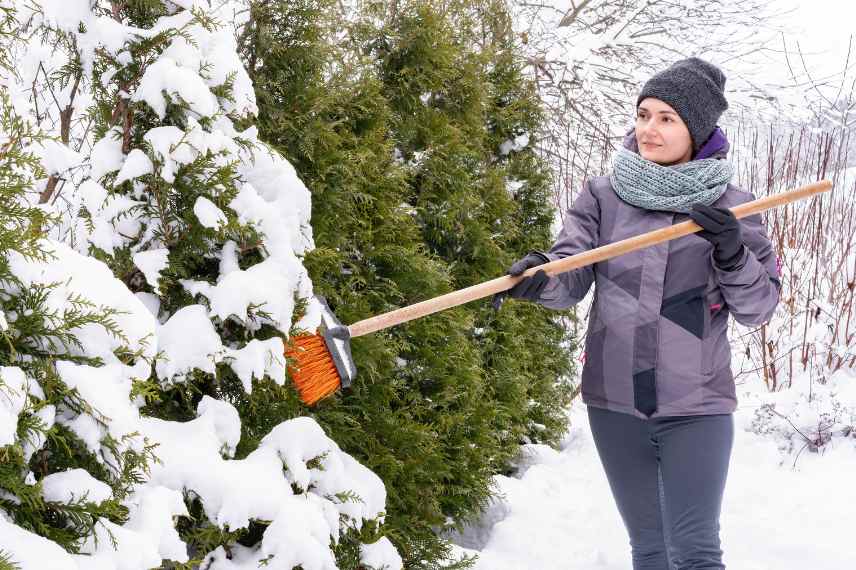
Remove excess snow, especially from evergreens
Caring for potted plants
Snow can affect plants not only in the garden: those grown in pots can suffer too. Again, snow’s weight can cause branches to snap and can even topple least stable containers. Plants can even become uprooted. With rootball no longer protected, roots may dry out or freeze.
After snowfall, remove excess snow from potted plants. And, if it still lies on the ground, make sure to insulate containers by placing them on bricks or blocks.
Check winter protection measures
In the same vein, if you find protections you installed on plants to protect against cold are covered in snow, it is important to remove that extra weight. You can simply brush the fleece or covers gently with a soft brush.
If temperatures rise above freezing, don’t hesitate to open the protection (zippered models are very handy for this) to check it hasn’t been damaged and that the plant hasn’t been affected.
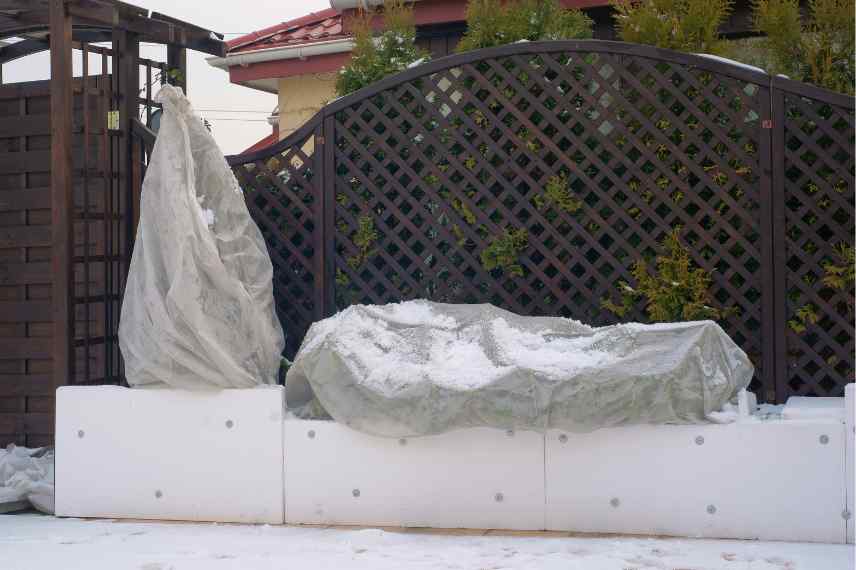
After repeated snowfalls, check covers and protections, removing any excess snow
Collect snow for later watering
Like rainwater, snow has the advantage of not being lime-bearing. Once melted and returned to room temperature, it can therefore be used to water plants, especially those that are acidophilous. So don’t hesitate to collect some and store it in a container for later use.
Note that even in winter it is sometimes necessary to water certain plants. Frequency should be adjusted according to growing conditions and specific needs of each plant.
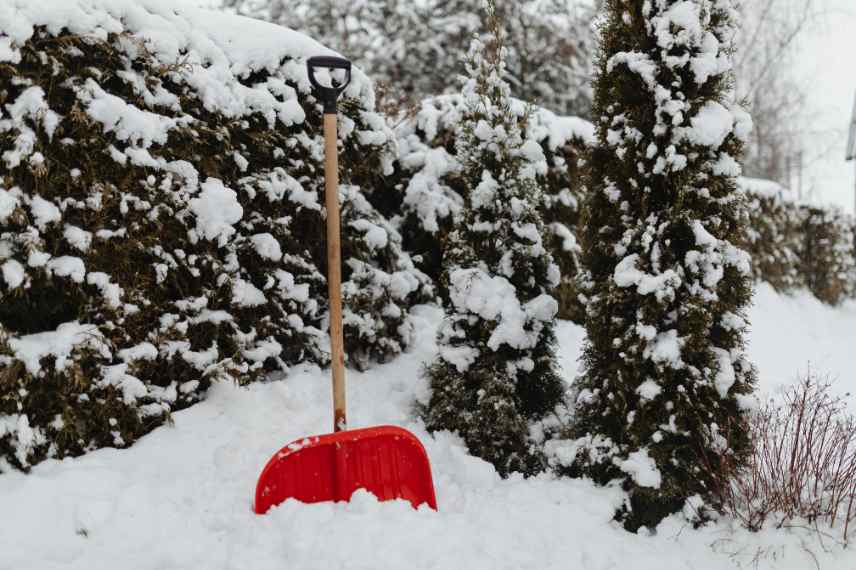
In case of heavy snowfall, get your shovels out!
Actions to avoid after a snowfall
After a snowfall, avoid certain actions to prevent damaging plants.
- Even though it’s obviously tempting to walk in the snow, avoid treading on the lawn.
- Do not pack down the snow that has fallen at the base of plants.
- If flowers are covered with snow, leave this protective layer on them. Winter-flowering plants such as witch hazel, the heather, the snowdrop or hellebores are not harmed by snowflakes, which protect them from frost.
- Do not prune parts of plants that appear damaged immediately after snowfall. That would further weaken the plant, especially if another snowfall or frost occurs. Wait until spring.
- Finally, even if it seems obvious, do not use de-icing salt near your plants.
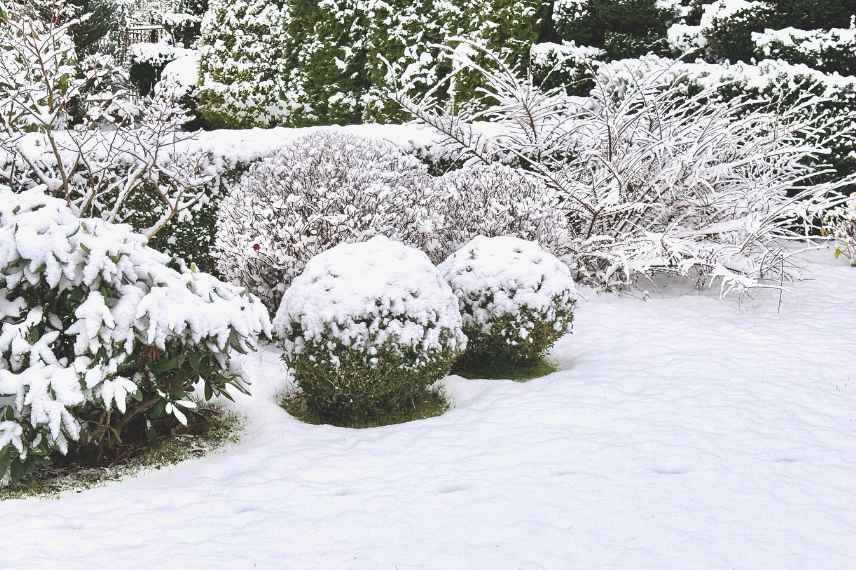
Some preventive measures in case of frequent snow in the garden
If your garden is regularly subject to snowfall, it is best to plan ahead to limit negative impacts.
- Install stakes to help young trunks (planted less than two years ago) stay upright. You can also protect them from snow by wrapping them in a fleece or by installing a woven rice straw protection.
- Lay an organic mulch around the base of your plants, in a thick layer about 10 cm deep. Use wood chips, dead leaves, straw, hay, fern fronds, etc.
- Group potted plants, if possible, in a sheltered area (for example under a porch). Also consider raising them off the ground.
- In late winter or autumn, when pruning evergreen shrubs, avoid giving them an overly flat shape. Opt for a slightly sloping shape, which will prevent snow from settling and forming a heavy blanket.
- Subscribe!
- Contents
This form is protected by reCAPTCHA - the Google Privacy Policy and Terms of Service apply.

































Comments