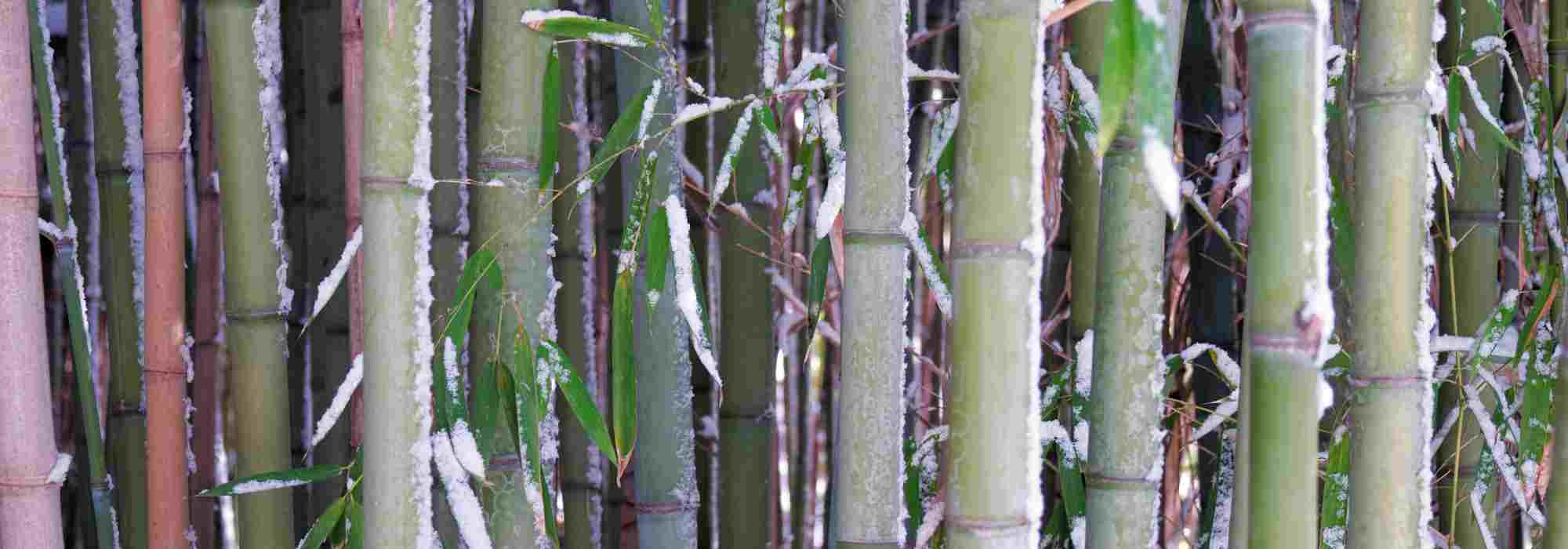
Protecting bamboo in winter: solutions against snow and frost
Keeping bamboo healthy even during the cold season
Contents
Bamboos offer many benefits for the garden. They bring an exotic, graphic touch, thanks to their attractive culms, also called stems or canes. Their evergreen foliage stirs at the slightest breeze, helping create a relaxing soundscape. They are also excellent candidates for forming attractive screening hedges. Some species are known to colonise very rapidly and generally grow quickly.
In cultivation, bamboos prefer moisture, warmth and rich soils. They are fairly hardy, tolerating frosts from -10°C to -25°C depending on species. But in winter, some will need a little helping hand to remain healthy. Let’s look at what measures to take to keep bamboos looking good after the cold season.
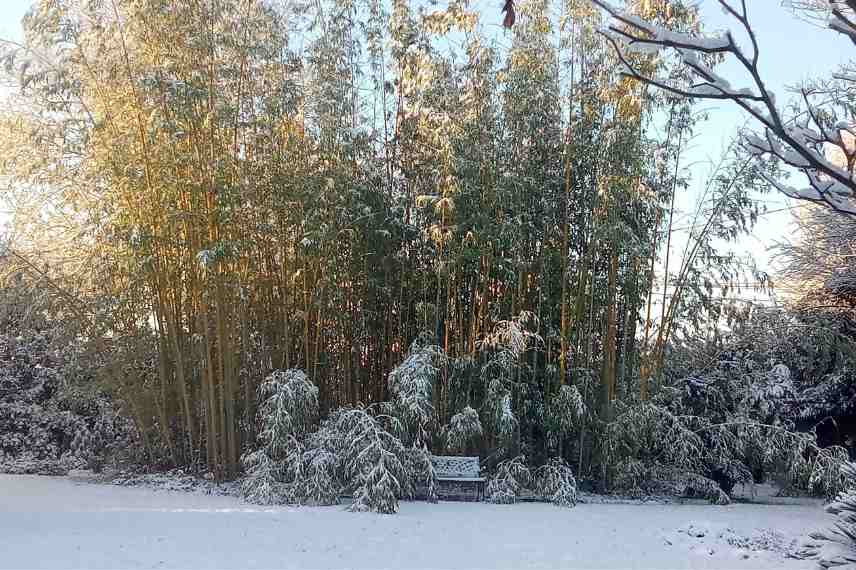
Snowy spells make bamboos bend… (photo © Gwenaelle Authier)

Impact of snow on plants
Snow will affect garden plants in two ways.
First, paradoxically, it can be protective. When powdery and therefore light, it can form a genuine protective blanket, insulating plants from cold and raising temperatures by a few degrees. Acting as a natural insulator, it traps air, preventing a more severe temperature drop, especially around plant roots. It can also protect soil from impact of winter weather, such as gale-force winds or heavy rain.
But snow can of course also cause damage to the garden. If it forms a layer on soil after a freezing spell, it may slow soil warming. When heavy and wet, it can damage the most sensitive plants. Evergreen trees and shrubs are among those plants that can suffer from snow, as it easily accumulates on foliage and can cause bending or even breaking of branches. This is exactly the case for bamboo.
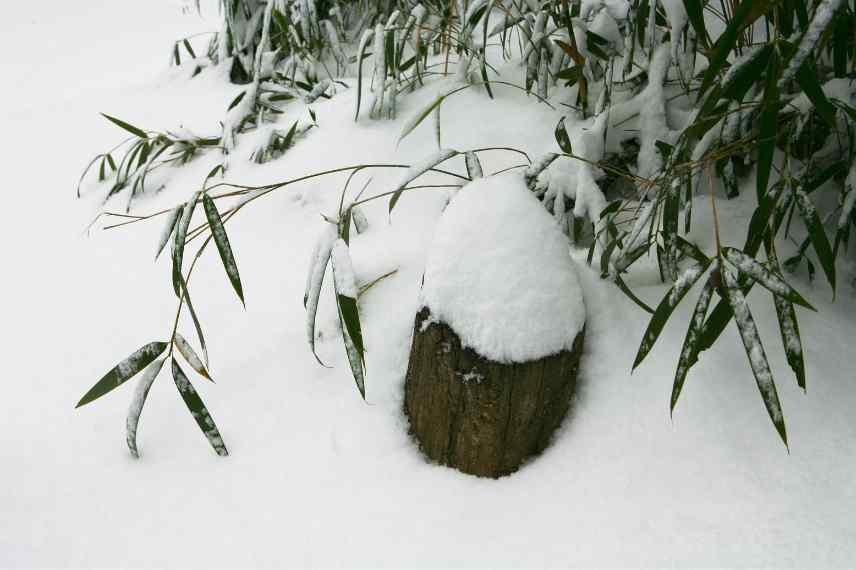
Snow often forms a more protective blanket than you might expect
Read also
Bamboos: planting, pruning, maintainingChoosing the right exposure for bamboo in winter
Although bamboos are fairly hardy, it is best to choose their location carefully at planting time to protect them from the cold season. Choose sites sheltered from the coldest, driest winds, to which they are quite sensitive. Also avoid waterlogged soils in winter: they would not survive there.
Ideally, bamboos should be placed in full sun or partial shade in the warmest regions. Give them a neutral or acidic soil, without excess lime. It should be fairly rich in organic matter, moist (never completely dry) and well drained (where water flows away easily without pooling).
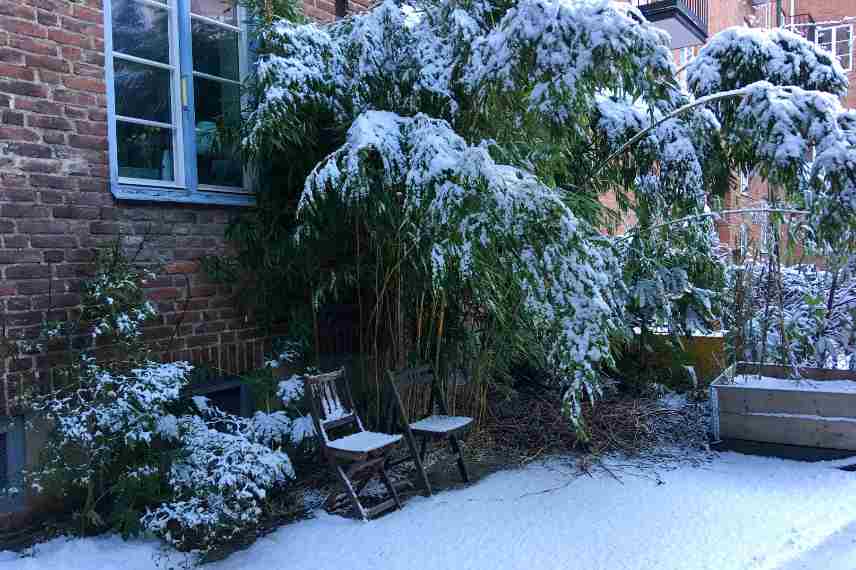
Planted against a house in a sunny, well-exposed position, bamboos do not suffer
Clear culms of snow
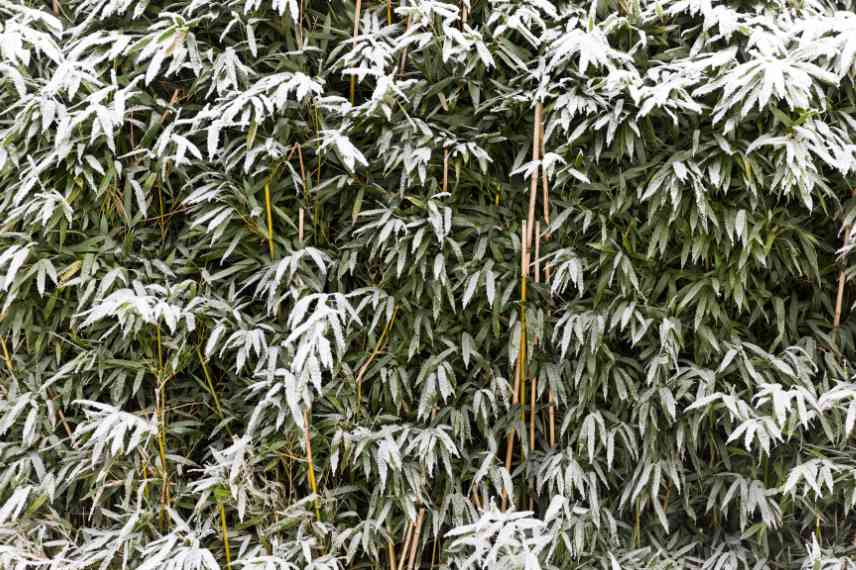
As we saw earlier, a snowfall can cause damage to bamboos. If snow falls in sufficient quantity to form a lasting layer, it can remain on foliage and on culms. In that case, its weight will cause those aerial parts to bend, even break. Even if they are flexible, bamboo culms can be too weakened: they will first curve, sometimes until touching ground, but may then snap under weight of snow. This situation can even uproot bamboos. And even if they do not break, stems may afterwards retain an arched shape.
As a precaution, after heavy snowfall, knock snow off using a brush, broom or rake. Tap foliage gently, working from top to bottom and from inside to outside. Repeat operation after each snowfall that forms a layer several centimetres deep.
Note that large bamboos are generally most susceptible to heavy snowfall. This includes Fargesia, Phyllostachys, Sasa, Pseudosasa and Semiarundinaria.
Read also
Bamboo, Fargesia: planting and careMulch the base of bamboo
We regularly remind you of the many benefits of mulching. In winter, it helps insulate the root system from cold. Particularly important during first years to protect young rootstocks from cold and frost. Use pine bark, straw, hay, fallen leaves, plant husks or RCW. Lay it in a thick layer at least 5 to 8 cm deep.
Over the years, don’t hesitate to let fallen foliage naturally form a protective carpet at the base of bamboo.
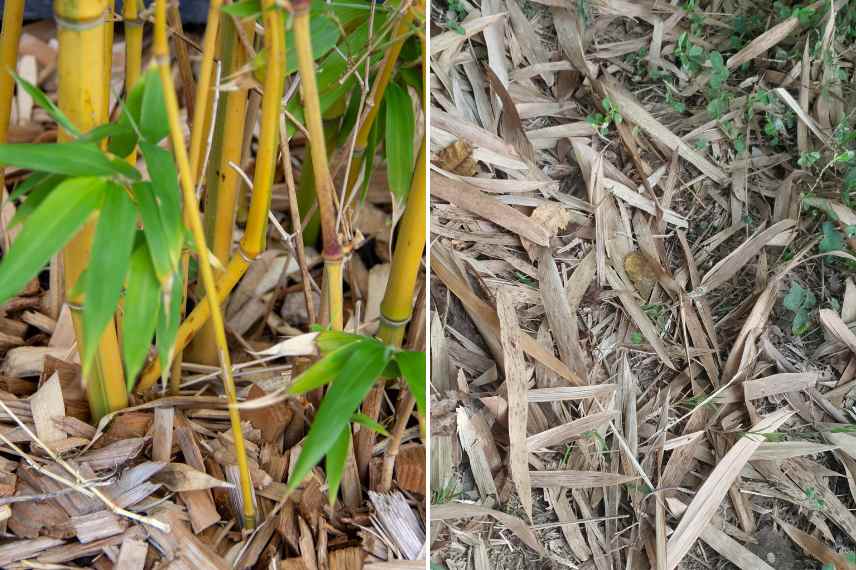
Mulch placed at their base is beneficial for young bamboo plants that have not yet formed their natural mulch of dry leaves
Install protective measures against snow and frost
If you have chosen to grow less hardy species or live in a region with harsh winters, bamboo will benefit from protection during winter. For this, install protective covers or winter fleeces.
To reduce risk of drying out or development of cryptogamous diseases (fungi) favoured by confined environments, remember to ventilate by removing or opening the fleeces on milder days. Once severe frosts have passed, you can completely remove protective coverings.
If protective coverings become covered in snow, give them a gentle brush to shake the snow off.
Caring for potted bamboo
Some bamboo species are slightly less hardy and are best grown in pots, so they can be more easily protected from winter cold from −15°C. For this, they should be placed in a bright, frost-free room, such as an unheated greenhouse or conservatory. In that case, make sure to continue watering occasionally when the soil is dry at the surface.
If you do not have a suitable indoor space, consider placing bamboo in a sheltered position (under a terrace, against a wall…). If snow settles on bamboo and risks tipping the pot under its weight, be sure to remove it. Also consider insulating pots from the ground by placing them on a brick, a tile, a pallet or a large stone. Finally, add a thick mulch in the pot (see dedicated paragraph above).
Remember that bamboos grown in pots are less hardy than those grown in the ground, as they have less soil volume to act as natural insulation.
If your bamboo’s leaves turn yellow during winter, don’t panic: this is generally a natural process that helps it cope with cold, by limiting evapotranspiration. Leaves should be renewed from spring.
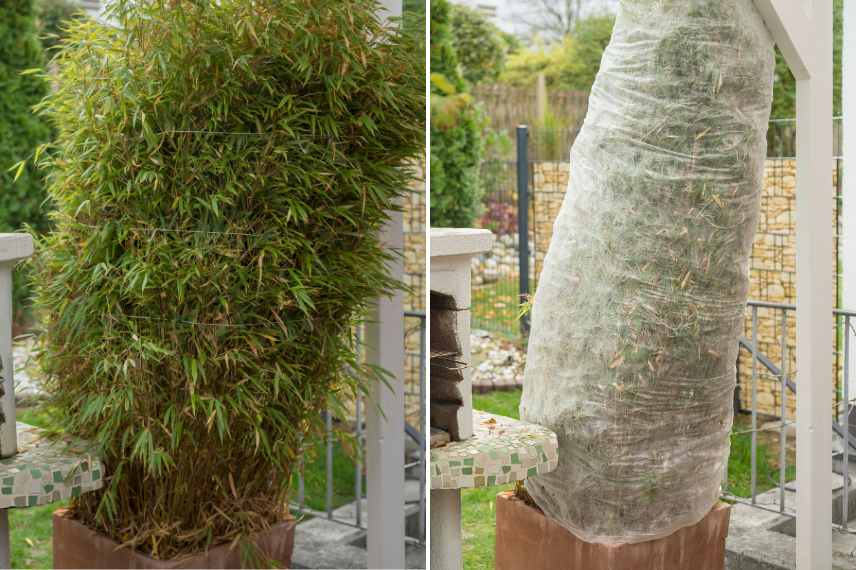
A fleece can be useful in some colder regions when bamboo is kept in pots year-round
- Subscribe!
- Contents
This form is protected by reCAPTCHA - the Google Privacy Policy and Terms of Service apply.

































Comments